
How to Brew Green Tea: Temperature and Time
Green tea brewing is mostly a question of water temperature: the same Longjing at 70, 80 and 95 °C gives three different drinks out of one bag. At 70 the cup is sweet and faintly marine; at 95 the catechins arrive first and the finish turns drying. Of the four variables that decide a green tea, temperature moves the result furthest.
What follows works through the other three, leaf, vessel and water, and then the questions that actually come up in a kitchen: how long, how many cups, and what to do when the cup turns bitter. Where a number comes from a study it is cited; where none exists, the page says so.
Table of Contents
Four things decide the cup
Leaf, water, temperature and time decide the cup. Everything else is preference.
| Starting point | Range | |
|---|---|---|
| Leaf | 3 g per 150 ml | 2–5 g depending on style |
| Water | 80 °C | 75–85 °C for bud tea; up to 90 °C for coarse leaf |
| First infusion | 90 seconds | 45 s – 2 min |
| Later infusions | Add 30 s | 2–3 infusions total |
Starting points for a 150 ml vessel; the ranges cover the four styles compared below.
Those numbers are a starting point. The useful skill is knowing which variable is doing the work, so you can adjust on purpose.
Temperature moves it furthest. The case against boiling water is not tradition. It is extraction chemistry.
A study measuring catechin recovery in water found that steeping at 80 °C for 20 minutes recovered 97 percent of the available catechins, while 95 °C for 10 minutes recovered 90 percent. Hotter water is not more efficient here — it degrades the compounds the category is valued for while extracting the harsh ones faster.
Catechins make up 30 to 42 percent of dry leaf weight, and within that fraction EGCG alone accounts for roughly half. They read as astringent and slightly bitter, and their extraction rate rises steeply with temperature. L-theanine, which provides the savoury sweetness, is present at only 1 to 2 percent and extracts more gently.
So the two things you want from the cup — sweetness and aroma — and the one thing that ruins it, astringency, respond differently to heat. Cooler water widens the gap in your favour. That is the whole argument, and it is why the same leaf at 100 °C and at 80 °C produces two drinks that barely resemble each other.
By tea type
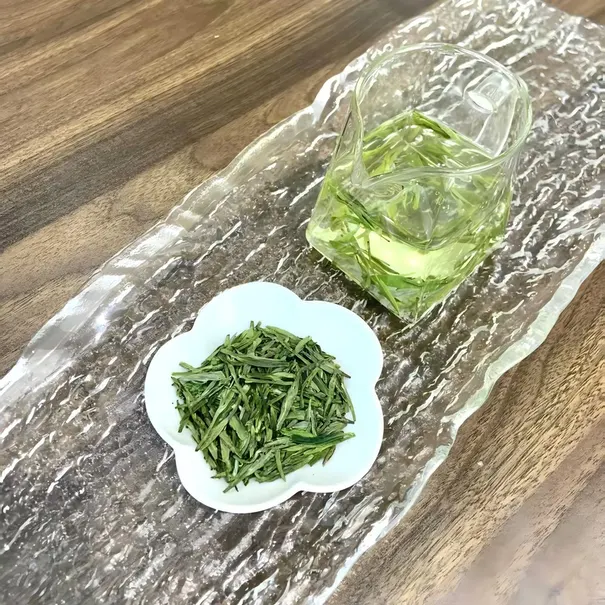
Green tea brewing changes by type: the four manufacturing styles need different treatment, and using one method for all of them is the second most common mistake.
Pan-fired tea such as Longjing wants 80 to 85 °C and short infusions. It is the middle of the road: enough structure to tolerate a little heat, not enough to survive a lot.
Baked tea such as Huangshan Maofeng is the most forgiving. The leaf is looser and the firing gentler, so 85 °C with a slightly longer first infusion works well and the cup stays sweet even if you over-run it by twenty seconds.
Steamed tea such as sencha or Enshi Yulu is the most heat-sensitive, because the leaf has more catechins and fewer amino acids before brewing even starts. A same-batch comparison found steamed leaf at 139.68 mg per gram of catechins against 111.36 for pan-fired, and 33.79 mg per gram of amino acids against 41.47. Use 70 to 75 °C and expect the cup to be green and marine rather than sweet.
Bud-heavy tea such as Biluochun or a single-bud Que She is delicate for a different reason: there is no leaf structure to slow extraction. Use 75 to 80 °C and a first infusion of 60 to 90 seconds. Longer than that and the cup turns sharp.
Vessel, water and rinse
Three vessels are worth knowing, and for green tea brewing the choice affects the cup as much as the temperature does.
A glass is the traditional modern choice for Chinese green tea, particularly Longjing. It is not an antique method — glass brewing is a contemporary habit — but it has a real advantage: you can see the leaf unfurl and judge the colour. Glass also holds heat less than porcelain, which helps keep the temperature down.
A gaiwan gives more control because you can pour off the liquor at will. It is the better choice for comparing teas, since it is neutral and repeatable. The drawback is speed: a gaiwan retains heat, so the first infusion can run warmer than intended.
A kyusu, the Japanese side-handled pot, is designed for steamed green tea at lower temperatures. Its small volume and side handle make short, cool infusions easier to manage than a gaiwan.
What matters less than the vessel is whether you can control the timing. A tea you cannot decant promptly will over-steep.
The rinse question. Rinsing green tea before brewing is common in some traditions and absent in others, and the evidence is mixed enough to be worth stating plainly.
On the positive side, research on rinsing found that a five to thirty second wash transferred between 0.2 and 24 percent of eight pesticide residues into the rinse water, reducing risk by 5 to 59 percent depending on the compound. That is a real effect, and it is the strongest argument for rinsing.
On the negative side, rinsing also carries off the compounds you want. The same study measured losses, and for green tea specifically the catechin and caffeine loss from a short rinse has not been quantified in the literature reviewed here. What can be said is that the first infusion of a good green tea is often the most aromatic of the session, and pouring it away is throwing out the best cup.
A reasonable compromise for green tea brewing is a very fast rinse of three to five seconds, just enough to wet the leaf; compressed tea gets the longer washes.
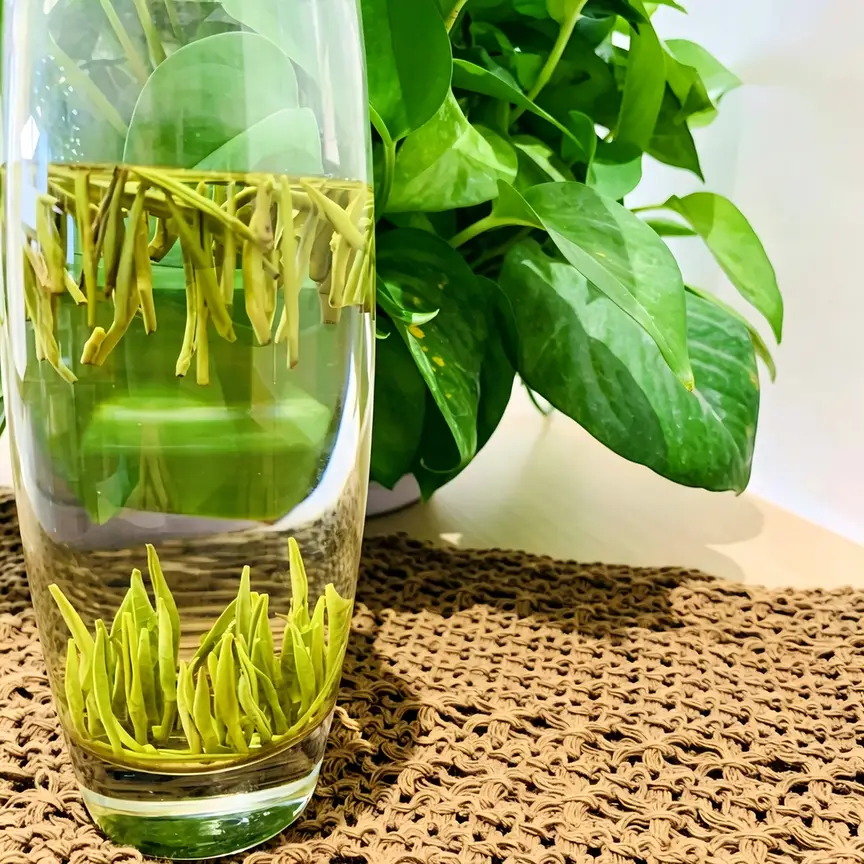
Water. Water matters because of mineral content, not purity.
Very soft water makes green tea taste thin and slightly sour. Very hard water makes it dull and can leave a scum on the surface. Ordinary filtered tap water usually sits in the right range, and if yours is very soft, a bottled water with moderate hardness will change the cup more than any equipment purchase.
Temperature is easier to control if you pour boiling water into a pitcher first and let it stand. In a room-temperature vessel, boiling water drops to roughly 80 °C in two to three minutes, though the exact figure depends on the vessel and the volume, so a thermometer is worth using until you can judge it by touch.
How much leaf, and how old the leaf is
Green tea brewing follows two conventions depending on where you are, and mixing them produces the muddy cup usually blamed on the tea.
The Chinese method is leaf-heavy and time-light: around 3 to 5 g in a 150 ml vessel, short infusions, multiple rounds. The leaf is reused and the cup is decanted quickly. This is the method that rewards attention and punishes delay.
The Western method is leaf-light and time-heavy: roughly 2 g in 250 ml, one infusion of two to three minutes, leaf discarded. It extracts more per round and gives you one decent cup instead of three good ones.
Both work. What does not work is combining a Chinese leaf ratio with a Western steep time. Three grams in 150 ml for three minutes is roughly double the intended extraction, and the result is the bitter cup people describe when they say green tea brewing is difficult.
If you are moving from one convention to the other, change one variable at a time. Increase leaf before you increase time.
Spring leaf and summer leaf. Spring leaf and summer leaf need different treatment, and the difference is chemical, not a matter of taste.
Early spring leaf grows slowly in cool weather, which concentrates amino acids and keeps catechins relatively low. It extracts gently and forgives a slightly long infusion.
Summer leaf grows fast in heat, which pushes catechins up and amino acids down. It extracts aggressively, turns astringent quickly, and needs either cooler water or a shorter steep — and in practice both.
This is the reason a brewing method that works beautifully on a pre-Qingming tea can fail completely on a later pick of the same cultivar. The tea is not worse; it is differently balanced, and the brewing has to follow.
For green tea brewing, the practical rule is that the earlier the pick, the more forgiving the leaf. Adjust downward in temperature and time as the season advances.
Iced and cold-brewed
Iced green tea is usually made badly, and the fault starts in the hot green tea brewing that comes before the ice: chilling concentrates the astringency you would otherwise avoid.
The better method is to brew at the low end of the temperature range, about 70 to 75 °C, for a shorter time than you would for a hot cup, then chill immediately. The result is a tea that keeps its aroma and does not turn harsh when cold. A second option is cold brewing, covered below.
What does not work is brewing a strong hot concentrate to dilute over ice. The concentration step extracts exactly the compounds that make iced green tea taste stewed.
One caution worth stating: bottled and canned green teas are usually made from extracts and sweetened heavily, which makes them a poor reference point for what the leaf can do. Iced green tea brewing using whole leaf tastes nothing like them.
Why does it taste bitter or thin?
Three faults account for almost every green tea brewing complaint.
Bitter and drying. Over-steeped or too hot. Green tea brewing has a narrow margin: the difference between a 90-second and a three-minute infusion is the difference between sweet and harsh.
Thin and flavourless. Usually too little leaf, or water that is too cool to extract anything. If the cup tastes like hot water with a green tint, add leaf before raising the temperature.
Sour. Usually stale tea, not a brewing fault. Green tea that has absorbed moisture or oxidised in storage tastes flat and slightly sour no matter how you brew it. See how to store green tea.
Astringent at the back of the mouth. Catechin extraction running ahead of everything else. Lower the temperature by five degrees and shorten the infusion.
Metallic. Very soft water, or a reactive vessel. Glass and porcelain are safe; unglazed clay and some metals are not.
Cold brewing. Cold-brewed green tea works, and it produces a different drink, not a colder version of the same one.
Use 5 to 7 g of leaf per litre of cold filtered water and refrigerate for six to eight hours. Cold extraction pulls far less catechin, so the cup is sweeter and much less astringent than a hot brew of the same leaf, with the floral notes more prominent.
What the research does not provide is a solid quantitative comparison. A dedicated study on cold-brewed green tea was not found in the literature reviewed here, so any specific claim about how much of each compound cold water extracts should be treated as unverified.
Practical notes: bud tea cold-brews beautifully, coarse leaf less so. And cold-brewed tea does not keep — drink it within two days, refrigerated.
Three things worth remembering
- 80 °C is a starting point, not a rule: bud-heavy and steamed leaf want 70–75 °C, coarse leaf can take 85 °C.
- 3 g per 150 ml. If the cup is bitter, lower the temperature before you cut the leaf.
- Spring leaf forgives a long infusion; summer leaf does not. Adjust down as the season advances.
Frequently Asked Questions
What temperature should green tea brewing use?
Around 80 °C as a starting point. Bud-heavy and steamed teas want 70 to 80 °C; loose baked leaf can take 85 °C. The reason is that hotter water extracts astringent catechins faster than it extracts sweet amino acids.
Can I use boiling water for green tea?
You can, and it will produce a drink — just a much more astringent one. A study found 80 °C for 20 minutes recovered 97 percent of catechins while 95 °C for 10 minutes recovered only 90 percent, so high heat is not more efficient and it does degrade the leaf.
How many times can green tea be brewed?
Two or three good infusions. Green tea is not a rolled oolong; the leaf gives up its contents quickly and later infusions thin out.
Does green tea brewing work in a gaiwan?
Yes, and it is the better choice for comparison because it is neutral. The trade-off is that a gaiwan holds heat, so the first infusion can run hotter than you intended.
If you want to test any of this. Three green teas from our own 2026 stock, chosen so the green tea brewing differences in this guide can be compared side by side: Shifeng Pre-Qingming Longjing ($14.90), pan-fired and the most forgiving at 80 °C; Dongting Biluochun ($19.90), bud-heavy and the one that punishes heat hardest; and Shouning High Mountain Green Tea ($19.90), coarse leaf that takes 85 °C without turning bitter. Harvest date and leaf grade sit on every listing.
Read next
Two pieces that go with this one. The four green tea styles, if you are still deciding what to buy, because the style decides the temperature more than the label does. And How to store green tea, because a cup that tastes flat or sour six weeks after opening is usually a storage problem, not a brewing one.
Sources & References
Peer-Reviewed Research
- Food Chemistry (2005). Catechin extraction: 80 °C/20 min recovers 97%, 95 °C/10 min recovers 90%. DOI:
10.1016/j.foodchem.2005.03.015 - Journal of Agricultural and Food Chemistry (2019). Rinsing transfers 0.2–24% of eight pesticide residues, reducing risk 5–59%. DOI:
10.1021/acs.jafc.8b04908 - Critical Reviews in Food Science and Nutrition (1997). Catechins 30–42% of dry weight; caffeine 3–6%. DOI:
10.1080/10408399709527797 - Trends in Food Science & Technology (1999). L-theanine at 1–2% of dry weight. DOI:
10.1016/S0924-2244(99)00044-8 - Foods (2022). Pan-fired versus steamed leaf composition. DOI:
10.3390/foods11111582
Standards
- GB/T 14456.1-2017 — Green tea, Part 1: Basic requirements.
What this page does not claim
We do not claim one temperature is correct for all green tea, that rinsing is traditional, or that cold brewing has been quantitatively characterised. Where the research is absent, the page says so instead of filling it in.

6 Comments