
How to Make Cold Brew Tea: A Complete Guide Using Real Chinese Loose Leaf
Quick Answer
- Add 1–1.5 g of loose leaf tea per 100 ml of cold filtered water (1 g per 100 ml is the most common baseline — our Shouming high mountain teas are so flavorful you might prefer the lighter end)
- Refrigerate for 4–12 hours depending on tea type
- Strain and serve
That’s the whole method. Cold water pulls flavor slowly, so you get a naturally sweet, smooth cup with very little bitterness — and if you’re using high-mountain tea from Fujian like ours, the notes stay clean through multiple sips without that scratchy finish you get from lowland leaves.
💡 New to cold brew? Check out our beginner’s guide to loose leaf tea for the basics on leaf selection and storage.
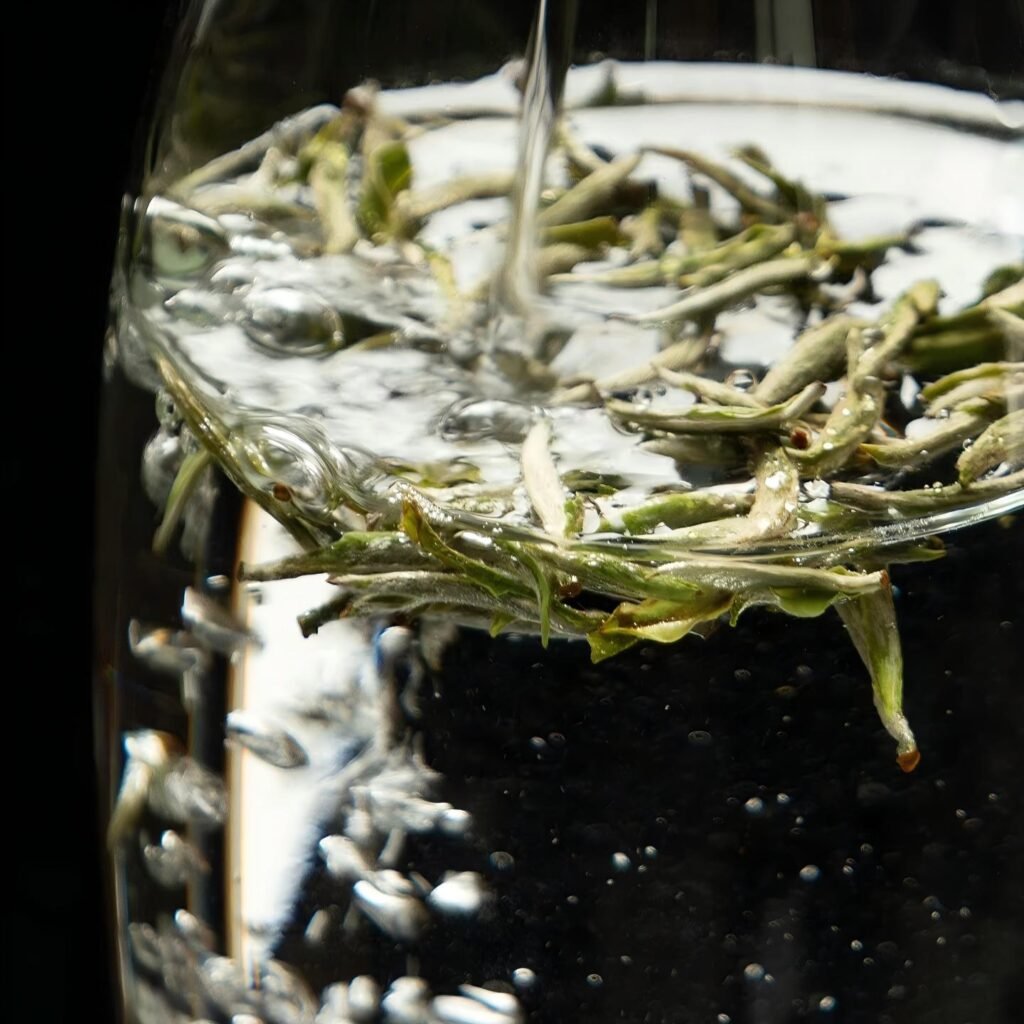
Why Does Cold Brew Tea Taste Better Than Hot-Brewed Iced Tea?
Hot tea poured over ice is a gamble. Half the time, the ice melts before the tea cools, and you end up with a bitter, watered-down glass.
Cold brewing avoids that. The leaves steep slowly in cold water, so fewer bitter compounds end up in the cup. A peer-reviewed metabolomics study published in PubMed found that volatile aroma compounds such as alcohols accumulate more under cold-brewing conditions, while the extraction rate of bitter compounds such as caffeine dropped by more than 40% compared with hot brewing. The result: floral aroma, sweet taste, and a green-tinged color that hot-brewed iced tea rarely matches.
This is especially noticeable with high-mountain teas. Our tea comes from Shouning, Fujian — a region with over a thousand years of tea history, sitting at elevations where cooler nights and mineral-rich soil produce leaves with naturally dense aroma compounds. When you cold-brew them, those floral and honey notes come through cleanly instead of being masked by bitterness.
You’ll notice:
- A smoother mouthfeel
- Natural sweetness — no sugar needed
- A cleaner finish
- Very little astringency
If you want a deeper look at why temperature changes extraction, our How to Brew Green Tea guide breaks down the chemistry in plain language.
How Do You Make Cold Brew Tea at Home?
Step 1: Pick Your Tea
Almost any tea works. Loose leaf gives the cleanest flavor because whole leaves release aromatics slowly. Here are our top picks from our Shouning collection:
| Tea Type | Our Recommendation | Why It Works for Cold Brew |
|---|---|---|
| 🟢 Green tea | Huang Shan Mao Feng 2026 or Bi Luo Chun 2026 | Light, sweet, vegetal — extracts gently in cold water |
| ⚪ White tea | Bai Hao Yin Zhen 2026 or Bai Mu Dan 2024 | Naturally sweet, delicate floral notes, very forgiving |
| 🟤 Black tea | Jin Jun Mei 2026 Spring or High Mountain Jin Mu Dan 2026 | Honeyed, smooth, minimal astringency |
| 🪨 Rock tea / Oolong | Explore our full Black Tea and White Tea categories | Complex layered flavors that unfold over hours |
For more on tea types, read our guides:
- White Tea Guide for Beginners
- 4 Types of White Tea Explained
- Black Tea 2026: Guide to Types, Benefits & Brewing
Step 2: Measure Tea and Water
Start with 1–1.5 g of tea per 100 ml of cold filtered water. The 1 g baseline is the most commonly cited starting point across tea education sources. If you’re using our high-mountain Shouning teas, you may find that 1 g per 100 ml already delivers full flavor — our leaves are naturally dense in aroma compounds thanks to the growing conditions at altitude, so they need less mass to saturate the water.
Quick reference:
- 5 g tea → 500 ml water (≈ 2 cups)
- 10 g tea → 1 liter water (≈ 4 cups)
- 20 g tea → 2 liters water (≈ 8 cups)
Step 3: Refrigerate
Drop the leaves into a glass jar or pitcher, add cold water, and put it in the fridge. Cover it tightly — tea is porous and readily adsorbs volatile odor compounds from nearby foods, especially in an open container.
Brew times by tea type:
| Tea Type | Cold Brew Time | Notes |
|---|---|---|
| 🟢 Green tea | 4–8 hours | Lighter profile at 1–4 hours |
| ⚪ White tea | 6–8 hours | Learn more about brewing Shou Mei |
| 🟤 Black tea | 8–12 hours | Also see our How to Brew Black Tea guide |
| 🌿 Overnight batch (1 L) | 8–10 hours | Use 8–10 g of tea |
Going much past 12 hours usually makes the tea taste flat rather than richer, so aim for the windows above.
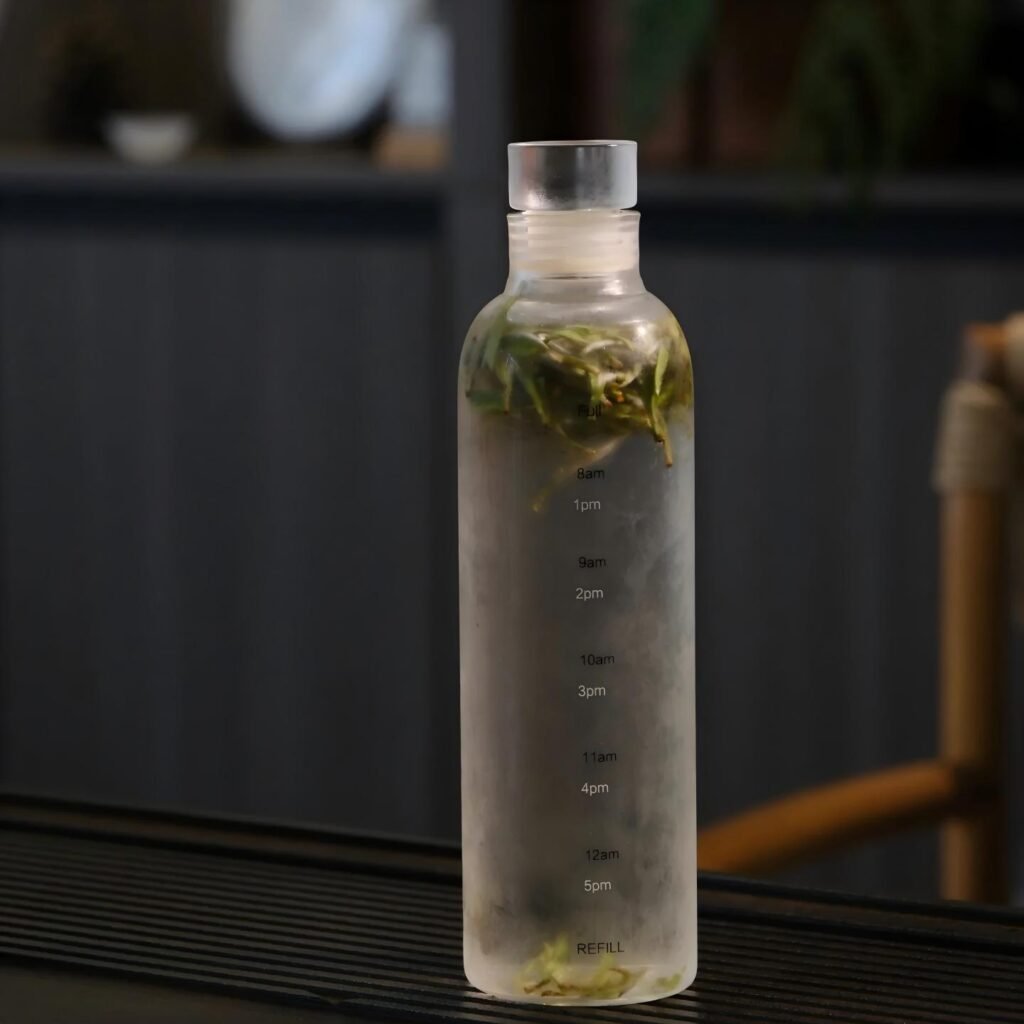
Step 4: Strain and Serve
Pull the leaves out with a fine mesh strainer, pour into a glass, and serve. Ice is optional — the brew is already cold.
Step 5: Store
Keep the finished tea in a sealed glass container in the fridge. It tastes best in the first 3 days and stays good for up to 5 days when handled cleanly.
What Is the Best Tea-to-Water Ratio for Cold Brew?
Across specialty tea education sources, the most commonly cited cold-brew range is 1.0–1.5 g per 100 ml, with 1 g per 100 ml as the most common baseline.
For teas from Shouning, Fujian — where leaves grow in high-mountain conditions with slower maturation — that ratio tends to sit at the lower end because the leaves are already concentrated in flavor. Most of our customers brewing Bai Hao Yin Zhen or Shou Mei Dragon Pearls find that 1 g per 100 ml gives a perfectly aromatic, sweet cup.
| Your Goal | Ratio | Example |
|---|---|---|
| Standard strength | 1 g / 100 ml | 10 g tea → 1 L water |
| Stronger / bolder | 1.5 g / 100 ml | 15 g tea → 1 L water |
| Lighter / delicate | 0.7 g / 100 ml | 7 g tea → 1 L water |
How Long Should You Steep Cold Brew Tea?
There is no single fixed standard for cold-brewing time — published research and industry guides give a range, not a hard number. As a working rule:
- Green tea: 4–8 hours (1–4 hours for a lighter, fresher cup)
- White tea: 6–8 hours — Silver Needle is ready on the earlier side; Shou Mei cakes benefit from longer
- Black tea: 8–12 hours — Jin Jun Mei hits its sweet spot around 8–10 hours
- Aged white tea: 10–12 hours — see our Shou Mei Aging Guide for why aged tea handles longer steeps so well
💡 Pro tip from our farm: Because high-mountain leaves grow slowly at elevation, their cell structure is denser — that’s why our teas are famously 耐泡 (nài pào) — able to withstand multiple infusions. In cold brew, this means the leaves take a little longer to fully open, but the flavor window is wider and more forgiving than with broken-leaf teas.
What Teas Work Best for Cold Brewing?
After brewing dozens of teas from our Shouning collection side by side, here are our top recommendations:
For Crisp Refreshment 🌿
Huang Shan Mao Feng Green Tea 2026 Light, sweet, slightly vegetal with grassy and chestnut notes. The cold-brewed version tastes like a clean mountain stream — hardly any astringency. Also try our Bi Luo Chun 2026 for a fruitier profile.
For Honeyed Depth 🍯
Jin Jun Mei Black Tea 2026 Spring Honeyed, floral, cocoa and malt notes with a silky body — rich without harsh tannins. This is our best-selling black tea for cold brew because it stays sweet even after 10 hours. Also try High Mountain Jin Mu Dan 2026 for a bolder profile.
For Elegant Floral Sweetness 🌸
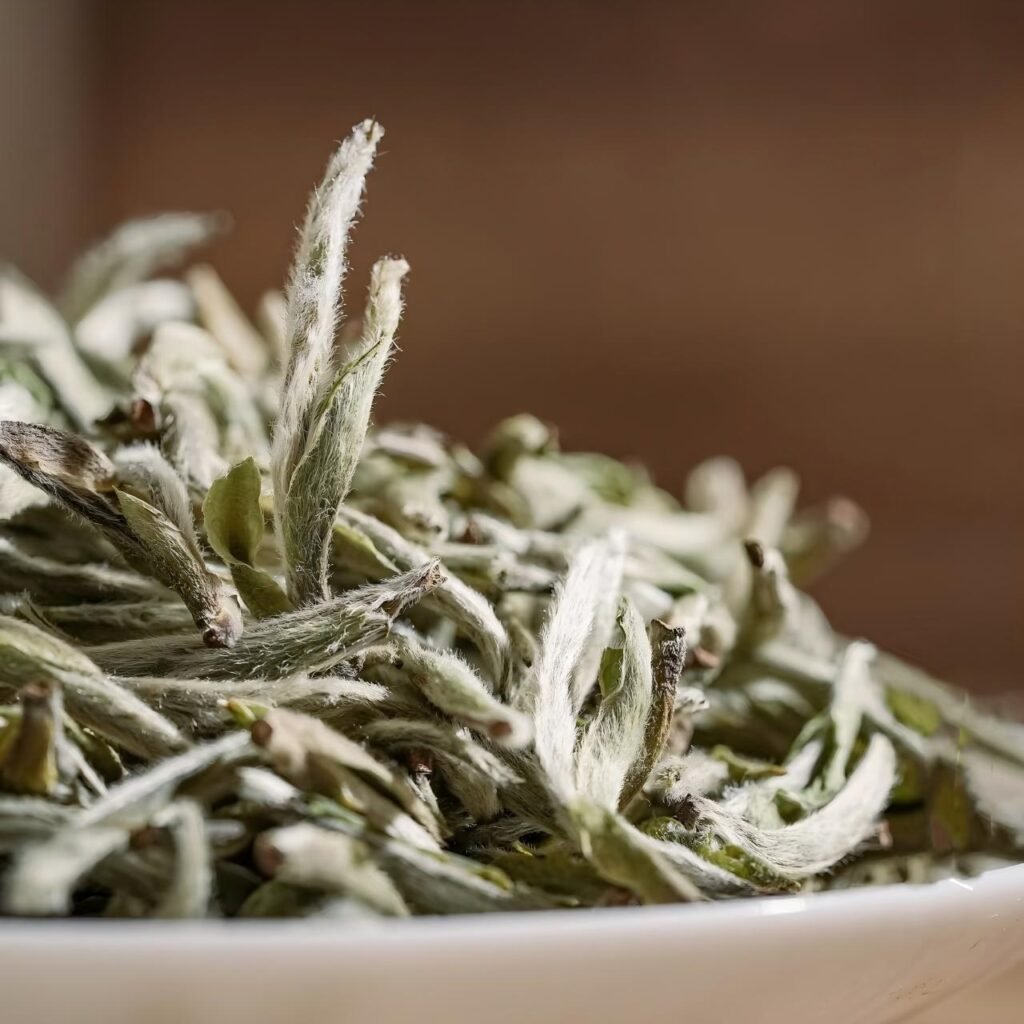
Bai Hao Yin Zhen (Silver Needle) 2026 Delicate floral sweetness, clean briskness, and a silky, almost meadowy finish. This is the gold standard of cold-brew white tea. It’s also the most forgiving — nearly impossible to over-steep.
For Aged Complexity 🏺
2014 Shou Mei Dragon Pearl Aged white tea cold-brews into something completely different from its younger siblings — dark amber, with notes of dried fruit, honey, and a subtle woody depth. Read about why aged white tea handles cold brew so well in our Shou Mei Aging Guide and How to Brew White Peony Tea.
👉 Browse all our cold-brew-ready teas: White Tea Collection | Black Tea Collection | Green Tea Collection
Can You Use Tea Bags for Cold Brew?
Yes — but you’ll get a flatter cup. Here’s why we strongly recommend loose leaf:
| Factor | Loose Leaf (Our Teas) | Tea Bags |
|---|---|---|
| Leaf quality | Whole leaves from Shouning, Fujian | Broken / fannings |
| Flavor | Cleaner, more layered, naturally sweet | Sometimes flat or dusty |
| Aroma | Brighter floral and honey notes | Muted |
| Reuse | 1–2 cold cycles possible | Single use |
| Clarity of brew | Clear, golden/amber | Often cloudy |
| 耐泡性 | High — our leaves endure long steeps | Low — exhausted quickly |
Cold brewing magnifies leaf quality. With our high-mountain whole-leaf teas, even the second cold steep often has flavor worth drinking.
What Are the Most Common Cold Brew Tea Mistakes?
- Using too little tea. A weak cup almost always comes from an under-dosed ratio. Stay at or above 1 g per 100 ml. If you’re using our teas, don’t worry — we source denser leaves, so you get more flavor per gram than typical commodity tea.
- Steeping too long. More hours won’t fix a weak tea. Once you pass the optimal window (often 8–12 hours), flavor usually flattens rather than getting stronger.
- Skipping the lid. Tea is porous and readily adsorbs volatile odor compounds from the fridge. Always cover the container.
- Brewing with broken-leaf bags. Cold water can’t extract much from dust and fannings. Whole leaves are worth it.
- Using distilled water. Low-mineral water tastes flat no matter how long you steep. Use filtered tap water or spring water.
Do You Need a Special Cold Brew Tea Maker?
No. A mason jar, a glass pitcher, or a French press all work fine. The vessel doesn’t matter nearly as much as the leaf quality.
A dedicated cold brew maker is convenient if you brew every day, but it’s not required to start.
How Long Does Cold Brew Tea Last?
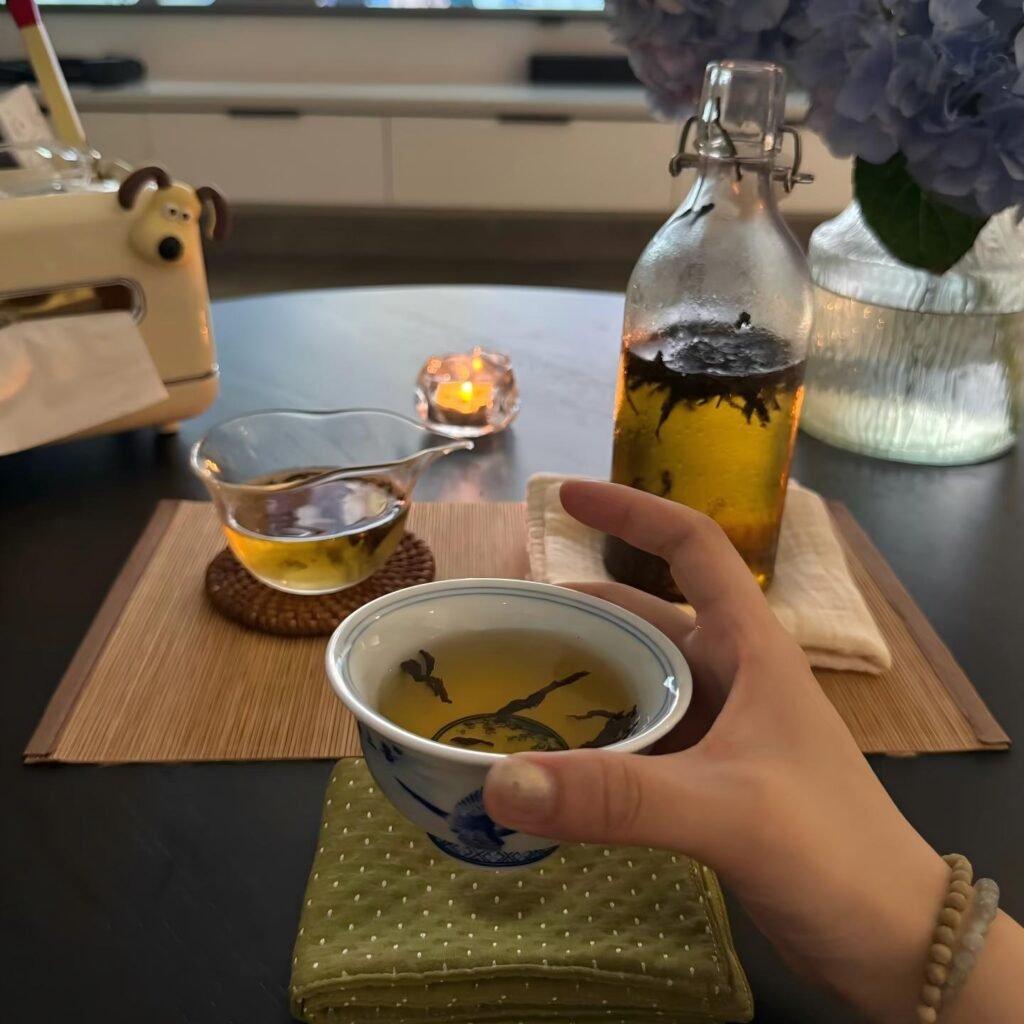
Stored in a sealed glass container in the refrigerator, cold-brewed tea stays good for 3 to 5 days, with 3 days being the more cautious ceiling for best quality and safety.
The USDA Food Safety and Inspection Service advises that “a refrigerator set at 40 °F or below will protect most foods” — a useful benchmark for storing brewed tea. South Dakota State University Extension also recommends keeping cold-brewed tea continuously refrigerated and consuming it within a few days of brewing.
Storage tip for your loose leaf: Keep unused tea leaves in a cool, dry place away from direct sunlight — our Shouning teas are naturally low in moisture thanks to the alpine conditions, but they’ll stay fresh longest in an airtight container in a dark cabinet. Learn more in our How to Store White Peony Tea guide.
Why Buy Your Cold Brew Tea from MinTeaShop.com?
🌄 Our Story
We source our tea directly from Shouning, Fujian — a region with over a thousand years of tea history, sitting at high elevation in the mountains of northern Fujian. The altitude gives our leaves three natural advantages:
- Slower growth = denser flavor — leaves develop more aroma compounds
- Cooler nights = more sweetness — less bitterness in the final cup
- Mist-covered mornings = tenderness — the leaf texture stays soft and whole
That’s why our teas are famously 耐泡 (nài pào) — you can steep them multiple times and they still taste good. In cold brew, this means more complexity with less leaf.
🚚 Fast Worldwide Shipping
| Method | Time | Carriers |
|---|---|---|
| Express | 7–15 days | DHL, FedEx, Europe Line |
| Standard | 15–25 days | China Post, Cainiao (used during policy periods) |
| Processing | 24–48 hours | All orders packed fresh |
💳 Secure Payments
We accept: PayPal · Credit/Debit Cards (Visa, MasterCard, JCB) · Bank Transfer (contact us) · Western Union (contact us)
🛡️ 7-Day Return Policy
If there’s a problem with your order (defect, wrong item, damage), contact us immediately with photos. We’ll replace or refund. Read our full return policy for details.
📦 Track Your Order
Every shipment comes with a tracking number via email. Track on DHL, FedEx, EMS, or Cainiao depending on your shipping method.
💬 24/7 Customer Support
Have a question about cold brewing a specific tea? Email us anytime — we’re real tea drinkers, not bots.
What Does the Science Say About Cold Brew Antioxidants?
This is where you need to read carefully. A lot of articles overstate the case.
The most-cited study is Yang DJ, Hwang LS, and Lin JT (2007), published in the Journal of Chromatography A (PMID 17161409). They tested tea at 70°C, 85°C, and 100°C (hot) versus 4°C and 25°C (cold), and concluded:
“Higher amounts of caffeine, catechins and gallic acid could be released from bag teas as hotter water was used.”
In other words, hot water extracts more total catechins from the same leaves. This was confirmed by a 2018 black-tea comparison study in the Journal of Food Research (DOI 10.5539/jfr.v8n3p35).
So if your only goal is maximum antioxidant intake, hot tea wins.
But here’s the nuance most articles miss:
A 2010 study by Lin et al. (Journal of Functional Foods, DOI 10.1016/j.jff.2009.06.012) compared hot vs. cold steeping across five tea types and found that white tea specifically showed higher antioxidant activity when cold steeped. The mechanism isn’t fully understood, but it suggests that some white tea compounds degrade or transform in hot water in ways they don’t at lower temperatures.
For a deeper look at the chemistry, see our guide to white tea compounds and benefits.
The Honest Takeaway
Cold brewed tea isn’t a “healthier” version of hot tea. It delivers fewer total catechins but in a smoother, less bitter cup. White tea is the one exception where cold brewing may actually preserve more antioxidant activity.
Frequently Asked Questions
Does cold brew tea have less caffeine than hot tea?
u003cemu003eu003cstrongu003eYes — substantially less.u003c/strongu003e Cold water extracts caffeine more slowly than hot water. A peer-reviewed study on green tea found that cold-brewed tea released only about u003cstrongu003e36–43% of the caffeineu003c/strongu003e of hot-brewed tea under comparable conditions.u003c/emu003eu003cbru003eu003cemu003eFor reference, u003ca href=u0022https://fdc.nal.usda.gov/u0022 target=u0022_blanku0022 rel=u0022noreferrer noopeneru0022u003eUSDA FoodData Centralu003c/au003e lists brewed black tea at about u003cstrongu003e47 mg of caffeine per 8 oz cupu003c/strongu003e. A comparable cold brew would typically deliver roughly u003cstrongu003e20–25 mg per cupu003c/strongu003e, though the exact number varies with tea type, leaf size, and steep time.u003c/emu003e
Can I reuse cold-brewed tea leaves?
u003cemu003eLoosely, yes. Most cold-brew guides recommend brewing the same leaves u003cstrongu003eonceu003c/strongu003e, occasionally u003cstrongu003etwiceu003c/strongu003e if they still smell clean. The u00222–3 infusionsu0022 idea is more typical of hot brewing.u003cbru003eOur high-mountain teas are unusually 耐泡u003cstrongu003e(nài pào)u003c/strongu003e — thanks to the dense cell structure of leaves grown at altitude, they hold their flavor longer than typical lowland tea. If you re-steep our u003ca href=u0022https://minteashop.com/product/2014-shou-mei-dragon-pearl/u0022 target=u0022_blanku0022 rel=u0022noreferrer noopeneru0022u003eShou Mei Dragon Pearlsu003c/au003e or u003ca href=u0022https://minteashop.com/product/bai-mu-dan-dragon-pearl-2019/u0022 target=u0022_blanku0022 rel=u0022noreferrer noopeneru0022u003eBai Mu Danu003c/au003e in cold water, expect a noticeably lighter but still pleasant second cup. Add 1–2 hours to the steep time.u003c/emu003e
Is cold brew tea healthier than hot tea?
u003cemu003eBoth methods extract different compounds. Cold brewing pulls fewer catechins and tannins while preserving more volatile aroma alcohols. Peer-reviewed research shows that u003ca href=u0022https://pmc.ncbi.nlm.nih.gov/articles/PMC8400668/u0022 target=u0022_blanku0022 rel=u0022noreferrer noopeneru0022u003ebrewing parameters — including temperature — affect polyphenol contentu003c/au003e in tea infusions, but neither method is u0022unhealthy.u0022 Pick what tastes best to you.u003c/emu003e
Why does my cold brew taste watery?
u003cemu003eUsually one of three things:u003cbru003e u003cstrongu003e1.Not enough teau003c/strongu003e — bump the dose to 1.5 g per 100 mlu003cbru003eu003cstrongu003e 2.Too short a steepu003c/strongu003e — give it 6–8 hours minimumu003cbru003eu003cstrongu003e 3.Very low-mineral wateru003c/strongu003e — use filtered tap water, not distilledu003cbru003eIf you’re using our teas and following the ratio above but still finding it weak, try a longer steep first. Our high-mountain leaves are denser and sometimes need an extra hour to fully open in cold water.u003c/emu003e
Final Thoughts
Learning how to make cold brew tea takes about 10 seconds of active work. The rest is just waiting.
Start small — 5 g of a green or white tea in 500 ml of water, brewed overnight. Strain it the next morning. If it tastes good, you’re done. If it tastes weak, add a little more tea next time.
Once you’ve had a properly cold-brewed cup made with real high-mountain Chinese loose leaf, hot-brewed iced tea is hard to go back to.
🛒 Ready to try? Shop our cold-brew favorites:
- Bai Hao Yin Zhen (Silver Needle) 2026 — the most forgiving cold brew
- Jin Jun Mei 2026 Spring — honeyed depth, zero bitterness
- Huang Shan Mao Feng Green Tea 2026 — crisp and refreshing
- 2014 Shou Mei Dragon Pearl — aged complexity
Or explore the full collections:
