
Bai hao Yin zhen | Exquisite 2026 First Flush Silver Needle White Tea
Price range: $12.90 through $127.90
Quick Specifications
Harvest Date: Early Spring 2026 (First Flush)
Sourcing: Shouning, Ningde, Fujian Province, China
Caffeine Level: Low
Available Weights: 3.5 oz (100g) / 7.0 oz (200g) / 17.6 oz (500g)
First Flush Bai Hao Yin Zhen Silver Needle white tea, spring 2026 harvest from Shouning, Fujian. Hand-plucked buds, low-caffeine, honeyed and silky. Shop now!
Description
Bai hao Yin zhen | First Flush Silver Needle White Tea |Fujian 2026
Introduction
Bai Hao Yin Zhen Silver Needle is the highest grade of traditional Chinese white tea. It is made only from the unopened, downy spring buds of the Camellia sinensis plant. First flush harvests from Fujian province command premium prices because the plucking window lasts just 10 to 14 days each spring.
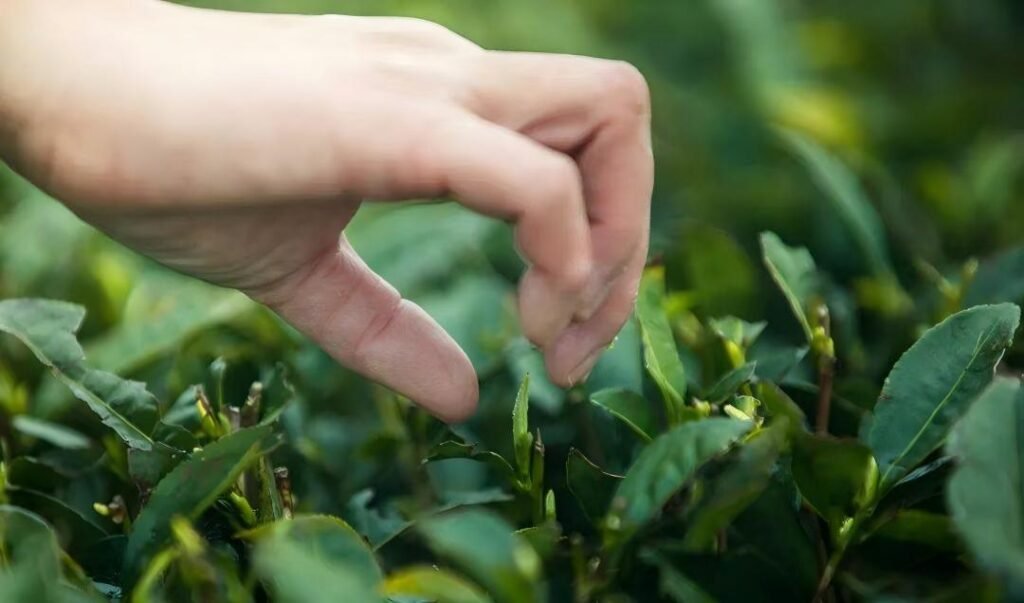
I was up at 4:15 a.m. on April 5, walking behind a foreman named Old Chen through a Shouning tea garden at 914 m elevation. The first flush of Bai Hao Yin Zhen doesn’t wait for sunrise. Pluckers had been on the slope since 3:30 a.m., headlamps clicking on and off in the mist, picking only the unopened silver buds while the leaf was still cold and tightly furled. By 7 a.m., the day’s haul — maybe 800 g of fresh bud from the entire 4-hectare plot — was already on its way to the withering room.
That is what you’re paying for when you buy First Flush Silver Needle. Not luxury. Not rarity for its own sake. Just an absurd amount of hand labor and a very narrow weather window. This guide covers what Bai Hao Yin Zhen actually is, how it differs from White Peony, how to brew it so the cup stays bright, what to expect on caffeine, and why Shouning altitude matters. By the end, you’ll know whether the 2026 harvest is the right one for you.
What Is Bai Hao Yin Zhen (Silver Needle) White Tea?
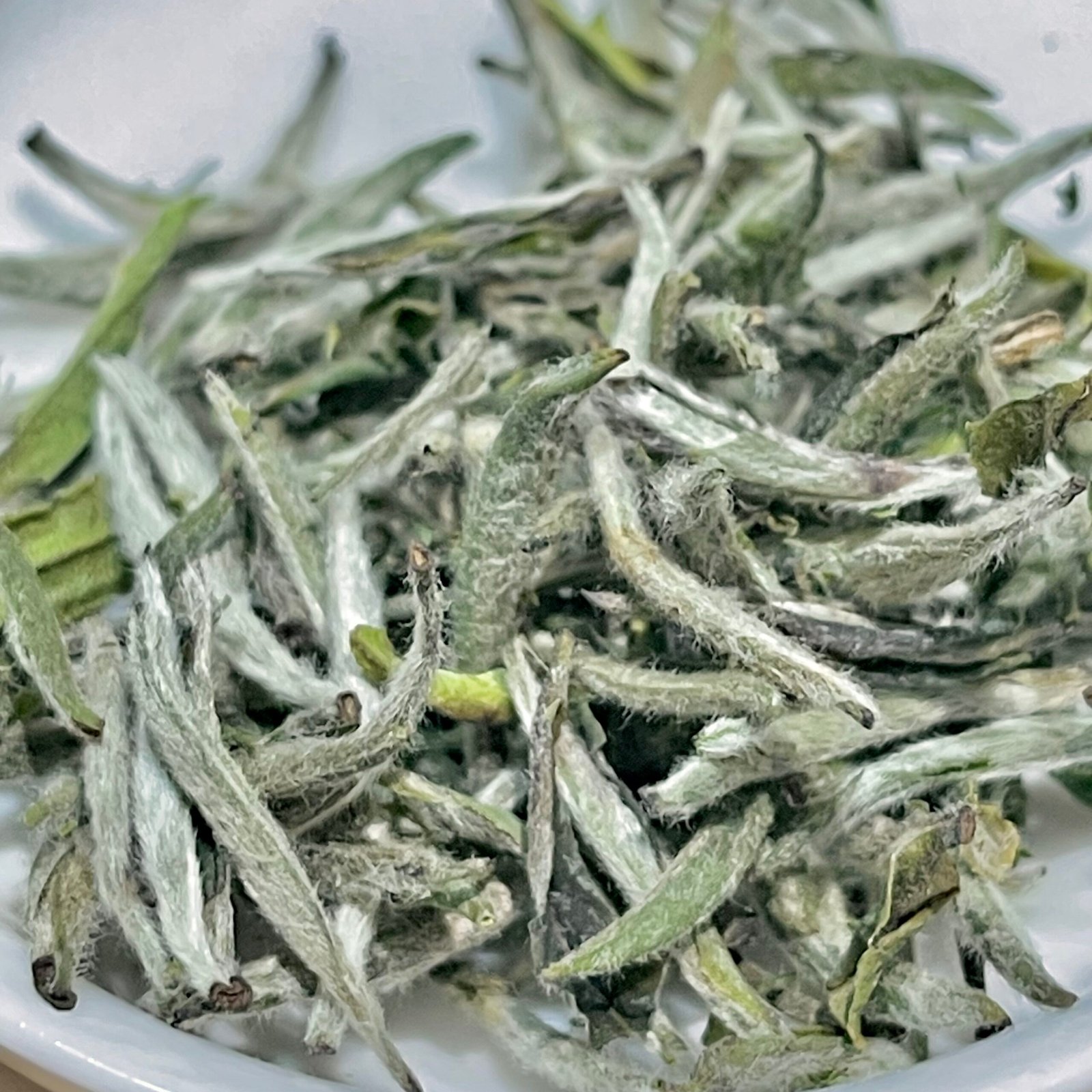
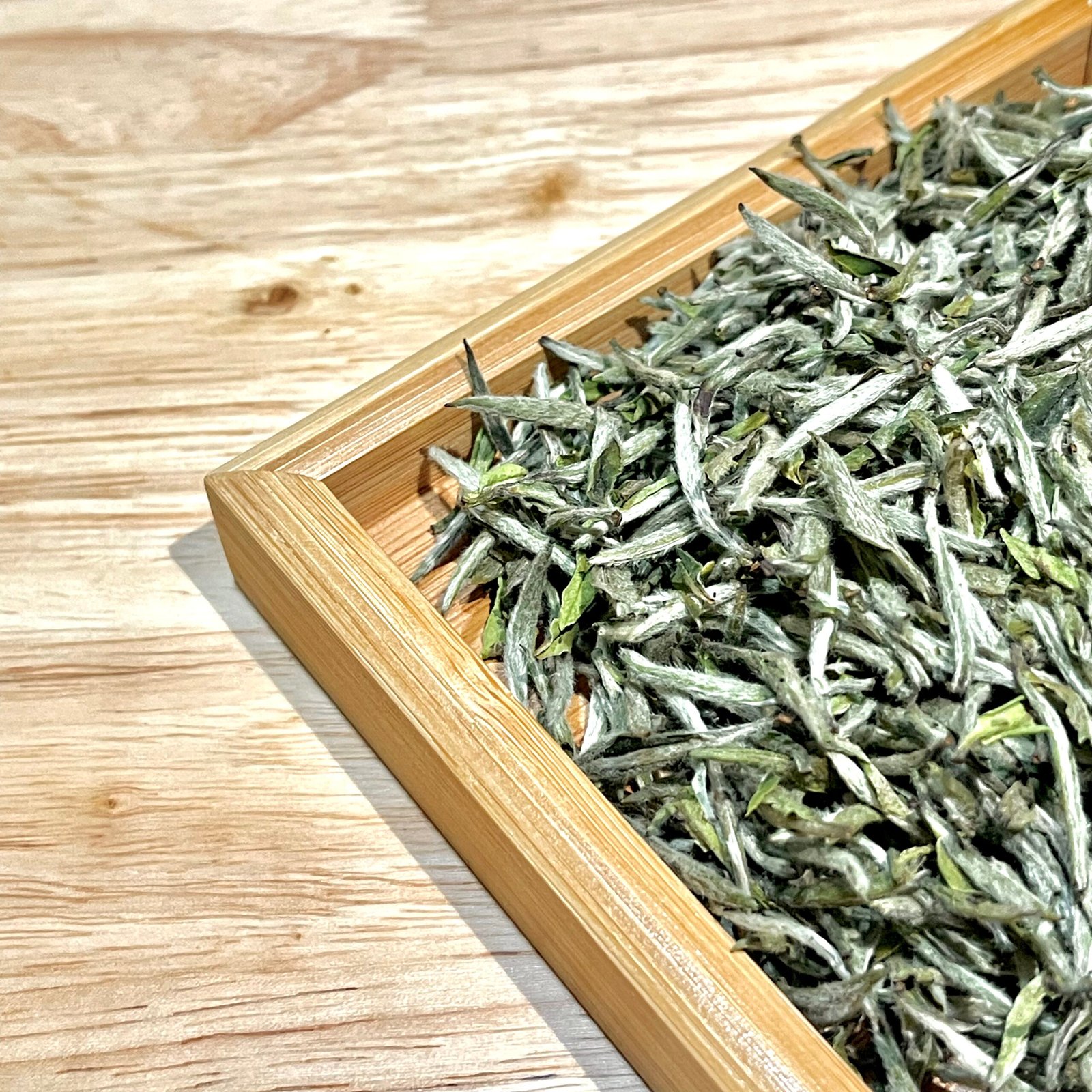
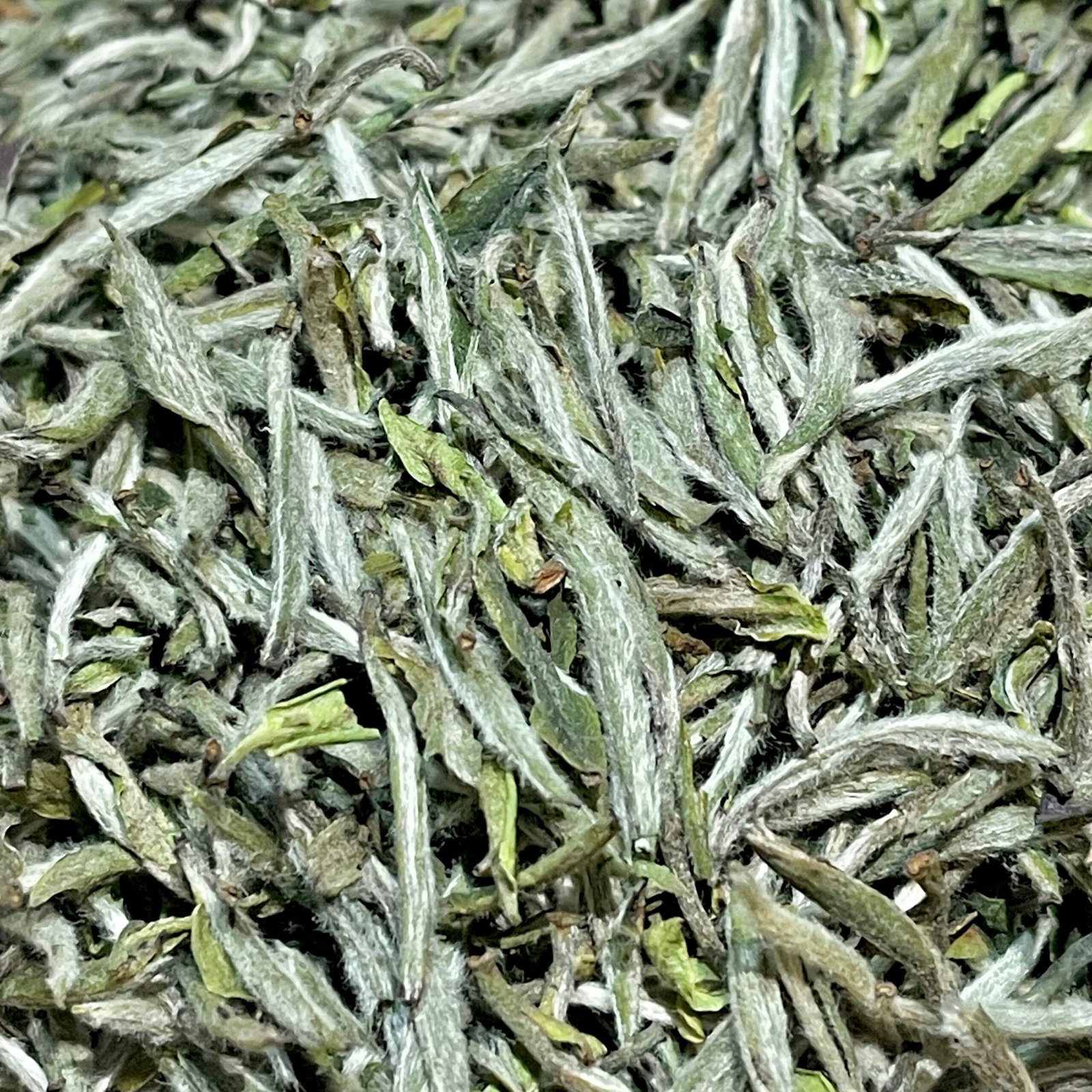
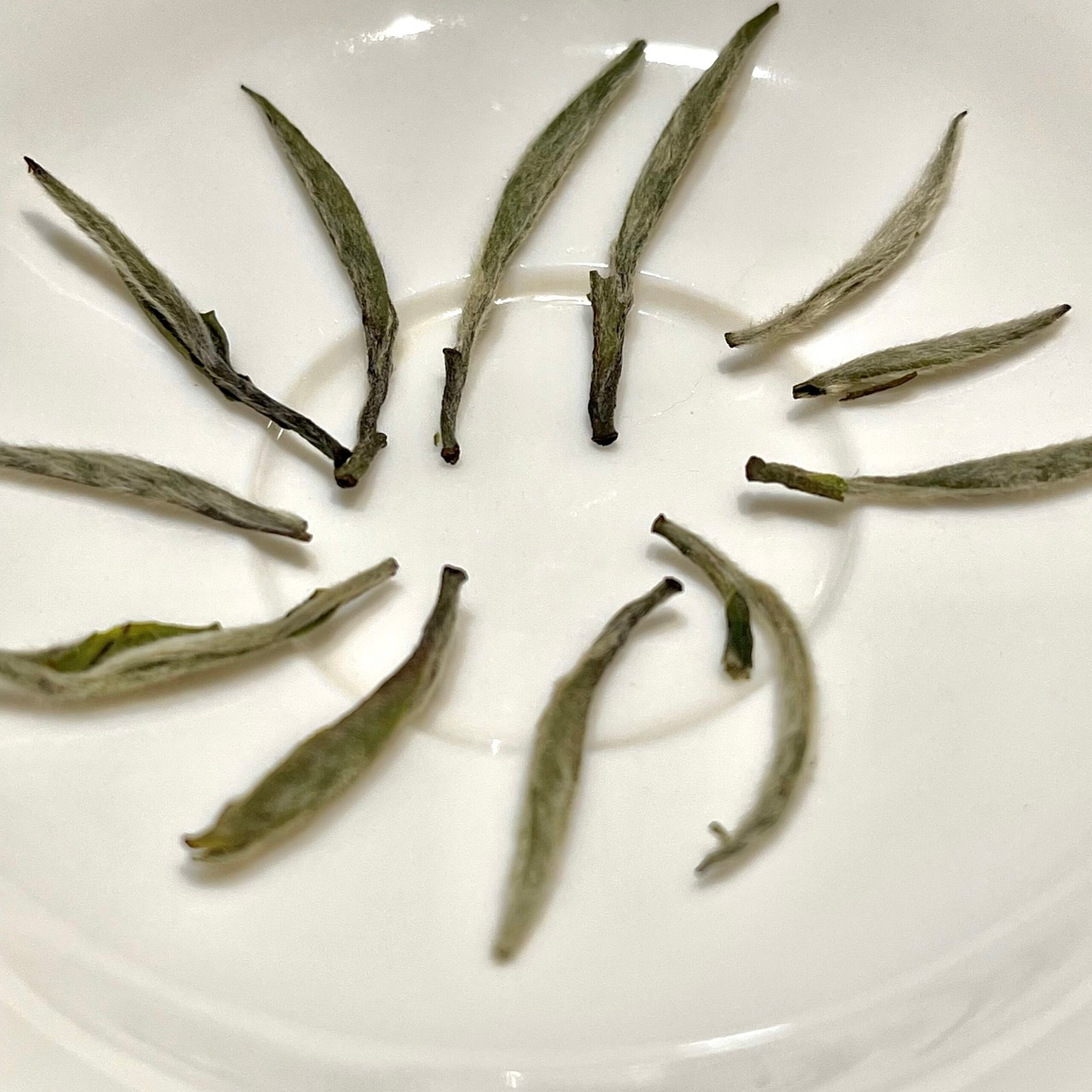
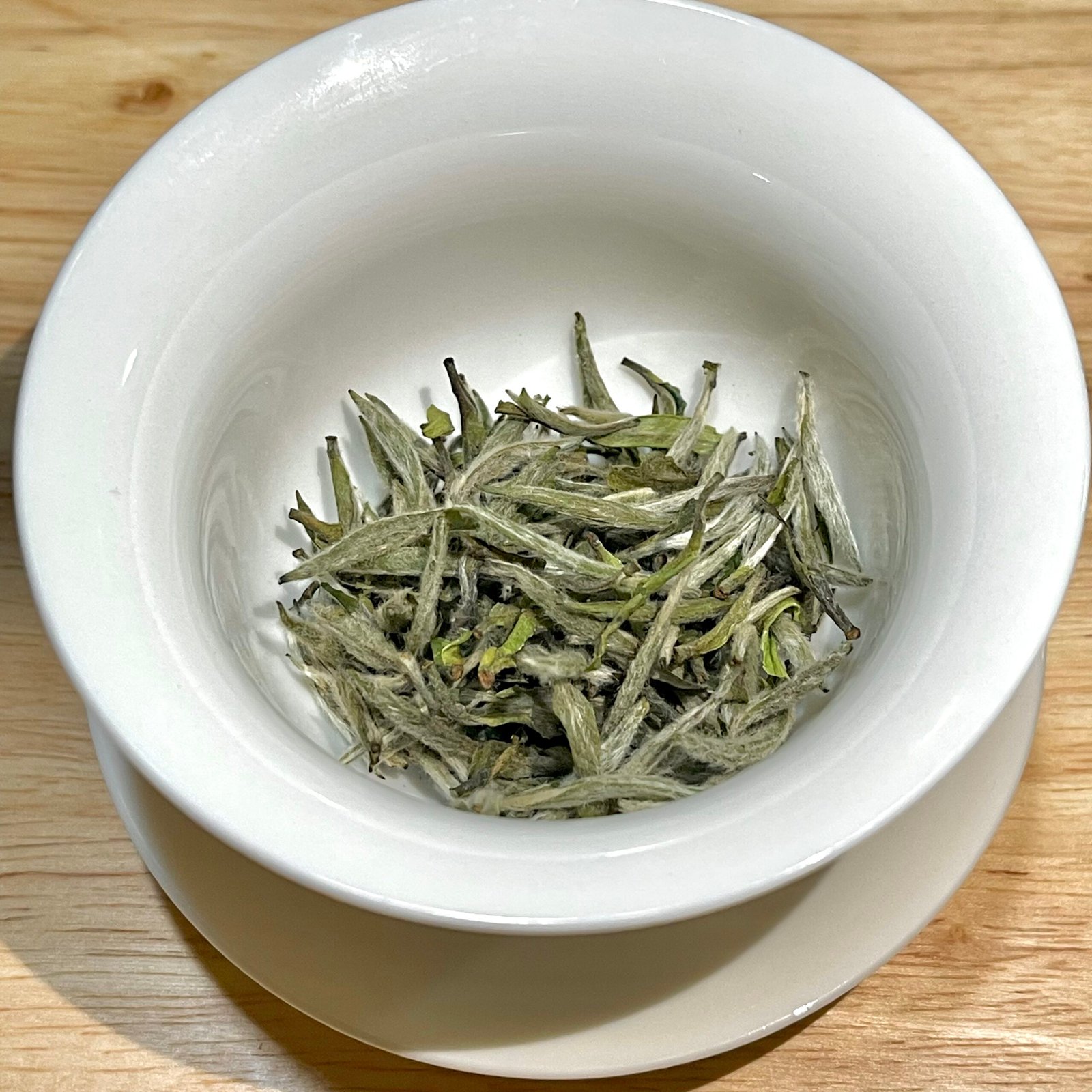
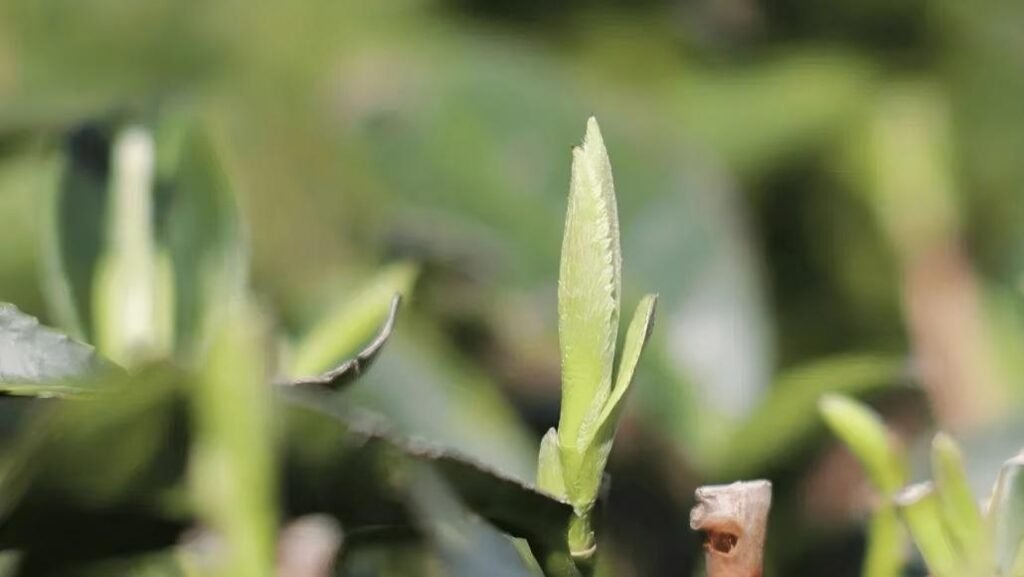
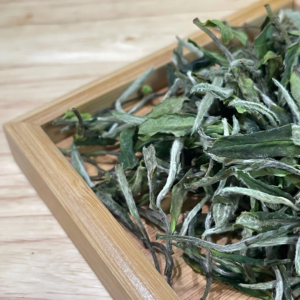
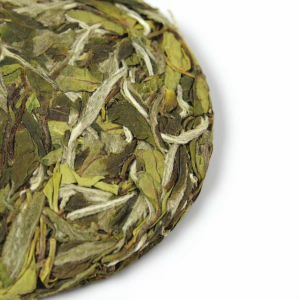
Bai Hao Yin Zhen — “Silver Needle” in English — is a traditional Chinese white tea made only from the unopened, downy top bud of the Camellia sinensis plant. No leaves. Just the bud, covered in fine silvery hairs called trichomes. After withering and a low-temperature drying, the buds stay whole, needle-shaped, and pale silver-grey in the tin.
Many people think Silver Needle is just a fancier version of any white tea. In reality, it is its own category. The unopened bud has almost no chlorophyll and very little leaf fiber. That is why the cup brews so pale and the mouthfeel feels so silky. The trichomes — those silver hairs — are full of amino acids and aromatic compounds. They dissolve into the liquor and give Silver Needle its signature honeyed sweetness.
| Grade & Tea Name | What Gets Plucked | Typical Cup & Taste Profile |
| Bai Hao Yin Zhen (Silver Needle) | Unopened bud only | Pale and silky liquor; very light with notes of fresh hay and a delicate, honeyed sweetness. |
| Bai Mu Dan (White Peony) | Bud + top 2 leaves | Fuller body; layered with bold notes of white peach, apricot, rich honey, and a clean mineral finish. |
| Shou Mei | Mature leaves, no bud | Darker and amber liquor; deeply earthier and woodier; develops its characteristics fastest with age. |
The plucking window is the line that defines this tea. In Shouning, First Flush typically runs from late March to mid-April, and a delayed cold snap can cut the harvest short by half. Most of the lots you’ll see imported into North America come from this narrow window. Anything labeled “summer harvest” is a different animal — cheaper, stronger, and not what you want for a quiet evening cup.
Where Is Bai Hao Yin Zhen Grown?
Authentic Bai Hao Yin Zhen comes from Fujian province in southeastern China. Most premium lots are grown in the high-mountain counties of Shouning, Zhenghe, and Fuding. Our 2026 harvest comes from Shouning, where the elevation, mist, and temperature swings give Silver Needle its signature cup.
Shouning sits between 600 m and 1,200 m above sea level. The plots we source from average 914 m. At that altitude, the tea bushes grow more slowly. Buds stay tight. Trichomes grow thicker to insulate the leaf from cool nights. The result is a denser, more aromatic bud that holds up to brewing better than lowland harvests.
Three factors define a good Silver Needle terroir:
- Mist and humidity: Cloud cover slows bud growth and protects trichomes from breaking off.
- Temperature swing: Cool nights and warm days build sugar and amino acids inside the bud.
- Acidic, mineral-rich soil: Yellow-red soil in Shouning gives the cup its faint mineral edge.
You can read more about the regional background in the official Shouning County Government entry on Fujian’s tea-growing regions. While other regions—such as Yunnan, Hunan, and even parts of Guangdong—now cultivate Silver Needle, the flavor profiles differ significantly. Yunnan buds tend to be larger and bolder, whereas Fujian buds are smaller, more heavily covered in downy hair, and distinctly more delicate. For the traditional, authentic flavor profile, Fujian still undisputedly leads the industry.
How Is First Flush Silver Needle Processed?
The processing is unusually simple. Spread freshly picked buds on bamboo trays indoors, in indirect light, with steady airflow. The buds lose moisture slowly over 48 to 72 hours, depending on humidity. Once moisture drops below 10%, a final low-temperature drying step locks everything in. No rolling. No oxidation. No roasting.
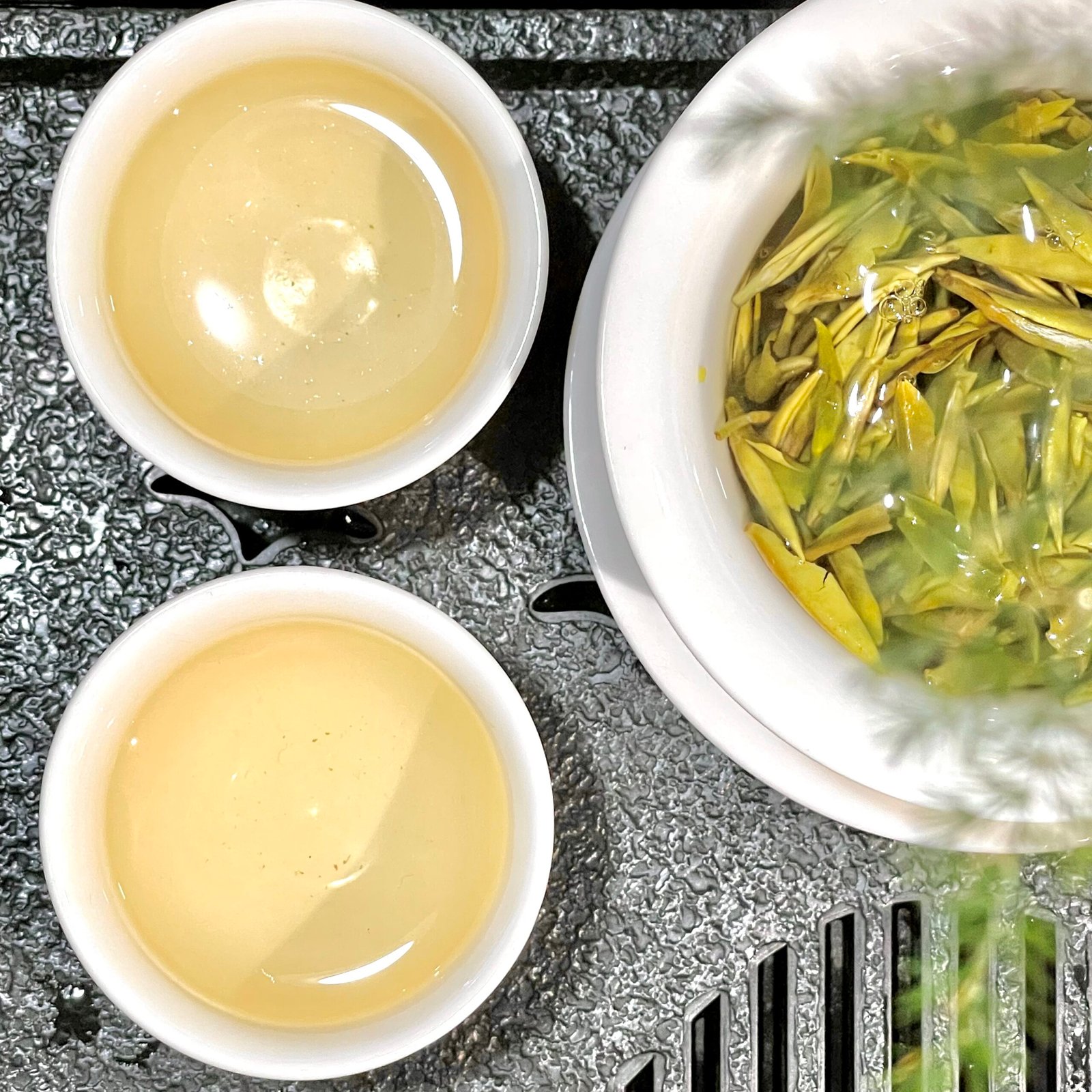
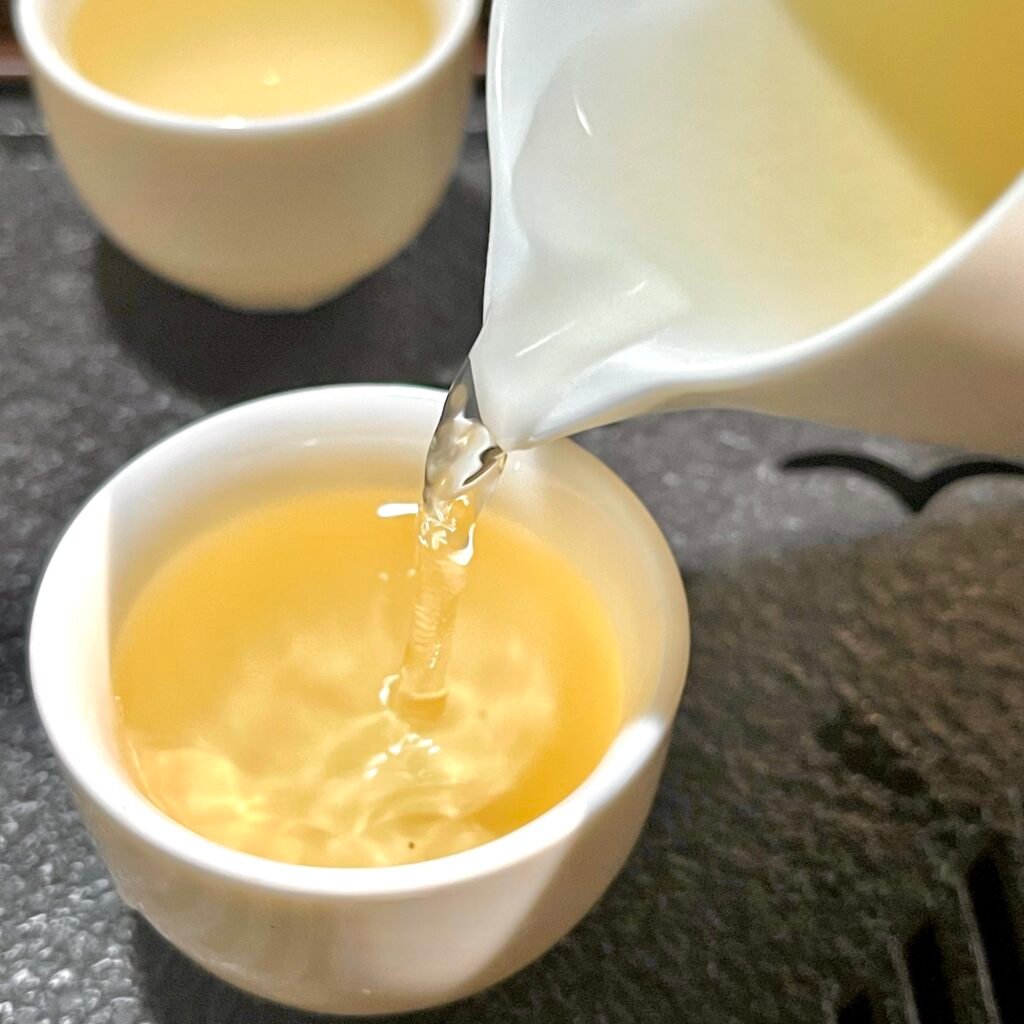
That minimal handling gives Silver Needle its signature profile: pale apricot-yellow liquor, almost weightless on the palate, with a sweet finish that lingers 30 seconds after you swallow. The same simplicity also makes the tea easy to ruin. Over-steep it with boiling water, and the cup goes flat and slightly metallic. Brew it properly, and the buds unfurl into the prettiest little spears you’ve ever seen in a glass.
Processors in Shouning follow three core rules:
- Indoor withering only: Sun withering damages trichomes and fades the silver color.
- Low-temperature final dry: Around 80°C to 90°C, never higher.
- No mechanical rolling: Whole buds are the point. Rolling would crush trichomes and oxidize the leaf.
What Does Silver Needle White Tea Taste Like?
Silver Needle tea tastes light, silky, and delicately sweet. The cup is pale apricot-yellow, almost weightless on the palate, with a long honeysuckle finish. Because only the unopened bud is used, there is very little bitterness or astringency — even when slightly over-steeped.
The flavor profile shifts with age. Here is what to expect:
Young Silver Needle (0 to 2 years)
- Honeysuckle and white peach
- Cucumber water and fresh hay
- Melon rind and a clean, vegetal lift
- Lingering honey finish
Aged Silver Needle (3 to 5 years)
- Dried apricot and soft date
- Light wood and bamboo
- Cooked honey and stewed plum
- Warmer, rounder mouthfeel
Old Silver Needle (5+ years)
- Sandalwood and dried longan
- Medicinal sweetness — often called “cha hou” by Chinese tea drinkers
- Smooth, almost brothy body
- Mineral edge on the finish
Most North American drinkers prefer Silver Needle young. The fresh, grassy, cucumber-and-honey character is why most people buy it. A small group ages Bai Hao Yin Zhen in sealed clay jars for 5 to 10 years and produces something closer to a light, sweet tonic.
How Is Silver Needle Different From White Peony (Bai Mu Dan)?
Both are white teas. Both come from the same plant. The difference is what gets plucked and when.
Silver Needle is the unopened bud. It brews pale, almost clear, with a delicate, slightly sweet, faintly vegetal profile — cucumber water, fresh hay, white peach skin, a long honeysuckle finish. The mouthfeel is thin and silky. Most of the “tea flavor” lives in the aroma, not the body.
White Peony (Bai Mu Dan) adds the top two leaves to the bud. That extra leaf material darkens the liquor to a pale gold or amber, thickens the mouthfeel, and brings forward real fruit — apricot, dried pear, honey, a soft mineral edge. It’s the more substantial cup.
In practice, here’s how I’d pick between them:
- Want something quiet and contemplative? Silver Needle. Drink it in a glass cup with morning light.
- Want a fuller meal companion? White Peony. Brew a pot, pair with food.
- Want to age tea in the cellar? White Peony, ideally. Silver Needle is best drunk young.
If you want to see the difference in person, our [Bai Mu Dan White Peony] is plucked from the same Shouning plots a few weeks later. Side by side, the two tell the whole story of how leaf maturity shapes flavor
How Do You Brew Silver Needle White Tea Properly?
You can ruin good Silver Needle in about 90 seconds with the wrong water temperature. The rule: cooler than you think, longer steep than you’d guess.
Western Style (Teapot or Mug)
- Use 3 grams of bud per 250 ml of water.
- Heat water to 175°F (80°C) — well below boiling.
- First steep: 4 to 5 minutes.
- Re-steep the same buds 2 to 3 more times, adding 60 seconds each round.
This is the method I default to at home. The lower temperature protects the delicate aromatics. The longer steep extracts enough body to feel like a real cup of tea, not flavored water.
Gongfu Style (Gaiwan or Glass)
- Use 5 grams of bud in a 100 ml gaiwan or glass pitcher.
- Water at 170°F (77°C).
- First steep: 30 seconds. Pour out completely.
- Add 15 to 20 seconds per subsequent round. Expect 5 to 6 infusions.
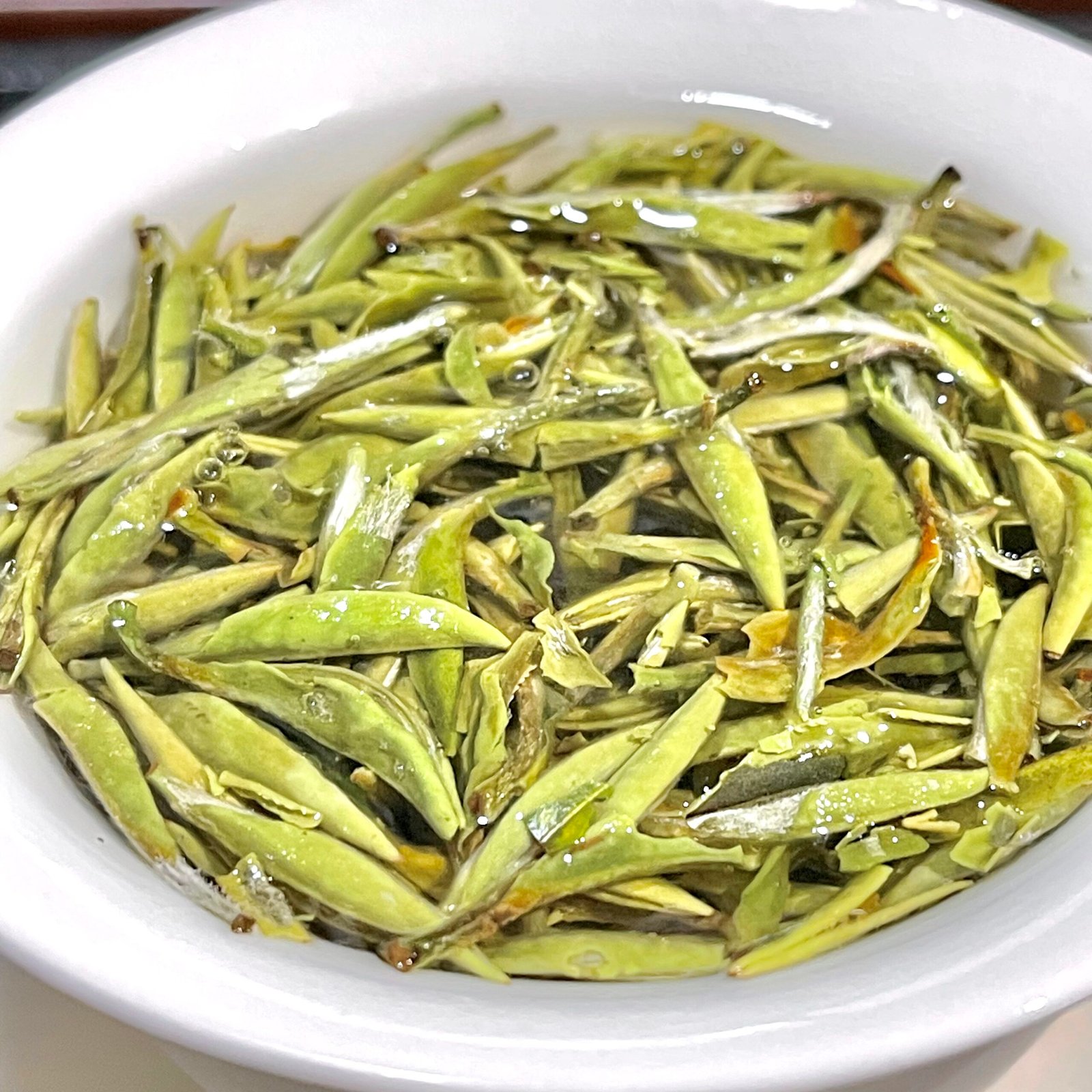
Gongfu works especially well with Silver Needle because the whole buds need time and contact to open. Each round tastes slightly different. The first is cucumber and honey. The third is peach. The fifth is mineral and hay.
| Style | Leaf Amount | Water Temp | First Steep | Re-steeps |
|---|---|---|---|---|
| Western | 3 g / 250 ml | 175°F / 80°C | 4–5 min | 2–3 rounds, +60 sec each |
| Gongfu | 5 g / 100 ml | 170°F / 77°C | 30 sec | 5–6 rounds, +15–20 sec each |
Can Silver Needle Be Cold Brewed?
Yes. Silver Needle cold brew is one of the best summer drinks in any white tea lineup. Slow, cold extraction pulls out amino acids and natural sugars without the bitterness hot water can sometimes bring.
To cold brew Silver Needle:
- Use 3 grams of bud per 500 ml of cold filtered water.
- Place in a glass pitcher or bottle.
- Refrigerate for 6 to 8 hours, or overnight.
- Strain and serve over ice.
Cold-brewed Silver Needle tastes like honeydew melon and white peach with a clean, almost watery finish. It holds up well for 24 hours in the fridge. The lower caffeine extraction — about 20% less than hot brewed — also makes it a good afternoon drink.
Does Silver Needle White Tea Have Caffeine?
Yes — it’s a Camellia sinensis tea, so it has caffeine. The amounts are lower than most people expect.
According to the USDA FoodData Central database, a typical 8 oz cup of brewed white tea contains roughly 30 to 50 mg of caffeine. The same serving of coffee averages 95 mg. Green tea falls in the middle.
Silver Needle also contains L-theanine, an amino acid co-occurring with caffeine in tea. There is published research on these synergistic effects in this NIH PubMed study on L-theanine and caffeine combination. I’ll leave the biochemical claims to the researchers. What I’ll say from cupping: Silver Needle gives a softer, slower lift than coffee. I drink a 175°F cup around 3 p.m. and I’m fine for the evening. If you’re very caffeine-sensitive, drop the leaf amount to 2 g and brew at 170°F.
Does Silver Needle White Tea Have Antioxidants?
Yes. Silver Needle is one of the most antioxidant-rich white teas on the market. Because the buds are plucked young and processed with minimal oxidation, the natural polyphenols stay almost intact.
The main antioxidant groups in Silver Needle include:
- Catechins, especially EGCG (epigallocatechin gallate)
- Polyphenols and flavonoids
- Theaflavins in trace amounts, formed during withering
- Amino acid derivatives, including L-theanine
White tea in general has been studied for its polyphenol content. A published review in the NIH PubMed database on white tea polyphenols and health benefits notes that minimal processing preserves more catechins than green or black tea. A 2009 study in the Journal of Food Science also found that white tea extract showed strong antioxidant activity compared to green tea extract.
For drinkers, the practical takeaway is simple: Silver Needle gives you the antioxidant profile of a green tea, with a much gentler cup. No grassy bite. No bitterness. No caffeine overload.
Why Is High-Altitude Shouning Silver Needle So Expensive?
The price tag on First Flush Silver Needle comes down to four things, in roughly this order:
- Hand labor: Thousands of buds per pound, all picked in a 10 to 14 day window. A skilled plucker can harvest 600 to 800 g of fresh bud in a long morning. The tea loses about 75% of its weight through withering and drying, so that 800 g becomes roughly 200 g of finished tea.
- Narrow harvest window: A late frost in Shouning can wipe out 30% of the year’s bud set. The 2024 harvest was hit by exactly that — a March frost dropped production for two of our partner farms by almost half.
- Altitude: The 914 m plots we source from are slower-growing. The buds are denser, the trichomes thicker, and the resulting cup is more aromatic. You can read the regional background in the Shouning County entry.
- Storage and shipping: Whole buds bruise easily. The lots we ship go from Shouning to Fuzhou, then by air to our warehouse, and we keep them in climate-controlled storage until the order ships.
How Should You Store Silver Needle, and Does It Age?
Keep the buds in an airtight container, away from sunlight, heat, and strong odors. A plain tin with a tight lid, or a sealed mylar bag, both work. Don’t refrigerate — condensation on cold buds is the fastest way to lose a tin.
For the bright, grassy, cucumber-fresh profile of a First Flush, drink it within 18 to 24 months. After that, the cup gradually goes mellower and a little darker. Aged Silver Needle has its fans, but if you bought it for the spring-fresh aromatics, drink it fresh.
Silver Needle Aging Guide
| Age | Flavor Profile | Best For |
|---|---|---|
| 0–2 years | Honeysuckle, melon, cucumber, fresh hay, white peach | Daily drinking, fresh aromatic cup |
| 2–5 years | Cooked honey, dried apricot, soft date, light bamboo | Mellow afternoon tea, light food pairing |
| 5–10 years | Sandalwood, dried longan, medicinal sweetness, mineral edge | Tea cellaring, special occasions |
| 10+ years | Deep wood, date syrup, light medicinal “cha hou” note | Collectors, traditional Chinese medicine fans |
For long-term aging, store sealed buds in a clay jar or food-grade aluminum bag with a small oxygen absorber. Keep the jar in a cool, dry, dark closet — not the refrigerator, not a humid basement. Check the seal every six months.
Who Should Drink Silver Needle White Tea?
Three real scenarios where this tea earns the spend:
- After-dinner drinkers: Low caffeine, no roast, no smoke. The cup settles you out without sending you to bed wired.
- Slow-morning readers: Brew 3 g in a glass pot, read for an hour, re-steep twice. The flavor changes as it cools.
- Book club / housewarming gifts: The dry buds look like tiny silver spears. The tin doesn’t need a gift box.
If you want something darker, bolder, and cheaper, try our [Shou Mei White Tea] instead — it’s a different tea from the same region, picked later in the season.
Frequently Asked Questions
What does Bai Hao Yin Zhen (Silver Needle) taste like?
Bai Hao Yin Zhen tastes light, silky, and delicately sweet. The cup is pale apricot-yellow, with notes of honeysuckle, fresh hay, cucumber, white peach, and a long honey finish. Aged Silver Needle develops deeper notes of dried apricot, sandalwood, and medicinal sweetness.
Is Silver Needle better than White Peony?
Neither is “better.” Silver Needle is the bud-only grade. White Peony adds the top two leaves and produces a fuller, fruitier cup. Silver Needle is best for quiet, contemplative drinking. White Peony is better for pairing with food or aging in the cellar.
What makes Bai Hao Yin Zhen (Silver Needle) so rare?
Authentic Bai Hao Yin Zhen is made only from the plant’s unopened top buds, plucked by hand in a narrow early-spring window. It takes thousands of buds to make a single pound of finished tea, which is why the price stays high.
Are the tiny fuzzy hairs in my Silver Needle tea normal?
Yes. Those silvery hairs are trichomes. They protect the young bud in the cool Shouning climate and give the liquor its signature thick, silky mouthfeel. Do not try to strain them out.
Can Silver Needle be cold brewed?
Yes. Silver Needle cold brew is one of the best summer drinks in any white tea lineup. Use 3 g per 500 ml of cold filtered water, refrigerate 6 to 8 hours, and serve over ice. The flavor is melon and white peach with low bitterness.
Is Silver Needle safe to drink during pregnancy?
White tea contains caffeine. The official ACOG pregnancy caffeine guidelines recommend keeping total daily caffeine intake under 200 mg during pregnancy. Please talk to your doctor about what level is right for you.
How much caffeine is in a cup of Silver Needle?
Roughly 30 to 50 mg per 8 oz cup, depending on leaf amount and steep time. Lower than coffee, similar to other white teas. Cold-brewed Silver Needle extracts about 20% less caffeine than hot-brewed.
How long does Silver Needle white tea last?
Stored in an airtight container, away from heat, light, and odor, Silver Needle stays fresh for 18 to 24 months. After that, the cup gradually darkens and develops mellower, woodier notes. Properly cellared Silver Needle can age 5 to 10 years or longer.
E-E-A-T Statement (Author & Reviewer Disclosure)
Author & Reviewer Disclosure: This article was written by the founder and head tea buyer at minteashop, drawing on 8 years of hands-on experience sourcing authentic white tea directly from Fujian farmers. The 2026 Shouning Bai Hao Yin Zhen described above was personally cupped at origin during our March 2026 spring sourcing trip. Health-related claims about caffeine and L-theanine are based on general published research and are not medical advice.
Additional information
| Weight | N/A |
|---|---|
| gram | 50, 100, 200, 500 |
Related products
-

Dragon Pearl Jasmine Tea | 7-Time Scented Ultimate Perfect Brew
Price range: $16.90 through $69.90Select options This product has multiple variants. The options may be chosen on the product page -
Jin Jun Mei | 100% Authentic Black Tea | Honey-Sweet Aroma
Price range: $9.90 through $46.90Select options This product has multiple variants. The options may be chosen on the product page -
White Peony | Exquisite Spring 2026 Bai Mu Dan Premium White Tea – Pure High-Mountain Harvest
Price range: $11.90 through $111.90Select options This product has multiple variants. The options may be chosen on the product page -
Reviews
There are no reviews yet.