
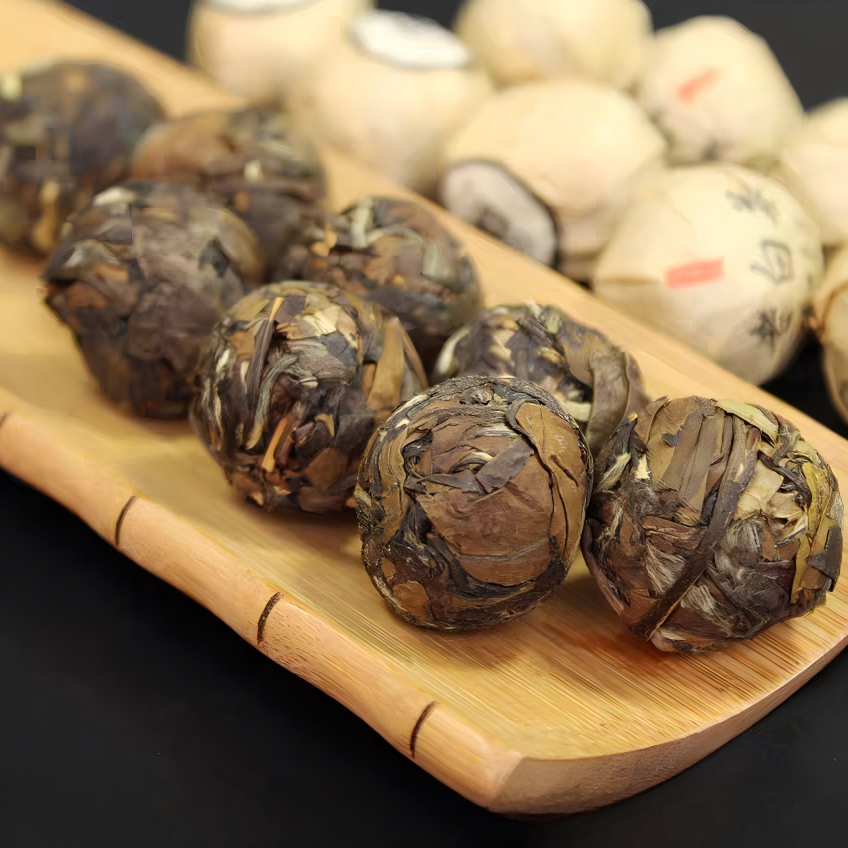
Shou Mei Dragon Pearl | 12 Year Dry-Aged | Perfect Rare Vintage
Price range: $16.90 through $69.90
Specifications at a Glance
Type: Aged White Tea (Spring Shou Mei) (Fuding Da Bai & Local Shouning Varietal)
Origin: Shouning, Ningde, Fujian Province, China
Harvest: Spring 2014 (High-Altitude 2,624–3,937 ft (800–1,200 m) | 12-Year Aged)
Caffeine Level: Very Low
Tasting Notes: Warm Aged Wood, Sweet Red Dates (Jujube), Dark Wild Honey, Soothing Medicinal Finish
Sizes: Individual Pearls (Approx. 0.17 oz / 5g each)
Experience the profound comfort of our 12 year aged white tea. This 2014 Shou Mei dragon pearl offers a rich, syrupy infusion perfect for boiling. Shop now!
Description
Shou Mei Dragon Pearl | 12 Year Dry-Aged | Aged White Tea
This is the aged white tea I keep on the desk. Not the rarest one. The easiest one. Our 2014 Shouning vintage, dry-aged in our cellar since October 2014, hand-rolled into 5 g dragon pearls. Brew it hot, simmer it in a kettle, take it to the office in a thermos. Almost impossible to mess up.
What Is 12 Year Aged Shou Mei Dragon Pearl White Tea?
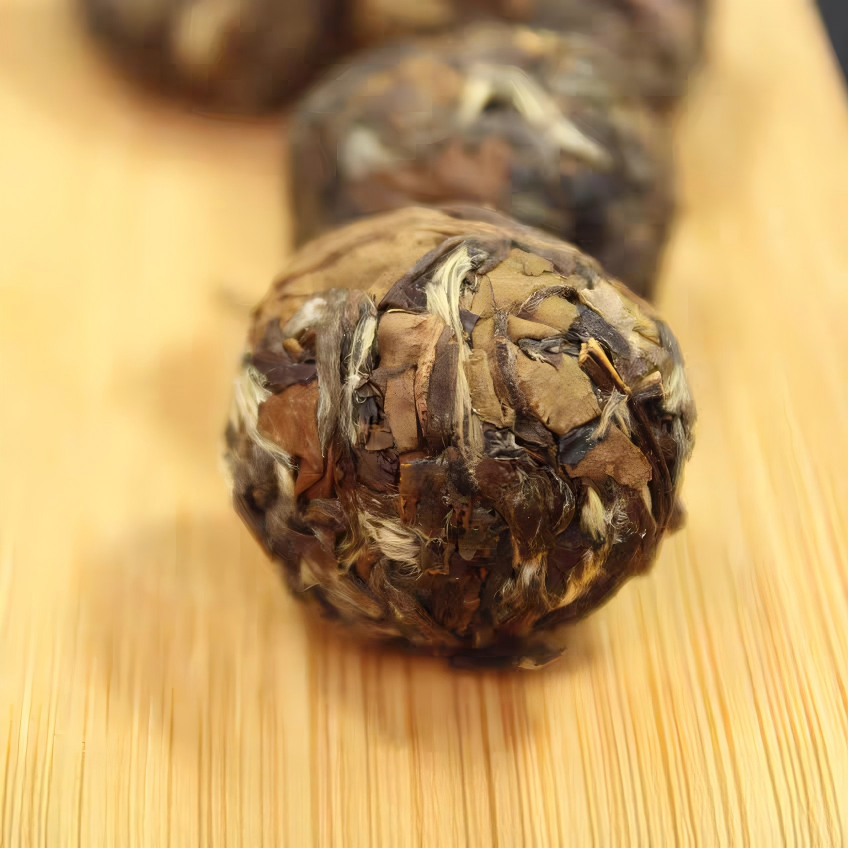
Shou Mei dragon pearl is what you get when you take the third and fourth open leaves of the Fuding Da Bai bush, sun-wither them on bamboo trays for 60 to 72 hours, hand-roll them into tight 5 g balls, then leave them in a dry-storage cellar for 12 years. No machine heat. No rolling machine. No artificial fermentation. Just sunlight, slow oxidation, and time.
White tea is one of the six main categories of Chinese tea — and the least processed of all six. Outside the picking, withering, and drying steps, the maker does almost nothing. That is why the Shouning origin (with over 1,000 years of tea history and altitudes from 600 to 1,200 m) matters so much; the leaf and the field do the actual work.
The pearls come from the same Shouning plots as our other white teas. The plots sit at 900 to 1,200 m elevation, with over 200 fog days per year. The 2014 lot came from a plot at 914 m (about 3,000 ft).
About the stem.
While Baihao Yinzhen and Bai Mudan both strip the stem, Shou Mei uniquely keeps it. Until recently, most drinkers treated that stem as mere filler. However, a 2024 study in Food Chemistry (titled “Positive contributions of the stem to the formation of white tea quality-related metabolites during withering”) tracked withering in Fuding white tea and proved that the stem is intensely chemically active. During withering, protein-derived amino acids rise, GABA accumulates, and phenylacetaldehyde (the core honey-floral aromatic compound) concentrates heavily in the stem rather than the leaf.
Translated into plain English: the stem isn’t just passively passing water and sugar—it is running its own active metabolic program that contributes directly to the brew. This unique botanical chemistry matters even more in aged leaf like our 2014 vintage, where twelve years of slow, dry cellar storage gives these rich stem compounds the necessary time to fully mature, transforming the liquor into a thick, deeply soothing cup.
For a side-by-side read across the four white tea grades (Silver Needle, White Peony, Shoumei, Gongmei), see our 4 types of white tea guide.
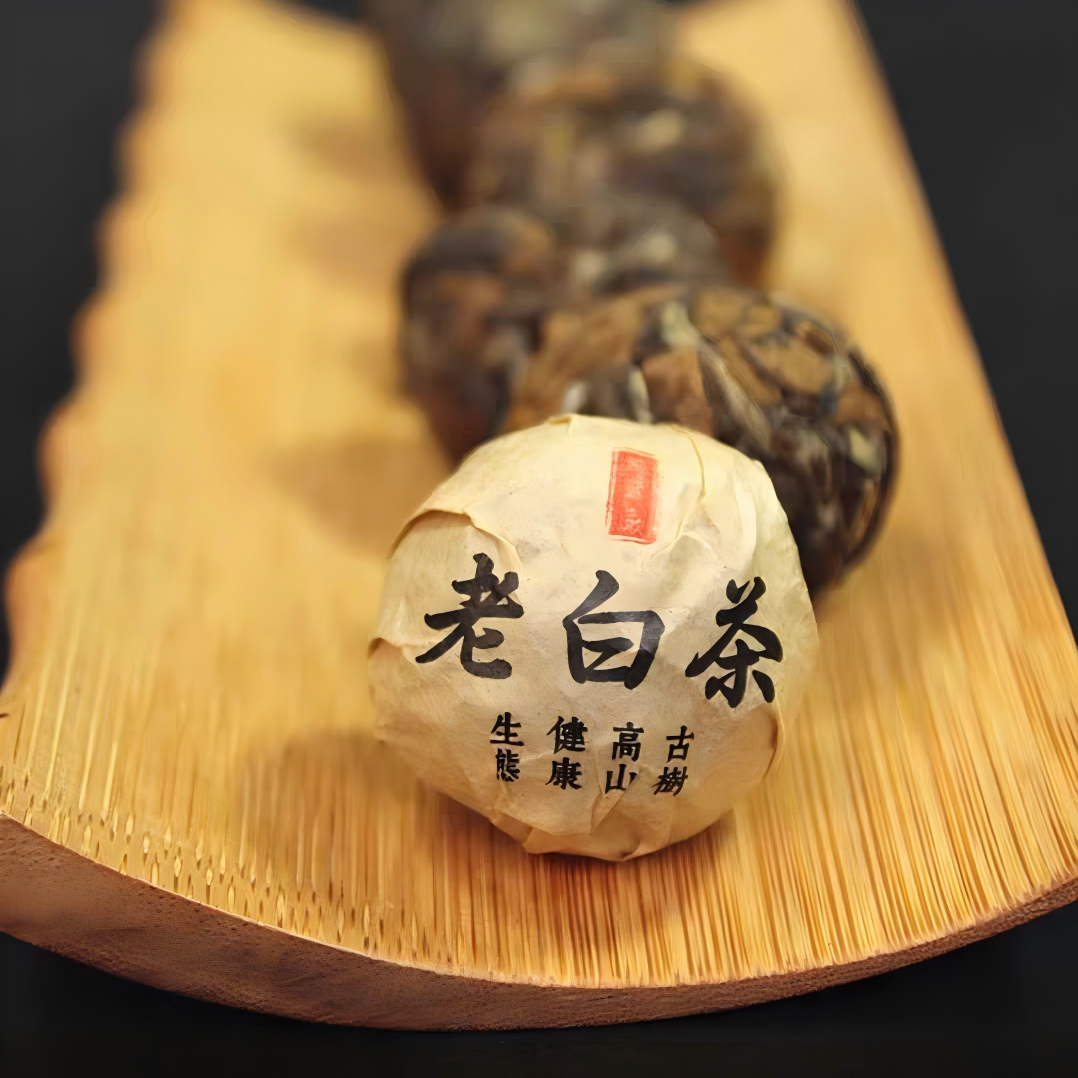
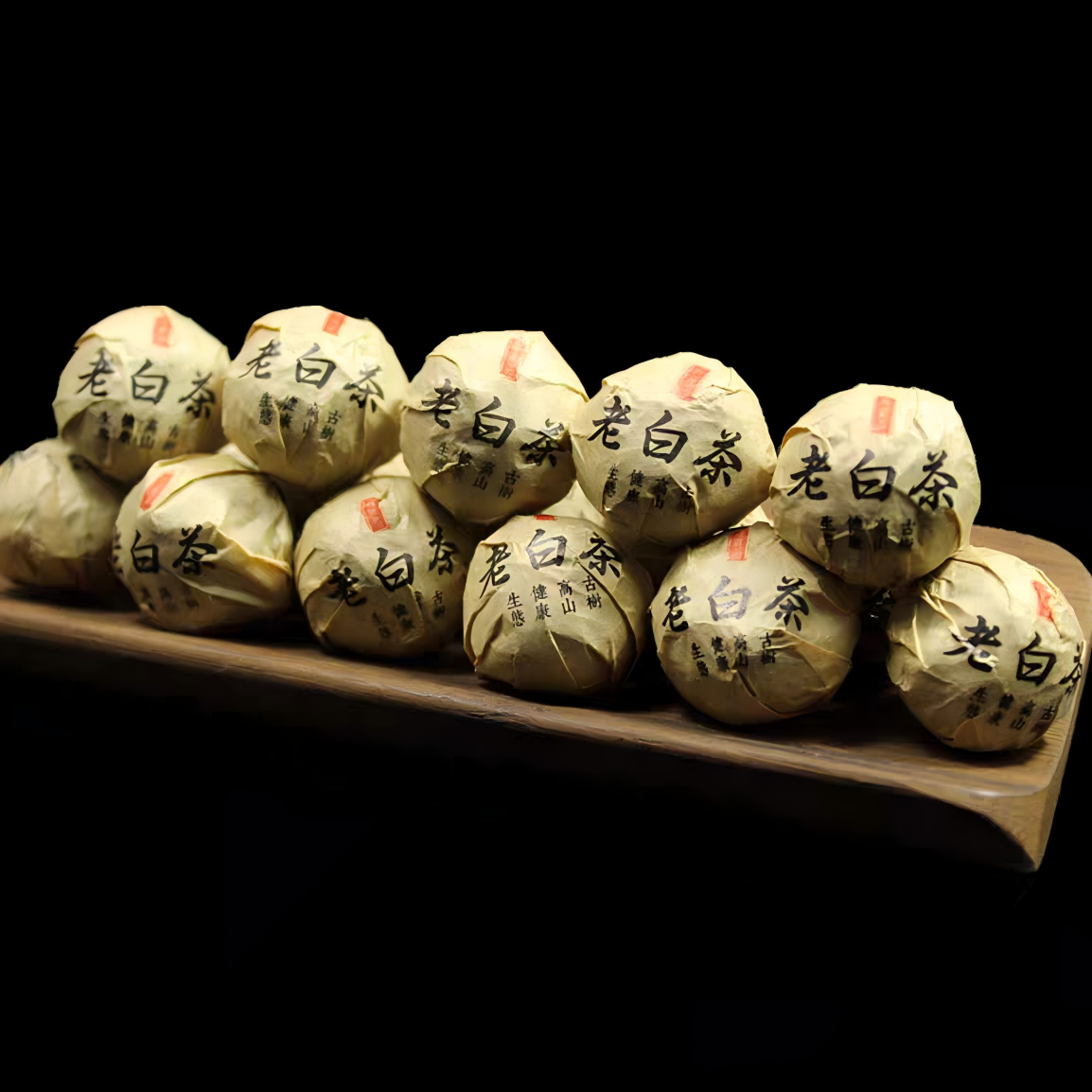
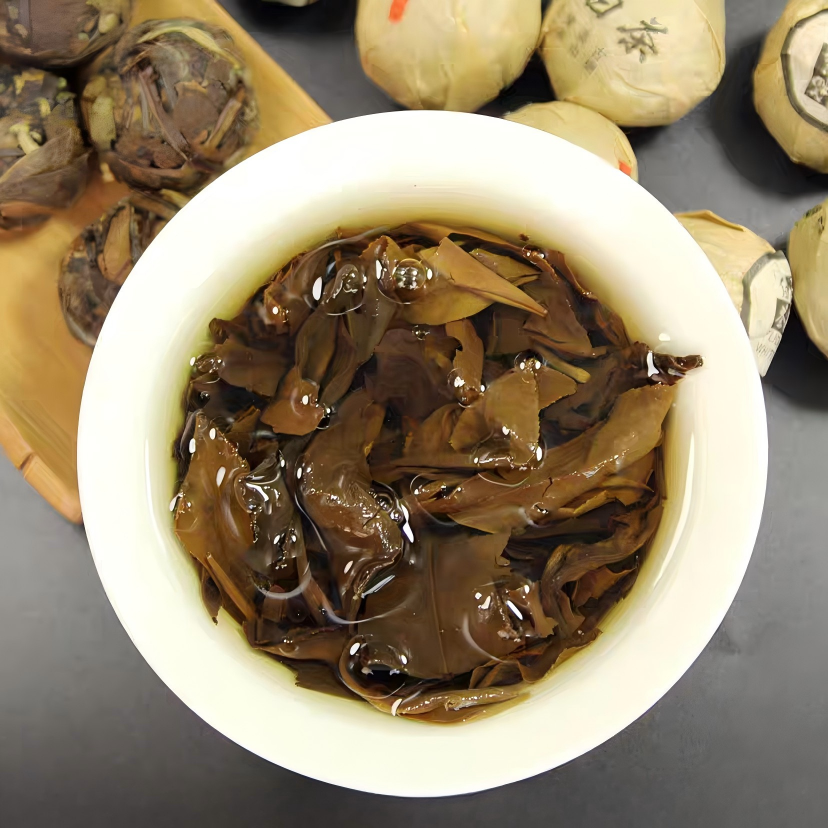
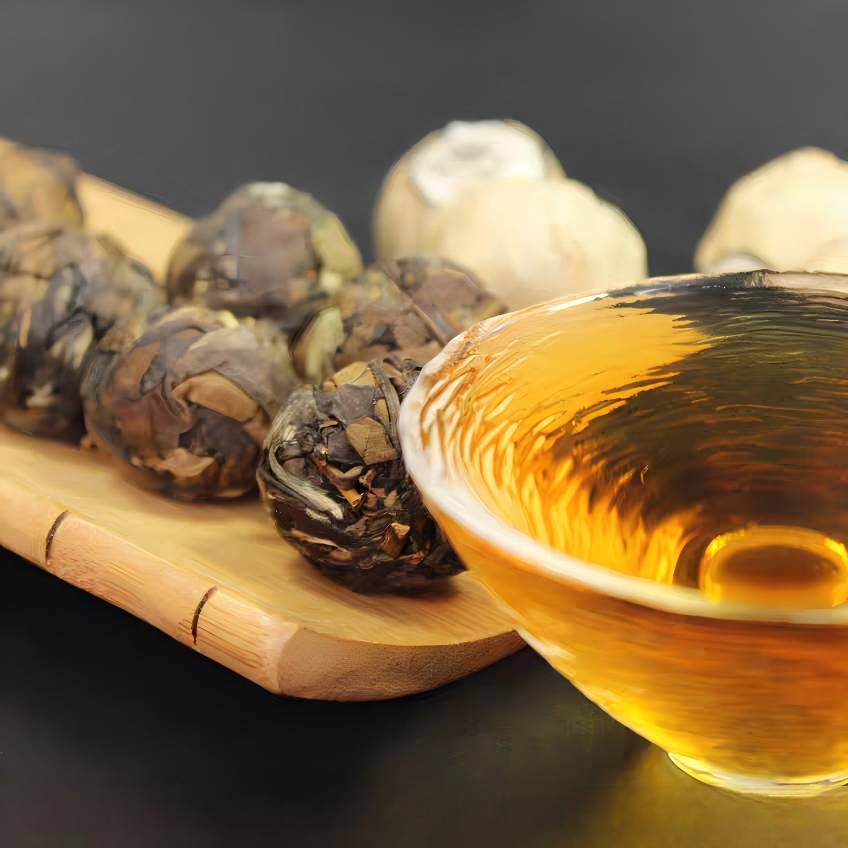
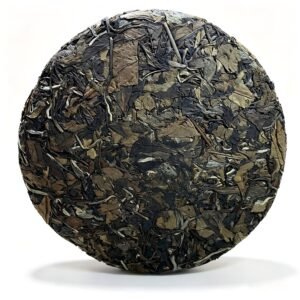
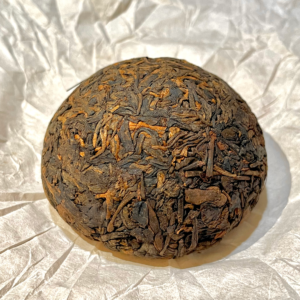
Premium 12 year aged Shou Mei dragon pearl, hand-rolled from the same Shouning plots as the rest of our white tea lineup.
How the dragon pearls are processed
Pick the third and fourth open leaves. Spread them on bamboo trays outdoors in direct sun. Wait 60 to 72 hours. The leaves turn pale brown and feel dry to the touch. Hand-roll the withered leaves into tight 5 g balls. Tie each one in a foil sachet, stack them in a tin, place in a cool dark cellar. Open the tin every spring to check the aroma. After 12 springs you get what is in this tin.
The Da Bai bushes are the standard large-leaf Fuding cultivar — the same variety the white-tea industry in Fujian runs on.
What Does 12 Year Aged Shou Mei Taste Like?
Aged Shou Mei does not taste like young Shou Mei. The difference shows up from the first steep.
- Young Shou Mei (under 2 years): Cut hay, dried longan, soft honey sweetness. Light-gold cup, clean crisp body.
- 12 year Shou Mei (this lot): Hay is gone. A darker, almost woody note shows up. Think dried dates, walnut skin, and a faint cocoa edge. Cup goes amber-to-garnet. Body has thickened into something close to a thin Shou Pu-erh — without the earthy funk.
- Simmered 12 year Shou Mei: Clean and lightly sweet, with a brown-sugar finish. No bitterness, no astringency.
Why flavor shifts with age. The chemistry behind this is documented, not folklore. A 2025 study in Food Chemistry: X tracked 1- to 7-year-aged samples and reported that tea polyphenols, caffeine, free amino acids, and soluble sugars all decrease gradually. Total catechins drop — particularly EGCG and ECG, the two catechins tied to bitterness and astringency. Flavonoids rise (rutin, proanthocyanidin B2), and the color deepens as thearubigin and theabrownin accumulate. The sensory profile shifts from fresh and floral toward sweet, mellow, woody, and — in longer-aged samples — medicinal 2. The same study tested safety and found no aflatoxin in properly stored samples. Mold and moisture cause the problems, not time.
I ran a six-steep blind tasting on this 2014 lot in October 2024, water at 95 °C, 5-minute rests between steeps. Steep 1 was pale green-amber with hay and fresh lotus-leaf on the nose — almost young-Shou Mei character. By steep 3 a new layer emerged: old chenpi meets white dangshen, sweet and slightly resinous. By steep 4 — simmered 3 minutes in a glass kettle — the liquor turned garnet-red and tasted like brown sugar and jujube skin. In steep 1 I forgot to seat the gaiwan lid and the water hit 100 °C. I braced for burnt notes. Instead the higher temperature pulled a thicker jujube layer. This is one of the most forgiving aged teas you will ever brew.
If this is your first aged white tea, do not expect young-Shou Mei flavor. Expect dates, walnut, a faint medicinal sweetness, and a body that holds through six steeps.
How Do You Brew 12 Year Shou Mei Dragon Pearl?
Three methods. Pick the one that fits your day.
Western (Teapot or Mug)
- Use 1 pearl (5 g) per 250 ml of water.
- Heat water to 95 °C (200 °F).
- Steep 3 to 4 minutes.
- Re-steep 3 to 4 more rounds. Add 30 seconds per round.
This is the daily-driver method. The pearls keep producing through 4 to 5 western rounds, then 2 to 3 simmer rounds.
Gongfu (Gaiwan or Small Pot)
- Use 1 pearl (5 g) per 100 ml gaiwan.
- Water at 90 °C (195 °F).
- First steep: 15 seconds. Pour out fully.
- Add 5 to 10 seconds per round. Expect 7 to 9 infusions.
Best for tasting sessions. The Yao Xiang (medicinal aroma) layer emerges around steep 3.
If you are new to white tea, a 110 ml porcelain gaiwan is the friendliest tool — porcelain does not absorb flavor, so you taste the leaf as it is. Always pour out the full infusion, even after a 5-second steep. Sitting water turns bitter fast.
Stovetop Simmer (Glass Kettle)
- Use 1 pearl (5 g) per 500 ml of water.
- Bring to a full boil. Drop in the pearl. Reduce to a low boil.
- Hold 5 to 8 minutes, then serve.
- Re-simmer the same pearl 2 to 3 more times — extend each round to 10 minutes for a thicker body.
This is the method I use most. It pulls the full jujube-brown-sugar character with almost no effort. Cold brew does not work well for 12 year aged — the pellets need heat to release their deeper notes. If you want a cold drink, simmer first, then chill the resulting liquor in the fridge. After 6 to 8 gongfu rounds, you can also transfer the same leaves to a clay pot or small kettle and simmer on low for 3 to 5 minutes to extract the stem sugars the gaiwan can’t fully reach.
For the full beginner walk-through across all four white tea grades, see our white tea guide for beginners.
Additional information
| gram | 100g, 200g, 500g |
|---|
Related products
-

White Peony | Exquisite Spring 2026 Bai Mu Dan Premium White Tea – Pure High-Mountain Harvest
Price range: $11.90 through $111.90Select options This product has multiple variants. The options may be chosen on the product page -
Shou Mei | 100% Authentic & Refreshing Premium White Tea
Price range: $9.90 through $46.90Select options This product has multiple variants. The options may be chosen on the product page -
-
Reviews
There are no reviews yet.