
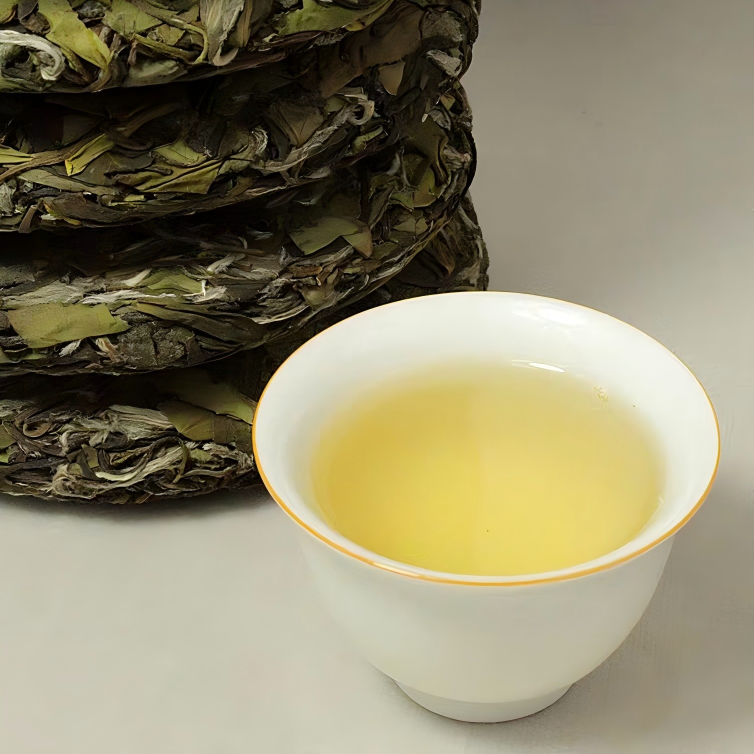
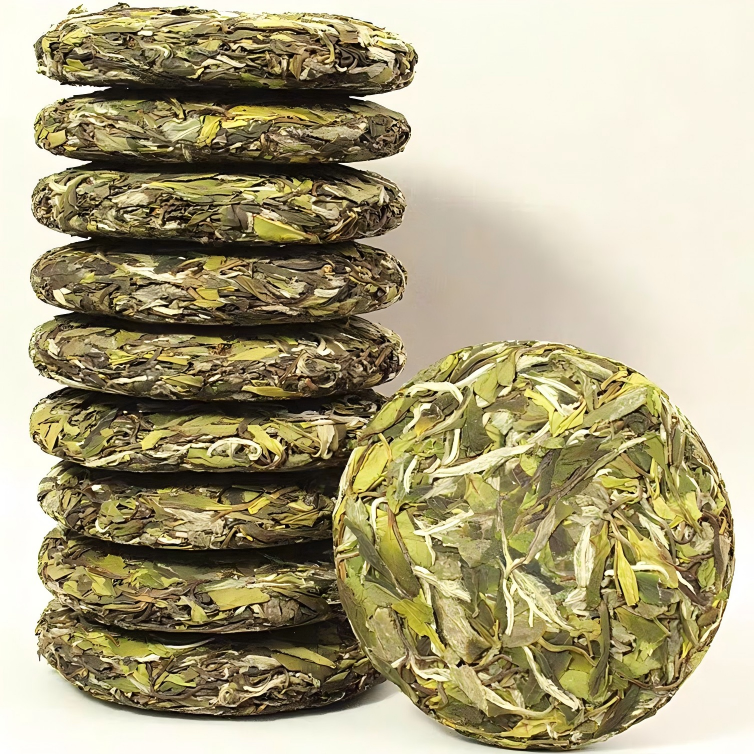
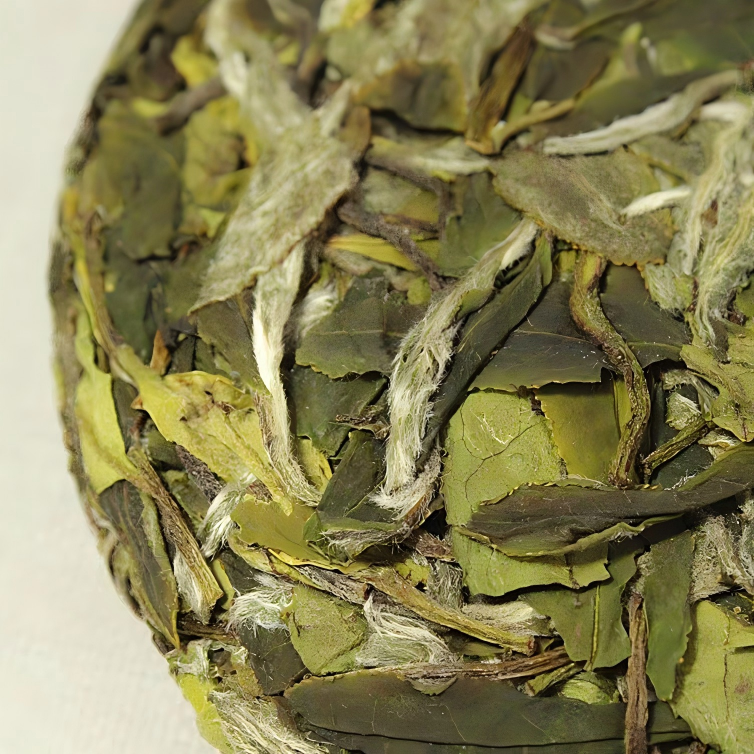
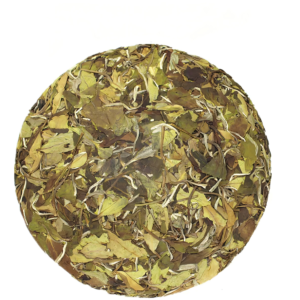
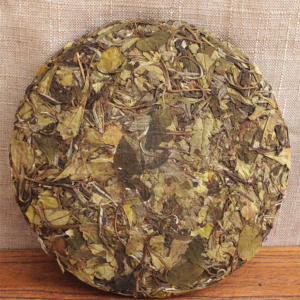
Premium White Peony Bai Mudan Cake | Authentic Shouning 2023
$19.90
Specifications at a Glance
Type: Bai Mu Dan (White Peony) White Tea
Origin: Shouning, Ningde, Fujian Province, China
Harvest: Spring 2023 (High-Altitude 2,600–3,900 ft / 800–1,200 m)
Caffeine Level: Low
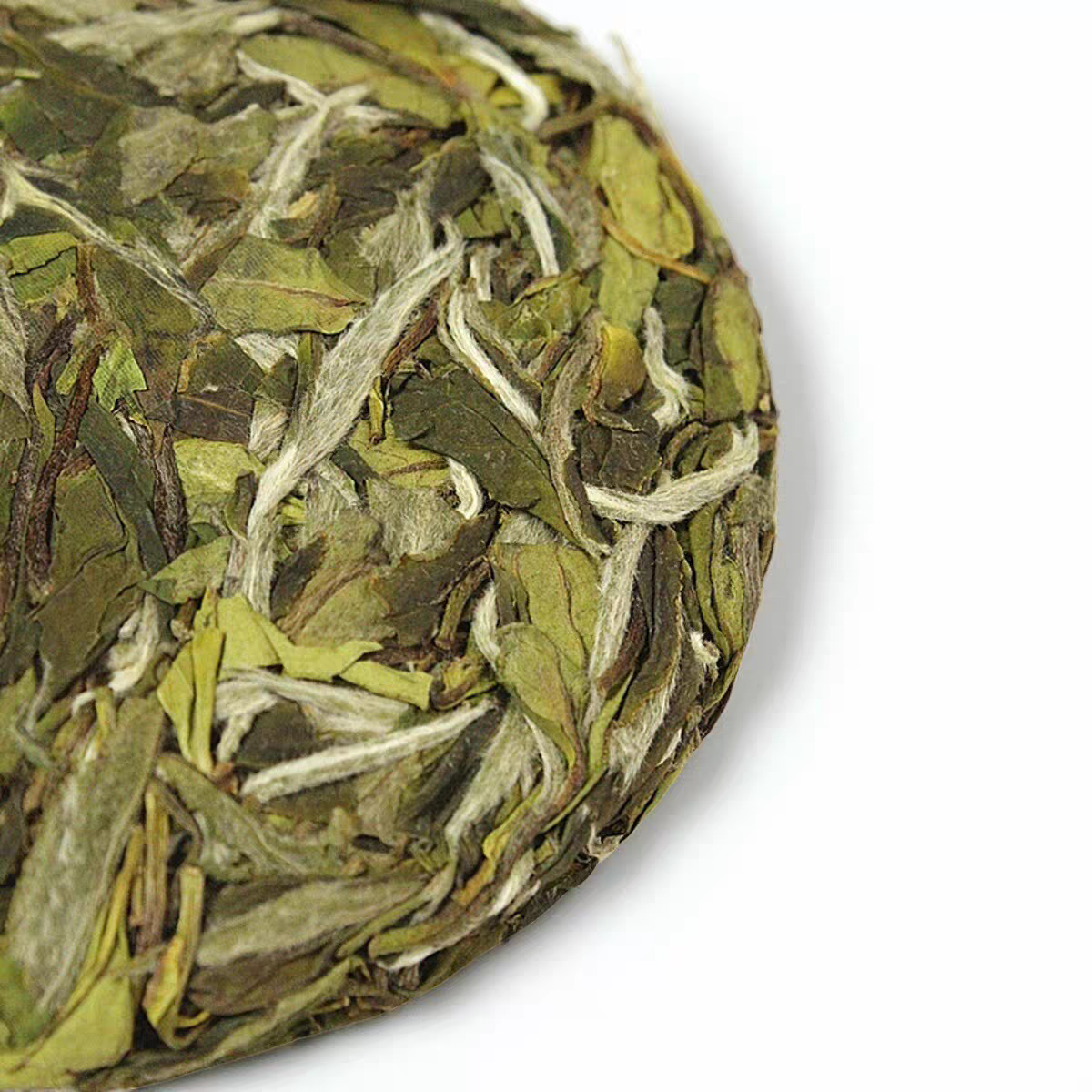
Tasting Notes: Apricot Jam, Wild Honey, Faint Cocoa, Milky Texture
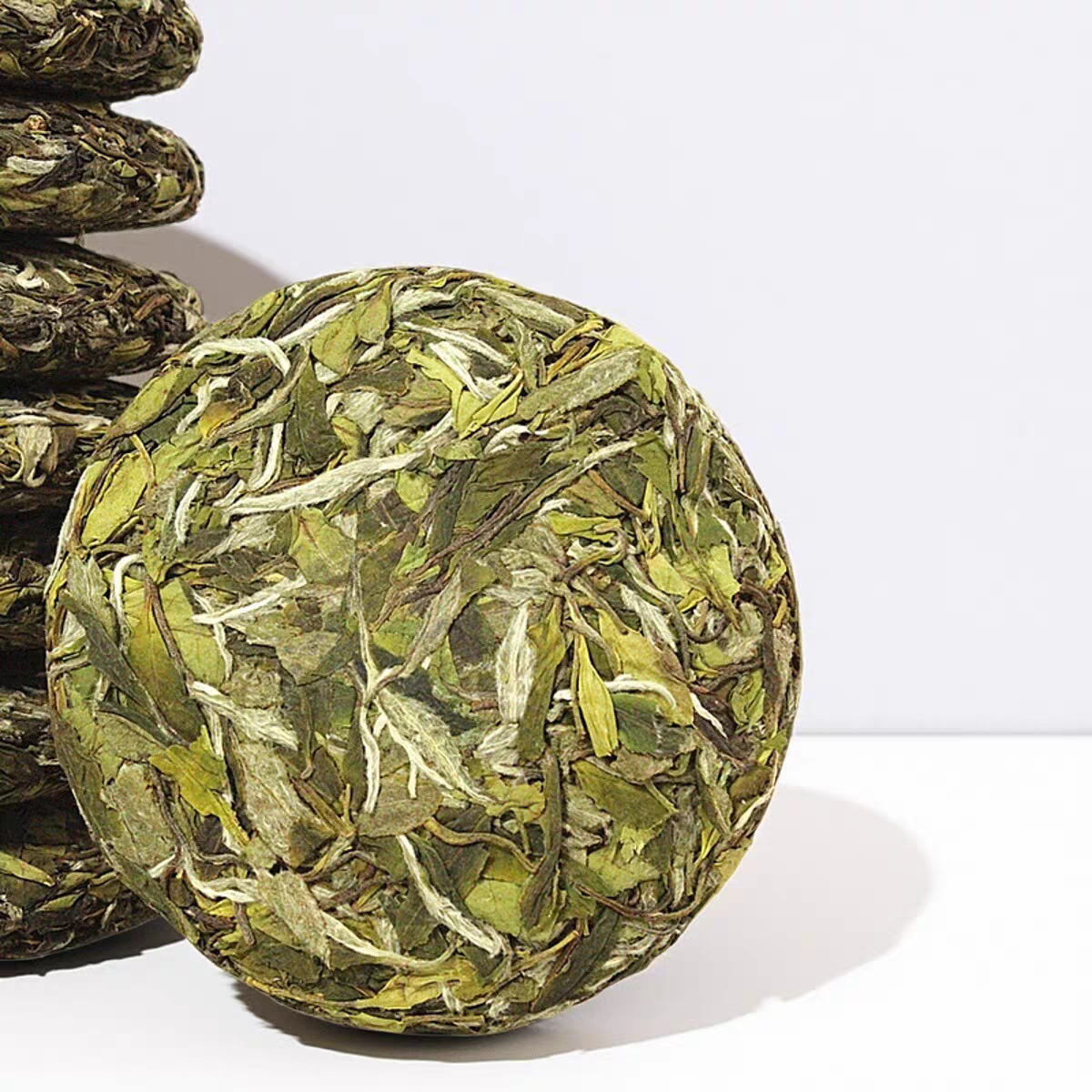
Sizes: 3.5 oz (100g) Cake
Experience this Fujian White Peony cake from Shouning. Our white peony bai mudan 2023 offers mellow floral sweetness in a convenient 100g cake. Shop now!
10 in stock
Description
Shouning High Mountain White Peony (Bai Mu Dan) Cake | Spring 2023
Ever opened a tin of supermarket white tea and found it grassy and forgettable? You’re not alone. Over three years, we’ve tasted more than forty white peony bai mudan samples in our tea room. The gap between cheap blends and a properly aged Fujian white peony cake is enormous. This 2023 spring-harvest Bai Mu Dan cake from Shouning aims to close that gap, offering a smooth, almost milky mouthfeel with deepening fruit and honey notes that reward patient aging.
What Is White Peony Bai Mudan White Tea?
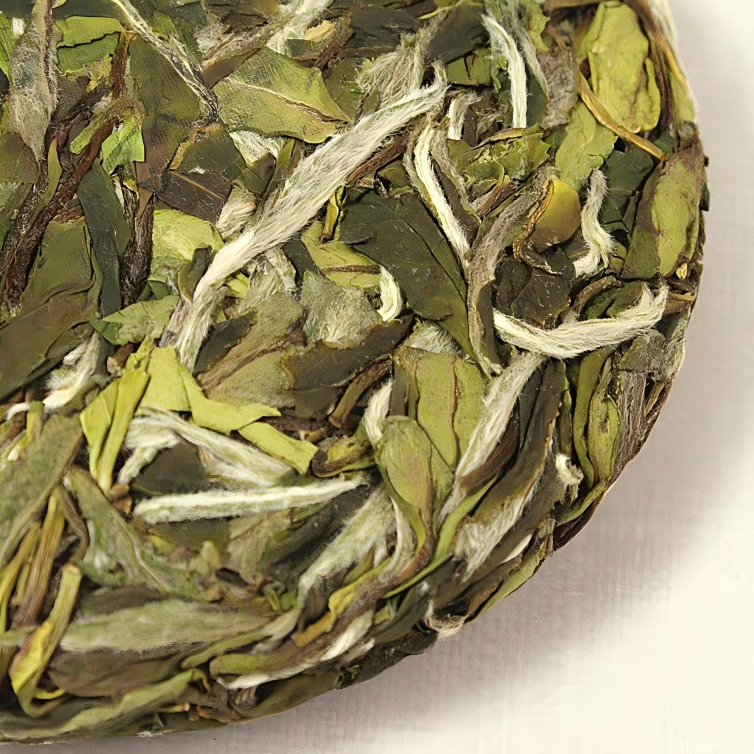
Bai Mu Dan, literally “White Peony,” is a Chinese white tea made from one bud plus two adjacent young leaves. Traditionally picked in early spring, many people assume white tea is just “unprocessed green tea.” In reality, the leaves are carefully withered and sun-dried for 60-72 hours. That slow oxidation gives the tea its peachy, hay-like notes. Sitting perfectly between Silver Needle (more delicate, bud-only) and Shou Mei (more robust, leafier), Bai Mu Dan has lower caffeine and noticeably less astringency than green tea. That makes it a strong choice for evening drinkers.
Curious how this Bai Mu Dan stacks up against Silver Needle, Shou Mei, and Gong Mei? See our side-by-side guide to the 4 main types of white tea for processing, flavor, and price differences.
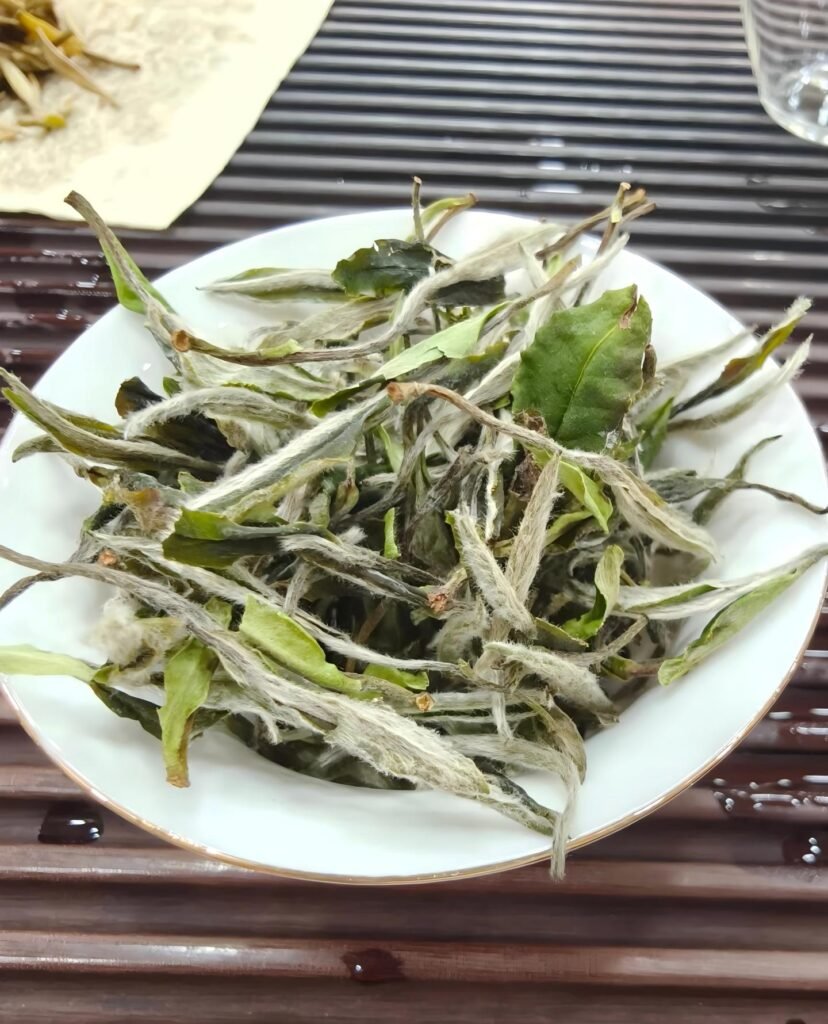
High-Altitude Heritage in Shouning.
This cake is sourced from Shouning County, a high-elevation region in northeastern Fujian Province at 800–1,200 meters. According to official Fujian Provincial Department of Agriculture data on Shouning tea region microclimates, Shouning’s granite-based,We visited one of our partner gardens in April 2023. The picker, Master Chen (29 years of experience), told us the bud-plus-two-leaves standard is strictly enforced on rainy mornings. Only about 1,800 kg of finished tea is produced from this single garden each season.
The Golden Elixir: Aroma & Taste (2026 Maturity Audit)
After roughly 30 months of resting in our climate-controlled warehouse, the 2023 harvest has settled into its peak drinking profile. The mouthfeel is what stands out — soft, almost milky on the tongue, with no sharp astringency. Compared to our November 2024 tasting, the fruit notes have deepened (more dried apricot, less fresh peach) and the body has rounded out. A 2019 study in the Journal of Food Science on white tea oxidation and Maillard reactions notes that well-aged Bai Mu Dan develops Maillard-driven honey notes that fresh-crop teas lack.
Here is what we logged in our November 2025 cupping session:
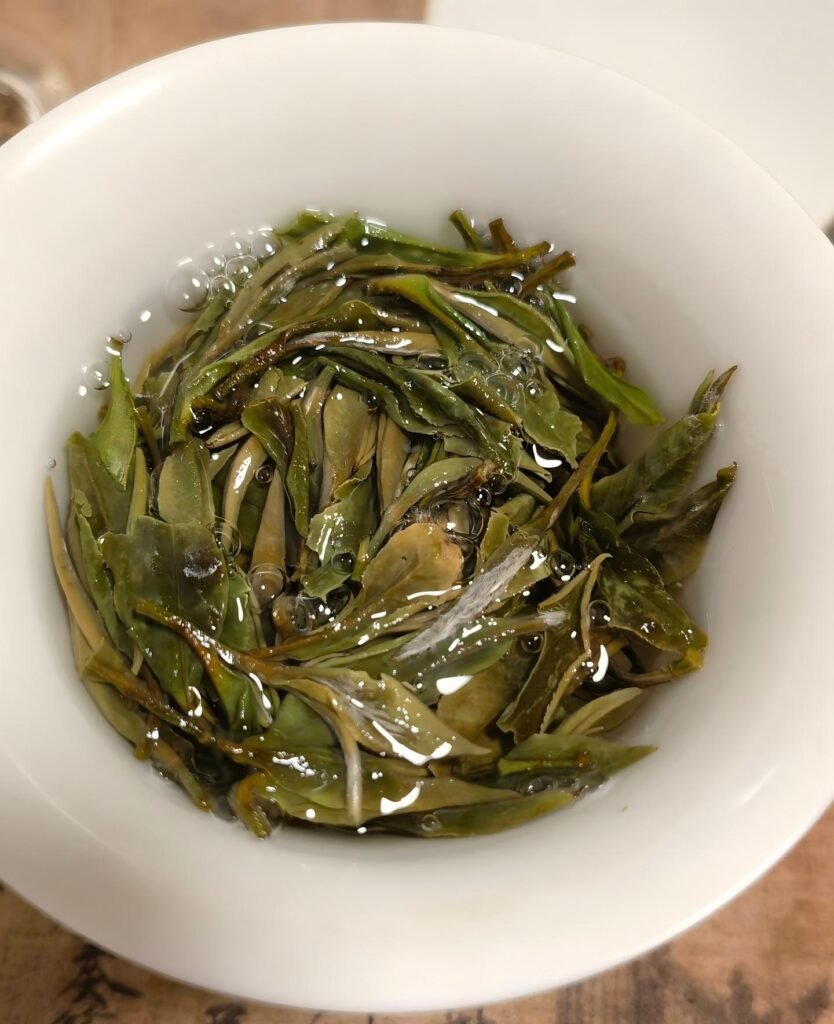
Steep 1 (Rinse): Wet hay, apricot skin aroma | Soft, sweet, almost milky body
Steep 2: White peach, honey aroma | Peach pit, cane sugar flavor | Medium body
Steep 3: Dried apricot, almond aroma | Apricot jam, faint cocoa flavor | Medium body
Steep 4: Hay, warm wood aroma | Mineral, dry sweetness flavor | Medium-light body
Steep 5+: Wet stone aroma | Cooling, clean finish | Light body
Art of the Infusion
This compact cake is forgiving, but water temperature and leaf ratio matter. To break off a piece of the cake, wedge a tea pick along the edge rather than prying from the center. Rinsing is optional — we skip it for this bai mudan to preserve the downy pekoe flavor.
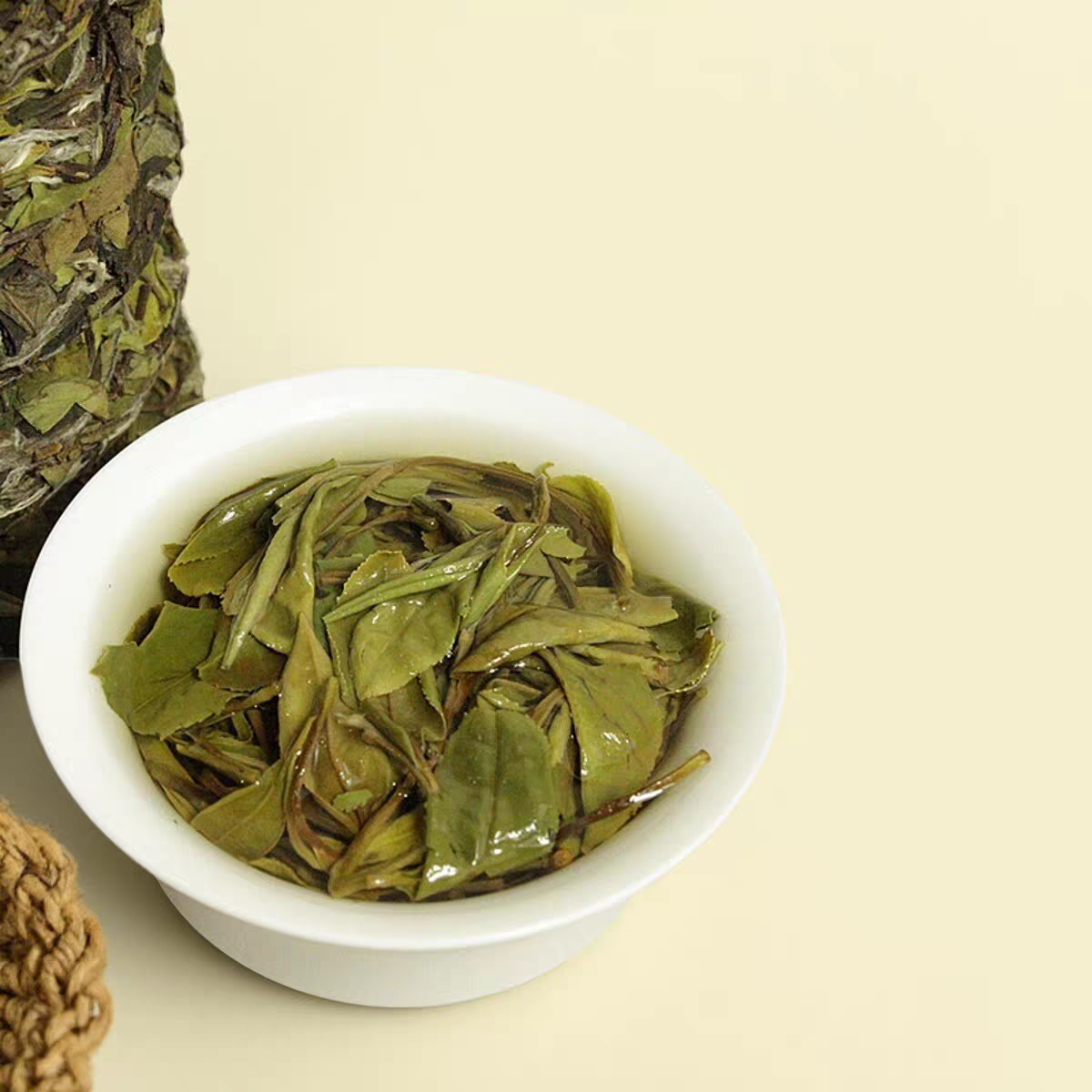
Gongfu Style: 5g leaf | 100ml water | 195°F (90°C) | 15s first steep, add 5s for each subsequent steep.
Western Style: 3g leaf | 250ml water | 195°F (90°C) | 3 min first steep, add 30s for each subsequent steep.
Stove-Top: 5g leaf | 500ml water | 195°F (90°C) | 2 min simmer, re-steep 2x.
Long-Term Storage Tips
Aged white tea is forgiving, but compressed cakes need airflow to age cleanly. Follow these four steps:
Keep the cake in its original paper wrapper inside a loose, odor-free tin (never plastic).
Store at 60-75°F (15-24°C) with relative humidity under 65%.
Avoid sunlight, kitchens, and anything that smells strong (coffee, spices, cardboard).
Rest the cake for 6-12 months between sessions if you want to taste the aging curve.
Curious where this curve leads at year 5, 10, or 20? Our Shou Mei white tea stem aging guide breaks down how white tea flavors transform from fresh hay to dried fruit, honey, and beyond.
Lesson learned: When we accidentally left a test cake near a spice cabinet for three months, it absorbed cumin within weeks. Odor-free storage is non-negotiable.
Perfect For: Beginners & Tea Gifting
This bai mudan cake is one of the easiest ways to start a Chinese tea collection. A 100g pressed cake delivers roughly 20 gongfu sessions, costs less per gram than Silver Needle, and doesn’t require a thermometer to enjoy. New drinkers can break off small pieces without committing to a full tin. New to white tea in general?
Our white tea guide for beginners covers harvest dates, oxidation, and the four brewing methods — a useful primer before you commit to a whole cake.
For gifting, we hand-wrap each cake in unbleached mulberry paper and include a printed brewing card. Order by December 18, 2026 for guaranteed pre-holiday delivery.
Frequently Asked Questions (FAQ)
How many cups does a 100g White Peony cake make? About 20 gongfu sessions (5g each) or 33 Western-style cups (3g each). Daily drinkers finish it in 3-4 weeks. Occasional drinkers can stretch it to 6 months.
Is Bai Mu Dan caffeinated? Yes, but at lower levels than black or green tea — roughly 30–40 mg per 8 oz cup. According to the USDA FoodData Central tea caffeine content database, white tea averages 6–15 mg caffeine per gram of dry leaf.
Can I drink this bai mudan cake every day? Most healthy adults can. If you’re pregnant, on blood thinners, or caffeine-sensitive, consult a qualified healthcare professional first. For a research-backed look at antioxidants, L-theanine, and how white tea compares with green and black tea, see our guide to what white tea is actually good for.
What’s the difference between Bai Mu Dan and Silver Needle? Silver Needle (Bai Hao Yin Zhen) uses only unopened buds. It is more delicate and more expensive. Bai Mu Dan adds two young leaves for more body and a lower price — a better everyday choice.
When does this 2023 harvest peak? Based on our monthly tastings from 2023 through 2025, the cake hit its stride in late 2024 and is currently (2026) in its peak drinking window through 2027. Expect dried-fruit, honeyed, and faint cocoa notes to deepen further by 2028. Beyond 2030, this bai mudan should enter a Shou Mei-like medicinal phase — best for drinkers who enjoy earthy, woody profiles.Want to preview what those earthy, woody notes actually taste like? Read our Shou Mei stem aging guide for a real cup-by-cup profile of aged white tea.
If you enjoy the pure, soothing flavors of this white tea, explore our diverse White Tea Collection to find your next favorite brew.
E-E-A-T Statement (Author & Reviewer Disclosure)
Author & Reviewer Disclosure: This article was written by the founder and head tea buyer at minteashop, drawing on 8 years of hands-on experience sourcing authentic white tea directly from Fujian farmers and aging cellars. The Spring 2023 White Peony (Bai Mu Dan) Cake described above was personally cupped and selected from pristine 3-year aged storage during our 2026 spring sourcing trip to Fujian. Health-related claims about caffeine and L-theanine are based on general published research and are not medical advice.
Related products
-

Bai Mu Dan Dragon Pearl 2019 | Best Premium Aged White Tea
Price range: $19.90 through $74.90Select options This product has multiple variants. The options may be chosen on the product page -
-
Dragon Pearl Jasmine Tea | 7-Time Scented Ultimate Perfect Brew
Price range: $16.90 through $69.90Select options This product has multiple variants. The options may be chosen on the product page -
Reviews
There are no reviews yet.