
Why Shoumei White Tea Ages Best — A Storage & Flavor Guide
Why does one white tea flatten with age while another deepens into something richer and more complex? The answer lies less in what the leaf keeps and more in what it gives up. Shoumei, the often-overlooked cousin of Silver Needle, is the clearest example of that transformation — and the easiest place to begin understanding aged white tea.
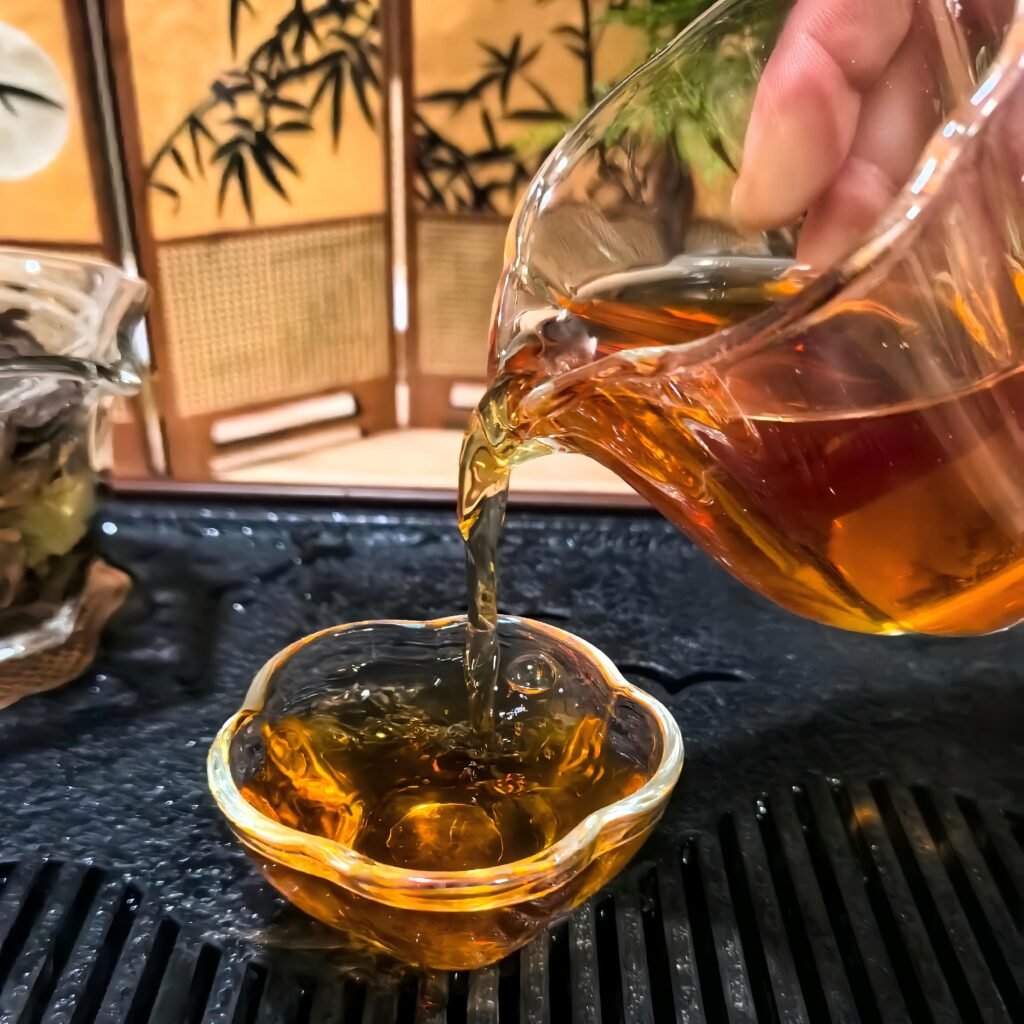
Min Tea Shop’s own collection of aged Dragon Pearl Shoumei and mid-aged Shoumei cakes sits at the heart of how we built this guide. We drink from those jars every week while writing — and we will name specific vintages as we go.
What Makes Shoumei Different from Other White Teas?
Under China’s national standard GB/T 31751-2015, Shoumei is graded using mostly one bud plus three or four mature leaves of cultivars such as Fuding Dabaicha or Zhenghe Dabaicha. Processing is intentionally minimal: no pan-firing, no rolling, just sun-withering and a low-temperature bake.
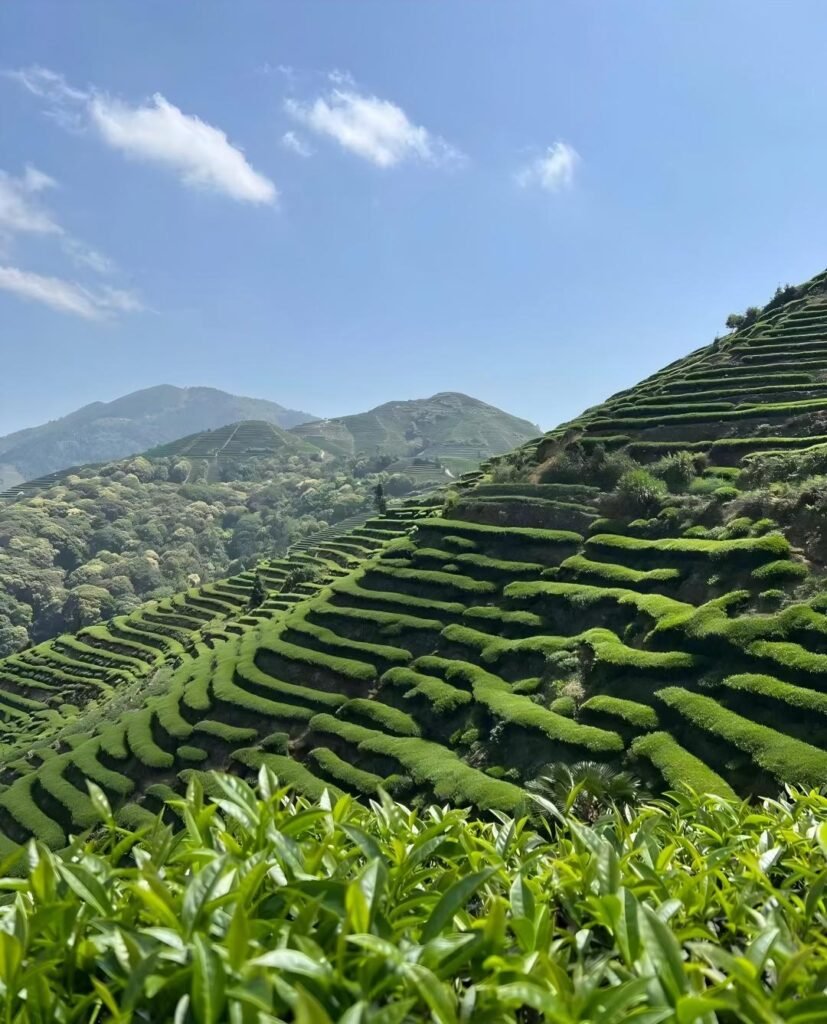
Where the leaf is grown also matters. Shouning County in northern Fujian — the source of the Shoumei we keep in our own cellar — sits at 600–900 m elevation with cool mountain nights and frequent mist. That slower growing cycle produces a leaf with denser cell structure and slightly thicker cuticle than lowland teas, which translates, in our experience, to two practical advantages: the brewed liquor carries a more rounded body, and the brewed leaf stays flavorful across many infusions. [1]
The mature foliage also finishes the bake at a slightly lower water activity than bud-heavy teas, giving it a structural margin against imperfect storage. The chemistry is where aging gets interesting. A 2019 metabolomic study tracking white teas aged 1, 3, 7, and 10+ years found that most metabolites — catechins, amino acids, nucleosides, organic acids — decrease over time, while EPSFs (storage-related marker compounds) increase. [2] Long-stored Shoumei is not a tea that “retains” its youth. It is a tea whose chemistry has been systematically rewritten by time, and the rewrite is what makes aged Shoumei worth waiting for.
Silver Needle and White Peony, by contrast, are built from tender buds with more residual moisture. They drink beautifully young but rarely improve past five years. For a deeper comparison across grades, see our guide to the four main types of white tea.
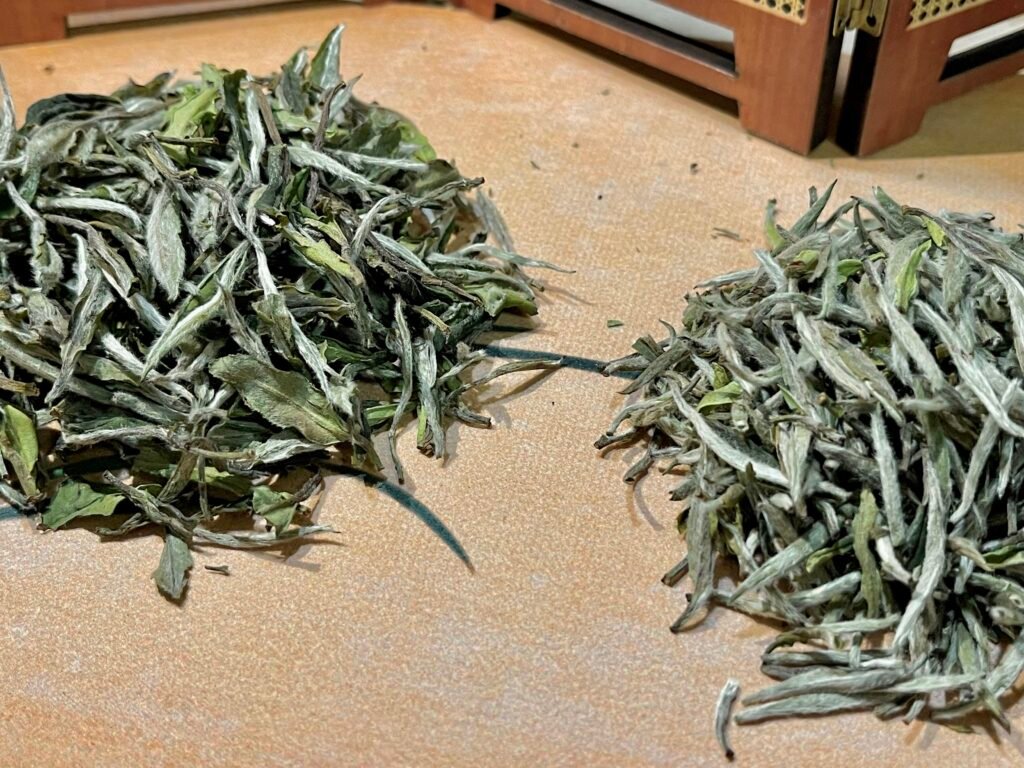
Why the Stem Matters: What Recent Research Shows
Shou Mei is usually the cheapest and least discussed of the white teas — the visible stem is the reason, and it is also the reason this tea ages so well.
Baihao Yinzhen gets the top shelf. Bai Mudan sits beside it. And Shou Mei, the leafy white tea with the visible stem, often gets pushed to the back. In tea market conversations across Fujian, it gets talked about least and priced lowest.
That hierarchy may deserve a second look. A 2024 study in Food Chemistry on Fuding white tea found that the stem — long treated as filler — actively contributes to the chemistry that defines this tea’s flavor. During withering, the stem shows increased protein-derived amino acids, rising γ-aminobutyric acid (GABA), and elevated phenylacetaldehyde, a compound linked to honey and floral aromas.
This article reviews what current research, pricing patterns, and community discussion actually say about this underappreciated tea — including how it differs from the more prestigious white teas above it on the shelf.
Why Is Shoumei Considered the Best White Tea for Aging?
Three reasons, each grounded in current research and our own tasting records.
High-mountain terroir holds up under long storage
Cool, slow-grown leaves from Shouning’s higher elevations pack more aromatic precursors into each gram than lowland equivalents. After three to five years in the jar, those precursors have had time to transform into the deeper, sweeter notes that define good aged Shoumei. A separate study on white tea storage confirmed that elevated-origin teas show more stable sensory profiles across longer storage windows. [3] To see what this looks like in practice, our Shoumei Stem Aging Guide walks through how stem content affects aging speed.
Time does real chemical work
The polyphenols and amino acids in Shoumei oxidize, polymerize, and recombine slowly in storage. Catechins — especially non-esterified forms — drop first; so does total amino acid content. By year 3, a Shoumei cake pours noticeably more amber than the fresh version. By year 7, jujube and medicinal notes have emerged. By year 10+, woody and resinous tones appear. A separate analysis of different storage years confirmed that 20-year white tea shows significantly elevated flavonoids compared with younger samples. [4]
Our own 2019 Shoumei cake, which we drink in rotation, sits right in the 7-year window — liquor already shifting toward deep amber, body noticeably more viscous than the 2025 fresh press.
The entry price forgives mistakes
Top-grade first-flush Fuding Silver Needle retails in the 3,000–8,000 yuan-per-jin range as of late 2025 (cross-checked across Taobao and JD flagship stores). A respectable Shoumei cake, even aged three to five years, usually costs a fraction of that — our current 2025 fresh Shoumei and the older vintages above all sit well below Silver Needle pricing. If you lose a batch to a storage error, the lesson costs less — and you still learn the same things about humidity, temperature, and packaging that a Silver Needle collector learns the hard way. New to the category? Start with our beginner’s guide to white tea.
How Should You Store Shoumei for Long-Term Aging?
Three controls matter: humidity, temperature, and packaging.
Keep the environment stable. Aim for roughly 25°C and relative humidity below 60%, per GB/T 30375-2013 (the general standard for tea storage in China). During the late-spring plum-rain (mei-yu) season in southern China, move your stash to an interior closet or run a small dehumidifier in the storage room. Keep jars away from kitchens, bathrooms, and any strong odor source — tea absorbs ambient smell faster than almost any food.
Use sealed inner packaging first. This is where a lot of online advice goes wrong. Many tea blogs recommend unglazed Yixing clay jars for long-term white tea storage, citing the clay’s breathability. The weight of public guidance and tea-association storage notes actually points the other way: high-breathability vessels expose tea to continuous air exchange, accelerating both flavor loss and moisture risk. The more reliable approach is aluminum-foil or food-grade sealed pouches as inner packaging, then placed inside a tin, ceramic, or Yixing vessel that serves as a stable outer shell. [5] A Yixing jar can absolutely be part of the system — as a stable, attractive outer container — but it should not be the only barrier between your leaf and the room.
Inspect every six months. Open one jar at a time. Look for clumping, dull color, or off-smells. If anything seems off, isolate that cake and let it sit uncovered for a few days — sometimes mild surface moisture resolves on its own. If the smell persists or you see visible mold, separate it permanently so it does not compromise the rest of your stash. For step-by-step brewing of aged cakes once you pull one out, our Shoumei brewing guide covers water temperature, leaf amount, and timing.
How Does the Flavor of This Cultivar Change Over Time?
The chemistry-driven flavor shift in aged Shoumei is well documented. As catechins decline, astringency softens. As amino acids decline, fresh-grass sharpness fades. As thearubigins and theaflavins give way to theabrownins, the liquor deepens from gold to amber to copper. A 2024 volatile-compound study using HS-SPME-GC-MS and HS-GC-IMS on white teas of different storage years identified 55 and 53 volatile compounds respectively, and showed that fresh-floral compounds such as linalool, geraniol, and 2-hexenal decline with age, while herbal and aged notes such as hexanoic acid, dimethyl disulfide, and borneyl acetate rise. [6]
The “aged aroma” itself — chenxiang — is associated with compounds such as 1,2-dimethoxybenzene, 1,2,3-trimethoxybenzene, and 4-ethyl-1,2-dimethoxybenzene, rather than any single signature molecule. A separate study tracking volatile lactones and terpene enantiomer ratios found significant correlation with storage years from 0 to 7, suggesting these could serve as chemical markers for age. [7]
What follows is the gradient that emerges from this chemistry, drawn from a synthesis of storage-year studies and our own in-house tasting notes:
| Age | Liquor | Aroma | Body | Try a Cake |
|---|---|---|---|---|
| 1–2 years | Pale gold, clear | Hay, light vegetal sweetness | Clean, brisk | 2025 Shoumei |
| 3–5 years | Light amber | Jujube, sticky-rice warmth, light chenxiang | Rounder, sweeter | 2020 Shoumei cake |
| 7–10 years | Deep amber | Dried longan, gentle medicinal notes, faint wood | Viscous, velvety | 2019 Shoumei |
| 10+ years | Copper-amber, glossy | Aged wood, camphor, faint honey | Thick, almost resinous | 2014 Dragon Pearl Shoumei |
📌 Brewing note: For cakes under five years of age, use 95°C water and short, brisk steeps. For anything past five years, use a full boil and let the leaves wake for 30 seconds before the first rinse — the higher heat draws out depth that a gentle steep would miss.
What Does Properly Aged Shoumei Actually Taste Like?
A well-stored 7-year-old cake from a clean maker pours a liquor the color of polished amber. The first sip is quieter than you’d expect — no smoke, no mineral bite. Mid-palate, a jujube sweetness arrives, followed by a faint medicinal warmth that sits at the back of the throat. The finish is long, almost honeyed, and clean.
It carries none of the boldness of Wuyi rock tea, none of the heavy earthiness of aged pu’er. It rewards slowness, the way a good book does. To store this leaf well is, at its core, a small bet on the next decade of your life. The tea will keep its side of that bargain — provided you keep yours.
To read about the broader wellness research on aged white tea, see our guide on what white tea is good for.
Ordering, Shipping & Returns — What to Know Before You Buy
Everything below applies to orders placed through minteashop.com. We ship from China to most international destinations.
Shipping options & delivery time
| Option | Carrier | Estimated time |
|---|---|---|
| Standard | China Post, Cainiao | 9–25 business days |
| Express | DHL, FedEx, Europe dedicated line | 7–15 business days |
Order processing time: Orders are picked, packed, and handed to the carrier within 24–48 hours of payment confirmation. You will receive a confirmation email at that point.
Delays: Weather events (heavy snow, typhoons, earthquakes) and customs inspections can extend delivery beyond the ranges above. We will keep you updated by email if your shipment is held.
Payment methods
- Credit / debit card — Visa, MasterCard, JCB
- PayPal
- Western Union — please contact our support team before sending
- Bank transfer — please contact our support team for account details
All prices are listed in the currency shown on the product page; PayPal and card payments are converted at the rate shown at checkout.
Return & exchange policy
You have 7 calendar days from the date of receipt to request a return or exchange. Email our support team first so we can issue the correct instructions.
- Store-side returns (free): Defective products, wrong item shipped, or shipping damage. Please send a photo or short video within 7 days of receipt so we can confirm and arrange replacement or refund.
- Buyer-side returns (buyer pays shipping): You changed your mind, the tea does not suit your palate, or the package was damaged after delivery.
📌 Note on opened tea: Once a sealed tea product has been opened, we cannot accept return for taste-preference reasons. If the seal is intact, we are happy to help.
Refunds
Refunds are issued to the original payment method after both parties confirm the return. Processing time is 3–30 business days from the date we receive the returned item, depending on your bank or card issuer.
Order changes & cancellations
- Before shipment: Contact us and we can edit the address or cancel the order.
- After shipment: The order can no longer be cancelled. To exchange, follow the return procedure after delivery.
- Wrong address entered at checkout: Reply to your order confirmation email before the package ships. After shipment, address changes are subject to carrier fees and will be billed at cost.
Tracking your order
Once your order ships, you will receive an email with the tracking number and the carrier’s tracking page (EMS, UPS, DHL, FedEx, and so on). You can also log into your Min Tea Shop account at any time to view real-time status.
Tea storage after you receive it
For the freshest drinking experience, store your tea in a cool, dry place away from direct sunlight, strong odors, and humidity. Once you open a Min Tea Shop pouch, transfer any cake you do not plan to drink soon into a sealed container — the same rules above apply in your own kitchen.
References
- Wang, Y., et al. (2014). Analysis of major biochemical components in white tea of different years. Food Industry Science & Technology. https://www.spgykj.com/article/doi/10.13386/j.issn1002-0306.2014.09.068
- Tan, J., et al. (2019). Metabolomic study on white tea of different storage years. PubMed, 31554114. https://pubmed.ncbi.nlm.nih.gov/31554114/
- Fuding white tea storage condition optimization study. AGRIS / FAO Records. https://agris.fao.org/search/en/providers/122436/records/691db65049e41686f792c404
- Wang, Y., et al. (2014). Storage-year flavonoid elevation in white tea. Food Industry Science & Technology.
- Fuding tea association storage guidance & community consensus. https://www.fdbcha.com/baocun/tea_375.html
- Zhou, X., et al. (2024). HS-SPME-GC-MS and HS-GC-IMS analysis of volatile compounds in white tea of different storage years. PubMed, 39630468. https://pubmed.ncbi.nlm.nih.gov/39630468/
- Volatile lactones and terpene enantiomer ratios in white tea of different storage years. PubMed, 32217431. https://pubmed.ncbi.nlm.nih.gov/32217431/

One Comment