
Rougui Tea: The Cultivar Behind Rock Tea’s Cinnamon Note
Rougui is the cultivar that made Wuyi rock tea commercially famous, and the one most often sold by the name of the garden it grew in. It is also the cultivar most often described inaccurately, starting with the explanation of its own name.
This page covers what Rougui tea actually is, why the cinnamon comparison is both useful and misleading, how roast level changes it, and how to brew it.
Table of Contents
What Rougui Tea Is
Rougui is a single clonal cultivar, not a blend and not a style. It is native to Matou Rock in the Wuyi range, and it was selected as an individual plant from the local population variety rather than bred from a cross. The distinction matters: Rougui is not a hybrid of anything, which is worth stating because hybrid parentage is sometimes claimed for it.
It was recognised as a provincial variety by Fujian’s crop variety committee in 1985. It is a small-to-medium leaf plant, late to flush, and it now accounts for roughly a third of Wuyishan’s tea gardens — an extraordinary share for a cultivar with a documented origin point.
The name means cinnamon. That is where the confusion starts.
The Cinnamon Question
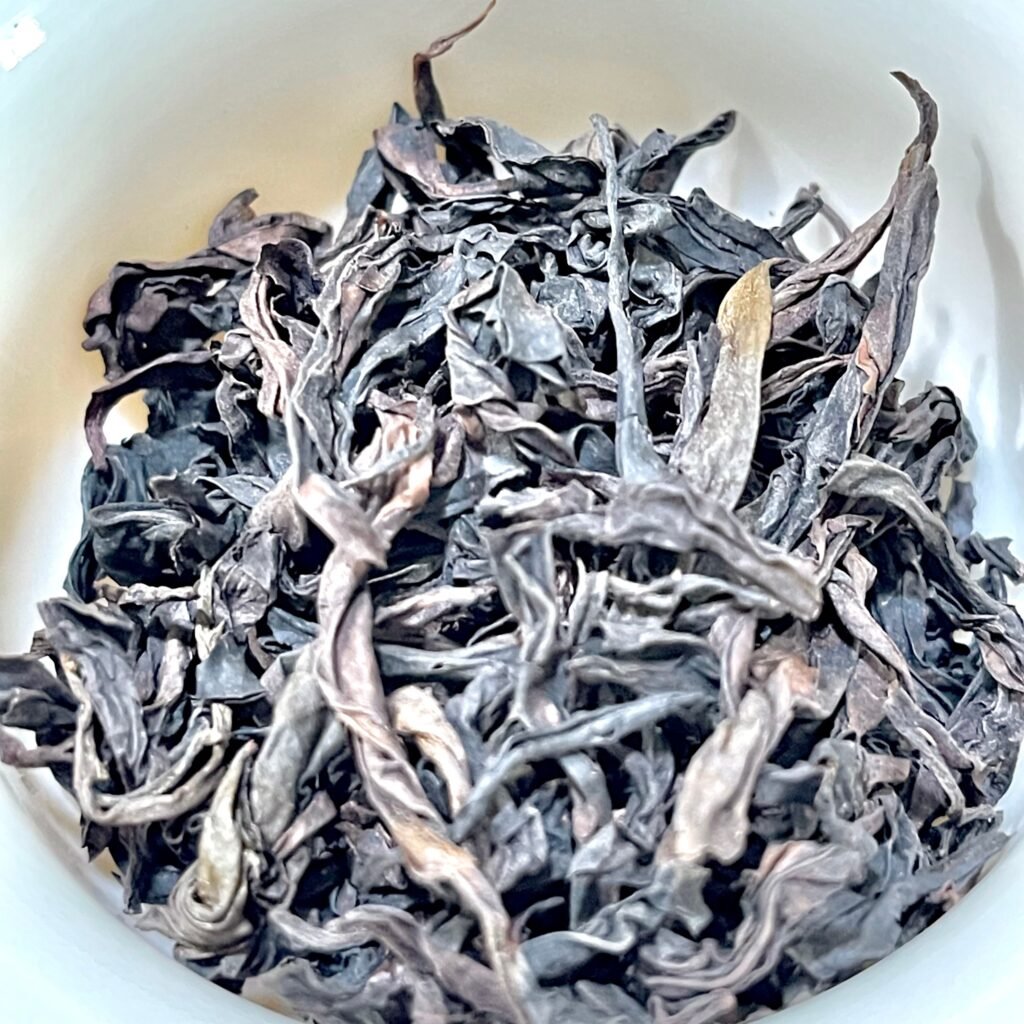
Rougui tea is described everywhere as having a cinnamon or spice aroma, and the obvious inference is that it contains cinnamaldehyde, the compound that gives cinnamon its smell. That inference turns out to be wrong, or at least unsupported.
A sensomics study on Rougui aroma used aroma extract dilution analysis and recombination testing to identify what actually produces the note. The main contributors were benzenepropanal and alpha-terpineol. Linalool was present and active, but in a masking role: the study measured its effect as reducing perceived intensity rather than adding to it. Cinnamaldehyde was not among the key contributors.
This is a good example of why “tastes like X, therefore contains X” reasoning fails in tea. The human nose groups dissimilar molecules together. Rougui smells like cinnamon because one of its compounds falls into the same perceptual category, not because it contains cinnamon’s signature molecule.
What the research does support is the breadth of the aroma. A GC-O study identified 80 aroma-active compounds in Rougui, of which 26 were judged key. That density of active compounds is why Rougui reads as complex rather than as a single spice note, and why the note shifts as the tea cools and across infusions.
How Roast Level Changes Rougui
Roast level is the single biggest variable in what a Rougui tastes like, and it is the thing most often left off a label.
Charcoal roasting generates its own aroma set — pyrazines, furans and related Maillard products — which sit on top of the cultivar’s own aromatics. A 2025 study on roasting chemistry identified fifteen odour-active compounds in roasted rock tea, three alkylpyrazines plus furfural and 5-methylfurfural among them, with odour activity values above one. Isotope labelling traced the nitrogen in those pyrazines to alanine and most of the carbon to glucose. That is a precise way of saying roasting is a reaction between the leaf’s own amino acids and sugars.
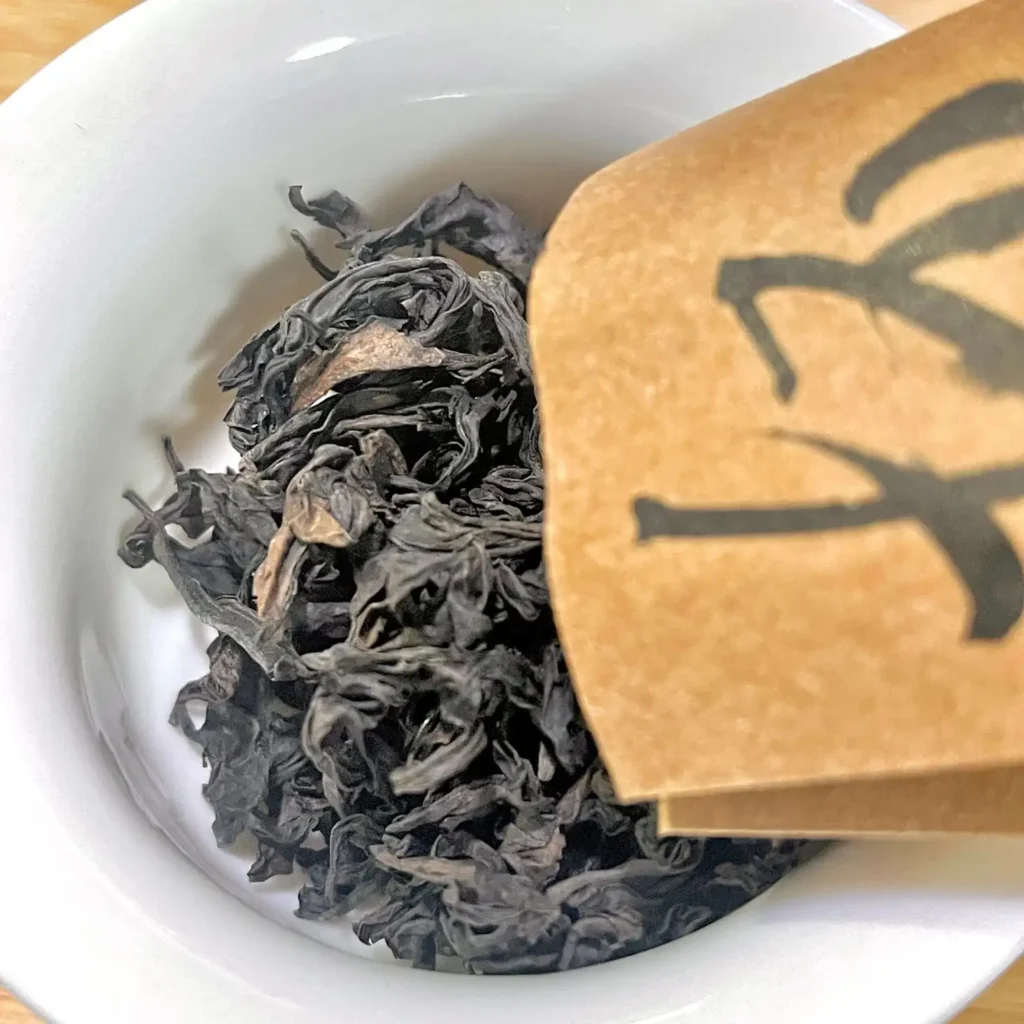
The practical consequence is straightforward. Light fire keeps the penetrating cultivar aroma forward and leaves the tea with less body. Medium fire balances the two and is where most commercial Rougui sits. Full fire pushes the cup toward roasted, mineral and dark, and it needs the longest rest before drinking because the roast has to settle.
Two Rougui teas at opposite ends of the fire scale can taste like different cultivars. That is not a flaw in the category; it is the category working as designed.
Garden Names and What They Mean
Rougui is the cultivar most often sold by named garden, and the market has developed a shorthand that outsiders find opaque.
The nicknames are straightforward once decoded. Niurou, beef, means Rougui from Niulan Pit. Marou, horse, means Rougui from Matou Rock. Xintourou, heart meat, means Rougui from Tianxin Rock. There are further variants for Jiulongke, Huxiao Rock and Guidong. None of these terms has a definition in the national standard; they are trade slang.
What the names point at is real, though. The valleys and the exposed slopes produce different leaf. Pits such as Niulan and Huiyuan get only a few hours of direct sun a day, stay humid, and grow in gravel soils rich in potassium and manganese. The leaf from those sites tends to be thicker, the cup denser, and the aroma more restrained but longer. Exposed sites such as Matou Rock get more sun, and the leaf is more aromatic and more forward.
The problem is verification. Rock tea terroir sets out why the words zhengyan and banyan cannot be checked against the standard, and why a garden name is a claim rather than a fact.
How to Brew Rougui Tea
Rougui is brewed like any rock tea, but the parameters shift with fire level.
Use a gaiwan or a small porcelain pot, 7 to 8 g of leaf in 110 ml, and boiling water. The first infusion should be short — five to ten seconds — because the leaf is already oxidised and roasted and gives up its aromatics fast. Lengthen each round by five to ten seconds.
For a light-fire Rougui, keep the early infusions short and drink the session young; the aroma is the point and it fades. For a full-fire Rougui, you can push the time harder and the tea will hold up over eight to ten infusions, turning from roasted to mineral to sweet as it goes.
If the cup tastes harsh rather than strong, the two usual causes are too much leaf and too little rest. Rougui is assertive by nature, and a harsh Rougui is usually a tea that was sold too soon after roasting or brewed too heavily. Resting rock tea covers the timing.
Buying Rougui Tea
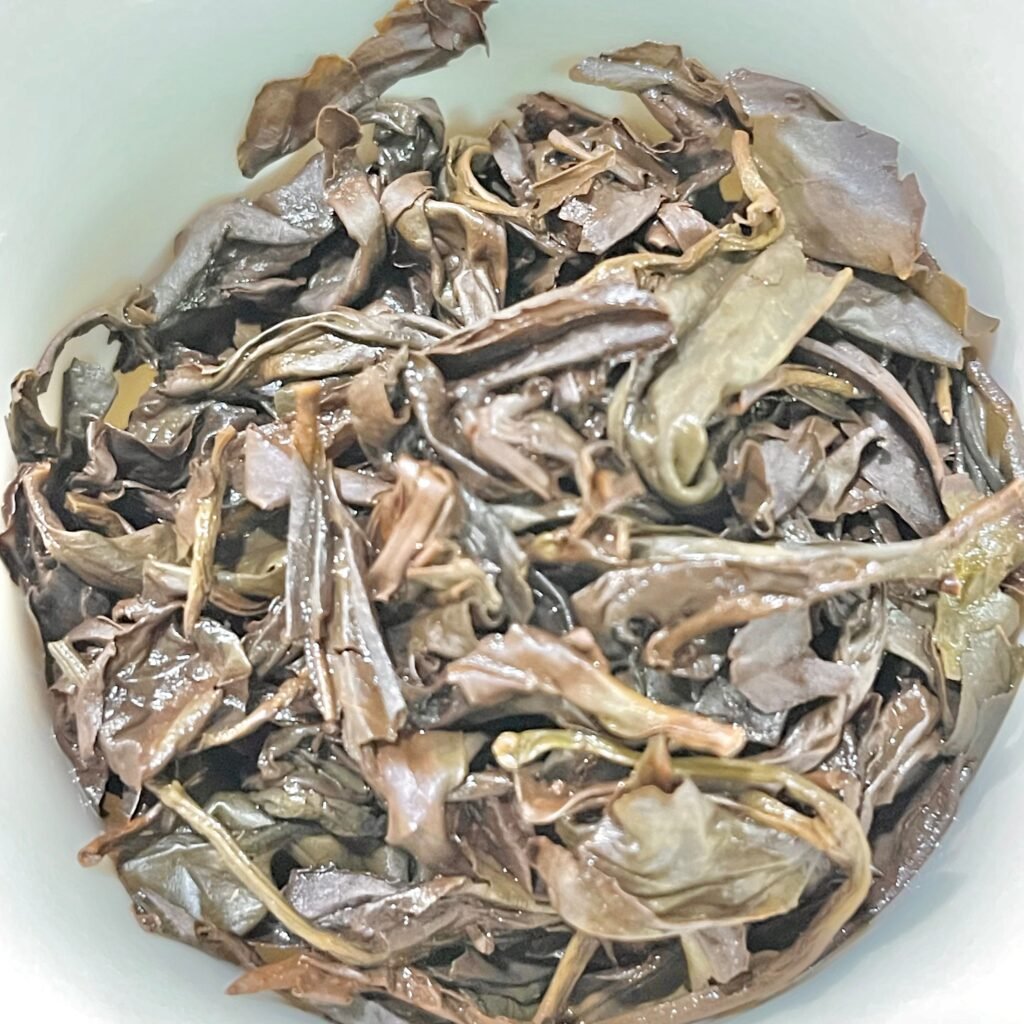
Four things to look for, in order of how much they tell you:
- Fire level stated on the listing. Light, medium and full produce very different teas, and a seller who does not say which is selling you a lottery ticket.
- Harvest year and how long the tea has rested. A 2026 tea bought in spring 2026 will be harsh.
- Cultivar confirmation. Rougui is a defined clonal cultivar, so the claim is checkable in principle even if it rarely is in practice.
- Garden name as a bonus, not a foundation. It tells you what to expect only if the source is honest.
What you should not do is buy the cheapest listing carrying a famous garden name. The economics do not work: the output of a single famous pit is small, and the volume of tea sold under those names is large. Rock tea prices explains the arithmetic.
Rougui Tea Against the Other Categories
Placing Rougui tea beside the other rock tea categories is the quickest way to understand what it is for.
Against Shui Xian. These two are the workhorses of the category, and they occupy opposite ends of the aromatic-versus-body axis. Rougui tea leads with aroma and can feel almost sharp in the first infusion. Shui Xian leads with texture and length, and its aroma sits further back. Neither is better; they answer different questions about what you want from a session.
Against mingcong. A mingcong is one specific bush, so it has a personality rather than a profile. Rougui tea has a recognisable signature that repeats across gardens, which is exactly what a large-production cultivar gives you. If you want consistency, Rougui. If you want to be surprised, mingcong.
Against Da Hong Pao. Da Hong Pao is a blend, and its job is balance. Rougui tea is single-cultivar, and its job is character. A blender may well use Rougui as a component of Da Hong Pao precisely because its aroma lifts a blend, which means the two categories can share material and still taste nothing alike.
Against Qizhong. Qizhong is seed-grown and variable; Rougui tea is clonal and consistent. The gap between them is the gap between a population and a cultivar, and it shows most clearly when you taste them side by side.
Why Rougui Tea Became the Expensive One
Rougui accounts for roughly a third of Wuyishan’s gardens, which is remarkable for a cultivar with a documented single origin. That share explains both why Rougui tea is widely available and why its price range is so wide.
The bottom of the range is ordinary material from outside the scenic core, roasted to a commercial medium level. The top is small-lot leaf from named pits, sold by the garden and often by the nickname. Between those two extremes there is a continuum, and the label rarely tells you where on it you are.
Three factors push the price up. Site scarcity is the first: the output of a single famous pit is small in absolute terms. Cultivar recognisability is the second: Rougui tea is easy to sell because buyers can identify what they are tasting. Market narrative is the third, and it is the least defensible of the three. A nickname attached to a pit can add more to the price than a better roast would.
Prices and how to read them are in rock tea prices.
Frequently Asked Questions
Does Rougui tea contain cinnamon?
No. The name refers to the aroma, and the sensory research attributes that note to benzenepropanal and alpha-terpineol rather than to cinnamaldehyde. Rougui is pure tea leaf.
Is Rougui a hybrid cultivar?
No. It was selected as an individual plant from the local population variety and recognised as a provincial variety in 1985. It is not a cross between two named cultivars.
What does Rougui tea taste like?
A penetrating spice-adjacent aroma over a firm, sometimes mineral body. At light roast the aroma dominates; at full roast the cup turns darker and more savoury. Bitterness and astringency should be low in a well-made example.
Is Rougui good for beginners?
Yes, with a caveat. Its aroma is unmistakable and easy to recognise, which makes it a good teaching tea. But a full-fire Rougui can be too assertive for a first rock tea, so start at medium fire.
Why is Rougui tea sometimes called the aroma champion?
Because its aroma is the most conspicuous in the category. A GC-O study identified 80 aroma-active compounds in Rougui, 26 of them key, and the result is a tea that announces itself before you taste it. No official body awards the title; it is trade shorthand for that prominence.
Does Rougui tea get better with age?
It changes rather than simply improving. Research on a decade of Rougui samples found gallic acid 166% to 168% higher than in new tea, with catechins moving in both directions rather than declining uniformly. What that means in the cup is a softer, less aromatic tea with more savoury depth, which some drinkers prefer and others do not.
How does Rougui differ from Shui Xian?
Rougui is aromatic and forward, Shui Xian rounder and deeper. They are separate cultivars with separate categories in the standard. See rock tea types.
Shop the rock teas in this guide
Sold directly from our own stock. Every listing states the cultivar, the garden and the fire level.
- Wuyi Rougui from Taoyuan Ke, 2026 — $10.90
- Jiulongke Rougui, Wuyishan zhengyan — $23.90
- Liuxiangjian Rougui, Wuyishan zhengyan — $49.90
Or browse the full rock tea collection.
Related Reading
the other four categories, garden names and what they mean, why Rougui costs what it does and brewing it.
Sources & References
Standards
- GB/T 18745-2006 — Geographical indication product: Wuyi rock tea. Rougui is one of the five product categories, graded special, first and second.
- GB/T 18745-2026 — Effective 2027-04-01. Defines Rougui as made from the Rougui clonal cultivar.
Peer-Reviewed Research
- Food Chemistry: X (2026). Sensomics of Rougui cinnamon-like aroma: benzenepropanal and alpha-terpineol as main contributors; linalool masking; cinnamaldehyde not key. DOI:
10.1016/j.fochx.2026.104243 - Journal of Agricultural and Food Chemistry (2021). GC-O characterisation of Rougui: 80 aroma-active compounds, 26 key. DOI:
10.1021/acs.jafc.1c06066 - Food Chemistry (2025). Roasting aroma chemistry: 15 odour-active compounds; alanine and glucose as precursors for pyrazines. DOI:
10.1016/j.foodchem.2025.143174
Variety Records
- Rougui: native to Matou Rock; selected from the population variety; provincial variety recognised by Fujian’s crop variety committee, 1985.
What this page does not claim
We do not claim Rougui contains cinnamaldehyde, that a garden name can be verified from the leaf, or that fuller fire is better. Where the research contradicts the common explanation, the page follows the research.


3 Comments