
Green Tea Caffeine, EGCG and Health: What Research Shows
Green tea caffeine runs about 20–30 mg per 250 ml, and its catechins — especially EGCG — have been studied for heart, metabolic and antioxidant effects. The honest summary is that the human evidence is promising but modest: green tea is a good drink, not a treatment.
First published: November 9, 2026 · Last updated: November 9, 2026 · By Steve Wood, founder and head tea buyer
Medical disclosure: This page is educational and is not medical advice. If you are pregnant, nursing, taking medication, or managing a health condition, talk to your clinician before changing your intake.
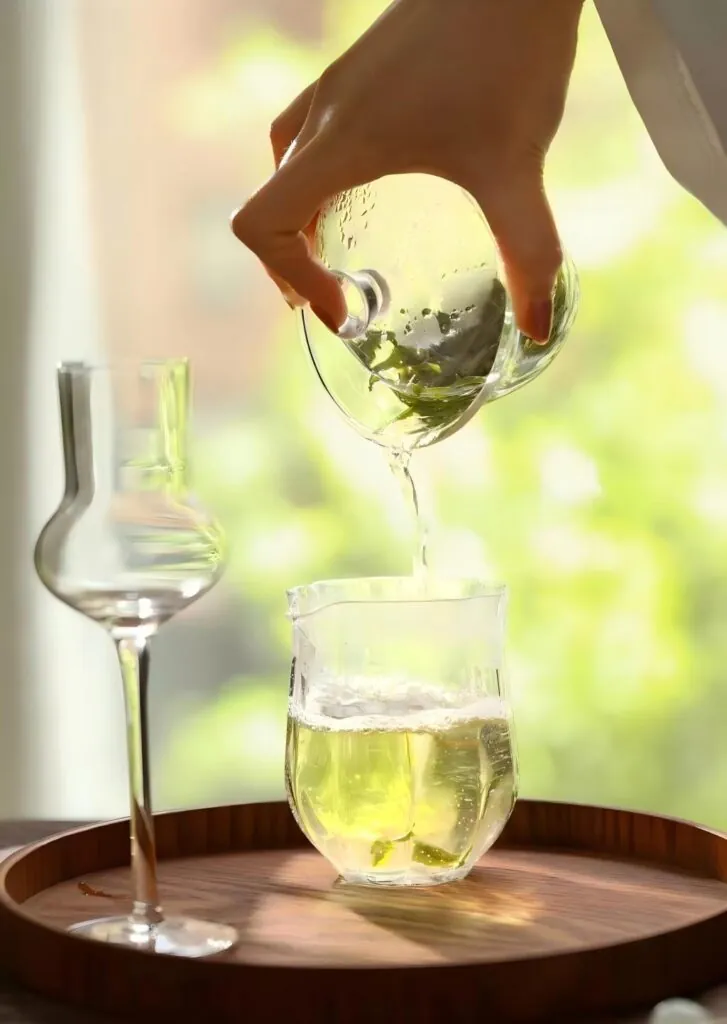
Green Tea Caffeine: How Much Is in a Cup?
Caffeine varies with leaf age, dose and steep time. A standard 240 ml cup is usually in the same range as the table below, but the numbers are estimates, not a lab result for every lot.
See our Jasmine Green Tea: Scenting, Grades and Taste guide.
Caffeine varies with leaf age, dose and steep time. A standard 240 ml cup is usually in the same range as the table below, but the numbers are estimates, not a lab result for every lot.
| Benchmark | Caffeine | What it means |
|---|---|---|
| Typical green tea, 250 ml | About 20–30 mg | Lower than coffee, higher than most herbal infusions |
| Mayo Clinic adult limit | 400 mg/day | Roughly 8–13 cups of regular green tea, depending on strength |
| ACOG pregnancy limit | 200 mg/day | A limit, not a target; count coffee, tea, chocolate and supplements together |
| EFSA pregnancy limit | 200 mg/day | Same practical ceiling as ACOG |
Mayo Clinic’s general adult guidance is up to 400 mg of caffeine a day. ACOG and EFSA both advise keeping total caffeine under 200 mg a day during pregnancy. Green tea is not caffeine-free, and a strong mug can add up faster than people expect.
EGCG and Antioxidants: What the Evidence Actually Shows
EGCG (epigallocatechin gallate) is the most studied catechin in green tea. It is an antioxidant in the test tube, but that does not automatically translate into a disease-prevention effect in people. The useful evidence is observational and modest.
The Ohsaki study followed 40,530 Japanese adults for up to 11 years and found that people who drank more green tea had lower cardiovascular mortality than those who drank less. That is an association in observational data, not proof that tea caused the difference; people who drink more tea may differ in other ways. PubMed 16968850
A 2011 meta-analysis of 14 randomised controlled trials found that green tea lowered LDL cholesterol by about 2.19 mg/dL on average — a real but small effect. It did not show a meaningful change in HDL. PubMed 21715508
So the fair claim is this: green tea contains catechins that have been associated with modest cardiovascular benefits, but it is not a substitute for blood-pressure treatment, lipid medication or a varied diet.
Does Green Tea Help With Weight Loss?
Only marginally. Human trials of green tea or green tea catechins tend to show small average differences in weight and waist circumference, and the results are inconsistent. The animal studies that report large percentages are not a guide to what happens in people.
If you like green tea, drink it because you like the taste and the ritual. Do not rely on it as a weight-loss method, and do not replace meals with it. The same applies to decaf: the catechins are still there, but the effect is not a shortcut.
Who Should Limit Green Tea?
- Pregnancy: keep total caffeine under 200 mg/day (ACOG and EFSA).
- Breastfeeding: caffeine passes into milk; keep total intake moderate and ask your clinician.
- Iron deficiency: tannins can reduce non-haem iron absorption. Drink tea between meals rather than with an iron-rich meal.
- Warfarin or other medication: green tea contains vitamin K and caffeine; consistency matters. Ask your pharmacist before making a sudden change.
- GERD, anxiety or caffeine sensitivity: strong tea may worsen symptoms; smaller, weaker cups or decaf may suit you better.
Green tea also has a mild laxative effect for some people, mostly through caffeine stimulating the gut, and it can raise gastric acid secretion — which is why some people feel queasy on an empty stomach. If that describes you, the adjustments are practical rather than medical: drink it after food rather than before, use fewer leaves, and shorten the steep. If you have reflux or take medication, talk to your doctor or pharmacist about how much tea is safe for you.
EGCG Supplements and Liver Risk
Brewed green tea is not the same thing as a concentrated green tea extract. High-dose EGCG supplements have been linked to rare liver injury, and EFSA has set a supplemental EGCG threshold of 800 mg/day for adults. That is far above what a normal cup provides.
If you take a green tea supplement, treat it as a supplement, not as a cup of tea: check the EGCG dose, do not stack multiple products, and stop if you develop nausea, dark urine, yellowing skin or unusual fatigue. Ask your clinician if you have liver disease or take medication.
Green Tea vs Matcha
Matcha is green tea powder, so you ingest the whole leaf. That means more catechins and more caffeine per gram than a steeped cup, but the idea that matcha is 137 times more nutritious is not supported. The difference is real but not a multiplier you should plan your health around. Our green tea vs matcha comparison covers the practical choice.
Why Two Cups of Green Tea Can Differ by a Factor of Three
Any single caffeine figure for green tea is an average over a very wide range. The leaf itself, how much of it you use and how you extract it all move the number more than the tea type does.
| Variable | Effect on caffeine in the cup |
|---|---|
| Leaf grade | Young buds and early spring leaf contain less caffeine than mature summer leaf; the same garden can differ substantially between a first flush and a late pick. |
| Amount of leaf | The dominant variable. Doubling the leaf roughly doubles the caffeine, regardless of everything else. |
| Water temperature | Hotter water extracts caffeine faster; a 70 °C steep for two minutes yields noticeably less than a 90 °C steep for the same time. |
| Steep time | Most of the caffeine comes out in the first minute or two; a ten-minute steep gains relatively little more. |
| Number of infusions | Roughly 60–70% of the caffeine is in the first infusion for a short steep; later infusions contribute progressively less. |
| Stem content | Stems carry caffeine too, so a stem-heavy leaf such as Shou Mei can give more per gram than its delicate appearance suggests. |
The practical conclusion: if you want a lower-caffeine cup, change the dose and the temperature. If you want a reliably low-caffeine drink, choose decaffeinated leaf — see how decaffeination works.
Reading Caffeine Figures Correctly
Published caffeine values are almost always given per 8 US fluid ounces — about 237 ml — which is smaller than most mugs. A 350 ml mug of the same tea is roughly 1.5× the quoted figure, and a gongfu session using 6 g of leaf across eight infusions delivers more caffeine in total than one large mug, even though each cup is small.
Three habits avoid most of the confusion:
- Convert to the size of the cup you actually use, not the cup the table uses.
- Ask whether the figure is per serving or per 100 ml; the two differ by more than double.
- Treat any single number as a midpoint of a range. Green tea as a category simply does not have one value.
Reducing Caffeine Without Going Decaf
If you want most of the flavour with less of the stimulant, several adjustments work, and they have different costs.
- Cooler water. 70–75 °C instead of 85 °C. This reduces caffeine meaningfully and also reduces the bitterness that hot water pulls out — usually the best single change.
- Shorter first steep, discard it. A 20–30 second rinse removes a useful share of caffeine. It also removes a useful share of the catechins, so this is a real trade rather than a free win.
- Less leaf, more water. The most predictable lever, but it also thins the body.
- Choose leaf type deliberately. Late-season and stem-heavy leaves are not necessarily lower in caffeine; early spring buds and young leaf generally are.
- Drink it earlier. Caffeine has a half-life of roughly five hours in most adults, so a cup at 4 pm is still measurably present at 9 pm.
L-Theanine and Why Green Tea Feels Different From Coffee
The reason a cup of green tea often feels calmer than the same amount of caffeine from coffee is not mysterious: green tea contains L-theanine, an amino acid that crosses into the brain and appears to modulate the stimulating effect of caffeine. Shading the bushes before picking — the step that also makes matcha — raises the L-theanine content. This is why matcha and shaded green teas are described as “calm alertness” while a coffee is not.
It is worth being precise about what this does and does not mean. L-theanine does not cancel caffeine; the caffeine is still absorbed and still acts. It changes the character of the experience, not the dose.
What “Antioxidant” Means on a Tea Label
“Rich in antioxidants” is a marketing phrase, not a measurement. Catechins — EGCG, EGC, ECG and EGCG’s relatives — are the polyphenols in green tea that most of the research concerns, and their content in the leaf falls as the leaf ages and as it is stored warm or damp.
Two things follow. First, freshness matters for catechin content, not just for flavour, which is another argument for buying small quantities and storing them properly (see the storage guide). Second, a supplement does not deliver the same thing as the drink: the doses and the safety profile are different, and the liver-safety issue with high-dose EGCG extracts is exactly why the two should not be treated as interchangeable.
Green Tea and Iron: A Practical Note
The polyphenols that make green tea interesting also bind iron, and they bind non-haem iron — the iron in plants and supplements — more strongly than the iron in meat. For most people this is irrelevant. For anyone with low iron stores, it is worth knowing that drinking tea with a meal reduces absorption from that meal, and that moving the cup an hour or two away from food largely resolves it.
This is a small, well-established point of practical nutrition rather than a reason to avoid green tea, and it is included here because it is the interference people most often ask about.
None of the material on this page is medical advice. If you are pregnant, breastfeeding, managing a condition or taking medication, the relevant guidance comes from your clinician rather than from a tea merchant.
Frequently Asked Questions
How much caffeine is in a cup of green tea?
Roughly 20–30 mg per 250 ml for a typical brew, though leaf dose and steep time move the number. Strong sencha or a long steep can be higher.
Is green tea good for your heart?
Observational studies associate regular green tea with lower cardiovascular mortality, and trials show small LDL reductions. That is encouraging but modest, and it does not replace medical care.
Does green tea help with weight loss?
Only marginally. Human trials show small, inconsistent differences. It is not a weight-loss treatment.
Can I drink green tea on an empty stomach?
Some people feel queasy because caffeine and tannins can increase gastric acid. If that happens, drink it after food, use fewer leaves, or choose a shorter steep.
Is decaf green tea as healthy as regular?
It retains most catechins and L-theanine, but the exact retention depends on the decaffeination method. It is a good choice if caffeine bothers you; see our decaf green tea guide.
Sources and disclosure
- Mayo Clinic — Caffeine
- ACOG — Moderate caffeine consumption during pregnancy
- EFSA — Caffeine
- Kuriyama et al. (2006), Ohsaki study, JAMA
- Zheng et al. (2011), green tea and LDL cholesterol meta-analysis
Author and reviewer disclosure
This page was written by the founder and head tea buyer at Min Tea Shop, who has bought and cupped tea directly from growers for eight years. The health claims are limited to what the linked sources support. No sponsored content or paid placements appear here.


6 Comments