
How to Store Green Tea: 6 Rules That Work
Green tea fades faster than most tea styles, so how to store green tea matters. The practical rules are simple: keep it sealed, cool, dark and dry, buy small amounts, and drink it within about three months of opening for the best cup.
First published: November 9, 2026 · Last updated: November 9, 2026 · By Steve Wood, founder and head tea buyer
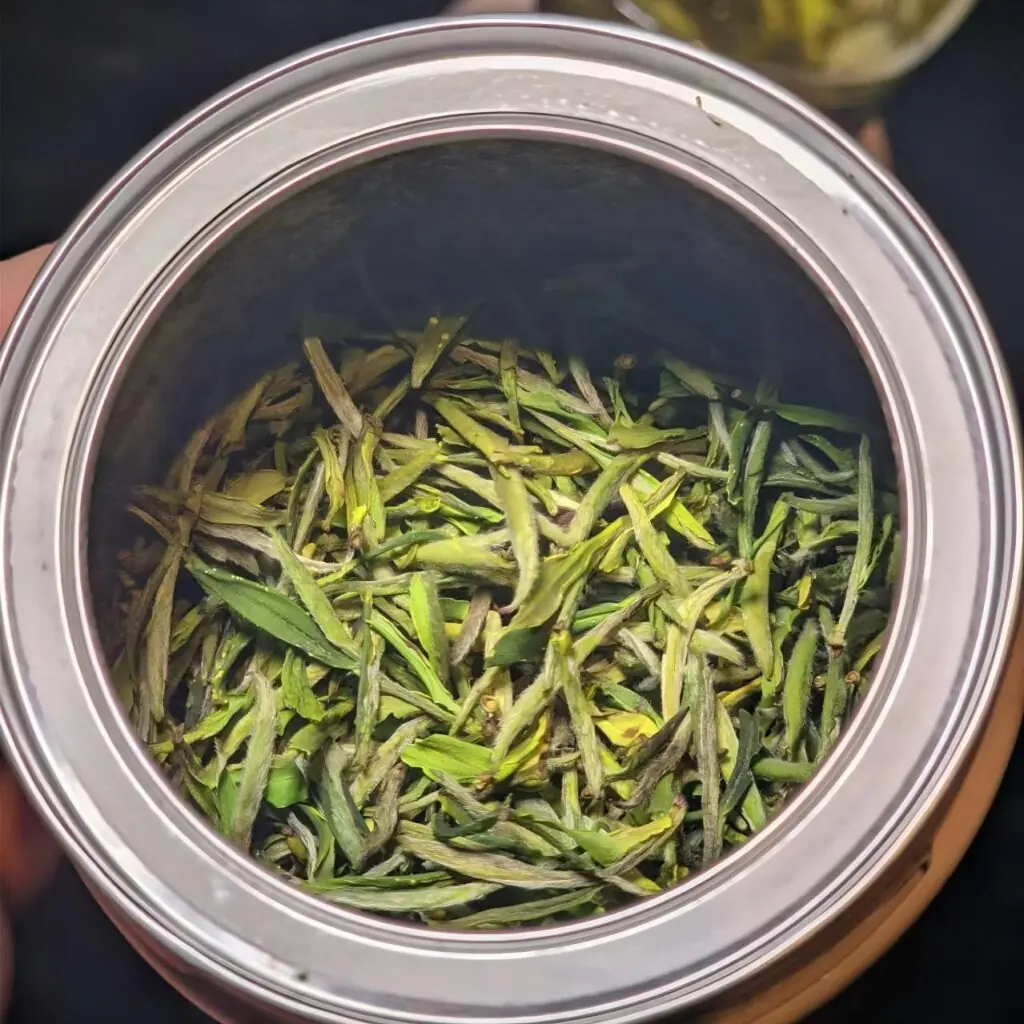
Why Green Tea Goes Stale
Green tea is minimally oxidised, and its fresh aromatics are delicate — which is the whole difficulty in how to store green tea. Oxygen, light, heat and moisture all push the leaf toward flat, hay-like or dusty flavours. The change is not dangerous, but it is fast: an opened bag left in a warm kitchen can lose its edge in weeks.
How to Store Green Tea: The Six Rules That Matter
- Seal it airtight. Oxygen is the main enemy. Press the air out of the bag or use a tin with a tight seal.
- Keep it cool. A cool cupboard is fine. For longer storage, the fridge or freezer works if the tea is sealed and allowed to come to room temperature before opening.
- Block the light. Use an opaque tin or the original foil bag. A clear jar on a sunny shelf is the worst place.
- Keep it dry. Do not store tea next to the kettle or over the stove. If you use the fridge, seal the tea twice so it does not pick up food smells or condensation.
- Avoid strong odours. Tea absorbs coffee, spices and onions. Keep it away from the spice rack.
- Buy small. A 50–100 g bag that you finish in a few months is better than a 500 g bag that goes flat.
How to Store Green Tea: Fridge or Cupboard?
For daily tea, a cool, dark cupboard is easier and avoids condensation; that is the simplest answer to how to store green tea. For a sealed bag you will not open for months, the fridge or freezer is useful. The key is to let the sealed bag reach room temperature before opening; otherwise moisture condenses on the cold leaf.
Do not refrigerate an open bag with the lid off. That is the most common mistake in how to store green tea. Tea is hygroscopic, and a fridge is a humid place.
How Long Does Green Tea Keep?
Unopened, sealed green tea is usually best within 12 months of harvest. Once opened, aim to finish it within three months for the clearest flavour. A sealed bag in the freezer can hold longer, but every opening introduces moisture and air.
These are quality windows, not safety deadlines. Old green tea is not dangerous; it just tastes flat.
What to Buy
Buy from a seller who prints the harvest date and the standard the tea is graded under. For Chinese green tea, that standard is GB/T 14456.1-2017. If you need a batch test report for a specific lot, ask the seller with your order number. A seller who has one will say so; a seller who does not should say that too.
Our own green tea is vacuum-sealed and ships within 30 days of harvest. We do not claim a lab test we cannot produce on request.
What Is Actually Happening Inside the Leaf
Green tea goes stale through several processes at once, and knowing which one is dominant tells you which rule matters most for your situation.
- Oxidation of lipids and pigments. The fats in the leaf and the chlorophyll that makes it green both react with oxygen. Chlorophyll breaking down is what turns stale green tea from vivid green to a dull olive-brown, and it is irreversible.
- Moisture uptake. Tea is hygroscopic — it pulls water out of the air. Above roughly 60% relative humidity the leaf rehydrates enough to support enzymatic activity and, eventually, mould. This is the single fastest way to ruin a good tea.
- Light. Ultraviolet light accelerates both pigment breakdown and the loss of the aroma compounds. A clear jar on a sunny counter is the worst possible container.
- Heat. Every 10 °C of extra storage temperature roughly doubles the rate of the reactions above.
- Absorption of foreign smells. The same porosity that lets tea absorb jasmine aroma in a scenting room lets it absorb whatever is in your cupboard — coffee, spices, washing powder. This one is permanent.
The practical rules that follow are simple, and the order of importance is: dryness first, then air, then light, then temperature.
How to Store Green Tea: Signs It Has Gone Over
Green tea rarely becomes unsafe before it becomes unpalatable, so the test is sensory rather than a date on the packet.
| Check | Still good | Past it |
|---|---|---|
| Dry leaf colour | Green, or a natural yellow-green | Olive, brown, greyish |
| Dry leaf smell | Fresh, grassy, faintly sweet | Dusty, papery, or smelling of the cupboard |
| Brew colour | Clear pale green or gold | Murky, dull, or yellow-brown |
| Taste | Sweet, some umami or chestnut | Flat, cardboard-like, or sharply astringent |
| Wet leaf | Holds shape, smells of tea | Slimy or crumbling, smells of nothing |
Mould is the one unambiguous failure: white or green fuzz, or a musty smell that stays in the nose. Throw it away. There is no way to wash it out, and no amount of hot water makes it safe.
How to Store Green Tea: Container Options
| Container | Blocks | Verdict |
|---|---|---|
| Original foil-lined pouch, folded and clipped | Air and light | Good, and free. Squeeze out as much air as possible. |
| Vacuum-sealed tin | All four | Best for long storage of unopened tea. |
| Opaque tin with a tight lid | Light, air | Good for the tea you are currently drinking. |
| Clear glass jar | Air only | Decor, not storage. Light destroys it within weeks. |
| Plastic container | Air, partly | Accepts smells. Acceptable for a month, not for a season. |
| Paper bag | Nothing | Use it to get the tea home, then move it. |
The habit that beats equipment: buy tins sized to what you actually drink in six weeks rather than one large jar you open daily.
How to Store Green Tea in the Fridge
Cold storage genuinely slows the chemistry, and it is how serious buyers hold spring tea through the summer. Most of the failures come from condensation, not from the cold.
- Seal the tea airtight before it goes in. A bag sealed with a clip is not enough; use a proper zip seal with the air pressed out, or a tin, and then a second bag around it.
- Put it in the coldest, most stable part of the fridge — not the door, which swings through a temperature range every time it opens.
- Keep it away from anything strong-smelling. Tea in a fridge next to cheese will absorb the cheese.
- Let the container sit closed on the counter until it reaches room temperature before opening it. Cold tea meeting warm air condenses water directly onto the leaf, which is the exact outcome you were trying to prevent.
If you drink a 100 g packet within a month, the fridge is not worth the effort. It pays off for tea you plan to keep for a season or more.
How to Store Green Tea: Buying the Right Quantity
The most effective storage decision is made at checkout. A 250 g packet of a good green tea drunk over a year will be worse at the end than a 100 g packet bought twice.
A useful rule: work out how many grams a cup you like actually uses — typically 3–5 g — and buy roughly a season’s worth. If you drink one cup a day at 4 g, 100 g lasts about seven weeks once opened, which is a sensible size. If you rarely drink green tea, buy 50 g or split an order with someone.
What to Do With Tea That Has Gone Flat
It cannot be revived — no re-firing trick in a home kitchen restores lost chlorophyll or returns volatiles that have left. But it is not always waste:
- Cold brew it. Cold extraction pulls less of the stale, papery compounds, so a fading leaf improves out of proportion in cold water.
- Cook with it. Flat green tea is fine as a poaching liquid, in rice, or ground into a rub where the tea is one flavour among several.
- Compost it. Tea is a legitimate compost input and a better ending than drinking something unpleasant.
For the parts of this guide that apply to other tea types — white, oolong, pu-erh — see the white tea grades guide and the rock tea guide, which have their own storage logic because their oxidation and roast levels differ.
How to Store Green Tea by Type
Not all green tea declines at the same rate, and the processing method is the reason. Firing stops oxidation, but the shape of the leaf, the amount of surface area and any post-processing all change how fast the tea fades.
| Type | Typical keeping time (opened) | Why |
|---|---|---|
| Pan-fired flat leaf (Longjing, Mao Feng) | 3–4 months | Dense, low surface area; the nutty notes are fairly stable. |
| Steamed leaf (sencha style) | 2–3 months | Higher moisture and a more fragile aroma; goes grassy-flat quickly. |
| Rolled pellet tea (gunpowder) | 6–12 months | Tightly rolled and often pan-fired hard; the most forgiving green tea to store. |
| Scented jasmine green tea | 2–3 months | The floral volatiles sit on the leaf surface and evaporate first. |
| Matcha | 2–4 weeks | No leaf structure to protect the powder; oxygen exposure is total. |
| Green tea in a cake or compressed form | 3–6 months | Compression slows air exchange, which is why it is used for white and pu-erh; unusual but effective for green too. |
Those ranges assume a sealed, opaque, dry container at room temperature. Left in an open bag on a kitchen counter, even a gunpowder will be flat within a couple of months.
Shipping, Travel and Gifting
Tea ordered in summer crosses a delivery network that will exceed 40 °C inside a van. That is hot enough to age a green tea noticeably in a few days, though it does not make it unsafe. Two habits help:
- Order less, more often in hot months rather than stocking up in June for the winter.
- Put the packet straight into its storage container on arrival rather than leaving it in a warm hallway while you get round to it.
For travel, a small tin is genuinely better than the original pouch, which will be crushed in a bag and will vent its aroma into your clothes. For gifting, an unopened vacuum-sealed tin is the most reliable choice: it survives the journey, it does not need to be consumed within weeks of receipt, and it does not put the recipient under pressure to drink 200 g quickly.
One thing worth saying plainly, because it is a common disappointment: a green tea given as a gift and opened six months later will not taste the way it did when it was bought. That is not a defect in the tea. It is the reason green tea is best bought in the size you will finish.
Frequently Asked Questions
Should green tea be stored in the fridge?
For daily use, a cool cupboard is fine. For long-term storage, the fridge or freezer works if the tea is sealed and warmed to room temperature before opening.
How long does opened green tea last?
About three months for the best flavour. It will not become unsafe after that, but it will taste flatter.
Can I freeze green tea?
Yes, if it is sealed and you let it thaw fully before opening. Moisture is the risk, not the cold.
Does green tea expire?
It has a quality window rather than a safety expiry. Old tea is drinkable but dull.
Related guides
Read our green tea brewing guide for temperature and time, or our caffeine and EGCG guide for the health evidence.
Author and reviewer disclosure
This page was written by the founder and head tea buyer at Min Tea Shop. It contains no sponsored content or paid placements.


4 Comments