
Silver Needle vs White Peony: Taste, Caffeine and Price
These are the two white teas most people choose between, and the choice is more practical than the marketing suggests. One is buds only; the other is buds with leaves attached. Everything else — the price gap, the flavour difference, the caffeine surprise — follows from that.
Here is the comparison, with the numbers where numbers exist and an honest note where they do not.
Table of Contents

The Difference Is One Word
Silver Needle vs White Peony comes down to one line in GB/T 22291-2017: the two grades are defined by raw material:
| Silver Needle (白毫银针) | White Peony (白牡丹) | |
|---|---|---|
| Raw material | Single buds only | One bud with one or two leaves |
| Cultivars | Daibai, Shuixian | Daibai, Shuixian |
| Grades in standard | 2 | 4 |
| Picking labour | Highest — buds picked individually | Lower — shoot picked whole |
The cultivars are the same. The processing is the same — withering, drying, sorting. The only structural difference is whether leaves come along with the bud, and that single difference does most of the work.
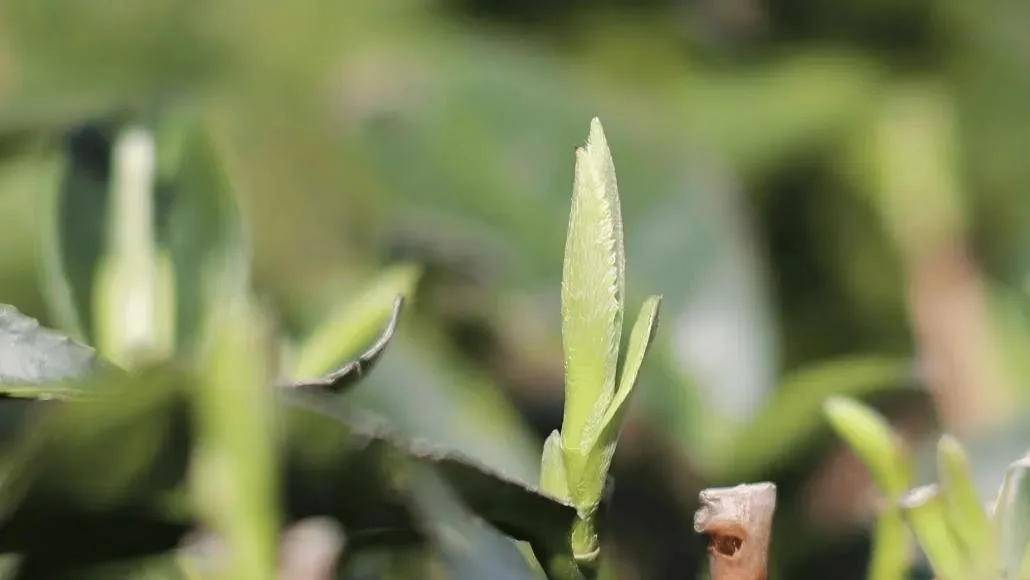
It is also the easiest thing to check before buying. Silver Needle should contain no leaf blades at all. If you see flat grey-green leaf mixed in, it is not Silver Needle, whatever the packet says.
How They Taste Side by Side
Brew them together, same weight, same water, same time, and the contrast is immediate.
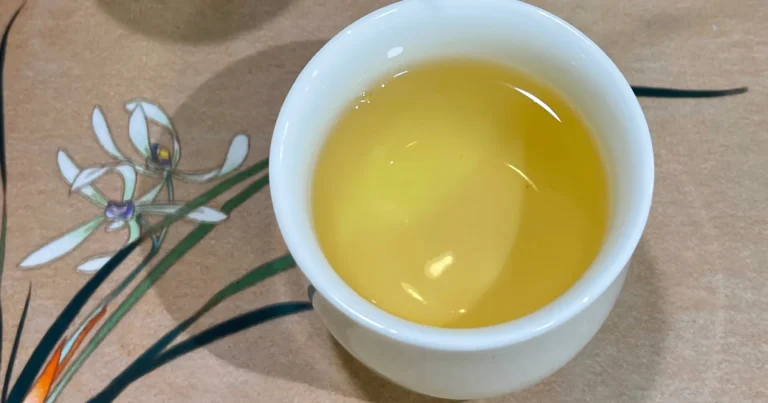
Silver Needle gives a pale, almost watery liquor with a sweet, floral, hay-like flavour and essentially no astringency. The sweetness arrives late and lingers; the mid-palate is quiet. It reads as delicate rather than weak, but only if you are paying attention.
White Peony gives a fuller, more coloured cup with more body and a faint fruitiness behind the florals. There is a little structure — a slight grip that Silver Needle lacks — and the flavour is present from the first sip rather than arriving late.
The standard’s own vocabulary captures the difference. Both grades use 毫香 (down fragrance) and 清甜 (clean sweetness), but White Peony adds 醇厚 (mellow and thick) as the grade drops, while Silver Needle’s descriptors stay in the register of 清鲜 (fresh and brisk). One is a texture tea; the other is an aroma tea.
The Caffeine Surprise
Most people assume the more expensive, bud-only tea carries more caffeine. In the cup, it usually carries less.
Pan et al. (2018) brewed three Fuding white grades identically — 3 g in 150 ml at 100 °C for five minutes — and measured caffeine by HPLC:
| Grade | Caffeine at 100 °C | Per 150 ml cup |
|---|---|---|
| Silver Needle | 386.58 ± 19.33 mg/L | ≈ 58 mg |
| White Peony | 610.96 ± 30.55 mg/L | ≈ 92 mg |
White Peony delivered roughly 1.6 times the caffeine of Silver Needle under identical conditions, despite Silver Needle often having more caffeine in the dry leaf — Tan et al. (2017) found higher dry-leaf caffeine in early-spring Silver Needle than in late-spring White Peony.
The resolution is extraction. Whole, downy buds resist water; leaves give up their contents faster. What is in the leaf and what reaches the cup are different measurements, and the grade comparison only makes sense if you specify which one you mean.
Practical upshot: if you want less caffeine, Silver Needle is the better choice — and if you want more, White Peony is. Both statements are the opposite of what most buyers expect.
What the Price Gap Buys
Silver Needle costs substantially more, and the reason is harvest economics rather than measured superiority.
Silver Needle requires picking buds individually in early spring, when the plant produces relatively little. Only buds are used; leaf and stem are discarded. White Peony is picked as a whole shoot — bud plus leaves — which is faster, and it uses more of what the plant produces.
So the premium buys you a specific raw material with a specific character, not a better-made tea. A well-made White Peony is a better drink than a poorly stored Silver Needle at several times the price, and that comparison happens more often than the price gap would suggest.
At the industry level, white tea averaged roughly 67 yuan per kilogram in agricultural value in 2025 across all grades — a figure that tells you about the category, not about the two teas in front of you.
Brewing Silver Needle and White Peony
The same method does not flatter both, which is why drinkers sometimes conclude they dislike one grade when they have simply used the wrong approach.
- Silver Needle: 5 g per 110 ml, 85–90 °C, 20 seconds for the first infusion. Pour against the wall of the gaiwan — the down detaches easily and a hard pour clouds the liquor.
- White Peony: 5 g per 110 ml, 85–90 °C, 15–20 seconds to start. It is more forgiving of both temperature and time.
Both want the whole infusion poured off each round, and both reward adding 5–10 seconds per steep. The commonest error with Silver Needle is under-extracting it — brewing it like a green tea and concluding it tastes of nothing.
One myth worth discarding here as well: neither grade needs cool water to protect it. The study that ran a full temperature range across four white teas found 95 °C optimal for all of them, including both Silver Needles. Cooler water slows extraction; it does not protect the leaf.
Full instructions are in how to brew white tea.
Do They Age Differently?
Yes, and the difference follows the same logic as everything else on this page: leaf carries more of the material that transforms.
White Peony is commonly aged. Studies tracking it over eight years found sweetness and mellowness rising while freshness and bitterness fell — a softening that many drinkers prefer to the fresh tea. It is also the grade most often pressed into cakes.
Silver Needle changes less. Buds carry fewer of the compounds that drive the transformation, so an aged Silver Needle tends to be a softer version of a fresh one rather than a different drink. It is not that it cannot be aged; it is that the return on aging is smaller.
Neither grade improves indefinitely. A study of white tea cakes aged 2 to 19 years found four years scoring best on sensory evaluation, and a storage trial found optimal conditions differed by grade. So “buy it and forget it for twenty years” is not a strategy either grade rewards.
If aging is your goal, Shoumei is the conventional choice and White Peony a reasonable second. Silver Needle is the least rewarding to age and the most expensive to experiment with. Details are in the Shoumei aging guide.
Which One Should You Buy?
Answer by what you actually want, not by which is “better”.
Choose White Peony if you are new to white tea, you drink several cups a day, you want a fuller cup, or you are choosing between grades for caffeine reasons. It is the better default, and it is the grade we recommend to most people starting out.
Choose Silver Needle if you want the most delicate expression of the category, you are willing to brew it attentively, you want lower caffeine per cup, or you are buying a gift where the appearance of the leaf matters.
Buy both if you can afford a small quantity of each. Tasting them side by side in one session teaches you more about white tea than any description, and it makes every subsequent buying decision easier.
A practical note on quantity: 50 g of each is enough for eight to ten gaiwan sessions, which is plenty to reach a view. Buy them in the same week if you can, so that the comparison is fresh in your mouth rather than remembered.
What we would not recommend is buying a large quantity of Silver Needle as a first purchase. It is the least forgiving grade for a beginner, and the most expensive way to discover you prefer something else.
Detailed guides: Baihao Yinzhen and White Peony tea. For how both fit into the wider category, see the four types of white tea.
How to Tell Them Apart in the Shop
You do not need to taste to identify these two. The difference is visible in a handful of dry leaf.
Silver Needle is a pile of pale needles. Every piece should be a bud — fat at the base, tapering, covered in fine white down. There is no leaf material, no stem in quantity. If you can see flat grey-green blades, it is not Silver Needle.
White Peony is a mix. You should see distinct downy buds attached to one or two grey-green leaves on a short stem. The ratio of bud to leaf is the quality signal: more bud heart means a higher grade and a higher price.
Three things to check on either:
- Uniformity. A consistent pile suggests careful sorting; a mix of sizes and colours suggests it was not.
- Colour. Silvery-grey-white with lustre for Silver Needle; grey-green with silvery buds for White Peony. Yellow or brown patches mean age, poor storage or heat damage.
- Smell. Hay-sweet and clean when dry. Any mustiness is disqualifying at Silver Needle prices.
What you cannot check is cultivar, and for these two grades it matters less than for Gongmei — both are made from the same Daibai and Shuixian material, so the difference between them really is the picking standard and nothing else.
A last word on expectations. Neither of these teas will taste like the other, and neither is a stepping stone to the other — they are parallel expressions of the same leaf. Drinkers often start with White Peony, move to Silver Needle out of curiosity, and then settle back on White Peony as the everyday tea while keeping Silver Needle for occasions. That pattern is not a failure of the expensive one; it is what the grading system is for. Each grade exists because it does a different job, and the job White Peony does — a full, forgiving, affordable cup — turns out to be the one most people want most days.
Frequently Asked Questions
Is Silver Needle stronger than White Peony?
No — in the cup it is usually lighter. Silver Needle is buds only, which extract slowly, so it tastes more delicate and gives less body than White Peony. It can also carry less caffeine per cup despite having more in the dry leaf.
Which has more caffeine, Silver Needle or White Peony?
White Peony, in the cup. Brewed identically at 100 °C, White Peony measured 610.96 mg/L against Silver Needle’s 386.58 mg/L. Silver Needle often has more caffeine in the dry leaf, but whole buds extract more slowly.
Why is Silver Needle more expensive?
Harvest labour. Buds are picked individually in early spring when yields are low, and only buds are used. White Peony is picked as a whole shoot, which is faster and uses more of the plant.
Which is better for beginners?
White Peony. It gives a fuller, more immediately legible cup, tolerates a wider range of brewing conditions, and costs less — which matters when you are still learning what you like.
Do they need different brewing temperatures?
Not much. Both work at 85–90 °C. The difference is time: Silver Needle benefits from a slightly longer first steep because whole buds resist water, while White Peony is forgiving of both.
Silver Needle vs White Peony: which has more caffeine?
White Peony, in the cup. Brewed identically at 100 °C, White Peony measured 610.96 mg/L against Silver Needle at 386.58 mg/L, because whole buds release their contents more slowly.
Silver Needle vs White Peony: which is better for beginners?
White Peony. It gives a fuller, more legible cup and tolerates a wider range of brewing; Silver Needle vs White Peony is not really a fair fight for someone still learning what they like.
Silver Needle vs White Peony: which costs more?
Silver Needle, by a wide margin. The gap reflects picking labour rather than measured quality — Silver Needle is buds picked individually, while White Peony is a whole shoot picked at once.
Silver Needle vs White Peony: which ages better?
The comparison favours White Peony. Leaf carries more of the compounds that transform in storage, so Silver Needle vs White Peony over ten years ends with the leaf grade in front.
Silver Needle vs White Peony: can I brew them the same way?
Almost. Both work at 85 to 90 °C, but Silver Needle needs a slightly longer first steep — about 20 seconds against 15 — because intact buds resist water.
Silver Needle vs White Peony: which is sweeter?
Both are sweet, but differently. Silver Needle is sweet in the finish, arriving late; White Peony is sweet up front with a faint fruit note behind it.
Silver Needle vs White Peony: which should I buy first?
White Peony. Buying a small amount of each is better still, but if you are choosing one, Silver Needle is the least forgiving grade and the most expensive way to learn.
Silver Needle vs White Peony: how do they look in the bag?
Completely different. Silver Needle is a pile of pale downy needles with no leaf at all; White Peony shows downy buds attached to one or two grey-green leaves on a short stem.
Silver Needle vs White Peony: which is more forgiving to brew?
White Peony. Silver Needle vs White Peony is not close on this point — whole buds resist water and punish a short steep, while White Peony tolerates a wide spread of temperature and time.
Silver Needle vs White Peony: can I age either one?
Both can be aged, but Silver Needle vs White Peony over years favours the leaf grade. White Peony has more material to transform; Silver Needle mostly softens in place.
Sources & References
Standards
- GB/T 22291-2017 — White tea product standard. §3.1 defines Baihao Yinzhen as single buds; §3.2 defines Baimudan as one bud with one or two leaves.
Peer-Reviewed Research
- Pan, J. et al. (2018). Comparison of the main compounds in Fuding white tea infusions from various tea types. Food Science and Biotechnology 27(5):1311–1318. DOI:
10.1007/s10068-018-0384-3 - Tan, J. et al. (2017). Flavonoids, phenolic acids, alkaloids and theanine in different types of authentic Chinese white tea samples. Journal of Food Composition and Analysis 57:8–15. DOI:
10.1016/j.jfca.2016.12.011 - Lin, C., Xia, G. & Liu, S. (2017). Modeling and comparison of extraction kinetics from representative white teas. LWT — Food Science and Technology 83:1–9. DOI:
10.1016/j.lwt.2017.04.028
Industry Sources
- China Tea Marketing Association (2026). White tea industry survey — average agricultural value per kilogram across all grades, 2025.
What this page does not claim
We do not claim either grade is superior, that price tracks quality, or that the caffeine figures above will match your own cup. They are laboratory measurements under fixed conditions; your brewing will differ.
Shop the teas in this guide
The grades described above, sold directly from our own stock. Prices are for the smallest size; every listing states the harvest, the county and the size options.
Editorial note
This guide is written by Steve Wood and reflects both published research and our own brewing. Where evidence is thin or contested, we say so rather than filling the gap. We sell white tea, which is a conflict of interest we disclose rather than hide.


6 Comments