
Jasmine Green Tea: Scenting, Grades and Taste
Jasmine green tea is not a separate plant. It is green tea scented with fresh jasmine blossoms, a process called scenting (窨制). The tea absorbs the flower aroma over several rounds, then the spent blossoms are removed.
First published: November 9, 2026 · Last updated: November 9, 2026 · By Steve Wood, founder and head tea buyer
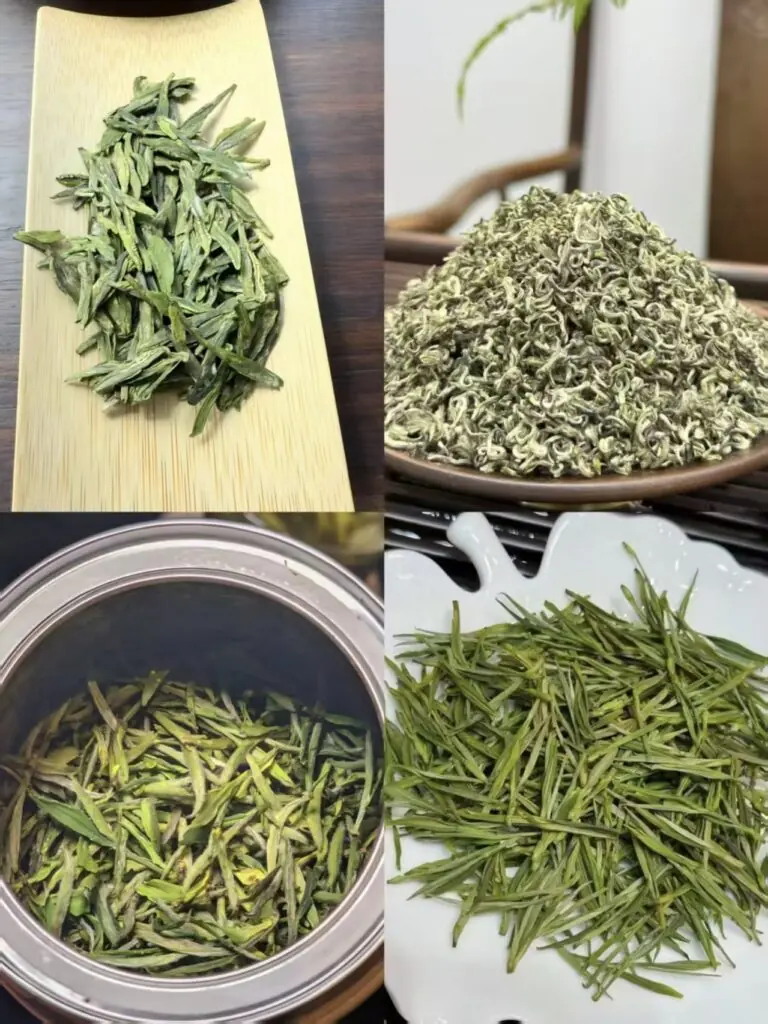
How Jasmine Green Tea Is Made
The base is usually a green tea from Fujian or Yunnan. In Fuzhou, the traditional method layers tea leaves with fresh jasmine buds picked in the afternoon and opened overnight. The dry tea absorbs the scent, then the flowers are sifted out. A good jasmine tea may go through several scenting rounds, with fresh flowers added each time.
This is why the flower count on the label is not the whole story. What matters is how many scenting rounds the tea received and how fresh the base leaf was. A tea with a lot of visible flowers but a thin base can smell perfumed rather than scented.
Grades and Scenting Rounds
Fuzhou jasmine tea is often graded by scenting rounds. Three rounds is ordinary; six is good; nine is the top tier associated with the traditional Fuzhou craft. The exact number is a production choice, not a legal grade, and a high count cannot rescue stale leaf.
Fuzhou’s jasmine tea scenting craft is recognised in China as national intangible cultural heritage. That recognition belongs to the craft and the region, not to every box labelled jasmine tea.
What Jasmine Green Tea Tastes Like
Expect jasmine flowers first, then a soft green-tea base with a sweet finish. Good versions taste floral rather than soapy, and the flower note fades into the tea instead of sitting on top. The liquor should be clear and pale gold, not cloudy.
It is a forgiving tea for beginners because the scent carries the cup even if the steep is slightly off. It is also easy to overbrew: too much leaf or too long a steep turns the base bitter and the jasmine cloying.
How to Brew Jasmine Green Tea
- Use 3 g of leaf per 150 ml of water.
- Heat water to 75–80 °C. Do not use boiling water.
- Steep for 1–2 minutes, then strain fully.
- Re-steep two or three times, adding 10–15 seconds per round.
For a cold version, use 1 g per 100 ml and steep in the fridge for 4–8 hours. The floral note comes through well without bitterness.
Scenting, Step by Step
Jasmine tea is made at night. The flowers open after dark and release most of their aroma in the hours that follow, so the blossoms are picked in the afternoon as buds, kept cool, and then layered with the finished green tea in the evening — often a ratio of roughly one part flowers to one part leaf, though the exact figure is a house decision.
The heap is left overnight. As the blossoms open, the leaf absorbs the volatiles. In the morning the spent flowers are sieved out, because leaving them in would make the tea taste of wet paper, and the leaf is re-fired briefly to drive off the moisture it picked up overnight. That moisture control is the part that separates good jasmine tea from tea that goes flat or musty within a season.
Then the whole cycle repeats with fresh flowers. Three rounds gives a clean, light jasmine character; six or seven gives the heavy, perfumed style that Chinese buyers associate with premium grades; nine is the traditional maximum and is quoted more often than it is genuinely achieved.
Why “Nine Scenting” Is a Claim Worth Testing
Scenting rounds cannot be verified by looking at the tea, which is exactly why the claim is so widely made. Two useful checks:
- Smell the dry leaf and then the brewed leaf. Genuinely multi-scented tea still smells of jasmine after three or four infusions. Tea that was flavoured with jasmine essence or sprayed with aroma peaks in the dry leaf and fades abruptly by the second cup.
- Look for petals — and understand that their absence is not a defect. Traditional Fuzhou scenting sieves every flower out, so no petals appear. Visible petals usually mean a different, cheaper method: blossom is added at the end for appearance. Neither approach is dishonest, but they are not the same product and should not be priced the same.
Single-Petal and Multi-Petal Jasmine
The flowers themselves differ. Single-petal jasmine (dan ban) opens with fewer, narrower petals and gives a lighter, cleaner aroma that most tasters prefer; multi-petal varieties (shuang ban) are hardier, later-flowering and produce a heavier, sweeter scent. Multi-petal is more common and cheaper. Single-petal commands a premium and is more often used for the higher scenting counts.
Neither is “fake”. A multi-petal tea scented seven times will beat a single-petal tea scented twice. Flower variety is one variable; rounds, leaf base and firing discipline matter at least as much.
The Leaf Base Matters as Much as the Flowers
Jasmine is a scent, not a tea type, so the base can be anything — and it usually is. Much of the jasmine tea sold worldwide is built on a low-grade green leaf with a lot of stem, because the aroma will cover it. A good base shows through: you should be able to taste green tea underneath the flowers, with some sweetness and a clean finish rather than a flat, slightly dusty body.
The jasmine teas on this site are built on Fujian and Shouning leaf rather than a commodity base. Compare the effect directly against a plain leaf, for example the green tea category or a specific lot like Huang Shan Mao Feng.
Brewing Jasmine Green Tea
Jasmine green tea is a green tea, so treat it like one. Water at 75–80 °C, about 3 g per 150 ml, and a first steep of one to two minutes. Boiling water flattens the floral top notes and pulls bitterness out of the base leaf at the same time — the worst of both outcomes.
In a gaiwan, use 4–5 g per 110 ml and steep 20–30 seconds, adding ten seconds a round. Two or three infusions is normal; the second is often the sweetest because the leaf has opened but the aroma has not yet gone.
Cold brewing is where jasmine performs unusually well. One gram per 100 ml of cold water, six to eight hours in the fridge, gives a sweet, floral, almost grape-like drink with none of the bitterness. See the cold brew method for ratios by tea type.
Storing and Reviving
Scented tea loses its aroma faster than plain green tea because the volatiles are on the surface of the leaf rather than locked inside it. Keep it sealed, dark and cool, and finish an opened packet within two to three months. A tea that has gone flat is not recoverable — but it is still drinkable as a cold brew, where the lower temperature extracts less of the staleness.
If you want the specifics on humidity, temperature and containers, the storage guide covers them in detail.
Where Jasmine Tea Comes From: Fuzhou, Hengxian and Yunnan
Three regions dominate, and the origin tells you a good deal about what is in the tin before you open it.
Fuzhou in Fujian is the historic home of jasmine tea and still sets the reference point. The local single-petal jasmine flowers in summer, the scenting houses run traditional multi-round cycles, and the finished tea is typically built on Fuding or Shouning green leaf. Volumes are small and prices are the highest of the three.
Hengxian in Guangxi produces the overwhelming majority of the world’s jasmine tea. The flowers are multi-petal, the season longer, and the scale industrial. Quality ranges from excellent to very ordinary; the region is not the problem, but its volume means a lot of the cheap end of the market starts here.
Yunnan supplies both a strong green leaf and its own flowers, and the result is a heavier, sweeter, more perfumed tea than a Fuzhou style. When Yunnan leaf is scented with Yunnan flowers the character is consistent — bolder body, less delicacy — and it is often better value per gram.
None of this substitutes for tasting. Origin narrows the expectation; the number of scenting rounds, the care taken at the re-firing step and the grade of the base leaf decide whether the expectation was met.
Jasmine on White and Oolong Bases
Scenting is a technique, not a tea type, and it works on any base that will absorb aroma. Two variations are worth knowing.
Jasmine white tea — sold as jasmine dragon pearl or jasmine silver needle — uses white tea leaf, often hand-rolled into pearls so that the jasmine can be layered evenly and picked out again. The effect is softer and sweeter than jasmine green tea: less grass, more honey, and a cup that tolerates cooler water very well. The pearls are denser than loose leaf, so use slightly more by weight and give them a few extra seconds.
Jasmine oolong is less common but interesting: a lightly oxidised, lightly roasted base shows the flower differently, with the jasmine sitting on top of a stone-fruit body instead of a grassy one. It rarely takes the nine-scenting treatment, because the roast would obscure the flower, so expect fewer rounds and a subtler result.
If you like jasmine green tea and want to explore, jasmine white is the natural next step. If you find jasmine green tea thin, a Yunnan-scented version or a jasmine oolong will give you more body without losing the flower.
Frequently Asked Questions
Is jasmine green tea a real tea?
Yes. It is green tea scented with jasmine flowers, not a herbal infusion. It contains caffeine unless it is specifically made from decaf green tea.
Does jasmine green tea have caffeine?
Yes, at roughly the level of the green tea base. A typical cup is around 20–30 mg per 250 ml, depending on leaf and steep time.
What does “nine-scenting” mean?
It means the tea was layered with fresh jasmine flowers nine times. It is a labour-intensive traditional style from Fuzhou, not a universal grade.
How should I store jasmine green tea?
Sealed, cool, dark and dry, away from strong smells. The floral note fades before the base tea does, so drink it within a few months of opening.
Related guides
See our green tea brewing guide for temperature and time, and our storage guide for keeping the scent fresh.
Author and reviewer disclosure
This page was written by the founder and head tea buyer at Min Tea Shop. It contains no sponsored content or paid placements.
Sources: Mayo Clinic’s caffeine chart; EFSA on caffeine intake; ACOG on caffeine in pregnancy.


2 Comments