How to Buy White Tea: Grades, Vintages and Red Flags
Buying white tea is easier than the shelf suggests, because most of what you need to judge is printed on the packet or visible in the leaf. The hard part is not the tea — it is the vintage claims, which are often unverifiable and occasionally criminal.
This guide covers what you can check, what you cannot, and what the difference is worth in money.
Table of Contents
Start With the Execution Standard
Chinese tea packaging carries an execution standard (执行标准) — the code of the standard the product is made to. For white tea, the relevant one is GB/T 22291-2017.
That standard recognises exactly four products: Baihao Yinzhen (Silver Needle), Baimudan (White Peony), Gongmei and Shoumei. Each has a defined raw material. A packet claiming to be white tea under some other category name — or under no standard at all — is not covered by the national standard, whatever the front of the box says.
Two category confusions are common enough to mention. “New process white tea” (新工艺白茶) is defined in a Fujian provincial standard, DB35/T 1633-2016, not the national one — it involves a light rolling step and produces a darker, fuller tea. And “Snow bud” (雪芽) is not a white tea category in the national standard at all, though the name appears on packaging.
The standard also sets the numbers: moisture ≤8.5%, total ash ≤6.5%, water extract ≥30%. Those are producer obligations rather than things you can check in a shop, but their presence tells you the product is being made to a specification.
A stricter number worth knowing
If a tea is sold under a geographical indication — Fuding white tea (protected 2009) or Zhenghe white tea (protected 2007) — it may be held to a tighter moisture limit than the national standard’s 8.5%. The older GI standards specify 7.0%. That distinction is real, but it only applies if the GI mark is genuine, so treat it as a claim to verify rather than a guarantee you have been given.
Read the Grade Correctly
Grade names describe picking standards, not quality tiers. That is the single most useful thing to understand before you spend money.
| Grade | Raw material | What it means for the cup |
|---|---|---|
| Baihao Yinzhen | Buds only | Delicate, sweet, floral, low astringency |
| Baimudan | One bud, one or two leaves | More body, more complexity, better value |
| Gongmei | Tender shoots of population varieties | Fuller and slightly earthy; limited supply |
| Shoumei | Tender shoots or leaves, often with stem | Rounded, sweet, the everyday grade |
Two consequences follow. First, a well-made Shoumei is not a worse tea than a mediocre Silver Needle — they are different materials, and the price difference reflects picking labour, not a quality hierarchy. Second, because Gongmei is restricted to population varieties since the 2017 standard, it is genuinely scarce; if a seller has unlimited quantities at a low price, ask which cultivar it came from.
What a Proper Evaluation Looks Like
China has a standard method for this, and you can borrow parts of it at home. GB/T 23776-2018 specifies the column-cup method for white tea:
- 3.0 g of leaf in 150 ml of boiling water — a 1:50 ratio
- Steep for 5 minutes
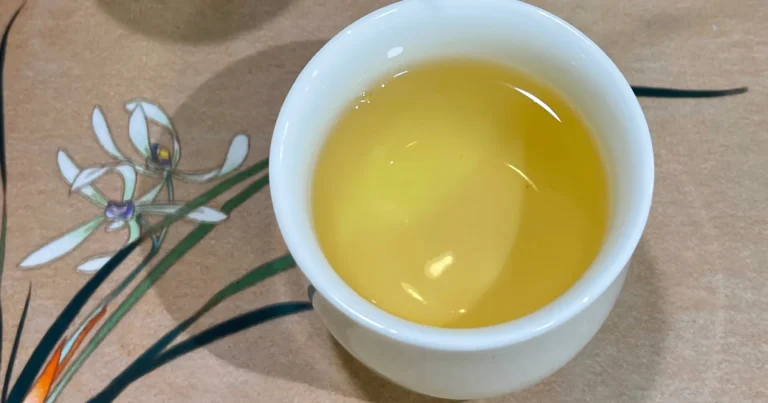
- Assess in order: liquor colour, then aroma, then taste, then the wet leaf
The scoring weights used in professional evaluation are appearance 25, liquor colour 10, aroma 25, taste 30, leaf bottom 10. Notice that taste carries the most weight and appearance the second most — which is a useful corrective to buying on looks alone.
Why boiling water and five minutes? Because the point is to expose the tea, not to flatter it. A short gentle steep hides faults; a standardised long steep reveals whether the leaf is clean, whether it turns bitter, and whether the aroma survives.
At home, you do not need the full protocol. Three things are worth doing: use a consistent ratio, use the same time for every tea you compare, and always smell the wet leaf after brewing. The wet leaf is where storage problems and processing faults show up most clearly.
Price: What the Data Actually Says
Almost every “white tea price guide” online is republishing vendor prices. The reliable figures are at the industry level, and they are broad.
The China Tea Marketing Association’s 2026 industry survey reports 2025 national white tea output of 100,100 tonnes (10.01 万吨), with an agricultural value of 6.785 billion yuan — an average farm-gate value of roughly 67 yuan per kilogram. The domestic wholesale average is reported at about 91.48 yuan per kilogram.
Those are averages across all grades, and the spread within them is enormous. Silver Needle, picked bud by bud in early spring, costs many times what Shou Mei costs. What the averages tell you is the order of magnitude of the category, not what any particular tea should cost.
What we will not do is quote retail prices per jin. They vary by region, season and channel, they go stale within months, and any specific number would be out of date before you read it.
How to Taste Before You Commit
Most of the risk in buying white tea is removed by tasting before you buy in quantity. If a seller will not let you taste, that is information too.
What to do with a sample:
- Brew it twice. Once gently, once with boiling water for five minutes. The first tells you how pleasant it is; the second tells you whether it is clean. Faults hide in gentle brewing and appear in the standardised one.
- Smell the wet leaf after pouring off. Fresh hay and floral notes are good. Sourness, damp earth or a cardboard smell point to storage problems.
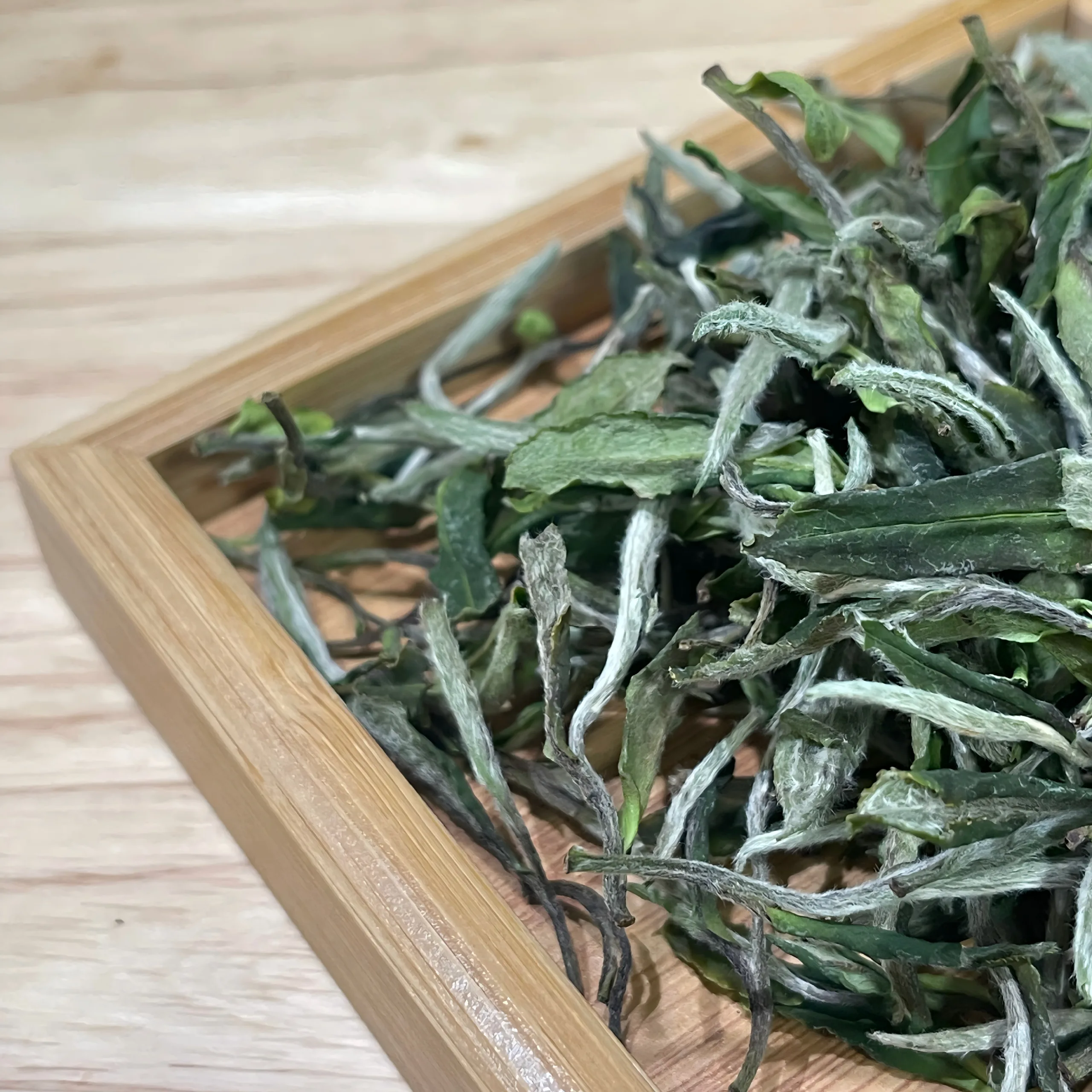
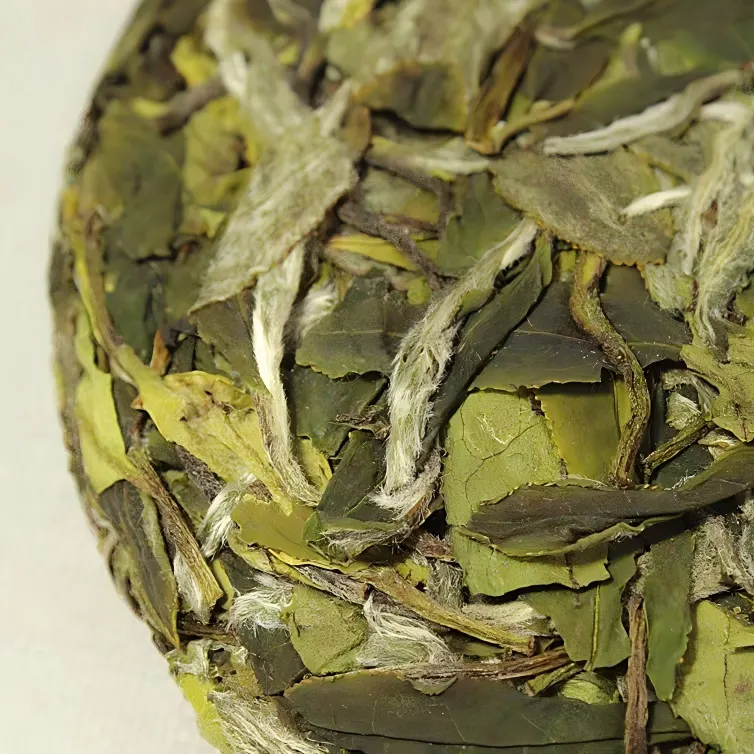
- Look at the leaf, not the liquor. Whole buds and unbroken leaves indicate careful handling. A high proportion of fragments suggests rough sorting or rough transport.
- Taste it cool. Bitterness and roughness show up more clearly as the cup drops below about 40 °C. If it is harsh when cool, it will be harsh in a larger pot too.
One thing tasting will not tell you is age. A well-made three-year-old tea can taste more “aged” than a poorly stored ten-year-old, because storage conditions matter more than the calendar. Judge the cup you are drinking, not the year on the label.
Vintage Claims: The Hard Part
This is where white tea buying differs from buying any other tea, and where most of the money is lost.
Aged white tea commands a premium, and under T/CSTEA 00021-2021 the term “aged white tea” is defined as tea naturally aged for five years or more. A cake sold as “aged” at three years is using the word outside its standard meaning.
The problem is that vintage is not something a buyer can verify. There is no test that reads a year off a leaf.
What has actually gone wrong
The fraud is documented, not hypothetical. In a 2026 case publicised by the Fuding court, a tea cake was labelled as produced in September 2015 but carried the execution standard GB/T 31751-2015 — a standard that only took effect on 1 February 2016. The cake could not have been made to a standard that did not yet exist. The false labelling drew an administrative penalty from the Fuding market regulator, including a 5,000 yuan fine and confiscation of the proceeds; the court case itself was a sale-contract dispute resolved by mediation, with the buyer refunded.
In a separate case, a shop sold “2012 aged white tea” that turned out not to have been produced by the manufacturer named on the package; the buyer was awarded a refund and compensation.
Trade reporting has described the practice of artificial aging (做旧) — accelerating appearance and colour to imitate age — for years. Academic work has documented two specific techniques: blending new leaf with old, and light rolling plus fermentation to imitate the darker liquor of aged tea.
What detection can and cannot do
Research has made real progress on classification, and it is worth understanding what it proves.
- Hyperspectral imaging combined with electronic tongue, electronic nose and gas chromatography can distinguish White Peony from 2020, 2021 and 2022 — a three-year window.
- Near-infrared spectroscopy with machine learning has been used to classify both category and vintage.
- Specific volatile and non-volatile markers rise or fall with storage time in a measurable way, which allows a sample to be placed in a rough age band.
What none of this does is establish a production year to a legal standard. These are statistical classifiers trained on known samples; they separate age bands, not calendar dates. And isotope analysis, which does work for origin, is not used for vintage.
So when a seller claims a specific year, the honest position is: they may be telling the truth, but neither you nor they can prove it from the leaf. What can be checked is documentation — the Fuding white tea traceability platform, which has operated since 2021, is the closest thing to a verifiable chain.
Pesticides, Lead and Mould
Three regulatory facts are worth carrying into a purchase.
Pesticides. GB 2763-2026, effective from March 2026, sets 112 maximum residue limits for tea. Tea is a regulated agricultural product in China and is subject to market sampling; public notices of failed batches do appear, which is a sign the system functions rather than a sign the category is unsafe.
Lead. GB 2762 sets a limit of 5.0 mg/kg for lead in tea.
Mycotoxins. GB 2761, the standard for mycotoxin limits in food, does not currently list tea. That is an absence of a limit, not evidence of safety. For aged tea in particular, the practical risk is damp storage, which is why the physical checks below matter more than any certificate.
A Buying Checklist
- Execution standard on the packet. GB/T 22291-2017 for white tea.
- Grade named correctly. Four categories only; if it is called something else, ask what it actually is.
- Harvest year stated. Not just “aged” — a year, and ideally a season.
- Origin stated. County level at minimum. “Fujian” is not an origin claim.
- Leaf intact. Whole buds and unbroken leaves; a high proportion of broken leaf suggests rough handling.
- Smell clean. Hay-sweet and dry. Musty, sour or dusty means walk away.
- No white fuzz. Patchy raised white spots are mould, not the natural down on buds.
- Buy small first. 50 g tells you whether you like a grade. A 350 g cake is a commitment.
- Be sceptical of vintage premiums. Pay for tea you have tasted, not for a year you cannot verify.
The last point deserves emphasis, because it is where most of the disappointment in this category comes from. A buyer pays a premium for a year, receives a tea they have not tasted, and discovers they prefer fresh white tea anyway. Taste first, then decide what a vintage is worth to you — not the other way round.
If you are still deciding which grade to buy, the four types of white tea explains what separates them, and Silver Needle versus White Peony compares the two most common first purchases. Once you have bought, how to store white tea covers keeping it in condition.
Frequently Asked Questions
What should I check before buying white tea?
Three things: the execution standard on the packet, the visible bud content in the dry leaf, and whether the seller can name the county. Buying white tea without those three is guesswork.
Is buying white tea online risky?
It can be. Buying white tea online means you cannot smell or handle the leaf first, so the seller’s willingness to state grade, county and year matters more, not less.
How much should buying white tea cost?
There is no fixed figure, but White Peony and Shoumei should be affordable enough to drink daily. Paying a Silver Needle premium for a tea with visible leaf in it is the commonest expensive mistake in buying white tea.
Should I buy white tea cakes or loose leaf?
Loose leaf for learning, cakes for keeping. Buying white tea as a cake suits long storage and takes less space; buying white tea loose lets you inspect and re-seal it easily.
How do I avoid buying fake vintage white tea?
The safest approach is buying white tea with documentation — a traceability mark, a stated year and a seller willing to be held to it. A date cannot be verified from the leaf.
Is buying white tea from a famous county worth it?
Only when the claim is checkable. Buying white tea from Fuding or Zhenghe carries real geographical indication weight; buying white tea from a county with no such designation means trusting the seller instead.
How much should I buy to start?
Fifty grams. Buying white tea in small amounts lets you taste before committing, and it is enough for eight to ten sessions — more than enough to know whether you want more.
Related reading: what to check when buying shoumei tea.
Sources & References
Standards
- GB/T 22291-2017 — White tea product standard. Four categories; moisture ≤8.5%, ash ≤6.5%, water extract ≥30%.
- GB/T 23776-2018 — Tea sensory evaluation. Column-cup method for white tea: 3.0 g / 150 ml, 5 minutes.
- T/CSTEA 00021-2021 — Aged white tea. Naturally aged five years or more.
- GB 2763-2026 — Maximum residue limits for pesticides in food. 112 limits for tea.
- GB 2762 — Contaminant limits. Lead in tea ≤5.0 mg/kg.
- GB 2761 — Mycotoxin limits. Tea not currently listed.
- DB35/T 1633-2016 — Fujian standard defining new-process white tea.
Industry and Regulatory Sources
- China Tea Marketing Association (2026). White tea industry survey: 2025 output, agricultural value and average value per kilogram.
- Fuding People’s Court (2026). Published case on false labelling of a white tea cake’s production date.
- Fuding white tea big-data traceability platform — operating since 2021.
Peer-Reviewed Research
- Food Research International (2024). Discrimination of white tea vintages using hyperspectral imaging combined with electronic tongue, electronic nose and GC-IMS; documentation of blending and light-rolling adulteration. DOI:
10.1016/j.foodres.2024.115394 - Talanta (2026). Near-infrared spectroscopy with CNN-Transformer modelling for simultaneous category and vintage classification. DOI:
10.1016/j.talanta.2026.130825 - Xie, K. et al. (2019). Age-related changes in white tea volatiles and non-volatiles, including EPSFs and pyroglutamic acid as vintage markers. PMID 31554114
What this guide does not claim
We do not claim that any testing method can establish a production year, that a higher price guarantees better tea, or that GI status guarantees quality. We also do not quote retail prices, because they date faster than the advice.
Shop the teas in this guide
The grades described above, sold directly from our own stock. Prices are for the smallest size; every listing states the harvest, the county and the size options.
- Bai Hao Yin Zhen, 2026 Shouning, loose leaf — $12.90
- Bai Mu Dan, 2026 Shouning, loose leaf — $11.90
- Shou Mei with stem, 2025 Shouning, loose leaf — $9.90
- 2014 Shouning Shou Mei dragon pearls — $16.90
Editorial note
This guide is written by Steve Wood and reflects both published research and our own brewing. Where evidence is thin or contested, we say so rather than filling the gap. We sell white tea, which is a conflict of interest we disclose rather than hide.



One Comment