
Rock Tea Brewing: Water, Leaf and the Rinse Question
Rock tea brewing is simpler than the category’s reputation suggests. Boiling water, a lot of leaf, a small vessel, and short infusions. The complications come from two places: the argument about whether to pour the first infusion away, and the fact that fire level changes what the leaf needs.
This page covers the standard method, the professional tasting protocol, the rinse question, and how to adjust for light and full-fire tea.
Table of Contents
The Four Numbers in Rock Tea Brewing
Rock tea brewing reduces to leaf, water, temperature and time.
| Gongfu drinking | Professional tasting | |
|---|---|---|
| Leaf | 7–8 g per 110 ml | 5.0 g per 110 ml |
| Water | Boiling | Boiling |
| First infusion | 5–12 seconds | 2 minutes |
| Later infusions | Add 5–10 s each | 3 then 5 minutes |
| Infusions | 8–10 | 3 |
The difference between the two columns is purpose, not correctness. The tasting protocol is deliberately over-extracting so that faults show up; nobody drinks it. The gongfu column is designed to spread extraction across many pleasant infusions.
The professional standard is GB/T 23776-2018, which specifies 5.0 g in 110 ml of boiling water, three infusions of two, three and five minutes, with the second infusion used as the primary basis for judgement.
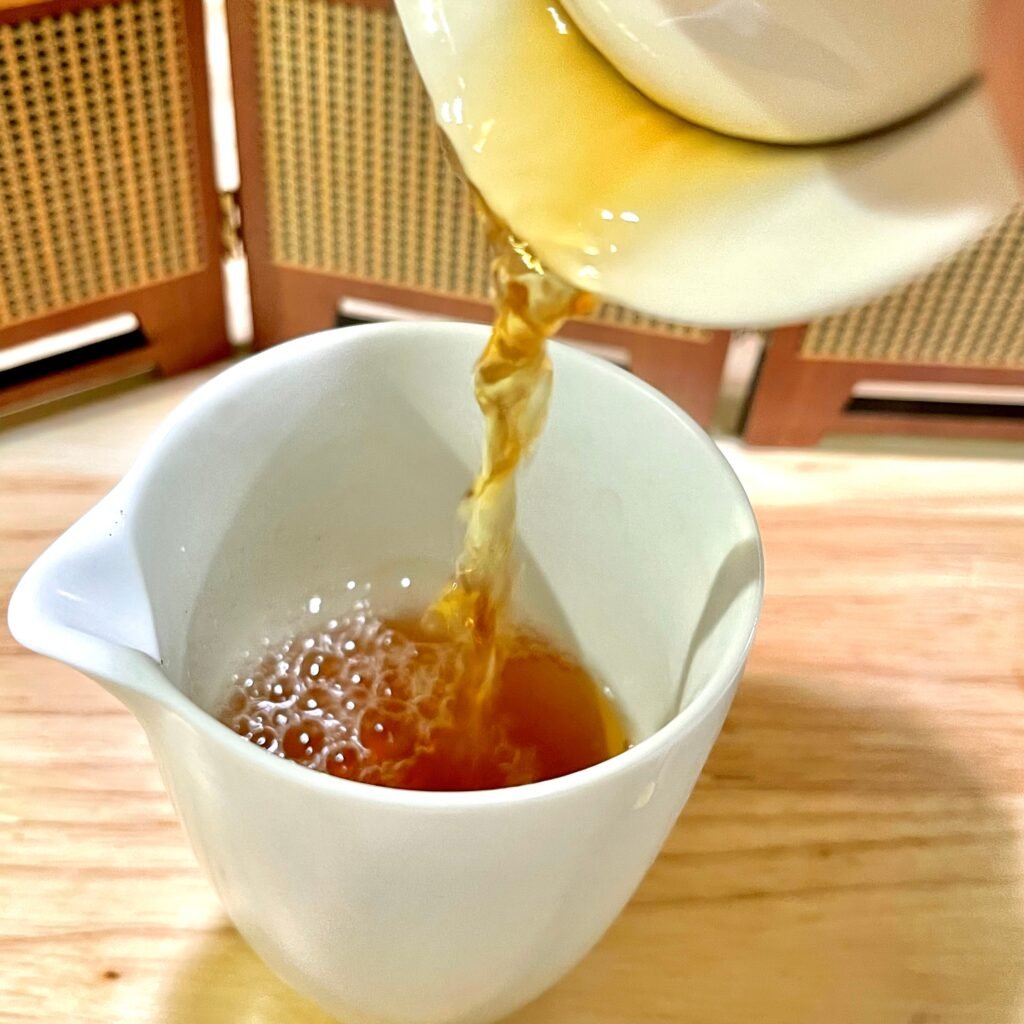
Why Rock Tea Brewing Uses Boiling Water
Rock tea wants full heat, and the reason is structural. The leaf is heavily oxidised and then charcoal roasted, which makes the cells resistant to water penetration. Cool water extracts the surface aromatics and little else, producing a fragrant but hollow cup.
Research on extraction confirms the direction. Steeping at higher temperatures raises the extraction rate across the board, and one to three minutes of steeping extracts 60 to 90 percent of the major soluble components. Water temperature is the strongest single lever in rock tea brewing, stronger than leaf ratio for most compounds.
There is no case for brewing rock tea at 85 °C. That advice belongs to green tea and to some light oolongs, where the goal is to avoid extracting astringency. Rock tea has already had its catechins converted and its structure set by fire; it needs heat to give up what it has.
The First Infusion Question
This is the most argued point in rock tea brewing, and both sides have something.
The tradition. Pouring the first infusion away is not a Wuyi practice. The local tradition is the opposite: the first steep is kept aside as huan hun tang, the returning-soul soup, and drunk at the end of the session when the palate is tired. The idea is that the first infusion holds the strongest aromatics and should be saved rather than discarded.
The science. Rinsing does something measurable. A study on rinsing across five to thirty seconds found it transferred between 0.2 and 24 percent of eight pesticide residues into the rinse water. Risk fell by 5 to 59 percent depending on the compound. The cost was a loss of 0 to 11 percent of EGCG, caffeine and other functional components.
So rinsing is defensible on residue grounds and costs relatively little. It is not a tradition, and anyone presenting it as ancient Wuyi practice is misinformed. If you rinse, keep it short: five to ten seconds is enough to wet the leaf and carry off surface material.
What the tradition is right about is aroma. The first infusion of a good rock tea is often the most aromatic of the session, and pouring it away is throwing out the best cup. A reasonable compromise is a very fast rinse of three to five seconds, drunk or discarded depending on your preference.
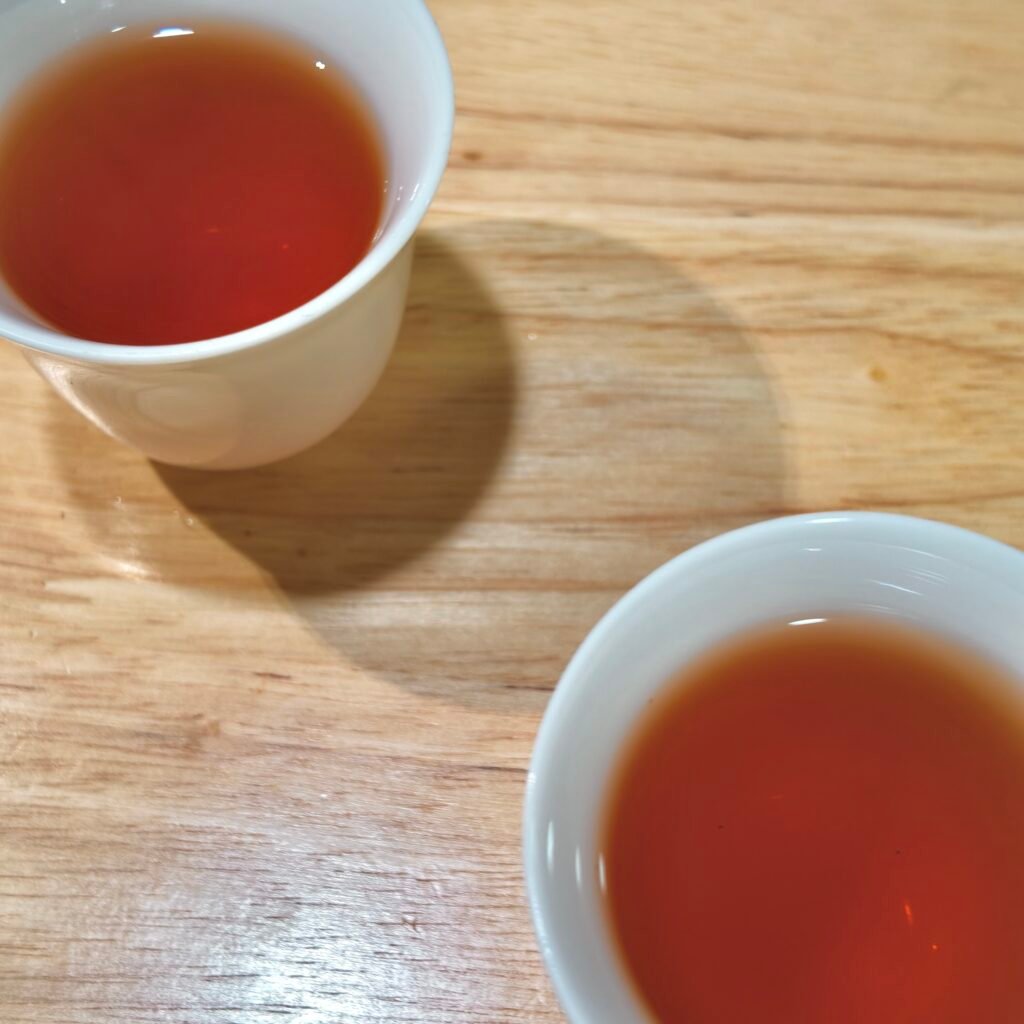
Vessel Choice for Rock Tea Brewing
Porcelain gaiwan or a small clay pot, and the two do different things.
Porcelain is neutral. It does not absorb aroma, it shows the liquor colour clearly, and it makes comparison between teas meaningful. For learning what a tea tastes like, porcelain is the right choice.
Yixing clay absorbs. A seasoned pot holds aroma compounds in its walls and releases them into later infusions, which rounds the cup and adds depth. It is also why a pot used for one tea should not be used for another: the seasoning carries flavour.
The mistake is using clay as a default. A pot seasoned with an aged oolong will blur the aromatics of a light-fire Rougui, and the effect is a cup that tastes pleasant but vague. For rock tea brewing specifically, a dedicated pot is fine if you drink one style, and porcelain is better if you are comparing.
Adjusting for Fire Level
Fire level changes the brewing more than most drinkers expect.
Light fire gives up its aromatics fast. Keep the early infusions very short, five to eight seconds, and accept that the session will fade after six or seven rounds. Pushing a light-fire tea produces bitterness with no compensating depth.
Medium fire is the most forgiving. Eight to twelve seconds on the first infusion, adding five seconds a round, works for almost everything in this band.
Full fire needs longer contact to open. Twelve to fifteen seconds on the first infusion is reasonable, and the tea will keep giving for ten or more rounds. It is also the style most tolerant of a heavy hand, which is partly why it is common in tea shops.
Troubleshooting Rock Tea Brewing
Burnt and harsh. Either the tea is too young or the brew is too strong. If the dry leaf smells of char, the problem is rock tea resting rather than brewing. If it only tastes burnt in the cup, reduce the leaf.
Thin and flat. Usually too little leaf. Rock tea leaf is bulky, so a generous-looking scoop may weigh six grams. Weigh it for the first few sessions.
Bitter at the back of the tongue. Over-steeped. Rock tea extracts fast once it opens, and the difference between a fifteen-second and a forty-second infusion is the difference between bright and harsh.
Astringent and drying. This is residual catechin extraction, and it usually means the tea is being pushed past its window. Shorten the later infusions rather than lengthening the early ones.
Metallic. Very soft water. Rock tea needs some mineral content to taste right, and distilled water produces a flat, oddly sweet cup.
Water
Water matters, and the reason is mineral content rather than purity. Rock tea brewed in very soft water tastes thin and slightly sour; brewed in very hard water it tastes dull and leaves a scum.
Ordinary filtered tap water is usually better than either extreme. If you have very soft water, a pinch of mineral blend or a switch to a bottled water with moderate hardness will change the cup more than most equipment purchases.
How Rock Tea Brewing Differs From Other Oolongs
The leaf is different, so the method is different. Three contrasts explain most of it.
Against green oolong. A modern Tieguanyin is brewed cooler, at 90 to 95 °C, with shorter sessions, because its appeal is a fresh green aroma that heat destroys. Rock tea brewing uses boiling water because the leaf has been roasted and will not release its depth otherwise. Applying green-oolong methods to rock tea produces a scented but empty cup.
Against dancong. Phoenix dancong is also brewed boiling and fast, but it is more fragile. Dancong is lightly oxidised, so its aromatics are more volatile and a long infusion turns it bitter quickly. Rock tea brewing tolerates more time because the roast has stabilised the leaf.
Against pu-erh. Pu-erh can be brewed repeatedly with very long infusions and even simmered, because compressed leaf releases slowly. Rock tea brewing sits between the two: longer than dancong, shorter than pu-erh, and never simmered unless you are deliberately experimenting.
Cold Brewing Rock Tea
Cold brewing works, though it produces a different drink rather than a colder version of the same one.
Use 5 to 7 g of leaf per litre of cold filtered water, refrigerated for six to eight hours. The cold extraction pulls less roast character and less astringency, so the cup is sweeter and lighter than hot-brewed rock tea, with the floral notes more prominent and the charcoal almost absent.
Two notes. Light-fire tea cold brews better than full-fire tea, because there is less roast to suppress. And cold-brewed rock tea does not keep well beyond two or three days even refrigerated, because the low-acid environment supports growth once the leaf is in contact with water.
Brewing to Taste Versus Brewing to Learn
These are different exercises, and confusing them is why people struggle to compare teas.
When you brew to taste, you optimise for the best cup: the leaf amount you enjoy, the water you have, the infusion lengths that suit your palate. There is no wrong answer, and adjusting mid-session is normal.
When you brew to learn, you hold everything constant. Same leaf weight, same water, same temperature, same timings, and taste two teas side by side. This is the only way to find out whether the difference you perceive is the tea or the method.
For rock tea brewing specifically, the most useful controlled comparison is the same tea at two different leaf weights. Rock tea is bulky and easy to over-portion, so the gap between 6 g and 8 g in the same vessel is often larger than the gap between two similarly priced teas.
A second useful test is temperature. Brew the same leaf at 90 °C and at 100 °C. The difference tells you more about the tea’s structure than any product description, and it takes five minutes.
What to Do With Spent Leaves
Rock tea gives more than most drinkers expect after the gaiwan session ends.
The spent leaf can be simmered: 5 g in 500 ml of water, brought to a boil and held just below for three to five minutes. The result is a sweet, woody infusion quite unlike the brewed cups, and for full-fire or aged tea it is often the most interesting thing the leaf produces.
It is also a diagnostic. If the simmer tastes thin and papery, the leaf was probably ordinary material heavily roasted. If it tastes sweet and long, the leaf had substance to begin with.
Frequently Asked Questions
What temperature should rock tea brewing use?
Boiling, or 99 to 100 °C. The leaf is roasted and oxidised, and it needs full heat to open. Cooler water gives a fragrant but hollow cup.
Should I throw away the first infusion?
Not by Wuyi tradition, which keeps it as huan hun tang and drinks it at the end. Rinsing does remove a measurable fraction of surface residues, so it is defensible on those grounds, but it is not an ancient practice.
How many times can rock tea be brewed?
Eight to ten infusions at gongfu ratios, and more for full-fire tea. The professional tasting standard uses only three because it is assessing rather than drinking.
Gaiwan or Yixing for rock tea brewing?
Porcelain if you are comparing or learning, because it is neutral. Clay if you want a rounder, deeper cup and have a pot dedicated to one style.
Why does my rock tea taste bitter?
Most often over-steeping or too much leaf. If the dry leaf smells burnt, the tea is under-rested rather than badly brewed.
How much leaf for one session?
7 to 8 g per 110 ml for drinking. Weigh it rather than judging by eye; rock tea leaf varies in density and a scoop is unreliable.
Shop the rock teas in this guide
Sold directly from our own stock. Every listing states the cultivar, the garden and the fire level.
Or browse the full rock tea collection.
Related Reading
why new tea tastes harsh, the five categories and Rougui in depth.
Sources & References
Standards
Standard numbers and dates can be verified at China’s national standards platform: openstd.samr.gov.cn.
- GB/T 23776-2018 — Tea sensory evaluation. Oolong: 5.0 g per 110 ml, boiling water, three infusions of 2, 3 and 5 minutes, second infusion primary.
Peer-Reviewed Research
- Journal of Agricultural and Food Chemistry (2019). Rinsing transfers 0.2–24% of eight pesticide residues, reducing risk 5–59%; EGCG and caffeine losses 0–11%. DOI:
10.1021/acs.jafc.8b04908 - Science and Technology of Food Industry (2018). 1–3 minutes of steeping extracts 60–90% of major soluble components; water temperature the dominant variable. DOI:
10.13386/j.issn1002-0306.2018.21.011
What this page does not claim
We do not claim one vessel or one ratio is correct, that rinsing is a Wuyi tradition, or that the professional tasting protocol is a drinking method. The numbers are starting points, and fire level moves them.


3 Comments