
How to Drink Black Tea Right: A Gentle Daily Guide
Learning how to brew black tea is not hard, but black tea is the easiest tea category to brew badly. Green tea punishes heat, white tea punishes impatience, but black tea punishes time — and time is the variable people stop paying attention to.
Knowing how to brew black tea is mostly a matter of knowing which of the four numbers to change, and in what order. This page covers those, how they shift by style, and how to fix a cup that has already gone wrong.
Table of Contents
The Four Numbers
Every instruction for how to brew black tea reduces to four variables. Get these roughly right and the leaf does the rest — and if you get them wrong, no amount of expensive tea will save the cup.
| Western | Gongfu | |
|---|---|---|
| Leaf | 2–3 g per 200 ml | 5 g per 110 ml |
| Water | 90–95 °C | 90–100 °C |
| First steep | 2–3 minutes | 10–20 seconds |
| Re-steeps | 1–2 | 6–10 |
The two columns look incompatible because they are describing different things. Western brewing extracts everything at once and gives you one good cup plus one mediocre one. Gongfu brewing extracts in slices, so you drink the tea as it changes. Neither is better; they answer different questions.
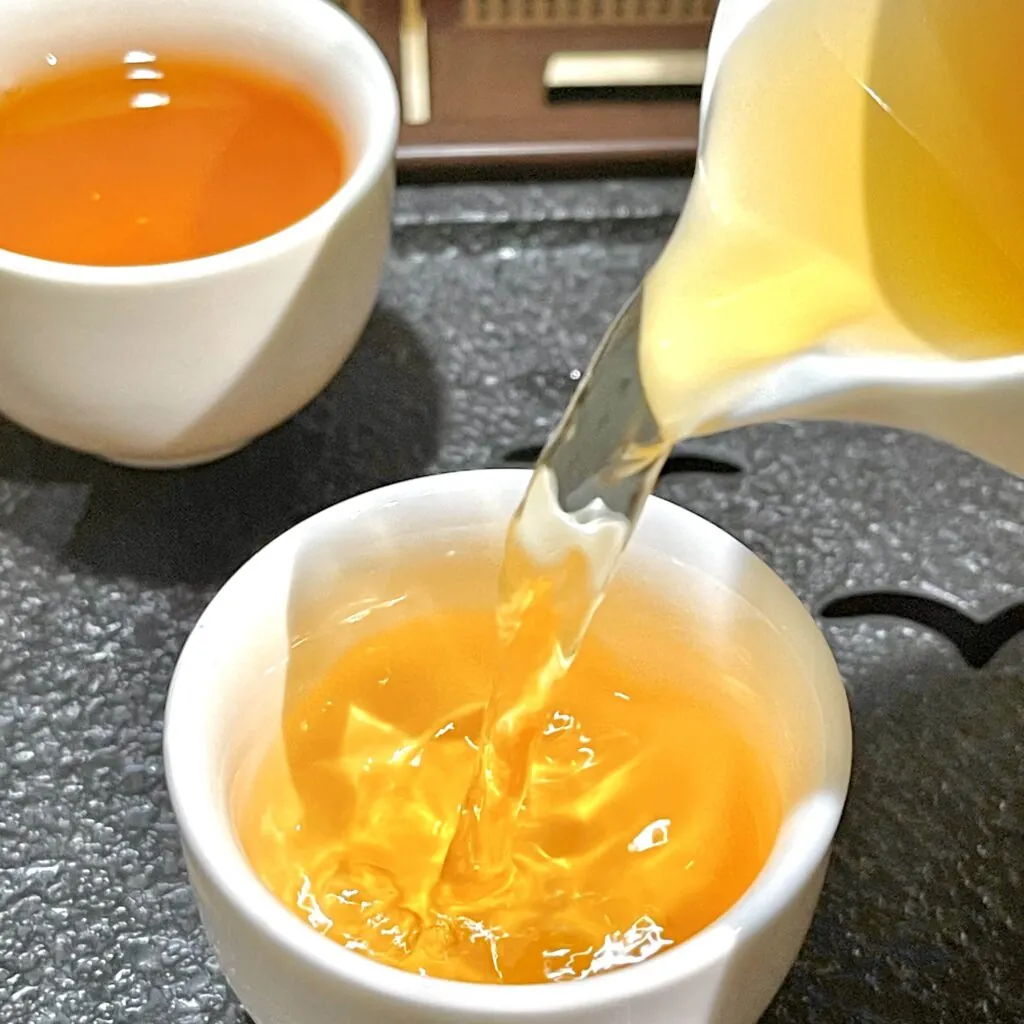
Temperature: What the Leaf Wants
Black tea is not one thing, and the right temperature depends on which black tea you are holding.
- 95–100 °C — Assam, Dianhong, Kenya CTC, smoked Souchong. These have the weight to take it, and full heat pulls out the malt.
- 90–95 °C — Keemun, Ceylon, Yingde, most Gongfu teas. Hot enough to extract, cool enough not to flatten the aromatics.
- 85–90 °C — Jin Jun Mei, first-flush Darjeeling, and any tea whose appeal is floral or perfumed. Full heat drives off exactly the compounds you paid for.
If you are learning how to brew black tea by style rather than by number, remember the pattern: the heavier the tea, the hotter the water. A rough way to hit these without a thermometer: boil the kettle, then wait 30 seconds for the hot band, 60 to 90 seconds for the middle, and two minutes for the cool band.
Time: The Variable That Ruins Cups
Black tea extracts fast. The difference between a two-minute and a five-minute steep is not “stronger tea” — it is the difference between bright and harsh. Understanding this one point is most of what how to brew black tea actually consists of.
What happens chemically is that the pleasant compounds come out first. Theaflavins, which give brightness and briskness, dissolve quickly. The catechins that survived oxidation — the ones that make your mouth feel dry — keep coming out. Steep short and you get the first group. Steep long and the second group catches up and drowns it.
A practical rule: the lighter the tea, the shorter the steep. Jin Jun Mei at two minutes is sweet; at five minutes it is bitter and has lost its point. Assam at two minutes is thin; at four it is where it should be.
Leaf: More Is Not Better
When people first learn how to brew black tea they usually err on the side of more leaf. The most common beginner error is using too much leaf to compensate for not enough flavour. It does not work. Over-leafing makes the tea strong and bitter at the same time, because it pushes extraction past the point where the good compounds dominate.
Two grams per 200 ml is a reasonable start for Western brewing. A standard teaspoon of broken leaf is roughly 2 g; a teaspoon of whole strip leaf is closer to 1.5 g, so use a little more.
A scale removes the guesswork and costs very little. If you only change one thing about how you brew, change this.
Water
Water matters for how to brew black tea, and the reason is mineral content rather than purity. Very soft water makes black tea taste thin and slightly sour; very hard water makes it dull and produces a scum on the surface. Water with some mineral content — ordinary filtered tap, in most places — is usually better than either extreme.
The full explanation, including what calcium and magnesium do to the cup, is in water for black tea.
Milk, Sugar and Lemon
Milk suits teas with weight and malt: Assam, Dianhong, strong Ceylon, most blends. It does not suit teas whose appeal is aromatic: Keemun, Jin Jun Mei, Darjeeling. Pouring milk into those is not wrong, but you are paying for something you then cover.
One chemistry note that matters if you care about health claims: adding milk does not meaningfully change how much of the tea’s polyphenols you absorb. It does appear to blunt the effect black tea has on blood vessel function in short-term studies. Neither of those is a reason to avoid milk if you like it — it is a reason not to drink milk tea for the health benefits.
Sugar is a matter of taste and has no effect on extraction. Lemon is different: acid shifts the colour of the liquor and can make it look paler, which is cosmetic but surprises people.
Iced and Cold Brew
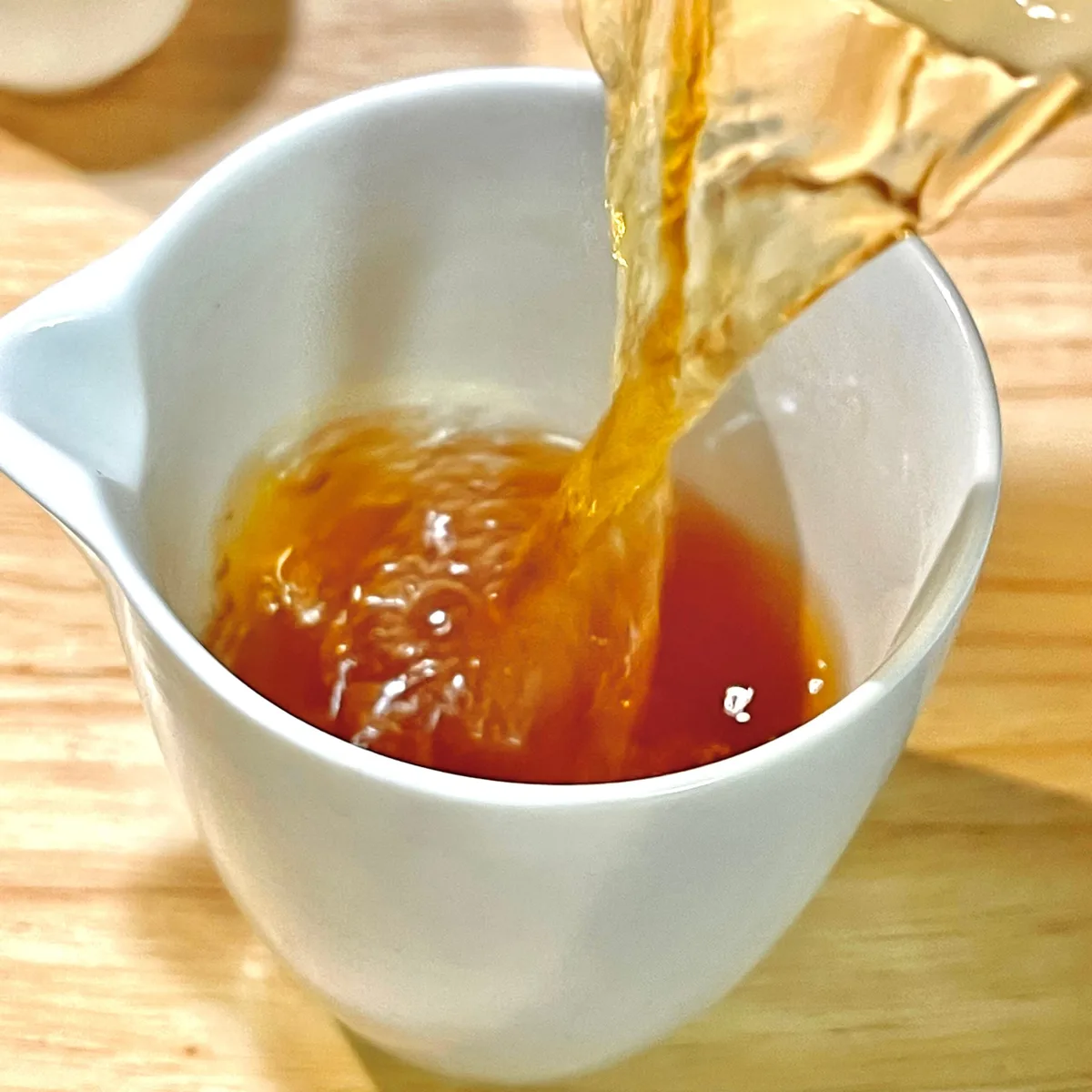
The iced version of how to brew black tea needs double the leaf, because the ice dilutes it. Brew 4 to 6 g per 200 ml, steep normally, then pour over ice immediately.
Cold brew is different: 5 to 7 g per litre of cold water, refrigerated for 6 to 8 hours. It extracts fewer bitter compounds and more of the sweet, malty ones, which is why cold-brewed black tea tastes rounder than the same tea brewed hot and chilled. It keeps two to three days refrigerated.
Troubleshooting
| Symptom | Cause | Fix |
|---|---|---|
| Bitter, drying | Steeped too long, or too much leaf | Cut time by a third; weigh the leaf |
| Thin and flat | Too little leaf, or water too cool | Add leaf before adding time |
| Dull, no brightness | Old tea, or over-oxidised leaf | Buy fresher tea; check the harvest date |
| Sour | Over-steeped, or stored badly | Shorten the steep; check storage |
| Metallic | Very soft or very hard water | Change the water, not the tea |
| Cloudy liquor | Hard water, or fine leaf dust | Filter the water; rinse the leaf first |
The general principle behind the table: fix the leaf amount first, then the time, then the temperature. Changing three variables at once teaches you nothing. This is true of how to brew black tea in general — adjust one thing, taste, adjust again.
Notes by Style
Keemun. 90 °C, 2.5 minutes, no milk. The rose note survives heat badly, so err cooler. Of all the styles, this is the one where how to brew black tea matters most, because the aroma is the whole point.
Assam. 95–100 °C, 3–4 minutes, milk if you want it. This tea is built to be strong.
Dianhong. 95 °C, 3 minutes. Forgiving enough that most reasonable variations work.
Jin Jun Mei. 85–90 °C, 1–2 minutes. Short and cool; the whole point is the aromatics.
Ceylon. 90–95 °C, 2–3 minutes. Also excellent brewed strong and poured over ice.
Smoked Souchong. 95 °C, 3 minutes. The smoke survives heat better than most aromatics.
Kenya CTC. 95–100 °C, 2–3 minutes, milk. Built for strength rather than nuance, and best treated that way. If you are used to bagged tea and want to move to loose leaf without changing your habits, this is the closest thing to a bridge.
Yingde. 95 °C, 3 minutes, plain or with milk. Malty and bright at once, which makes it unusually flexible.
Why Black Tea Needs Its Own Method
How to brew black tea is not the same question as how to brew green tea, and the difference is structural rather than a matter of taste.
Green tea is unoxidised, so its catechins are intact and its enzymes have been killed by heat. It turns bitter fast because those intact catechins extract readily and are harsh. Black tea has already spent its catechins in oxidation — most of them are gone, converted into theaflavins and thearubigins. What is left extracts differently: slower in the early minutes, and with a softer edge.
That is why the common advice differs. Green tea wants cooler water and no steeping beyond a couple of minutes. Black tea can take boiling water and several minutes because there is less left to go bitter. The limit is still there, just further out.
It is also why over-steeping black tea produces a drying rather than a sharp bitterness. What you are tasting late in the steep is the residual catechin fraction, and it reads as astringency — a rough, drying sensation on the tongue rather than a bitter taste at the back of the throat. Recognising that difference tells you which fix to apply.
Gongfu and Western in Practice
Most guides to how to brew black tea present one method. It is worth knowing both, because they answer different questions.
Western brewing is what most people mean by making a cup: leaf in a pot or mug, water in, wait, drink. It extracts most of what the leaf has in one go, which is efficient but flat — you get one good cup and nothing after it. It is the right method when you want a mug of tea and are not going to sit with it.
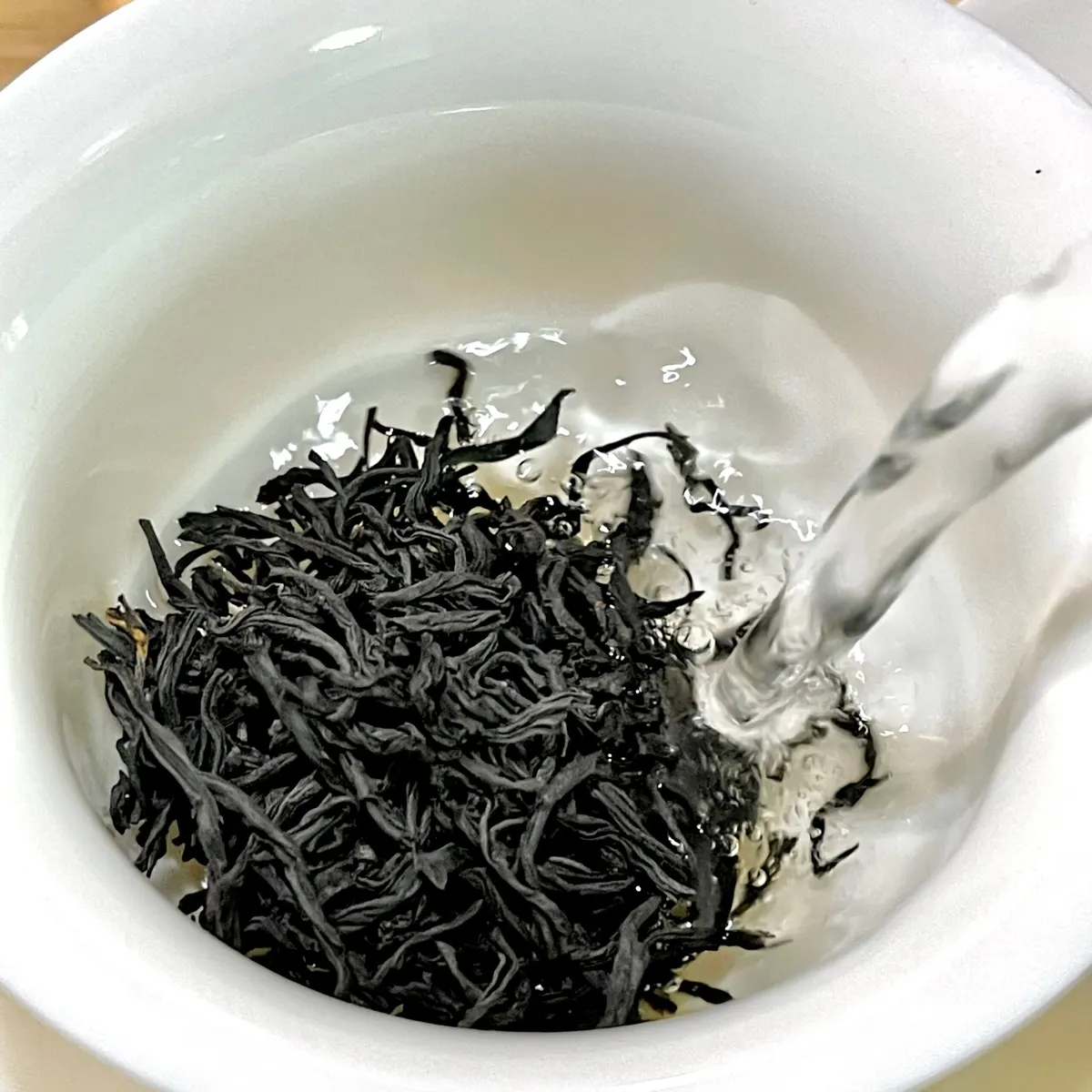
Gongfu brewing uses a small vessel, a high leaf-to-water ratio and short repeated infusions. Because each steep is brief, the compounds come out in sequence: the aromatics first, then the body, then the deeper notes. A good black tea will run six to ten infusions this way and be different at each stage.
The choice is not about sophistication. Someone who wants tea with breakfast should brew Western. Someone who wants to taste what they paid for should brew gongfu. Learning how to brew black tea properly means being able to do whichever the moment calls for.
One mechanical point that applies to both: pour the whole infusion off the leaf each time. Tea left sitting in water keeps extracting, and the next cup from a stewed pot is always worse than the one before.
Frequently Asked Questions
How long should I steep black tea?
Two to three minutes Western, ten to twenty seconds for gongfu. If your tea tastes harsh, cut the time by a third before changing anything else. This is the single most useful rule in how to brew black tea.
What temperature should black tea be brewed at?
90 to 95 °C for most teas, 95 to 100 °C for Assam and Dianhong, and 85 to 90 °C for Jin Jun Mei or first-flush Darjeeling. Cooler water is not a failure — it is the correct choice for aromatic teas.
Can I brew black tea twice?
Western-style, yes, though the second cup is weaker. Gongfu-style, six to ten times is normal and the later steeps are often the more interesting ones.
Why does my black tea taste bitter?
Almost always too much time or too much leaf. See why black tea tastes bitter for the chemistry and the fixes.
Should I rinse the leaf first?
Optional. A quick rinse warms the vessel and removes surface dust, and for compressed tea it helps the leaf open. It costs a little aroma. For most loose black tea it makes no meaningful difference.
Does the water really matter?
Yes, more than most people expect. Very soft water makes black tea taste thin and sour; very hard water makes it dull. The background is in water for black tea.
How do I brew black tea for a crowd?
Scale the leaf, not the time. Doubling the water volume needs double the leaf but the same steep time. Increasing the time instead is how large pots of tea turn bitter.
Related reading: why is black tea bitter? 5 causes and how to fix each, black tea caffeine, how to store black tea.
Shop the black teas in this guide
Sold directly from our own stock. Every listing states the harvest, the county and the size options.
- Jin Jun Mei 2026, single bud, Shouning — $19.90
- Xiao Cai Cha 2026, Shouning — $19.90
Not sure which one? Browse the full black tea collection — or start with the guides above.
Sources & References
Standards
Standard numbers and dates can be verified at China’s national standards platform: std.samr.gov.cn.
- GB/T 23776-2018 — Tea sensory evaluation. Black tea is brewed 3 g per 150 ml of boiling water for 5 minutes for professional assessment — a diagnostic standard, not a drinking recipe.
- GB/T 13738.2-2017 — Gongfu black tea. Grade requirements referenced by style.
Peer-Reviewed Research
- Tanaka, T. & Matsuo, Y. (2020). Production mechanisms of black tea polyphenols. Chemical and Pharmaceutical Bulletin 68:1131–1142. DOI:
10.1248/cpb.c20-00295 - Lorenz, M. et al. (2013). Addition of milk to tea blunts the vascular effects of tea. European Heart Journal. DOI:
10.1093/eurheartj/ehl442
What this page does not claim
We do not claim there is one correct way to brew black tea. The numbers above are starting points chosen to avoid the common failures, not a specification. Where a style has a genuine preference — Jin Jun Mei brewed cool, Assam brewed hot — we say so and explain why.

4 Comments