
Why Is Black Tea Bitter? How to Brew It Sweet
If you are asking why is black tea bitter, the answer is a specific chemical sequence rather than bad luck or cheap leaf. Once you know it, most of the fixes become obvious, and none of them require buying better tea.
There are two different sensations people call “bitter” in tea, and they have different causes. Working out which one you are tasting is the first step to fixing it.
Table of Contents
Bitter and Astringent Are Not the Same
The first thing to establish in any discussion of why black tea is bitter is that the word is doing double duty.
Bitterness is a taste, detected by receptors on the tongue, concentrated at the back. It reads as sharp and chemical. In tea it comes mainly from caffeine and from certain flavonoid compounds.
Astringency is not a taste at all — it is a tactile sensation. It is the drying, puckering, rough feeling that makes your mouth feel coated. It comes from polyphenols binding to proteins in your saliva.
Most people who say why is black tea bitter are actually describing astringency. The distinction matters because the fixes are different: bitterness responds to temperature and leaf quality, astringency responds to time and quantity.

The Five Things That Make Black Tea Bitter
1. Steeping too long
This is the cause in the majority of cases, and the first thing to rule out when asking why is black tea bitter. Black tea extracts in sequence: the aromatic compounds and theaflavins dissolve first, giving brightness and flavour, and the residual catechins come out later, giving astringency.
At two minutes you have mostly the first group. At five minutes the second group has caught up and taken over. The tea has not got “stronger” — its balance has shifted, which is why a long-steeped cup tastes harsh and thin at the same time.
2. Too much leaf
Over-leafing has the same effect as over-steeping, only faster. It pushes total extraction past the point where the pleasant compounds dominate. It is a common response to a cup that tastes weak, and it makes the problem worse rather than better.
If your tea tastes thin, the answer is usually more leaf or hotter water for the same time — not more time.
3. Water that is too hot for the tea
Temperature does not simply scale extraction up and down; it changes what comes out. Very hot water extracts the harsh compounds proportionally faster, and it also drives off the volatile aromatics that make an aromatic tea worth drinking.
This is why the same 95 °C water that suits Assam will flatten a Keemun. The tea is not fragile in a general sense — the compounds that give it its character are.
4. Caffeine
Caffeine is genuinely bitter, and black tea contains it. But it is a smaller contributor than most people assume. A cup of black tea carries between 14 and 61 mg per serving, and the bitterness threshold for caffeine in water sits well above what a normal cup delivers.
Where caffeine does matter is in the finish. A long-steeped, high-leaf cup carries enough to leave a lingering bitter note after the astringency has faded — which is why very strong tea tastes bitter “at the back” rather than drying at the front.
5. Water chemistry
Water is the most underrated variable. Very soft water — low in calcium and magnesium — makes black tea taste thin and sometimes sour, because there is nothing for the polyphenols to bind to in a way that rounds them out. Very hard water makes it dull and can leave a scum on the surface.
Neither extreme is bitter in the strict sense, but both read as “wrong” and both get blamed on the leaf.
What Is Actually Happening in the Leaf
The chemistry is worth a moment because it explains why the fixes work, and why some of the folk advice about why is black tea bitter is wrong.
Black tea is oxidised leaf. During oxidation, most of the catechins that make green tea sharp are converted into theaflavins and thearubigins — larger, less astringent molecules that give colour and body.
Roughly 80% to 85% of the original catechin content is gone by the end of processing. What remains is the fraction that did not react, and that fraction is what turns astringent when you over-extract.
This is the reason black tea tolerates boiling water better than green tea, and also the reason it still has a limit: the remaining catechins are harsher per unit than the ones in green tea, because the gentle ones have already been converted.
The other half of the picture is theaflavins. These give brightness and a brisk quality — the thing that makes a good cup feel alive. They are highest right after oxidation and they decline with over-oxidation and with age. A tea that tastes flat and bitter at once has usually been over-oxidised or stored too long.
Fixing a Bitter Cup
Work through these in order. Change one variable at a time or you will not learn which one mattered.
| What you taste | Most likely cause | Change this |
|---|---|---|
| Drying, rough, coats the mouth | Astringency from over-steeping | Cut steep time by a third |
| Sharp and chemical at the back | Caffeine from too much leaf | Reduce leaf to 2 g per 200 ml |
| Bitter and flat together | Old or over-oxidised leaf | Buy fresher tea |
| Sour and thin | Very soft water | Try filtered tap instead of distilled |
| Dull with surface scum | Very hard water | Filter the water |
| Aromatic teas taste hollow | Water too hot | Drop to 85–90 °C |
Can You Rescue a Cup That Is Already Bitter?
Partly. Adding milk genuinely helps — the proteins in milk bind to the astringent polyphenols and physically remove the sensation. This is the real reason milk is traditional in strong black teas, rather than a matter of taste.
Adding sugar does not help. Sweetness masks bitterness slightly but does nothing for astringency, which is why sweetened bitter tea still feels rough.
Diluting with hot water works but also dilutes everything else. Cooling the cup makes astringency more noticeable rather than less.
What does not work is adding more tea. That is the most common response and it makes the problem worse.
Preventing It Next Time
The short version of why is black tea bitter: it is almost always a time or quantity problem, and the leaf is almost never at fault. Four habits prevent most of it:
- Weigh the leaf for the first few cups until you know what 2 g looks like in your spoon
- Set a timer — the difference between 2 and 5 minutes is not intuitive
- Match water temperature to the style, not to the kettle
- Pour the whole infusion off the leaf rather than leaving it in the pot
Full method detail is in how to brew black tea.
Frequently Asked Questions
Why is black tea bitter when green tea is not?
It is not that black tea is inherently more bitter — it is that black tea contains fewer but harsher catechins. Green tea’s catechins are gentler and extract faster at lower temperatures, so the standard advice for green tea (cool water, short steep) keeps them in check. Black tea can take more heat but punishes time.
Does adding milk really reduce bitterness?
Yes, and the mechanism is physical rather than psychological. Milk proteins bind to astringent polyphenols, which is why milk is traditional in strong black teas and why it works better than sugar.
Why is my black tea bitter even with a short steep?
Check the leaf quantity and the water. Too much leaf produces bitterness at any steep time, and very soft water can make tea taste harsh in a way that is easy to mistake for over-steeping.
Is bitter black tea bad for you?
No. Bitterness is a taste signal, not a toxicity signal in tea. The compounds responsible are ordinary polyphenols and caffeine.
Does the bitterness mean the tea is high quality?
No, and this is worth being blunt about. If the question is why is black tea bitter, the honest answer is that bitterness usually indicates over-extraction or aged leaf, both of which are faults. A well-made, well-brewed black tea is bright and rounded, not harsh.
Why is black tea bitter with milk but not without?
It is usually not the milk. Milk reduces astringency, so if a cup tastes worse with milk, the milk is probably masking a flavour rather than adding bitterness — or it has been overheated, which makes milk taste cooked. Try the same tea plain and with cold milk added last.
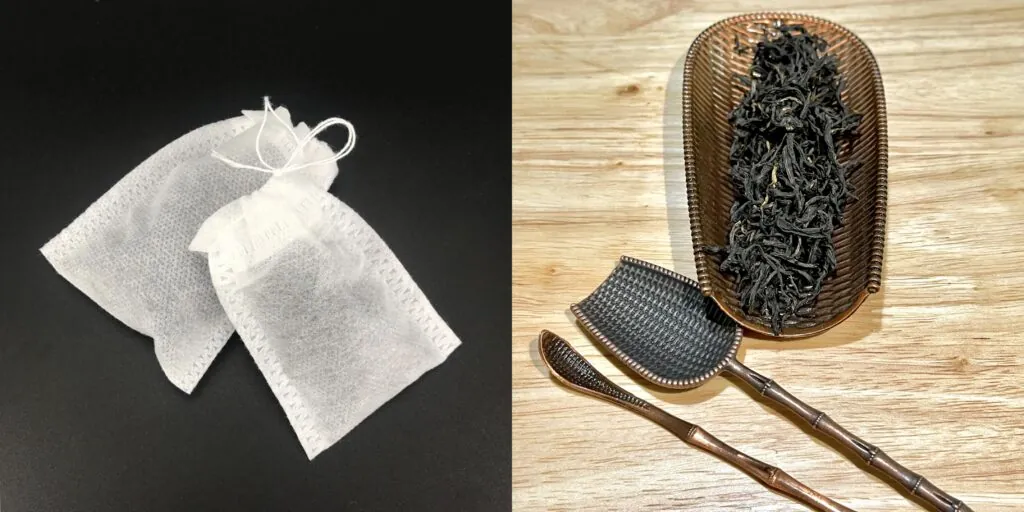
Why is black tea bitter in a tea bag but not loose leaf?
Because broken leaf extracts faster. A bag contains small particles with far more surface area than whole leaf, so the same two minutes produces a much stronger and harsher cup. If you are asking why is black tea bitter only when you use bags, the format is the answer.
Why is black tea bitter when I use a travel mug?
Because the leaf stays in the water. A travel mug with loose leaf and no basket keeps extracting for as long as the tea is in it, and hot water in a sealed flask stays hot for hours. Either use a basket you can lift out or brew separately and pour.
Can bitterness be removed after brewing?
Not really. The compounds are already dissolved. Milk binds some of them, which is why it works better than any other addition, but you cannot un-steep a cup.
Why does black tea taste bitter as it cools?
Astringency becomes more pronounced at lower temperatures, because the polyphenol-protein complexes that cause the drying sensation form more readily as the liquid cools. The tea has not changed; your perception of it has.
Bitterness by Style
The same mistake produces different results depending on the tea, which is why advice about why is black tea bitter has to be style-specific rather than general.
Assam and Kenyan CTC. These are built strong. They go bitter later than most teas because their catechin fraction is lower relative to their body, but they go bitter hard when they do. A four-minute Assam is fine; a seven-minute Assam is undrinkable.
Keemun and Jin Jun Mei. These turn harsh early, and the failure is obvious because the aroma disappears at the same moment the astringency arrives. If your Keemun has lost its rose note, you have over-steeped it, not bought a bad tin.
Smoked Souchong. The smoke masks astringency to a surprising degree. It is easy to over-steep this tea without noticing, and the result tastes more like ash than like bitterness.
Broken teas and tea bags. Broken leaf extracts far faster than whole leaf because there is more surface area. A tea bag that needs two minutes would need four as whole leaf. This is the single biggest reason bagged tea goes bitter — the instructions often assume a longer steep than the format can take.
Bitterness in Iced Tea
Iced black tea goes bitter in a way that surprises people, and the mechanism is the same one described above with an extra step.
Hot-brewed iced tea is usually made stronger so that the ice does not dilute it into nothing. That means more leaf and often longer steeping, both of which push extraction past the balance point. The tea then sits in the fridge for hours, during which the astringent compounds continue to form complexes. By the time you drink it, the drying sensation is at its maximum.
Two fixes. Brew it at the strength you want to drink it rather than double-strength, and accept that the ice will dilute it a little. Or cold brew it: 5 to 7 g per litre, refrigerated overnight, which extracts fewer harsh compounds by design.
Related reading: how to brew black tea, how black tea is made.
Shop the black teas in this guide
Sold directly from our own stock. Every listing states the harvest, the county and the size options.
- Jin Jun Mei 2026, single bud, Shouning — $19.90
- Xiao Cai Cha 2026, Shouning — $19.90
Not sure which one? Browse the full black tea collection — or start with the guides above.
Still deciding between grades and styles? types of black tea sets out the categories and what each one means.
Sources & References
Standards
Standard numbers and dates can be verified at China’s national standards platform: std.samr.gov.cn.
- GB/T 35810-2018 — Technical specification for black tea processing. Oxidation and drying parameters that determine the final catechin fraction.
- GB/T 23776-2018 — Tea sensory evaluation. Black tea assessed at 3 g per 150 ml for 5 minutes, a deliberately over-extracting diagnostic brew.
Peer-Reviewed Research
- Tanaka, T. & Matsuo, Y. (2020). Production mechanisms of black tea polyphenols. Chemical and Pharmaceutical Bulletin 68:1131–1142. DOI:
10.1248/cpb.c20-00295 - Obanda, M. et al. (2001). Changes in theaflavin composition and astringency during black tea fermentation. Food Chemistry 75:395–404. DOI:
10.1016/S0308-8146(01)00223-0 - Chin, J.M. et al. (2008). Caffeine content of brewed teas. Journal of Analytical Toxicology 32(8):702–704. DOI:
10.1093/jat/32.8.702
What this page does not claim
We do not claim bitterness indicates quality in either direction, or that a specific steep time is correct for every tea. The causes are well established; the right numbers depend on the leaf in front of you.

4 Comments