
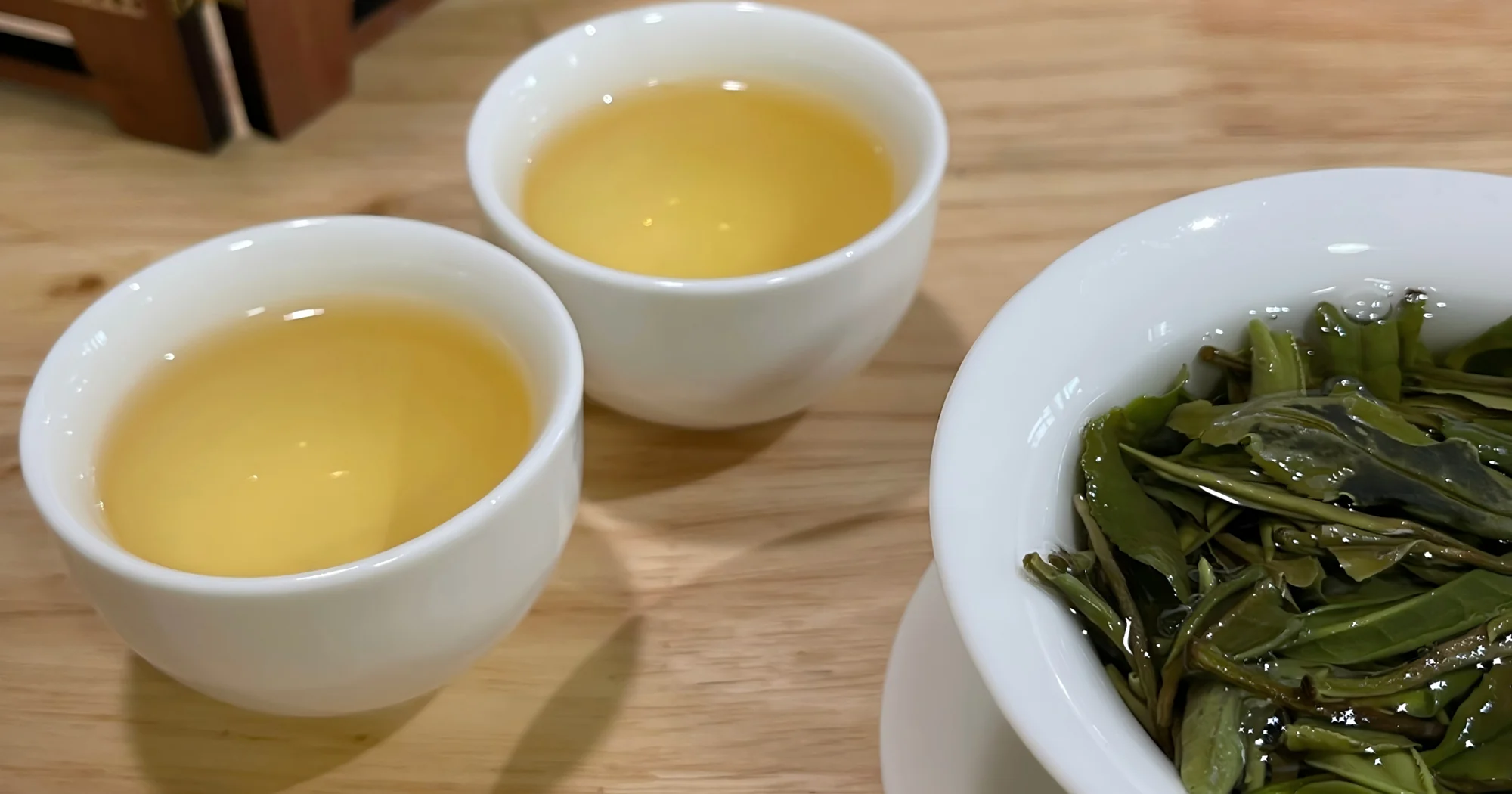
White Tea Benefits: What the Research Shows & Caffeine
Quick Answer
White tea is good for three ordinary things: a clean, gentle flavour, a moderate caffeine lift, and a polyphenol profile broadly similar to green tea. It is not a medicine, and the strongest claims made for it are not supported by human trials.
What the evidence actually shows:
- Antioxidants. White tea contains catechins and other polyphenols — but when the same cultivar is processed into white, green and black tea and all three are measured with the same three assays, the ranking comes out green ≥ white ≥ black. White does not beat green (Carloni et al., 2013).
- Caffeine. In the largest direct comparison of brewed teas, white, green and black all fell between 14 and 61 mg per serving, with no consistent difference by tea type (Chin et al., 2008).
- Health outcomes. No randomised controlled trial of white tea has been published. The most-cited human study is an observational, non-blinded comparison in which every group also dieted and exercised.
So the honest case for white tea is sensory, not medical. It is minimally processed, low in astringency, and easy to drink several times a day. If you want a tea to replace coffee in the afternoon, that is a real benefit. If you want a tea to treat a condition, this is not the page that will tell you it does.
Table of Contents
Is White Tea Right For You?
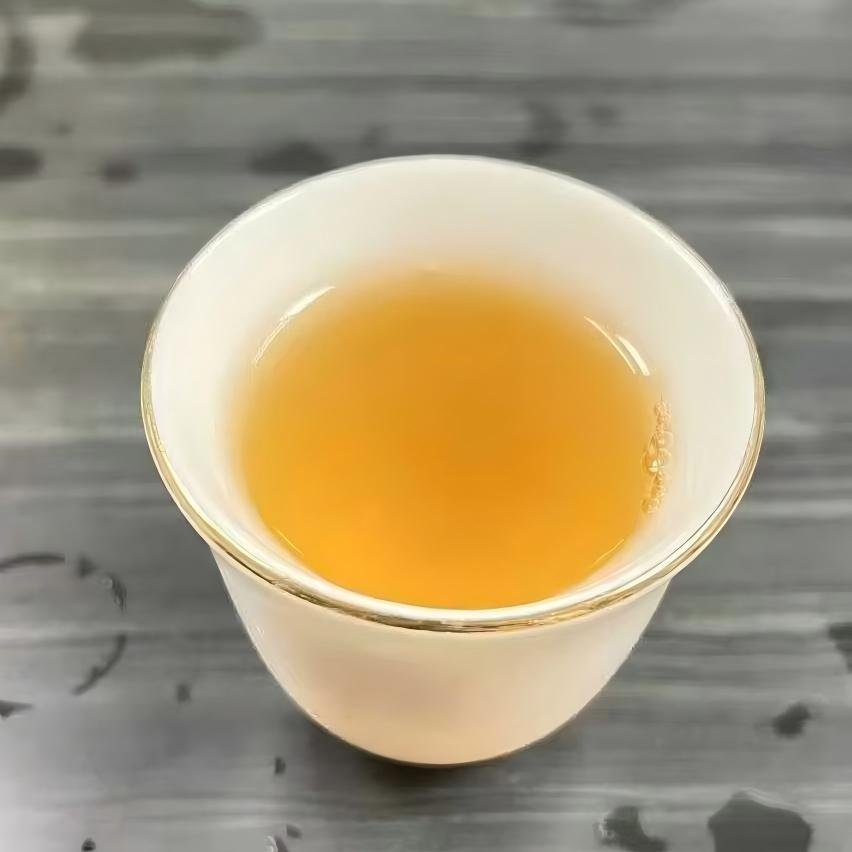
White tea benefits get oversold, so this page separates what the evidence supports from what it does not. The tea itself suits you if you want a gentle daily cup that does not turn bitter when you look away from it, if you drink several cups a day and want something lighter than black tea, or if you simply prefer a less processed leaf. It is a poor fit if you dislike floral, hay-like flavours, if you need a strong caffeine hit, or if you are hoping for a therapeutic effect.
Most people start with Bai Mu Dan (White Peony) because it mixes buds and young leaves, costs less than Silver Needle, and gives a fuller cup than a bud-only tea. That is an editorial preference, not a tested one.
What Are the Main Benefits of White Tea?
Three claims are worth examining, because they are the ones buyers actually encounter. Each has a different strength of evidence, and conflating them is how marketing turns into misinformation.
How strong is the evidence?
It helps to grade evidence before reading conclusions. A human randomised controlled trial with blinding and a placebo is the strongest kind. An observational study that compares groups without randomising them is weaker. Animal and laboratory work sits further down, and a claim with no direct study at all is not evidence — it is a hypothesis.
Judged this way, white tea has: no randomised trial, one small observational human study, a body of animal work, and a large literature on tea catechins in general that is mostly about green tea.
What the human studies actually showed
The most-cited white tea trial is Akyildiz et al. (2024, Medicina 60:1568). It is worth reading closely, because the way it gets summarised is usually wrong.
Ninety-one adults with obesity were enrolled and 54 completed; fourteen were in the white tea group. They drank two cups a day for twelve weeks, steeped for seven minutes, and ate the brewed leaves as well as the liquor. Crucially, all four groups also followed a calorie-restricted diet and an exercise plan. The study was not blinded and had no placebo. The ClinicalTrials.gov record (NCT06357273) describes the design as observational, prospective and case-control — while the paper itself says participants were “randomly assigned”. That contradiction is worth knowing about, because it changes how much weight the result can carry.
Between-group differences were reported for weight, BMI and waist circumference. Blood lipids and inflammatory markers showed no statistically significant between-group differences — the “reductions” in the abstract are mostly within-group before-and-after comparisons.
What that means in plain terms: a small, unblinded study in which everyone dieted and exercised found that the group also drinking white tea lost a little more weight. It does not show that white tea causes weight loss, and it cannot separate the tea from the diet.
A second human study (Dardashti Pour et al., 2021) followed 49 women with type 2 diabetes for six months across four groups and reported improvements in the white tea arm. The published report does not give the dose in the abstract and the trial registration number appears to be a placeholder, so it is difficult to weigh.
Beyond those, the human literature on white tea specifically is thin. There is a mouthwash trial using white tea extract for gingivitis, which tells us nothing about drinking it, and a single-arm study of acute energy expenditure at a caffeine dose above 300 mg — an effect that would be attributable to caffeine, not to anything distinctive about white tea.
Antioxidants: how white tea really compares with green tea
This is the claim most often overstated. The cleanest study holds the cultivar constant and changes only the processing: one 2013 experiment took leaf from a single cultivar and had it made into white tea, two green teas (regular and low-caffeine) and two black teas (Orthodox and CTC), then ran ABTS, ORAC and LDL assays on all of them. All three assays agreed on the order: green ≥ low-caffeine green > white ≥ black Orthodox > black CTC.
On total catechin content the picture is messier and more interesting. Unachukwu et al. (2010) measured eight commercial white teas against green teas and found total catechins ranging from 14.4 to 369.6 mg/g of dry leaf for white and 21.4 to 228.2 mg/g for green. The two ranges overlap heavily. Their conclusion was that “statements suggesting a hierarchical order of catechin content among tea types are inconclusive” — and they added that white teas matching green teas on catechins still showed lower antioxidant capacity, which points to fewer non-catechin antioxidants.
The practical implication: grade, origin and harvest matter more than the colour on the packet. A good Silver Needle can out-catechin a mediocre green tea, and the reverse is also true. Anyone selling you white tea on the grounds that it is the most antioxidant-dense category is overselling.
Fluoride and safety
Tea accumulates fluoride, and the concentration depends heavily on leaf age. In one Fujian study, young leaves of Fuding Daibai contained 74.3 ± 17.2 mg/kg of fluoride while old leaves contained 460.0 ± 26.5 mg/kg — a 6.2-fold difference (Lin, 2015). That is why bud-heavy Silver Needle and leaf-heavy Shou Mei are not equivalent on this measure.
A survey of 631 tea samples sold in Fuzhou found fluoride risk to be very low for white, green and black tea, with oolong and dark tea warranting more attention (Liu, 2020). Reported cases of fluorosis from tea drinking involve people who drank large volumes of brick tea for decades; there are no reported cases attributed to white tea.
The sensible precaution is not to drink strongly simmered old-leaf tea all day in place of water. Beyond that, the risk is theoretical.
How Much Caffeine, Briefly
Short answer: somewhere between 14 and 61 mg per cup, and the tea type tells you less than your brewing does.
Chin et al. (2008) analysed 20 commercial teas and found white, green and black all landing inside that range, with no observable trend by tea type. Steep time moved the number more than the category did. A later HPLC study of Fuding white teas brewed at 100 °C found Silver Needle at 386.6 mg/L, Bai Mu Dan at 611.0 mg/L and Shou Mei at 555.8 mg/L — grade differences larger than the differences between tea categories (Pan et al., 2018).
The widely repeated line that white tea is “naturally low in caffeine” is not supported. It is lower than a strong coffee, and roughly in the same band as green tea. If you are pregnant, ACOG advises keeping total caffeine under 200 mg a day; that is a ceiling, not a target.
We cover the full picture — grade differences, temperature effects, aged tea, and how to estimate your own cup — in our white tea caffeine guide.
How Do You Brew White Tea?
Three numbers do most of the work: about 5 g of leaf per 110 ml of water, 85–90 °C, and 15–20 seconds for the first steep, adding a few seconds each round. That is the gaiwan method and it is forgiving.
One thing worth knowing: the idea that delicate buds need cooler water does not survive contact with the data. The one study that ran a full temperature range across four white teas found 95 °C optimal for all of them, including both Silver Needles. Cooler water slows extraction — useful when you want six short steeps, not a way to protect the leaf.
Full instructions for gaiwan, glass, teapot and thermos, plus the rinsing question, are covered in our brewing guides for White Peony and Shou Mei.
How Do You Choose a Good White Tea?
Start with the label. Under GB/T 22291-2017, white tea is one of exactly four products — Baihao Yinzhen (Silver Needle), Baimudan (White Peony), Gongmei and Shoumei — and each has defined raw-material requirements. A product calling itself “white tea” outside those four categories is not covered by the national standard.
Then judge the leaf: intact, with visible buds, minimal breakage, and a colour true to its grade. Smell it — it should be clean and hay-sweet, not musty. Ask for the harvest year, and be sceptical of aged tea without documentation, because vintage is not something a buyer can verify by looking.
For the grade definitions in full, see the four types of white tea.
FAQ
What are the actual health benefits of white tea?
Real but modest. White tea contains catechins and caffeine, and it is a pleasant, low-astringency drink. There is no randomised controlled trial showing that white tea prevents or treats any disease. The most-cited human study was observational and unblinded, and every group in it also dieted and exercised. Treat it as a good beverage, not a treatment.
Is white tea lower in caffeine than green or black tea?
Not reliably. A 2008 analysis of 20 commercial teas found white, green and black all in the 14–61 mg range per serving, with no consistent difference by type. What does move the number is grade and brewing: at 100 °C, Bai Mu Dan measured 611.0 mg/L against Silver Needle’s 386.6 mg/L.
Is white tea good for weight loss?
The evidence is weak. A 2024 study reported small between-group differences in weight and BMI, but it was unblinded, had no placebo, assigned groups non-randomly, and put every participant on a calorie-restricted diet plus exercise. A Cochrane review of green tea — not white — found the weight-loss effect small and not statistically significant.
Is white tea higher in antioxidants than green tea?
No. When a single cultivar is processed into white, green and black tea and measured with three separate antioxidant assays, the order is green ≥ white ≥ black. On total catechins the categories overlap so heavily that researchers describe any fixed ranking as inconclusive.
Is Bai Mu Dan good for beginners?
Yes — it is our usual first recommendation. Bai Mu Dan mixes buds and young leaves, so it gives a fuller, more forgiving cup than bud-only Silver Needle, and it costs less. It also tolerates a wider range of brewing mistakes.
What does Bai Mu Dan taste like?
Light floral aroma, gentle sweetness, and a smooth, slightly fuller body than Silver Needle. Good Bai Mu Dan has no harsh astringency; older leaf develops honey and dried-fruit notes.
How long does white tea keep once opened?
Sealed, dark, dry and away from smells. GB/T 30375-2013 sets the target for white tea at 25 °C or below and 50% relative humidity or below. The finished-tea moisture limit under GB/T 22291-2017 is 8.5%. Full detail is in our storage guide.
What are the main white tea benefits?
The white tea benefits with the best supporting evidence are antioxidant content comparable to green tea and a modest caffeine load. White tea benefits claimed for weight loss, anti-ageing and immunity have far weaker human evidence.
Are white tea benefits proven in humans?
Mostly no. The white tea benefits reported in cell and animal studies have not been confirmed in randomised human trials. The one human study often cited was observational, unblinded, and had 14 people in its white tea arm.
Do white tea benefits include weight loss?
The evidence for weight loss among white tea benefits is weak. The often-quoted trial put every group on a diet and exercise programme, so any effect cannot be separated from the lifestyle change.
How much white tea gives benefits?
No dose has been established, because the human evidence is too thin to set one. Studies that report white tea benefits typically use two to three cups a day, which is also a reasonable amount to drink for pleasure.
Are white tea benefits different from green tea?
Less than the marketing suggests. When the same cultivar is processed into white and green tea, antioxidant capacity is comparable or slightly higher in green. White tea benefits are not a superior version of green tea benefits.
Do white tea benefits change as the tea ages?
Catechins fall over years of storage, so the antioxidant side of white tea benefits weakens with age while the flavour softens. Aged white tea is drunk for taste, not for a stronger effect.
Is white tea safe to drink every day?
Yes, for most people. The practical limit is caffeine rather than the tea itself: two to three cups keeps most adults well under the 400 mg daily ceiling, and well under the 200 mg advised in pregnancy.
Which white tea has the most benefits?
Grade matters less than freshness for the antioxidant side, and more than anything else for the flavour. If you want the highest catechin content, drink young leaf-grade white tea rather than aged bud tea.
Do white tea benefits apply to aged tea?
Partly. The flavonoid and catechin side of white tea benefits declines with storage, while the sensory side improves. Aged white tea is drunk because it tastes smoother, not because the benefits are stronger.
Are white tea benefits better with loose leaf or bags?
Loose leaf. White tea benefits depend on what actually reaches the cup, and bags made from dust and fannings release less of the leaf. Whole leaf also lets you see whether the grade is what the packet claims.
Can white tea benefits be obtained from supplements?
Not equivalently. White tea benefits come from the whole infusion rather than an isolated extract, and supplement products are not standardised. Drinking the tea is both cheaper and better evidenced.
Sources & References
Peer-Reviewed Research
- Carloni, P. et al. (2013). Antioxidant activity of white, green and black tea obtained from the same tea cultivar. Food Research International 53(2):900–908. DOI:
10.1016/j.foodres.2012.07.057 - Unachukwu, U. J. et al. (2010). White and green teas (Camellia sinensis var. sinensis): variation in phenolic, methylxanthine, and antioxidant profiles. Journal of Food Science 75(6):C541–C548. DOI:
10.1111/j.1750-3841.2010.01705.x - Chin, J. M. et al. (2008). Caffeine content of brewed teas. Journal of Analytical Toxicology 32(8):702–704. DOI:
10.1093/jat/32.8.702 - Pan, J. et al. (2018). Comparison of the main compounds in Fuding white tea infusions from various tea types. Food Science and Biotechnology 27(5):1311–1318. DOI:
10.1007/s10068-018-0384-3 - Tan, J. et al. (2017). Flavonoids, phenolic acids, alkaloids and theanine in different types of authentic Chinese white tea samples. Journal of Food Composition and Analysis 57:8–15. DOI:
10.1016/j.jfca.2016.12.011 - Akyildiz, K. et al. (2024). White Tea Consumption Alleviates Anthropometric and Metabolic Parameters in Obese Patients. Medicina 60(10):1568. DOI:
10.3390/medicina60101568. ClinicalTrials.gov: NCT06357273 - Dardashti Pour, S. et al. (2021). Effects of white tea consumption on anthropometric indices, blood pressure and metabolic markers in type 2 diabetic women. Clinical Nutrition ESPEN 45:134–139. PMID 34620309
- Nunes, A. R. et al. (2015). Daily consumption of white tea improves the cerebral cortex metabolic and oxidative profile in prediabetic Wistar rats. British Journal of Nutrition 113(5):832–842. PMID 25716141 (animal study)
- Jurgens, T. et al. (2012). Green tea for weight loss and weight maintenance in overweight or obese adults. Cochrane Database of Systematic Reviews. (green tea, not white tea)
- Lin, H. (2015). Fluoride content in Fuding Daibai tea leaves at different maturity. Fujian Journal of Agricultural Sciences. (Chinese-language)
- Liu, F. (2020). Fluoride risk assessment of market tea in Fuzhou. Fujian Tea. (Chinese-language)
Standards and Official Guidance
- GB/T 22291-2017 — White tea (product standard). Grades, raw-material definitions, moisture ≤8.5%, ash ≤6.5%, water extract ≥30%.
- GB/T 30375-2013 — Tea storage. §5.3.5 sets white tea at ≤25 °C and ≤50% relative humidity.
- ACOG Committee Opinion No. 462 — Moderate caffeine consumption during pregnancy (≤200 mg/day).
- ClinicalTrials.gov NCT06357273 — Registration record for the Akyildiz 2024 study, listing the design as observational.
What this page does not claim
We do not claim that white tea prevents cancer, treats diabetes, aids weight loss on its own, delays ageing, protects the liver, boosts immunity, or improves sleep. None of those has direct human evidence for white tea, and several have been studied and not supported for tea generally. If you see a tea page making those claims, the page is selling, not informing.
Shop the teas in this guide
The grades described above, sold directly from our own stock. Prices are for the smallest size; every listing states the harvest, the county and the size options.
- Bai Mu Dan, 2026 Shouning, loose leaf — $11.90
- Shou Mei with stem, 2025 Shouning, loose leaf — $9.90
- Panxi Shou Mei, 2026 Fuding, loose leaf — $9.90
Editorial note
This guide is written by Steve Wood and reflects both published research and our own brewing. Where evidence is thin or contested, we say so rather than filling the gap. We sell white tea, which is a conflict of interest we disclose rather than hide.


11 Comments