
Matcha Tea: Shading, Tencha and the 137 Times Myth
A matcha bowl contains the leaf itself, ground fine enough to whisk into water. Before that, the bushes spend 20 to 30 days under shade; the leaves are steamed, dried without rolling and milled.
This guide follows the process from field to bowl, separates the historical record from later stories and explains what grade labels can tell you.
Table of Contents
What Matcha Tea Is
The Chinese national standard for matcha, GB/T 34778-2017, defines it by its raw material and process, not by its colour or its use.
The sequence is: shade the bushes, pick the leaf, steam it, dry it without rolling, remove stems and veins, and grind the result to powder. The dried unrolled leaf is called tencha, and tencha is what becomes matcha. The grinding is done in stone mills because the friction heat of faster methods damages the aroma.
Two steps distinguish matcha tea from other green tea. Shading is agricultural and happens before picking. Drying without rolling is a processing choice that makes the leaf brittle enough to grind. The grinding itself is almost an afterthought by comparison, though it is what makes the powder drinkable.
Why Shading Changes Everything
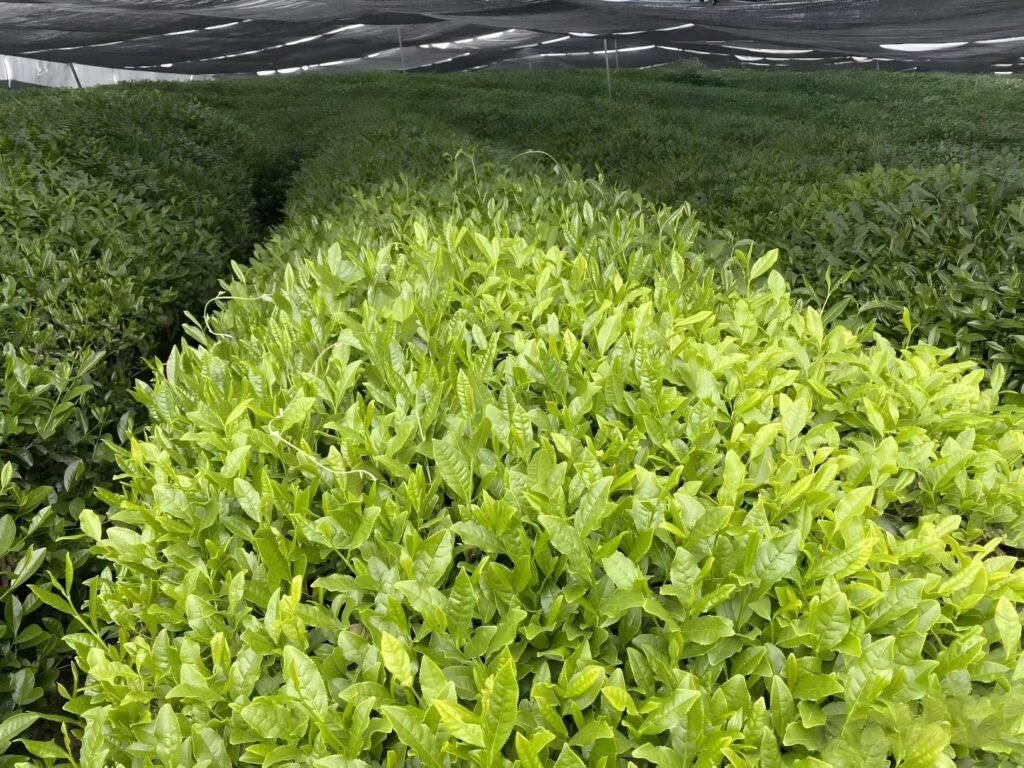
Shading is the step that produces matcha’s defining qualities, and the standard specifies a period of 20 to 30 days before picking.
The chemistry is measured. Research on shading found it raises theanine and caffeine while lowering the catechins EC and EGC. A study comparing shading levels found 85 percent shading produced the highest chlorophyll content, ahead of 95 percent and the unshaded control.
Those three changes produce the three qualities matcha is judged on. More theanine means more umami. Fewer simple catechins means less astringency. More chlorophyll means a deeper green.
The leaf is being pushed toward sweet and green and away from bitter and grassy, and it happens in the field, not in the factory. That is why a shaded leaf processed by ordinary green tea methods would make an odd cup: the raw material has already been changed.
From Leaf to Powder
After picking, the leaf is steamed, not pan-fired. Steaming is the Japanese convention and it preserves colour better than a hot surface does, which matters when the target is a vivid green powder.
The defining processing step is that the steamed leaf is dried without rolling. Ordinary steamed green tea is rolled into needle shapes, which is what makes sencha sencha. Tencha is not rolled, so it dries flat and brittle and can be ground.
The stems and veins are removed before grinding, which is part of why matcha is expensive: a considerable fraction of the harvest is discarded at that stage.
Grinding is slow by design. Stone mills turn slowly to keep the powder from heating, and the throughput is low — a mill produces only tens of grams per hour. That is the mechanical reason ceremonial matcha costs what it does.
What the History Records
The history of matcha tea is well documented in outline and badly served by the stories attached to it.
Steamed green tea in cake form is described in the Tang dynasty tea classic, which sets out a sequence of steaming, pounding, pressing, baking, stringing and sealing. That is the ancestor of the method, though not matcha itself.
Tea reached Japan in the ninth century through monks returning from China — Saicho, Kukai and Eichu are the names associated with the transmission, and Eichu’s presentation of tea to Emperor Saga in 815 is conventionally treated as the beginning of tea drinking in Japan.
The method that became matcha arrived later. In the late twelfth century the monk Eisai brought back the Southern Song practice of steamed powdered tea and the whisking method that went with it, and that is the direct ancestor of matcha and of the tea ceremony built around it.
Shaded cultivation is later again. The practice began in Uji in the fifteenth century, not in the thirteenth century with the Zen monks. The confusion is understandable — the ceremony and the shading are both associated with monastic tea culture — but they are separated by roughly two centuries.
Ceremonial and Culinary Grade
Matcha tea is sold as ceremonial or culinary grade, and neither term has a legal definition in any standard reviewed here.
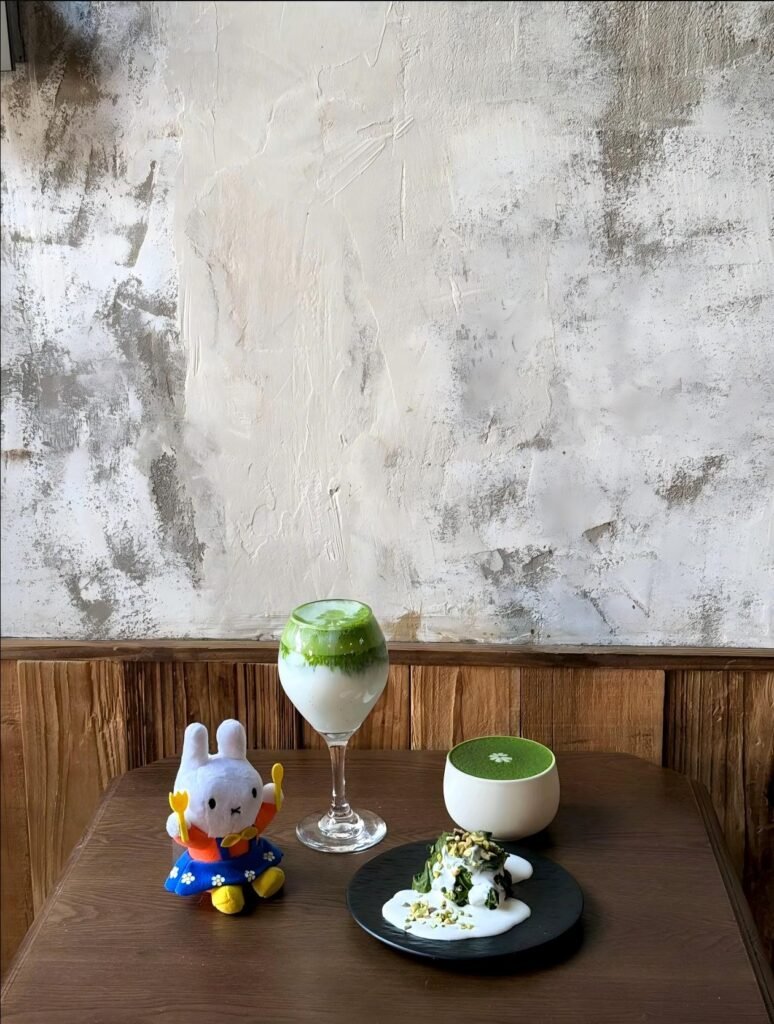
What the labels signal is real. Ceremonial grade is made from the youngest leaf, shaded for the full period, ground fine, and intended to be whisked with water and drunk plain. Culinary grade is made from later leaf, often shaded less, and intended for lattes, baking and blending, where milk and sugar mask its bitterness.
The practical test is simple: whisk a small amount with water and drink it. Ceremonial matcha tea is smooth enough to drink this way. Culinary grade is not — it tastes harsh, slightly chalky and bitter, which is fine in a latte and unpleasant in a bowl.
Because the terms are unregulated, a producer can label anything ceremonial. The quality difference is real; the label is not a guarantee of it.
The 137 Times Claim
The claim that matcha tea contains 137 times the antioxidants of brewed green tea has a real source and does not mean what the marketing implies.
The figure comes from a 2003 study comparing the amount of EGCG extracted into the drink from matcha versus steeped tea under particular preparations. It describes a delivery difference for one compound, not a general nutritional multiple.
Three things are wrong with the way it is usually stated. It generalises from one compound to all antioxidants. It treats a difference in what reaches the drink as a difference in what the leaf contains. And it depends entirely on how much leaf each method uses, which varies.
What is true is that matcha delivers more catechins per serving than a steeped cup, because the whole leaf is consumed. That is meaningful. It is not a factor of 137.
Caffeine
Matcha tea is the highest-caffeine way to drink green tea per serving, and the reason is delivery, not content.
Caffeine in dry tea leaf runs 3 to 6 percent by weight across categories. A steeped green tea extracts a fraction of that into the cup and leaves the rest in the discarded leaf. Matcha is whisked and drunk whole, so the full content of the powder reaches you.
Shading also raises caffeine somewhat, so matcha sits toward the higher end of the band as well as delivering it completely. A 1 to 2 g serving therefore carries more caffeine than a 3 g steeped serving of ordinary green tea.
A direct quantitative comparison of whole-leaf versus steeped delivery was not found in the literature reviewed here, so the arithmetic is a calculation, not a measurement. Green tea caffeine covers the wider picture.
Making a bowl without lumps
Matcha tea is prepared by whisking, not steeping, and the method is short enough to describe completely.
Sift 1 to 2 g of powder into a bowl to break up clumps. Add about 70 ml of water at 80 °C — not boiling, which makes it bitter. Whisk briskly with a bamboo chasen in a zigzag motion until a fine foam forms, which takes fifteen to twenty seconds.
Drink it immediately. The powder settles, and a bowl left standing separates into a gritty layer and cloudy water.
Two common faults: water that is too hot, which turns the bowl bitter, and insufficient whisking, which leaves clumps. A third is using culinary grade for drinking, which no amount of technique fixes.
Matcha Against Other Green Tea
The comparison with ordinary green tea comes down to shading and delivery, and both matter.
Shading changes the leaf before processing, pushing it toward umami and away from astringency. Whole-leaf consumption means you ingest everything, not an infusion. The result is a drink that is thicker, sweeter, greener and stronger than any steeped green tea.
Whether that is better is a matter of what you want. A Longjing gives you aroma and a session that changes across infusions. A bowl of matcha tea gives you one concentrated serving with a texture nothing else in the category has.
Green tea vs matcha sets the two side by side in detail.
Storing Matcha Tea
Matcha tea degrades faster than any other form of tea, and the reason is surface area. A powder exposes every particle to air, light and moisture at once, and the catechins and chlorophyll that give it colour and flavour oxidise quickly.
The practical window is short. An opened tin of matcha tea is best within a month or two; sealed and refrigerated it may hold for six. That is far shorter than loose-leaf green tea, which itself is a fresh product.
Storage conditions are the same as for any green tea but less forgiving. Sealed, opaque, refrigerated, and away from anything with a smell — the powder absorbs odours readily. If you refrigerate it, let the tin come to room temperature before opening, or condensation will form inside.
Colour is the simplest freshness indicator. Fresh matcha is bright, deep green. As it ages it dulls toward olive and then khaki, and the flavour goes with it. A matcha that has turned brownish will taste flat no matter how carefully you whisk it.
Where matcha is used
Matcha tea is used as an ingredient far more often than it is drunk plain, and the grade question matters most here.
Culinary grade exists for this. Its bitterness and slight chalkiness disappear behind milk, sugar, cream or chocolate, and its lower price makes it practical to use by the spoonful. Ceremonial grade used in baking is largely wasted, since the qualities that justify the price are the ones the other ingredients mask.
Two practical notes. Matcha darkens and turns bitter when heated strongly, so it is usually added late in cooking or dissolved into a cool liquid first. And it clumps in anything cold unless sifted or made into a paste before mixing.
The distinction worth keeping is that culinary matcha is not inferior tea. It is matcha tea made to a different target, from later leaf, and judged by a different standard.
Three things to remember
- Matcha is shade-grown, steamed, dried without rolling and milled.
- The whole leaf is whisked into the bowl.
- “Ceremonial” and “culinary” are trade terms, not regulated grades.
Frequently Asked Questions
Is matcha tea the same as green tea powder?
No. Matcha tea must be made from shaded leaf that was steamed and dried without rolling before grinding. A green tea powder made from unshaded, rolled leaf is a different product, though both are sold as powder.
How long is matcha shaded?
The Chinese national standard specifies 20 to 30 days before picking.
Is ceremonial grade regulated?
No. Neither ceremonial nor culinary grade has a legal definition. The distinction corresponds to real quality differences, but the label is not enforced.
Why is matcha tea expensive?
Several reasons together: only the youngest shaded leaf is used, stems and veins are removed before grinding, and stone mills produce only tens of grams per hour. The cost is structural, not a premium for the name.
Does matcha tea have more caffeine than coffee?
Per serving it can approach coffee, because the whole leaf is consumed. A 1 to 2 g bowl delivers a substantial fraction of a coffee’s caffeine, and two bowls plus a coffee is a meaningful daily total.
When did shading begin?
In Uji, in the fifteenth century. The tea ceremony arrived earlier, in the late twelfth century, so the two are separated by roughly two centuries.
Choose by preparation. Matcha is whisked and consumed as powder; loose green tea is steeped and poured off. Compare preparation and serving size before price. Browse matcha · Green tea range.
- Shouning High Mountain Green Tea, $19.90
Or browse the full green tea collection.
Read next
For loose-leaf preparation, see how to brew green tea. For the comparison, read green tea vs matcha. Also worth opening: green tea vs matcha, the category as a whole and kill-green and drying.
Sources & References
Standards
- GB/T 34778-2017 — Matcha. Specifies a shading period of 20–30 days before picking.
- GB/T 14456.6-2016 — Steamed green tea.
Historical Sources
- Lu Yu, The Classic of Tea (Tang dynasty) — steamed cake tea sequence.
- Japanese tradition: Saicho, Kukai and Eichu in the ninth century; Eichu’s presentation to Emperor Saga in 815; Eisai transmitting Southern Song powdered tea in the late twelfth century.
- Shaded cultivation: Uji, fifteenth century.
Peer-Reviewed Research
- International Journal of Molecular Sciences (2022). Shading levels and chlorophyll; 85% highest. DOI:
10.3390/ijms232214169 - Critical Reviews in Food Science and Nutrition (2023). Shading as the basis of matcha colour and flavour. DOI:
10.1080/10408398.2023.2194419 - Critical Reviews in Food Science and Nutrition (1997). Caffeine at 3–6% of dry leaf weight. DOI:
10.1080/10408399709527797
Boundary of this page: We do not claim matcha tea has 137 times the antioxidants, that ceremonial grade is a legal category, or that shading arrived with the tea ceremony. Where the record contradicts a popular story, the page follows the record.


