
Black Tea History: 1567–1610, Not a Legend
Black tea history begins in one village in Fujian and ends up in almost every teapot in the world. It is also a subject where a great deal of what gets repeated is legend rather than record, and the two are rarely separated.
What follows separates them. Any account of black tea history has to do this, because the subject attracts more confident storytelling per page than almost any other part of tea. Where the documentary record supports a claim, it is stated plainly. Where the record is thin or contested, that is stated too. Where something is a story, it is labelled a story.
Table of Contents
Where Black Tea Comes From
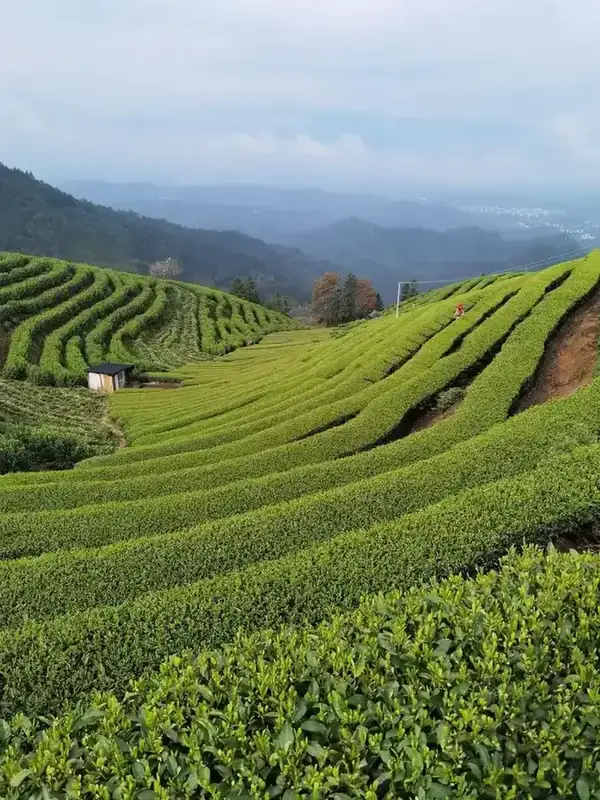
Black tea was first made in the Wuyi Mountains of northern Fujian, in the area around Tongmu Village in what is now Xingcun Township. The product is Zhengshan Souchong — the smoked black tea the West came to call Lapsang Souchong — and it is generally treated as the ancestor of every other black tea.
The date is the first problem in any black tea history. The scholarly mainstream places the invention in the late sixteenth to early seventeenth century, during the Wanli to Chongzhen years of the Ming. The most systematic attempt to pin it down, by Zou Xinqiu, works from local records and export documents and proposes a window of 1567 to 1610.
Other sources say “late Ming, early Qing”, which is consistent but vaguer. A minority view pushes the date back to the mid-Ming on the basis of the word “red tea” appearing in earlier texts, but most specialists do not accept that those references describe the oxidised tea we now call black tea.
So: black tea history has a place with reasonable confidence, and a date with a defensible forty-year window. It does not have a year.
The Story Everyone Tells
The most repeated origin story runs like this. An army passed through Tongmu and camped among the tea leaves spread out for drying. By the time the soldiers left, the leaf had been crushed and had begun to redden. Facing a ruined batch, the growers dried it over a pine-wood fire to salvage something, and the result — dark, smoked, and unexpectedly good — became the first black tea.
It is a good story. It explains three things at once: why the leaf is oxidised, why it is smoked, and why it happened here.
It is also unverified. No document supports it. It should be written as “the story goes” or “相传” rather than as history, and a lot of tea writing does not make that distinction. We are making it here because it is the difference between knowing black tea history and repeating a marketing pamphlet.
How It Reached Europe
Black tea became a global commodity through the maritime trade, and the Dutch were early carriers. A commonly cited date is 1610, when Dutch traders brought Wuyi tea to Europe. The trade to Britain is documented more solidly from the 1650s — tea was being sold in a London coffee house by 1657 — with the 1662 arrival of Catherine of Braganza as a further spur to fashion rather than the beginning of the trade.
One widely repeated claim, that tea reached Britain in 1640, traces to a single author and is not supported by the shipping records. Treat it with caution.
Whether black tea was invented for export is another question with a common answer that outruns the evidence. What can be said is that the commercialisation of black tea coincided with the growth of the sea trade, and that Fujian merchants were the ones pushing it outward. “Made for export” is an inference, not a documented fact.
Bohea, Souchong and the Name Black Tea
The vocabulary of early tea trade is worth knowing because it still appears on packaging.
Bohea is a rendering of “Wuyi”. From the late seventeenth century into the early eighteenth it was the European word for Chinese tea generally, and for Wuyi black tea specifically. The English East India Company was importing “Bohea” by 1702. Over time the word drifted, and came to mean ordinary black tea rather than a specific origin.
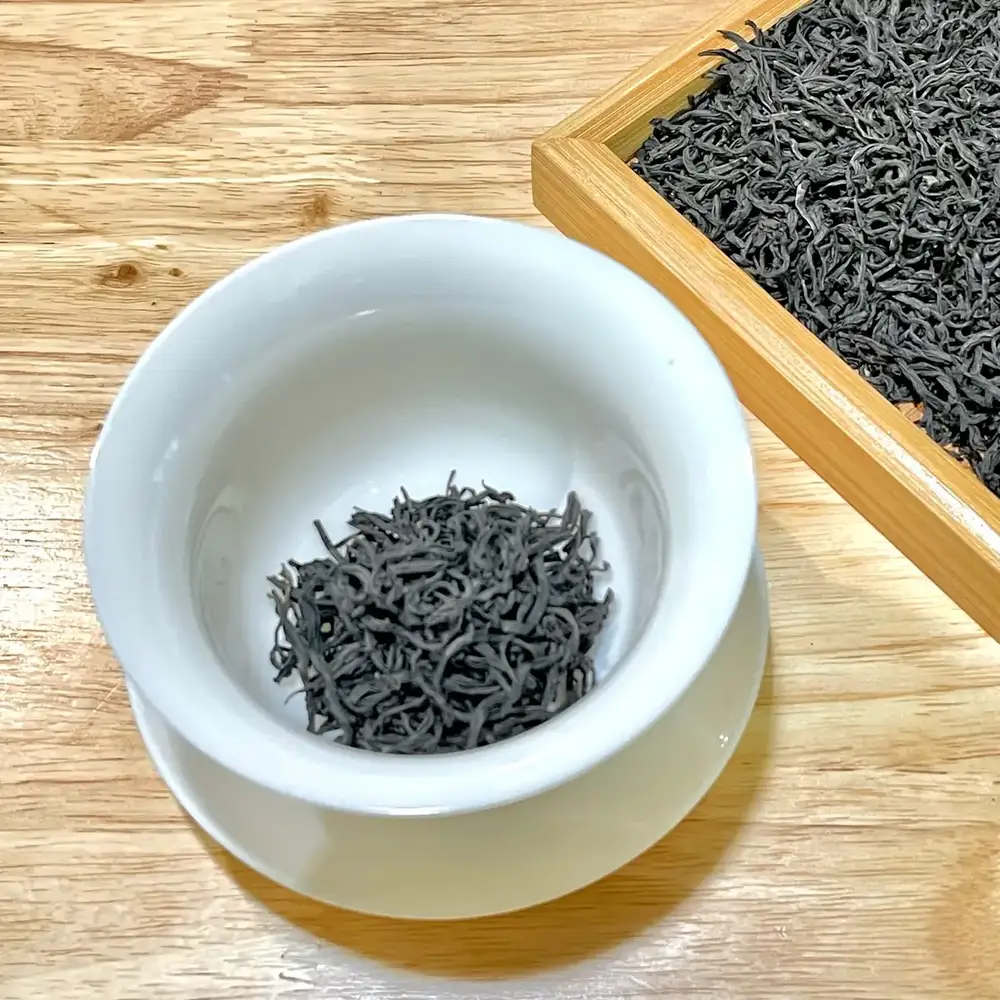
Souchong is a transliteration of 小种 — “small variety” or “small leaf”. The Oxford English Dictionary dates the English word to 1760.
Lapsang is the uncertain part. The common explanation is that it derives from a Fuzhou-dialect word for “smoked”, and that it became attached to the tea after Fuzhou opened as a port in 1853. It appears in the Encyclopaedia Britannica by 1878. The etymology is not settled, and anyone who tells you it is should be asked for a source.
A note on how these words were used in trade. Merchants in the eighteenth century did not distinguish carefully between a place name and a grade, so a single word could mean the Wuyi district, the tea grown there, or simply the ordinary black tea sold by the chest. The same looseness persists today, which is why reading a modern packet and reading a 1750 shipping manifest both require the same caution about what a name is actually promising.
One clarification about the name itself: Chinese calls it 红茶, “red tea”, after the colour of the liquor. English calls it black tea, after the colour of the dry leaf. Neither is wrong; they are describing different ends of the same product.
The Move to India and Ceylon
For two centuries China supplied essentially all the world’s black tea. That changed in the nineteenth century, and the change reshaped black tea history more than any invention had.
Tea plants were found growing wild in Assam in the 1820s and identified as a variety of Camellia sinensis. Commercial plantations followed, and by the end of the century India was a major producer in its own right. Ceylon entered after coffee plantations were destroyed by leaf disease in the 1870s, and tea replaced coffee as the island’s crop.
The consequence was a shift in what “black tea” meant. Chinese black tea was strip-processed, small-leaf and often delicate. Indian and Ceylonese tea was large-leaf, often CTC or broken, strong and built for milk. Most of the black tea drunk in the world today descends from that second tradition rather than the first.
Black Tea Today
The scale is easy to underestimate. World tea production in 2022 was about 6.7 million tonnes, of which black tea was roughly 3.58 million tonnes — about 53%. Black tea accounts for an even larger share of tea traded internationally, around 70% to 75%, because a great deal of green tea is consumed where it is grown.
China’s own production has swung back toward black tea in recent decades. Output was 491,000 tonnes in 2023 and 510,300 tonnes in 2024, about 14.6% of the country’s total tea production and 383,600 tonnes of domestic sales. That is a reversal of the mid-twentieth-century pattern, when Chinese production was dominated by green tea.
The producing map is now broad. India grows roughly 700 million kilograms of Assam alone; Kenya exports half a million tonnes of mostly CTC tea; Turkey produces about 246,000 tonnes and consumes nearly all of it domestically, with the highest per-capita tea consumption in the world.
A Short Timeline
| Date | Event | Confidence |
|---|---|---|
| 1567–1610 | Black tea developed around Tongmu, Wuyi | Scholarly estimate |
| 1610 | Dutch bring Wuyi tea to Europe | Commonly cited |
| 1657 | Tea sold in a London coffee house | Documented |
| 1702 | East India Company imports “Bohea” | Documented |
| 1760 | “Souchong” enters English | OED |
| 1820s | Wild tea identified in Assam | Documented |
| 1853 | Fuzhou opens; “Lapsang” spreads | Likely, etymology unsettled |
| 1870s | Ceylon converts from coffee to tea | Documented |
| 1875 | Keemun created in Anhui | Documented |
| 1938–39 | Dianhong developed in Yunnan | Documented |
| 2005 | Jin Jun Mei created at Tongmu | Documented |
The timeline above is deliberately uneven in confidence. Some entries are documented in company records; others are scholarly estimates; one is a likely inference. Reading black tea history properly means carrying that unevenness rather than flattening it into a clean sequence of dates.
Why the History Still Matters
The history is not just antiquarian. Three things about the tea on a modern shelf only make sense with the story behind them.
Two practical reasons, beyond interest, and a third that is simply about not being misled.
First, black tea history explains the names on the shelf. Keemun, Dianhong, Yingde and Jin Jun Mei are all twentieth-century or later inventions, and knowing that adjusts what you expect from them — a tea invented in 2005 has no centuries-old production base, which is exactly why the genuine article is scarce and expensive.
Second, black tea history explains why the trade looks the way it does today. The reason Britain drinks black tea rather than green is not a matter of taste discovered in a laboratory; it is a consequence of shipping times, tax policy and the planting of Indian gardens in the nineteenth century.
Second among the practical reasons, it explains the two traditions. Chinese black tea and Indian black tea are not variations on one theme; they descend from different decisions about leaf, process and market. Expecting a CTC Assam to behave like a Keemun is the same category error as expecting an IPA to taste like a lager.
How Black Tea Became a British Drink
The British end of black tea history is better documented than the Chinese end, and it explains why the world drinks black tea rather than green.
Tea arrived in Britain as a luxury and stayed one for over a century. The early imports were green and Bohea, and the tax on tea was high enough that smuggling was industrial-scale. When the tax was cut sharply in the 1780s, consumption widened from a narrow elite to a mass market within a generation.
The shift from green to black as the British default has several causes, and no single decisive one. Black tea kept better on a long sea voyage, which mattered when the journey took months. The British preference for milk and sugar suited a strong oxidised leaf better than a delicate green one. And the planting of Indian and Ceylonese gardens from the 1830s onward created a supply of cheap, strong, consistent black tea that the Chinese trade could not match on price.
By the end of the nineteenth century the pattern was set: Britain drank black tea with milk, sourced increasingly from India and Ceylon, and that habit travelled with the empire. Much of the black tea history that shaped global consumption happened in this commercial shift rather than in any discovery about processing.
Frequently Asked Questions
When was black tea invented?
Sometime between 1567 and 1610, in the Wuyi Mountains of Fujian. The window comes from documentary and export-record analysis; no source gives a specific year, and any page that states one confidently is overreaching.
Is black tea history older than green tea?
No. Green tea is far older — tea was being processed and drunk for well over a thousand years before black tea appeared. Black tea history is comparatively recent, a development of the late Ming.
Where does the name Lapsang Souchong come from?
“Souchong” is a transliteration of 小种 and entered English by 1760. “Lapsang” is less certain; the usual explanation is a Fuzhou-dialect word for smoke, attached after Fuzhou opened in 1853, but the etymology is not settled.
Did black tea come from India?
No. India became the largest producer in the twentieth century, but black tea was made in Fujian for roughly two hundred years before commercial planting began in Assam.
Why is it called black tea when the drink is red?
English names the dry leaf, which is dark brown to black. Chinese names the liquor, which is red — hence 红茶, “red tea”. Both descriptions are accurate about different things.
Related reading: types of black tea, chinese black tea regions, how black tea is made.
Shop the black teas in this guide
Sold directly from our own stock. Every listing states the harvest, the county and the size options.
Not sure which one? Browse the full black tea collection — or start with the guides above.
Sources & References
History and Scholarship
For the British side of the trade, the UK Tea & Infusions Association maintains a dated chronology: tea.co.uk/history-of-tea.
- Zou Xinqiu — The World’s First Black Tea: Wuyi Zhengshan Souchong. Source of the 1567–1610 dating window.
- Zhuwei, T. (2000). On the origin of black tea. Cha (Japan).
- Oxford English Dictionary — “souchong” dated 1760.
- Encyclopaedia Britannica, 1878 — early “Lapsang” entry.
Standards
Standard numbers and dates can be verified at China’s national standards platform: std.samr.gov.cn.
- GB/T 13738.3-2012 — Souchong black tea. Separates Zhengshan Souchong from smoked Souchong.
- GB/T 30766-2014 — Tea classification. Defines Souchong as a strip product finished over a pine-smoke fire.
Production Statistics
- FAO (2022) — world tea production 6.7 million tonnes; black tea 3.579 million tonnes (53%).
- China Tea Marketing Association (2025) — Chinese black tea output 491,000 t (2023), 510,300 t (2024), 14.58% of total, 383,600 t domestic sales.
- India, Kenya, Turkey — 2022 figures as cited in text.
What this page does not claim
We do not claim a precise year for the invention of black tea, that the army story is true, that tea reached Britain in 1640, or that the Lapsang etymology is settled. Where the record is thin, we say so — that is the only honest way to write black tea history.

One Comment