
Shui Xian Tea: Wuyi’s Gentlest Cultivar and Old Bush
Shui Xian tea is the older of Wuyi’s two workhorse cultivars, and the one that rewards patience. Where Rougui announces itself, Shui Xian tea settles into the cup and stays. It is also the cultivar behind the most expensive category in the mountains, because old Shui Xian bushes are genuinely old and genuinely scarce.
It is also one of the hardest categories to buy well, because “old bush” has no legal definition and the claim is unverifiable at the point of sale.
Table of Contents
What Shui Xian Tea Is
Shui Xian is a single clonal cultivar, one of the five legal categories of Wuyi rock tea under GB/T 18745. It is the oldest of the commercially significant Wuyi cultivars, and its history runs in a different direction from Rougui’s.
The plant is native to Dahua village in Jianyang, in northern Fujian, where it was selected around the Kangxi period. It reached the Wuyi Mountains around the Guangxu period, roughly the last decades of the nineteenth century, and was adopted there so completely that most drinkers now treat Shui Xian tea as a Wuyi product rather than a Jianyang one.
In 1984 it was registered as a national variety, listed as Huacha 9. That registration matters because it distinguishes Shui Xian tea from the many local seedling populations that share similar names without being the same plant.
Why Being a Triploid Matters
Shui Xian is a triploid: it carries three sets of chromosomes rather than the usual two. That is unusual in tea, and it has practical consequences.
Triploids are generally sterile or near-sterile, which means Shui Xian tea cannot be propagated by seed in any useful way. Every Shui Xian plant in commercial production is a clone — a cutting from an existing bush. This is true of most named tea cultivars, but for Shui Xian tea it is a biological necessity rather than a commercial preference.
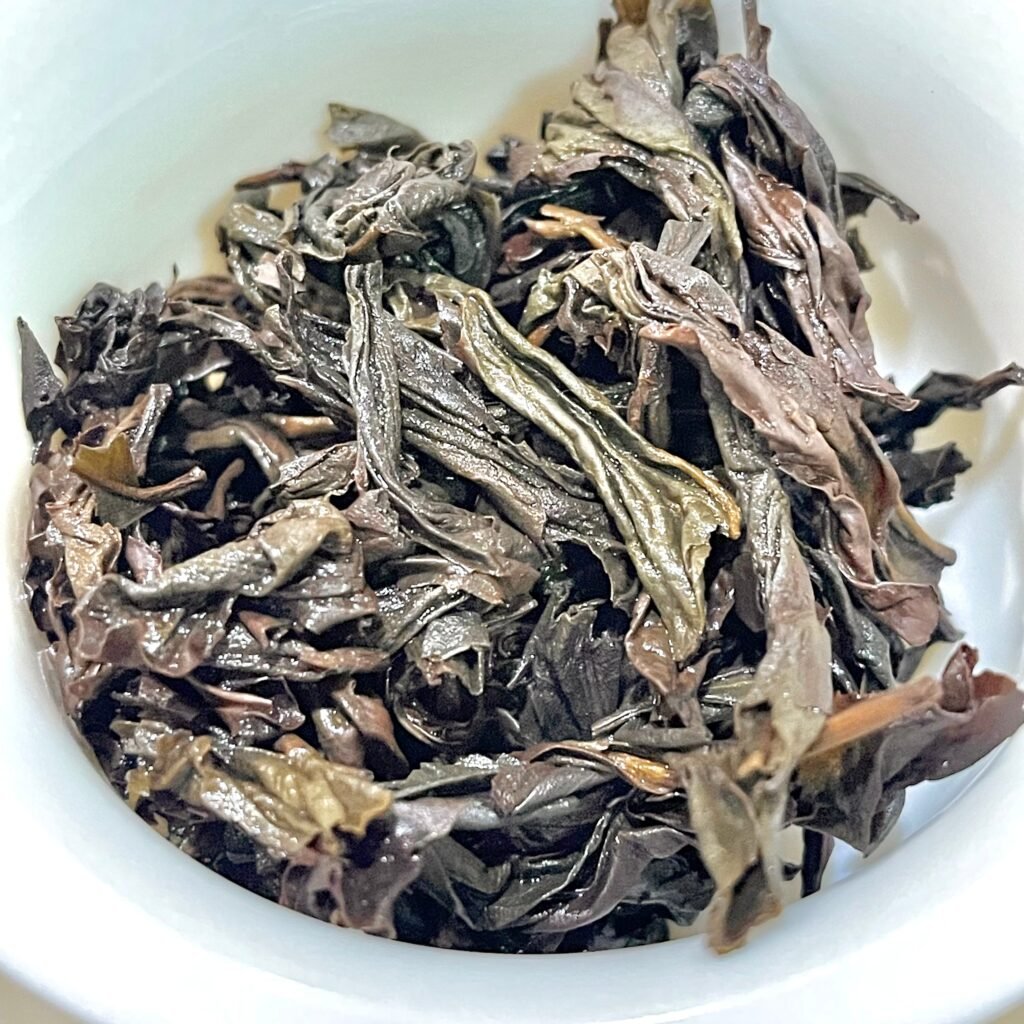
The visible effect is in the leaf. Triploid tea plants tend to produce larger, thicker, more robust leaves with heavier cell walls, and that structure is what gives the cultivar its characteristic weight in the mouth. The same trait makes the leaf slower to give up its compounds, which is why it can run more infusions than many other oolongs without collapsing.
It also explains why old-bush material is so highly valued. Because every plant is a clone, a genuinely old bush is not reproducing itself in the field. When it dies, it is not replaced by an identical plant. The population of old bushes only shrinks.
Old-Bush Shui Xian Tea and Cong Wei
Old-bush Shui Xian tea — lao cong shui xian — is the most sought-after expression of the cultivar, and the one with the least precise definition.
There is no legal threshold for “old” in the standard. Industry usage varies: some sellers use thirty years, some fifty, some eighty. What buyers are actually chasing is a flavour quality the trade calls cong wei, bush flavour, and that quality is real even if the age cutoff is not.
Research on the aroma of old-bush Shui Xian tea identified specific compounds behind the character. Theaspirone was measured at an odour activity value around 500, which is high enough that a small concentration dominates perception. Delta-decalactone and 2-acetylpyrrole were also identified as contributors. Theaspirone reads as a woody, slightly sweet, almost tobacco-like note; delta-decalactone contributes a creamy, coconut-adjacent quality.
What this gives you is a way to argue about old-bush claims on a chemical basis rather than a marketing one. A tea with theaspirone at high odour activity will read as old-bush whether or not the seller’s stated age is accurate. A tea without it will not, whatever the label says.
Two cautions. First, cong wei is a quality, not a guarantee of quality: a badly made old-bush tea can taste muddy. Second, the compound profile can be imitated by roast, so a heavily roasted young Shui Xian tea can approximate the aroma without the underlying age. The tell is usually in the finish, which stays short in the imitation.
What Shui Xian Tea Tastes Like
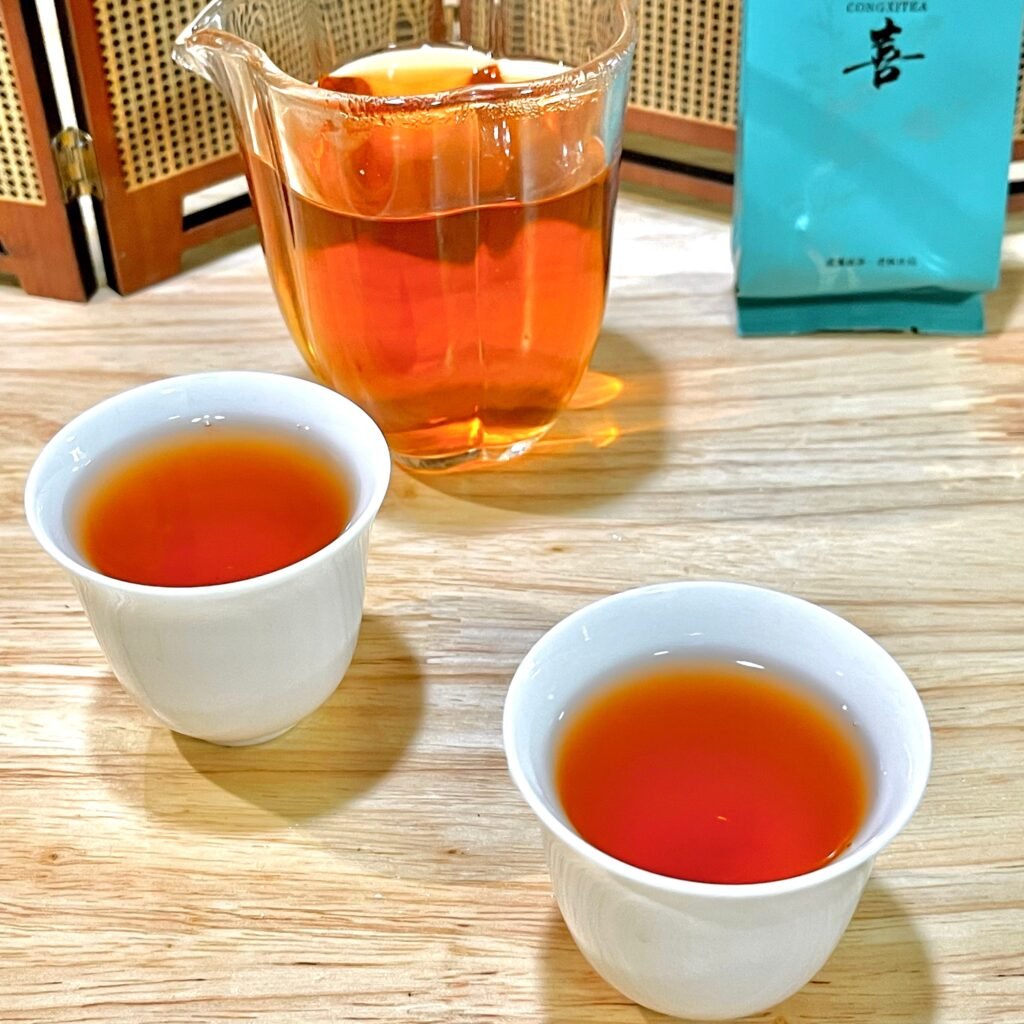
The cultivar is rounder and heavier than Rougui, with less top-note drive and more mid-palate presence. The liquor is typically a deeper amber-orange, and the body is the point rather than the aroma.
Young Shui Xian tea tastes of stone fruit, honey and a light roast character, with a clean finish. As the bush ages, the profile shifts toward wood, tobacco leaf, dried fruit and a savoury quality that is difficult to describe without reaching for the cong wei term. Old-bush Shui Xian tea also tends to have a longer finish, which is the most reliable sensory difference between a genuinely old bush and a well-roasted young one.
Fire level changes the picture as it does across the category. A light-fire Shui Xian tea keeps more fruit and floral character; a full-fire version turns darker and more mineral, and needs longer resting before it is pleasant to drink.
How to Brew Shui Xian Tea
Shui Xian is forgiving compared with Rougui, and it tolerates slightly longer infusions without turning harsh.
Use 7 to 8 g of leaf in a 110 ml gaiwan with boiling water. A first infusion of 8 to 12 seconds is a reasonable starting point; because the leaf is thicker, it needs a little more contact time than Rougui to open. Add 5 to 10 seconds per round and expect eight to ten infusions.
Old-bush material can be pushed harder again. Some drinkers simmer the spent leaf after the gaiwan session, which pulls out a sweet, woody liquor that is quite different from the brewed cups.
If the tea tastes flat rather than weak, the problem is usually insufficient leaf rather than insufficient time. Shui Xian leaf is bulky, so a scoop that looks generous can weigh surprisingly little. Rock tea brewing has the full method.
Does Shui Xian Tea Improve with Age
It changes, and the evidence is more specific than the folklore.
Research on aged rock tea analysed a decade of samples and found gallic acid 166% to 168% higher in the aged material than in new tea. Catechins moved in both directions rather than declining uniformly, which is the opposite of the simple “it fades” model many drinkers assume. A separate study on Shui Xian tea identified 29 compounds that could serve as year markers, which is a way of saying the aging trajectory is measurable rather than arbitrary.
In the cup, aged Shui Xian tea is less aromatic and more savoury, with a softer body and a longer, quieter finish. Whether that is an improvement depends entirely on what you want from the tea. Fresh Shui Xian tea is a better teaching tea; aged Shui Xian tea is a better slow afternoon.
Storage is the deciding factor. Sealed, dark, dry, at 25 °C or below and 50% relative humidity or below, per GB/T 30375-2013. Resting rock tea covers the related question of how long to wait after roasting.
Judging an Old-Bush Claim
Because there is no legal definition of old bush, the claim is only as good as the seller. Four things are worth checking.
Price realism. Genuine old-bush Shui Xian tea is expensive because the bushes are scarce and cannot be replaced. A listing that undercuts the market by a wide margin is not finding you a bargain.
Stated age. A number, even an approximate one, is better than the phrase “old bush” alone. Sellers who know their material usually know roughly how old it is.
Finish length. This is the sensory test you can run at home. A long, sweet, savoury finish is the strongest signal of genuine age; a short finish with a woody aroma is the signature of roast imitating age.
Consistency between purchases. Old-bush material from the same garden should taste like the same tea from year to year, because it is the same plants. A seller whose old-bush offering changes character completely each season is probably blending.
Shui Xian Against Rougui
The two cultivars are the commercial core of the category, and the comparison is the fastest way to learn to tell them apart.
| Shui Xian tea | Rougui tea | |
|---|---|---|
| Aroma | Rounder, further back | Penetrating, forward |
| Body | Heavier, thicker | Firmer, sometimes sharp |
| Leaf | Larger, thicker | Smaller, medium leaf |
| Old-bush expression | Yes — cong wei | Not a defined concept |
| Forgiveness | Higher | Lower |
There is one more difference worth knowing. Shui Xian tea holds its shape through the session, so the later infusions still taste of something rather than of hot water. Rougui fades faster and more gracefully. If you drink alone over an hour, that difference matters more than the first cup does.
For a new drinker, Shui Xian tea is usually the easier entry. It is harder to over-brew into harshness and its structure is easier to recognise. Rock tea types covers the other categories.
Three Things Buyers Get Wrong
Assuming bigger leaf means older bush. Leaf size in Shui Xian is partly genetic and partly a function of how the bush is pruned and fed. An old bush that has been cut back hard will push smaller leaf for several seasons. Judging age from leaf appearance is unreliable.
Assuming dark roast means better quality. Full fire is a style, not a grade. It is also the easiest way to hide thin material, because charcoal aromas sit on top of everything else. A badly made tea is more often over-roasted than under-roasted.
Assuming the cultivar name guarantees origin. Shui Xian is grown well beyond Wuyishan, in Jianyang, Jian’ou and across northern Fujian. Only material grown inside the Wuyishan geographical indication area and processed to the standard can be sold as Wuyi rock tea. A plain “Shui Xian” label may be perfectly good tea from outside the area.
Frequently Asked Questions
Is Shui Xian tea a rock tea or a separate tea?
Both in different senses. Shui Xian is a distinct cultivar, and Shui Xian tea grown inside the Wuyishan geographical indication area and processed to the standard is a Wuyi rock tea. The same cultivar grown elsewhere is Shui Xian but not Wuyi rock tea.
What does old-bush Shui Xian tea taste like?
Wood, tobacco leaf, dried fruit and a savoury quality often called cong wei. The clearest marker is a longer finish than young Shui Xian tea, which is difficult to fake.
How old does a bush have to be to count as old bush?
There is no legal threshold. Industry usage ranges from thirty to eighty years, which is why the claim is a matter of trust rather than verification.
Why is Shui Xian tea cheaper than Rougui?
It is not, consistently. Ordinary Shui Xian tea is cheaper because production is larger and the cultivar is less fashionable. Old-bush Shui Xian tea can exceed Rougui prices considerably.
Can Shui Xian tea be aged?
Yes. Aged Shui Xian tea loses aromatic lift and gains savoury depth, with measurable changes in gallic acid and catechins. Storage conditions decide whether that reads as improvement.
Shop the rock teas in this guide
Sold directly from our own stock. Every listing states the cultivar, the garden and the fire level.
- Wuyi Shui Xian, 38-year-old bush reserve — $9.90
- Wu San Di old-bush Shui Xian, 2026 — $18.90
- Wu San Di Shui Xian, 46-year-old bush — $12.90
Or browse the full rock tea collection.
Related Reading
the other four categories, how long to rest it, brewing it and Rougui, the other workhorse cultivar.
Sources & References
Standards
- GB/T 18745-2006 — Geographical indication product: Wuyi rock tea. Shui Xian is one of the five product categories.
- GB/T 30375-2013 — Tea storage. Oolong at ≤25 °C and ≤50% relative humidity.
Peer-Reviewed Research
- Foods (2025). Old-bush Shui Xian aroma: theaspirone at OAV ~500, delta-decalactone, 2-acetylpyrrole. DOI:
10.3390/foods14101706 - Food Science & Nutrition (2024). Age markers in Shui Xian tea; 29 compounds identified. DOI:
10.1002/fsn3.4327 - Food Chemistry: X (2026). Gallic acid 166–168% higher in decade-aged rock tea. DOI:
10.1016/j.fochx.2026.104613
Variety Records
- Shui Xian: triploid (2n = 3x = 45); native to Dahua village, Jianyang; brought to Wuyi around the Guangxu period; national variety Huacha 9, 1984.
What this page does not claim
We do not claim a specific age threshold for old bush, that aging always improves Shui Xian tea, or that cong wei can be identified from a label. Where the trade uses an undefined term, the page explains the chemistry behind it instead.
