
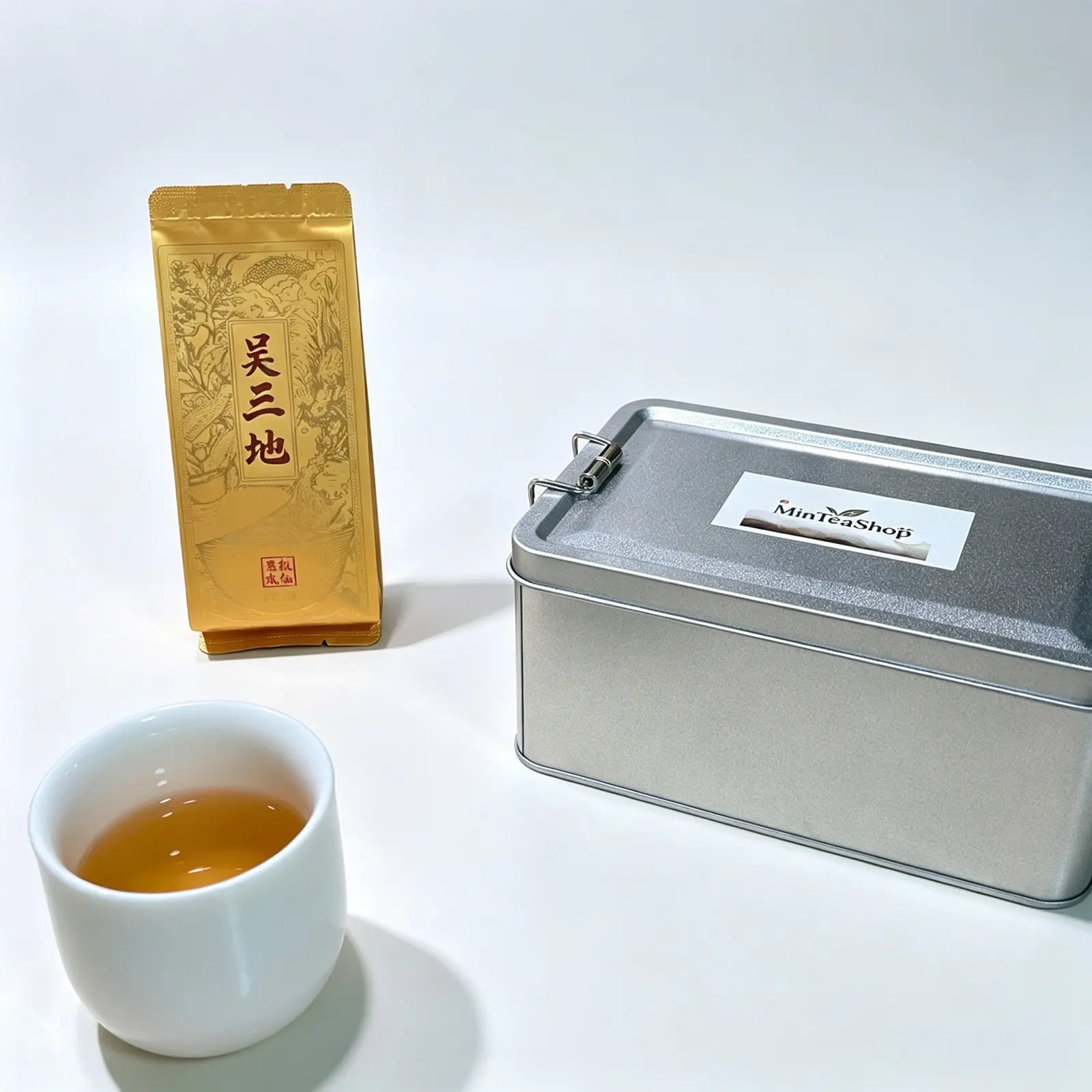
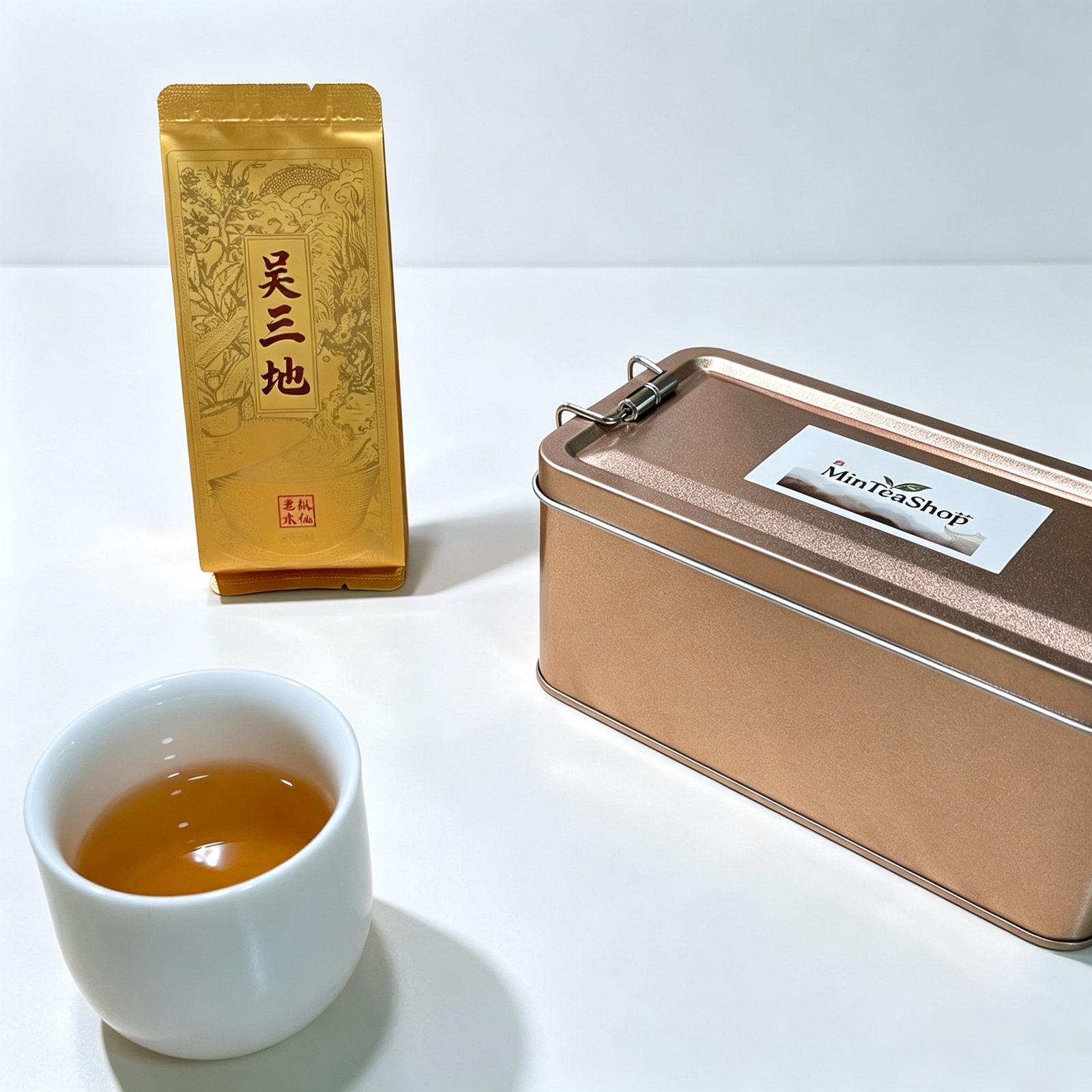
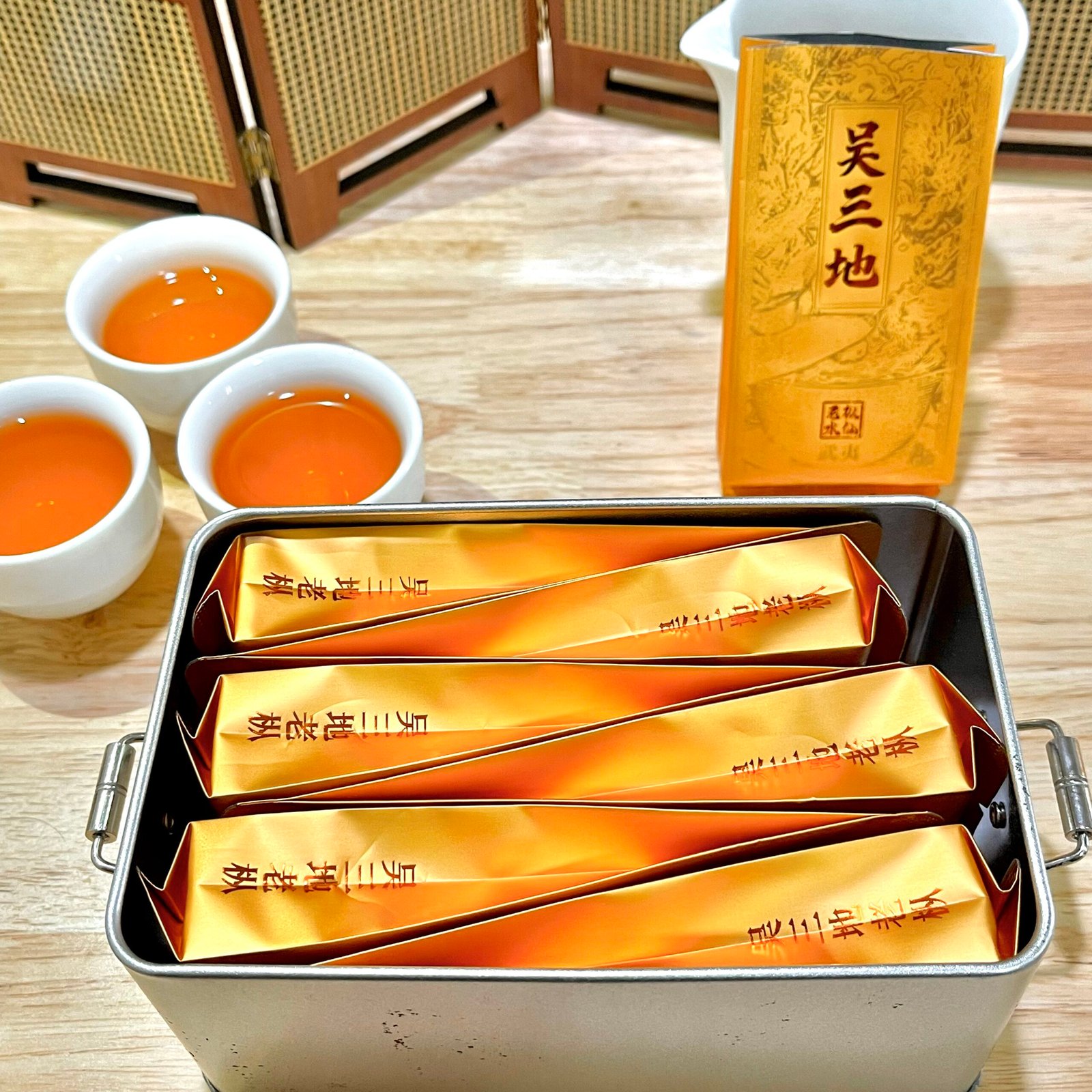
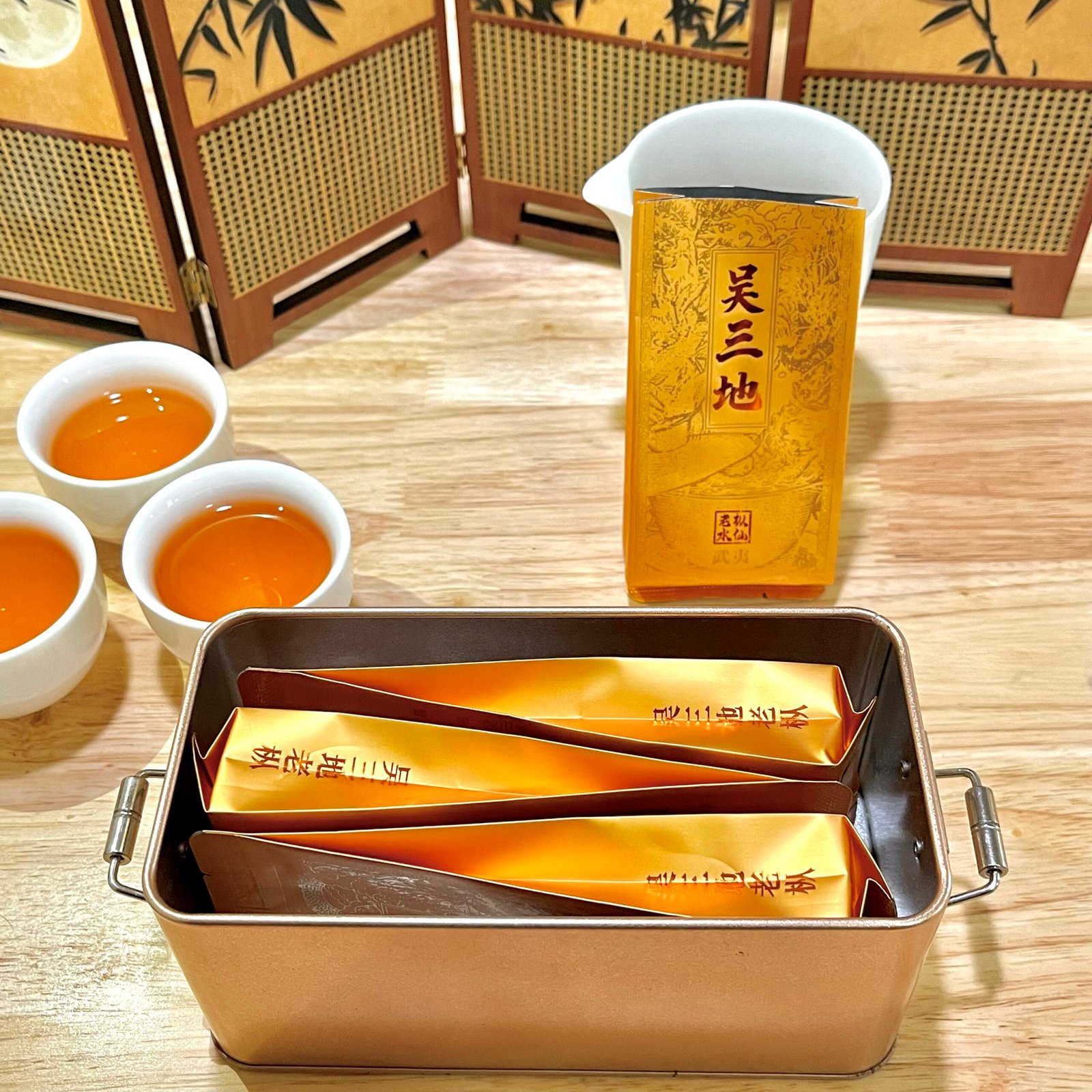
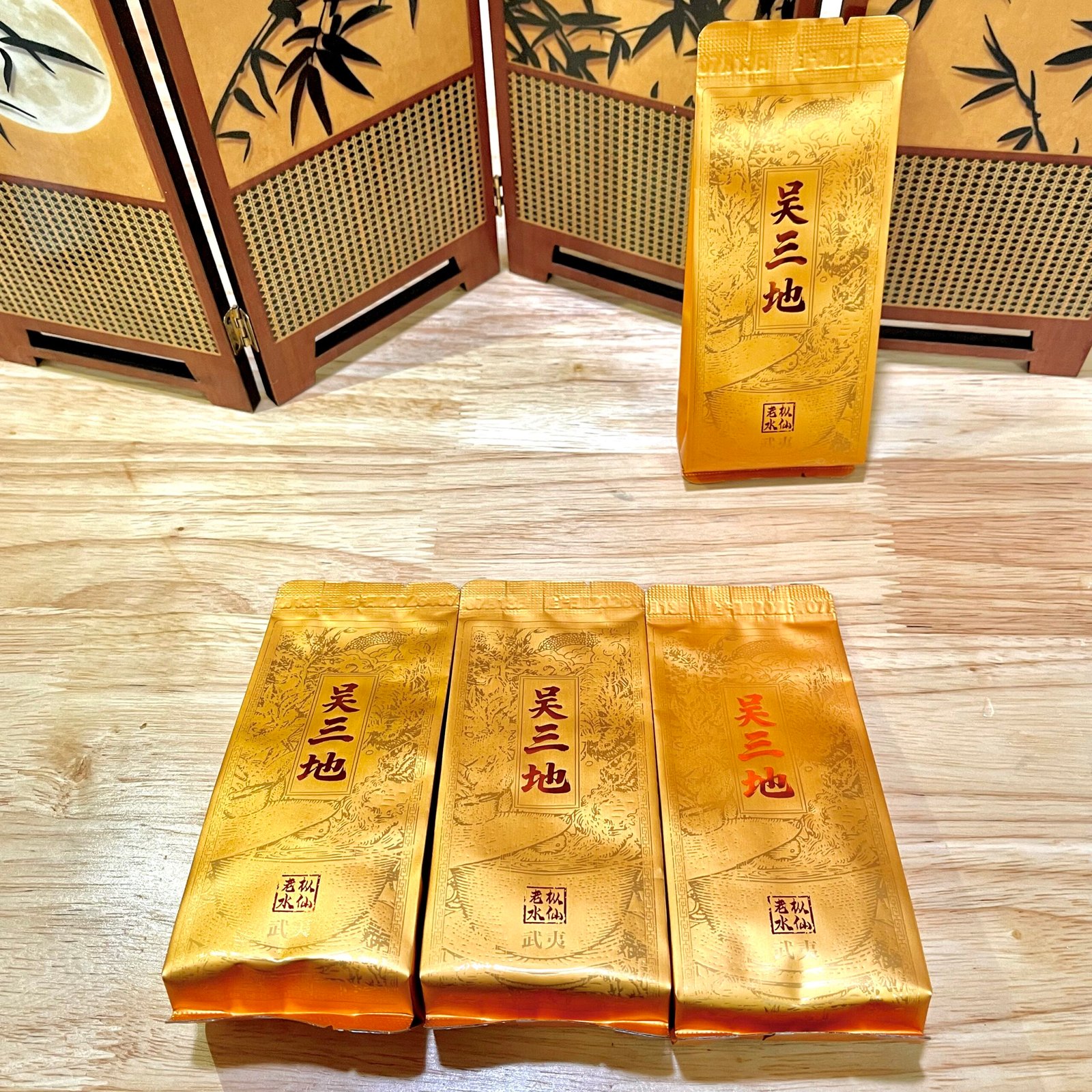
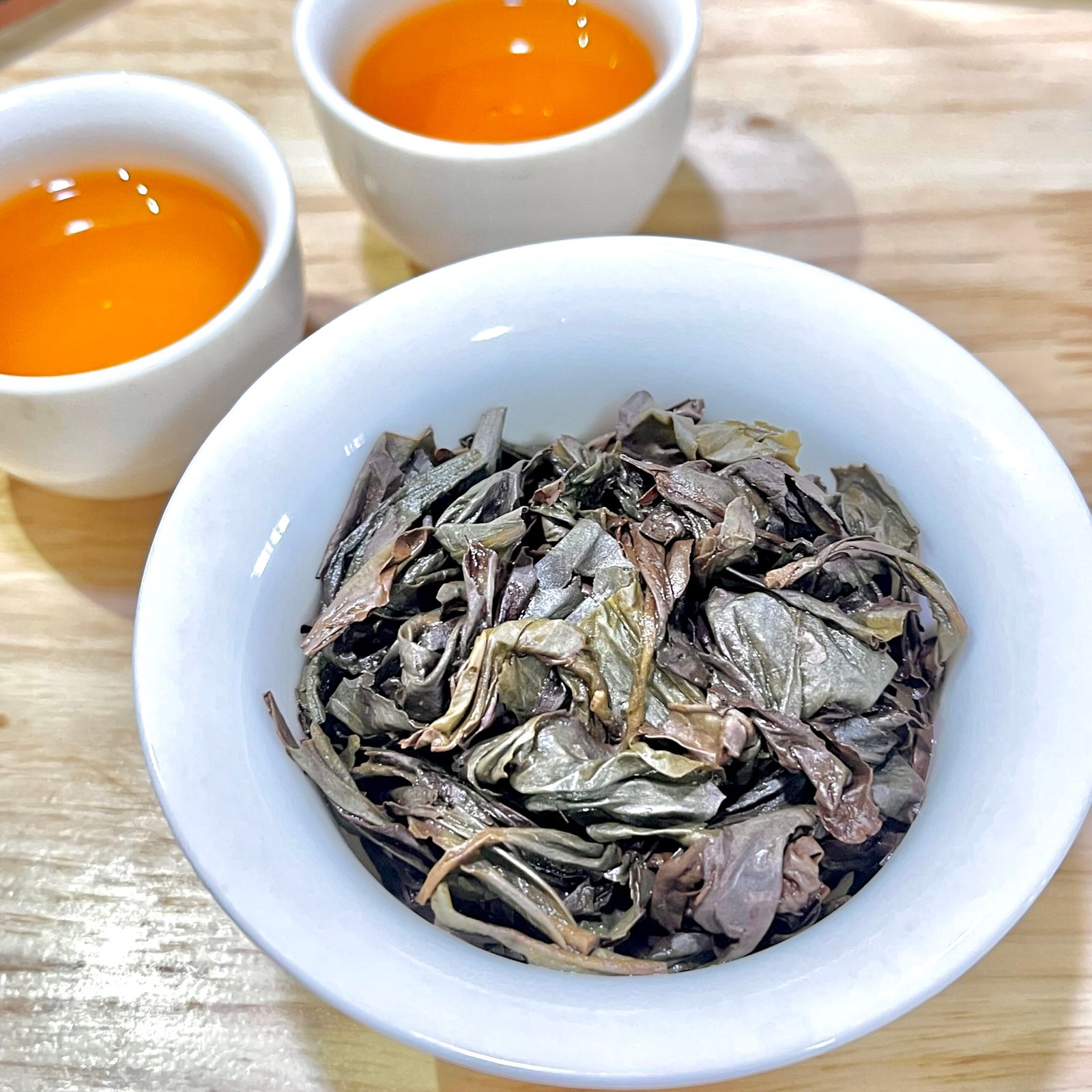
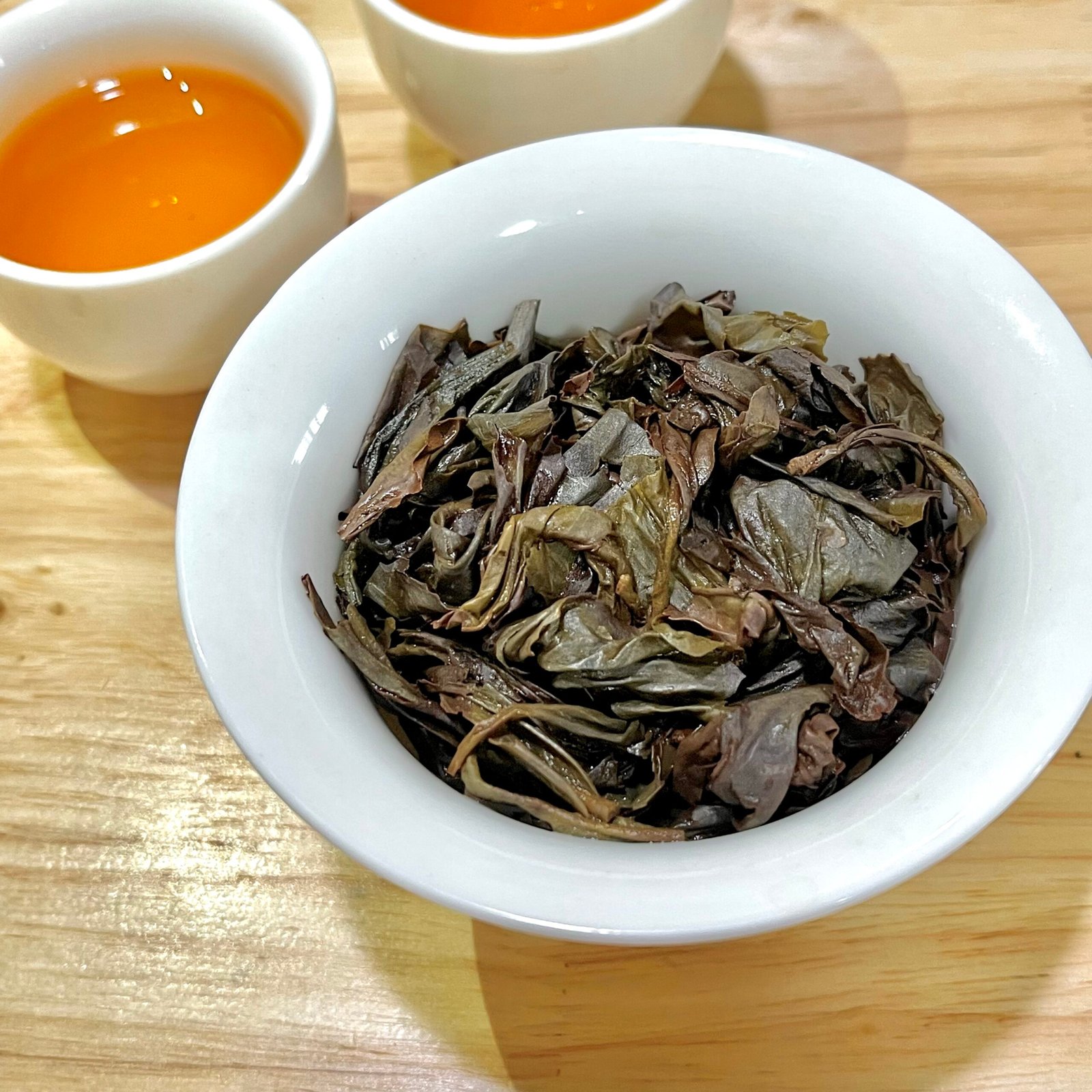
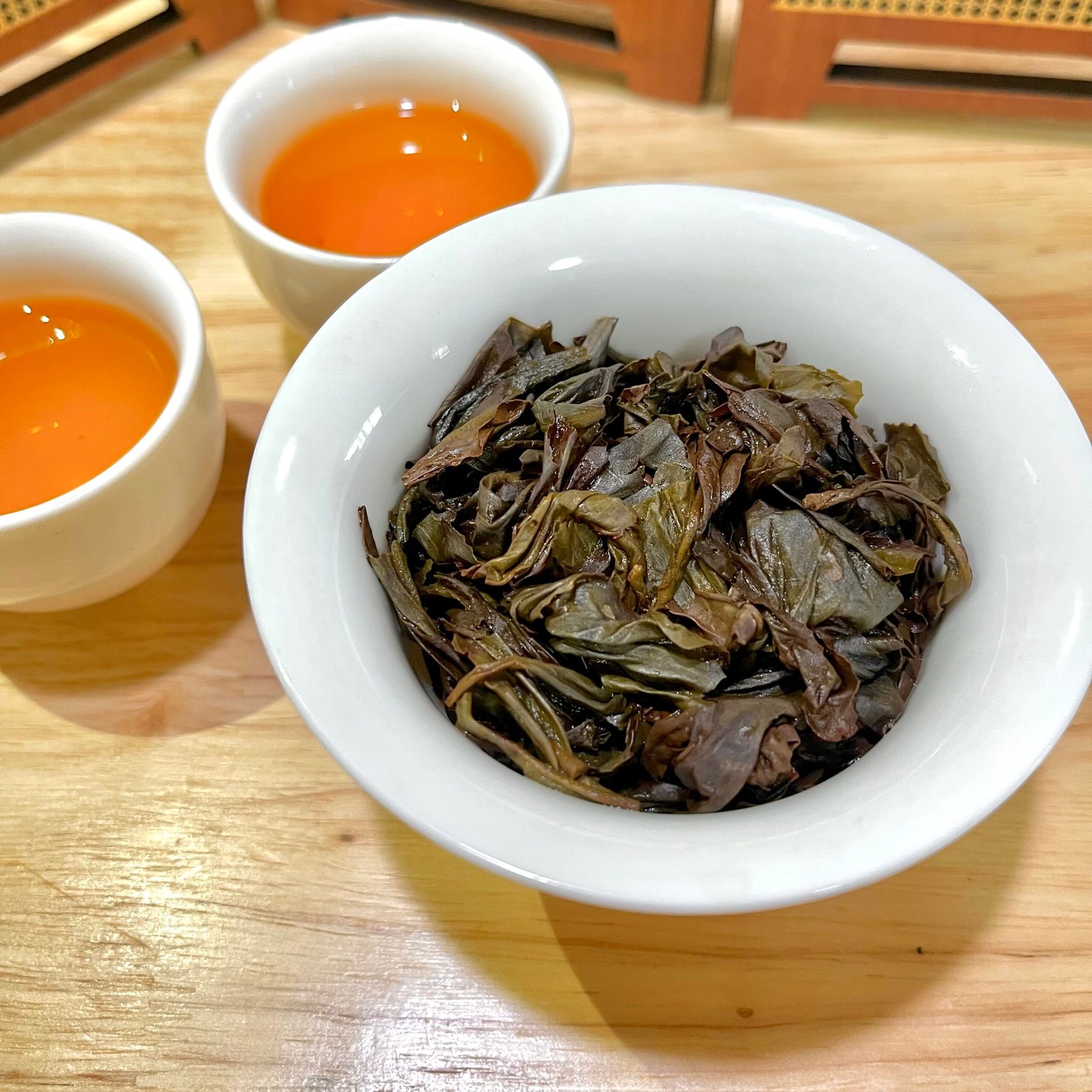
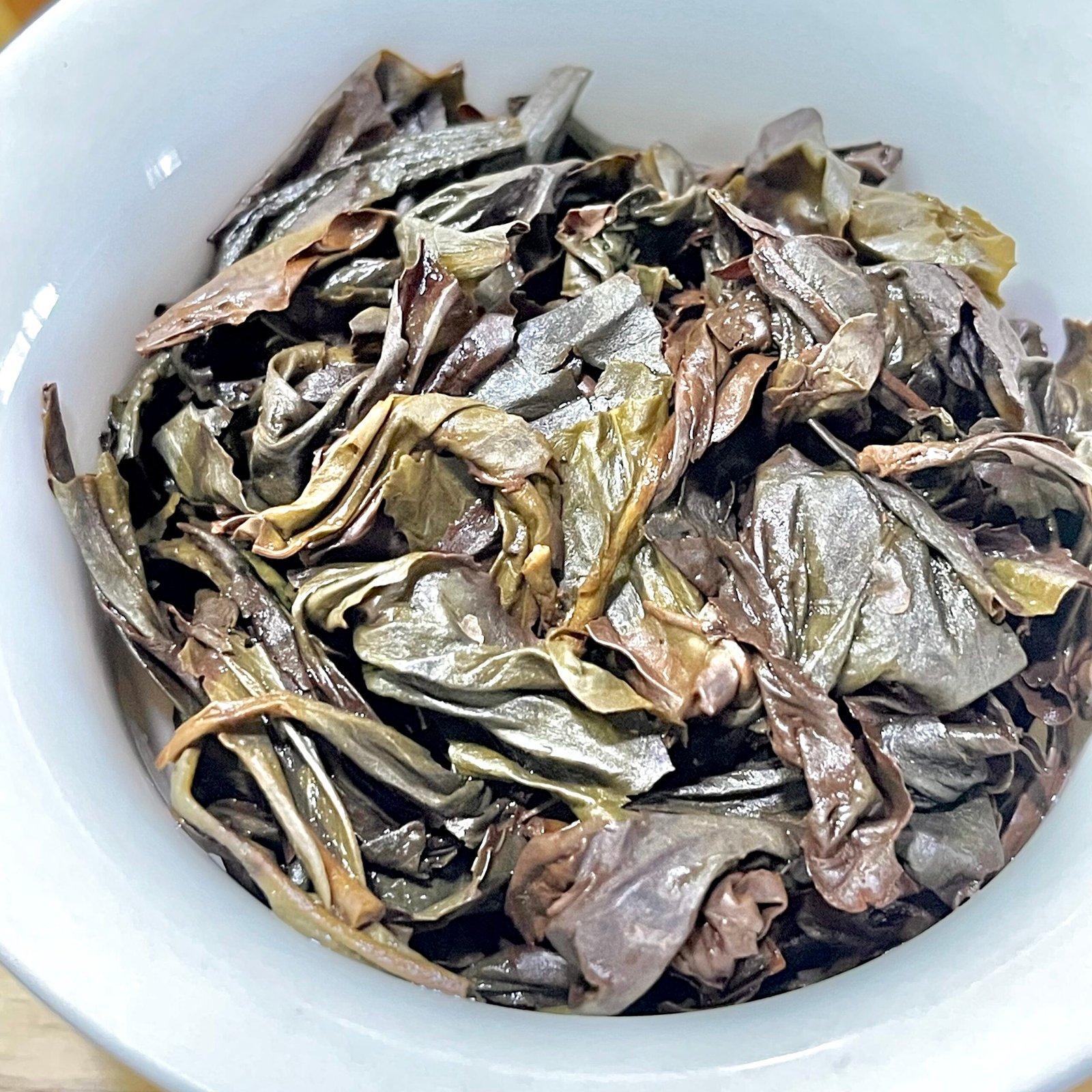
Wu San Di Old Bush Shuixian Rock Tea, 2026 Wuyishan
Price range: $18.90 through $249.90
2026 Wu San Di old bush Shuixian rock tea from Wuyishan, Fujian, from old, uncut trees. Moss, orchids and hazelnut with a deep, cooling finish.
Description
First published: 20 September 2026 · Last updated: 4 November 2026
This Wu San Di is a 2026 old bush Shui Xian rock oolong from Wuyi Mountain, Fujian, made from tea trees that are not cut back like a commercial plot. The cup is moss and orchid over roasted hazelnut, with a cooling finish that keeps unfolding. It suits drinkers who want the oldest kind of Wuyi tea and the patience to sit with a long session, and anyone curious about what tree age does to a cup.
What is Wu San Di?
It is a named growing area in the Wuyi Mountains, and this is the old bush Shui Xian we buy from it.
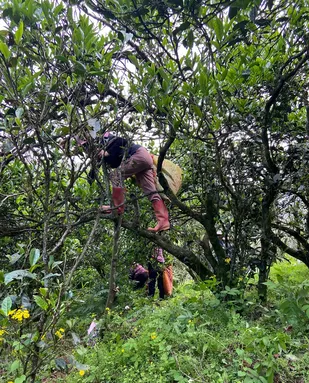
The Wu San Di name is a place name, not a grade. What matters for this lot is the tree condition: these are old tea bushes with thicker trunks and larger individual leaves, and far fewer of them than a trimmed commercial plot. The photograph here shows a picker working up in the canopy, which is the practical difference between old-bush leaf and hedge-pruned leaf.
We do not publish a planting year for this lot. We have no independent planting record, and the older the bush, the less reliable the number becomes. What we can describe is what we buy: uncut old-bush material, picked by hand, with the leaf and stem size that goes with it.
Shui Xian is one of the traditional local varieties of the Wuyi area, listed alongside Rougui, Wuyi cai cha and Aijiao Wulong in the national product standard for Wuyi rock tea.
Is it 老枞 or 老丛?
This is the one piece of tea vocabulary that trips up even experienced drinkers, including in English.
In ordinary Chinese, 枞 (cōng) means a fir or spruce, a tall conifer. It has nothing to do with tea plants. The tea scholar Luo Shengcai, who compiled the reference catalogue of Wuyi rock tea famous clones —《武夷岩茶名丛录》, published by Science Press in 2008 and still the standard list, with 70 named clones in it — has argued that the correct character in tea terminology is 丛 (cóng), which describes a clump of plants growing together, and that writing 枞 is a basic error that became convention. The dictionary entries for 枞 and 丛 show the difference: 枞 is a conifer, while 丛 is a clump of plants.
It is worth saying that the trade is not unanimous on this. Some drinkers argue the other way round — that 枞 should mark a tree picked as a single plant and 丛 a plot picked as a group. The dictionary does not settle it, and neither does the catalogue. What is not in doubt is that 枞 on its own means a fir, and that these are tea trees.
The reason the confusion persists is that Wuyi Shui Xian is a semi-tree, large-leaf variety, so 老枞水仙 was defensible in the older trade, and the wording stuck. You will see both characters on packaging, and they are read the same, lǎocóng.
So the trees in this lot are tea trees, not firs. What the old character points at is real: aged bushes with thick trunks and a distinct cup character the trade calls cong wei, clump flavour.
How old do the trees have to be?
There is no legal threshold, and the age itself is close to unverifiable.
In the Wuyi trade, old-bush tea is graded by tiers, and tree age sits at the centre of a language that includes both age classes and cong wei as a separate taste category. The honest problem is that how many years a given tree has actually stood is almost impossible to confirm, which is why the same characters turn up on a thirty-year-old bush and a ninety-year-old one.
What is not in doubt is the effect. Older trees are less vigorous and lower yielding, the leaf is different, and the cup develops a depth that younger bushes do not reach. That is a widely shared observation among drinkers, and we are not going to dress it up with a percentage.
| Tree age | What to expect in the cup |
|---|---|
| Under 30 years | Bright, clean, good structure. The everyday benchmark |
| 30–60 years | More body, more depth, the mineral thread gets stronger |
| 60 years and up | Cong wei: moss, aged wood, orchid, a finish that keeps going |
These are tendencies we have observed across many sessions, not a measured scale. If a seller tells you the exact age of a bush without a planting record, treat it as a story.
What does it taste like?
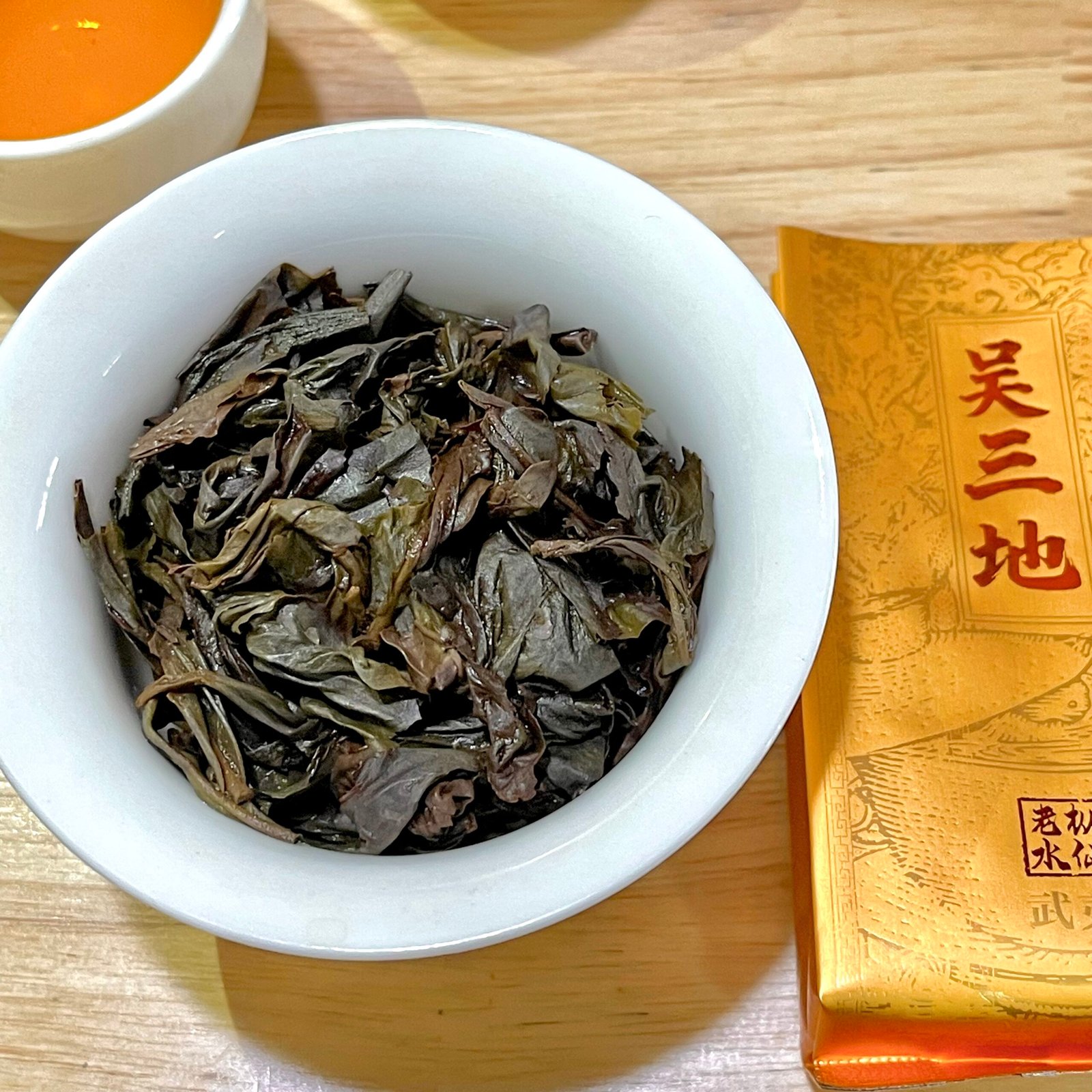
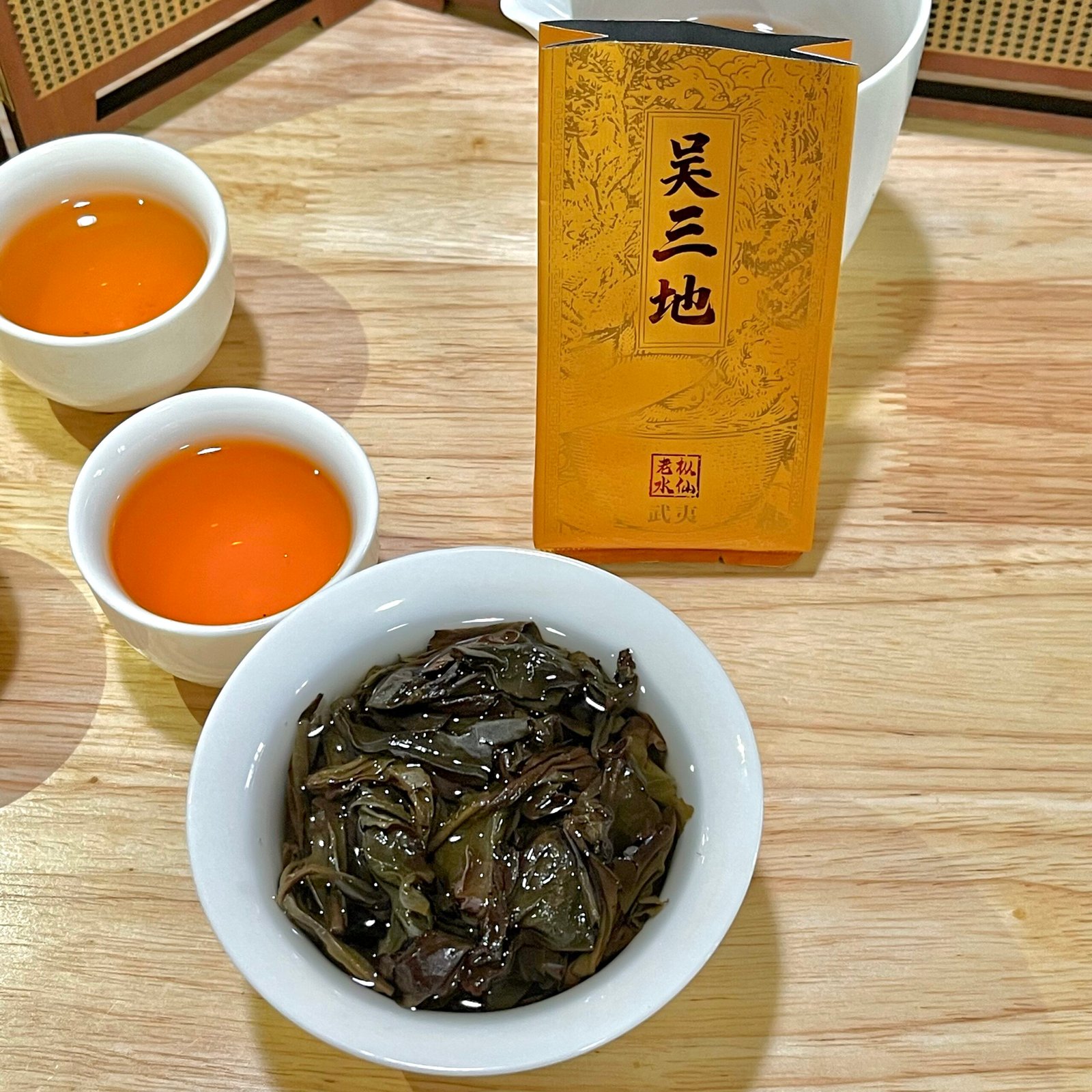
Moss and wet wood first, orchid in the middle, roasted hazelnut underneath, and a cooling finish that keeps going.
| Round | What we noted |
|---|---|
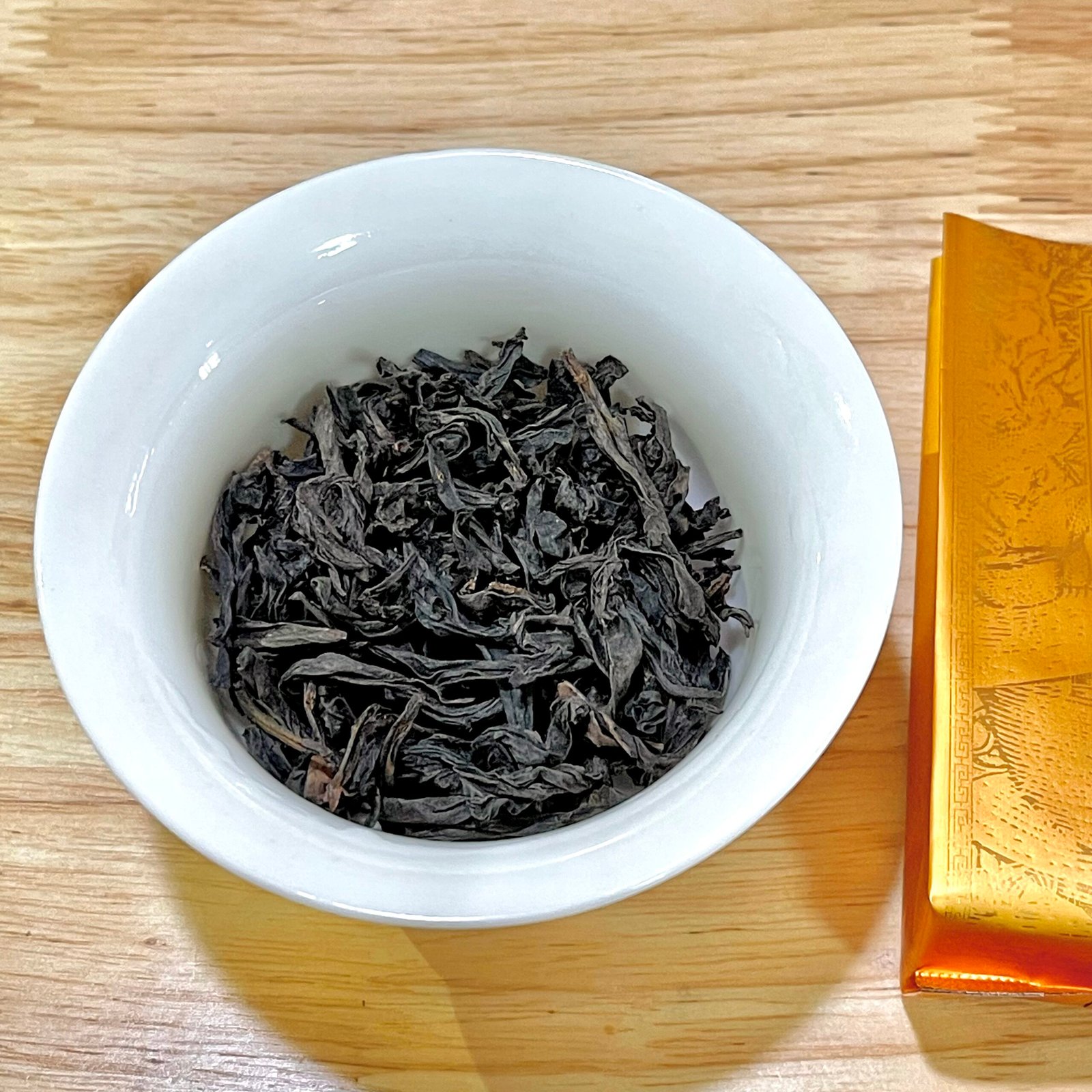
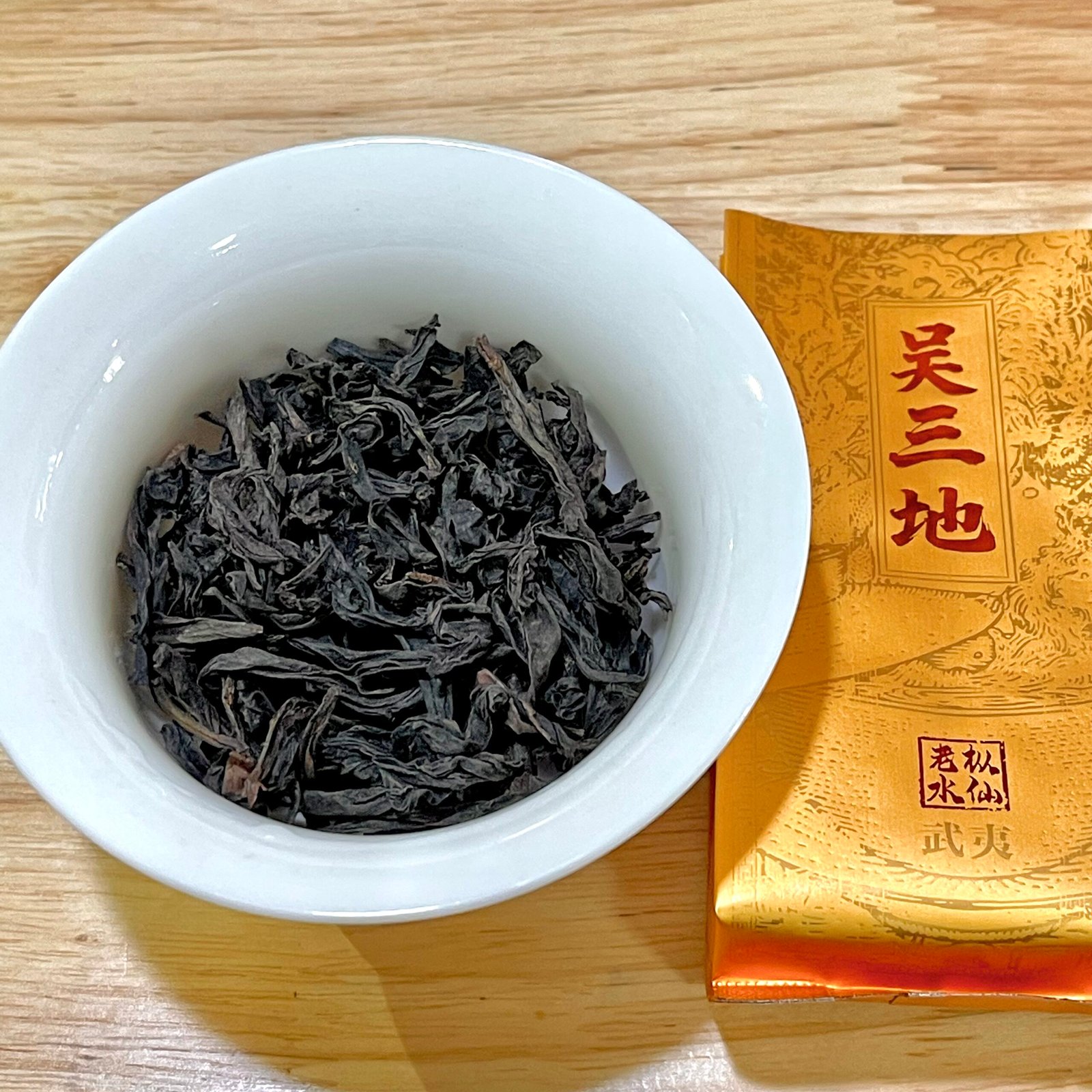
| Dry leaf | Moss, damp wood, a faint orchid |
| Steeps 1–2 | Aroma opens up, moss and stone, body already full |
| Steeps 3–4 | Roasted hazelnut and dried longan, the orchid becomes clear |
| Steeps 5–6 | Cool, mineral, a sweet finish that arrives late |
| Steeps 7–9 | Soft, honeyed, still structured |
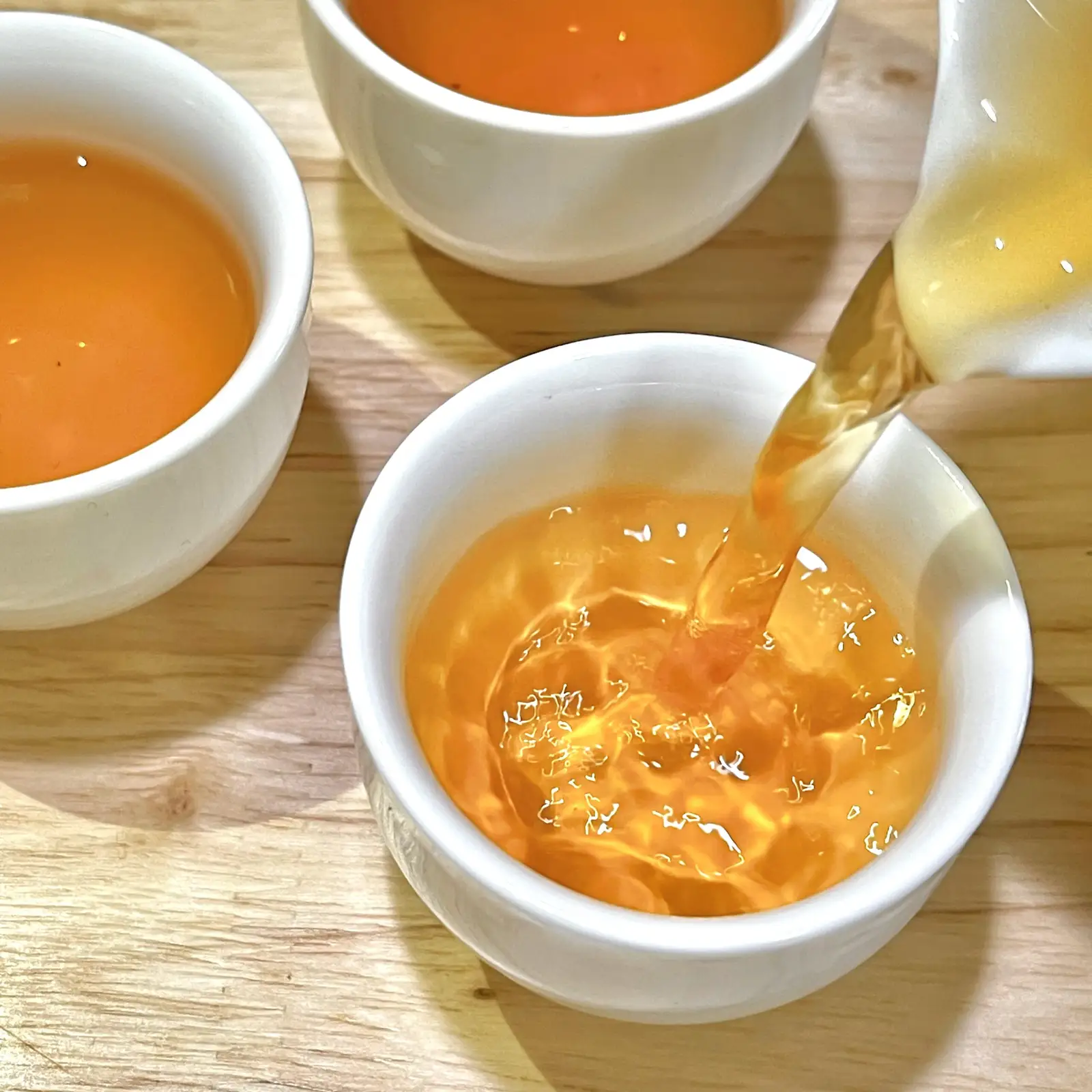
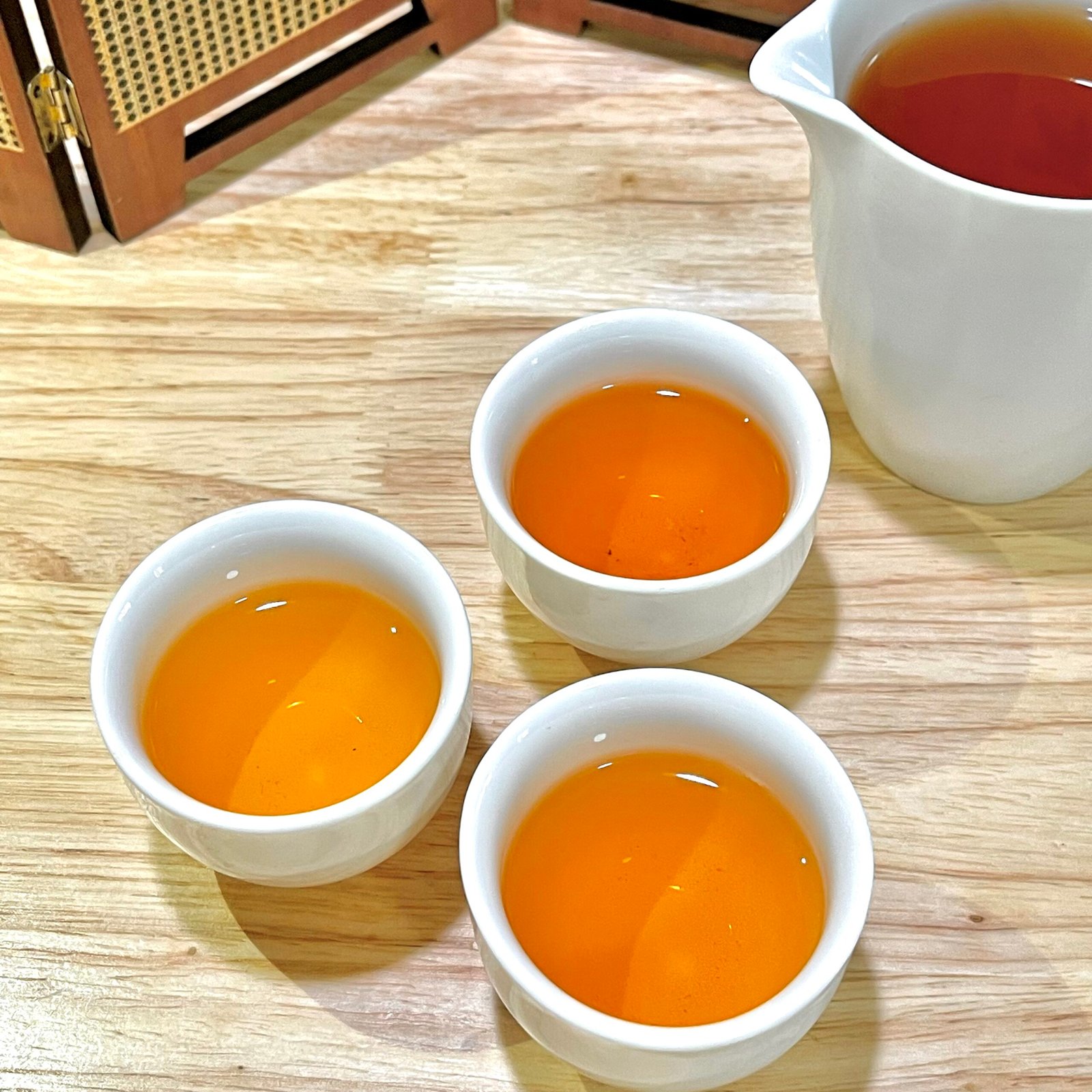
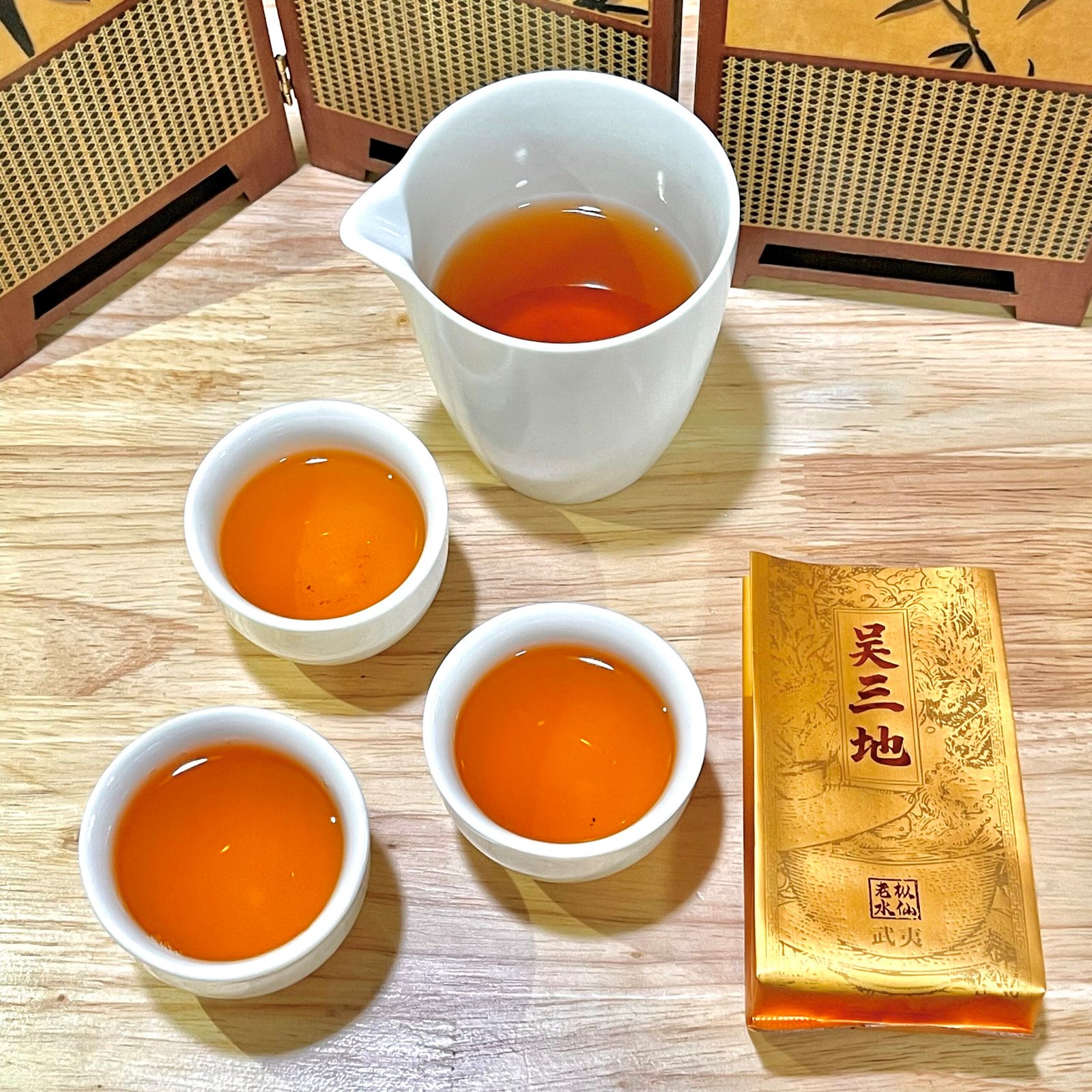
The Wu San Di cup is deeper in colour than most Rougui, a dark amber with real weight in the glass, and the finish does something unusual: it turns cool and mineral, then returns sweet after the swallow.
The moss note is the clearest marker of cong wei in our experience. It is not literally moss, and it is not dampness either. It is a green, forest-floor character that old-bush water infusions develop and younger bushes do not.
Rock rhyme, Yan Yun, is the wider Wuyi idea behind this: the provincial standard defines it as the combined result of environment, variety, cultivation and craft, with a fragrant, persistent aroma and a taste that has bone, is thick and mellow, smooth and sweet, with a lingering finish. DB35/T 1545-2015 is the source.
How is it roasted?
Slower and gentler than a Rougui, because the leaf is old and does not take heat the same way.
| Stage | What happens |
|---|---|
| Harvest, spring 2026 | Hand-picked, fewer and larger leaves |
| Withering and tossing | Longer withering, gentle tossing on bamboo trays |
| Fixation and rolling | Pan-fired, then hand-rolled |
| Roasting | Charcoal, medium-low, long and slow |
| Rest | Weeks between rounds, longer than a standard lot |
Old-bush leaf that is roasted like a young Rougui turns bitter and loses its aromatics. This lot needs a lower, longer roast, and the rests between rounds matter more than usual. These are our lot notes, not a certificate.
How does it compare with Rougui and Da Hong Pao?
Three different kinds of tea, and the difference is in the plant, not the mountain.
| Old bush Shui Xian | Rougui | Da Hong Pao | |
|---|---|---|---|
| What it is | One variety, old trees | One variety, younger trees | A blend, often from old trees |
| Signature | Moss, orchid, aged wood | Cassia bark | Cocoa, caramel, ripe plum |
| Roast | Medium-low, slow | Medium, keeps the spice | Deeper and heavier |
| Body | Full and round | Medium | Thick, coating |
| Best for | Slow sessions, and pairing with food | Daily gongfu | Gifting, ageing, rich meals |
Our Mituoyan Da Hong Pao is the deeper, darker end of the same range, and our Matouyan Rougui is the sharper, lighter one. This tea sits between them and goes deeper than either in the direction of moss and orchid.
How do you brew it?
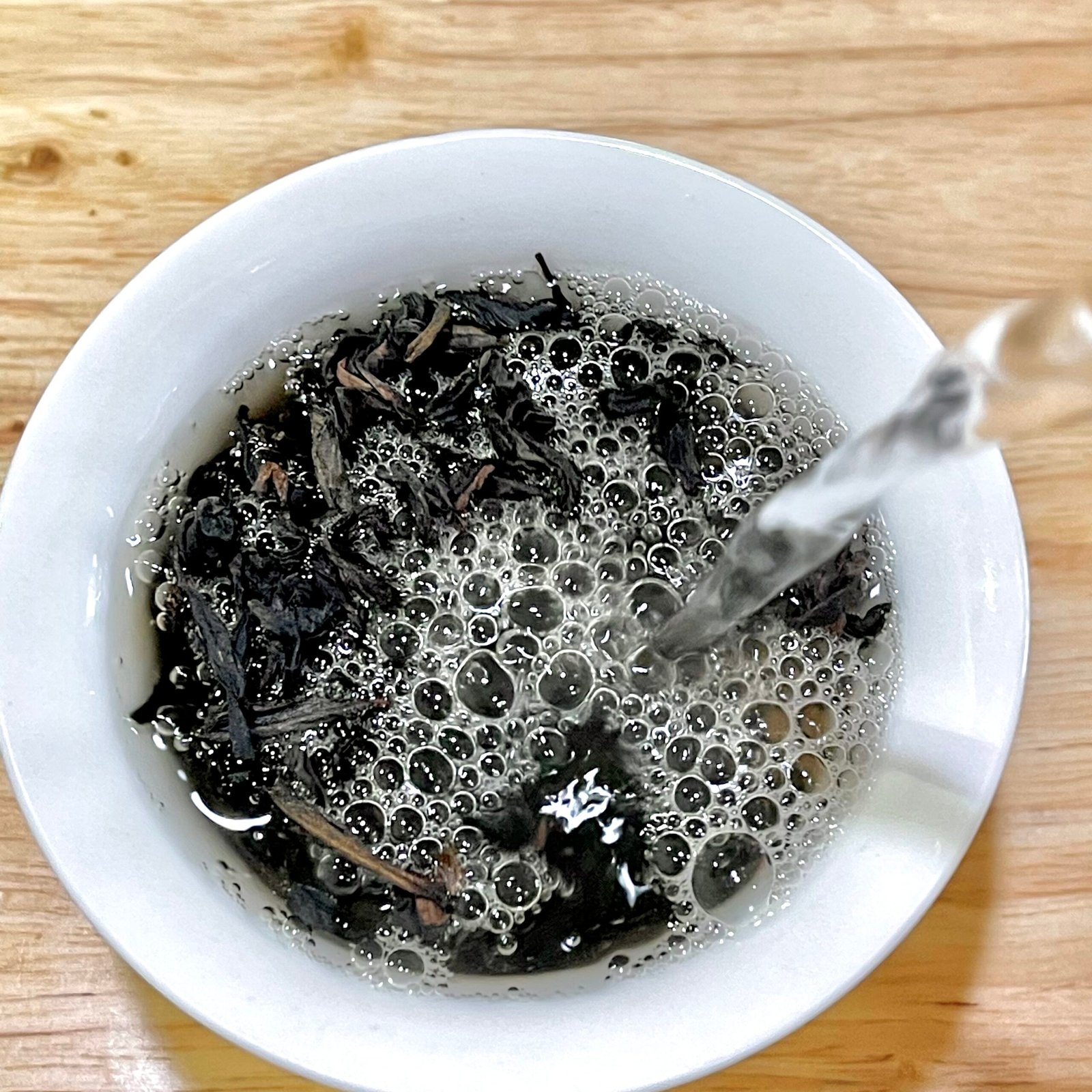
Brew this Wu San Di in a 110 ml gaiwan and bring plenty of patience. This one rewards slow brewing.
- Vessel: 110 ml porcelain gaiwan.
- Leaf: one 8.3 g sachet.
- Water: 95°C, not a rolling boil. Old-bush leaf is more delicate than it looks.
- Rinse: five seconds, discarded.
- Steeps 1–3: 10–15 seconds each.
- Steeps 4–6: add 5 seconds per round.
- Steeps 7–9: add 10 seconds per round.
Nine infusions, and the last is worth drinking. Do not shorten the steeps to save time; this leaf has depth that comes out slowly and it will taste thin if you rush it. And do not use boiling water: at this leaf age the aromatics are thinner and will turn bitter first.
A western pot at 3 g per 250 ml for two to three minutes gives you three or four rounds, which is a shame but workable.
How much caffeine is in it?
Moderate, and lower than coffee.
Mayo Clinic’s caffeine chart puts brewed oolong at 37 mg and brewed black tea at 47 mg per 8 oz serving, with brewed coffee at 96 mg, and it notes that caffeine in tea varies with leaf weight and steep time. A round in a small gaiwan lands in that oolong range.
If you are pregnant, ACOG recommends keeping total caffeine under 200 mg a day, which is a limit rather than a target. Ask your own clinician.
How should you store it?
Sealed, cool, dark, and used within the season.
Keep the Wu San Di sachet sealed inside the tin. Once open, split the remainder into small foil bags and use it within three months. Store it away from anything aromatic; old-bush teas pick up neighbouring smells easily, and a mossy cup that smells of your kitchen cupboard is a wasted tea.
Who is it for?
For drinkers who want the oldest kind of Wuyi tea and the patience to sit with a long session.
It suits experienced rock tea drinkers who want something that is not a Rougui, and anyone who eats well: this tea stands up to food in a way that lighter oolongs do not. Try it with dark chocolate, with aged cheese, or with a rich meat dish.
Skip it if you want a cheap everyday drinker, or if you like bright and floral oolongs. This is the slowest tea on our rock tea list, and it is the one most likely to be wasted by someone in a hurry.
The six micro-terroir collection sets six Rougui sites side by side, the Jiulongke page covers the valley with the Da Hong Pao mother bushes, and the Wuyi rock tea collection has the rest of the range.
Where does it come from?
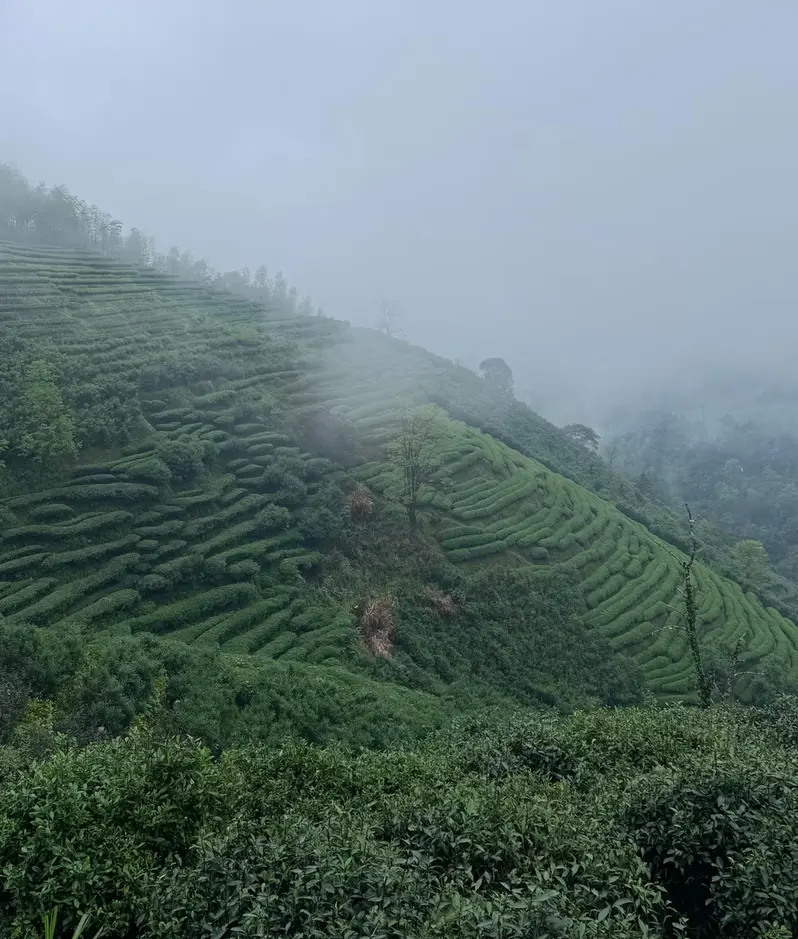
The Wu San Di garden is in the Wuyi Mountains of Fujian. The national standard for Wuyi rock tea is GB/T 18745-2006, “Product of geographical indication — Wuyi rock tea”, in force since December 2006, and it sets the geographical indication area as the whole of the Wuyishan administrative district — the scenic area and everything around it. The standard text is published free on the national standards portal.
The split into Mingyan and Danyan — the scenic area and the rest — that you meet in older trade writing came from the 2002 version of the standard. The 2006 revision dropped the division of the raw-material producing areas altogether. So the growing-area words on a tin — Zhengyan, half-rock, outer-mountain — are the market’s view of sites, not a boundary anyone enforces.
The Mount Wuyi World Heritage listing, number 911, covers 107,044 ha plus 40,170 ha of buffer. It protects a landscape, not a tea grade, and it does not certify an individual garden. A seller claiming a UNESCO certificate for one plot is claiming something that does not exist.
For the vocabulary behind these terms, our beginner’s guide to Wuyi rock tea sets out what the growing-area names mean and where the boundaries run, and our guide to what Wuyi rock tea costs explains how price follows the growing area rather than the label.
Frequently Asked Questions
How old are the trees in this lot?
We do not know, and we will not invent a number. The lot is sold as old-bush material, and the bushes are not cut back to knee height like a commercial plot. We do not have an independent planting record, and nobody can reliably date a bush without one.
What does cong wei actually taste like?
Moss and damp forest wood, orchid, aged timber, and a finish that turns cool before it returns sweet. It is the flavour drinkers associate with old-bush water infusions, and it is different from the cinnamon of a Rougui or the cocoa of a Da Hong Pao.
Is it 老枞 or 老丛?
Both spellings are used and both are read lǎocóng. Strictly, 枞 means fir or spruce and the correct tea term is 丛, meaning a clump of plants. The older wording survives because Wuyi Shui Xian is a semi-tree variety, so it was defensible at one time.
How many infusions should I get?
Nine, with the last one worth drinking. Use slightly cooler water than you would for a Rougui and let the steeps run longer.
How does it differ from Rougui?
Shui Xian is a different variety and this is old-bush material. Expect moss, orchid and aged wood where a Rougui gives you cassia bark and spice, and expect a fuller body.
Is it worth the price?
It depends on what you are comparing it with. Against an everyday rock tea, the difference is obvious by the third infusion. Against another old-bush single variety, the gap narrows, and you are paying for the site and the trees rather than for a category nobody else has.
How should I store it?
Sealed in its foil bag, inside the tin, in a cool dark cupboard, away from light, moisture and strong smells. Use it within three months of opening and do not refrigerate it.
Author and reviewer disclosure
This page was written by the founder and head tea buyer at Min Tea Shop, who has bought and cupped tea directly from Fujian growers for eight years. The Wu San Di tea described above was selected during our 2026 sourcing trip to Fujian, and the tasting notes come from our own gongfu sessions.
Statements about production standards and caffeine are general, are sourced to the published documents cited above, and are not medical advice. No sponsored content, no paid placements, and no affiliate links appear on this page, and we do not sell or share your personal data — see our privacy policy for details. If a specification on this page is wrong, tell us and we will correct it.
Additional information
| Weight | 0.0249 kg |
|---|---|
| size | 3 Packs (0.88 oz), 6 Packs (1.76 oz), 18 Packs (5.27 oz), 30 Packs (8.78 oz), 60 Packs (17.57 oz) |
Related products
-

Jiulongke Rougui Rock Tea, 2026 Wuyishan Zhengyan
Price range: $23.90 through $299.90Select options This product has multiple variants. The options may be chosen on the product page -
The Ultimate 2026 Wuyi Rock Tea Guide: Best Rougui Tasting & Brewing
Price range: $9.90 through $106.90Select options This product has multiple variants. The options may be chosen on the product page -
Wuyi Rougui Micro-Terroir Set: Six Named Lots, 2026
Price range: $20.90 through $52.90Select options This product has multiple variants. The options may be chosen on the product page -
High Mountain Old Bush Shuixian 2026, Wuyi Rock Tea
Price range: $9.90 through $106.90Select options This product has multiple variants. The options may be chosen on the product page
Reviews
There are no reviews yet.