





The Ultimate 2026 Wuyi Rock Tea Guide: Best Rougui Tasting & Brewing
Price range: $9.90 through $106.90
Discover the ultimate 2026 Wuyi Rock Tea guide. Learn expert Rougui tasting notes, exact 110ml gaiwan steep times, and avoid common bitterness mistakes.
Description
Wuyi Rock Tea Guide 2026 | Rougui Tasting & Gongfu Brewing
Wuyi rock tea usually arrives with more hype than instructions. Sellers hand you a tin, a mountain story, and no clue how much leaf to use or how long to steep it. Steep it wrong and the same tea turns bitter and flat, so most first-time drinkers blame the tea instead of the method.
We cupped eleven batches of Rougui for this guide, then brewed batch WR-2604 eleven ways in a 110 ml gaiwan. Below you get the real numbers: tasting notes, grams per vessel, steep times, storage rules, and the two shortcuts that change the cup most. You also see exactly where this batch falls short, and who this tea is not for.

Batch specifications
| Batch | WR-2604 |
|---|---|
| Origin | Wuyi Mountains, Fujian, China |
| Altitude | 600–800 m |
| Cultivar | Rougui |
| Harvest | Spring 2026 |
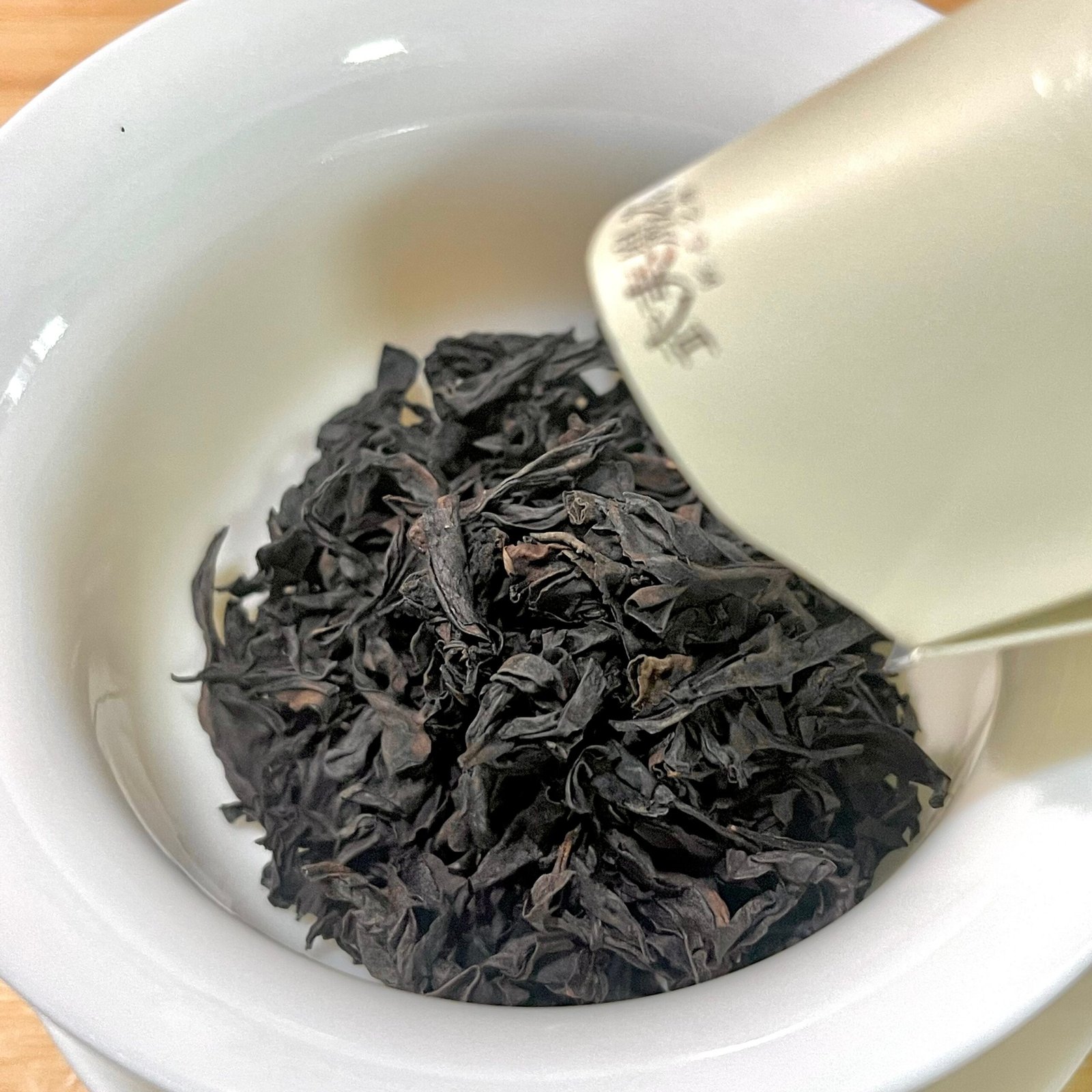
| Leaf standard | One bud, three to four leaves |
| Roast | Medium-light charcoal, three passes, roasted by Hui |
| Final roast | September 2026 |
| Packed | October 2026 |
| Best before | 24 months from packing |
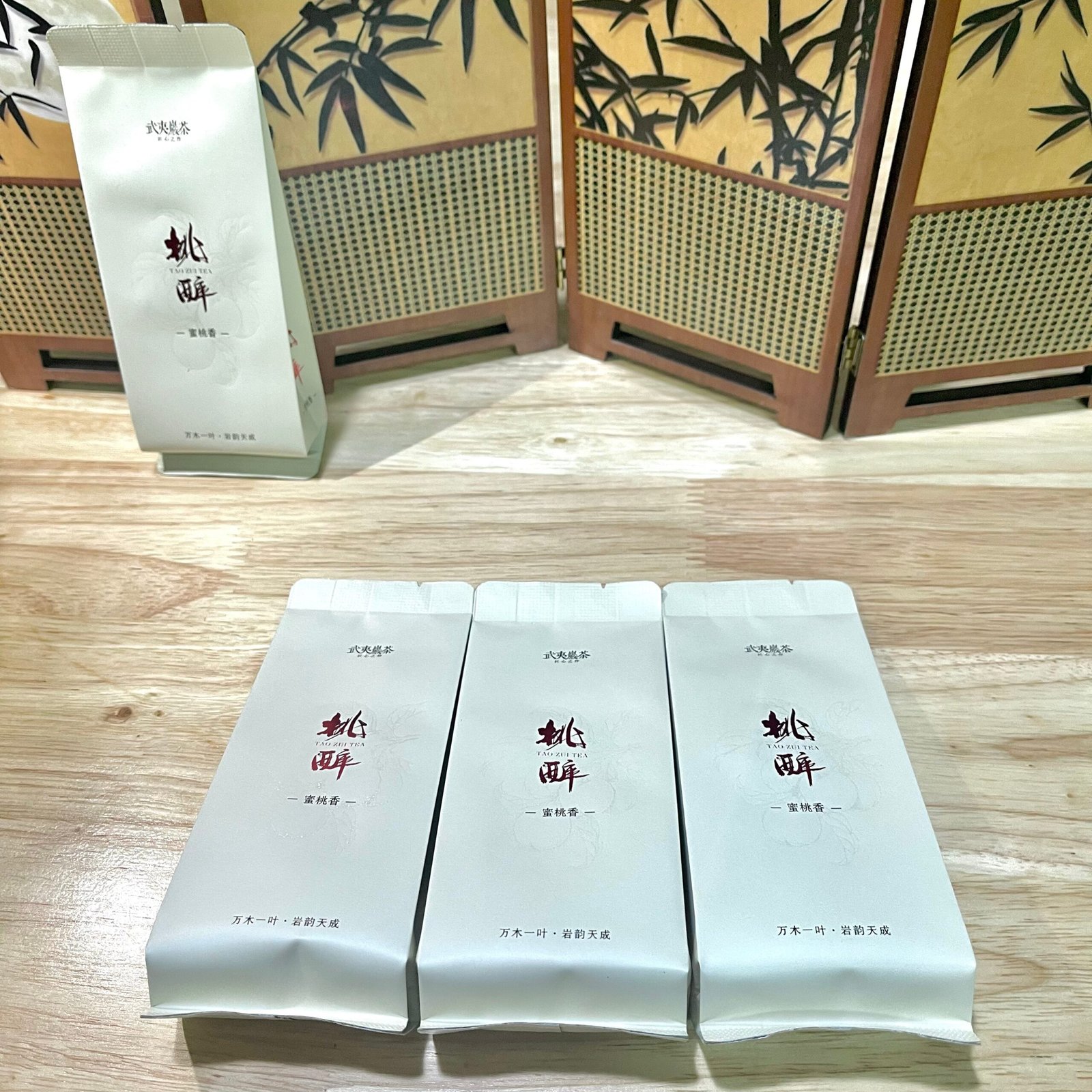
| Serving size | 8.3 g pouch |
| Brewing | 110–150 ml gaiwan, 100 °C, 8–10 infusions |
Each 8.3 g pouch is sealed and dated at packing. The leaf stays whole and aromatic until you open it.

What Does Wuyi Rock Tea Taste Like? Rougui Tasting Notes
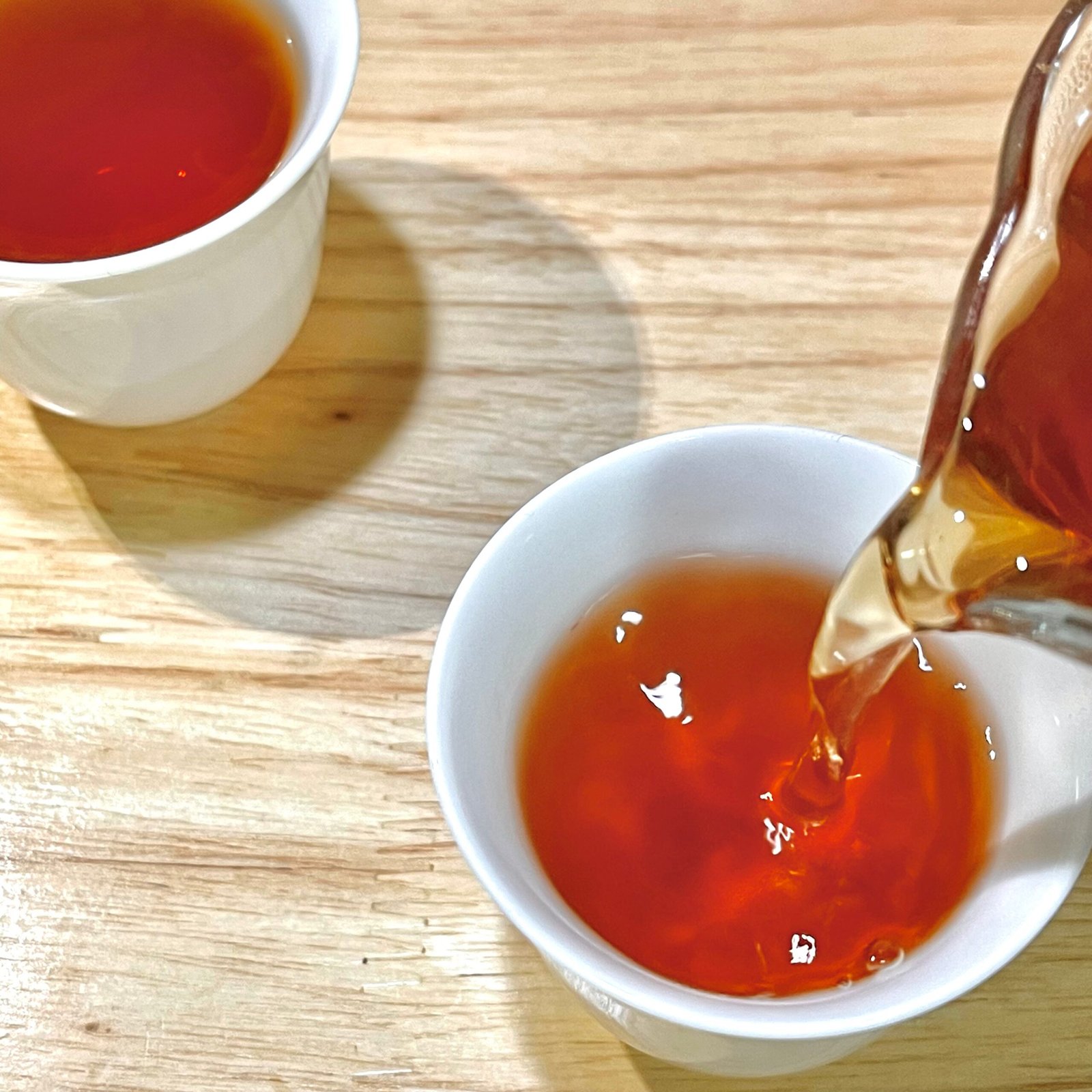
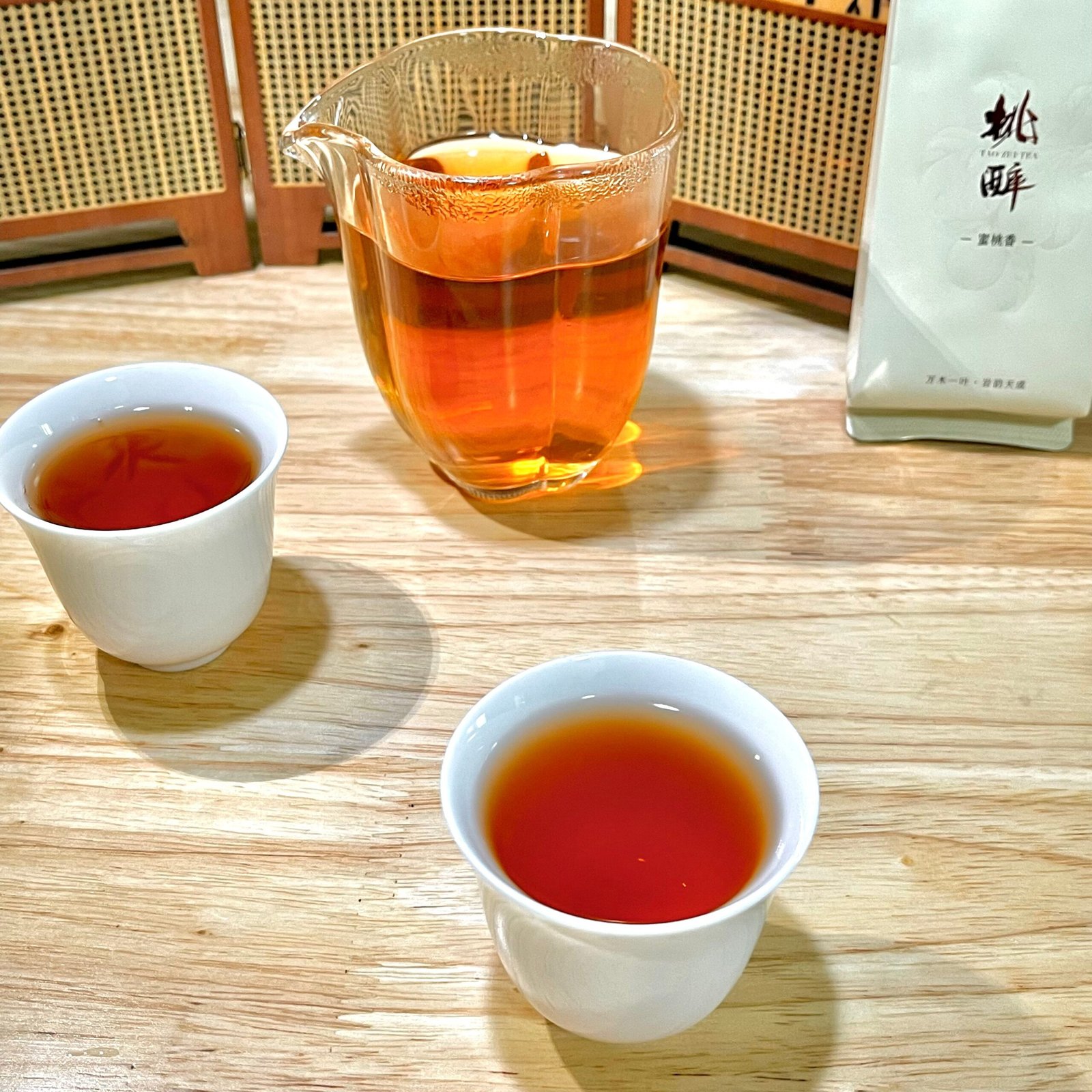
Ripe peach arrives first. Cinnamon follows close behind. Then a clean honey sweetness that clings to the tongue instead of washing out.
Underneath the fruit sits a mineral feel. Most people call this style yancha, or rock tea. The name sounds like a marketing trick, but it is simply the category name for teas from the Wuyi Mountains in Fujian. It describes the growing area, not the taste.
The roast is medium-light charcoal, done in three passes. Many people assume roasted means smoky. Here the smoke sits under the fruit instead of on top of it. Want smoke? Go darker.
We brewed this batch eleven ways before we settled on the method below. Our first session over-steeped the third infusion by twenty seconds. The whole pot turned bitter, and no extra steeping fixed it.
Here is where it falls short. The top notes fade after the sixth infusion, and the body thins fast after the eighth. Buy enough for one session, not for a shelf. If you want more control, compare loose leaf vs. tea sachets before you order.
| Infusion | Steep time | What you taste |
|---|---|---|
| 1 | 5 seconds | Peach skin, cinnamon, thin body |
| 2 | 10 seconds | Clear honey, more weight |
| 3 | 15 seconds | Peach returns, mineral feel shows |
| 4–6 | 20 seconds each | Sweetest stretch, cinnamon peaks |
| 7–8 | 30 seconds each | Smoke comes forward, body thins |
| 9+ | 30 seconds each | Grassy, past its peak |
How this batch compares to other oolongs
| Tea | Profile |
|---|---|
| Rougui (batch WR-2604) | Stone fruit, cinnamon, honey, mineral |
| Da Hong Pao | Deeper roast, roasted stone fruit, more body |
| Tieguanyin | Green, creamy, orchid, no roast |
| Aji | Floral, cold-sweet, a thinner finish |
Our full Wuyi rock tea collection covers the other roast levels if you want to compare side by side in person.
How Do You Brew Wuyi Rougui Oolong Tea?
Gongfu brewing is the best way to taste Wuyi Rougui oolong tea. It uses less water per gram. The leaf opens up instead of getting lost.
- Warm the gaiwan. Pour in hot water, swirl it, throw it away.
- Add one 8.3 g pouch. Tap the leaf flat.
- First steep: 110–150 ml of boiling water, 5 seconds.
- Second and third steep: 10–15 seconds each. Pour out completely.
- Fourth to sixth steep: 20 seconds each.
- Seventh steep onward: 30 seconds, until the taste thins.
- At the end, tip the wet leaf into the lid and smell it. It tells you whether the brew was right.
| Water | 100 °C / 212 °F, freshly boiled |
|---|---|
| Vessel | 110–150 ml gaiwan or small Yixing pot |
| Leaf | 1 pouch (8.3 g) |
| Ratio | About 1 g per 15 ml |
| Steep 1 | 5 seconds |
| Steeps 2–3 | 10–15 seconds |
| Steeps 4–6 | 20 seconds |
| Steeps 7–10 | 30 seconds |
| Refill | Top up, do not dump the water |
| Total time | About 10–12 minutes |
One pouch equals one 8.3 g sachet. Brew it in a gaiwan or a regular teapot. It travels well in a laptop bag. The Western method works too: one pouch in 300–500 ml for 2–3 minutes, then two or three rounds.
One caveat. Sachet leaf breaks a little more than loose leaf. Broken leaf gives up bitter compounds faster. Long steeps can turn harsh. Watch the clock after steep six. New to this? Our gongfu brewing guide for beginners walks through the full setup.
Why Does Wuyi Rock Tea Cost More Than Regular Oolong?
Yancha means rock tea. The name comes from the rock beds, not from a rocky taste.
The gardens sit on cliff terraces at 600–800 m. Fresh leaf loses a lot of weight during rolling and roasting. Pickers take one bud and three or four leaves, by hand. High altitude and hand picking set the price.
Wuyi Rougui oolong tea from this batch comes from gardens inside the UNESCO listing for Mount Wuyi, inscribed in 1999. Many of the best-known gardens sit inside that protected landscape. That limits how much can be planted.
Plainly, then: a pouch costs more per gram than bulk leaf. You pay for a dated roast and sealed packing. Buy loose if you brew more than one session a week.
Is Wuyi Rougui Oolong Tea Good for Beginners?
Rougui is a good first rock tea and a poor first oolong. The fruit notes are forgiving, but the roast needs a method most beginners do not have yet.
Our short version: use a gaiwan, skip the filter paper, and pour every infusion out completely. Standing water on the leaf is what makes people think this tea is harsh.
- Start at 110 ml, not 200 ml. Small vessel, short steep, less risk.
- Use 100 °C water. Anything cooler leaves the roast closed up.
- Skip the paper filter. It pulls out the body.
- Pour out fully each time. Do not leave water sitting on the leaf.
- Drink the first three infusions slowly. The peach is most obvious there.
- Do not judge it by cup three alone. The body only shows up around cup four.
If you want the category first, read our Wuyi tea basics before you order anything.
How Many Grams of Wuyi Rougui for One Gongfu Session?
One pouch. That is the answer for most people. Most Wuyi Rougui oolong tea drinkers here use a 110 ml gaiwan.
| Vessel | Leaf | Water | Infusions |
|---|---|---|---|
| 60 ml mini gaiwan | 4–5 g — open a pouch, use half, keep the rest in an airtight tin | 60 ml | 6–8 |
| 110 ml gaiwan | 8.3 g (1 pouch) | 110–150 ml | 8–10 |
| 200 ml Yixing pot | 8.3 g (1 pouch) | 200 ml | 5–6 |
| 600 ml pot | 16.6 g (2 pouches) | 600 ml | 2–3 |
Try one session of Wuyi Rougui oolong tea before you buy a case. One pouch is one full gongfu session, eight to ten infusions. If the roast is not for you, message us within 30 days and we will sort it out. Full terms are on our shipping and returns policy. You can also browse our Fujian high mountain tea collection for lighter or darker styles.
What Is the Difference Between Wuyi Rock Tea and Other Oolong Teas?
All oolong tea starts green and ends brown. The difference is where it stops on that journey, and how it gets there.
| Comparison | Wuyi rock tea | Tieguanyin | Longjing | Dan Cong |
|---|---|---|---|---|
| Origin | Wuyi Mountains, Fujian | Anxi, Fujian | Hangzhou, Zhejiang | Chaozhou, Guangdong |
| Roast | Charcoal, light to dark | Green style, lightly roasted | Pan-fired green | Charcoal, often heavier |
| Main note | Mineral, ripe peach, cinnamon | Orchid, cream, gardenia | Grass, chestnut | Fruit, honey, floral |
| Body | Medium, with mineral structure | Full, creamy | Light, clean | Medium-light |
| Brew | 100 °C gaiwan | 100 °C gaiwan | 80 °C glass | 100 °C gaiwan |
The short version: Wuyi and Dan Cong both use charcoal, and Dan Cong often pushes the roast harder. What sets Wuyi apart is the rock bed under the bushes. That gives the tea a mineral structure you cannot brew into a green tea. Wuyi rock is also the most expensive of the four per gram. Tieguanyin and Dan Cong sit in the middle. Longjing is the cheapest.
If you want a fuller Wuyi body, read Rougui vs. Da Hong Pao compared.
Where Does This Wuyi Rock Tea Come From?
This batch comes from gardens inside the UNESCO World Heritage listing for Mount Wuyi, listed in 1999. The same listing covers the rock terraces and the old tea paths you can still walk today.
We pack the leaf by hand after a medium-light charcoal roast in three passes. The final roast finished in September 2026, and we sealed and dated every pouch on the packing day in October 2026.
Picking standard for this tea is one bud with three to four leaves. We do not publish a third-source claim here, so treat that as our house spec rather than a certified standard.
What Is the Difference Between Rougui and Da Hong Pao?
They come from the same mountains and the same tea plants. The difference is roast depth and processing, not region. Da Hong Pao is the darker, heavier cousin. Rougui is the earlier harvest and the lighter roast.
| Rougui | Da Hong Pao |
|---|---|
| Medium-light roast, 3 passes | Medium to deep roast, 5+ passes |
| Ripe peach, cinnamon, honey | Roasted stone fruit, cocoa, heavier body |
| Brighter, more transparent | Darker, rounder, more forgiving |
| Spring to early summer | Later in the season |
Read our Rougui vs. Da Hong Pao comparison for the side-by-side brewing notes, and see Da Hong Pao tea if you want the darker profile.
Why Does My Wuyi Rock Tea Taste Bitter?
Three things cause bitterness. You steeped too long. The sachet leaf broke finer than loose leaf. Or your water is hard and lacks minerals.
Fix them in this order:
- Cut the steep time by five seconds. This fixes most bitter cups.
- Switch to filtered or bottled water if yours is hard.
- Skip the paper filter, and use a basket with a wider weave.
See our why is my tea bitter checklist for the full troubleshooting tree.
How Should You Store an Opened Pouch?
Keep the pouch sealed, away from light, away from heat, and away from the pantry. In humid summers the fridge works. Let the pouch come to room temperature before you open it, because trapped water vapor kills the top notes faster than anything else.
Our tea team writes and photographs every batch, and we note the storage window on the tin. We confirm the best-before date at checkout, and we stand behind it for 24 months from packing. More detail in our how to store loose leaf tea guide.
Frequently Asked Questions About Wuyi Rougui Oolong Tea
How many infusions does one 8.3 g pouch make?
Eight to ten. Most drinkers stop at seven, when the smell starts to fade. You can split one pouch across two sessions, but the leaf loses aroma faster once it is wet and re-dried.
Does Rougui oolong tea contain caffeine?
Yes. Oolong has less caffeine than most black tea. It has more than green tea. EFSA’s 200 mg single-dose limit for healthy adults is roughly one strong gongfu session. The exact number moves with leaf grade and brew time.
How should I store the sachets after opening?
Keep them sealed, away from light, away from heat, and away from the pantry. In humid summers the fridge works. Let the pouch come to room temperature before you open it. Trapped water vapor kills the top notes faster than anything else.
Can I use a French press or an electric kettle?
Yes. Use 95 °C water for about three minutes and a basket with a wider weave. Skip the filter paper. It catches the fines and flattens the body.
Why does my brew taste bitter?
Three things cause bitterness. You steeped too long. The sachet leaf broke finer than loose leaf. Or your water is hard and lacks minerals. Try three shorter steeps and use filtered or bottled water.
Additional information
| size | 3 Packs (0.88 oz), 6 Packs (1.76 oz), 18 Packs (5.27 oz), 30 Packs (8.78 oz), 60 Packs (17.57 oz) |
|---|
Related products
-

Liuxiangjian Zhengyan Rougui Rock Tea, 2026 Wuyishan
Price range: $49.90 through $129.90Select options This product has multiple variants. The options may be chosen on the product page -
Wu San Di Shui xian: Authentic 46-Year Old Bush Wuyi Rock Tea
Price range: $12.90 through $189.90Select options This product has multiple variants. The options may be chosen on the product page -
Mituoyan Da Hong Pao Rock Tea, 2026 Wuyi Mountain
Price range: $23.90 through $299.90Select options This product has multiple variants. The options may be chosen on the product page -
Matouyan Rougui Rock Tea, 2026 Wuyishan Zhengyan
Price range: $23.90 through $299.90Select options This product has multiple variants. The options may be chosen on the product page

Reviews
There are no reviews yet.