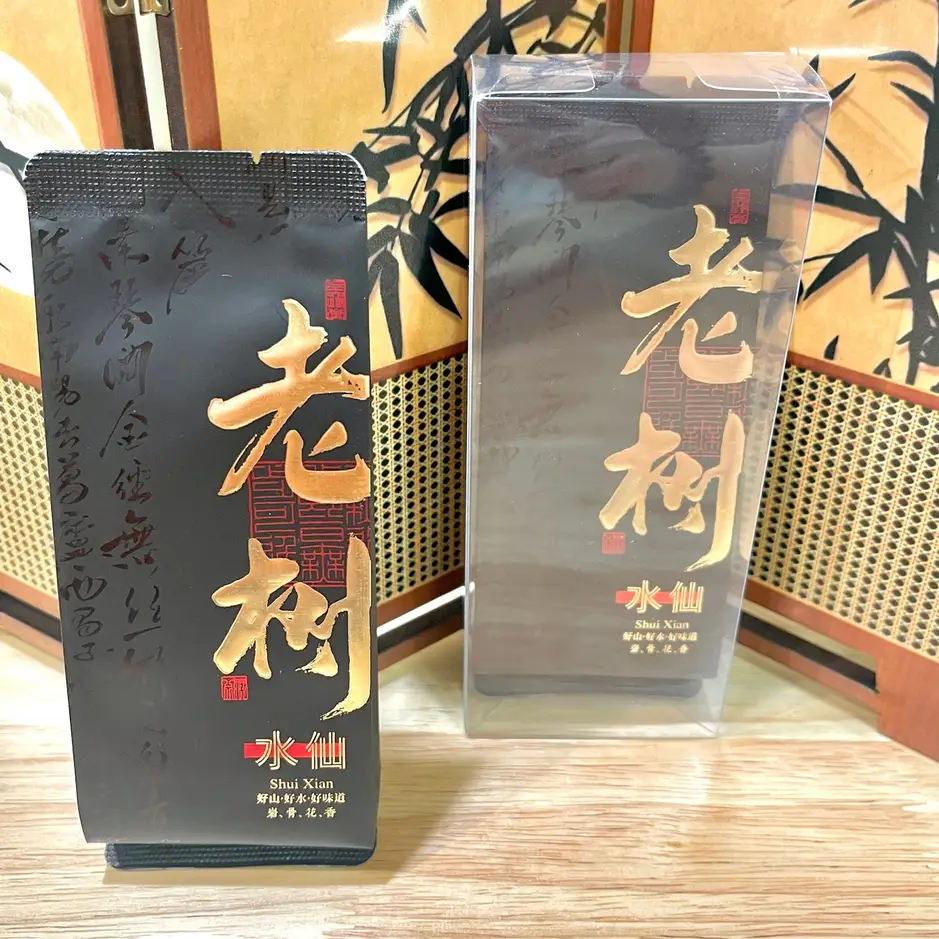
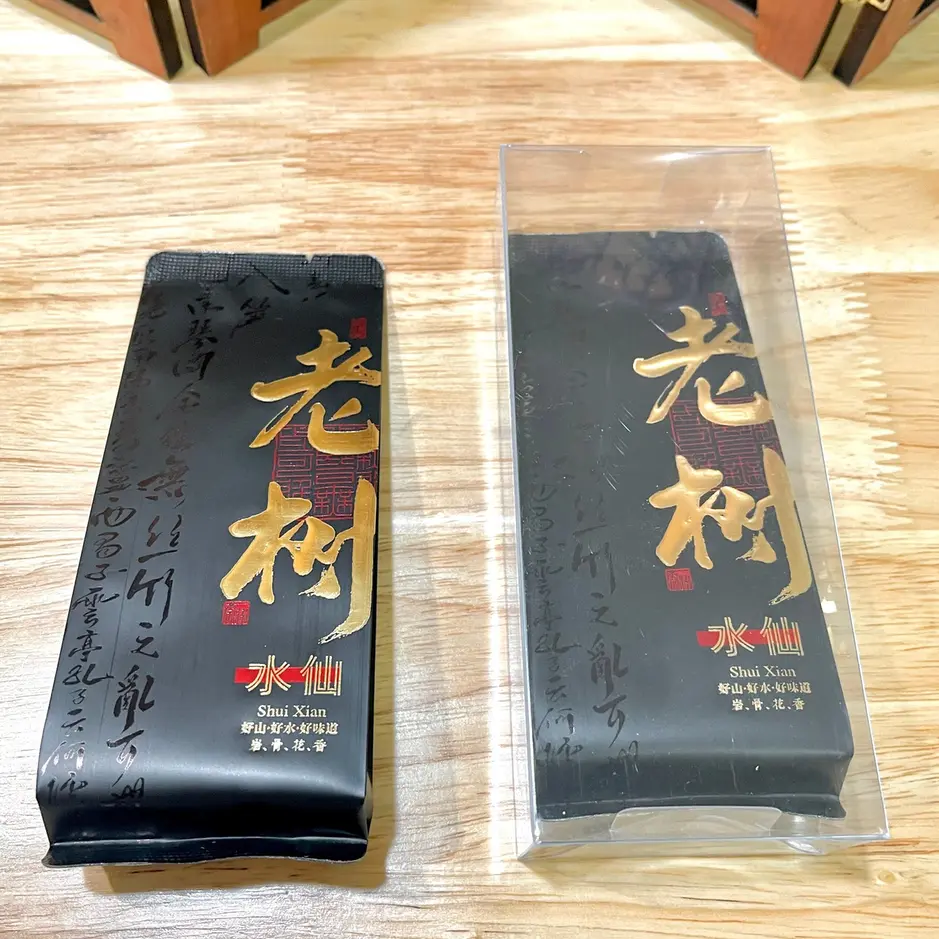
High Mountain Old Bush Shuixian 2026, Wuyi Rock Tea
Price range: $9.90 through $106.90
2026 Wuyi high mountain old bush Shuixian rock tea from Wuyishan, Fujian, 50-year-old trees at 600-800 m. Honey, wet stone and orchid in a creamy cup.
Description
First published: 3 October 2026 · Last updated: 5 November 2026
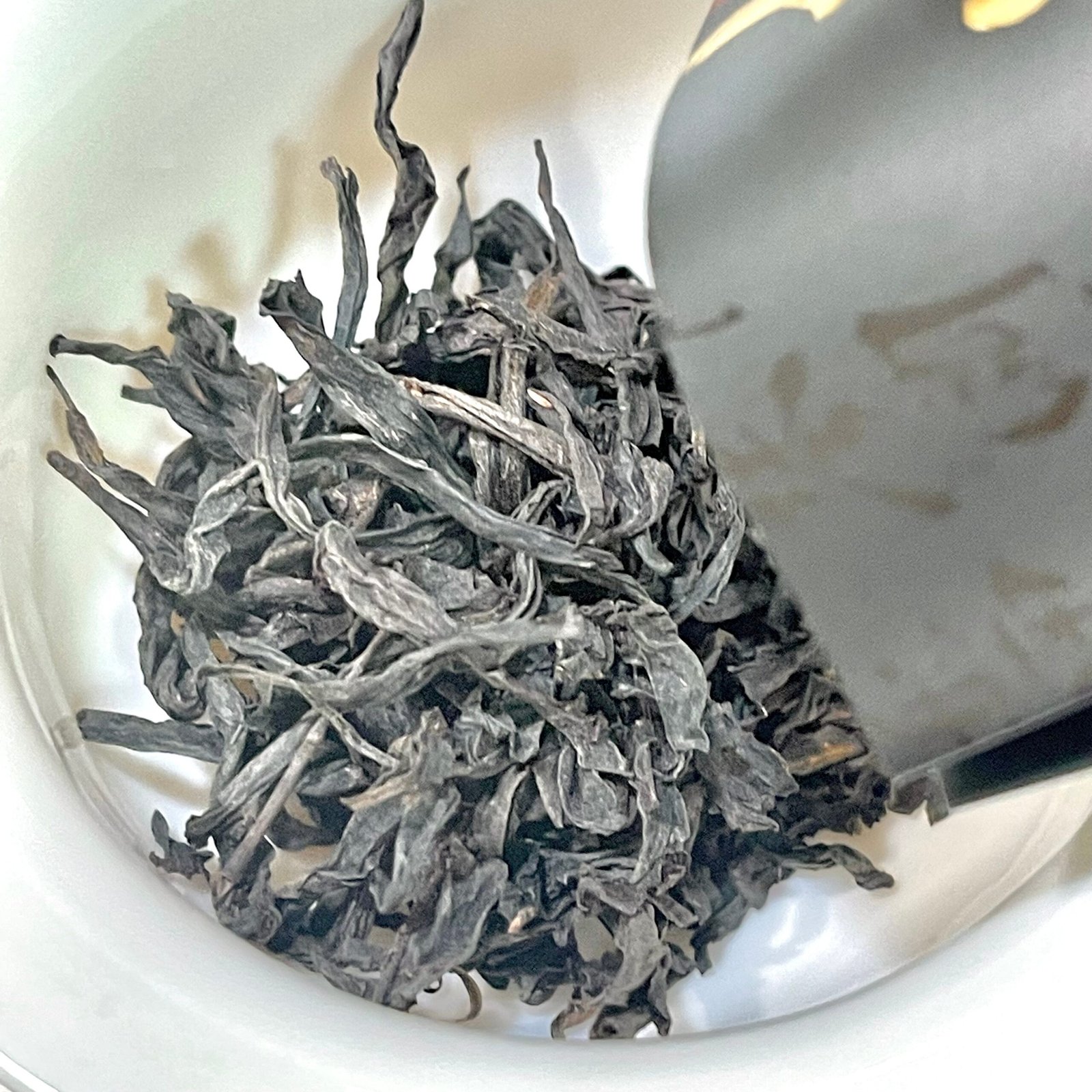
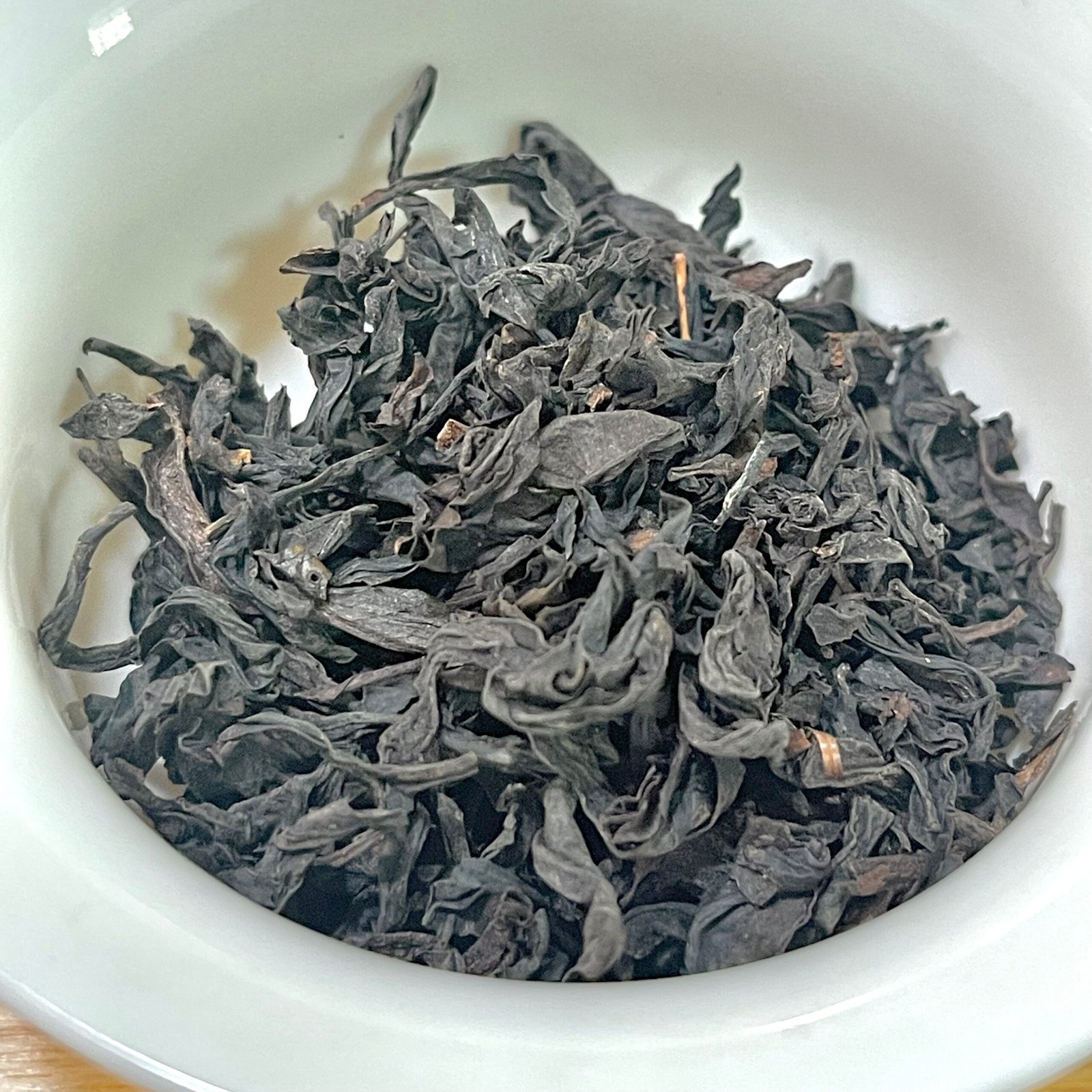
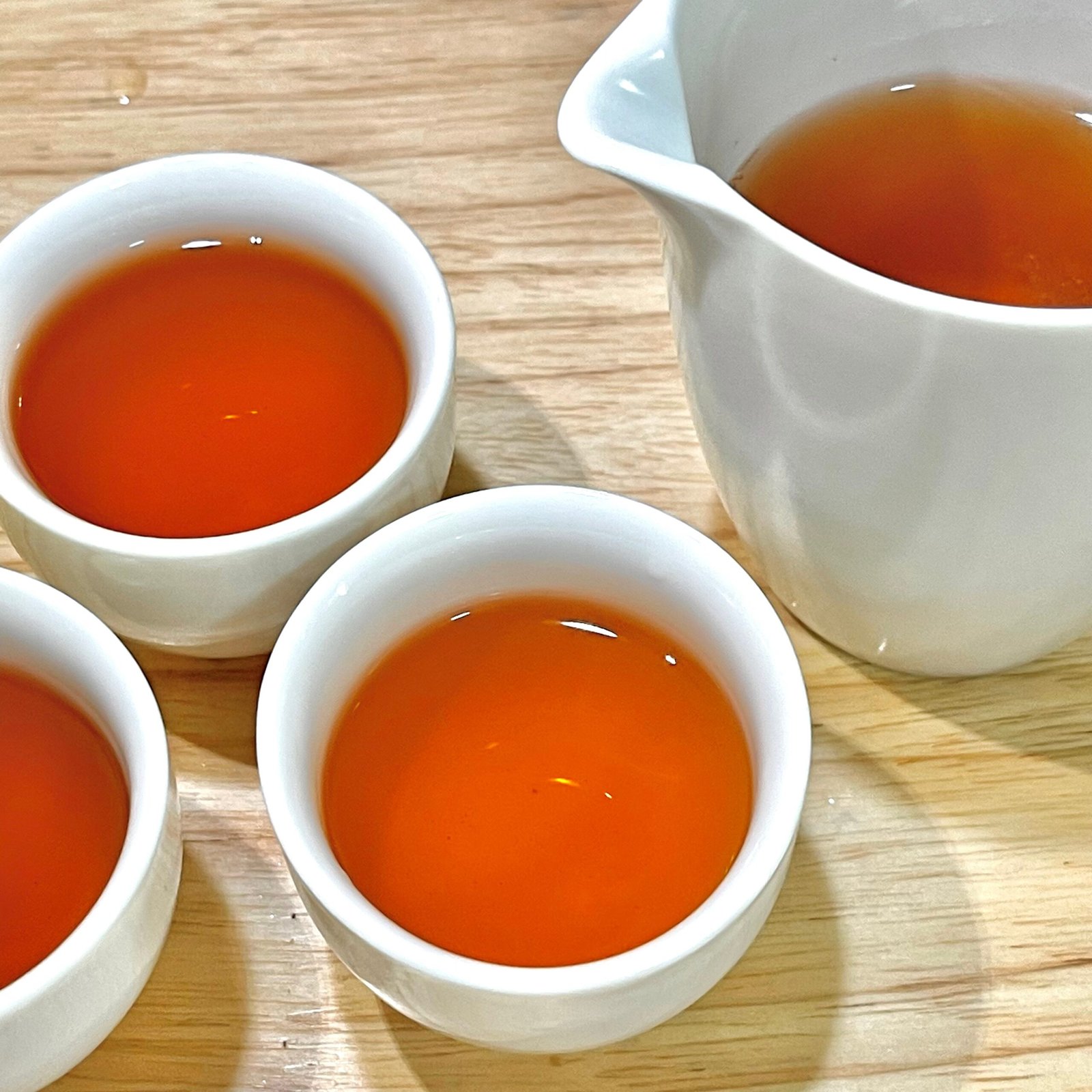
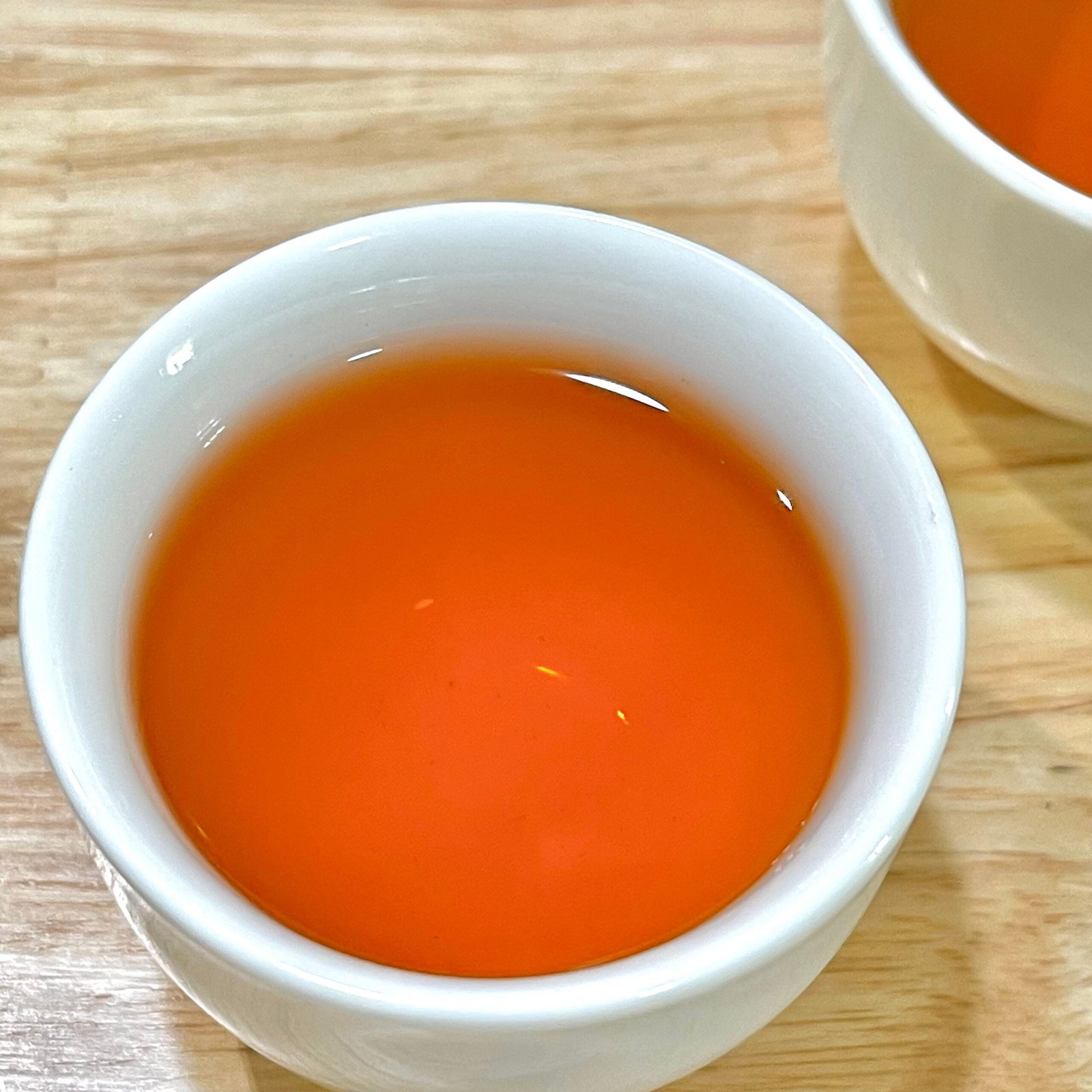
This old bush Shuixian is a 2026 Wuyi rock oolong from tea trees sold as around fifty years old on slopes at 600–800 m above the valley in Fujian, roasted over charcoal in three rounds at a medium level. The cup is toasted hazelnut and wildflower honey, with orchid arriving around the third steep and wet stone at the finish. It suits drinkers who want the creamy, honeyed side of rock tea at an everyday price.
What is old bush Shuixian?
It is Shui Xian made from mature bushes rather than young ones, and this lot comes from a high slope site well above the valley.
Shuixian, 水仙, means water immortal, a reference to the smooth, almost weightless feel the tea leaves on the tongue. It is one of the two flagship Wuyi cultivars alongside Rougui, and it behaves very differently: where Rougui is sharp and spicy, Shui Xian is round, creamy and honeyed.
Old bush, 老丛, describes the plant rather than the process. Mature Shui Xian bushes have thicker trunks, deeper roots and lower yields, and the tea they make has a moss-and-orchid depth that young bushes do not reach. You will also see the spelling 老枞 on packaging; strictly speaking that character means fir, and 丛 is the correct one in tea. Our Wu San Di old bush Shuixian page goes deeper into that character history.
We work with a partner farm on these upper slopes. The lot is sold as roughly fifty-year-old material; we do not have an independent planting record, so treat the age as the producer’s claim rather than a certificate.
The gardens are in Wuyishan, outside the scenic Mingyan zone. We classify the lot as Danyan, which is Wuyi rock tea but not Zhengyan. The producer’s GI paperwork is not displayed here; Danyan is our sourcing classification.
For the boundaries: GB/T 18745-2006, “Product of geographical indication — Wuyi rock tea”, has defined Wuyi rock tea since December 2006, and it sets the geographical indication area as the whole of the Wuyishan administrative district — the scenic area and everything around it. The split into Mingyan and Danyan that you meet in older trade writing came from the 2002 version of the standard; the 2006 revision dropped the division of the raw-material producing areas altogether. The standard text is published free on the national standards portal.
Why is high mountain old bush Shuixian different?
Altitude softens the astringency and lifts the aroma, and that part has been measured rather than assumed.
A 2014 study in the Journal of Food and Drug Analysis analysed oolong from the same mountain area at 200, 800 and 1,300 m and found that catechin content, and the degree of galloylation that drives astringency, both fall as altitude rises, with taste quality improving in step. The paper is indexed on PubMed. That is why high-slope old bush Shuixian reads creamy rather than grippy: there is simply less of the compound that makes tea dry your mouth.
| Altitude band | Leaf and cup | Astringency and finish |
|---|---|---|
| Under 300 m | Larger leaf, thin and grassy cup | Noticeable; short finish |
| 300–400 m | Medium leaf, balanced cup | Moderate; medium finish |
| 600–800 m, this lot | Smaller, slower leaf; thick honeyed cup | Low; long wet-stone finish |
We are not going to give you percentages for any of that. The effect is real and measurable in the mouth; the numbers are not ours to invent.
What does the charcoal roasting do?
Three rounds, at a medium level the Chinese call zhong huo, and the rests between them are what make the tea drinkable.
| Round | What it does |
|---|---|
| First | Locks the leaf shape, drives off green astringency, sets the moisture baseline |
| Rest | Days to weeks, so the leaf settles between firings |
| Second | Builds the toasted hazelnut and brown sugar core |
| Third | Sets the mineral finish without charring the leaf |
Skip a round, or replace charcoal with an electric drum, and you get one of two failures: a flat cup, or a smoky one that never settles. Most commercial oolong is fired once, on an electric drum, and is at its best in the first few months. Firing in three charcoal rounds with rests between them is the slow way, and it is why the honey here is still there in the eighth steep — and why it will still be there next season.
What does it taste like?
Toasted hazelnut and honey first, orchid in the middle, wet stone at the end.
| Steep | What you notice |
|---|---|
| Rinse, 3 seconds | Hot hay, fresh leaf |
| Steep 1, 5 seconds | Toasted hazelnut, brown sugar |
| Steep 3, 15 seconds | Honey, light orchid |
| Steep 5, 25 seconds | Wet stone, cocoa nib |
| Steep 7, 35 seconds | Mineral, a little stone fruit |
| Steep 10+, 50 seconds | Soft water-flower, almost weightless |
The body is thick and creamy and the cup needs no sugar or milk. Where a Rougui grabs the front of your tongue, this old bush Shuixian sits in the middle and stays there.
If you have only had roasted oolong from a supermarket, the first steep may smell like a campfire. That is the medium roast doing its job. Give it three steeps, and it settles into honey.
How do you brew it?
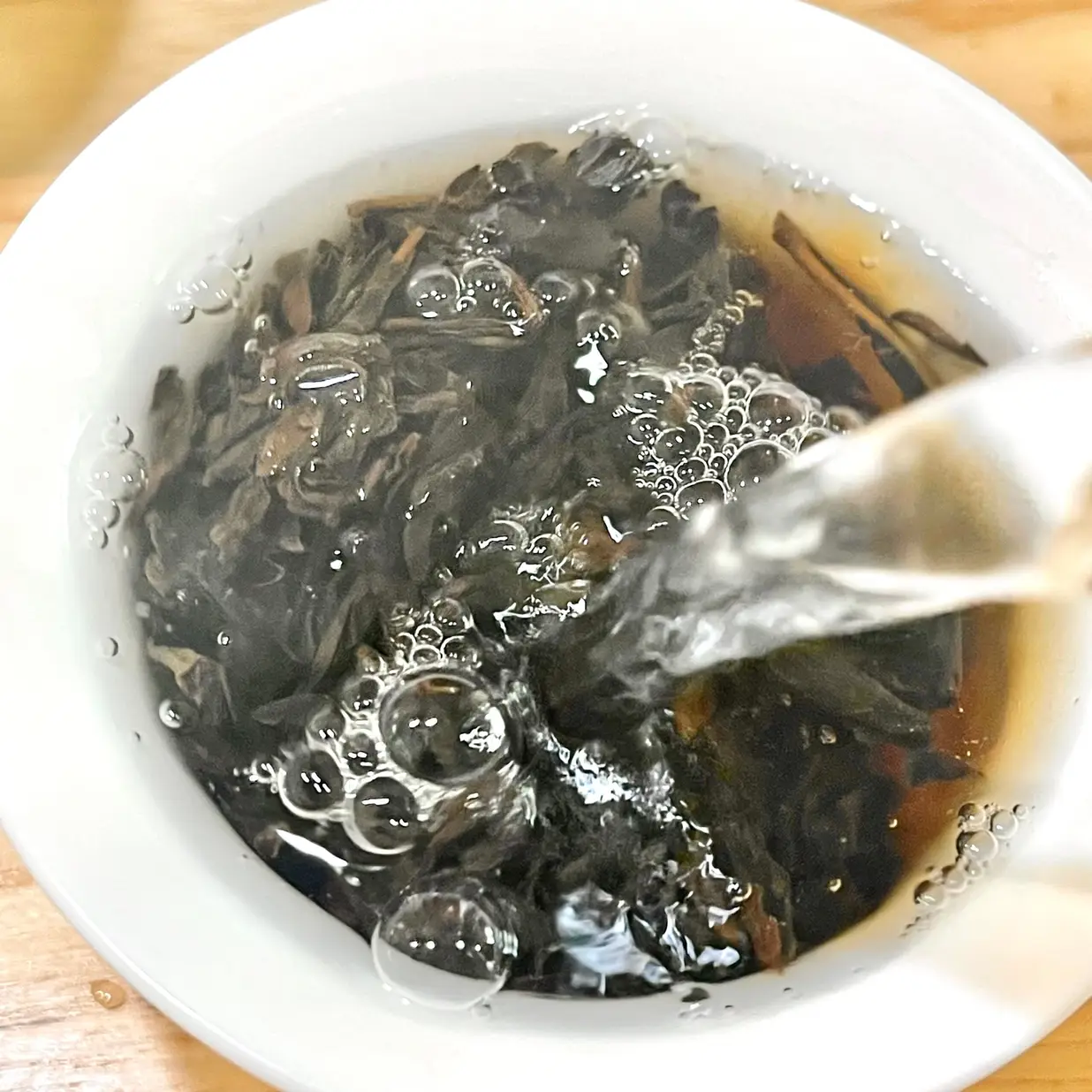
A 110 ml gaiwan, one sachet, and boiling water.
- Vessel: 110 ml porcelain gaiwan, or a small Yixing pot.
- Leaf: one 8.3 g sachet.
- Water: 100°C.
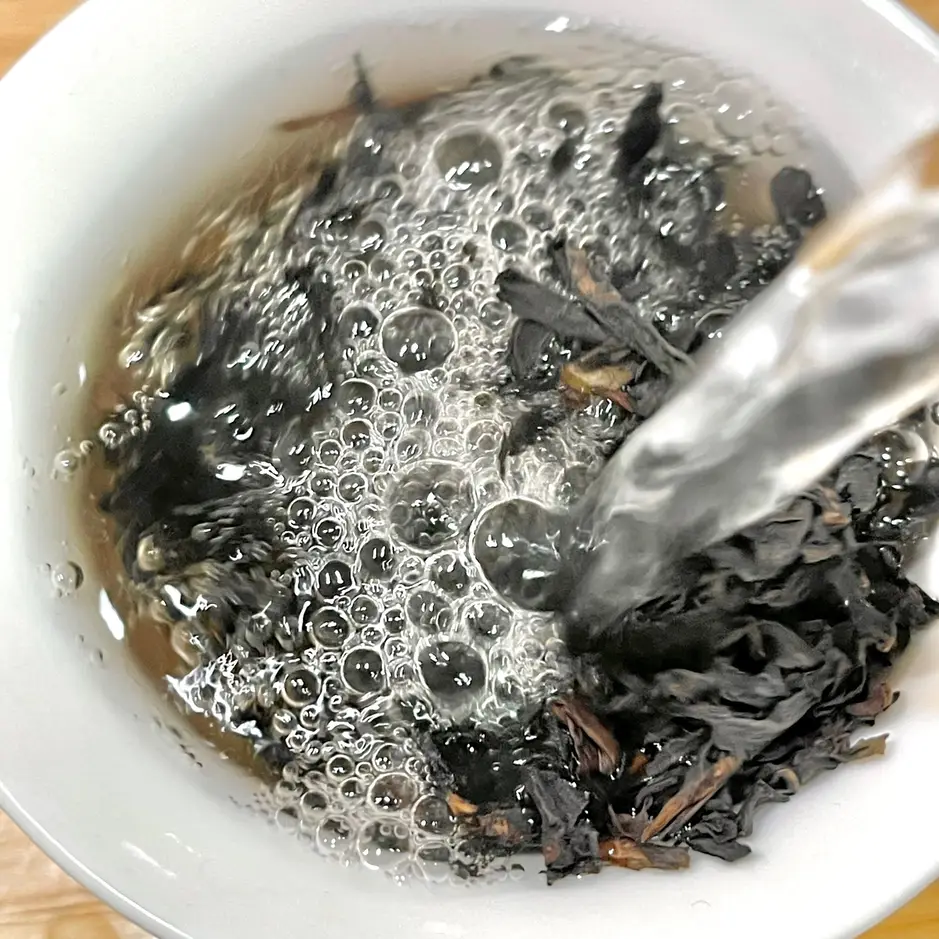
- Rinse: pour to the rim and off again, 3 seconds.
- Steeps 1–3: refill and pour off, about 5–8 seconds each.
- From steep 5: add 5–10 seconds per round.
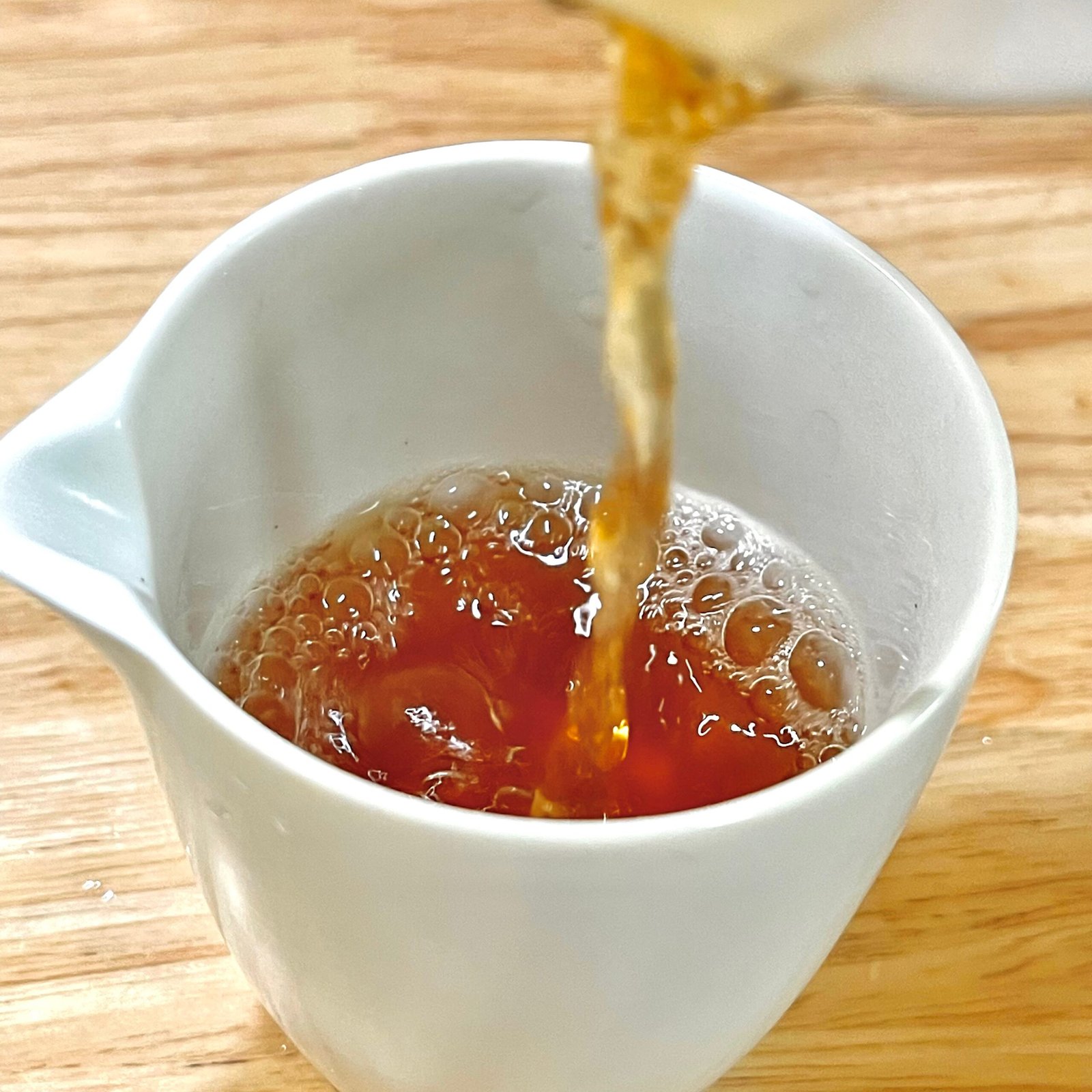
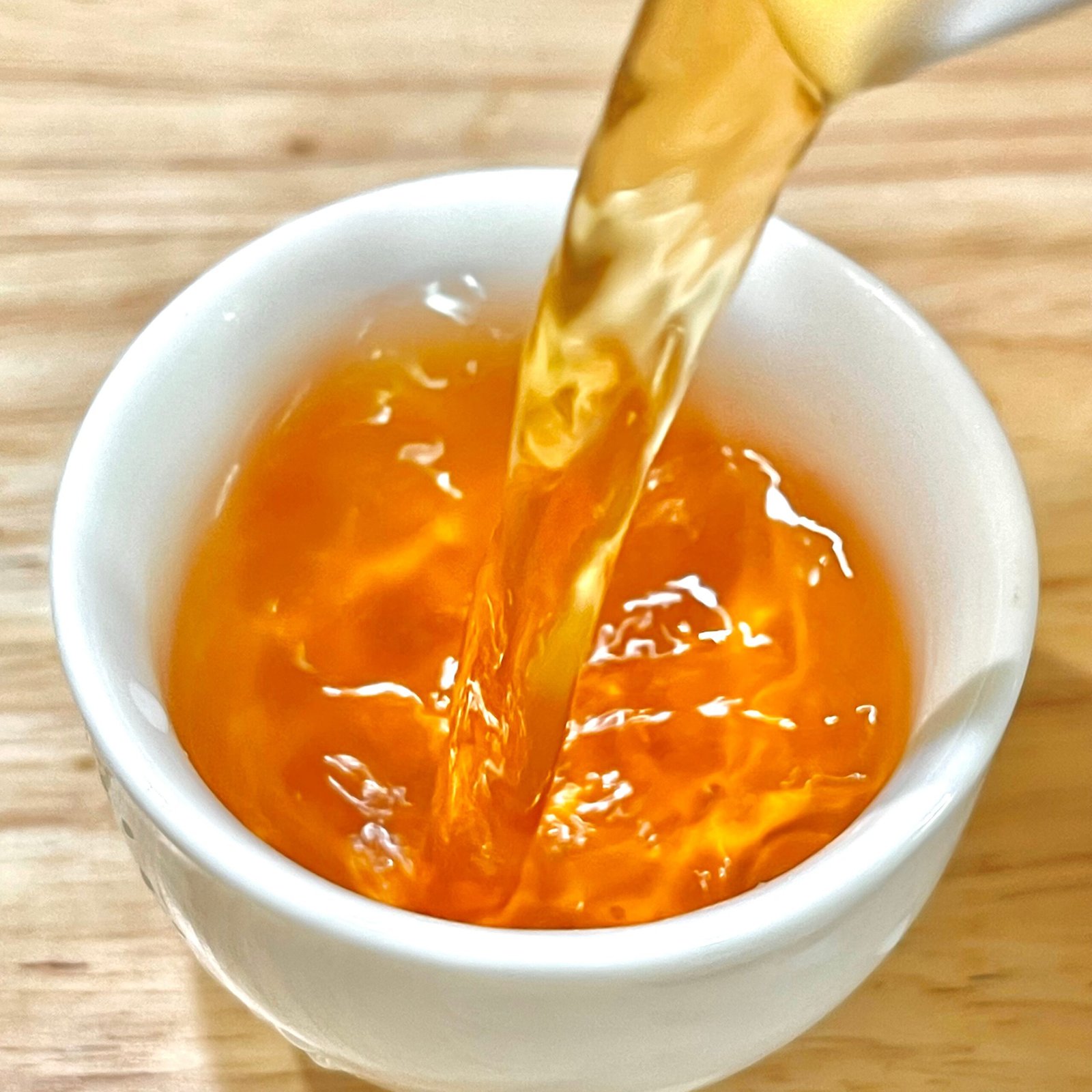
- Stop: when the liquor goes pale gold and the honey turns watery.
Eight to twelve infusions. The first three are sweet and round, four to seven go deep into the mineral layer, and eight onward turns into that soft water-flower finish.
Western brewing works too, at 3 g per 250 ml for two to three minutes, though you will get two or three rounds instead of ten. You do not lose the tea, you lose the arc.
How does this differ from your other old bush Shuixian?
This is the everyday one. The other is a named site with older trees and a deeper cup, and it costs more.
| This old bush Shuixian | Wu San Di old bush Shuixian | |
|---|---|---|
| Age | Sold as around 50 years | No age published; named-site old bush |
| Site | High slope, 600–800 m | Named area, worked from a single garden |
| Cup | Honey, orchid, creamy | Moss, aged wood, deeper |
| Price | Entry level | Higher |
If you have never had old bush Shuixian, start here: it is the cheapest way to find out whether you like moss and orchid at all. If you already know you do, the Wu San Di old bush Shuixian is the deeper version.
If you want the Rougui side of the comparison, the six-site Rougui set puts six named sites in one box.
How much caffeine is in it?
Moderate, at roughly the level of other oolongs.
Mayo Clinic’s caffeine chart puts brewed oolong at 37 mg and brewed black tea at 47 mg per 8 oz serving, with brewed coffee at 96 mg, and it notes that caffeine in tea varies with leaf weight and steep time. A gongfu session spreads that across eight to twelve small cups over an hour or more.
If you are pregnant, ACOG recommends keeping total caffeine under 200 mg a day, which is a limit rather than a target. Ask your own clinician rather than working it out from a tea page.
How should you store it?
Sealed, cool, dark, and away from anything that smells.
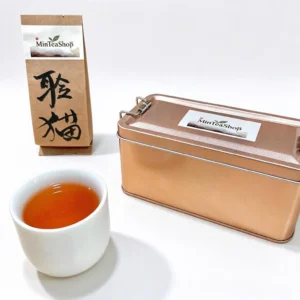
Keep the sachet in its kraft pouch inside an airtight tin. Once opened, use it within a year for the brightest honey, and it stays drinkable for two. Do not refrigerate it: condensation and fridge smells do more damage than a warm cupboard.
We keep our own open pouches in a ceramic jar with a food-safe desiccant, and they hold their honey note for well over a year that way.
Who is it for?
For drinkers who want the creamy, honeyed side of rock tea, and for anyone stepping up from lighter oolongs.
It suits people who find Rougui too sharp, drinkers who like Tieguanyin and want to move into roasted tea, and anyone who wants a single tea that works with food. It is also the cheapest way into old bush material.
Skip it if you want spice and grip, or if you are buying for someone who judges rock tea by its valley name. Our Mituoyan Da Hong Pao is the deep-roast alternative, the Matouyan Duboling Rougui is the spicier one, and the Wuyi rock tea collection has the rest of the range.
For the vocabulary behind these terms, our beginner’s guide to Wuyi rock tea sets out what Zhengyan, half-rock and outer-mountain mean and where the growing-area boundary runs; and our guide to what Wuyi rock tea costs explains how the price follows the growing area rather than the label.
Frequently Asked Questions
What does old bush mean?
It describes mature tea bushes, not a processing method. Older Shui Xian plants have thicker trunks, deeper roots and lower yields, and the tea they make is deeper and more layered than young-bush material. There is no legal threshold, and tree age is hard to verify without planting records.
Is it 老丛 or 老枞?
Both spellings appear on packaging and both are read lao cong. Strictly, 枞 means fir or spruce and 丛 is the correct character in tea terminology, describing a clump of plants. The older spelling survives because Shui Xian is a semi-tree variety.
Why does this taste creamier than other rock tea?
Altitude. Catechin levels and the galloylation that causes astringency both fall as elevation rises, which has been measured in oolong from 200 to 1,300 m. Less astringency plus a medium charcoal roast reads as cream and honey rather than grip.
How many infusions will it give?
Eight to twelve in a gaiwan. Sweet and round for the first three, mineral in the middle, water-flower at the end.
Is it good for beginners?
It is one of the better entry points, yes. The roast is medium rather than heavy, the bitterness is low, and a five-second first steep is hard to get wrong. If the first cup smells of campfire, that is the roast; give it three steeps.
What does it pair with?
Duck, charcuterie, aged cheese and dark chocolate. The creaminess carries fat well, and the mineral finish clears the palate between bites.
How much caffeine is in a session?
Around the level of brewed oolong, which Mayo Clinic puts at 37 mg per 8 oz, against 96 mg for brewed coffee. A ten-round session is more than one cup, spread over an hour.
How long does it keep?
A year for the brightest honey, two years while still drinkable. Sealed, cool, dark, and never in the fridge.
Author and reviewer disclosure
This page was written by the founder and head tea buyer at Min Tea Shop, who has bought and cupped tea directly from Fujian growers for eight years. The tea described above was selected during our 2026 sourcing trip to Fujian, and the tasting notes come from our own gongfu sessions.
Statements about altitude, production standards and caffeine are general, are sourced to the published documents cited above, and are not medical advice. No sponsored content, no paid placements, and no affiliate links appear on this page, and we do not sell or share your personal data — see our privacy policy for details. If a specification on this page is wrong, tell us and we will correct it.
Additional information
| Weight | 0.0332 kg |
|---|---|
| size | 4 Packs (1.17 oz), 6 Packs (1.76 oz), 18 Packs (5.27 oz), 30 Packs (8.78 oz), 60 Packs (17.57 oz) |
Related products
-

Wuyi Rougui Micro-Terroir Set: Six Named Lots, 2026
Price range: $20.90 through $52.90Select options This product has multiple variants. The options may be chosen on the product page -
Mituoyan Da Hong Pao Rock Tea, 2026 Wuyi Mountain
Price range: $23.90 through $299.90Select options This product has multiple variants. The options may be chosen on the product page -
The Ultimate 2026 Wuyi Rock Tea Guide: Best Rougui Tasting & Brewing
Price range: $9.90 through $106.90Select options This product has multiple variants. The options may be chosen on the product page -
Mao Er Shi Zhengyan Rougui Rock Tea, 2026 Wuyishan
Price range: $39.90 through $99.90Select options This product has multiple variants. The options may be chosen on the product page
Reviews
There are no reviews yet.