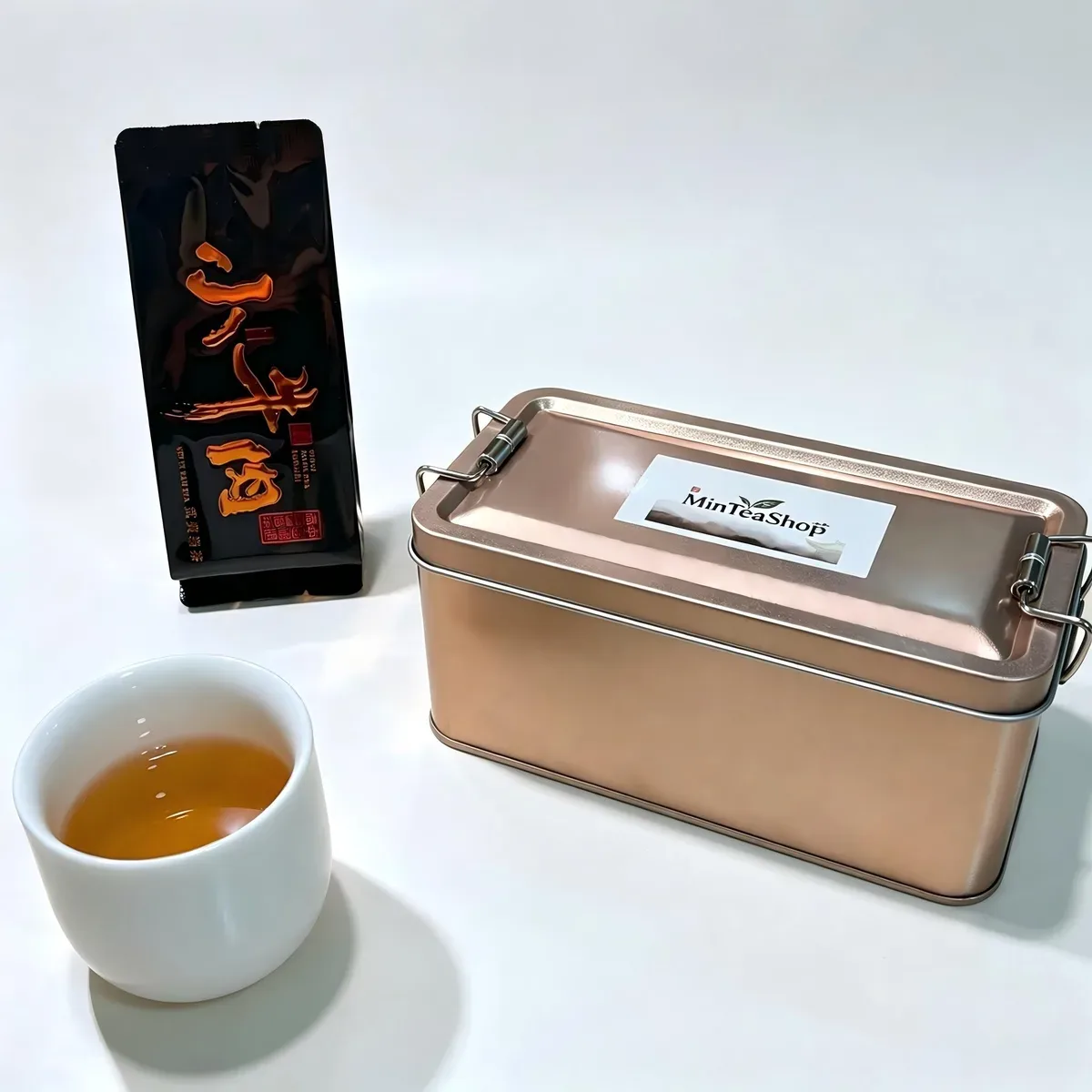

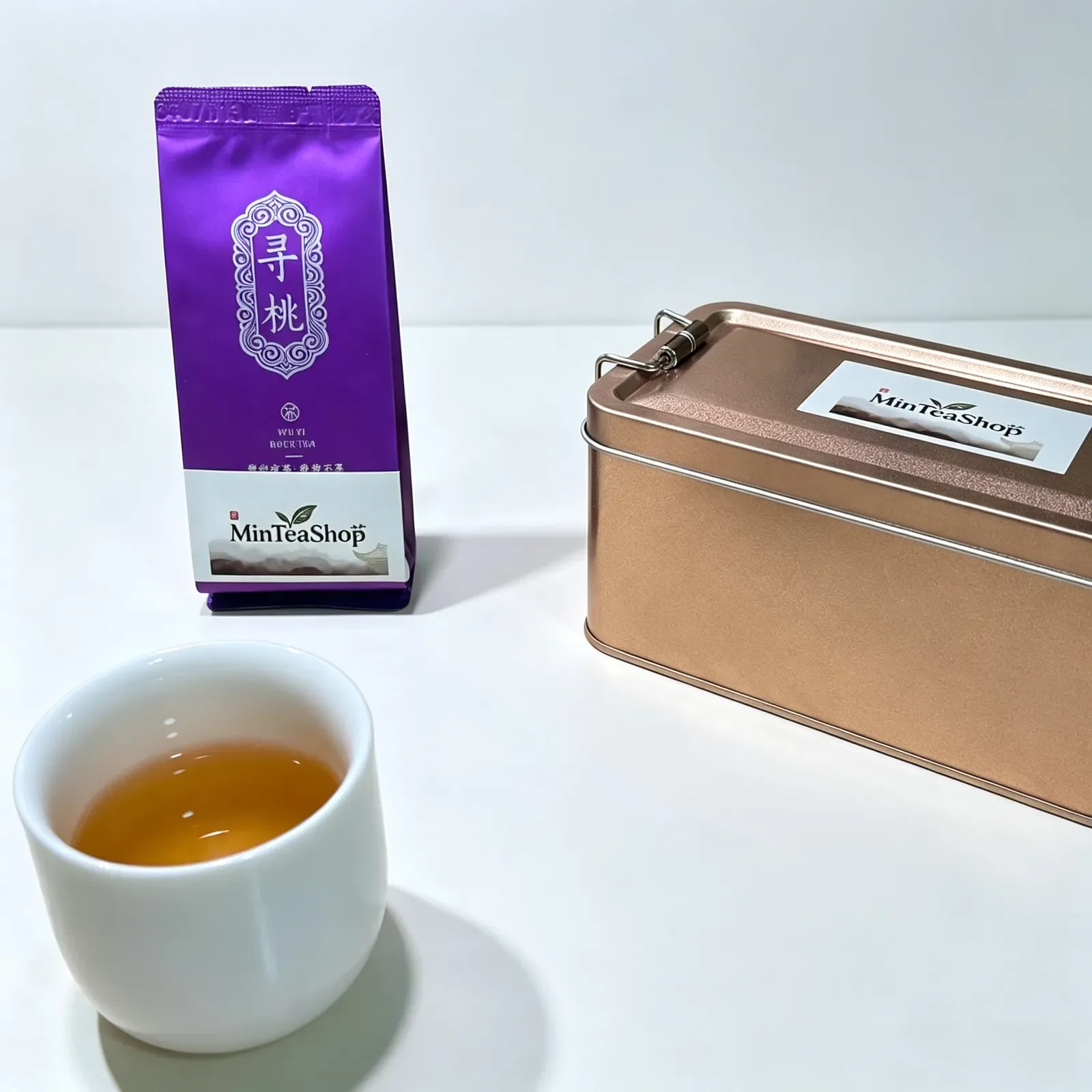
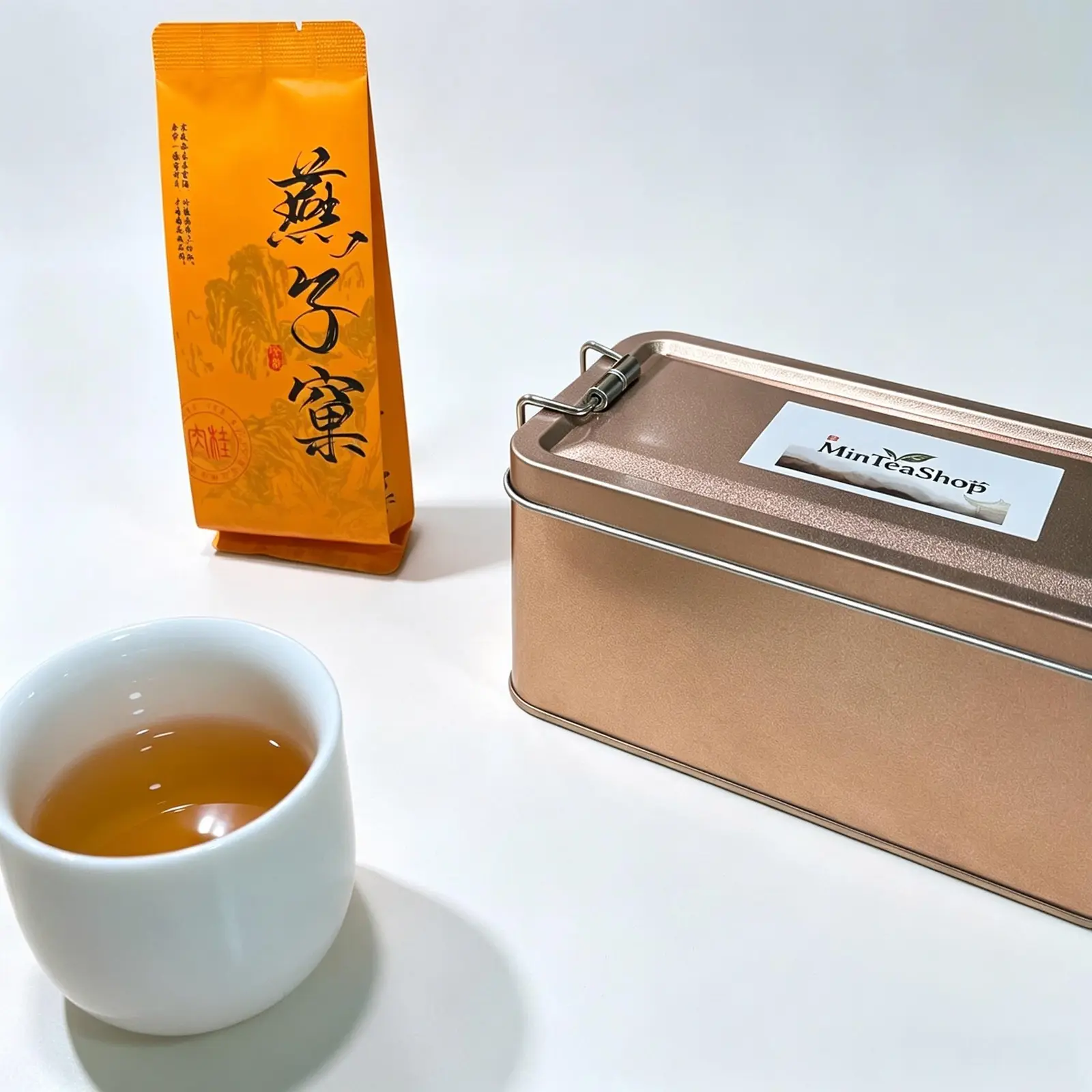
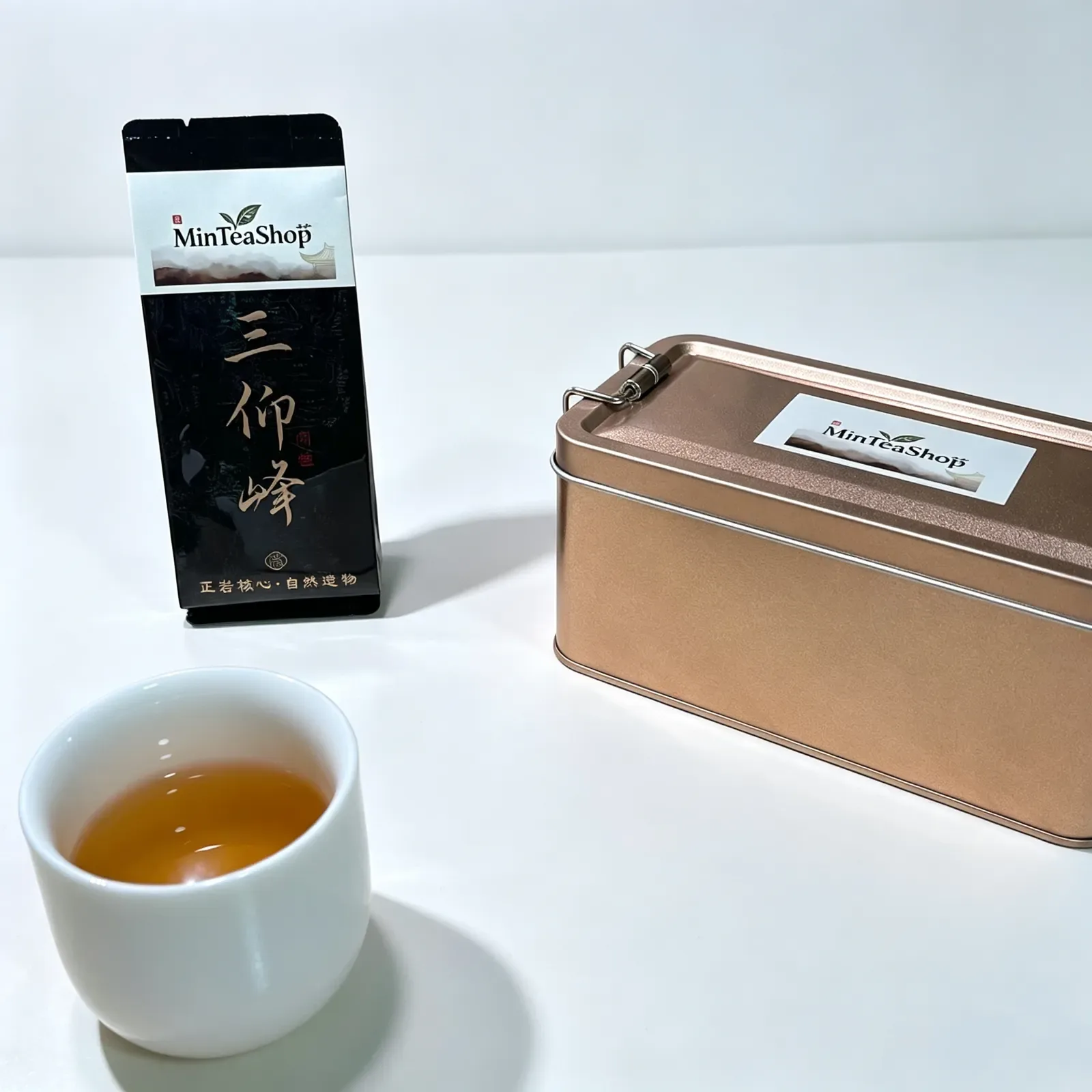
Wuyi Rougui Micro-Terroir Set: Six Named Lots, 2026
Price range: $20.90 through $52.90
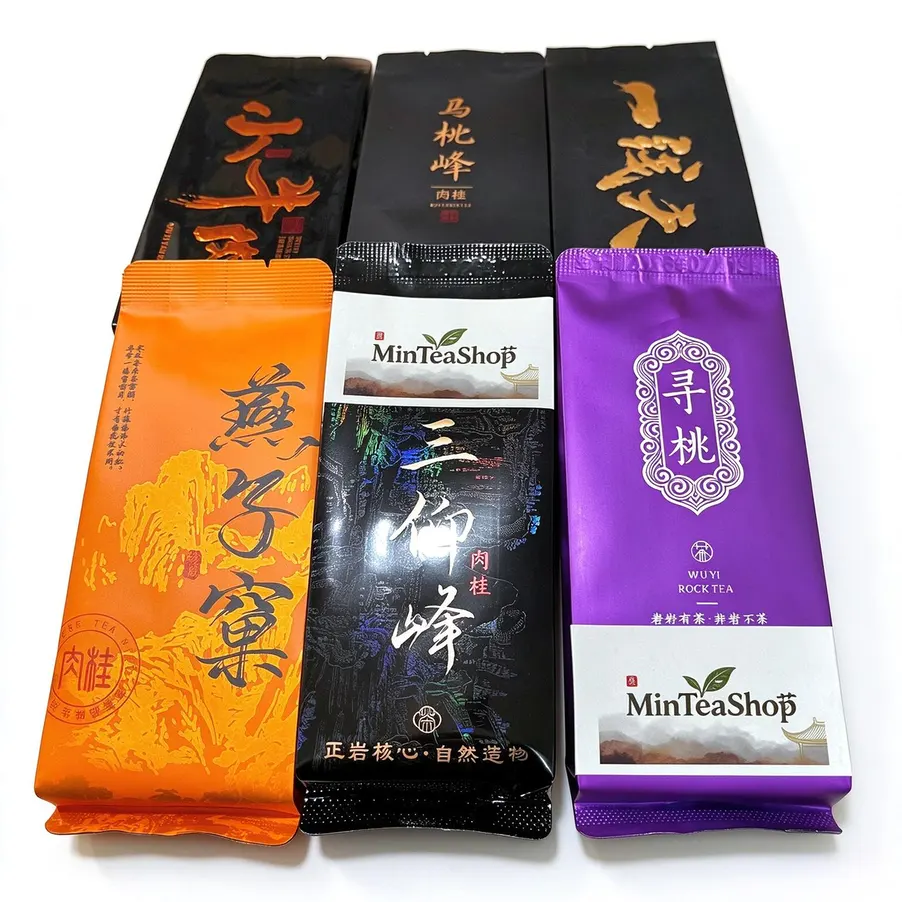
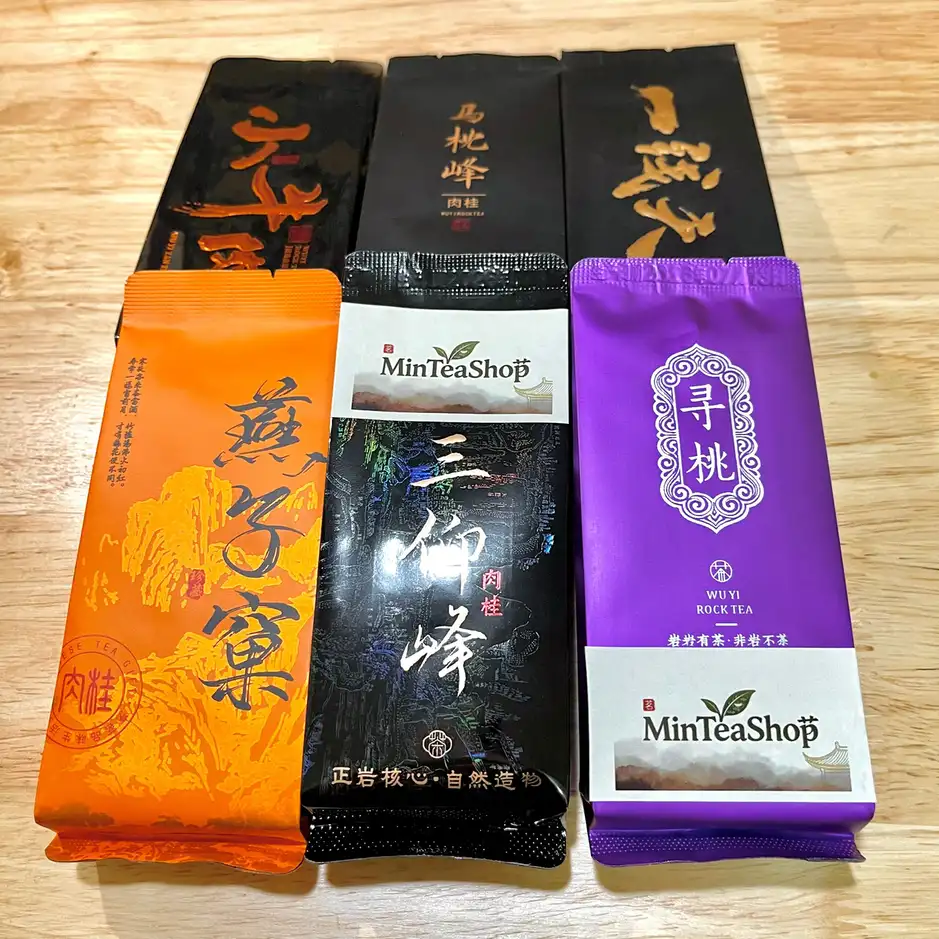
2026 Wuyi Rougui micro-terroir set from Wuyishan: six 8.3 g sachets, one from Yanzi Ke, Mazhenfeng, Xiao Niu Rou, Yixiantian, Sanyang Peak and Lingyang Pass.
Description
First published: 29 September 2026 · Last updated: 4 November 2026
This set puts six Wuyi Rougui beside each other, one 8.3 g sachet from each named micro-terroir: Yanzi Ke, Mazhenfeng, Xiao Niu Rou, Yixiantian, Sanyang Peak and Lingyang Pass. Same cultivar, same county, same method in your cup, six different answers. It suits anyone who has read about rock tea and wants to taste the difference rather than take it on trust, and drinkers deciding which single lot to buy a full tin of.
What is a micro-terroir, and why does it matter in Wuyi?
A micro-terroir is one small, named growing site whose soil, light, drainage and air behave differently from the site next door, and Wuyi is the clearest example of it in Chinese tea.
The Wuyi Mountains are a landscape of rock walls, narrow ravines and shaded valleys, and the tea gardens sit in and between them rather than on open fields. A garden at the bottom of a ravine that sees two hours of sun a day makes a different tea from one on a slope that faces the afternoon sun, even when both are planted with the same cultivar and picked in the same week.
What that means in practice is that the word Rougui describes the plant, and the site name describes what the plant turned into. Both matter, and the site is usually the part you are paying for.
What is in the box?
Six sachets, 8.3 g each, one from each of the sites below.
| Site | Where it sits | How we roast it | What the cup does |
|---|---|---|---|
| Yanzi Ke | Inside the scenic area | Three-stage charcoal, lychee wood, rested about three weeks | The softest of the six. Cinnamon without the aggression |
| Mazhenfeng | Inside the scenic area | Three-stage charcoal, medium | Honey and stone fruit over a warm mineral base |
| Xiao Niu Rou | Inside the scenic area | Three-stage charcoal, medium-heavy | The densest body, cinnamon bark that lasts |
| Yixiantian | Inside the scenic area | Charcoal, medium | Tight and high-toned, the sharpest cinnamon |
| Sanyang Peak | Inside the scenic area | Long three-stage charcoal | Cocoa, then a long honeyed finish |
| Lingyang Pass | Outside the scenic area, in the far north of Wuyishan | Two charcoal rounds, light-to-medium | The sharpest and most concentrated of the six. High-altitude leaf asks for fewer, longer steeps |
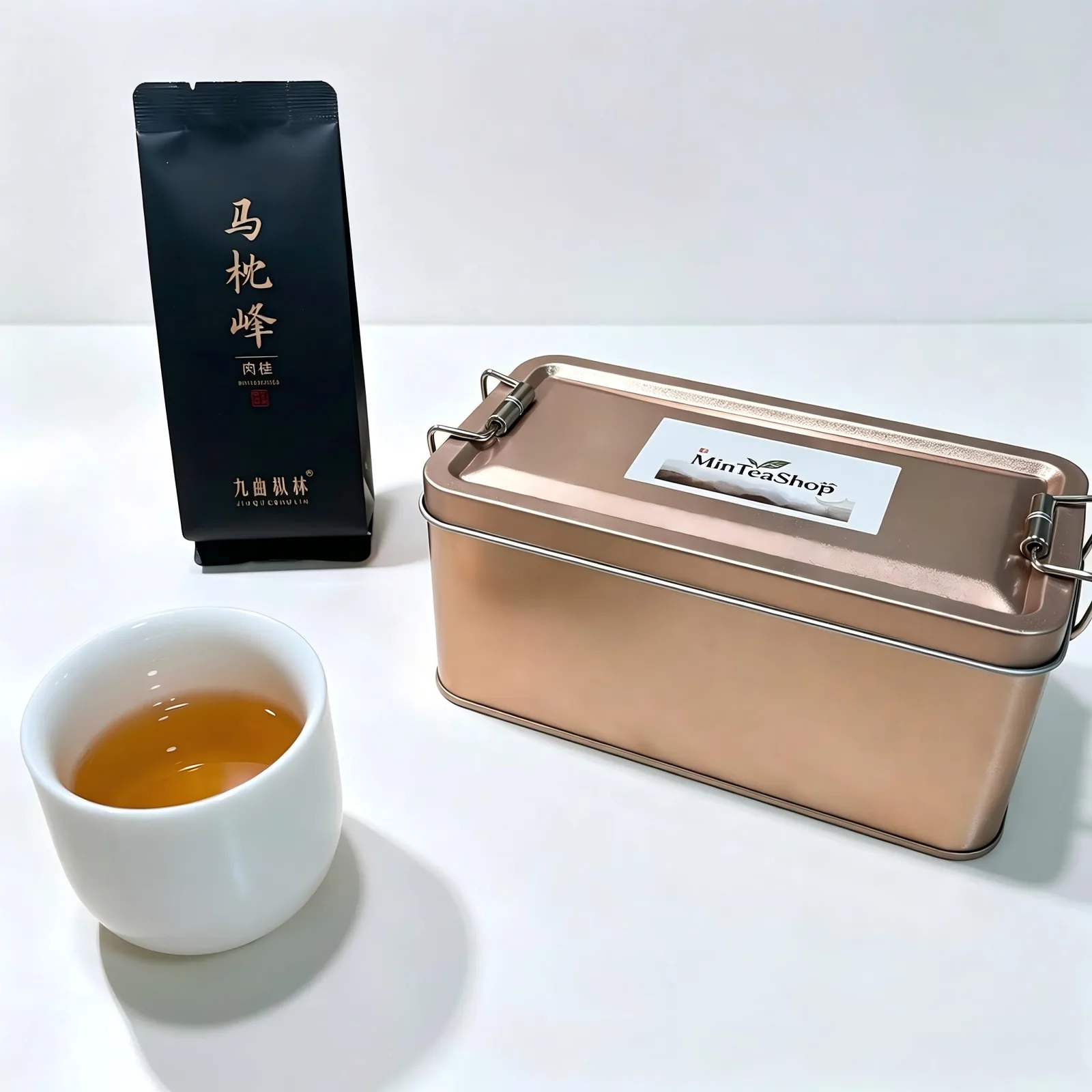
All six micro-terroir lots come from Wuyishan, Fujian, picked in spring 2026, and packed as nitrogen-flushed single servings.
Five of these six come from inside the Wuyi scenic area. Lingyang Pass does not: it sits in the far north of the county, in what older trade writing would have called the Danyan half of the production area. Under the current national standard it is still Wuyi rock tea inside the geographical indication — the standard now covers the whole of Wuyishan — but it is not a Zhengyan tea, and we would rather say so here than let you work it out from a price comparison later. It is in the box because it is genuinely a different site with a genuinely different cup, not because it completes a set.
Is this a fair comparison of terroir?
No, and pretending otherwise would cheat you. You are tasting six complete teas, not six sites under laboratory conditions.
The sites differ, but so do the roast levels and the resting times, because each lot is made the way that site needs to be made. Yanzi Ke is rested longer because its leaf is softer; Lingyang Pass is roasted lighter because high-altitude leaf loses its aromatics if you push the fire. A side-by-side tasting of these six tells you how six complete teas compare, which is what you actually drink.
If you want to isolate the site, the honest way is to compare two lots with the same roast level, and even then the leaf differs. We are not going to dress this set up as a controlled experiment, because it is not one.
What actually changes from site to site?
Three things, and you can taste all three.
The light. A ravine that loses the sun early grows a smaller, slower leaf than a south-facing slope that keeps it all day. Slower growth concentrates the aromatics, which is why the shaded sites read sharper and more persistent.
The water. Rock-derived soil drains fast, so the bushes work harder for water. That stress shows up in the cup as weight and a mineral finish, which is the quality the trade calls rock rhyme.
The altitude. This part has been measured. A 2014 study in the Journal of Food and Drug Analysis analysed oolong from the same mountain area at 200, 800 and 1,300 m and found that catechin content and the degree of galloylation, which drive astringency, both fall as altitude rises, with taste quality improving in step. The paper is indexed on PubMed. That supports altitude as one factor in the cup. It is not a ranking of this box: we do not have measured garden elevations for all six, and the lots differ in roast and rest as well.
What are the specifications?
| Item | Detail |
|---|---|
| Contents | Six 8.3 g sachets, one per site |
| Origin | Wuyishan, Fujian, China |
| Cultivar | Rougui |
| Harvest | Spring 2026 |
| Roast | Charcoal, level matched to each site |
| Format | Nitrogen-flushed single-serving sachets |
| Storage | Cool, dark and dry; about 18 months unopened |
How does the set work in practice?
One sachet makes one gongfu session, and six sessions is the whole comparison.
| Step | What to do |
|---|---|
| Order | Start with Yanzi Ke, then Yixiantian, then Lingyang Pass. Soft, then sharp, then the densest |
| Dose | One 8.3 g sachet per 100–150 ml gaiwan, the same vessel every time |
| Water | 100°C for all six |
| Rinse | Five seconds, discarded, every time |
| Steeps | 10 seconds for the first three, then add 5 seconds per round |
| Record | Write one line per site: what the aroma was, and when the finish arrived |
The micro-terroir set’s recording part sounds fussy and is the only thing that makes it worth buying. This micro-terroir comparison runs over six sessions, six days, one line each, and by the end you will know which site you actually like rather than which one you were told to like.
What should you notice between the six?
The cinnamon is the constant; the body and the finish are where they separate.
| Site | Aroma | Body and finish |
|---|---|---|
| Yanzi Ke | Cinnamon, dried longan | Medium; soft and honeyed |
| Mazhenfeng | Honey, stone fruit | Medium; warm and mineral |
| Xiao Niu Rou | Cassia bark, cocoa | Full; long and spicy |
| Yixiantian | Sharp cinnamon, orchid | Medium; tight and cooling |
| Sanyang Peak | Cocoa, roasted | Full; long honey |
| Lingyang Pass | Cinnamon bark, honey, roasted sweet potato | Full; long and cooling |
That table is our own tasting across the six lots, written from our own sessions. It is a description rather than a measurement, and your pour, your water and your palate will move the lines.
What is the growing area, and what does UNESCO certify?
The six micro-terroir sites are in Wuyishan. The national standard for Wuyi rock tea is GB/T 18745-2006, “Product of geographical indication — Wuyi rock tea”, in force since December 2006, and it sets the geographical indication area as the whole of the Wuyishan administrative district — the scenic area and everything around it. The standard text is published free on the national standards portal.
The split into Mingyan and Danyan — the scenic area and the rest — that you meet in older trade writing came from the 2002 version of the standard. The 2006 revision dropped the division of the raw-material producing areas altogether. So the growing-area words on a tin — Zhengyan, half-rock, outer-mountain — are the market’s view of sites, not a boundary anyone enforces.
The Mount Wuyi World Heritage listing, number 911, protects a landscape of 107,044 ha plus a buffer. It does not draw a tea-garden boundary, it does not certify a tea grade, and it does not name a core tea polygon. A seller claiming that UNESCO certifies a single plot is claiming something that does not exist.
If you want the vocabulary first — what Zhengyan, half-rock and outer-mountain mean, and how the growing-area names on a tin relate to the actual production area — our beginner’s guide to Wuyi rock tea sets it out. And if the question is what any of this costs, our guide to Wuyi rock tea prices explains how the price follows the growing area rather than the label.
How much caffeine is in each sachet?
Moderate, and much less than coffee.
Mayo Clinic’s caffeine chart puts brewed oolong at 37 mg and brewed black tea at 47 mg per 8 oz serving, with brewed coffee at 96 mg, and it notes that caffeine in tea varies with leaf weight and steep time. A gongfu round in a small gaiwan lands in that oolong range.
Six sessions across six days is well within any normal intake. If you are pregnant, ACOG recommends keeping total caffeine under 200 mg a day, which is a limit rather than a target. Ask your own clinician.
How should you store the sachets?
Sealed, cool, dark and away from anything that smells.
Keep the unopened sachets in their box in a cupboard away from sunlight, spices and coffee. Use them within about eighteen months of the packing date stamped on the box, and each one within about three months of opening. Never refrigerate a roasted leaf: condensation is worse than a warm shelf.
Who is this set for?
For anyone who wants to taste what a growing site does, rather than read about it.
It suits drinkers who already know they like rock tea and want to understand why one lot differs from another. It is also the cheapest way to decide which of the six you want a full tin of, because buying six tins to find out is an expensive education.
It is the wrong buy if you want one tea to drink every day, or if you have never brewed gongfu before and do not want six sessions of learning curve. Start with Yanzi Ke on its own instead; it is the most forgiving of the six.
If you already know your site, each is sold separately: Yanzi Ke, Mazhenfeng, Xiao Niu Rou, Yixiantian, Sanyang Peak and Lingyang Pass. The Wuyi rock tea collection has the rest of the range.
Frequently Asked Questions
How should I taste six teas without confusing myself?
One sachet at a time, on six different days, in the same gaiwan, and one written line per session. Tasting all six in one sitting sounds thorough and mostly produces a headache and a blur.
Which one should I start with?
Yanzi Ke first, because it is the softest and the least likely to upset someone new to gongfu. Then Yixiantian, then Lingyang Pass, which is the densest and asks for fewer, longer steeps.
Is this a controlled comparison of terroir?
No. The six lots differ in roast level and resting time as well as in site, so you are tasting six finished teas rather than six sites under laboratory conditions. The section above explains why that is the useful comparison.
How much caffeine is in a sachet?
Around the level of brewed oolong. Mayo Clinic’s chart puts brewed oolong at 37 mg per 8 oz, against 96 mg for brewed coffee. Six sessions across six days is a normal intake.
Can I cold brew them?
You can, and the results are dull. Cold water flattens a roast, and a roasted oolong is built around the fire. If you want a cold drink, brew it hot and chill the liquor instead.
How long do the sachets keep?
About eighteen months unopened, in a cool dark cupboard. Once opened, use the sachet within about three months. Do not refrigerate.
How is this different from buying one tin?
Six tins would cost far more than one set, and you would be committing to six teas you have not tasted. The micro-terroir set is the cheap way to find out which one you want to spend real money on.
Author and reviewer disclosure
This page was written by the founder and head tea buyer at Min Tea Shop, who has bought and cupped tea directly from Fujian growers for eight years. The six lots in this set were selected during our 2026 sourcing trip to Fujian, and the tasting notes come from our own gongfu sessions with each one.
Statements about altitude and caffeine are general, are sourced to the published research cited above, and are not medical advice. No sponsored content, no paid placements, and no affiliate links appear on this page, and we do not sell or share your personal data — see our privacy policy for details. If a specification on this page is wrong, tell us and we will correct it.
Additional information
| Weight | 0.0499 kg |
|---|---|
| size | 6 Packs (1.76 oz), 12 Packs (3.51 oz), 18 Packs (5.27 oz) |
Related products
-

Wu San Di Shui xian: Authentic 46-Year Old Bush Wuyi Rock Tea
Price range: $12.90 through $189.90Select options This product has multiple variants. The options may be chosen on the product page -
Wuyi Rougui Oolong Tea from Taoyuan Ke, 2026
Price range: $10.90 through $149.90Select options This product has multiple variants. The options may be chosen on the product page -
Su Xin Lan Rock Tea, 2026 Wuyi High Mountain, Fujian
Price range: $9.90 through $106.90Select options This product has multiple variants. The options may be chosen on the product page -
Matouyan Rougui Rock Tea, 2026 Wuyishan Zhengyan
Price range: $23.90 through $299.90Select options This product has multiple variants. The options may be chosen on the product page


Reviews
There are no reviews yet.