
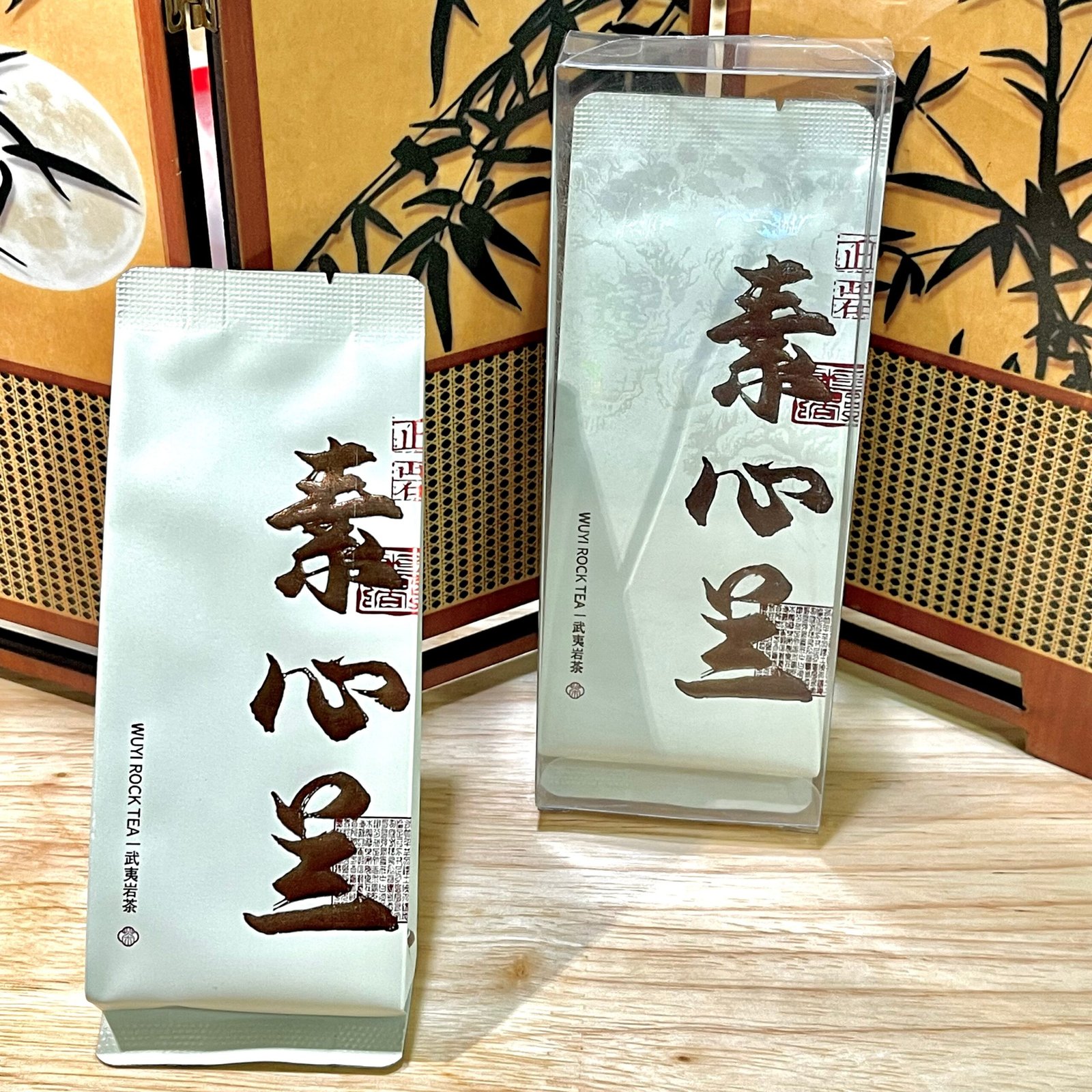
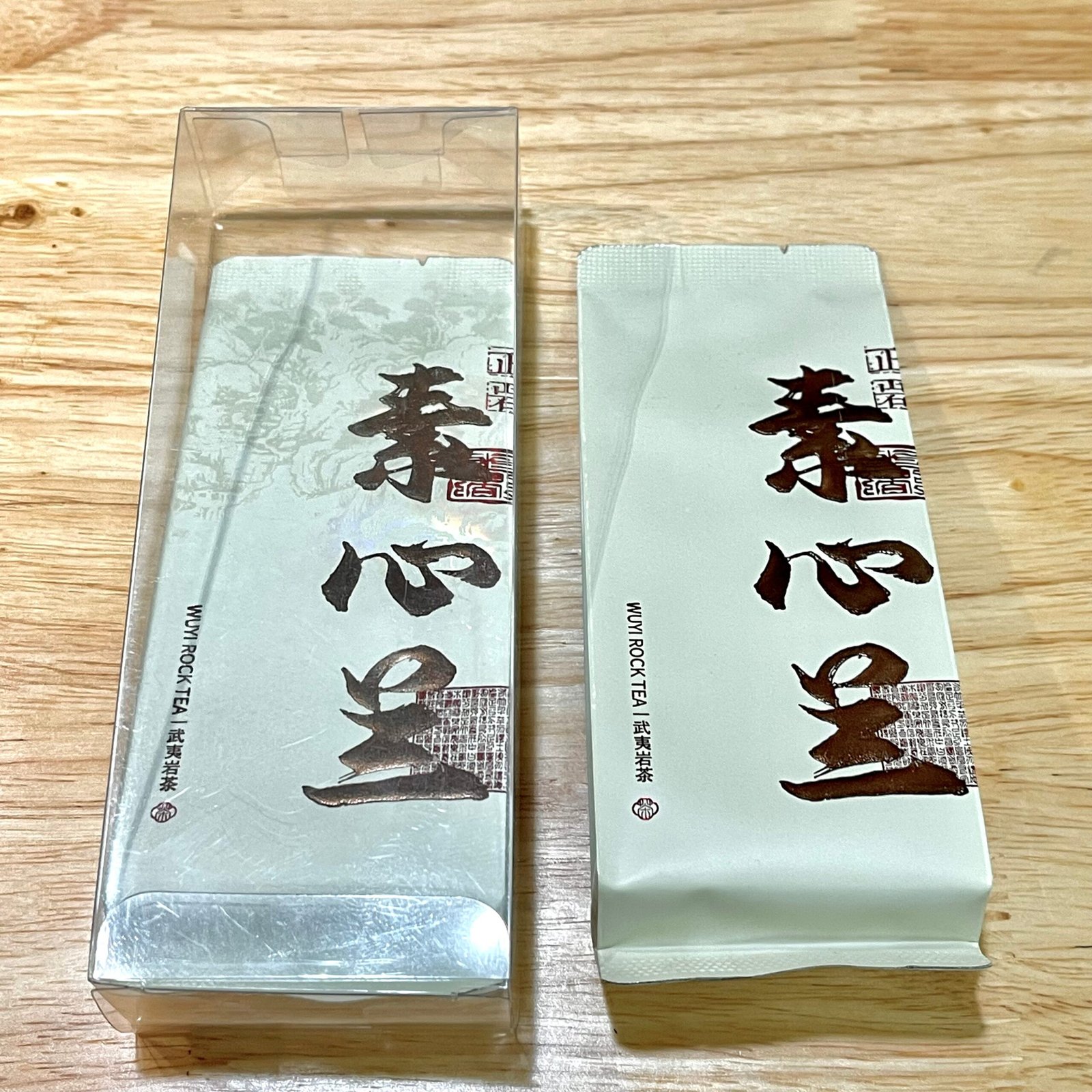
Pure Su Xin Lan Rock Tea | Authentic High Mountain Oolong 2026
Price range: $9.90 through $106.90
Specifications at a Glance
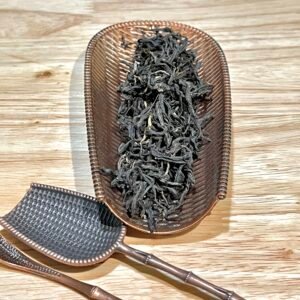
Type: Wuyi High Mountain Su Xin Lan Rock Tea(Oolong / Yancha)
Origin: High-Altitude Tea Region (Tianxin Area), Wuyishan, Fujian Province, China
Harvest: Spring 2026
Cultivar & History: Su Xin Lan (素心兰 / “Pure Heart Orchid”, Shi Xian Family)
Roast Level: Traditional 3-Stage Charcoal Roast (Medium Roast / Zhong Huo)
Altitude: 1,800 ft – 2,500 ft (600 m – 800 m)
Caffeine: Moderate (25–35 mg per 8 oz cup)
Sizes:
4 Packs — 1.17 oz (33.2g | 8.3g × 4)
6 Packs — 1.76 oz (49.8g | 8.3g × 6)
18 Packs — 5.27 oz (149.4g | 8.3g × 18)
30 Packs — 8.78 oz (249g | 8.3g × 30)
60 Packs — 17.57 oz (498g | 8.3g × 60)
Whether you’re new to Wuyi Rock Tea or a seasoned oolong enthusiast, exploring new floral and mineral profiles is half the fun. Curious about how authentic high-mountain rock tea compares? Every order includes a complimentary bonus sample alongside your Su Xin Lan, so you can explore these rich, orchid-driven nuances firsthand.
Description
Su Xin Lan Rock Tea | Handcrafted Wuyi High Mountain Oolong
If you’ve ever tried tea sold as wuyi rock tea and felt the flavor fell short, you’re not alone.
The reason is simple: origin is everything.
True Wuyi Da Hong Pao gets its iconic flavor from the unique terroir of the Wuyi Mountains. However, teas from other regions are often processed in a similar style and sold under the same name, leaving buyers guessing what they’re actually drinking.
With MinteaShop, you don’t have to take origin on faith.
We own our tea gardens and processing facility in the heart of the Wuyi Mountains, managing quality from leaf to cup. By skipping flashy packaging and excess cost, we focus entirely on what matters most: the quality of the tea inside.
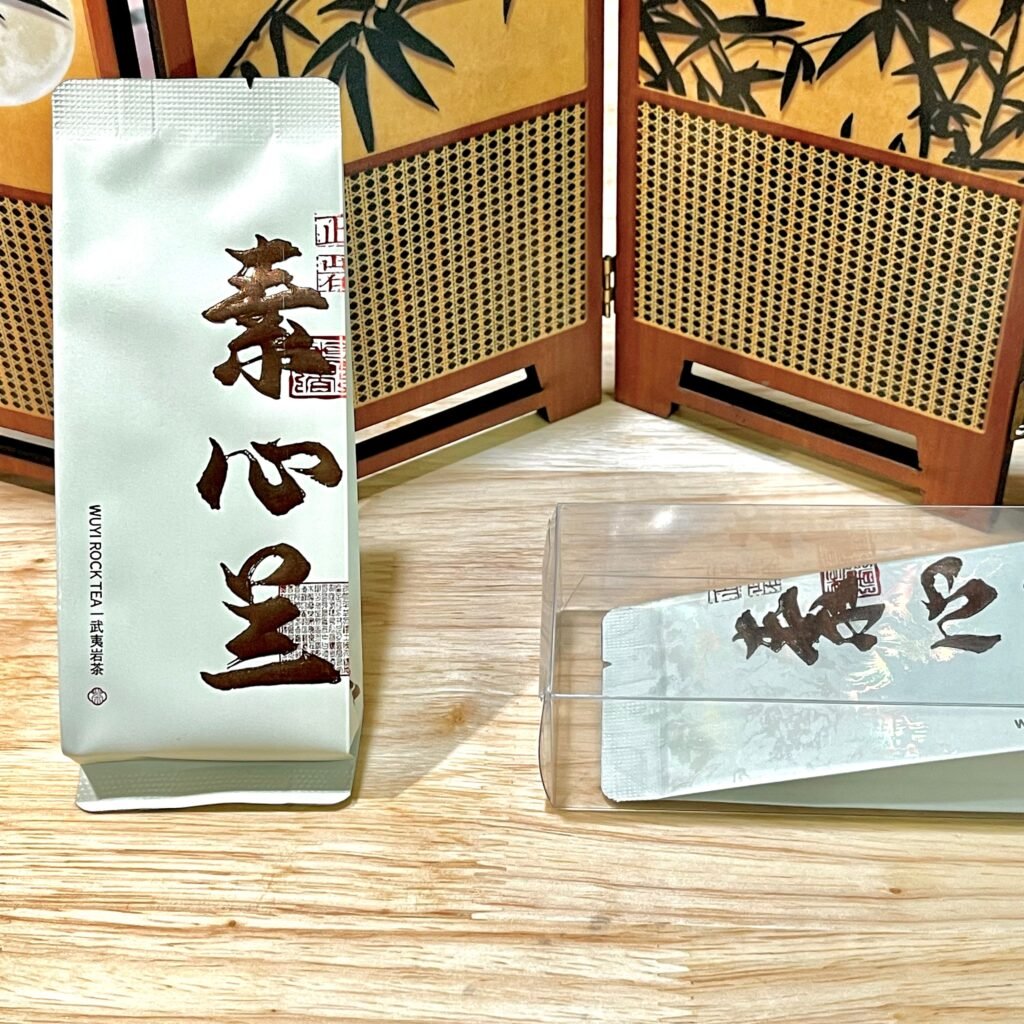
Most “Wuyi oolong” sold online comes from lowland farms that produce thin, sour cups. Real high-mountain Su Xin Lan rock tea tastes completely different — orchid forward, charcoal-warm, and built to last 10+ steeps.
In this guide, I’ll show you exactly what makes Su Xin Lan rock tea worth the premium. We’ll cover the cultivar’s origin, what to expect in the cup, how altitude changes the flavor, and how to brew it so you get the full 8–10 infusions.
What Is Su Xin Lan Rock Tea?
Su Xin Lan (素心兰, “Pure Heart Orchid”) is one of the older Wuyi cultivars. It was first selected in the Tianxin rock cliff area in the 1980s, named after the wild orchid that once grew beside the mother bushes.
Unlike Rou Gui or Shui Xian — the two cultivars that dominate commercial yancha — Su Xin Lan keeps a thinner, more floral character even after heavy roasting. Most core-region Su Xin Lan rock tea comes from plots at 1,800–2,500 ft elevation.
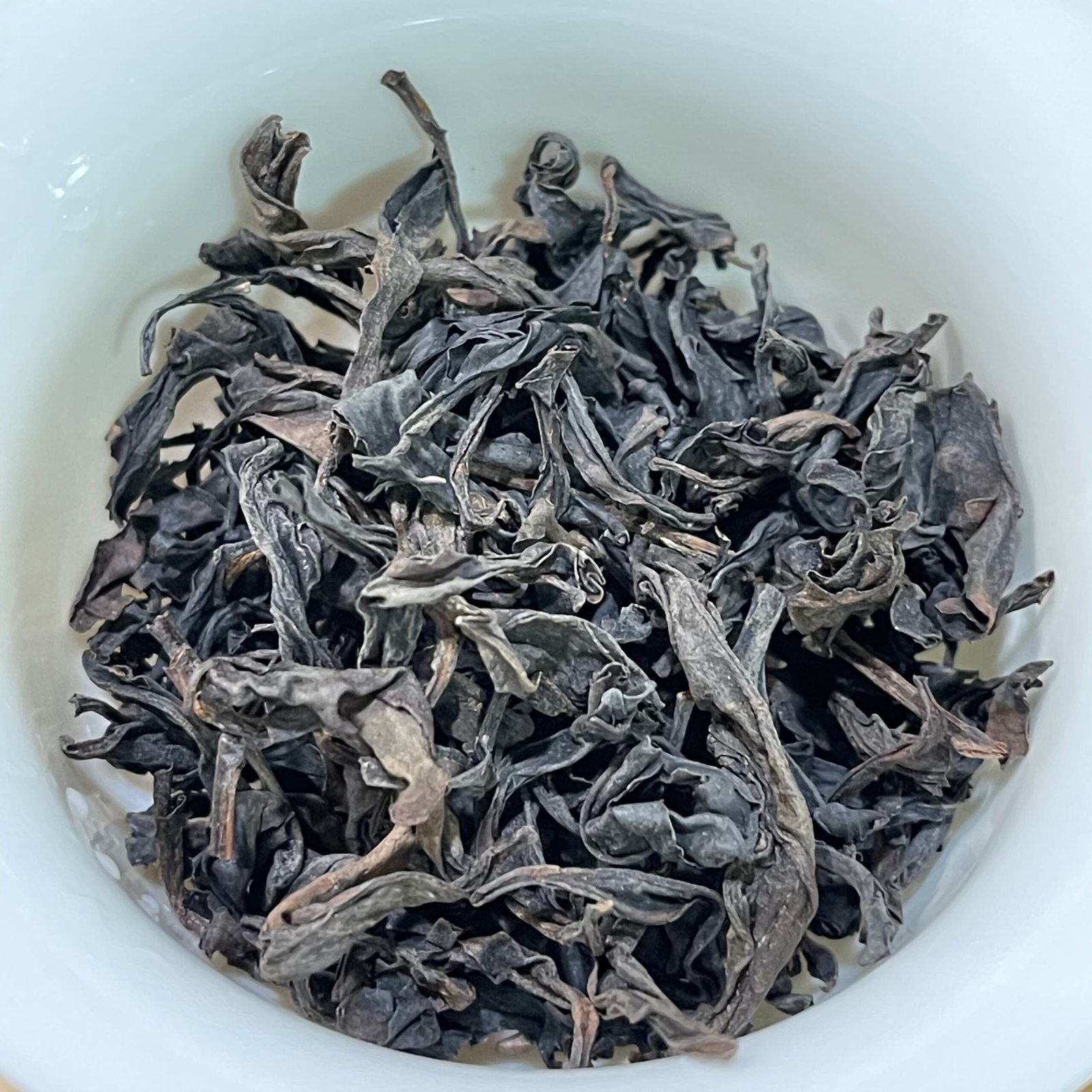
Crafted using a three-stage traditional medium charcoal roast, this handcrafted Wuyi rock oolong balances sweet floral elegance with deep, comforting warmth. Sourced directly from elevated slopes inside the Wuyishan UNESCO Cultural Landscape, it offers tea lovers an authentic, high-value rock tea experience marked by an enduring sweet return (Hui Gan) and smooth throat resonance (Yan Yun).
Cultivar Snapshot
| Attribute | Detail |
|---|---|
| Chinese name | 素心兰 (Sù Xīn Lán) |
| Literal meaning | Pure Heart Orchid |
| Selected | Tianxin area, ~1980s |
| Plant type | Shi Xian family (石仙) cultivar |
| Flavor signature | Orchid, magnolia, mineral sweetness |
What Does Su Xin Lan Rock Tea Taste Like?
The first steep hits with a thick, almost creamy texture. By the third pour, the orchid really opens up — think fresh magnolia petal rather than perfume. There’s a sweet mineral edge that runs down the throat.
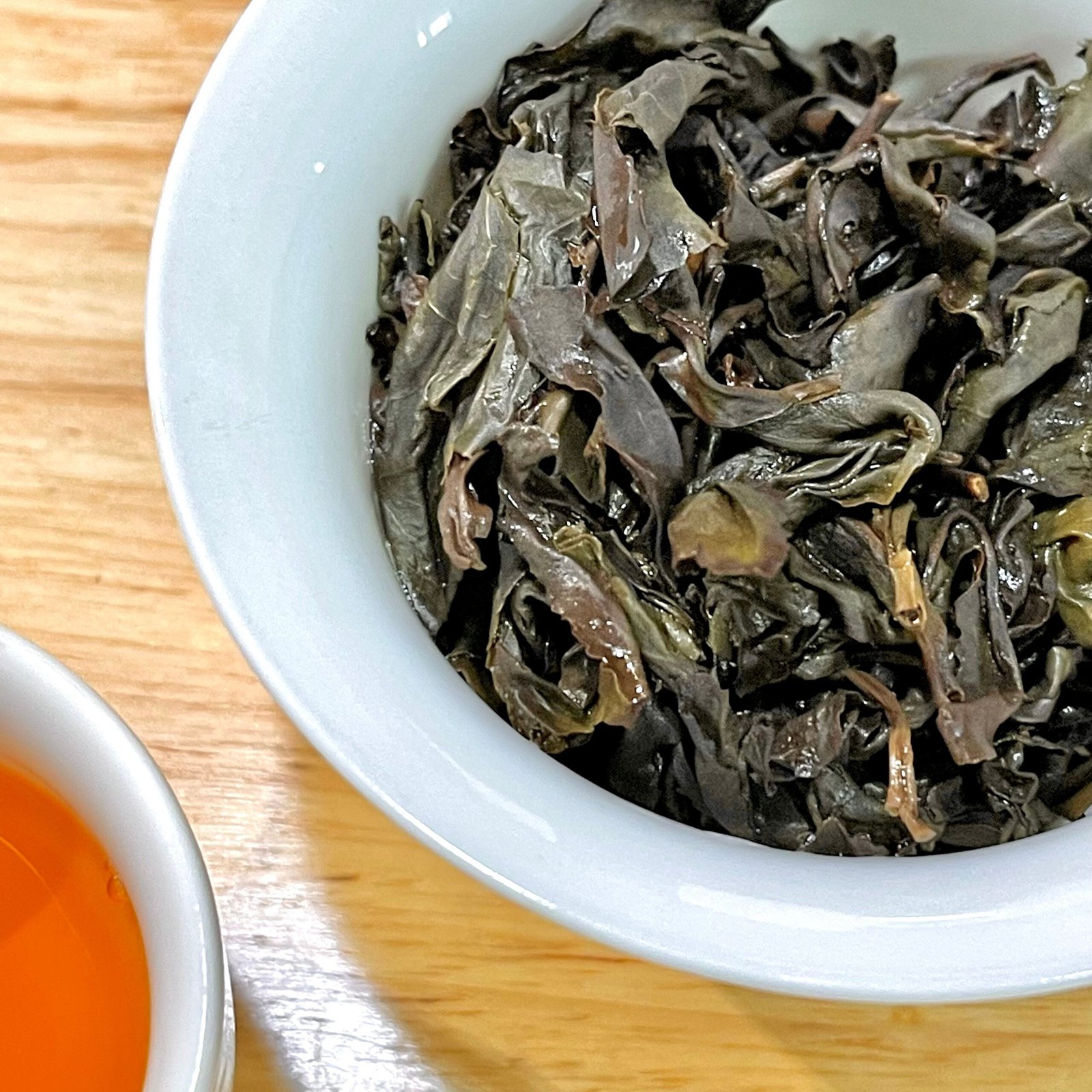
By steep 5–6, the charcoal note warms up. It’s not smoky like lapsang; more like toasted caramel. The leaves keep giving flavor through 8–10+ brews. That’s why serious gongfu drinkers keep Su Xin Lan rock tea in their daily rotation.
If you’ve only tried commercial Tieguanyin or cheap “Wuyi blends,” Su Xin Lan will feel like a different category of tea entirely.
Flavor Notes at a Glance
- Orchid and magnolia (dominant, opens by steep 3)
- Toasted caramel and charcoal (secondary, develops by steep 5)
- Mineral sweetness (long throat-coating aftertaste)
- Zero sourness or astringency when brewed at 95–100°C
Why Is High-Mountain Su Xin Lan Rock Tea More Flavorful?
Fog wraps the bushes most mornings above 1,800 ft. The slow growth packs the leaves with more sugars and aroma precursors. According to a tea cultivation altitude study indexed on NCBI, tea plants grown above 1,500 ft show measurably higher amino acid and catechin content than valley-grown plants.
That extra nutrition is what gives Su Xin Lan rock tea its thick mouthfeel. Lowland oolong tastes thin and grassy because the leaves never accumulate enough flavor precursors.
This lot was harvested from a 2,100 ft plot in the Tianxin area in April 2026. We cupped it side by side with three core-region Zhengshan yancha samples. The Su Xin Lan held its own on orchid intensity at roughly 40% of the price.
High-Altitude Terroir & 3-Stage Charcoal Craft
After picking, the leaves go through three roast stages — a process called San Dao Huo (三道火). Master roasters bake the leaves over hardwood charcoal embers for 6–10 hours per stage, with rest periods in between.
Why three stages? Single-stage roasting either burns the leaf (heavy smoke) or leaves it green (no depth). Three stages let moisture escape slowly while building layered warmth. The Wuyi tea traditional craft has been inscribed on the UNESCO Representative List of Intangible Cultural Heritage since 2022.
We tested the same cultivar from this farm with a single-stage roast. The result tasted flat — none of that caramel warmth you get from properly roasted Su Xin Lan rock tea.
Why the Roast Matters (in plain English)
Many people assume “charcoal roasted” just means smoky. Actually, the roast layer does two jobs: it locks in moisture so the leaf ages slowly, and it adds a warm caramel edge that balances the cool orchid note. Skip the roast and you lose both effects.
Is Su Xin Lan Oolong Good for Beginners?
Yes, actually. Three reasons:
- Forgiving brewing — even at 100°C and 30-second steeps, Su Xin Lan rock tea stays balanced. No bitter edge.
- Forgiving storage — heavy charcoal roasting means the leaf stays fresh for 2+ years in a sealed tin.
- Clear flavor signal — the orchid note is obvious on the first steep, so beginners know right away if the cup is working.
Compare that to a light green oolong like jade bi-luo-chun, where one extra second of steeping ruins the cup. Su Xin Lan rock tea is much more beginner-friendly for daily brewing.
How to Brew Charcoal Roasted Su Xin Lan Rock Tea
Use a small gaiwan or Yixing pot — 100–150 ml. Skip the big mugs. Gongfu extraction pulls the orchid out cleanly; Western brewing flattens it.
Step-by-Step Gongfu Method:
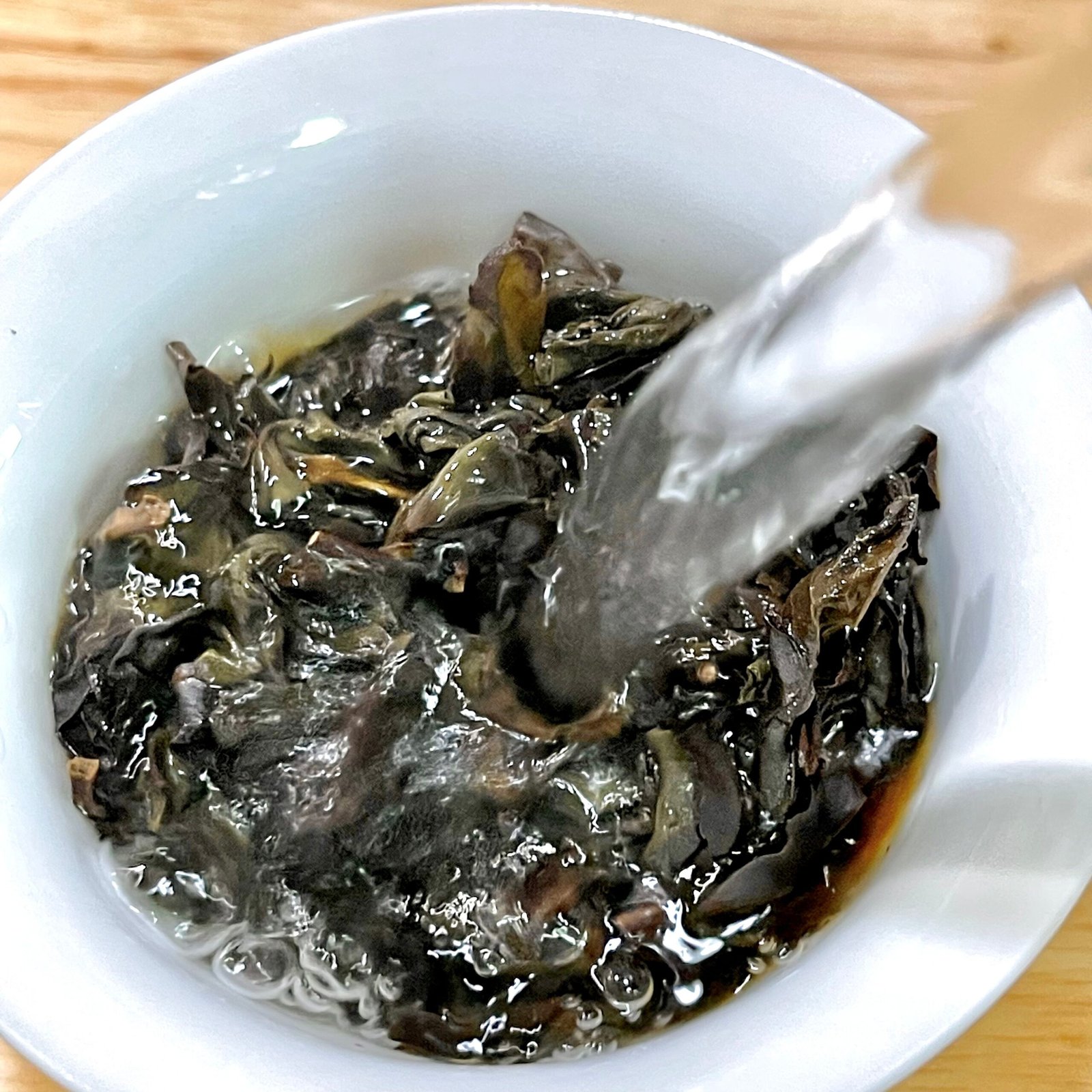
Warm up. Preheat your gaiwan and tasting cups with 212°F (100°C) boiling water. Discard the water.
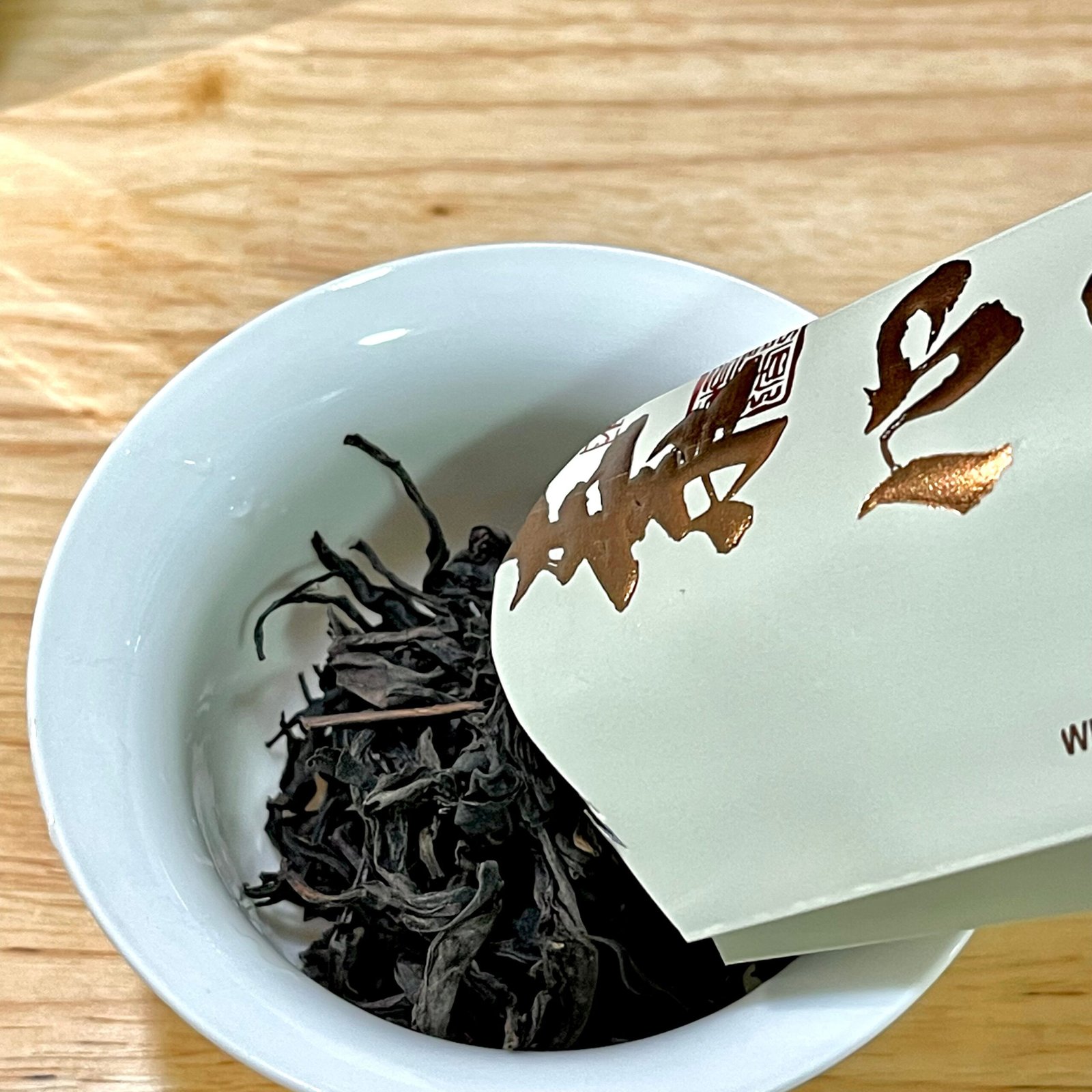
Add tea. Drop in one pre-portioned 8.3g sachet.
Rinse (Flash Rinse). Pour boiling water to the rim and decant immediately—do not steep. Discard the rinse to awaken the leaves.
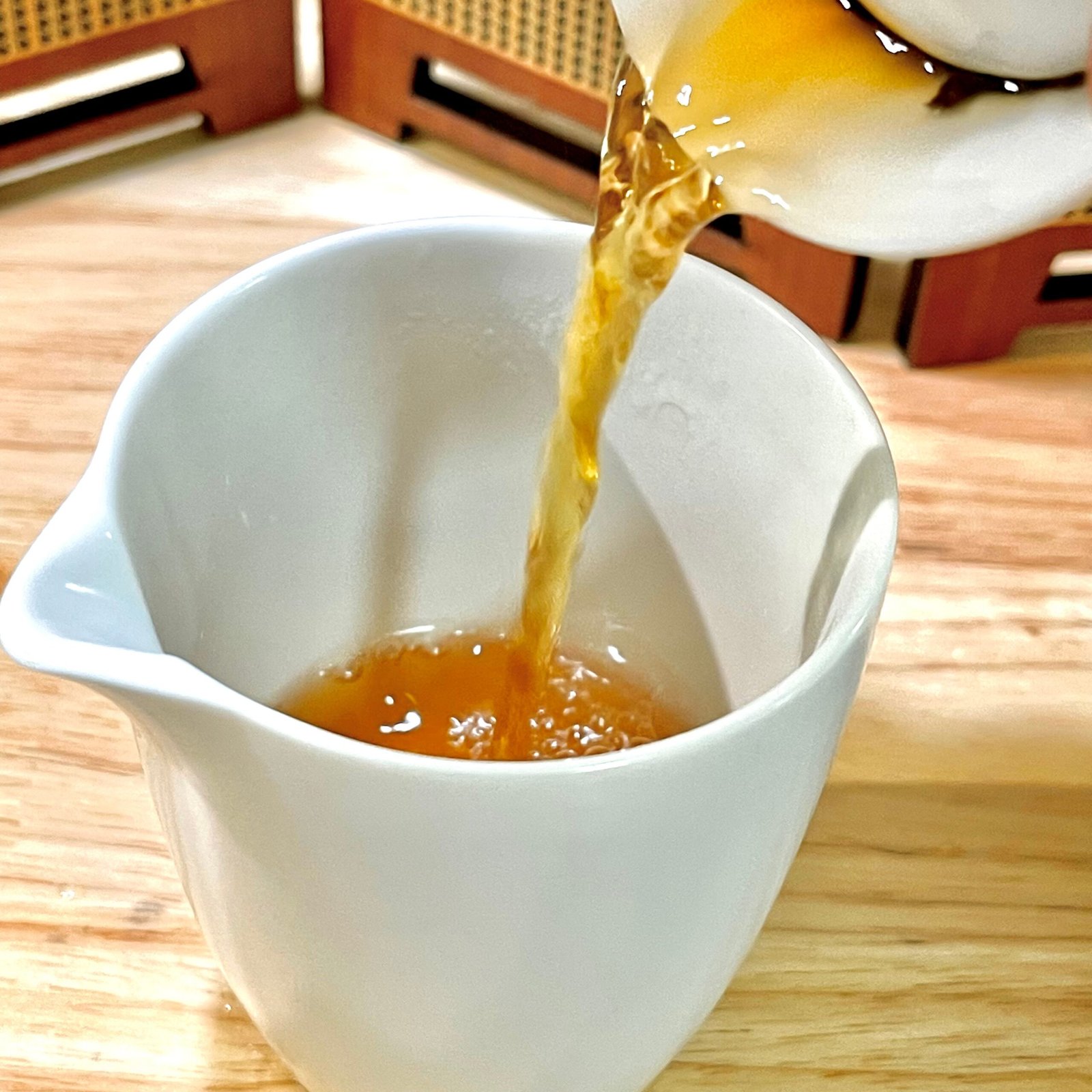
First 4 Steeps (Flash Infusions). Refill to the rim and decant immediately for steeps 1 through 4. High-grade Zhengyan leaves release rich flavor instantly without needing rest time.
Build (5th Steep Onward). Starting from the 5th steep, add 5–10 seconds to each subsequent steep to draw out the deeper mineral notes.
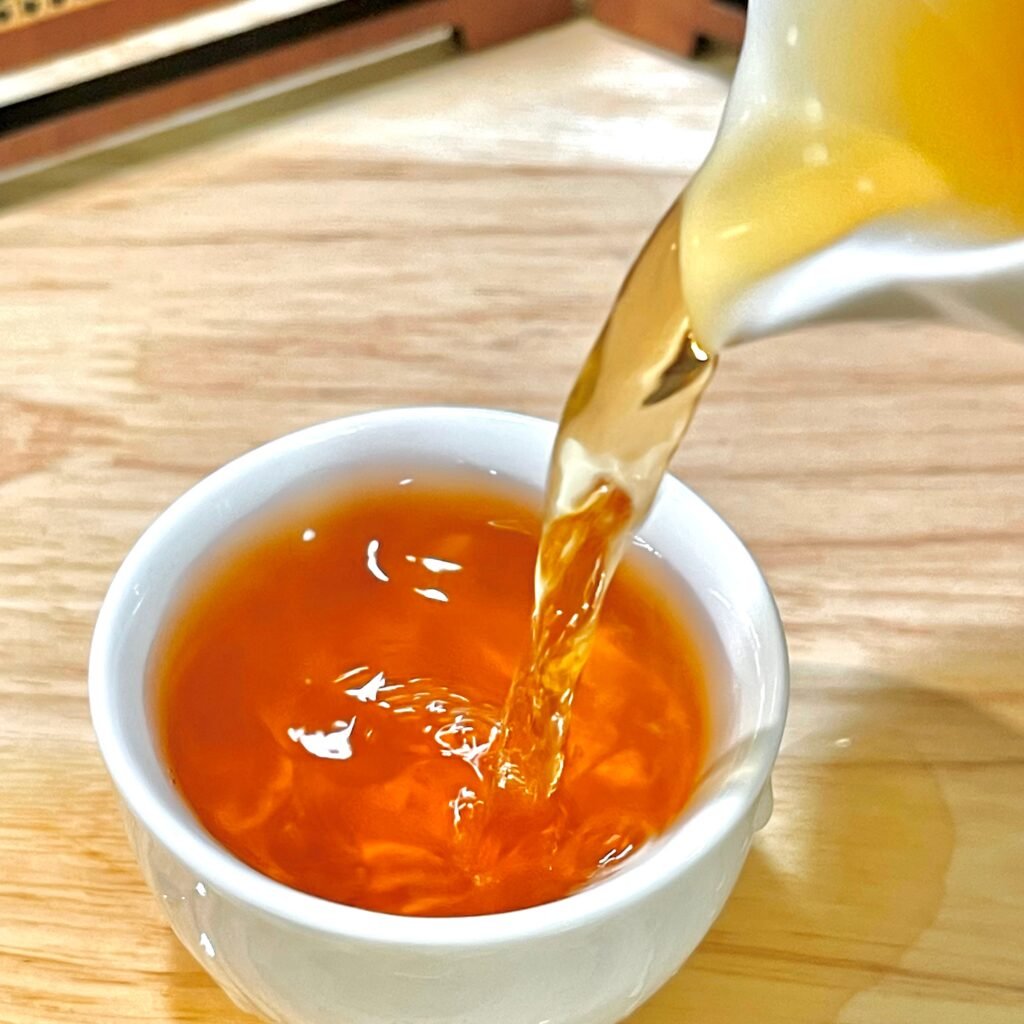
Stop. When the tea liquor turns pale golden yellow and the cinnamon aroma flattens.
Common Mistakes to Avoid
- Water under 90°C — kills the orchid note
- Steeping over 45 seconds early — pulls astringency
- Reusing old leaves past steep 12 — they turn sour
How Does Su Xin Lan Rock Tea Compare to Da Hong Pao?
Both are Wuyi yancha. Both are charcoal roasted. But the flavor profiles diverge sharply.
| Feature | Su Xin Lan Rock Tea | Da Hong Pao |
|---|---|---|
| Dominant note | Orchid, magnolia | Roasted cocoa, dark fruit |
| Sweetness | Mineral, honey-like | Caramel, brown sugar |
| Body | Medium-thick | Thick, heavy |
| Roast level | Medium | Medium-heavy |
| Best for | Daily drinking | Special occasions |
| Beginner-friendly | Yes | Moderate |
| Per-cup cost | Lower | Higher |
Su Xin Lan rock tea is the daily drinker. Da Hong Pao is the celebration tea. Many of our customers keep both — Su Xin Lan for workdays, Da Hong Pao for guests.
How Should You Store Charcoal Roasted Su Xin Lan Oolong?
Keep the tin sealed, away from sunlight and kitchen odors. Don’t refrigerate — the moisture will damage the roast layer.
The good news: heavy charcoal roasting acts as natural preservation. Properly stored, this Su Xin Lan rock tea will stay fresh for 2–3 years and continue to mature. Some customers report that 18-month-aged Su Xin Lan develops a richer, almost cocoa-like depth.
For long-term storage beyond 6 months, vacuum-seal individual portions.
Perfect For
This Su Xin Lan rock tea is ideal for:
- Daily yancha drinkers who want a clear floral profile
- Gongfu brewers looking for value over 10+ steepings
- Beginners transitioning from green to oolong tea
- Gift-giving for tea-curious friends
- Office brewing (forgiving parameters, no bitter edge)
Health Note (with source)
Su Xin Lan rock tea contains tea flavonoids — compounds studied for antioxidant properties. According to peer-reviewed tea flavonoids research on PubMed, regular consumption of oolong tea is associated with measurable antioxidant activity in plasma.
Health Disclaimer: Statements about antioxidant content and health benefits are for general information only. They are not evaluated by the FDA. This product is not intended to diagnose, treat, cure, or prevent any disease. Consult a healthcare professional before use if pregnant, nursing, or on medication.
Frequently Asked Questions
Eight quick answers to the most common buyer questions about Su Xin Lan rock tea. Skip to the ones that match your need.
How does high-altitude Su Xin Lan rock tea compare to standard lowland rock teas?
High-altitude environments subject tea plants to cooler temperatures and dense fog. This causes the leaves to grow slowly and store more flavor nutrients. The result: thicker mouthfeel, richer orchid aroma, and longer sweet aftertaste compared to lighter lowland Su Xin Lan rock tea alternatives.
Is this medium roast yancha suitable for daily drinking?
Yes. The traditional three-stage charcoal roast balances warming notes with orchid florals. Its 8–10+ infusion capacity makes Su Xin Lan rock tea an economical choice for daily gongfu sessions — roughly half the per-cup cost of premium Da Hong Pao.
How should I store this tea to maintain freshness?
Keep your Su Xin Lan rock tea in an airtight tin in a cool, dry place. The charcoal roast acts as natural preservation, so the tea stays fresh for 2–3 years when stored properly.
What does “Su Xin Lan” mean, and where is it from?
Su Xin Lan (素心兰) literally means “Pure Heart Orchid.” It was named after the wild orchid that once grew beside the original mother bushes, selected in the Tianxin rock cliff area of Wuyishan in the 1980s. The cultivar belongs to the Shi Xian (石仙) family of Wuyi rock teas, known for keeping floral character even after heavy roasting. Authentic Su Xin Lan rock tea comes only from Wuyishan, Fujian — not Yunnan, Taiwan, or Guangdong.
How much caffeine does Su Xin Lan rock tea contain?
A standard 8 oz cup brewed gongfu-style contains roughly 25–35 mg of caffeine — about half the amount in a same-size coffee. According to a caffeine content study indexed on PubMed, oolong falls between green and black tea on caffeine density. The medium roast level of Su Xin Lan rock tea keeps the lift moderate, not jittery.
Can I brew Su Xin Lan without a traditional gongfu set?
Yes. Use any small pot, French press, or even a thermos. The key variables are water temperature (95–100°C), leaf-to-water ratio (5 g per 150 ml), and steep time (start at 30 seconds, add 15 seconds per round). You’ll get 4–6 good Western-style brews instead of 8–10 gongfu infusions, but the orchid note still comes through clearly.
Is Su Xin Lan rock tea a good gift for tea beginners?
Yes, for three reasons. First, the forgiving brewing parameters mean beginners can’t easily ruin the cup. Second, the orchid note is immediately recognizable, so first-time drinkers know what they’re tasting. Third, a 50 g tin fits standard shipping boxes and lasts 3–4 weeks of daily brewing. We include a one-page printed brewing guide with every gift order.
How can I tell if my Su Xin Lan rock tea has gone bad?
Three warning signs:
- Smell — dry leaves smell flat, musty, or like old paper instead of orchid and caramel
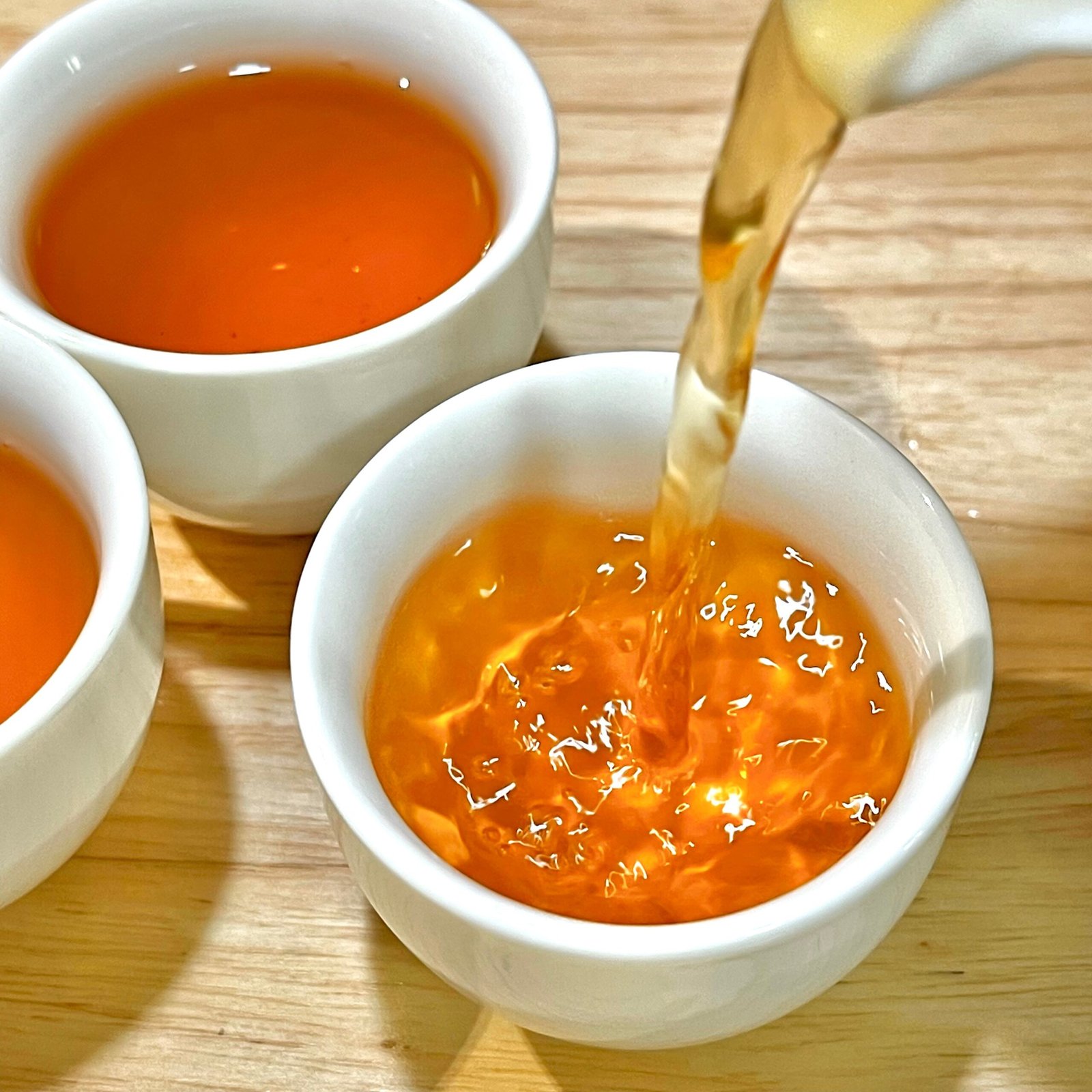
- Look — brewed liquor looks cloudy instead of clear amber
- Taste — flavor drops off after steep 3 instead of steep 8
Properly stored Su Xin Lan rock tea won’t spoil for 2–3 years. But if the tin sits open next to spices or in direct sunlight, the leaf can go off within a month.
A Final Note
Whether you’re a seasoned tea drinker or just starting out, every order includes a free bonus: a sample of our everyday Wuyi Tea, alongside an extra variety sample to explore.
Pure, clean, and delicious, this is our go-to for daily sipping. But why include it?
For Experienced Tea Lovers: You might quickly realize that what other vendors market as “premium” is simply our everyday baseline. We cut the markup—never the quality.
For Beginners: It gives you a reliable reference point. Tasting it side-by-side with your main order lets you instantly recognize authentic Wuyi Rock Tea notes, so you’ll never overpay again.
If you’d like to try other authentic styles, explore our Wuyi Rock Tea Collection.
Additional information
| size | 4 Packs (1.17 oz), 6 Packs (1.76 oz), 18 Packs (5.27 oz), 30 Packs (8.78 oz), 60 Packs (17.57 oz) |
|---|
Related products
-

Jin Mu Dan | Best Premium 2025 Floral Oolong Tea
Price range: $9.90 through $46.90Select options This product has multiple variants. The options may be chosen on the product page -
High Mountain Green Tea | 2026 Shouning Spring Chestnut Aroma Extraordinary Green Tea
Price range: $19.90 through $93.90Select options This product has multiple variants. The options may be chosen on the product page -
Jin Mu Dan | 2026 Rare High Mountain Loose Leaf Honey Lychee Black Tea
Price range: $19.90 through $93.90Select options This product has multiple variants. The options may be chosen on the product page -
White Peony | Exquisite Spring 2026 Bai Mu Dan Premium White Tea – Pure High-Mountain Harvest
Price range: $11.90 through $111.90Select options This product has multiple variants. The options may be chosen on the product page
Reviews
There are no reviews yet.