
How to Brew White Peony Tea: 4 Simple Methods
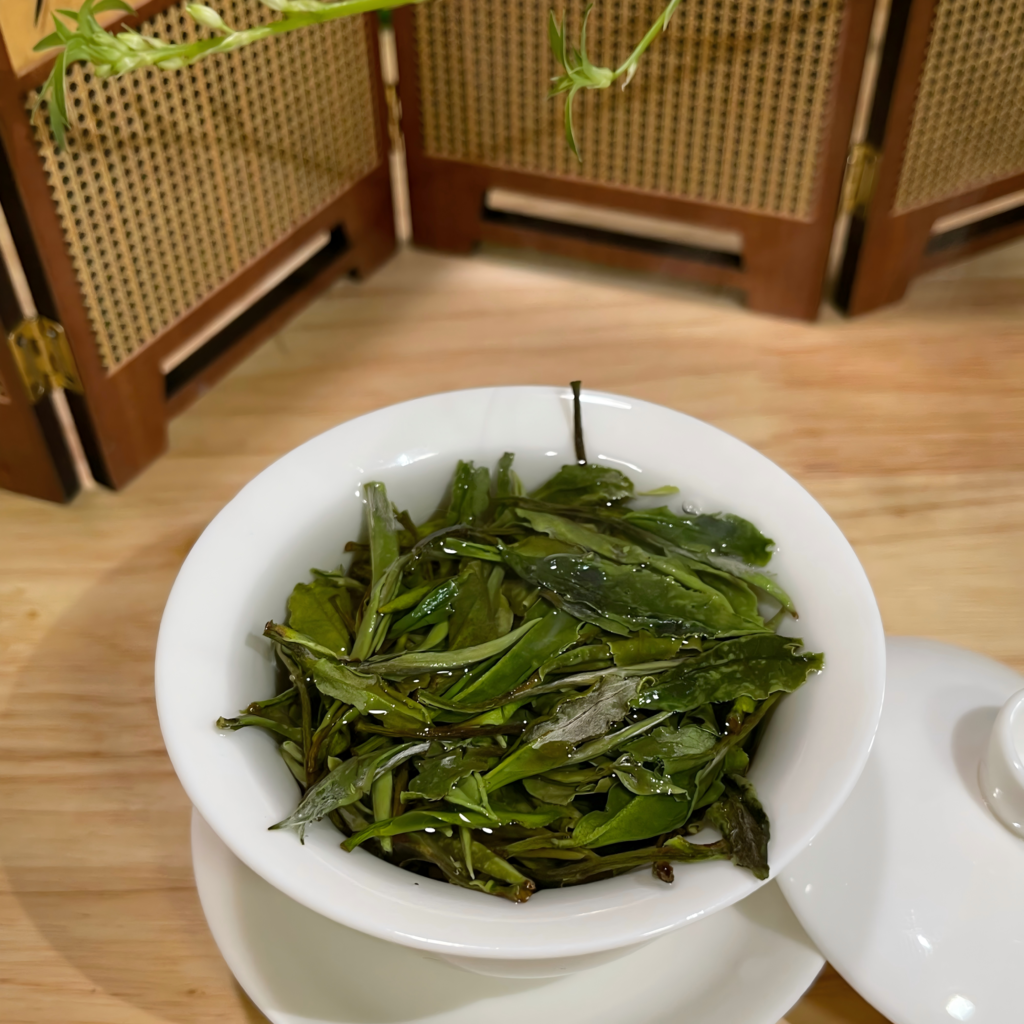
I wrote the first draft of this guide on a rainy Saturday. I had been drinking cheap green tea all week and wanted something softer. A friend handed me a small tin of White Peony — Bai Mu Dan in Chinese — and said: “Try this. Just don’t mess it up.”
Here’s the thing: White Peony is the easiest good tea to mess up badly, and the hardest to mess up at all. The leaves are forgiving. The flavor is gentle. You don’t need a $200 kettle. You don’t need a ceremony.
You need hot water, a cup, and about three minutes.
A quick note on who wrote this: This guide comes from Minteashop, a tea company based in Shouning, Fujian — a high-altitude region in southeastern China with over a thousand years of tea-growing history. Every method below was tested with teas from our own white tea collection. If you want to follow along at home, browse our Bai Mu Dan and White Peony selection to pick up some leaves.
In this guide, I’ll show you four brewing methods I’ve tested at home, plus the facts you need on caffeine, aging, and storage — all cross-checked against published standards and peer-reviewed sources.
What Is White Peony Tea?
White Peony is a Chinese white tea. It sits between Silver Needle (which uses only buds) and Shou Mei (which uses larger, more mature leaves). The leaves are picked as one bud plus one or two leaves, then dried. There’s no rolling. No pan-firing.
The processing is closer to drying herbs than to making green tea. That’s why it tastes soft, sweet, and a little grassy — no bitterness, almost no astringency.
If you’ve only had green or black tea, White Peony will surprise you. The flavor is quieter, but it lasts longer across multiple steeps. I usually get 6–8 good cups from one gongfu session.
Quick specs:
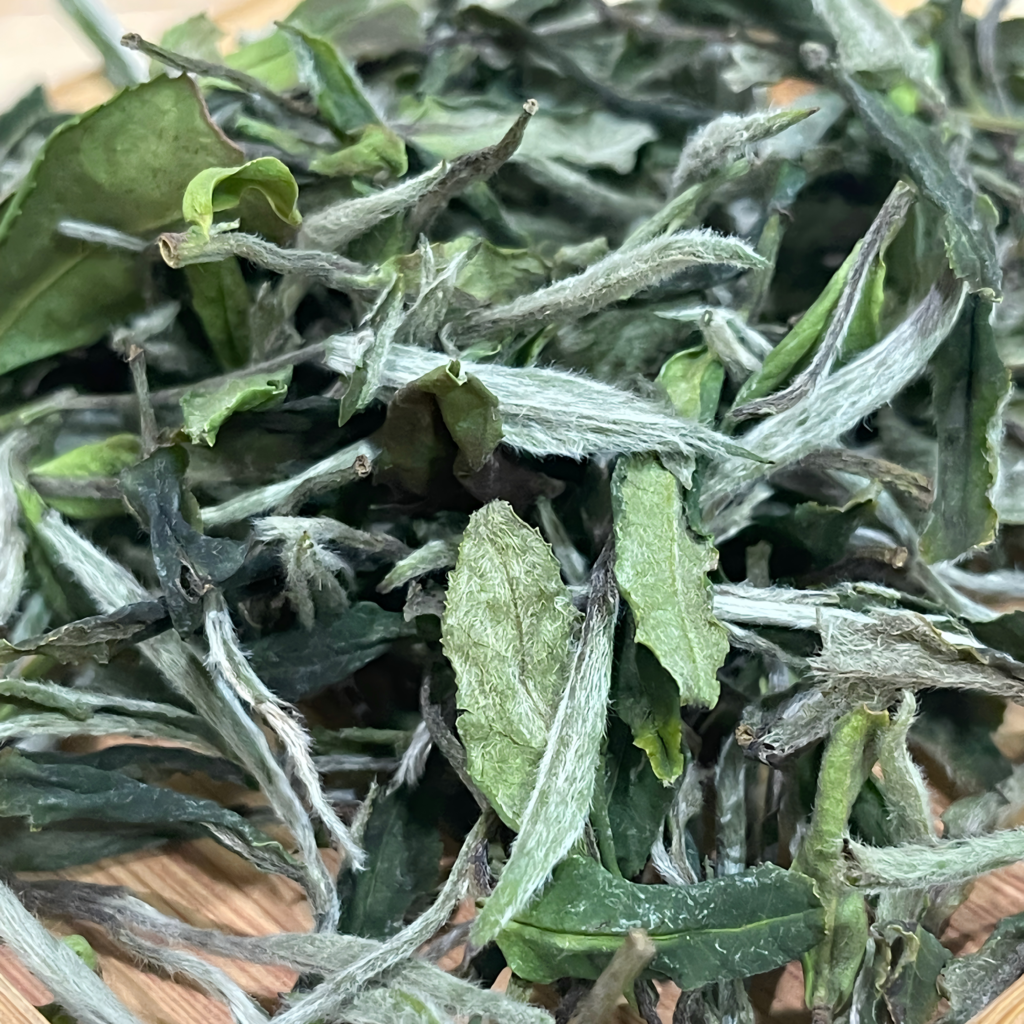
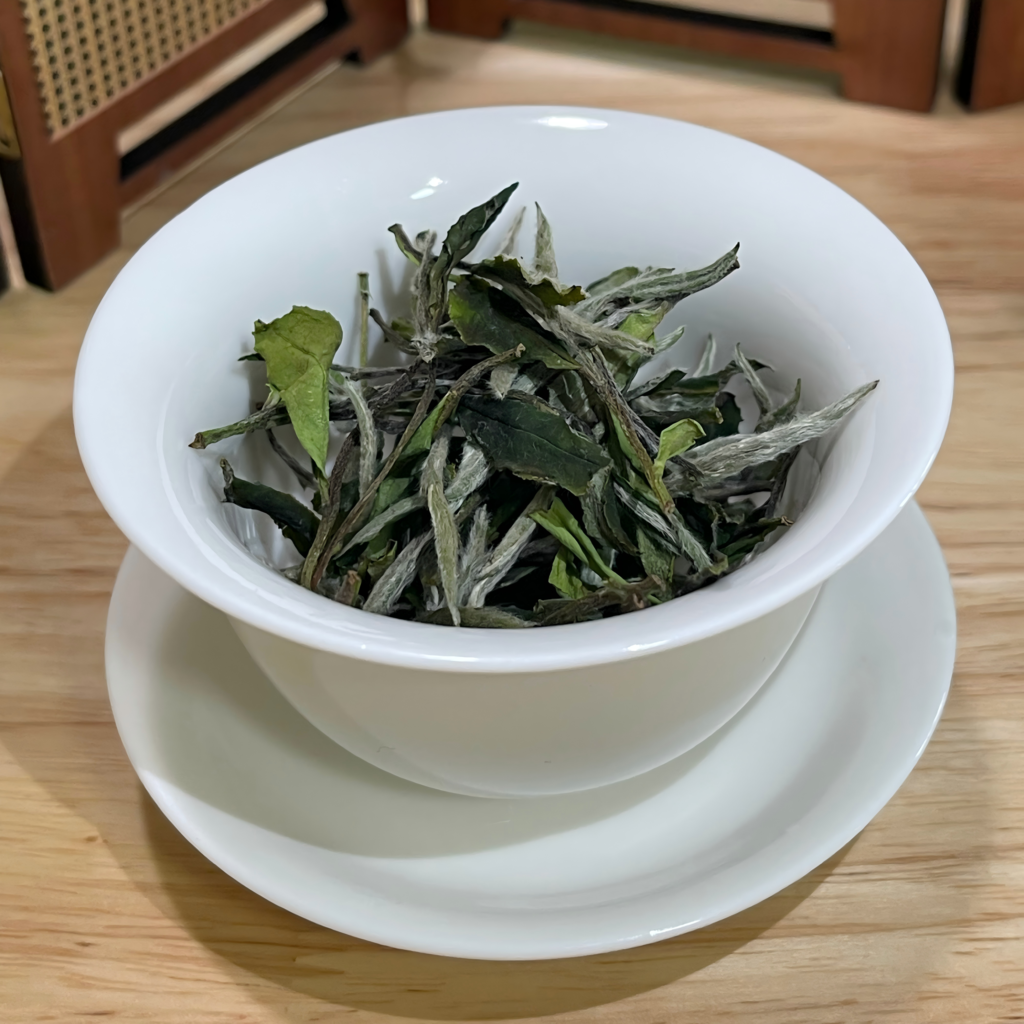
- Form: one bud + one or two leaves, covered in silvery down
- Color of liquor: pale apricot yellow
- Aroma: hay, dried apricot, light floral
- Caffeine: about 15–30 mg per 8 oz cup — see the caffeine section below
- Origin: Fujian Province, China. Our White Peony comes from Shouning, a high-mountain county in Fujian where tea has been grown for over a thousand years. The cooler mountain air and slower leaf growth produce a cleaner, sweeter cup than you’d get from lowland tea.
If you’re new to white tea overall, our white tea guide for beginners covers the broader picture. And if you want to see how White Peony fits among the four main white tea types, this comparison is a good next read.
How Is White Peony Tea Made?
White tea follows the simplest processing path of all six major Chinese tea categories. Two steps define it:
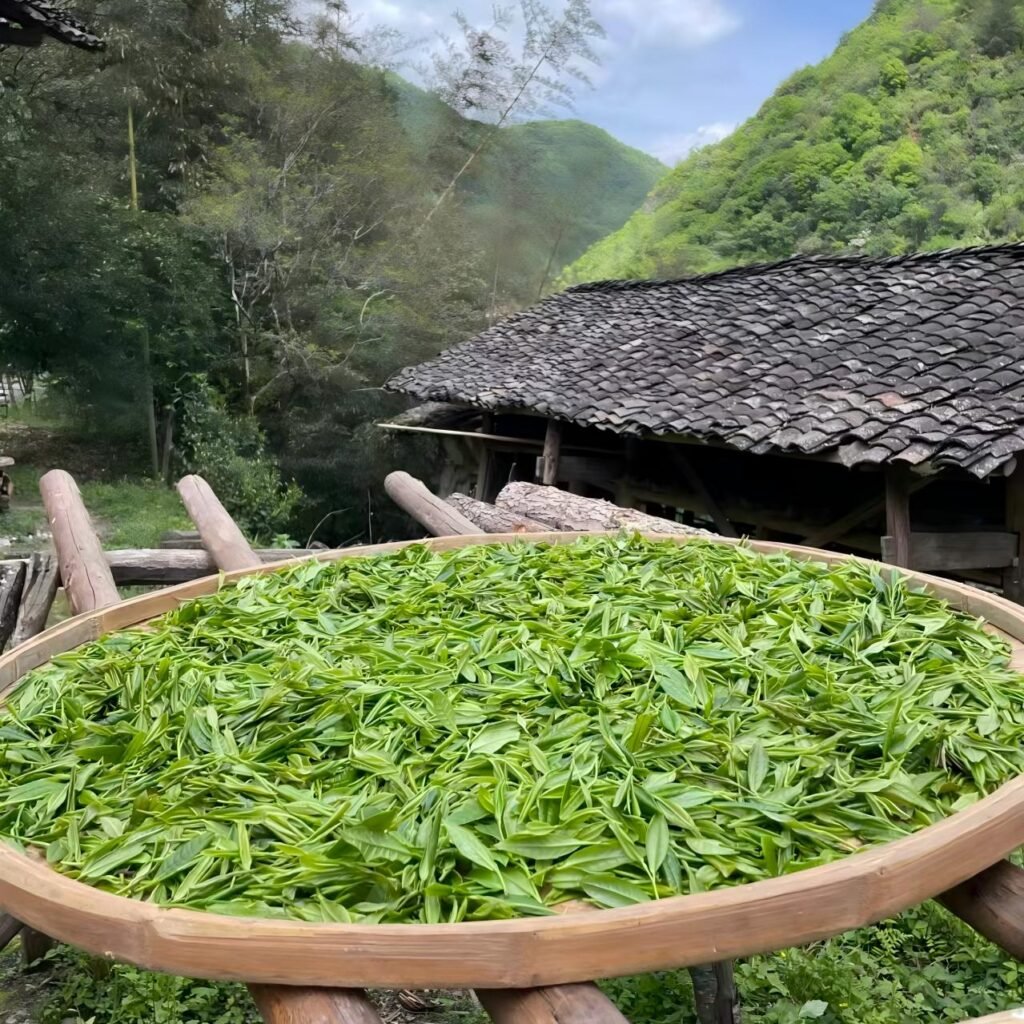
1. Withering. Freshly picked leaves are spread out and left to dry slowly — typically 48 to 72 hours. During this time, the leaves lose moisture, soften, and undergo a mild enzymatic change that builds the tea’s signature flavor.
2. Low-temperature drying. Once withered, the leaves are dried at a low heat to lock in flavor and bring moisture down to a stable level.
That’s it. No rolling, which would crush the leaf and break the silvery down. No pan-firing (kill-green), which would shift the flavor toward green tea. The goal is to keep the leaf as close to its natural state as possible — bud intact, down preserved, oxidation minimal.
This is also why White Peony is sometimes called the most “natural” of Chinese teas. The craft is in not doing too much.
In Shouning specifically, much of the withering is still done the old way — leaves spread on bamboo racks or in sun-drenched indoor rooms, where the mountain air does its slow work. The altitude and temperature swings between day and night give the tea a particular brightness that you don’t get from lowland processing.
The main national standard for white tea in China is GB/T 22291-2017, which defines product grades and quality requirements.
How to Brew White Peony Tea in a Glass Cup?
This is my favorite method when I’m at my desk. It takes about 90 seconds.
You’ll need:
- 5 g of White Peony leaves
- 200 ml glass cup
- 85–90 °C (185–194 °F) water
Steps:
- Put the leaves in the glass.
- Add just enough 85–90 °C water to cover them. Wait 5 seconds. Pour it out. (This is the “rinse” — it washes off dust and helps the leaves open.)
- Refill the cup to about 70 % full with 85–90 °C water.
- Wait 60 seconds. Drink.
The first thing you’ll notice is the down swirling in the water. It looks like tiny silver threads. That’s normal — it’s the hair on the buds, and it’s a sign of good quality.
Why 85–90 °C, not boiling? Industry guides for Fuding-style white tea typically recommend 85–90 °C for new Bai Mu Dan. Boiling water can scorch the buds and bring out bitterness you don’t want.
Flavor: light, sweet, slightly floral. Best for a quick afternoon break.
Try it with: our White Peony 2026 — fresh, floral, and very forgiving in a glass. It’s also one of our most popular new harvests this year.
Note on temperature ranges. The exact temperature isn’t a fixed rule. Tea industry sources commonly cite 85–90 °C for new white peony and 90–95 °C for older or thicker-leaf white teas like Shou Mei. Adjust to your taste.
How to Brew White Peony Tea in a Gaiwan?
A gaiwan is a small lidded Chinese brewing cup — bowl with a lid. Use this method when you want to taste the tea more carefully, or when friends are over.
You’ll need:
- 5 g of White Peony leaves
- 100 ml gaiwan
- 85–90 °C water
Steps:
- Add the leaves to the gaiwan.
- Rinse once with 85–90 °C water. Pour off after 5 seconds.
- Refill with 85–90 °C water. Close the lid. Steep for 30 seconds.
- Pour out through the lid (it acts as a strainer).
- Add 10–15 seconds for each new steep. You’ll get 6–8 good cups.
The flavor changes as you go:
| Steep | Flavor |
|---|---|
| 1 | Clean, hay-like |
| 2 | Floral, lighter |
| 3–4 | Honey and stone fruit |
| 5+ | Mellow, woody |
Don’t rush. The later steeps are usually the best.
Try it with: our Bai Mu Dan Dragon Pearl 2019 — the leaves are hand-rolled into small pearls that unfurl slowly during steeping. It’s one of the most fun ways to do gongfu-style brewing, because you can watch the pearls open.
How to Brew White Peony Tea in a Teapot?
This is for when you want a bigger, fuller cup. The best teapot depends on what kind of tea you’re brewing.
You’ll need:
- 5–7 g of White Peony leaves
- 100–150 ml teapot
- Water temperature depends on the pot (see below)
Steps:
- Put the leaves in the pot.
- Rinse once with hot water. Discard.
- Add water at the right temperature (see below). Close the lid.
- Steep 30–45 seconds. Pour.
Porcelain or glass teapot: use 85–90 °C water. These materials don’t absorb aromas, so they let the tea’s natural floral notes come through cleanly. This is the best choice for new White Peony.
Yixing clay teapot: use 90–95 °C water. The clay’s microporous structure holds heat well, but it also absorbs and re-releases aroma compounds over time. That makes it great for thick, heavy teas (pu’er, roasted oolong, aged white tea) but less ideal for new White Peony, where you want the delicate floral scent preserved.
For new white peony, I’d reach for a porcelain gaiwan first. For aged white tea or Shou Mei, the Yixing becomes a real asset.
Try it with: our Shou Mei 2019 — the larger, more mature leaves give a thicker, sweeter brew that holds up well in clay or porcelain. Or try our Shou Mei White Tea Cake 2020 for an even fuller body.
Flavor: thicker, sweeter, more body. Less delicate than the glass method.
Large Pot Brew: All-Day Tea
This is what I do on weekends when I’m working from home. I fill a 1-liter pot in the morning and drink from it until dinner.
You’ll need:
- 10–15 g of White Peony leaves
- 1 L teapot or thermos
- 85–90 °C water
Steps:
- Put the leaves in the pot.
- Pour 85–90 °C water over them.
- Wait 2 minutes. Pour a cup.
- Refill with hot water whenever the pot gets low.
Don’t strain the leaves out. Just leave them in. The flavor will keep developing all day.
Try it with: our Shou Mei 2025 — affordable, easy to brew, and forgiving enough to drink all day without going bitter. For a richer base, the Shou Mei White Tea Cake 2020 is also a great pick.
How Much Caffeine Is in White Peony Tea?
This is one of the most common questions, and the honest answer has some nuance.
Per 8 oz cup (about 240 ml), brewed white tea typically contains around 28 mg of caffeine, according to data aggregated from the USDA FoodData Central. Common ranges are 15–30 mg per cup.
How does that compare to other teas?
| Tea type | Typical caffeine per 8 oz cup |
|---|---|
| White tea | 15–30 mg |
| Green tea | 20–45 mg |
| Black tea | 40–70 mg |
White tea often has the lowest typical caffeine among true teas, but the range overlaps with green tea. A strong-brewed white tea can easily have more caffeine than a weak-brewed green tea.
What about cold brew?
Cold brew extracts caffeine more slowly than hot brew. Over the same steeping time, hot water usually releases more caffeine. So a typical cold-brewed cup will have less caffeine than a typical hot-brewed cup — but only if you don’t steep the cold brew for many hours, in which case the totals can converge.
Daily safety guidelines. The European Food Safety Authority’s 2015 Scientific Opinion on Caffeine sets the following safety reference levels:
- Healthy non-pregnant adults: up to 400 mg per day
- Pregnant or breastfeeding women: up to 200 mg per day
- Children and adolescents: up to 3 mg per kg of body weight per day
These are upper safety references, not recommended intake targets. For most adults, drinking 2–4 cups of white tea a day stays well within safe limits.
If you’re over 65. UCLA Health notes that caffeine sensitivity often grows with age, because caffeine metabolism slows down. Many older adults find they’re more comfortable with lower amounts — there’s no single official limit, but Mayo Clinic and UCLA suggest watching how your body responds, especially if you have sleep, heart rhythm, or reflux issues.
For a broader look at what white tea can (and can’t) do for your health, see our white tea health benefits guide. For reference data, see the USDA FoodData Central database and the EFSA 2015 Scientific Opinion on Caffeine.
Is Aged White Peony Better Than Fresh White Peony?
Short answer: it depends on what you like.
Fresh White Peony (under 1 year old) tastes bright, floral, and a little grassy. It feels lively.
Aged White Peony (commonly 3+ years, by industry tradition) tastes deeper and mellower, with notes of dried fruit, honey, and sometimes wood or medicine. Some people love it. Some people find it flat.
I prefer fresh for everyday drinking. I keep aged White Peony for slow winter evenings.
Note: “3 years” as a threshold for “aged” white tea is an industry and folk tradition — it’s not a definition in the Chinese national standard GB/T 22291-2017. Whether aged tea actually tastes better depends heavily on storage conditions and personal preference.
Proper storage matters more than age. If the leaves got damp or sat in sunlight, even 5-year-old tea will taste bad. Keep sealed, away from light, in a cool dry place.
If you want to dig deeper into how aging actually changes white tea, our Shou Mei aging guide walks through the chemistry in plain language.
Try aged tea with: our 2014 Shou Mei Dragon Pearl — over 10 years of careful storage in Fujian’s climate. It shows what time and proper conditions can do: deep honey notes, dried fruit, very low astringency.
How to Store White Peony Tea?
Storage is where most people wreck their white tea. The good news: it’s simple if you follow the basics.
The consensus from industry guides and a 2025 study on Zhenghe white tea:
- Temperature: around 25 °C, stable — avoid big swings
- Humidity: 40–50 % relative humidity is a safe range
- Light: keep away from direct sunlight
- Odors: store away from kitchens, spices, perfume
- Separation: keep different teas (and different vintages) apart
The 2025 study specifically found that for Bai Mu Dan (White Peony), the optimal storage conditions were 25 °C with 40 % relative humidity. For Shou Mei, slightly higher humidity (60 % RH) worked better.
Keep the original sealed bag or tin. If you buy in bulk, transfer to a clean, opaque, airtight container. A simple ceramic jar works fine for most people.
For more on aging white tea, see our Shou Mei stem and aging guide and the White2Tea storage guide.
White Peony FAQ
What’s the best water for White Peony tea?
u003cemu003eFiltered water. Hard water or chlorinated tap water will flatten the flavor. No need for fancy mineral water — just use the same water you drink.u003c/emu003e
Can I cold-brew White Peony tea?
u003cemu003eYes. Use about 8 g of leaves per liter of cold water. Refrigerate for 6–8 hours. Strain and drink. The result is sweet, smooth, and lower in caffeine than a typical hot brew — though not caffeine-free.u003c/emu003e
How long does White Peony tea last?
u003cemu003eStored properly (sealed, dark, 25 °C, 40–50 % RH), White Peony keeps well for at least 2 years. Some collectors age it much longer, but flavor changes over time — that’s a feature, not a guarantee of quality.u003cbru003eu003c/emu003eu003cbru003eu003cemu003eFor a deeper look at long-term aging, see our u003ca href=u0022https://minteashop.com/shoumei-white-tea-aging-guide/u0022 target=u0022_blanku0022 rel=u0022noreferrer noopeneru0022u003eShou Mei aging guideu003c/au003e.u003c/emu003e
Why does my White Peony taste bitter?
u003cemu003eThree common reasons: (1) water too hot, (2) leaves steeped too long, (3) low-quality tea. Try dropping to 80–85 °C and shortening the steep to 30 seconds.u003c/emu003e
Is White Peony the same as white tea?
u003cemu003eWhite Peony is one type of white tea. Other white teas include Silver Needle (buds only) and Shou Mei (larger leaves). White Peony sits in the middle — more flavorful than Silver Needle, more delicate than Shou Mei.u003c/emu003e
If you’re still building your mental map of white teas, our white tea guide for beginners and our guide to the four types of white tea are good starting points.
For a focused read on White Peony itself (different from this brewing guide), see our White Peony tea guide.
A Note Before You Brew
I’ve been drinking tea for 12 years. White Peony is the one I come back to most. Not because it’s the best tea in the world. Because it’s the one I forget to mess up.
Brew it too strong? Still fine. Brew it too weak? Still fine. Forget it for 10 minutes? Still drinkable.
Most good tea punishes you for small mistakes. White Peony doesn’t.
If you only buy one tea this month, make it this one.
Try These Teas at Home
All four brewing methods in this guide were tested with teas from our white tea collection. Here are the picks mentioned above:
| Tea | Best for | Link |
|---|---|---|
| White Peony 2026 | Glass cup, fresh daily drinking | View |
| Bai Mu Dan Dragon Pearl 2019 | Gaiwan / gongfu | View |
| Bai Mu Dan Tea Cake 2024 | Gaiwan or pot, medium body | View |
| White Peony Cake 2023 | Aged-style sweetness, pot brewing | View |
| Shou Mei 2019 | Teapot, fuller body | View |
| Shou Mei White Tea Cake 2020 | Large pot or teapot | View |
| Shou Mei 2025 | Everyday drinking | View |
| 2014 Shou Mei Dragon Pearl | Aged white tea, slow winter evenings | View |
| Bai Hao Yin Zhen 2026 | Higher-end Silver Needle | View |
| Dragon Pearl Jasmine Tea 2026 | Jasmine-scented white tea, occasional brewing | View |
👉 Browse the full white tea collection →
About Minteashop
Minteashop is a small tea company based in Shouning, Fujian — a high-altitude county in southeastern China with over a thousand years of tea-growing history. We source and pack our own leaves from local farmers and ship worldwide.
A few practical notes for international customers:
- Shipping: Express options (DHL, FEDEX, Europe dedicated line) take 7–15 business days. Standard options (EMS, Cainiao, China Post) take 9–25 business days. Weather or customs delays can add time.
- Payment: PayPal, Visa, Mastercard, JCB, bank transfer, or Western Union.
- Order processing: 1–2 business days before shipping.
- Returns: 7-day return window on unopened products if there’s a defect or shipping error on our side.
- Support: We answer email 7 days a week.
First published: May 15, 2026 Last updated: May 15, 2026 Author: The Minteashop team · Reviewed by: [Reviewer Name, RD] Reading time: ~9 minutes
⚖️ Health & Affiliate Disclaimer
This article is for informational purposes only and is not medical advice. Tea contains caffeine. If you’re pregnant, nursing, on medication, or have a medical condition, talk to your doctor before changing how much tea you drink. Some links in this article are affiliate links. We only recommend products we actually use and have tested.

2 Comments