
Black Tea 2026: A Beginner’s Guide to a Gentler Daily Brew
Picture this: it’s 3 p.m., your eyes are glazing over a spreadsheet, and the coffee you had at 9 a.m. has already started arguing with your stomach. A properly brewed cup of loose-leaf black tea contains roughly half the caffeine of a drip coffee, and is noticeably smoother on the palate. That’s the quiet case for keeping a tin in the cupboard.
This guide covers what black tea actually is, the five varieties worth ordering first, what current science says about benefits (with the limits named up front), and how to brew and store it without second-guessing yourself.
I. What Exactly Is Black Tea?
Fully oxidized tea from Camellia sinensis — marketed abroad as “black tea” but called 红茶 (“red tea”) in Chinese for the bright reddish liquor in the cup — is the world’s most-produced tea category. According to the International Tea Committee (ITC) in its 2023 Global Tea Report, black teas represent about 55% of world tea production, with green teas at roughly 32% and other teas at about 13%. [Source: International Tea Committee, 2023 Global Tea Report] FAO data for 2022 imply a similar share: 3.58 million tonnes of black tea out of 6.7 million tonnes total (≈53.4%). [Source: FAO Intergovernmental Group on Tea, 2024 outlook]
The English name refers to the dark, lustrous look of the dried leaf, not the cup in your hand. The Chinese name refers to the cup itself. Two languages, two visual cues, one drink.
Why oxidation matters. The orthodox black tea manufacturing process is consistently described in FAO and Tea Research Institute materials as four core steps: [Source: 2023 review in Foods (PMC)]
- Withering — moisture reduction and biochemical preconditioning.
- Rolling / maceration — cell disruption to release enzymes and polyphenols.
- Fermentation (oxidation) — enzymatic oxidation of catechins.
- Drying (firing) — heat inactivation of enzymes and final moisture reduction.
During step 3, the leaf’s own enzymes convert astringent catechins into two signature pigment classes:
- Theaflavins (TFs) — oxidized polyphenolic dimers built on a characteristic benzotropolone skeleton. They give black tea its bright golden-orange hue and brisk, sharp astringency.
- Thearubigins (TRs) — a heterogeneous mixture of higher-molecular-weight polymeric phenolics. They give the deep red-brown body color, thickness, and malty roundness of the cup. [Source: KCI review on tea polyphenols]
The industry term “fermentation” is shorthand: tea oxidation is enzymatic, not microbial — closer to how a cut apple browns than how wine ferments.
Because most catechins are converted during oxidation, the finished cup is smoother and lower in bitterness than green or white tea — which is why it’s widely tolerated by people with sensitive stomachs.
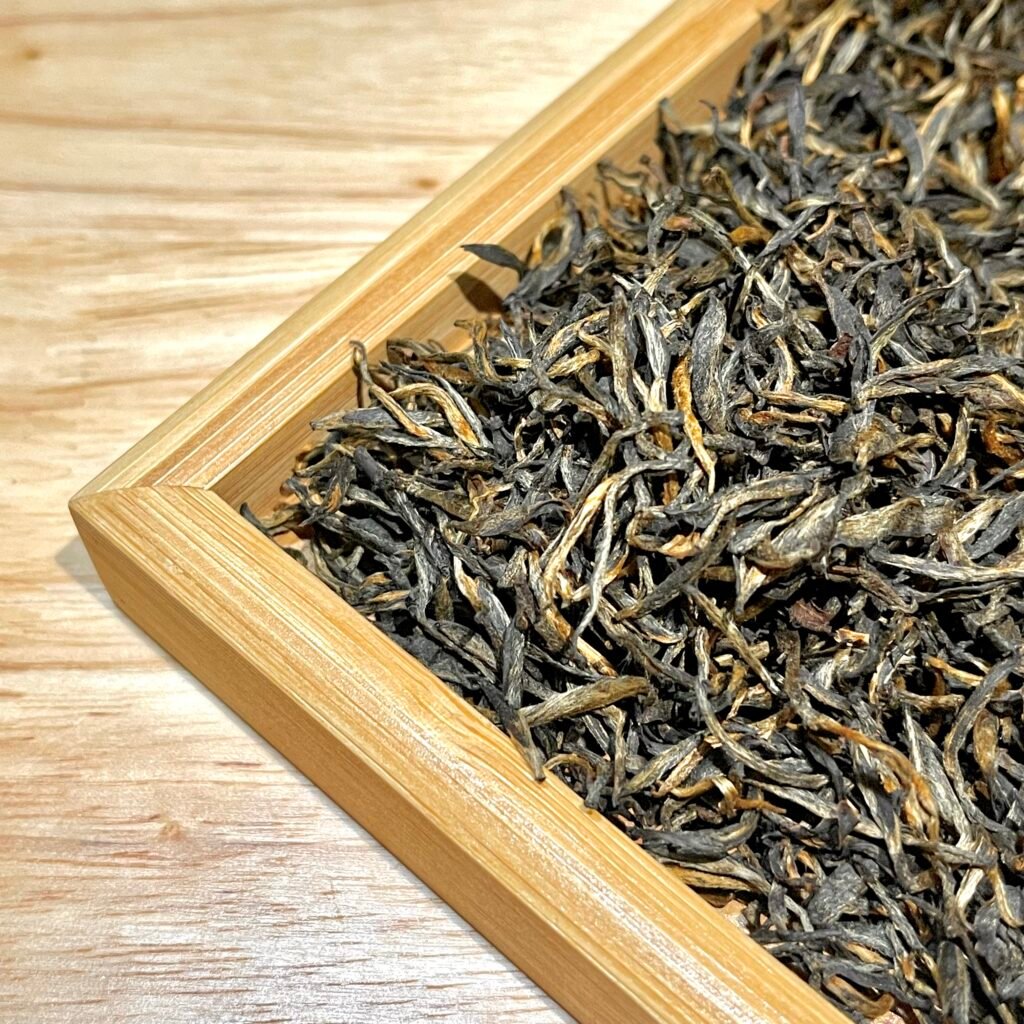
II. What Are the 5 Best Black Teas for Beginners?
These five are the safest entry points — they are widely available, forgiving to brew, and each shows off a distinct flavor archetype of fully oxidized tea.
| # | Tea | Region | Flavor Profile | Try It If You Like… |
|---|---|---|---|---|
| 1 | Keemun (祁门红茶) | Qimen, Anhui | Cocoa, honeyed, faint orchid; smooth, mellow body | A clean, fragrant morning cup |
| 2 | Dian Hong (滇红) | Fengqing, Yunnan | Malty, biscuit-like, golden tips; full-bodied | A weighty afternoon brew, with or without milk |
| 3 | Lapsang Souchong (正山小种) | Wuyi Mountains, Fujian | Pine-smoke, dried longan; underlying malty base | Lapsang lovers; pairs with chocolate |
| 4 | Jin Jun Mei (金骏眉) | Wuyi Mountains, Fujian | Sweet honey, light stone fruit, no smoke; delicate | A guest-impressing all-bud tea |
| 5 | Assam CTC | Brahmaputra Valley, India | Robust, brisk, malt-pungent; classic breakfast character | A chai base; the British breakfast mug |
A note on Fujian origin — and why it matters. The Wuyi Mountains in northern Fujian produce both Lapsang Souchong and Jin Jun Mei — the same high-mountain terroir that also gives the world Da Hong Pao oolong. Within Fujian, Shouning (寿宁) is a thousand-year tea hometown whose high-altitude gardens (typically 600–1,000 m) produce leaves prized for clarity, mineral depth, and the ability to sustain 8–10+ infusions without bitterness — a quality driven by slower leaf maturation in cool mountain air. Curious how oolong and black tea diverge in processing? See our broader Black Tea 2026 Guide: Types, Benefits & Brewing →.
💡 From our cellar: If you’d like to start with a high-mountain Fujian black tea, our Jin Jun Mei 2026 Spring harvest comes from a single-bud pluck and shows the classic honey-sweetness that makes this style famous.
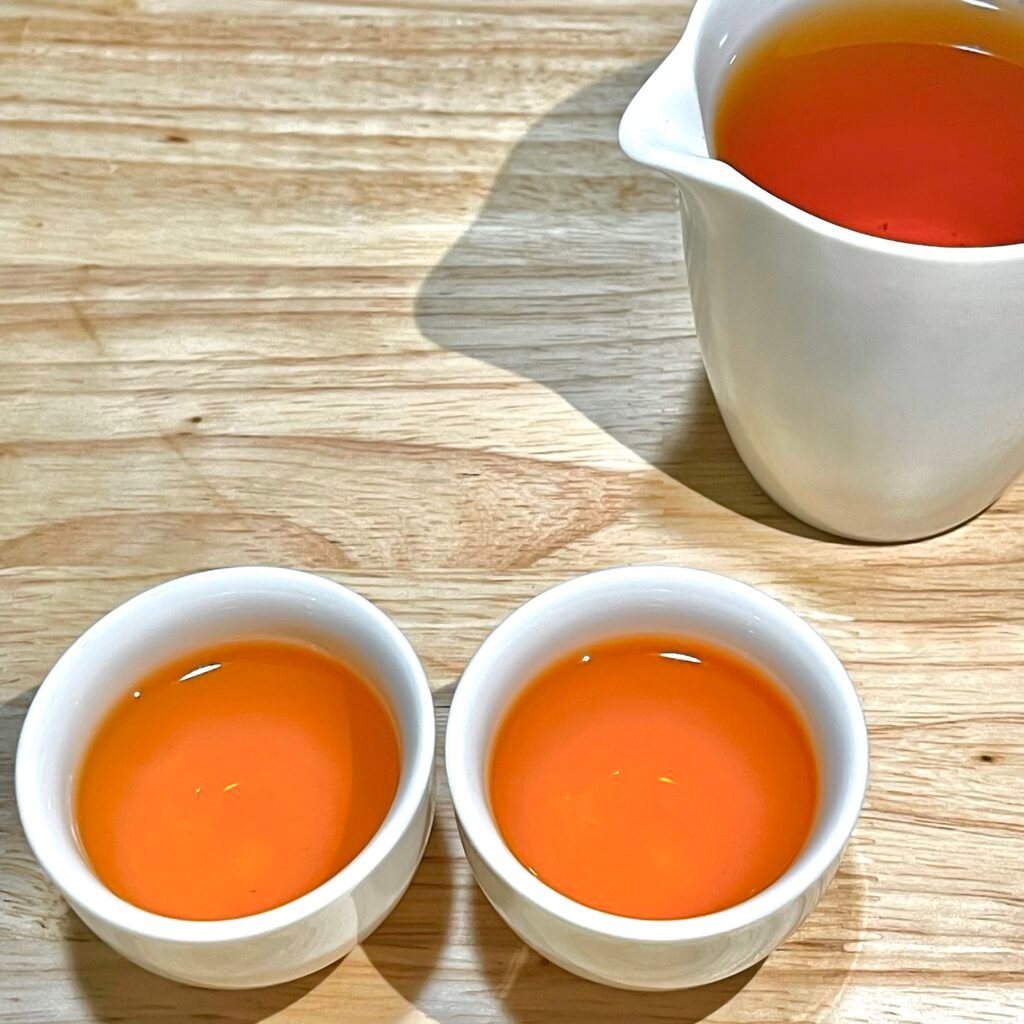
III. Is Black Tea Actually Good for You?
Black tea is gentle on most stomachs, though it carries a few caveats worth naming up front. Here is what current evidence supports — and where it stops.
1. How Much Caffeine Is in Black Tea?
According to USDA FoodData Central, an 8-oz (≈240 mL) cup of brewed black tea contains about 47 mg caffeine on average, with a typical range of 40–70 mg depending on leaf grade and brew strength. [Source: USDA FoodData Central — caffeine in tea] This is meaningfully less than drip coffee: USDA gives ~95 mg per 8-oz cup of brewed (drip) coffee, typically in the 70–140 mg range, while a single 1-oz espresso shot is about 63 mg. [Source: USDA coffee caffeine data summary]
The U.S. FDA notes that up to 400 mg of caffeine per day is not generally linked with negative effects in healthy adults. [Source: FDA — Spilling the Beans] So yes — a cup of black tea can help with focus and an afternoon slump, well within those bounds.
2. Antioxidant Activity — Promising, Still Evolving
Theaflavins and thearubigins show antioxidant activity in laboratory studies. Human evidence remains limited: the National Center for Complementary and Integrative Health (NCCIH) at NIH concludes that claims about heart disease and cancer protection are inconclusive for now. [Source: NCCIH — Antioxidant Supplements in a Bottle]
3. Digestive Comfort — Individual, Not Universal
The smoothness of fully oxidized tea comes from reduced catechins — which is why many people with sensitive stomachs report fewer issues than with green tea. Caffeine can still increase gastric acid secretion, [Source: PubMed PMID 14969698] so those with GERD or reflux often tolerate it better with or after meals, not on an empty stomach. [Source: American College of Gastroenterology GERD Guideline]
4. Who Should Avoid Drinking Black Tea?
- Pregnancy: the American College of Obstetricians and Gynecologists (ACOG) recommends keeping caffeine below 200 mg per day. [Source: ACOG Committee Opinion]
- Children: the American Academy of Pediatrics (AAP) advises avoiding caffeine for younger children and limiting it for adolescents. [Source: AAP Pediatrics, June 2011]
- Iron and medications: A 2017 randomized controlled trial in the American Journal of Clinical Nutrition showed that simultaneous tea consumption reduced iron absorption by about 37% in healthy women, and that delaying tea by 1 hour cut the inhibition roughly in half (to ~18%). [Source: Fuzi et al., AJCN 2017, PubMed PMID 29046302] Current evidence supports leaving at least a 1-hour gap between iron-rich meals (or iron supplements) and tea.
💡 **Want to try a gentler cup right away? Browse the Jin Jun Mei Black Tea collection → — single-origin Fujian black tea, naturally smooth and low in bitterness.
IV. How Do You Brew Black Tea Like a Pro?
Great flavor is mostly a matter of ratio, temperature, and time. Follow the numbers; trust the leaf.
| Style | Leaf per 150 ml | Water Temp | Steep Time |
|---|---|---|---|
| Keemun, Dian Hong, Assam (Western** | 2–3 g (≈1 tsp) | 95 °C / 203 °F | 3–5 min |
| Lapsang Souchong | 2–3 g | 95 °C / 203 °F | 2–3 min (smoke is delicate)** |
| Jin Jun Mei (single bud) | 2–3 g | 85–90 °C / 185–194 °F | 3–4 min |
| Any black tea (gongfu** | 4–6 g per 100 ml | 90–95 °C | 10–20 s first steep, add 2–5 s each round** |
Sources for these ranges: the Tea Association of the USA recommends about one teaspoon per 8-oz cup, [Source: Tea Association of the USA — Brewing Tea] and gongfu practitioners commonly use 4–6 g per 100 ml for black tea. [Source: White2Tea gongfu guide] [Source: Teas.co.uk gongfu guide]
Common mistake: pouring fully boiling water onto tender single-bud teas like Jin Jun Mei. Drop the temperature to 85–90 °C — boiling water scorches the delicate buds and turns the cup bitter.
Gongfu shortcut (for when you have a few extra minutes):
- Warm a small gaiwan or teapot with hot water; discard.
- Add leaf. Smell the dry leaves in the warmed vessel (the traditional step 闻干香).
- Wake the leaves: pour hot water over the leaf, swirl briefly, and discard this rinse after 5–10 seconds. This is a documented gongfu technique, used to hydrate tightly rolled leaves and remove any dust. [Source: Cha Wisdom gongfu guide] [Source: Touzenko gongfu cheat sheet]
- First drinking steep: 90 °C, 10–20 seconds. Pour fully.
- Add 2–5 seconds per subsequent steep. Top-grade Jin Jun Mei can sustain 6–10 infusions, with the very best all-bud material yielding up to 10–12. [Source: Teafinity Jin Jun Mei entry] [Source: Wuyi Origin brewing guide]
Prefer the Western/office method? Our How to Brew Black Tea — Western Style → covers mug-and-kettle brewing in more detail.
Creative blends to try at home:
- Milk black tea — barista-style, no syrup needed.
- Lemon black tea — bright, palate-cleansing, summer-perfect.
- Red date + longan black tea — warming, naturally sweet, ideal in cooler months.
⚠️ Food-safety note: Per USDA FSIS, brewed tea is a perishable food once prepared and should not sit at room temperature longer than 2 hours (or 1 hour if ambient temperature is above 90 °F / 32 °C). Refrigerate any leftover brew promptly. [Source: USDA FSIS — Safe Handling of Take-Out Foods (Danger Zone & 2-Hour Rule)]
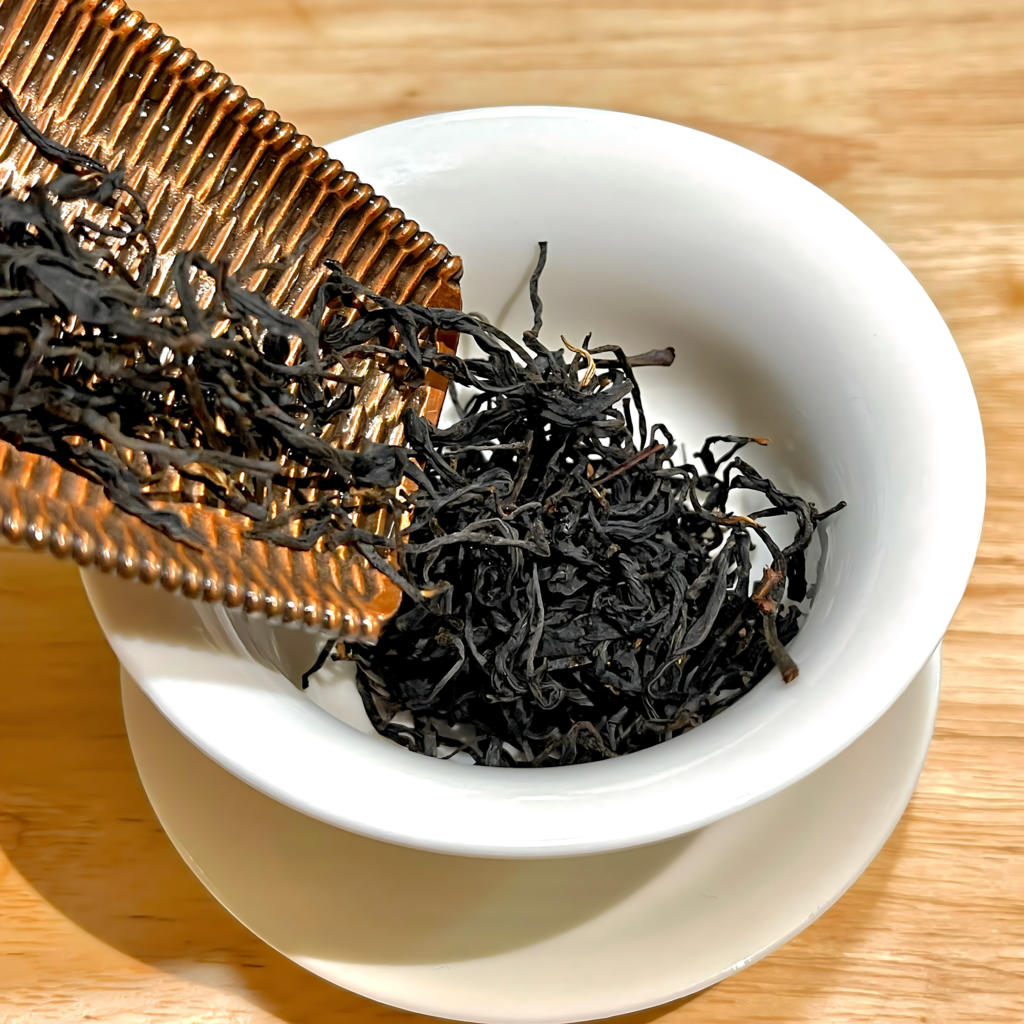
V. How Do You Buy and Store Black Tea Without the Guesswork?
What to look for on the shelf:
- Dry leaf: tightly twisted, even, free of fragments, with visible golden tips on higher grades.
- Aroma: pure, fresh fragrance — floral, honeyed, or malty. No musty, smoky-off (other than Lapsang’s signature pine smoke), or stale notes.
- Liquor: clear, bright, with a smooth sweet finish — no harsh bitterness or sour edge.
How to store it:
- Use an opaque, airtight canister or sealed foil pouch.
- Keep in a cool, dry place away from sunlight, spices, and humidity.
- Under good storage, loose-leaf black tea is best within 1–2 years and remains drinkable for about 2–3 years. [Source: Teas.co.uk — How Long Does Tea Last?]
Does black tea improve with age like wine? No, and the sensory research is consistent on this. A 2026 study of Yunnan black teas stored 2011–2024 found that beyond an optimal window of 1–3 years, overall quality declined: aroma shifted from floral/fruity toward woody, sweetness faded, and sourness emerged. [Source: Effect of Storage Duration on the Quality of Yunnan Black Tea, 2026] Only post-fermented teas like Pu’er are designed for long aging.
VI. What Are Common Side Effects to Watch For?
Black tea is safe for most adults at typical intakes, but a few real-world effects are worth tracking:
- Sleep disruption. In a 2013 randomized crossover trial (Drake et al., Journal of Clinical Sleep Medicine), 400 mg of caffeine taken even 6 hours before bedtime significantly increased sleep latency and reduced sleep efficiency. [Source: Drake et al., J Clin Sleep Med 2013] The FDA’s 400 mg/day ceiling applies across the whole day; for black tea’s ~47 mg per cup, even an afternoon cup (before ~2 p.m.) is well within safe territory for most healthy adults, though individual sensitivity varies.
- Caffeine half-life is variable. In healthy adults, plasma caffeine half-life averages about 5 hours, but ranges from roughly 1.5 to 9.5 hours depending on CYP1A2 genetics, liver function, oral contraceptive use, and pregnancy. [Source: NCBI Bookshelf — Pharmacology of Caffeine] Slow metabolizers may feel stimulant effects well into the evening from a mid-afternoon cup.
- Iron deficiency risk in heavy tea drinkers — keep a 1-hour gap from iron-rich meals or supplements, per the AJCN trial cited above.
- Tooth staining — rinsing with water after your cup helps.
- Medication interactions — tannins and caffeine can interact with certain antibiotics, blood thinners, and heart medications. Confirm with your pharmacist.
If you notice persistent jitteriness, reflux, or stomach upset, cut back to one cup a day, switch to a lower-caffeine tea, or brew at the weaker end of the 2–3 g range. People with clinically diagnosed caffeine sensitivity may tolerate only ≤200 mg/day or less, with highly sensitive individuals advised to stay ≤100 mg/day or avoid caffeine entirely. [Source: Mayo Clinic — Caffeine] [Source: Cleveland Clinic — Caffeine Sensitivity]
VII. What’s the Best Way to Start Tomorrow?
Life doesn’t need much — just a kettle, a leaf, and a few quiet minutes. Black tea asks nothing of you. No ceremony, no special cup, no rules. Just heat, steep, sip.
A practical place to begin: tomorrow morning, weigh out 2–3 g of Keemun before the kettle clicks off. Brew at 95 °C for 3 minutes. Taste it plain — no milk, no sugar. That’s the baseline you’ll measure every other cup against.
From there, branch out: a strong Dian Hong for a 3 p.m. slump, a delicate Jin Jun Mei when guests are over, an Assam + milk + cardamom chai on a slow Sunday morning. The processed-leaf story of this drink runs deep; your first good cup is fifteen minutes away.
VIII. Ready to Order? Beginner-Friendly Picks from MinTeaShop
💎 Curated by the MinTeaShop Editorial Team — every tea below comes from our Shouning (寿宁), Fujian cellar, where high-mountain gardens (600–1,000 m altitude) and a thousand-year tea tradition give the leaves their signature clarity, depth, and ability to sustain 8–10+ infusions without bitterness.
| Product | Origin | Style | Best For | Link |
|---|---|---|---|---|
| Jin Jun Mei 2026 Spring | Wuyi Mts, Fujian (Shouning) | Single-bud, honey-sweet | A guest-impressing morning cup | View product → |
| High Mountain Jin Mu Dan Black Tea 2026 | Wuyi Mts, Fujian (Shouning) | Jin Mu Dan cultivar, floral, complex | A modern signature pick | View product → |
| High Mountain Xiao Cai Cha Black Tea | Wuyi Mts, Fujian (Shouning) | Traditional local cultivar, mellow, mineral | A daily high-mountain cup | View product → |
| Jin Jun Mei Black Tea (Classic) | Wuyi Mts, Fujian (Shouning) | Classic honey-floral single-bud | A timeless entry into Wuyi blacks | View product →** |
🌍 Practical Info for International Buyers
| Topic | Details |
|---|---|
| Shipping | Orders ship within 24–48 hours. Standard shipping (China Post / Cainiao) 9–25 days; Express shipping (DHL / FedEx / EU dedicated line) 7–15 days. |
| Customs delays | Force-majeure events (snowstorms, typhoons, earthquakes) may delay delivery — thank you for your patience. |
| Payment | PayPal, Visa / MasterCard / JCB credit & debit cards, plus bank transfer / Western Union on request (contact support). |
| Customer service | 24 / 7 support — reach us anytime before or after your order. |
| Returns | 7 calendar days from receipt for product defects or our mistakes (wrong item, shipping error). Contact support first. Customer-side returns (changed mind, taste preference, accidental damage after delivery) are the buyer’s responsibility — please inspect packaging on arrival. |
| Refunds | Issued via original payment channel, processed in 3 to 30 business days after mutual confirmation. |
| Order changes / cancellations | Possible before shipment. After shipment, modifications incur courier re-routing fees. |
| Tracking | A tracking number and carrier link are emailed once your order ships (EMS, UPS, DHL, FedEx, etc.). |
📚 Related Articles from MinTeaShop
- Black Tea 2026 Guide: Types, Benefits & Brewing → — the broader MinTeaShop reference for every black tea style we carry.
- How to Brew Black Tea — Western Style → — mug-and-kettle method, ratios, and timing for busy mornings.
🏯 About MinTeaShop
MinTeaShop is an online specialty store shipping authentic Chinese tea directly from our Shouning (寿宁), Fujian cellar to drinkers worldwide. Shouning is a thousand-year tea hometown set in the high mountains of northern Fujian, where altitude, mineral soil, and traditional single-cultivar plucking give our leaves their signature clarity, mineral depth, and 耐泡 (endurance across many infusions).
What we carry: white tea, black tea (red tea), Wuyi rock tea (岩茶), green tea, and Pu’er.
Why buy from us:
- 🏔️ Single-origin Shouning sourcing — high-mountain Fujian terroir* 🍃 All-natural, single-cultivar leaves — no blending shortcuts
- ✈️ Fast worldwide shipping — DHL / FedEx / EU dedicated line,7–15 days
- 💳 Secure payment — PayPal, Visa, MasterCard, JCB, bank transfer
- 🤝 24 / 7 customer support — and a 7-day return window on defects and our errors—
⚠️ Medical & Wellness Disclaimer
The information in this article reflects peer-reviewed studies and government health sources available as of September 2026. It is for educational purposes only and does not constitute medical advice. Always consult a qualified healthcare provider before making dietary changes, especially if you are pregnant, nursing, taking medication, or managing a health condition.
🤝 Affiliate & Product Disclosure
Some links in this article are affiliate links. We may earn a small commission at no extra cost to you if you purchase through them. We only recommend products we genuinely use and trust. Our editorial opinions are not influenced by affiliate partnerships.
