
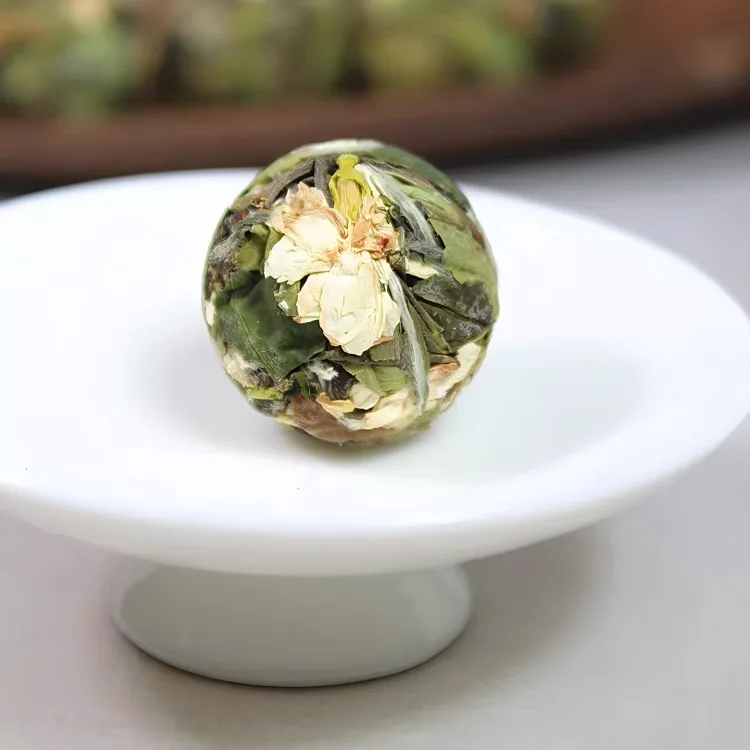
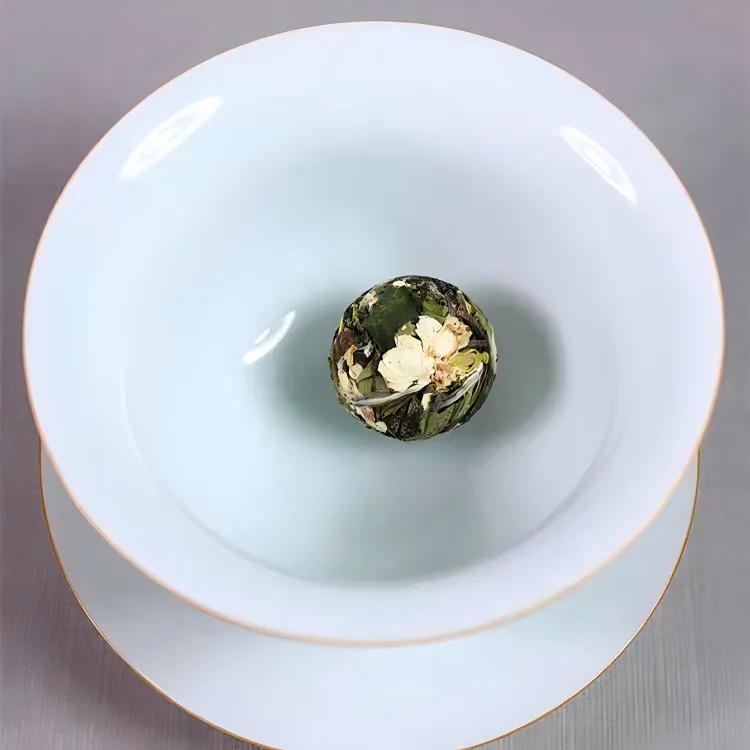
Jasmine Dragon Pearl Tea, Shouning White Tea, Scented 7x
Price range: $16.90 through $69.90
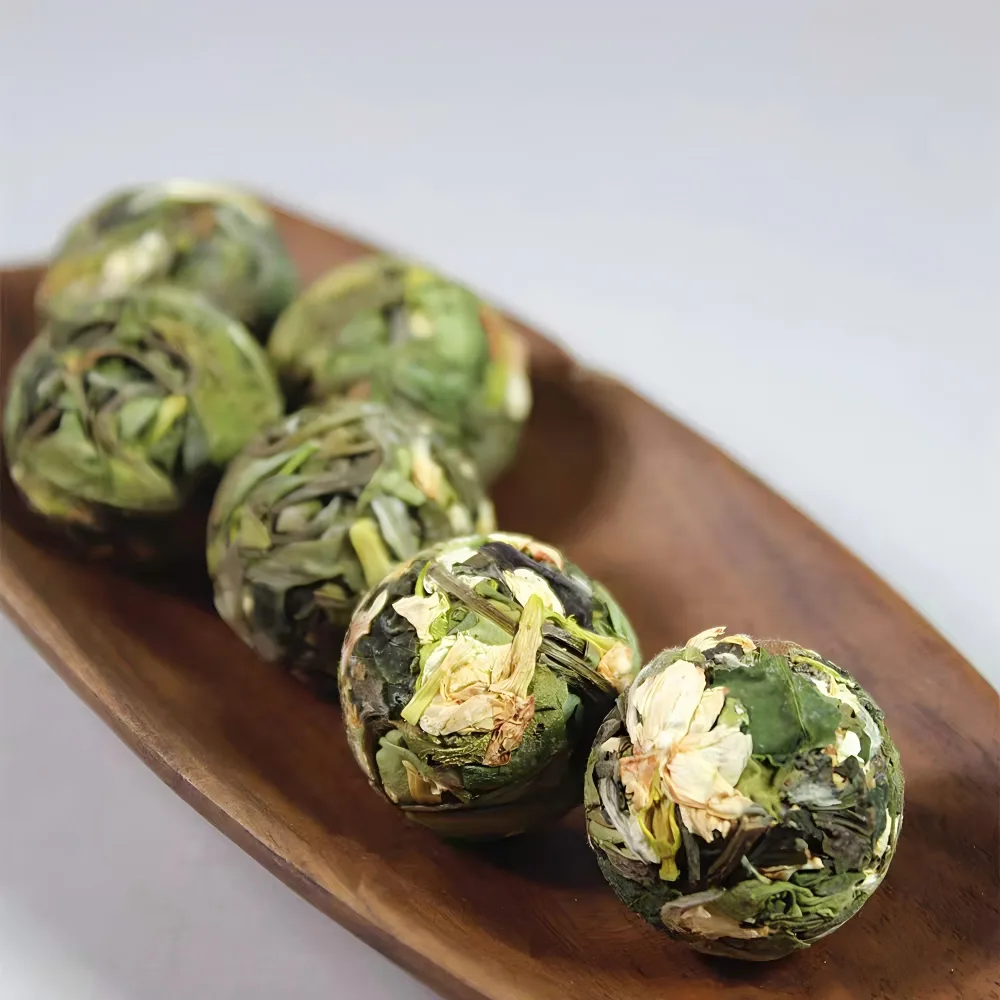
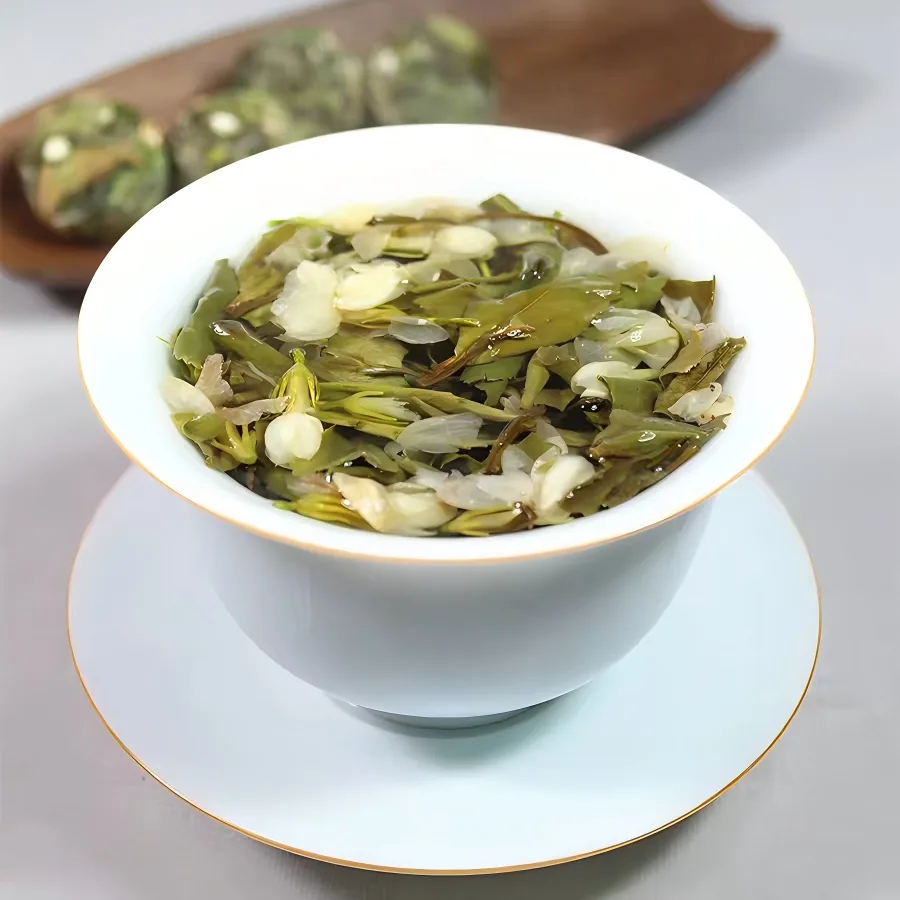
A 2026 Shouning white tea hand-rolled into dragon pearls and scented seven times with fresh jasmine blossom. Intense jasmine, sugarcane and gardenia over a smooth, low-bitterness cup. Brew at 80 °C so the floral compounds stay in the cup, and cold brew works especially well.
Description
First published: 7 July 2026 · Last updated: 2 November 2026
- What is jasmine dragon pearl tea?
- Where does it come from?
- How is it made?
- What does it taste like?
- How do you brew it?
- Is it high in caffeine?
- How long do jasmine dragon pearls last?
- Who is this for?
This jasmine dragon pearl tea is a 2026 white tea from Shouning county, Fujian, hand-rolled into small balls and scented seven times with fresh jasmine blossoms. The cup is intensely floral, with sugarcane sweetness and a gardenia note over a smooth, low-bitterness white tea base. It suits anyone who finds plain white tea too quiet, and drinkers who want a scented tea that tastes of flowers rather than perfume.
What is jasmine dragon pearl tea?
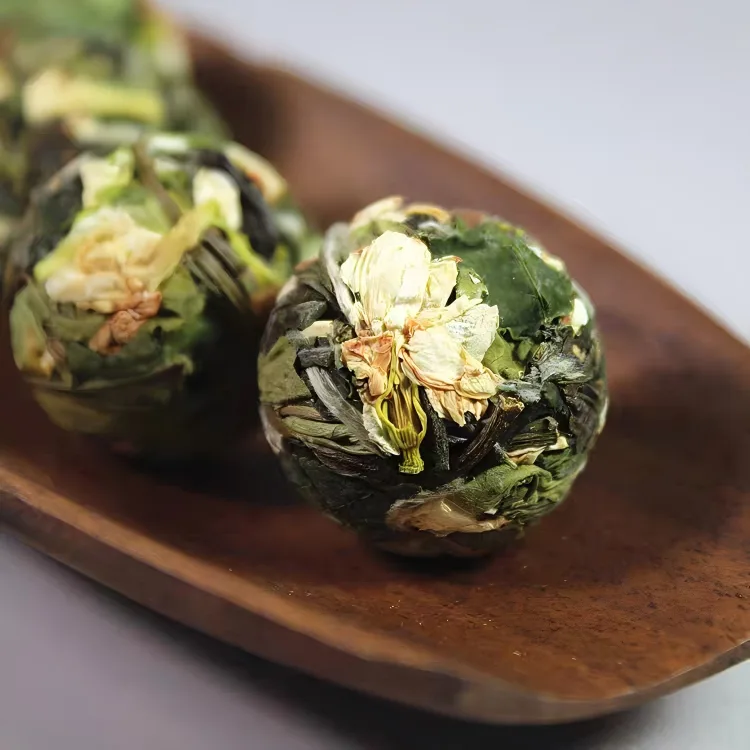
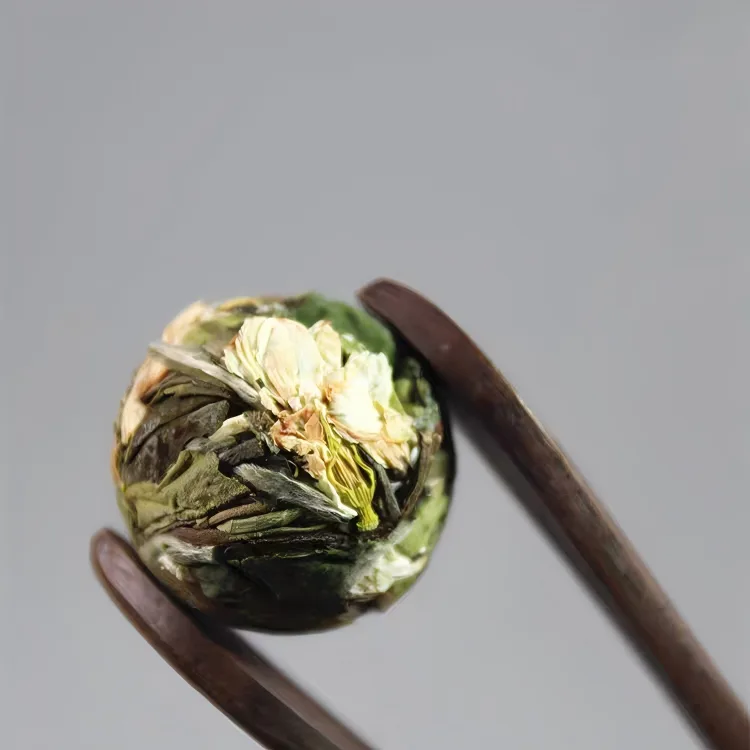
Jasmine dragon pearl tea is a scented white tea, rolled into small balls and layered with fresh jasmine flowers until the leaf takes on the scent.
The base is white tea: one bud and one young leaf, withered and dried, then hand-rolled into a pearl roughly the size of a small pea. The scenting comes after. Fresh jasmine blossoms are picked as they open, layered with the pearls, and removed the next morning; the cycle repeats. Nothing is sprayed on and no essence is added.
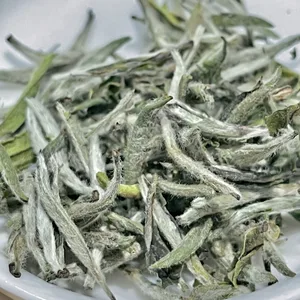
Worth putting on the record, because the base tea is a defined grade rather than a loose description. GB/T 22291-2017 , the national standard for white tea, defines Bai Mu Dan as white tea made from the one-bud-and-one-or-two-leaves pick of a Da Bai Cha or a Shu Xian bush, withered, dried and sorted. This lot is the one-bud-and-one-leaf end of that range, which is why the pearls are small and pale rather than leafy.
One caveat the standard does not cover: it sets rules for white tea, not for scented tea, so the jasmine on top is outside it. The base is inside the standard; the scenting is ours to describe, and the only claim we make about it is what you can taste and smell.
If white tea is new to you, the beginner’s guide covers the basics of grades and brewing.
One thing worth knowing before you buy, because most pages skip it. Most jasmine dragon pearls sold in the West use a green tea base, not a white one. The Wikipedia jasmine tea entry notes that green tea is the most common base, with white, oolong and black also used. That is a big part of why the green-base pearls taste sharper and steeper and why the liquor goes yellow-green. This one is a white tea base, which is why the cup is softer and the sweetness reads as sugarcane rather than as cut grass.
Jasmine Dragon Pearl: Where does it come from?
From Shouning county in northeastern Fujian, on mountain land between 500 and 1,200 m. The county figures, the climate and soil data and the geographical indication record are all in our Shouning white tea guide, which we keep as the single reference rather than repeating it on every product page. The 2026 picking came from a block at about 914 m, in the same hills as our other Shouning white teas. We do not publish a block name or picking dates we cannot document, so the county range and the official figures are what we can stand behind.
The jasmine is grown on the same farms rather than shipped in, which matters more than it sounds: flowers that travel lose the volatile compounds you are paying for, and scenting has to happen within hours of picking.
Jasmine Dragon Pearl: How is it made?
By layering leaf and fresh flowers, seven times, over about a week and a half.
The flowers are picked at dusk, when the buds are just opening, because that is when they release most of their scent. They are layered with the dried pearls on trays, left overnight, and picked out by hand the next morning. The pearls rest during the day and the cycle repeats.
Seven rounds is the number for this lot. Cheaper scented teas do one or two, which is why the jasmine in them reads as a top note that vanishes by the second steep rather than as something in the body of the tea.
The rolling is done by hand, one pearl at a time. We do not publish a daily output figure for the workers, because we have not measured it and will not turn a guess into a specification.
Jasmine Dragon Pearl: What does it taste like?
Jasmine first and loudest, then sugarcane sweetness, then a gardenia note that sits underneath and outlasts the flowers.
| Pass | Aroma | Flavour | Body |
|---|---|---|---|
| 1 | Fresh jasmine, orange blossom | Jasmine, light sweetness | Light |
| 2 | Jasmine, warm sugar | Sugarcane, soft | Light-medium |
| 3 | Gardenia, honey | Floral honey, clean | Medium |
| 4 | Faint jasmine, hay | Sweet hay, mineral | Light |
| 5+ | White tea base | Soft, dry finish | Light |
The white tea base is what keeps this drinkable. A green-tea jasmine pearl turns brisk and slightly bitter if you push the steep; this one stays smooth even at three minutes, which is why it survives being forgotten in a mug.
A 2023 lot we opened recently had lost most of its jasmine and tasted like aged Shou Mei underneath: dates, soft wood, a honeyed finish. Still good, and not what you bought it for.
How do you brew it?
Cooler water than you would use for black tea, a short first steep, and no rinse.
| Style | Leaf | Water | Temperature | Time |
|---|---|---|---|---|
| Western | 3–4 g per 250 ml | Filtered | 175°F (80°C) | 2–3 minutes, re-steep 2–3 times adding 30 seconds |
| Gongfu | 5 g per 100 ml | Filtered | 175°F (80°C) | 20 seconds, adding 5–10 seconds, 6–8 infusions |
| Cold brew | 5–7 g per 1 L | Cold, refrigerated | — | 6–8 hours, keeps 2–3 days |
Boiling water flattens the flowers. The lower temperature here is about the scenting rather than the leaf: heat drives off the volatile floral compounds that seven rounds of scenting put in, and once they are gone the cup reads thin rather than perfumed. Unscented white tea is a different case — the extraction optimum there is around 95 °C, which is why our brewing white tea guide gives a higher figure for it. If the jasmine smells faint, the water was too hot or the pearls were too old; check the water first, because it is the cheaper mistake to fix.
Cold brew is where this tea earns its place. The cold extraction pulls the floral compounds and leaves the tannins behind, and the result is clean and lightly sweet with no bitterness at all.
Is it high in caffeine?
They are moderate, in the same range as other white and green teas, and the flowers add no caffeine of their own.
Mayo Clinic’s caffeine chart puts brewed green tea at 28 mg and brewed black tea at 47 mg per 8 oz serving, with brewed coffee at 96 mg, and it notes that caffeine in tea varies with leaf weight and steep time. A 3 to 4 g serving of these pearls lands in that range, and a long gongfu session extracts more in total.
On theanine, one caution. You will read that L-theanine makes caffeine arrive gradually, which is not how it works; theanine does not bind caffeine or change its absorption. What the research does show is a combined effect: in a small double-blind trial, 50 mg of caffeine with 100 mg of L-theanine improved speed and accuracy on an attention-switching task and reduced distraction compared with caffeine alone. The 2008 Nutritional Neuroscience study is the source, and it describes a different feel rather than a slower release. We are not making a health claim on a product page; our guide to what white tea is actually good for sets out what is established and what is not.
If you are pregnant, ACOG recommends keeping total caffeine under 200 mg a day, which is a limit rather than a target. Ask your own clinician.
How long do jasmine dragon pearls last?
Drink them within a year; the jasmine goes before the tea does.
| Age | What to expect |
|---|---|
| 0–3 months | Loud jasmine, bright sweetness (this is where the 2026 lot is) |
| 3–6 months | Balanced, full floral |
| 6–12 months | Honey forward, jasmine fading |
| 12–24 months | Mellow hay, jasmine essentially gone |
| Beyond | Tastes like plain Shou Mei |
Store the pearls in an airtight tin in a dark cupboard at room temperature. Do not refrigerate: condensation on cold leaf is worse than a warm shelf, and the flowers are the first thing to suffer. Keep them away from coffee, spices and anything else that smells, because a scented tea will take on a neighbour’s aroma as readily as it took on jasmine.
Past twelve months the tea is still drinkable, just no longer jasmine tea. Brew it hot and short and enjoy it as a soft white tea.
Who is this for?
For anyone who wants a scented tea that tastes of flowers rather than of perfume, and for drinkers who find plain white tea too quiet.
Jasmine dragon pearls are also the easiest thing on our shelf to brew badly and still enjoy: one spoon, 80°C, two minutes, and it works in a thermos at 11 a.m. as well as it does at home. The 100 g tin is $16.90, 200 g is $28.90 and 500 g is $69.90.
They are the wrong buy if you want a tea for cellaring, because the jasmine fades and the base is not old enough to be interesting on its own. For that, take a plain 2019 Shou Mei cake and let it age.
If you want the delicate unscented cousin, our Baihao Yinzhen is buds only. If you want to see how the four white grades differ, the guide to the four types of white tea lays them out, and the Shou Mei aging guide explains what happens to leaf and stem over time.
Two more worth knowing. Our 2026 Shouning Bai Mu Dan is the same base tea without the flowers, so you can taste the difference the scenting makes, and our 2019 Bai Mu Dan dragon pearl is the same shape seven years further down the curve. The white tea collection has the rest.
Frequently Asked Questions
Is jasmine dragon pearl tea green tea or white tea?
Usually green tea, which surprises people. Most jasmine pearls sold internationally use a green tea base; this one uses a white tea base from Shouning, which is why the cup is softer and sweeter rather than brisk.
Is the jasmine natural or a flavouring?
Natural. The pearls are layered with fresh Jasminum sambac blossoms seven times and the flowers are removed by hand each morning. Nothing is sprayed on, and there is no jasmine essence in the tin.
Can you cold brew it?
Yes, and it is one of the best uses for it. Five to seven grams per litre of cold water, six to eight hours in the fridge, then strain. The cup is clean, lightly floral and never bitter, and it keeps for two or three days.
Does it contain caffeine?
Yes, at roughly the level of other white and green teas. The flowers add none. If you are sensitive, brew it earlier in the day and use less leaf rather than fewer steeps.
Is it safe during pregnancy?
It contains caffeine. ACOG recommends keeping total caffeine under 200 mg a day during pregnancy. One serving of these pearls sits well below that, but talk to your own clinician about your situation.
Can I age it on purpose?
You can, but there is little point. After two or three years the jasmine is gone and what is left is an ordinary young white tea tasting of dates and soft wood. Scented teas are for drinking, not cellaring; if you want to age something, take a plain 2019 Shou Mei cake and follow our Shou Mei brewing guide while it rests.
Author and reviewer disclosure
This page was written by the founder and head tea buyer at Min Tea Shop, who has bought tea directly from Fujian farmers for eight years. The 2026 pearls described above were cupped and selected at origin during our 2026 sourcing trip to Fujian, and the tasting notes come from our own sessions in 2026.
Statements about caffeine and theanine are general, and are sourced to the published research cited above. They are not medical advice. No sponsored content, no paid placements, and no affiliate links appear on this page, and we do not sell or share your personal data — see our privacy policy for details. If a specification on this page is wrong, tell us and we will correct it.
Additional information
| Weight | 0.1 kg |
|---|---|
| gram | 100g, 200g, 500g |
Related products
-

2014 Shouning Aged Shou Mei Dragon Pearl, 5g
Price range: $16.90 through $69.90Select options This product has multiple variants. The options may be chosen on the product page -
-
Bai Mu Dan (White Peony) Tea 2026, Shouning Loose Leaf
Price range: $11.90 through $111.90Select options This product has multiple variants. The options may be chosen on the product page -
Bai Hao Yin Zhen (Silver Needle) White Tea, 2026 Shouning
Price range: $12.90 through $127.90Select options This product has multiple variants. The options may be chosen on the product page

Reviews
There are no reviews yet.