
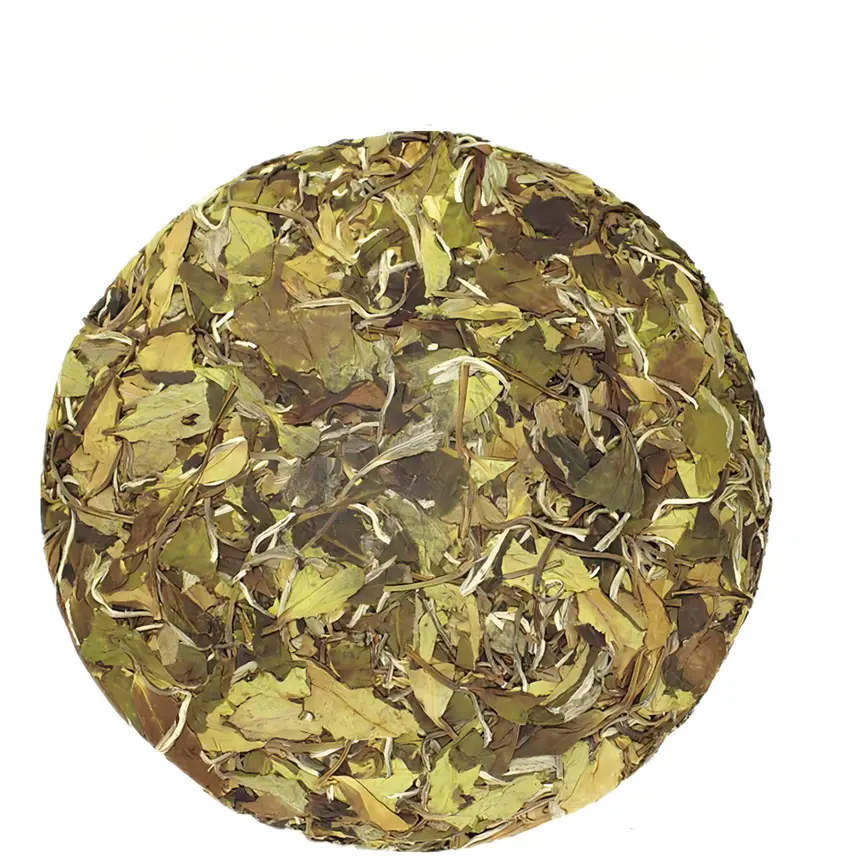
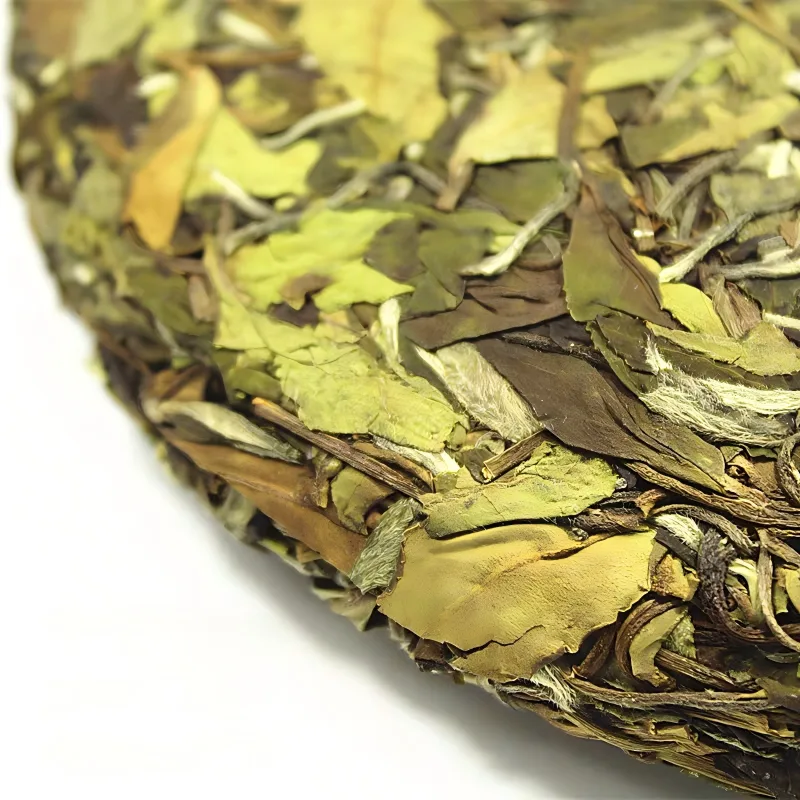
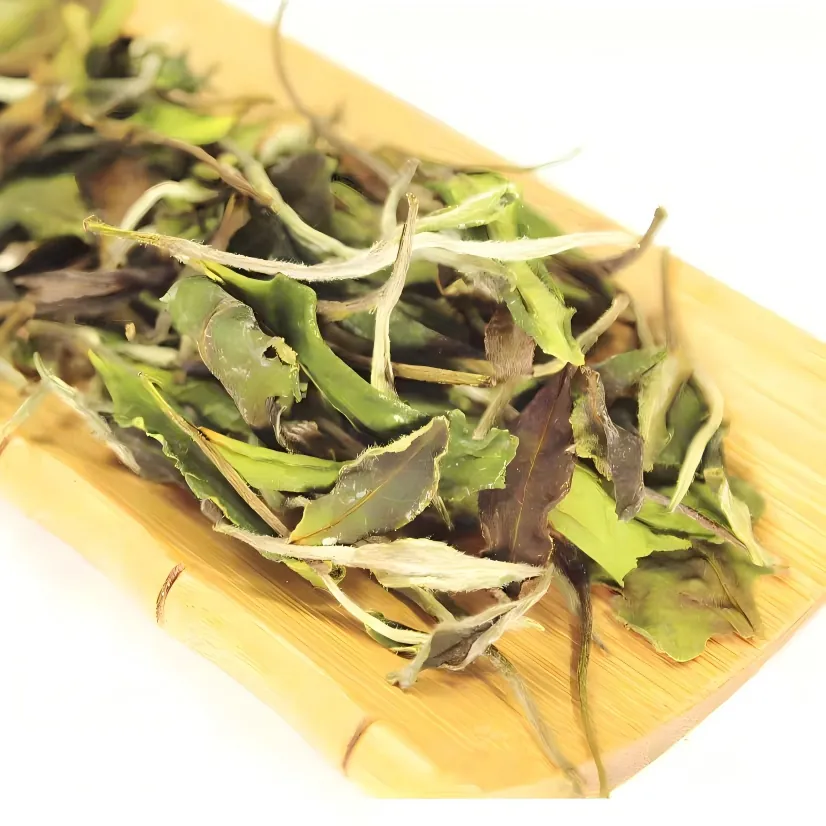


2019 Shouning Aged Shou Mei White Tea Cake, 350g
$49.90
A 2019 Shouning Shou Mei aged white tea cake, 350 g, now seven years into its storage in Fujian. Dried longan, stewed pear and wild herbal honey over a thick body. Brew with boiling water and a short rinse before the first steep.
10 in stock
Description
First published: 4 July 2026 · Last updated: 2 November 2026
- What is 2019 shouning shou mei?
- Where does it come from?
- How is it made?
- What does it taste like after seven years?
- How do you brew a 350 g cake?
- How should you store it?
- Was 2019 a good year?
- Who is this cake for?
This 2019 shouning shou mei is a 350 g pressed cake of aged white tea from Shouning county in northeastern Fujian, made mostly from mature leaf and picked in spring 2019. Seven years in, the cup has turned deep amber with dried longan, stewed pear and wild herbal honey over a thick body. It suits drinkers who want the richness of aged white tea without the price of Silver Needle, and anyone who likes tea that changes in the tin.
What is 2019 shouning shou mei?
It is aged white tea pressed into a 350 g cake, and at seven years it sits close to the sweet spot of what this leaf does — the one that travels furthest with time, though not for ever. Our 2020 Shou Mei is the same style a year younger, and it is what to buy if you want an everyday cup rather than a cellar.
Shou Mei means longevity eyebrow: 寿 is longevity and 眉 is eyebrow, and the name comes from the shape of the finished leaf rather than from the bud. This is the leafiest grade of Chinese white tea, made mostly from mature leaves with a bud or two in the mix, which is why it is cheaper than Bai Mu Dan and far cheaper than Silver Needle, and why it ages so well. The exact plucking standard for this lot was not recorded, so we describe what is in the cake rather than claim a specification we cannot document.
Two naming traps worth clearing, because both catch people. The first is Gong Mei. Under GB/T 22291-2017 , the national standard for white tea, there are four named products rather than three: Silver Needle from single buds, Bai Mu Dan from a bud with one or two leaves, Gong Mei from the tender shoots of population-variety bushes, and Shou Mei from shoots or leaf of Da Bai Cha, Shu Xian or population bushes.
Shou Mei and Gong Mei are separate categories in the standard and separate teas in the cup, Gong Mei being the finer and more expensive of the two, but they get labelled interchangeably all over the place. This cake is Shou Mei: mostly mature leaf, coarse, with the bark-like stems you can see along the edges of the cake. The second trap is that “shou” in Chinese also means ripe, as in shou pu-erh, and that is a completely different product made by wet-piling.
Shou Mei is a white tea aged by air and time; ripe pu-erh is a tea fermented in a heap. They sit in different parts of this shop for a reason.
Aging matters because white tea is not inert. Over years, the grassy, vegetal compounds soften, the colour deepens and the cup moves toward dried fruit, wood and honey. Seven years is far enough along for that to be obvious.
Where does it come from?
The leaf for this cake was grown in Shouning county, northeastern Fujian, on mountain land between 500 and 1,200 m. The county-wide figures and GI record now live in the Shouning white tea guide; what follows is our own record from the county.
We have bought from the same grower since 2019. On our April 2019 visit the pickers were working a steep south-facing slope, and the leaf was coming in on dry mornings only, which is the practical way to keep white tea from bruising. We did not record the garden name or its exact elevation, and we would rather say so than invent a detail.

The 2019 shouning cake was made from the spring leaf we bought that year, and the garden photograph above is from the same slope.
The county’s soils and climate are often described as the reason Shouning white tea reads sweet rather than sharp. That is a reasonable working explanation and it is also the kind of claim that is easy to overstate: what we can tell you is what this cake tastes like after seven years.
How is it made?
Wither, dry, press, and then leave it alone. Shou Mei gets no rolling and no kill-green step, and after pressing the only ingredient is time.
The leaf is withered slowly in moving air, then dried to a stable moisture level, then steamed briefly and pressed into a cake. Compression matters for aging because it limits how fast air moves through the leaf: a cake changes more slowly and more evenly than the same tea stored loose.
The chemistry of what happens next is now fairly well documented. In white tea, aging reduces free amino acids and drives the polymerisation of theabrownins and thearubigins, which is why the liquor darkens from pale gold to amber and then to a deeper red-brown. A 2026 study in the Journal of the Science of Food and Agriculture tracks that shift. A separate study of compressed white tea over long storage found the aroma moving from sweet, fruity and floral toward woody, herbal and eventually stale as the years pass. The 2022 Frontiers in Nutrition paper is useful precisely because it does not treat aging as a one-way improvement.
That last point is worth holding on to. Aging is not a ladder that only goes up. Seven years is, for most drinkers, close to the sweet spot.
What does it taste like after seven years?
Dried longan and soft cedar on the nose, stewed pear in the middle, and a thick, almost syrupy body with no bitterness at all.
We tasted this cake against a 2020 and a 2022 spring lot from the same garden, and the differences were obvious in the glass rather than subtle.
| Attribute | 2019 (7 years) | 2020 (6 years) | 2022 (4 years) |
|---|---|---|---|
| Liquor | Deep amber, dark-honey colour | Medium amber | Pale gold |
| Aroma | Dried longan, cedar, stewed pear | Fresh hay, light honey | Green, grassy |
| Sweetness | High | Medium-high | Medium |
| Bitterness | None | None | A little on the first steep |
| Body | Thick, syrupy | Smooth, lighter | Light |
| Best use | Drinking now, or keep going | Daily drinking | Cellaring or cold brew |
The younger cakes still carry green notes. The 2019 has converted those into dried fruit and wood, and the body has thickened in a way that is hard to fake with brewing. That is the practical case for buying aged white tea rather than young white tea plus patience.
On the liquor colour: ours pours the shade of dark honey, not black. If a “seven-year” cake pours opaque and dark, the storage was probably wet rather than dry, and the cup will tell you in the first sip.
How do you brew a 350 g cake?
Five to six grams, a 110 ml gaiwan, water at 95–100°C, and a short first steep.
| Parameter | Value |
|---|---|
| Leaf | 5–6 g, broken from the cake with a pick |
| Vessel | 110 ml gaiwan, pre-warmed |
| Water | 95–100°C (203–212°F) |
| Rinse | 3 seconds, discarded |
| First steep | 15 seconds |
| Each round after | Add 5 seconds |
| From round 6 | Extend to 30–45 seconds |
| Total infusions | 10–12 |
Aim for a mix of buds and mature leaf when you break the cake, because the buds give sweetness and the leaf gives body. Steeped this way the cup moves from bright and honeyed, through the cedar note in the middle rounds, into a soft sweet finish.
Aged Shou Mei is also unusually hard to ruin. A five-minute western steep still tastes smooth rather than bitter, which is not true of young white tea. Western brewing: 5 g per 250 ml at 95°C for three to four minutes, re-steeping two or three times.
How should you store it?
Dry, dark, cool and aired, and in paper rather than plastic.
| Rule | Target | Why |
|---|---|---|
| Dry | 50–65% relative humidity | Above that, mould becomes a real risk |
| Dark | Out of sunlight | Light breaks down the aromatics you are trying to keep |
| Cool | 15–25°C | Attics, kitchens and garages swing too much |
| Aired | Original paper inside a clay pot or kraft bag | Plastic and vacuum sealing stop the change |
We learned the last rule the hard way. A 2015 Shou Mei cake from the same grower went into a plastic bag for five years; it grew mould and lost its aroma completely. A sister cake from the same lot, kept in paper, is in its prime. Storage is not a detail.
Our Shou Mei aging guide goes deeper on how leaf grade and stem content change the aging curve.
Was 2019 a good year?
We like the 2019 shouning cake, and we bought it, but we will not pretend to a climate verdict we cannot document.
Every seller wants a vintage story, and the story for 2019 is usually told through spring rainfall figures. We have not been able to verify those figures for this garden, so we are not going to print them. What we can tell you is what the cake does in the cup after seven years, and that the 2019 we hold has aged into something rounder than the 2020 and 2022 lots beside it.
If a vintage claim matters to you, ask the seller for the harvest record rather than the rainfall chart.
Who is this cake for?
For drinkers who want the depth of aged white tea at a sensible price, and for anyone building a small vertical of vintages.
Shou Mei is the cheapest way into aged white tea, and the most rewarding per yuan, because the leaf is what ages: stems and mature leaf convert into dried fruit and wood rather than fading. A 350 g cake gives about sixty gongfu sessions at 6 g, which is a season of daily drinking or several years of occasional cups. At $49.90 for the cake, that is roughly $14.30 per 100 g, below the $19.90 per 100 g of our 2023 Bai Mu Dan.
If you want the delicate end of white tea, our Baihao Yinzhen is buds only and Bai Mu Dan is the middle grade. If you want to understand the whole category first, our guide to the four types of white tea puts them side by side, and the beginner’s guide covers harvest dates and brewing.
Our white tea collection has the other vintages we currently hold.
Where this sits in the range is worth being explicit about, because there are several aged white teas on this site and they are not interchangeable. If you want the sweet, delicate end, our 2023 Bai Mu Dan cake is three years further down its own curve, with dried apricot and honey and a much lighter body, and the 2024 Bai Mu Dan in 300 g is the same idea a year younger, in the size that makes drinking it every day an easy decision rather than an expensive one. If you want aged but portable, the 2014 Shou Mei dragon pearl
is the same style rolled into a shape you can carry, five years further along still. This 2019 cake is the plain pressed version of the oldest tea we hold, and it is the one to buy if you want a cake rather than a pearl.
Frequently Asked Questions
Is spring Shou Mei different from autumn Shou Mei?
Yes. Spring Shou Mei has finer leaf and more buds, and it cups cleaner and sweeter. Autumn Shou Mei is leafier and more rustic, with bolder dried-date notes. Neither is better; spring ages into honey and stone fruit, autumn ages into wood and herb.
How long can a Shou Mei cake keep improving?
Most of the change happens in the first three to five years, then it slows. A well-stored cake stays interesting for fifteen to twenty years, but the far end of that curve turns woody and herbal rather than sweeter. Taste it every year or two and decide where you want to stop.
Is Shou Mei low in caffeine?
It is lower than black tea and similar to green tea, and the exact figure depends on how much leaf you use and how long you steep. Mayo Clinic’s chart puts brewed green tea at 28 mg and brewed black tea at 47 mg per 8 oz, with brewed coffee at 96 mg. A gongfu session of this cake across ten infusions will extract more than a single cup, so count the leaf rather than the cup.
Does aged Shou Mei get bitter if you over-steep it?
Not this one. Seven years has taken the astringency out, and even a five-minute steep tastes smooth and slightly sweet. Younger cakes will turn bitter if you walk away from them.
Is it safe during pregnancy?
It contains caffeine. ACOG recommends keeping total caffeine under 200 mg a day during pregnancy, which is a limit rather than a target. Ask your own clinician about your situation; we would not set a cup count on your behalf.
How can I tell whether a Shou Mei cake has been stored well?
Look at the liquor and smell the leaf. Clean dry storage gives a clear amber cup and a dry-leaf aroma of dried fruit, cedar and honey. Wet storage looks darker and sometimes cloudy, and smells of damp earth or a cellar. If a seller cannot tell you where a cake has been kept, the age is a rumour.
Author and reviewer disclosure
This page was written by the founder and head tea buyer at Min Tea Shop, who has bought tea directly from Fujian farmers for eight years. The 2019 cake described above was cupped and selected from our own dry storage, and the tasting notes come from our sessions in 2026, including a side-by-side against 2020 and 2022 lots from the same garden.
Statements about aging chemistry and caffeine are general, and are sourced to the published research cited above. They are not medical advice. No sponsored content, no paid placements, and no affiliate links appear on this page, and we do not sell or share your personal data — see our privacy policy for details. If a specification on this page is wrong, tell us and we will correct it.
Additional information
| Weight | 0.35 kg |
|---|
Related products
-
Sale!

Ji Pai Minimalist 9-Piece Automatic Glass Tea Set
Original price was: $199.90.$159.90Current price is: $159.90. -
-
-


Reviews
There are no reviews yet.