
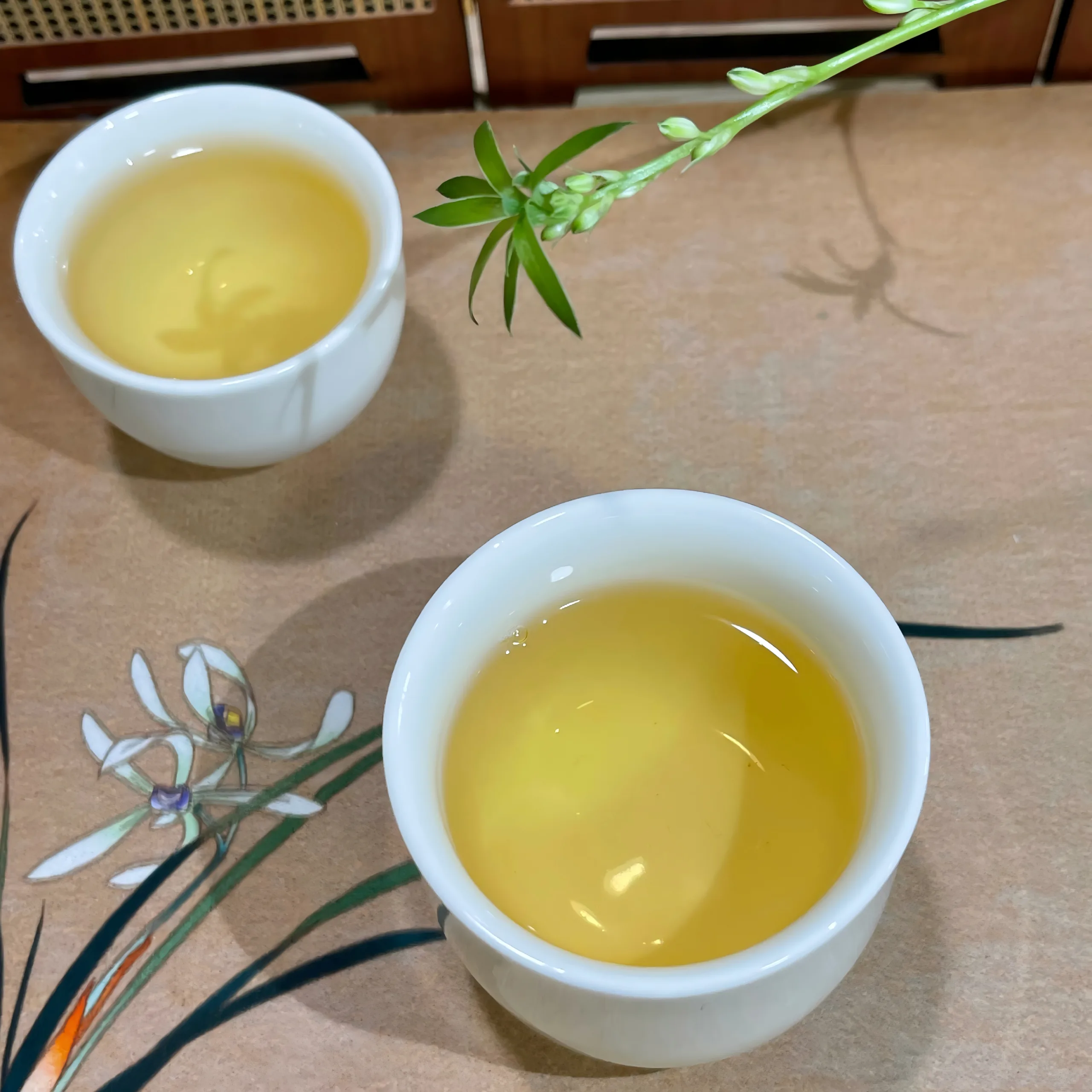
What Water to Use for White Tea
Water hardness is the variable most drinkers ignore, and the one that changes the cup most. Two cups of the same white tea, brewed identically except for the water, do not taste the same. This is not a sommelier’s affectation — it is measurable, and the measurements run in a direction most people do not expect.
The useful question is not “which water is best” but “what is my water doing to this leaf”. Three studies answer most of it.
Table of Contents
Same Tea, Three Waters
A team at the Hangzhou Tea Research Institute brewed the same Fuding Baihao Yinzhen in three waters — pure, spring and tap — and measured catechins, caffeine, theanine and free amino acids, then ran a sensory panel on the results (Zhang et al., 2017).
The findings were not a clean win for any one water:
| Water | Catechins | Caffeine & theanine | Free amino acids | Overall sensory |
|---|---|---|---|---|
| Pure (weakly acidic, low ions) | Highest | Lower | Lower | Best |
| Spring (mineral) | Middle | Highest | Middle | Second |
| Tap | Lowest | Middle | Highest | Lowest |
The authors concluded that pure water was “more suitable for brewing white tea with superior colour, aroma and taste”. But the table above is the more interesting result: the water that extracted the most catechins extracted the least caffeine and theanine. Different compounds respond to dissolved ions in different ways. That split is why the water you use changes how much caffeine reaches the cup, which we set out separately in white tea caffeine.
So “use the purest water” is an oversimplification, and “use mineral water for the minerals” is too. If you want the most catechins and the cleanest cup, go soft. If you want more caffeine and theanine in the cup, slightly mineral water does that.
Why Hardness Hurts
The mechanism is understood well enough to explain the taste. A 2021 study brewed green tea in synthetic freshwater at five hardness levels, plus a sodium bicarbonate solution, a mineral salt solution and deionised water, then measured catechins and caffeine by HPLC (Cabrera et al., 2021).
The headline finding: as water hardness increased, total catechin yield decreased. The loss was mostly due to autoxidation of epigallocatechin (EGC) and epigallocatechin gallate (EGCG). Epicatechin, epicatechin gallate and caffeine were more chemically stable.
Two details matter for practice. First, the catechins were not failing to extract — they were extracting and then oxidising. Second, alkaline conditions accelerated the autoxidation and caused the liquor to brown. Hardness and alkalinity are separate variables, and alkalinity is the one that turns a pale gold cup muddy.
That study used green tea, not white. The mechanism is not tea-specific — it is the chemistry of catechins in the presence of calcium, magnesium and bicarbonate — but it is worth being precise that the direct white tea evidence is the Zhang study above, not this one.
What Hardness and TDS Actually Measure
Two numbers get used interchangeably in tea writing and they are not the same thing.
Total dissolved solids (TDS) is the mass of everything dissolved in the water — calcium, magnesium, sodium, potassium, bicarbonate, sulphate, chloride and more — usually expressed in milligrams per litre (mg/L), which is the same as parts per million (ppm). A TDS pen measures electrical conductivity and infers the total. It cannot tell you what is dissolved, only how much.
Hardness is narrower: the calcium and magnesium content specifically, usually reported as an equivalent mass of calcium carbonate. Water can have a moderate TDS made mostly of sodium and bicarbonate and still be soft in the technical sense. That distinction matters here, because the Cabrera study found both hardness and alkalinity pushing catechins in the wrong direction — and a TDS pen shows neither separately.
The practical consequence is that a TDS pen is a screening tool, not a diagnosis. A high reading tells you something is dissolved; it does not tell you whether it is the calcium that dulls the tea or the bicarbonate that browns it. If you want the detail, your water supplier’s annual quality report lists calcium, magnesium, alkalinity and pH individually, and it is free.
Two other parameters are worth knowing. pH tells you whether the water is acidic, neutral or alkaline; alkaline water accelerates the catechin loss described above. Alkalinity is the water’s capacity to neutralise acid, and it is usually driven by bicarbonate — the same ion that the Cabrera study added directly to test browning.
The Film on Cooled Tea
If you have watched a cup of tea develop a thin, brittle skin as it cools, you have seen the same chemistry in visible form. A short communication in Nature found that the film is mainly an organic polymer derived from tea polyphenols, with calcium carbonate particles embedded in it, and that oxygen is required for it to form at all — a nitrogen atmosphere prevents it (Spiro & Jaganyi, 1993).
Brew with distilled or very soft water and the film largely fails to form, because there is little calcium to supply it. Brew with hard water and it appears reliably. It is harmless, but it is a useful diagnostic: if your white tea is producing a skin and tasting dull, the water is the first thing to change, not the tea.
Does Water Change the Caffeine?
Yes, and in the opposite direction to catechins — which is the single most counter-intuitive result in the Zhang study.
Pure water produced the highest catechin content but the lowest caffeine and theanine. Spring water produced the highest caffeine and theanine. Tap water produced the highest free amino acids.
The likely explanation is ion-mediated: dissolved minerals affect how readily different compounds go into solution and how quickly they are lost afterwards. Catechins are vulnerable to oxidative loss, which soft water minimises; caffeine and theanine are more stable and simply extract more readily in the presence of minerals.
For a drinker this is a small effect compared with leaf ratio or steep time. It is worth knowing mainly because it corrects the assumption that “better water” means better everything. If your goal is a gentle, aromatic cup, soft water helps. If you want the most stimulant effect per gram of leaf, very soft water is not the optimum.
What to Aim For
There is no Chinese national standard for brewing water, and no tea equivalent of the coffee industry’s water specification. Anyone quoting a precise target is quoting trade convention, not regulation.
What the research supports:
- Soft over hard. Lower hardness means more catechins survive and less browning.
- Not absolute zero. Very pure water pulled less caffeine and theanine than spring water in the Zhang study, and tastes flat on its own.
- Neutral to slightly acidic. Alkaline water accelerates catechin loss and darkens the liquor.
- No chlorine. Chlorine is volatile and reactive, and it flattens exactly the aromas white tea is bought for. It is also the easiest problem to fix.
A cheap TDS (total dissolved solids) pen costs very little and tells you more about your tap water than any description will. If your reading is high — say, well above a few hundred parts per million — a jug filter or a switch to low-mineral bottled water will change your tea more than any change of leaf.
Chlorine and the Filter Question
Chlorine is the one water problem with no trade-off. Removing it improves aroma and does not cost you extraction. A carbon jug filter does this well; so does letting water stand, though less reliably.
What a jug filter will not do is soften genuinely hard water much. Ion-exchange softeners and reverse osmosis do, which is why they are common in tea shops — but reverse osmosis takes you toward the “too pure” end of the Zhang findings, so it is worth tasting both before committing.
Which Filter Does What
Filters are sold on health claims, but for tea what matters is narrower: does it remove chlorine, and does it change hardness or alkalinity? Those are different jobs and no single device does all three well.
| Device | Removes chlorine | Softens | Effect on tea |
|---|---|---|---|
| Jug filter (carbon + ion exchange resin) | Yes | Partly | Good general improvement; cheap |
| Under-sink carbon block | Yes | Barely | Removes chlorine without changing mineral profile |
| Reverse osmosis | Yes | Yes, nearly completely | Moves toward the “too pure” end; may soften the cup |
| Ion-exchange softener | No | Yes, by swapping calcium for sodium | Removes hardness but adds sodium; not the same as pure water |
| Boiling | Yes, if boiled and cooled | No — it concentrates minerals | Removes chlorine but leaves hardness behind |
The jug filter is the pragmatic default. It removes chlorine reliably, reduces some hardness, costs little and needs no plumbing. Its weakness is throughput and the fact that the cartridge degrades quietly — a spent cartridge still passes water, which is why manufacturers specify replacement intervals.
Reverse osmosis is what most tea shops use, and for good reason: it produces a consistent, low-mineral base that can then be adjusted. If you blend a little tap water back into RO water, you get control over hardness that no single device gives you. That is more effort than most home drinkers need.
An ion-exchange softener deserves a caution. It does not remove minerals so much as trade them: calcium and magnesium out, sodium in. The water tests “soft”, but it is not low-TDS, and it is not the same water the Zhang study called “pure”. If you have a whole-house softener, your tea water is soft and sodium-rich — usually fine, but worth knowing.
Testing Your Own Water
You do not need a laboratory. A simple comparison will tell you most of what you need:
- Brew the same leaf, same weight, same temperature, same time, in three waters: your tap, a jug-filtered version of the same tap, and a low-mineral bottled water.
- Taste them side by side while warm, then again after they cool. Hard-water effects often show up more clearly in the cooled cup.
- Look at the colour against a white background. Muddy or brownish liquor in one cup and pale gold in another is a water result, not a tea result.
If filtered water wins clearly, keep filtering. If the difference is small, stop worrying about it — water matters, but it matters less than leaf ratio and steep time.
Reading bottled water labels
If you buy water for tea, the label matters more than the brand. “Spring water” must come from a specified underground source; “mineral water” must contain a declared level of dissolved minerals and have a stable composition; “purified” or “distilled” water has been treated to remove dissolved solids and is often close to the “too pure” end of the spectrum.
The dry residue figure printed on European-style mineral water labels — usually given in mg/L — is effectively a TDS reading, and it is the most useful number on the bottle. A low dry residue means soft water. A high calcium figure means the water will dull catechins even if the total is moderate.
Three things a comparison will not tell you
It will not tell you which water is more healthful — that is a different question with different evidence, and mostly about what you do not want in water rather than what you do.
It will not tell you how your water behaves at other temperatures. Hardness effects often show up more at higher temperatures, when calcium carbonate is less soluble.
And it will not be reproducible next month if your supplier changes source. Municipal water varies seasonally, which is one quiet argument for filtering: it makes your tea consistent even when the supply is not.
One framing worth keeping: white tea is a light, aromatic drink, and water faults show up in it faster than they do in a heavily roasted oolong or a strong black tea. There is less colour and less bitterness to hide behind. That is why a change of water often registers on white tea before it registers anywhere else in your cupboard — and why the same water experiment is worth repeating with the white teas you actually drink, rather than taking any single result as general.
For the brewing parameters that interact with all of this, see how to brew white tea. For why storage conditions matter as much as brewing, see how to store white tea.
Frequently Asked Questions
Does water hardness matter for white tea?
Yes, and more than most variables people worry about. Water hardness determines how much calcium and magnesium reach the leaf, and it changes both the colour and the taste of the infusion.
What water hardness is best for white tea?
Soft to moderately soft — roughly 30 to 80 mg/L as calcium carbonate. Very soft water keeps the liquor pale and the aroma lifted; high water hardness dulls both and produces a visible film.
Why does hard water make tea taste flat?
Because calcium and magnesium bind to the polyphenols that give tea its brightness. The higher the water hardness, the more of those compounds are locked up before they reach your tongue.
Is bottled water better than tap for white tea?
Not necessarily. What matters is the mineral content, not the label. Some bottled waters are harder than the tap water they replace, so check the water hardness figure on the label before assuming.
Can I reduce water hardness at home?
Yes — a simple carbon filter removes chlorine but not hardness, while a softening filter reduces it. If your water hardness is very high, using low-mineral bottled water for brewing is the simpler fix.
Does water hardness affect the colour of white tea?
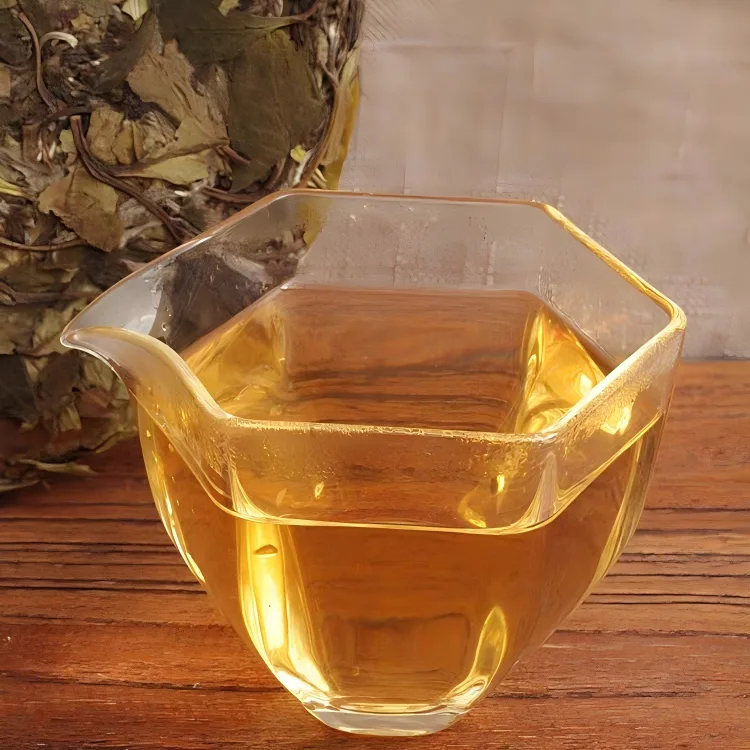
The liquor darkens as water hardness rises. The same leaf brewed in soft water gives a pale gold cup; brewed in hard water, it turns duller and slightly brown, which is a useful visual diagnostic.
What about pH and hardness together?
Both matter. Water hardness supplies the minerals that bind polyphenols, and pH decides how those reactions proceed. Alkaline water darkens the liquor further, which is why very hard or high-pH water is the usual culprit behind dull white tea.
Sources & References
Peer-Reviewed Research
- Zhang, H. et al. (2017). Effect of water quality on the main components in Fuding white tea infusions. Journal of Food Science and Technology 54(5):1206–1211. DOI:
10.1007/s13197-017-2571-2 - Cabrera, M. et al. (2021). Effect of water hardness on catechin and caffeine content in green tea infusions. Molecules 26(12):3485. DOI:
10.3390/molecules26123485 - Spiro, M. & Jaganyi, D. (1993). What causes scum on tea? Nature 364(6438):581. DOI:
10.1038/364581a0
What this guide does not claim
We do not claim that any particular TDS reading is required, that bottled water is better than filtered tap, or that water quality matters more than brewing technique. The studies show direction and mechanism; your own three-cup comparison shows what your water is actually doing.
Related reading: the four types of white tea — different grades respond to the same water in different ways.
Shop the teas in this guide
The grades described above, sold directly from our own stock. Prices are for the smallest size; every listing states the harvest, the county and the size options.
Editorial note
This guide is written by Steve Wood and reflects both published research and our own brewing. Where evidence is thin or contested, we say so rather than filling the gap. We sell white tea, which is a conflict of interest we disclose rather than hide.


One Comment