
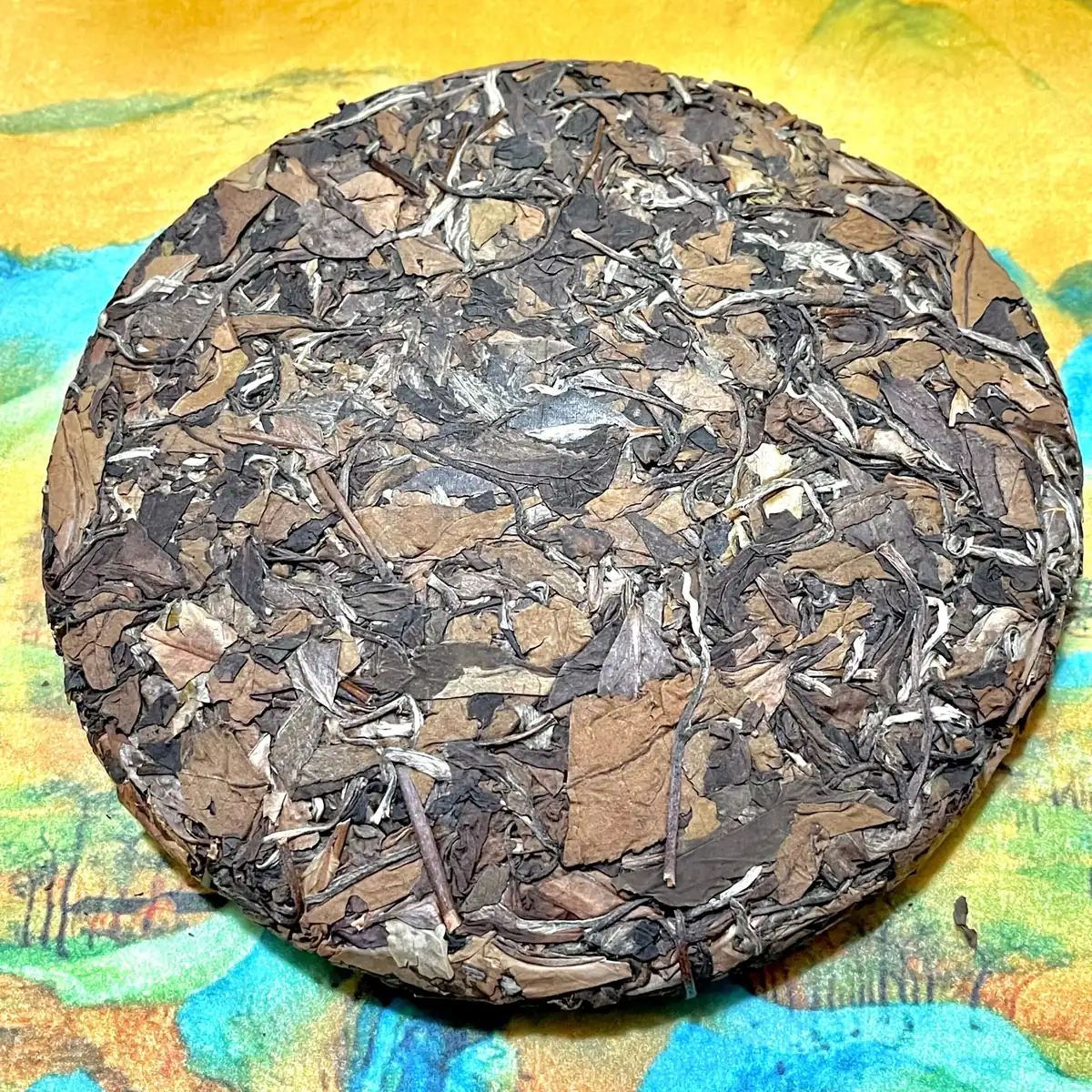
How to Store White Tea So It Ages Well
White tea is the one tea category Chinese standards explicitly allow you to keep for years rather than months. That permission comes with conditions, and the conditions are numerical. Get them right and the leaf changes slowly in a direction most drinkers enjoy. Get them wrong and you are not aging tea — you are storing damp leaves.
This guide covers the numbers, the containers, the refrigeration question, and how to tell when a cake has turned.
Table of Contents
The Three Numbers
Storing white tea comes down to three figures, and they come from two different standards.
| Number | What it means | Source |
|---|---|---|
| ≤25 °C | Storage temperature ceiling for white tea | GB/T 30375-2013 §5.3.5 |
| ≤50% | Relative humidity ceiling | GB/T 30375-2013 §5.3.5 |
| ≤8.5% | Moisture content of finished tea at packing | GB/T 22291-2017 |
The temperature figure is generous compared with green tea, which the same standard asks to keep at 10 °C or below. That difference reflects intent: green tea is meant to stay as close to fresh as possible, while white tea is meant to change. But the humidity ceiling is identical for both, and that is the number that matters most.
Why 8.5% Is Not the Mould Line
This is the most commonly misread figure in white tea storage. The 8.5% limit in GB/T 22291-2017 is a rule for producers at packing, not a threshold at which your tea spoils.
A survey of Chinese teas found that white tea and dark tea carry more water on average than green, black and oolong. White tea samples mostly sat between 8% and 12% moisture — above the standard’s own packing limit — yet their water activity averaged only 0.58, with most samples between 0.55 and 0.65 (Ikeda & Watase, 2016).
Water activity is the number that predicts spoilage, not moisture percentage. It measures how much of that water is available to microorganisms. Mould generally needs a water activity of about 0.80 to grow, and below 0.60 essentially nothing grows. Most Chinese teas measure under 0.65.
So white tea at 0.58 has margin — but not a wide one. Moving from 0.58 to 0.80 requires a real intake of moisture, and that is exactly what a failed seal plus a humid season delivers. The practical lesson is not to chase a moisture number. It is to keep the leaf sealed and dry, because water activity only goes up when the tea absorbs water.
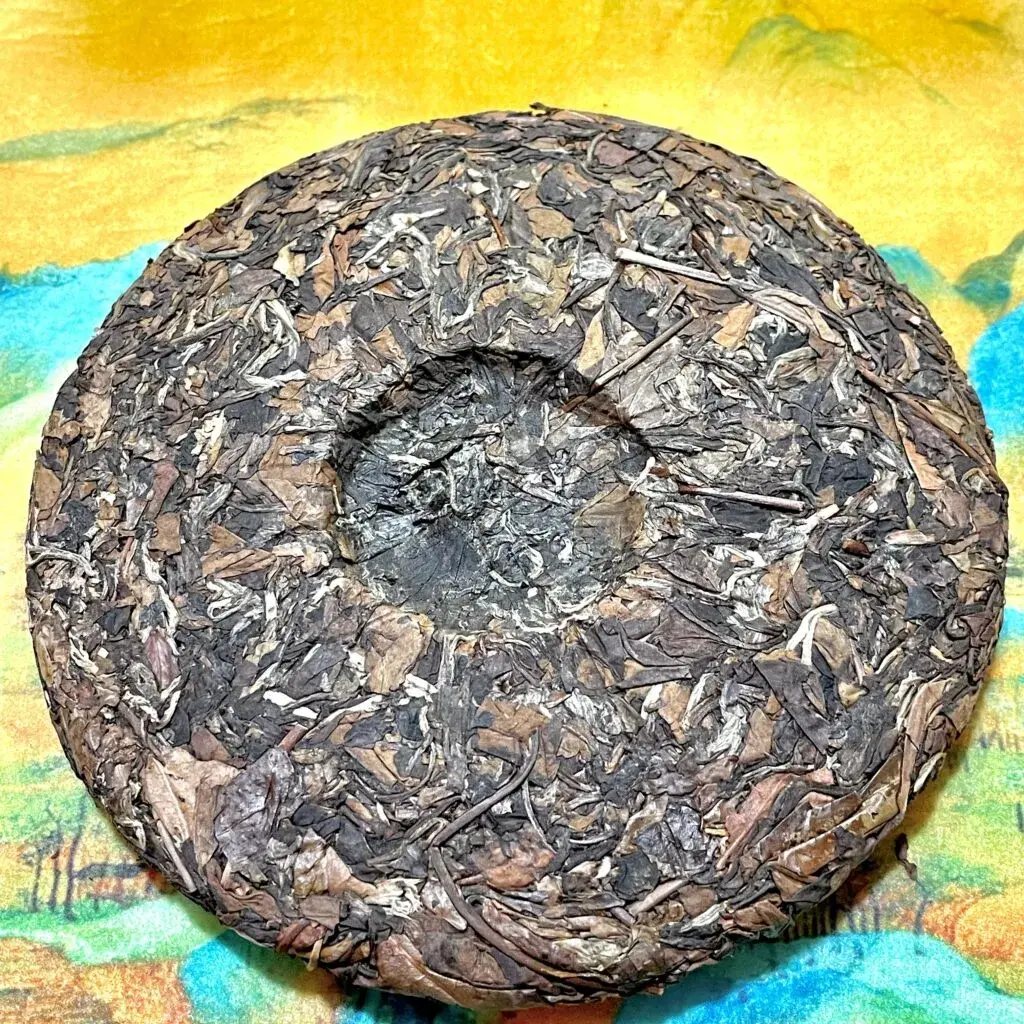
Containers: What Actually Works
No Chinese standard prescribes a specific container for home storage, so this section is industry practice rather than regulation. The principles are simple: block moisture, block light, block odours, and do not let the packaging itself become a moisture source.
The layered approach
A common setup in the Fujian trade is three layers — a food-contact-safe inner bag, a high-barrier outer bag (foil or metallised film), and a rigid carton for light and crush protection. Layer count matters less than function: the packaging must be clean, odour-free, moisture-resistant, sealed, and opaque.
What to avoid
Cardboard is a poor primary barrier. It absorbs moisture from the air and will happily pass it inward; it is a fine outer box and a bad inner wrapper. Keep cartons off damp floors and away from exterior walls, where condensation forms.
Thin plastic bags are also a weak barrier over months. They are adequate for a few weeks of daily use, not for a cake you intend to keep for five years.
Desiccants and oxygen absorbers
Do not add silica gel or oxygen absorbers unless they are approved for food contact and used exactly as the manufacturer instructs. An incorrectly handled desiccant can dry the leaf unevenly or, worse, be mistaken for something else in the tin. The standard-compliant approach is a sealed barrier, not chemical drying.
Refrigeration: The Honest Answer
“Never refrigerate white tea” is stated more absolutely than the evidence supports.
Refrigeration slows oxidation, which is why it is standard for green tea. For white tea intended for long aging, it works against you: the biochemical changes you want happen faster at room temperature, and repeated trips between cold and warm conditions create condensation on the leaf every time.
A workable position:
- New, unopened tea you will drink within a few months — refrigeration is defensible if the package is genuinely sealed against moisture and odours. Let it return to room temperature fully before opening, or condensation will form on the cold leaf.
- Opened tea, daily-drinking tea, and anything you intend to age — a cool, dark, dry cupboard is simpler and safer. Household refrigerators cycle humidity and carry food odours, and tea is very good at absorbing both.
The deciding question is not “cold or warm” but “stable or cycling”. A stable cupboard at 22 °C beats a refrigerator that opens twenty times a day.
Odours, Light and Movement
Tea is hygroscopic and highly adsorbent. It will pick up the smell of coffee, spices, perfume, smoke, cleaning products and cooking fat, and the pickup is not reversible. Store it away from all of those, and away from sinks, kettles and exterior walls.
Light accelerates the degradation of pigments and some aroma compounds, so opaque packaging is not cosmetic. A glass jar on a sunny shelf is the worst common choice.
Movement matters less than people think, but compression does: a cake crushed under other boxes will shed leaf and break its own structure. Give cakes their own space.
What Happens Over Years
White tea does change with storage, and the changes are measurable — though not always in the direction folklore suggests.
A study spanning white teas up to twenty years old found total catechins falling sharply after the first two years and almost gone by year twenty, with tea polyphenols, free amino acids and soluble sugars also declining over long storage. Caffeine, notably, was among the compounds that changed least (Zhou et al., 2014).
A tighter study followed Zhenghe Bai Mu Dan from 2015 to 2022 — same cultivar, picking standard, processing and storage — and found water extract, flavonoids, tea polyphenols, free amino acids, catechins, theophylline and theobromine all falling significantly. Its sensory finding is the useful part: sweetness and mellowness rose year by year while freshness and bitterness fell (Shen & Zhu, 2025).
One honest caveat: the direction of the flavonoid change is disputed. Zhou et al. reported flavonoids rising with age, significantly so at twenty years; Shen and Zhu reported them falling over eight years. Different grades, spans and methods. We state the disagreement rather than pick the more flattering number.
Is older better?
Not indefinitely. A study of cakes aged 2 to 19 years found tea polyphenols, free amino acids and thearubigins declining and total flavonoids and theabrownins rising, with four years of storage scoring best on sensory evaluation. Another trial on Zhenghe white tea found the suitable condition differed by grade: Bai Mu Dan at 25 °C and 40% humidity, Shou Mei at 25 °C and 60%.
So “older is better” is not a rule. There is a window, it depends on grade and storage, and past a certain point the tea becomes smooth but thin.
What counts as aged
There is a standard for this. T/CSTEA 00021-2021 defines aged white tea as white tea naturally aged for five years or more, with characteristics clearly distinct from new tea, and classifies it into three style types. A three-year-old cake is not “aged white tea” in the standard’s sense, whatever the shop says.
How to Tell a Cake Has Turned
You cannot test water activity at home, but you can read the physical signs.
- White fuzzy patches on the surface, distinct from the natural silvery down on buds. Down is even, attached and part of the leaf; mould is patchy, raised and sits on top.
- A persistent musty smell that does not blow off after a few minutes in open air. A brief cellar note can fade; mould does not.
- Caking or heating inside the cake — leaf that has matted into a solid block, or a cake that feels warm.
If any of those are present, discard the tea. Rinsing will not fix it. The rinse research that exists concerns pesticides, not mycotoxins, and there is no washing step that makes mouldy tea safe.
One regulatory note worth knowing: GB 2761, the Chinese standard for mycotoxin limits in food, does not currently list tea. That is not evidence that tea is risk-free — it means there is no national limit to test against, and some trade associations set their own. Damp storage is the main route to a problem, which is why the humidity number matters more than the temperature number.
How Long Will It Keep?
There is no single answer, because “keep” means two different things: remaining drinkable, and improving.
Under GB/T 30375-2013, white tea may be stored long-term provided the storage conditions are met — the standard sets limits rather than an expiry date, and the 2017 product standard notably allows for long-term storage where the 2008 version did not. In practice, the limiting factor is almost never the calendar. It is the cupboard.
The sensory trajectory is roughly this:
- Year 0–2. Fresh, floral, hay-sweet. Catechins are still high; astringency is present but moderate. This is the period most drinkers who say they “don’t like aged tea” actually enjoy.
- Year 3–5. The transition. Freshness fades, sweetness and body increase, and the tea starts to taste like the aged tea people describe. One study of cakes aged 2–19 years scored four years highest on sensory evaluation.
- Year 5+. Formally “aged white tea” under T/CSTEA 00021-2021. Chenxiang (aged aroma) develops; the liquor darkens.
- Year 10–20. Catechins approach depletion — a twenty-year sample measured almost none — and the tea becomes very smooth but can also become thin. This is where “older is better” stops being reliable.
Two cautions. First, these are tendencies, not guarantees: the same grade stored at 40% and at 65% humidity will not age the same way, and a badly stored five-year cake can be worse than a well-stored two-year one. Second, published studies disagree on details — including whether flavonoids rise or fall — so treat any specific “peak year” as one study’s finding rather than a law.
A Storage Checklist
- Inner bag food-grade, sealed, and squeezed of excess air
- Outer barrier opaque and moisture-resistant
- Rigid box, off the floor, away from exterior walls
- Location stable in temperature, dark, and free of smells
- Target ≤25 °C and ≤50% relative humidity; a cheap hygrometer costs little and tells you the truth
- Check every few months, and after any seasonal change, for package damage, dampness, insects and odour
- Keep the inner bag sealed. Opening it to “let the tea breathe” is not a practice we recommend
If you want the fuller picture on how aging changes the cup, and which grade benefits most, see our Shou Mei aging guide. If you are still choosing what to buy, the guide to the four types covers grades and vintage claims, and the caffeine guide explains why aged tea does not become low-caffeine tea.
Frequently Asked Questions
What is the best container for storing white tea?
An airtight, opaque container with a sealed inner bag. Storing white tea in glass jars looks good but exposes it to light, and storing white tea in a Yixing jar alone allows continuous air exchange.
What humidity is safe for storing white tea?
50% relative humidity or below, per GB/T 30375-2013. Storing white tea above that risks the leaf taking up moisture past the 8.5% limit set by the product standard.
Can I store white tea in the fridge?
Not recommended. Storing white tea cold invites condensation every time the container is opened, and the leaf is hygroscopic. Cool, dark and dry beats cold.
How long can I keep storing white tea before it fades?
Storing white tea for five years or more is normal for Shoumei, and the standard definition of aged white tea starts at five years. Bud-only grades change less and are usually drunk younger.
Does storing white tea near other tea affect it?
Yes. Storing white tea beside strong-smelling tea, spices or coffee will taint it, because the dry leaf absorbs odours readily. Keep it separate and sealed.
Should I keep storing white tea in its original packaging?
Only if the original packaging is airtight and opaque. Storing white tea in a paper bag or a thin pouch lets moisture and odours through, and storing white tea that way for months will flatten it.
Does storing white tea in a metal tin affect the taste?
Not the metal itself, but a tin that does not seal will. Storing white tea in a well-sealed tin is fine; storing white tea in a decorative tin with a loose lid is not.
Sources & References
Standards
- GB/T 30375-2013 — Tea storage. §5.3.5 sets white tea at ≤25 °C and ≤50% relative humidity.
- GB/T 22291-2017 — White tea product standard. Moisture ≤8.5%, ash ≤6.5%, water extract ≥30%.
- T/CSTEA 00021-2021 — Aged white tea. Defines aged white tea as naturally aged for five years or more, with three style types.
- GB 2761 — Mycotoxin limits in food. Tea is not currently listed.
Peer-Reviewed Research
- Ikeda, N. & Watase, T. (2016). Moisture contents and water activities in Chinese tea. Tea Research Journal (茶業研究報告) 122:9–14.
- Zhou, Q. et al. (2014). 不同年份白茶的主要生化成分分析 [Main biochemical components of white tea stored for different years]. 食品工业科技 2014(09):351–354. DOI:
10.13386/j.issn1002-0306.2014.09.068(Chinese-language) - Shen, Y. & Zhu, H. (2025). 仓储 1~8 年间政和白牡丹茶感官品质及理化成分变化 [Sensory and physicochemical changes in Zhenghe Bai Mu Dan over 1–8 years of storage]. 食品工业科技. DOI:
10.13386/j.issn1002-0306.2024090170(Chinese-language) - Xie, K. et al. (2024). 不同年份白茶饼主要化学成分的变化 [Changes in the main chemical components of white tea cakes of different vintages]. 中国食品学报 24(1):252–262. (Chinese-language)
- Wang, P.-F. et al. (2025). Optimization of storage conditions for Zhenghe white tea: effects of temperature and humidity on sensory and physiochemical qualities over one-year storage. Journal of Agriculture and Food Research 24:102448. DOI:
10.1016/j.jafr.2025.102448
What this guide does not claim
We do not claim that white tea improves with unlimited age, that any particular container is required by Chinese standards for home storage, or that refrigeration ruins tea. The standards give limits; the research gives directions; your own hygrometer gives you the actual conditions in your cupboard.
Shop the teas in this guide
The grades described above, sold directly from our own stock. Prices are for the smallest size; every listing states the harvest, the county and the size options.
- 2020 Shouning Shou Mei cake, 300 g — $45.90
- 2019 Shouning Shou Mei cake, 350 g — $49.90
- 2015 Jianyang Xiaobai Shou Mei cake, 350 g — $54.90
Editorial note
This guide is written by Steve Wood and reflects both published research and our own brewing. Where evidence is thin or contested, we say so rather than filling the gap. We sell white tea, which is a conflict of interest we disclose rather than hide.


8 Comments