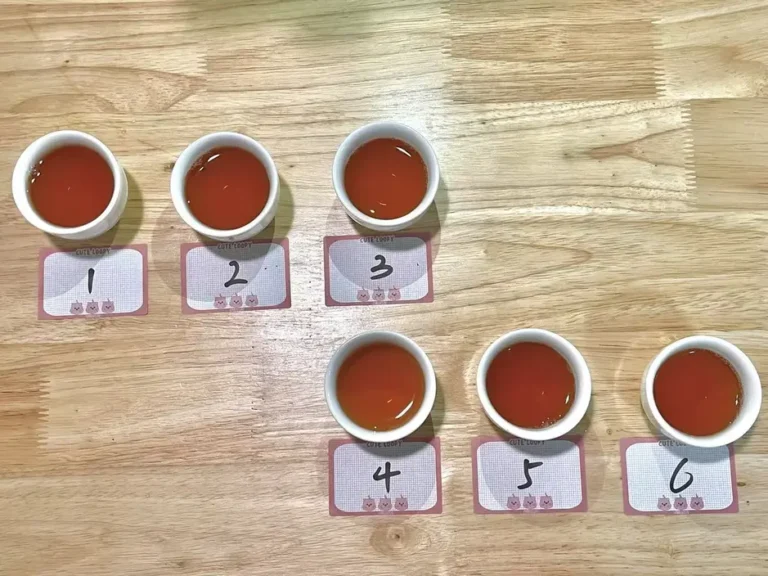
Aged Pu-erh Tea: What Changes and Where It Stops
Aged pu-erh tea is the category’s most expensive promise and its least regulated claim. The standard permits long storage; it says nothing about improvement. What actually happens to a cake over twenty years has now been measured, and the results are more specific than the folklore.
This page covers what ageing does chemically, where the process plateaus, what storage conditions produce which result, and how to store pu-erh tea at home without ruining it.
Table of Contents
What the Standard Says About Aged Pu-erh Tea
GB/T 22111 sets no shelf life. It states that under compliant storage conditions, pu-erh tea is suitable for long-term storage, and it lists the conditions: clean, ventilated, dark, dry, free of odours, never stored beside toxic or strongly scented materials.
For aged pu-erh tea that is a permission rather than a promise. The standard does not contain the word “ageing,” and it does not contain the phrase usually translated as “the older the better.”
The closest official statement is a note in the 2008 approval announcement: under suitable storage conditions, the sensory and physical indicators of raw tea will move in the direction of ripe pressed tea. There is no quantified timeline attached, and no claim that the movement is always an improvement.
What Aging Does to the Leaf
The most useful study on aged pu-erh tea anywhere in the literature followed same-origin, same-storage samples across 1 to 22 years and found the chemistry moving in stages rather than smoothly.
| Period | What happens |
|---|---|
| 1–4 years | Rapid early change; bitterness begins to soften |
| 6–10 years | Bitterness recedes further; aroma shifts from green to fruity |
| 14–18 years | Non-volatile compounds stabilise; aroma continues to reorganise |
| 19–22 years | Non-volatiles essentially stable; aroma still moving |
The direction of change is consistent throughout. Polyphenols, catechins and amino acids fall. Theabrownin, thearubigin and gallic acid rise. In the cup, that reads as a tea that becomes darker, softer, less bitter and more complex.
The finding that matters most is the plateau. After roughly fourteen years the non-volatile compounds stop changing much, while the aroma keeps developing. That is the honest shape of the “the older the better” claim: real, measurable, and not indefinite.
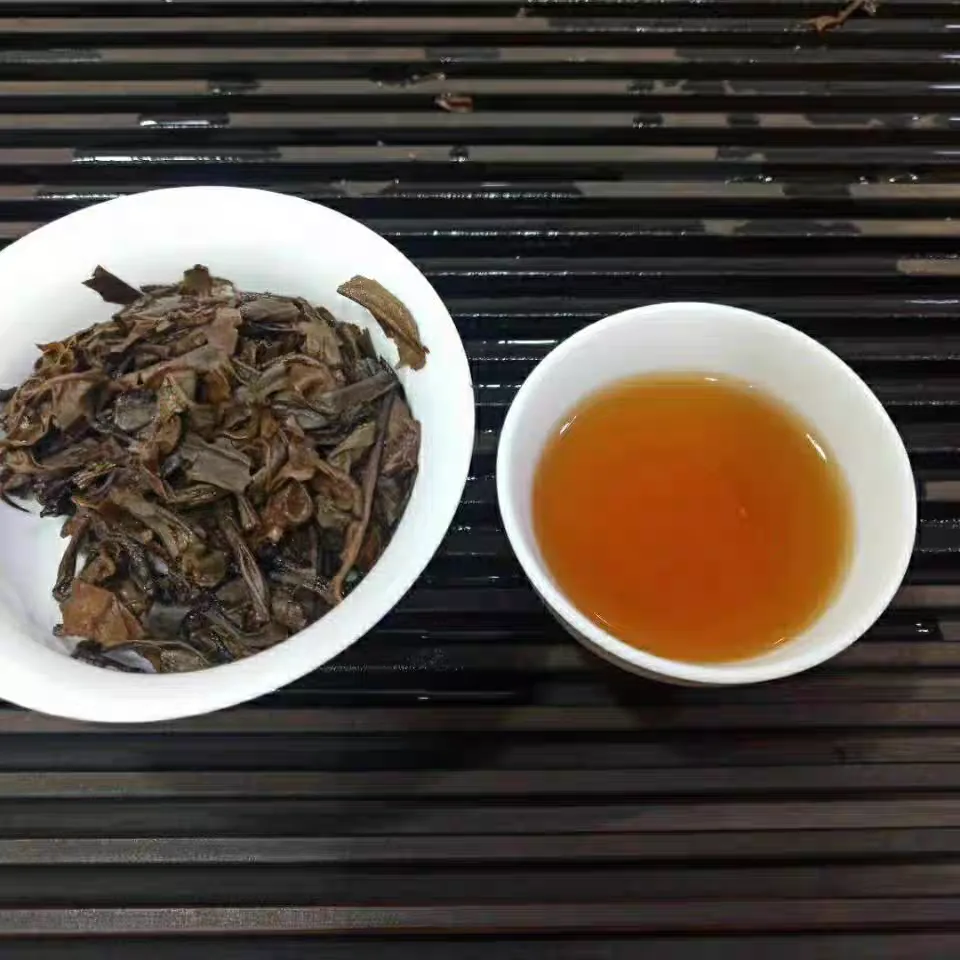
Storage Conditions Decide Everything When Aging Pu-erh Tea
Two cakes of the same tea, stored differently for ten years, will not be the same tea. Storage is a bigger variable than age.
The controlling measure is water activity — the availability of water for chemical and microbial reactions, rather than total moisture. Research puts the optimal range at 0.60 to 0.70. Above 0.70, off-flavours develop and the risk of unwanted microbial growth rises.
| Storage | Result in the cup |
|---|---|
| Cool and dry | Floral and sweet notes; glycosides and carotenoid derivatives dominate |
| Hot and humid | Methoxybenzene compounds; a taste the trade calls old wood |
| Too wet | Mustiness, off-flavours, potential mould |
| Too dry | Slow change, thin cup, aromatics lost |
Neither cool-dry nor hot-humid is objectively better; they produce different teas, and the trade argues about which is correct. What is not arguable is that above 0.70 water activity the change becomes degradation.
Dry and Wet Storage for Aged Pu-erh Tea
The trade uses two terms, dry storage and wet storage, and the first thing to know is that neither is a standard term. GB/T 22111 does not define them.
Dry storage usually means relative humidity around 50 to 70 percent at moderate temperature, typically associated with Kunming and northern storage. Change is slow, aromatics are preserved, and the tea keeps a brighter character longer.
Wet storage means deliberately higher humidity, historically associated with Hong Kong and Guangdong warehouses. Change is fast, the tea darkens quickly, and the cup becomes smooth and woody — but the margin between accelerated ageing and spoilage is narrow.
What buyers should understand is that wet storage is not automatically a defect, despite the way the term is used in marketing. A well-managed humid warehouse produces tea that many drinkers prefer to dry-stored tea of the same age. A badly managed one produces tea that smells of a cellar.
Raw vs ripe pu-erh explains why only raw tea is aged deliberately.
Aging Pu-erh Tea at Home
Home storage is simpler than the trade’s vocabulary suggests, and most of it is about avoiding mistakes rather than engineering conditions.
Keep it away from smells. Compressed tea absorbs odours readily. A cake stored beside spices, coffee or soap will taste of them permanently.
Avoid kitchens and bathrooms. Both have humidity swings that push water activity above the safe range.
Keep it dark. Light degrades the leaf, and there is no benefit to displaying a cake in daylight.
Give it air, but not draughts. Ventilation prevents stagnant humidity; a constant draught dries the cake unevenly.
Do not seal it in plastic. A sealed bag traps moisture and prevents the slow exchange that ageing requires. Paper or a breathable container is better.
For most drinkers in a temperate climate, a cupboard away from the kitchen is adequate. In a humid climate, a dehumidifier or a sealed container with a humidity buffer is worth the effort.
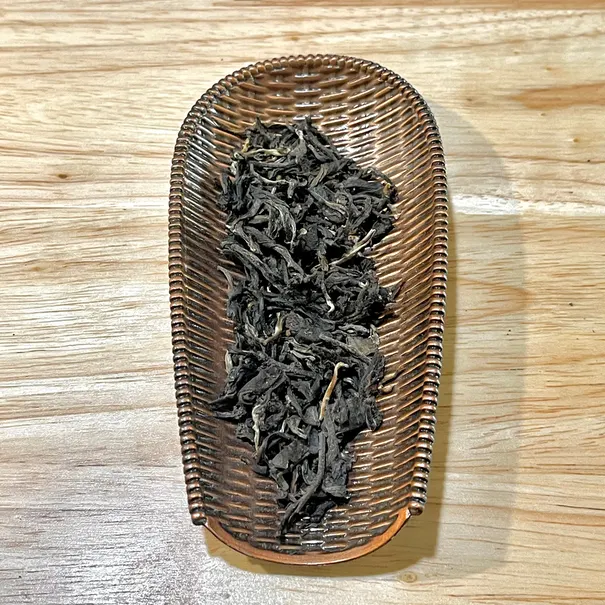
Myths About Aging Pu-erh Tea, and What Aged Pu-erh Tea Really Does
“Older is always better.” Ageing moves tea in a direction; it does not guarantee the destination. A badly made cake stored for twenty years is a badly made cake that has been stored for twenty years.
“Any old cake is valuable.” Price tracks provenance, storage history and provenance documentation, not the number on the wrapper. A vintage claim without a storage record is a claim about a wrapper.
“Ripe tea can be aged into something better.” Ripe pu-erh tea has already been through its transformation. It softens with time but will not become a different tea.
“Wet storage ruins tea.” Badly managed humid storage ruins tea. Well-managed humid storage produces a style many drinkers prefer.
Why Aged Pu-erh Tea Became a Market
The market for aged pu-erh tea has a specific commercial history, and knowing it explains a lot about current pricing.
Hong Kong drinkers had long kept pu-erh tea and preferred it mature. In the 1990s and 2000s, Taiwanese collectors bought old cakes from Hong Kong and began promoting the ageing story, which spread through the mainland after 2000. The idea that old tea is inherently valuable moved from a regional habit to a national investment thesis.
The result was a speculative bubble that collapsed in April 2007. The benchmark Dayi 7542 recipe fell from roughly 22,000 to 23,000 yuan per case to about 11,000 within six weeks, and the wider market dropped 20 to 50 percent. Industry estimates put the value destroyed at 200 to 340 million yuan.
That history is why vintage claims deserve scepticism. Pu-erh buying covers how to check one.
Which Teas Reward Ageing
Not every raw cake is worth holding for a decade, and the qualities that predict a good result are reasonably well understood within the trade.
Strong raw material. Tea that is thin when young becomes thin and old rather than thin and complex. Bitterness is a sign of catechins, and catechins are what makes the ageing process produce something. A cake that tastes of very little at five years will taste of very little at twenty.
Correct processing. Sun-dried tea that was properly kill-green and properly dried has the enzymes and microorganisms needed for slow change. Tea that was rushed or rain-damaged does not recover.
Good storage from day one. This is the variable buyers focus on least and should focus on most. Ten years in the wrong conditions produces ten-year-old bad tea, and a cake that spent its first five years in a damp warehouse carries that history permanently.
A pressed form. Raw pu-erh tea is pressed by definition, and the compression slows and evens the change. That is a feature of aging pu-erh tea rather than an incidental detail of packaging.
What does not predict anything is the wrapper. A mountain name and a year printed on paper are claims, and the tea inside has to justify them.
Why the Aroma Keeps Moving After the Body Stops
One finding from the long-term studies deserves its own explanation, because it is the part of aged pu-erh tea that drinkers notice most and understand least.
After roughly fourteen years, the non-volatile compounds — the catechins, amino acids and pigments that determine body, bitterness and colour — settle into a new balance and stop changing much. The aroma does not follow the same curve. It keeps reorganising, and a cake at twenty years will smell different from the same cake at fifteen even though its body has stopped moving.
The likely reason is that aroma compounds are generated and lost continuously through slow oxidative and hydrolytic reactions, and there is no equilibrium point for them in the way there is for the bulk chemistry. The result is a tea whose structure is fixed but whose top notes keep shifting, which is why experienced drinkers describe old cakes as having a settled body and a lively nose.
For anyone storing tea, that has a practical implication. If you are buying aged pu-erh tea to drink, judge it on body and bitterness, which are stable. If you are buying it to keep, the aroma is going to move whether you want it to or not.
Frequently Asked Questions
Does pu-erh tea get better with age?
Raw pu-erh tea changes measurably, becoming softer and more complex, but research shows the non-volatile compounds stabilise after about fourteen years while aroma continues to develop. It is a real change with a limit, not an indefinite improvement.
How long can pu-erh tea be stored?
The standard sets no limit and states that the tea is suitable for long-term storage under compliant conditions. Practical windows depend on whether the tea is raw or ripe and how it is stored.
What humidity should I store pu-erh tea at?
Research puts optimal water activity at 0.60 to 0.70. Above 0.70, off-flavours and microbial problems become likely.
What is the difference between dry and wet storage?
Dry storage means moderate humidity and slow change; wet storage means higher humidity and faster change. Neither is a standard term, and well-managed humid storage is a legitimate style rather than a defect.
How do I know if a cake has been stored well?
Brew it. A well-stored aged pu-erh tea gives a clear liquor with no cloudiness, a nose that reads as wood, dried fruit, camphor or old paper rather than cellar or damp, and a finish that lingers. A badly stored one smells of a basement, tastes sharp at the edges, and the off-note sits on top of everything else.
Is a little white frost on an old cake mould?
Usually not. Dry-stored cakes often develop a light, even frosting of crystallised compounds. Mould is fuzzy, patchy and coloured, and it smells musty rather than woody. The distinction is visual and olfactory, not a matter of degree.
Can I age ripe pu-erh tea?
It will soften and lose its fermented edge, but it has already been through its transformation. Ageing ripe tea is not the same proposition as ageing raw tea.
Does old pu-erh tea taste better?
That depends on the tea and the storage. Age changes the cup; whether the change suits you is a matter of preference, and a badly stored old cake is not improved by its age.
Shop the pu-erh teas in this guide
Sold from our own stock. Every listing states the year, the region and the storage.
- 2003 Bulang raw tuocha, $19.90
Or browse the full pu-erh collection.
Related Reading
the category as a whole, why only raw tea is aged, checking a vintage claim and storage contrast.
Sources & References
Standards
- GB/T 22111-2008 — Geographical indication product: Pu-erh tea. Storage clauses; suitability for long-term storage; no shelf life specified.
- GB/T 30375-2013 — Tea storage.
- Announcement No. 60 of 2008 — note that raw tea moves in the direction of ripe pressed tea under suitable storage.
Peer-Reviewed Research
- Foods (2026). 1–22 year storage study; four stages; non-volatiles stabilising around 14 years. DOI:
10.3390/foods15193448 - Journal of Advanced Research (2026). Water activity 0.60–0.70 optimal; above 0.70 produces off-flavours. DOI:
10.1016/j.jare.2025.10.078 - Food Chemistry (2021). Aroma differences between dry-cool and hot-humid storage. DOI:
10.1016/j.foodchem.2021.129186
What this page does not claim
We do not claim ageing improves every cake, that dry storage is superior to wet, or that a vintage claim can be verified from a wrapper. Where the trade uses an undefined term, the page says so.