Pu-erh Shapes: Cakes, Bricks and the 357 g Question
Pu-erh shapes are not decoration. The cake, the brick and the bowl were each designed for a specific transport problem, and the format still affects how the tea ages and how you break it apart.
This page covers the standard formats, the 357 g question that generates more confusion than it deserves, what the numbers on a wrapper mean, and how shape changes the tea.
Table of Contents
The Core Pu-erh Shapes
Pressed pu-erh tea is classified by shape rather than by grade, because the standard gives pressed tea no quality tiers at all. Four formats dominate.
| Format | Typical weight | Origin of the shape |
|---|---|---|
| Round cake | 357 g | The default drinking format |
| Brick | 250–1,000 g | Easier to stack and transport |
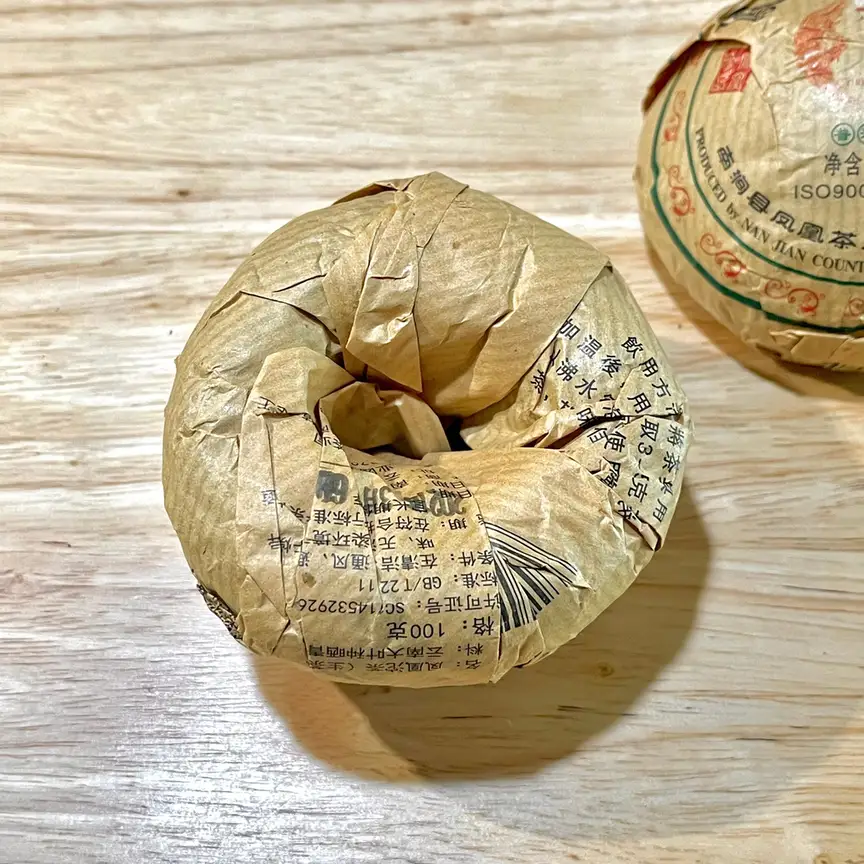
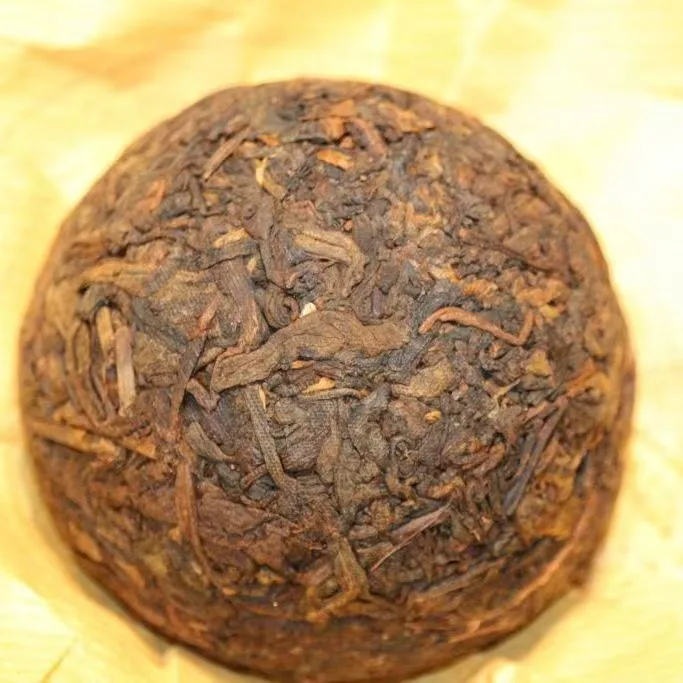
| Bowl (tuo cha) | 100 g, 250 g | Trade format, especially the Sichuan route |
| Mushroom and column | Varied | Presentation and tribute pieces |
The bowl-shaped tuo cha is worth a note because its name causes trouble. The trade name comes from the Sichuan river port where much of it was sold, and the Chinese character used for it is a later substitution. It is not related to the word for a tube of cakes, and anyone describing tuo cha as a “tong” has mixed up two different packaging terms.
Pu-erh Shapes and the 357 Gram Question
Almost every pu-erh cake sold today weighs 357 g, and the explanations offered for that number are mostly wrong.
A common claim is that each cake was historically seven liang, and seven liang converts to 357 g. That conversion does not work. The Qing dynasty standardisation of 1735 specified seven round cakes to a tube with a total weight of 49 liang, which in modern units is roughly 1.5 to 1.8 kg — not the 2.5 kg that seven 357 g cakes would weigh. The arithmetic for “seven liang per cake” does not reconstruct the historical figure.
Another popular explanation involves the I Ching, or the digits 3, 5 and 7 summing to fifteen for a full moon. Neither has documentary support.
The likely explanation is packaging arithmetic of a later period. Seven cakes to a tube at 2.5 kg and twelve tubes to a case at 30 kg are round numbers that make shipping and accounting convenient, and 357 g is what makes those totals come out. It is a trade convention from the state-run era, not a legal requirement and not an ancient rule.
What matters practically is that 357 g is a convention rather than a standard. Cakes in other weights are legitimate, and the standard does not specify 357 g anywhere.
Pu-erh Shapes and the Units Above the Cake
Pu-erh packaging stacks in fixed multiples, and the vocabulary is worth knowing because it appears on wrappers.
A tube (tong) holds seven cakes. That is the unit most often quoted in wholesale pricing, and it is where the “seven sons” name comes from — the seven-cake tube rather than any individual cake.
A case (jian) holds twelve tubes, which is 84 cakes or about 30 kg. Traditional packaging used bamboo leaf and bamboo strips, which is why old wrappers often show the impressions of the binding.
The terminology shifted in the 1970s, when the state tea company replaced the older word for a round cake with the modern one. That is why older documents and modern packaging use different terms for the same object.
How Pu-erh Shapes Affect the Tea
Shape is not neutral. It changes how the tea ages and how it brews.
Surface area. A pressed cake exposes much less surface than the same weight of loose leaf. Moisture and oxygen reach the interior slowly, which is why pressed tea ages more evenly and more slowly. It is also why raw pu-erh tea is pressed by definition: the shape is part of the ageing method.
Density. A tightly pressed cake takes longer to open when brewing and gives up its character more gradually across a session. A loosely pressed cake extracts faster and can turn bitter sooner. Neither is better; they suit different teas.
Edge versus centre. The outer layer of a cake ages faster than the core because it is closer to the air. A well-aged cake can be noticeably different at the edge than in the middle, which is why some drinkers break a cake from the centre outward and others take a cross-section.
Breaking the Common Pu-erh Shapes
How you break a cake affects both the cup and what is left for later.
Work from the edge with a tea pick or a thin blade, following the layers rather than forcing through. A cake that shatters into dust wastes leaf and extracts unevenly, because the dust gives up everything immediately while the chunks give up nothing.
Break off what you will drink over two to four weeks and leave the rest whole. Compression protects the interior, and a cake broken all at once changes faster because the surface area has increased.
Some drinkers separate a cake into two zones: an outer ring that has aged faster and an inner core that is younger in character. Drinking them separately is a way of tasting the ageing process inside a single cake.
Pu-erh Shapes and What the Wrapper Says
Pu-erh labels carry a specific vocabulary, and three elements matter most.
The recipe number is a four-digit code identifying the blend and the factory, not the year. A 7542 is a recipe, and the same recipe has been made for decades. Confusing the recipe with a vintage is a common mistake.
The year should be the pressing year, though in practice it is a claim. Wrappers are printed before the tea is made and are often reprinted later, so a wrapper date is not evidence.
The factory mark identifies the producer. The state-run factories dominated for decades and their marks carry market weight, which is why counterfeiting concentrates there.
Pu-erh buying covers how to check the claims, and pu-erh aging covers what the shape does to the tea over time.
Which Format to Buy
The pu-erh shapes differ in how convenient they are to drink, and the difference matters more for a beginner than the tea inside does.
A 100 g tuo cha is the easiest entry point. It is a single session-sized unit, needs no breaking skill to start, and it is usually the cheapest way to try a producer. The trade-off is that tuo cha is often made from smaller or blended leaf rather than the best material.
A 250 g brick sits in the middle. It breaks into manageable pieces, stores well, and is common for ripe tea. Bricks are often the best value in the category because they carry less of a presentation premium than round cakes.
A 357 g round cake is the standard drinking format and the one most collectors buy. It gives dozens of sessions, ages predictably, and holds resale value better because the format is what the market expects. The trade-off is that you commit to a large amount of a tea you have not tasted.
For a first purchase, a tuo cha or a small brick tells you more per dollar than a cake. For a tea you already know you like, the cake is the better format because it ages consistently and stores compactly.
How Pu-erh Shapes Store
Format changes the storage problem, and not just because of size.
Compressed shapes are the easiest to keep. The dense interior is protected from humidity swings, so a cake survives a period of imperfect storage better than loose leaf would. Surface mould is usually superficial on a well-pressed cake and can be brushed away, which is not true of loose tea.
Tuocha have more surface area relative to their weight than cakes, so they dry out faster and age faster. That is an advantage if you want a tea to mature quickly and a disadvantage if you want it to last.
Bricks behave like cakes but with more edge per unit volume, which means the outer layer ages faster and can diverge from the core more noticeably.
What does not change with format is the environmental requirement. Water activity in the 0.60 to 0.70 range, no strong smells, no light, and no sealed plastic. Pu-erh aging covers the conditions.
Shape and Counterfeiting
The compromise between convenience and authenticity matters here more than in most categories, because pu-erh shapes are unusually easy to imitate.
A wrapper with a famous factory mark can be printed, and the cake inside can be anything. Shape helps a little: a genuine factory cake has a characteristic press, weight and edge profile, and experienced buyers check these before anything else. But shape is a weak signal compared with provenance.
What that means practically is that an unfamiliar pu-erh shape at an unfamiliar price deserves more scrutiny than an unfamiliar tea in a category where the wrapper matters less. Pu-erh buying covers what to check.
Frequently Asked Questions
Why is pu-erh shaped into cakes?
Compression reduces volume for transport and slows the ageing process by reducing surface area. The cake is a functional format rather than a decorative one.
Why does a pu-erh cake weigh 357 g?
So that seven cakes make a 2.5 kg tube and twelve tubes make a 30 kg case. It is a trade convention from the state-run era, not a legal requirement, and the popular “seven liang” explanation does not reconstruct the historical weights.
What is a seven sons cake?
The name refers to the seven-cake tube rather than to an individual cake. A tube holds seven cakes, and the terminology comes from the Qing dynasty standardisation of 1735.
Is a 357 g cake the standard?
The standard sets no weight for pressed pu-erh tea. 357 g is a widespread convention, and other weights are legitimate products.
What is tuo cha?
A bowl-shaped compressed format, typically 100 g or 250 g, named after the Sichuan river port where much of it was sold. It is unrelated to the word for a tube of cakes.
Are all pu-erh shapes pressed the same way?
No, and the press is one of the few things a buyer can assess. A stone-pressed cake is usually looser and easier to break; a machine-pressed cake is denser and takes longer to open when brewing. Neither is better, but a cake that shatters when you touch it was pressed too dry, and one that will not yield at all was pressed too tight.
Does the shape affect the taste?
It affects how the tea ages and how fast it brews. A dense cake changes more slowly and extracts more gradually than a loose one, but the raw material matters more than the format.
Shop the pu-erh teas in this guide
Sold from our own stock. Every listing states the year, the region and the storage.
- 2022 Menghai ripe brick, $19.99
- 2021 Lincang ripe tuocha, $19.90
Or browse the full pu-erh collection.
Related Reading
the category as a whole, what shape does to ageing, checking the wrapper and brewing and breaking, and the health evidence.
For a drinker rather than a collector, the format question is mostly about convenience. A cake is the default because it ages well and the market expects it, but a brick or a tuo cha gives you the same tea in a size that suits a smaller appetite for commitment.
The formats also differ in how much skill they demand. A tuo cha can be brewed by anyone with a gaiwan; a tightly pressed cake rewards a pick, a steady hand and some patience. Neither is a better tea, but they suit different levels of commitment.
Pressed formats and their requirements are covered by GB/T 22111, published on China’s national standards platform. The compressed tea series is catalogued at the standards service.
Sources & References
Standards
Standard text and dates are published on China’s national standards platform: openstd.samr.gov.cn.
- GB/T 22111-2008 — Geographical indication product: Pu-erh tea. Pressed tea is classified by shape and specification; no weight is specified and pressed tea is not graded.
- GB/T 9833 series — Compressed tea standards, including Part 5 for tuo cha and Part 6 for tight tea. Pu-erh cakes and bricks have no separate part and fall under GB/T 22111.
Historical Records
- Qing standardisation of 1735: seven round cakes to a tube, total weight 49 liang. In modern units this is roughly 1.5–1.8 kg, which does not correspond to seven 357 g cakes.
- 1970s: the state tea company replaced the older term for a round cake with the modern one.
What this page does not claim
We do not claim the 357 g weight has a legal basis, that the seven-liang or I Ching explanations are correct, or that shape determines quality. Where a number is a trade convention, the page says so.