
Pu-erh Caffeine: The Numbers and the Lovastatin Myth
Pu-erh caffeine is one of the category’s most searched questions and one of its least regulated numbers. The standard does not test caffeine at all, so every figure comes from measurement rather than from a specification.
This page covers the measured range, what a cup actually delivers, why ripe and raw are closer than people assume, and the lovastatin claim that gets repeated with numbers that do not survive arithmetic.
Table of Contents
Pu-erh Caffeine: The Measured Range
Pu-erh caffeine sits in the same band as every other tea type: roughly 2 to 5 percent of dry leaf weight. A measured ripe sample came in at 3.39 percent.
That figure might surprise drinkers who expect the category to be stronger. Pu-erh is dark, heavily processed and often old, and the visual weight of the tea suggests more stimulant than it carries. The chemistry does not agree.
What matters is that the processing does not destroy caffeine. Fermentation consumes catechins, converts them into theaflavins and theabrownins, and leaves the xanthine alkaloids largely untouched. A ripe cake and a raw cake made from the same leaf carry similar caffeine even though they taste completely different.
One point worth stating plainly: GB/T 22111 does not set a caffeine limit and does not list caffeine among its test items. Any number quoted for pu-erh caffeine is a measurement, not a compliance figure. Pu-erh tea covers what the standard does specify.
Pu-erh Caffeine in the Cup
Dry-leaf percentages are not what you drink, and the pu-erh method changes the arithmetic more than in other categories.
At 6 to 8 g per 100 ml, a session holds more leaf than a green tea or oolong session would. That pushes the total dose up even though the percentage is unremarkable. The saving grace is that pu-erh tea is drunk across many short infusions rather than one long steep, so the caffeine arrives gradually over an hour or more.
A rough calculation for a 7 g session at 3 to 4 percent: roughly 210 to 280 mg of caffeine is present in the leaf. Not all of it extracts, and the first three or four infusions carry most of what does. A realistic estimate for the session is somewhere in the range of 80 to 140 mg, spread across the drinking.
That is comparable to one to one and a half cups of coffee, delivered far more slowly. The practical difference is the shape of the dose rather than its size.
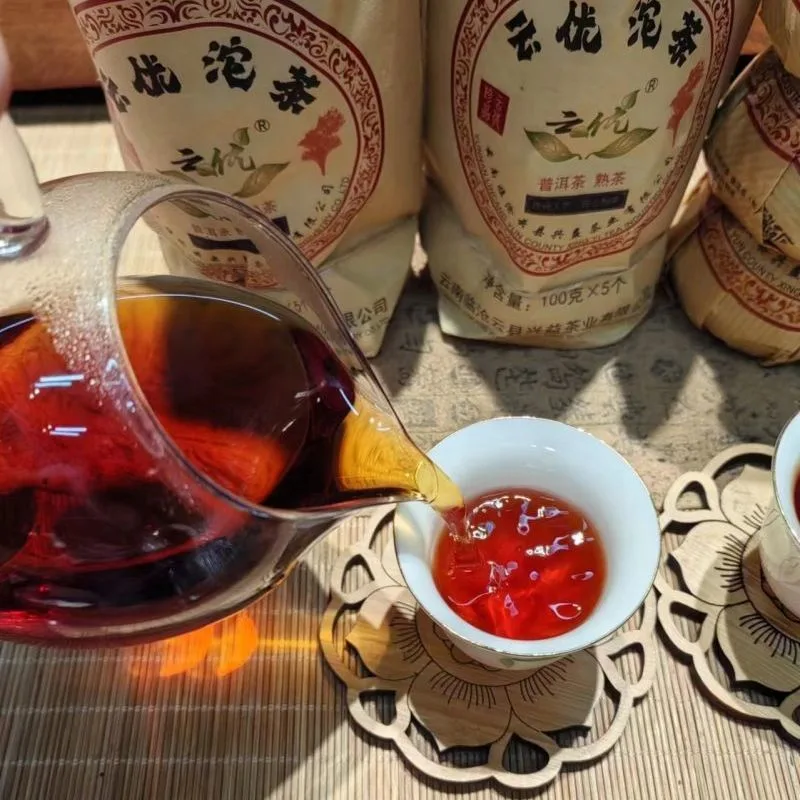
Pu-erh Caffeine in Raw vs Ripe
The two types are closer in caffeine than their flavours suggest.
Raw pu-erh tea is unfermented and retains its original compound profile, so caffeine sits at the level the leaf started with. Ripe pu-erh tea has been through pile fermentation, which does not consume caffeine, so its level stays close to the raw material’s.
Measured ripe samples at 3.39 percent fall inside the expected range for raw leaf. The difference between the two is not a caffeine difference; it is a difference in everything else.
The variable that does move caffeine is leaf grade and picking standard, not processing. Bud-heavy material carries more than coarse leaf, the same pattern found across every tea category.
The Lovastatin Claim
Ripe pu-erh tea contains lovastatin, a statin, and this fact gets repeated in ways that mislead.
The measurements: 20.61 to 226.38 nanograms per gram in ripe tea, rising with storage, reaching around 513 ng/g in a 25-year sample. Unaged raw tea shows none.
Now the arithmetic. A 226 ng/g cake, at 10 g of tea a day, delivers about 2.3 micrograms of lovastatin. A therapeutic dose of lovastatin is 20 to 80 milligrams. The tea provides roughly four orders of magnitude less — a ten-thousandth of the smallest clinical dose.
So the compound is real, the measurement is real, and the health inference is not. Pu-erh caffeine pages that imply a statin effect are reporting a laboratory finding and skipping the conversion. Pu-erh benefits covers what the clinical evidence actually shows.
Other Compounds in Pu-erh Tea
Theabrownin is the pigment that defines ripe pu-erh’s colour, reaching 10 to 19 percent of dry weight in some lots. It is the subject of a separate line of metabolic research discussed on the benefits page.
GABA measures around 4.9 mg per gram in pu-erh tea against about 1.27 mg per gram in fresh leaf, according to values reported in the research literature. That is a real enrichment through processing, though the amounts remain small relative to a supplement dose.
Gallic acid rises during fermentation and storage as catechins break down. It contributes the slight sour-bright note that distinguishes ripe tea from raw.

Pu-erh Caffeine and the Safety Limits
Two reference points matter, and neither is specific to pu-erh.
The European Food Safety Authority sets 400 mg of caffeine per day for healthy adults, 200 mg in a single dose, and 200 mg per day in pregnancy.
Against those figures, a pu-erh session at 7 g per 100 ml is a moderate dose — typically under 150 mg across a long session. Two sessions plus a coffee would approach the daily limit without feeling like much.
What the research does not provide is evidence of a pu-erh-specific caffeine risk. The category’s documented safety concerns are about mycotoxins and storage, not about caffeine. Pu-erh processing covers the contamination question.
Timing
Caffeine has a half-life of roughly five hours in most people. Because a pu-erh session runs long, the last infusion can be drunk considerably later than the first, which extends the window in which caffeine is still arriving.
If you are sensitive, three adjustments work: use less leaf, stop after the fourth or fifth infusion, and avoid boiling the spent leaf in the evening, since the simmer extracts whatever caffeine is left.
What does not work is switching from raw to ripe in the hope of a lower dose. The caffeine is essentially the same.
Pu-erh Caffeine by Brewing Method
The same cake delivers very different amounts depending on how you brew it, and the variables are worth knowing because they are entirely under your control.
| Method | Relative caffeine | Why |
|---|---|---|
| Gaiwan, 5 infusions | Lowest | Most caffeine is in the first two; stopping early halves the dose |
| Gaiwan, 10+ infusions | Moderate | Long session extracts more across the rounds |
| Boiling the spent leaf | Adds a further share | The simmer extracts whatever is left |
| Large thermos, all day | Highest | Continuous extraction over hours |
The thermos method deserves a warning. It is the most common way pu-erh tea is drunk in Chinese offices, and it extracts far more than a gaiwan session because the leaf sits in hot water for hours. It also turns bitter. If you use a thermos, use less leaf — half a gaiwan dose is closer to right.
There is no pu-erh caffeine figure that holds across all methods. The leaf sets a ceiling and your brewing decides how much of it you take.
Pu-erh Caffeine Against Coffee
The comparison is useful because it explains why pu-erh tea feels different from coffee despite similar totals.
An eight-ounce cup of brewed coffee carries roughly 95 mg of caffeine, delivered in five minutes. A pu-erh session at 7 g might carry 80 to 140 mg, delivered across an hour of sipping.
The totals overlap; the curve does not. Coffee produces a sharp rise and a corresponding drop. A long pu-erh session produces a gradual rise that many drinkers describe as steadier, though the pharmacology is the same compound and the difference is primarily rate of intake.
What that means practically is that two pu-erh sessions in a morning can easily equal one large coffee, and people who would never drink two coffees may drink two sessions without noticing.
Can You Get Decaf Pu-erh?
Decaffeinated pu-erh tea exists but is rare, and the reason is instructive.
Decaffeination works on finished dry tea, which is then dried again. For a compressed cake that would mean breaking it, treating the leaf and re-pressing, which is expensive and damages the product. For loose ripe tea it is technically possible but commercially marginal, since the market for decaf pu-erh tea is small.
What you will find instead is aged tea marketed on the assumption that age reduces caffeine. It does not, not in any meaningful way. The xanthine alkaloids are stable through decades of storage.
If caffeine is the concern, the practical answer is to brew fewer infusions with less leaf rather than to look for a decaffeinated cake. Decaf green tea covers the decaffeination processes themselves.
Frequently Asked Questions
How much caffeine is in pu-erh tea?
About 2 to 5 percent of dry leaf weight, the same band as other tea types. A measured ripe sample came in at 3.39 percent. The standard does not set a caffeine limit.
Does pu-erh tea have more caffeine than other teas?
Not per gram. It sits in the same range. A pu-erh session may deliver more total caffeine because the leaf ratio is higher, but that is a brewing choice rather than a property of the tea.
Does ripe pu-erh tea have less caffeine than raw?
Not meaningfully. Fermentation does not consume caffeine, so the two stay close. Measured ripe tea at 3.39 percent falls inside the normal raw range.
Does pu-erh tea contain statins?
Ripe pu-erh tea contains lovastatin at 20.61 to 226.38 ng/g, rising with storage. At 10 g a day that is about 2.3 micrograms — roughly a ten-thousandth of a clinical dose. It does not produce a statin effect.
Does fermentation change pu-erh caffeine?
No. The xanthine alkaloids are stable through pile fermentation, so a ripe cake carries roughly what its raw material carried. Measured ripe tea at 3.39 percent sits inside the normal range for raw leaf, which is why switching between the two makes no difference to the dose.
Is pu-erh tea high in caffeine?
Per gram, no. Per session it can look high because a session uses 6 to 8 g, but the caffeine is spread across many short infusions over an hour or more.
Can I drink pu-erh tea at night?
Depends on your sensitivity. A short session of a few infusions carries little; a long session plus a boil carries more. Caffeine has a half-life of about five hours.
Shop the pu-erh teas in this guide
Sold from our own stock. Every listing states the year, the region and the storage.
- 2021 Lincang ripe tuocha, $19.90
Or browse the full pu-erh collection.
Related Reading
the category as a whole, the health evidence, how fermentation works and decaffeination processes.
The practical conclusion about pu-erh caffeine is that the tea is unremarkable in stimulant terms and the session size is what pushes the total up. That is a useful thing to know because it means the lever is entirely in your hands: less leaf, fewer infusions, and the dose falls without changing what you bought.
The single most useful thing to remember about pu-erh caffeine is that the leaf sets a ceiling and the brewing decides how much of it you take. Everything else — raw versus ripe, young versus aged, cheap versus expensive — makes far less difference than the number of infusions you pour.
One final comparison: a single espresso carries roughly 60 to 75 mg in about 30 ml, while a pu-erh session spreads a comparable total across a litre of water and an hour of sipping. The dose overlaps; the experience does not.
Caffeine content also does not change with price. An expensive aged cake and a cheap young tuocha made from similar leaf carry comparable amounts, and paying more buys flavour and provenance rather than a stronger cup.
Sources & References
Standards
- GB/T 22111-2008 — Geographical indication product: Pu-erh tea. Caffeine is not among its test items and no caffeine limit is set.
Peer-Reviewed Research
- Journal of Agricultural and Food Chemistry (2007). Lovastatin 20.61–226.38 ng/g in ripe pu-erh tea; 513 ng/g in a 25-year sample; not detected in unaged raw tea. DOI:
10.1021/jf071629p - Foods (2026). Storage chemistry; compound changes over 1–22 years. DOI:
10.3390/foods15193448 - Critical Reviews in Food Science and Nutrition (1997). Caffeine at 3–6 percent of dry leaf weight across tea types. DOI:
10.1080/10408399709527797
Regulatory Guidance
- EFSA (2015). 400 mg per day for healthy adults; 200 mg single dose; 200 mg per day in pregnancy. DOI:
10.2903/j.efsa.2015.4102
What this page does not claim
We do not claim pu-erh tea lowers cholesterol through its lovastatin content, that ripe tea is lower in caffeine than raw, or that the standard regulates caffeine in this category. Where a number is a measurement rather than a limit, the page says so.



2 Comments