
Chinese Black Tea Regions: 8 Provinces, Ranked by Style
Chinese black tea comes from a handful of provinces, and each one produces something recognisably different. Knowing the map is more useful than memorising brand names, because the province tells you what to expect in the cup before you open the tin.
This page covers how Chinese black tea is structured, the provinces that matter, and what is genuinely protected versus what is only marketed as though it were. It is worth reading the structure first, because almost every confusing claim about Chinese black tea comes from mixing up a category, a grade and a region.
Table of Contents
How This Page Differs From the Types Guide
This page is about where Chinese black tea comes from: the provinces, the terroir, and which names carry real geographical protection.
It does not re-explain the three manufacturing categories — Gongfu, broken and Souchong — or the six-grade system. Those are classification questions, and they are covered in types of black tea, which also covers the international teas and the Ceylon grading system. If you want to know what a category means, read that page. If you want to know which province makes what and what is actually protected, stay here.
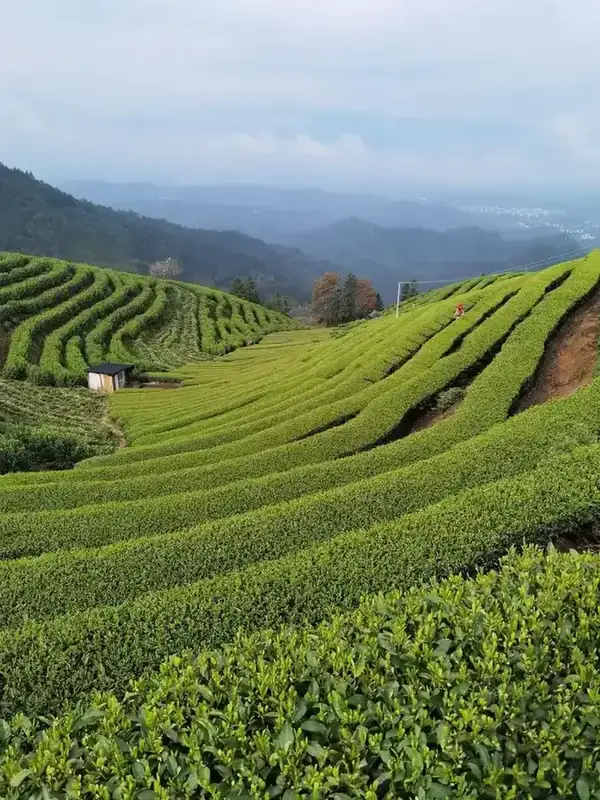
Anhui: Keemun
Keemun, from Qimen County and the surrounding areas of Dongzhi, Shitai, Yi and Guichi, is the reference point for refined Chinese black tea. It was created in 1875 by Yu Ganchen and Hu Yuanlong, who modelled the process on Fujian black tea.
Its signature has a measurable chemical basis. Keemun aroma depends on an unusually high geraniol content — geraniol reads as rose — supported by linalool, benzyl alcohol and phenylethanol. That combination is why Keemun is one of the few black teas that is arguably better without milk: the aroma is the product.
The protection history is a useful case study in Chinese geographical indications. Qimen received an origin mark in 2002, was widely recognised as a GI, went through a long dispute, registered a collective trademark in 2024, and was approved to use the geographical indication mark in 2026. “Protected” in Chinese tea often means a process still in progress rather than a settled status.
Fujian: Souchong and the Minhong Trio
Fujian is where Chinese black tea started, and it still produces the widest range of it.
Zhengshan Souchong comes from Tongmu Village in the Wuyi Mountains, finished over a pine fire at around 70 °C for six to twelve hours. The smoke compounds are longifolene at the highest level, plus longicyclene and the guaiacols. The standard separates this from smoked Souchong as a named product.
Jin Jun Mei was created in 2005 by a team led by Jiang Yuanxun at Zhengshantang, with Liang Junde producing the first batch. It is bud-only material from a defined area around Tongmu and belongs to the Souchong family. It is not a legal geographical indication: in 2013 the Beijing High Court treated the name as generic, and it is defined by an industry standard, GH/T 1118-2015.
The Minhong trio — the three Fujian Gongfu styles — are:
- Tanyang Gongfu from Fuan, dating from 1851
- Bailin Gongfu from Fuding, from the 1850s
- Zhenghe Gongfu from Zhenghe, mid-nineteenth century, switching to large-leaf material in 1875
These are the teas that the modern Fujian black tea industry was built on, and they are worth trying precisely because they are not fashionable. A well-made Tanyang has the aromatic lift of Keemun with more body.
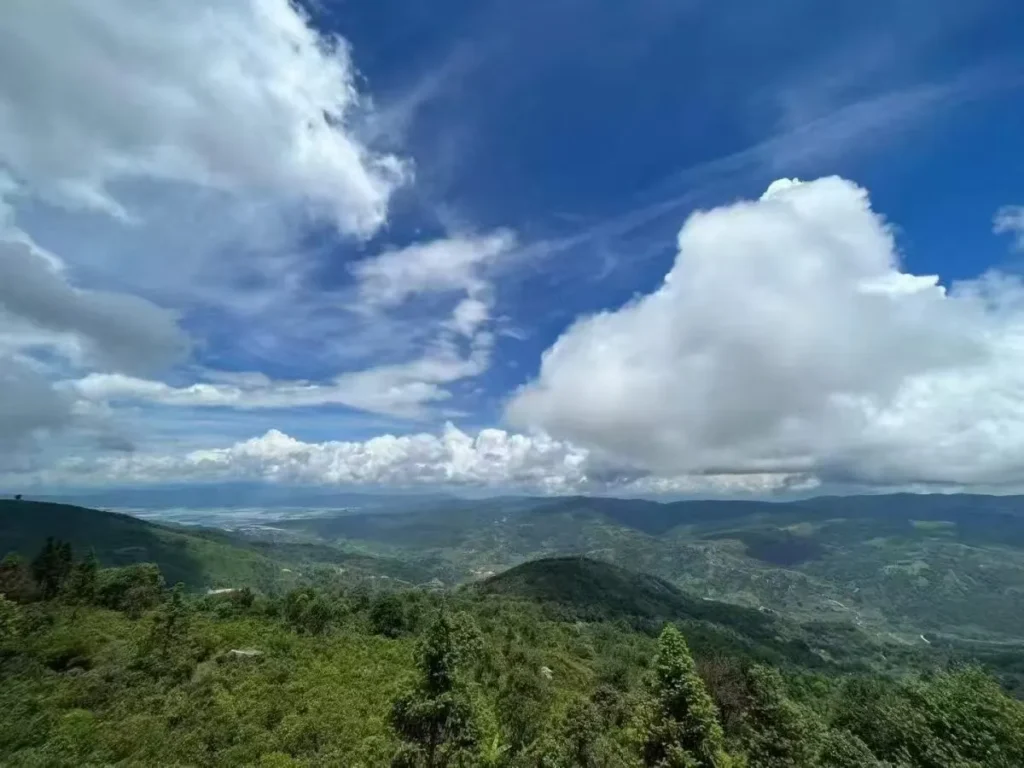
Yunnan: Dianhong
Yunnan is large-leaf country, and the difference shows immediately in the cup. Feng Shaoqiu developed Dianhong in 1938 and the Shunning experimental factory began volume production in 1939. The main areas are Fengqing, Lincang and Menghai, and “Fengqing Dianhong” holds a geographical indication certification trademark.
Large-leaf material carries more of the compounds that become theaflavins and thearubigins during oxidation, which is why Yunnan tea has weight, malt and colour that small-leaf teas cannot match. It is also why Dianhong is one of the few Chinese black teas that genuinely improves with milk — the body is there to support it.
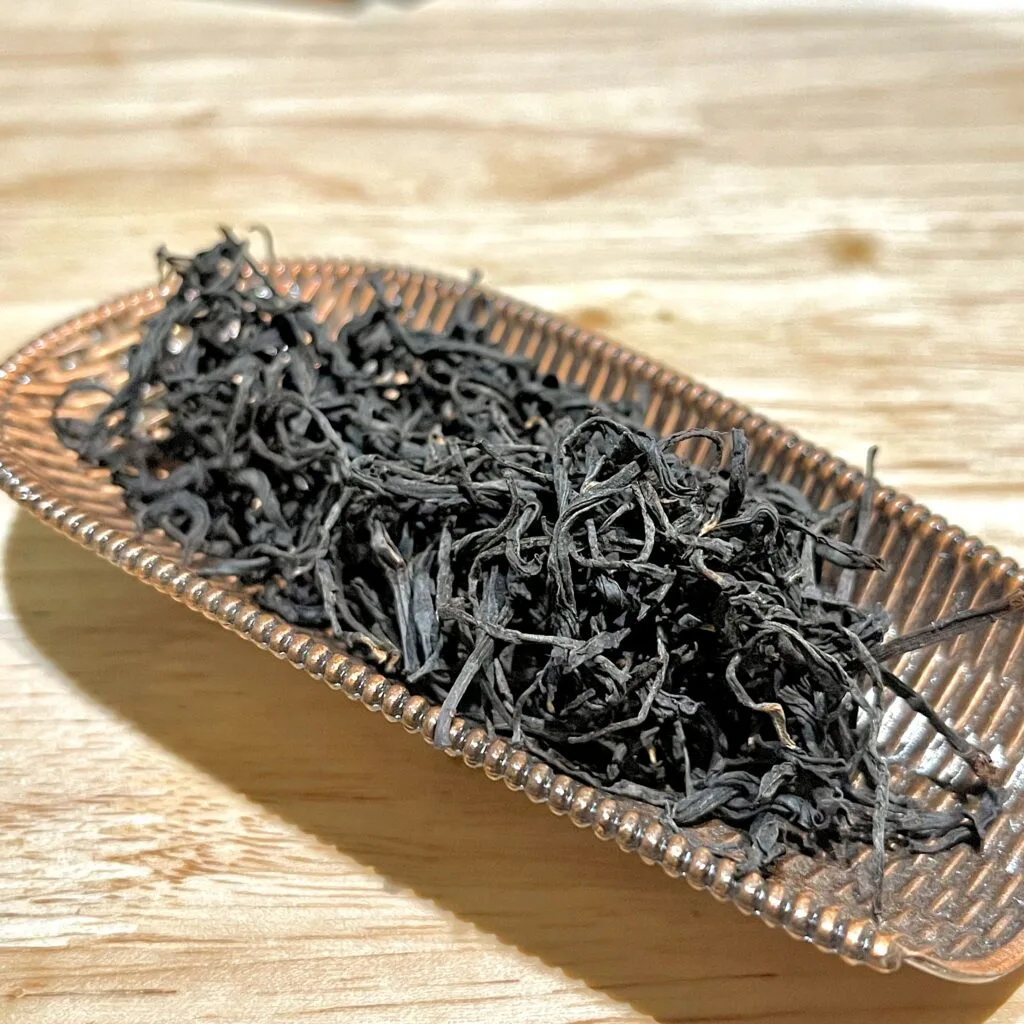
Guangdong: Yingde
Yingde black tea was first released in 1959, with the process standardised by 1964. Its defining cultivar is Yinghong No. 9, selected as a single plant between 1961 and 1986 and approved provincially in 1988.
Yingde became a national geographical indication product in 2006 and was included in the first China-EU GI list, which gives it a more settled protection status than most. In the cup it is malty and bright at once — more aromatic than Dianhong, with more body than Keemun.
The Second Tier: Hubei, Sichuan, Jiangxi
Three Gongfu traditions that deserve more attention than they get.
Yihong Gongfu — Yichang and Enshi, Hubei, from the mid-nineteenth century. Yidu holds a geographical indication.
Chuanhong Gongfu — Yibin, Sichuan, developed in the 1950s. Gaoxian holds a geographical indication. Made from early-spring buds, it is sweet and high-aromatic.
Ninghong Gongfu — Xiushui, Jiangxi, dating from 1821 to 1850. It holds an agricultural geographical indication since 2011 and became a national GI product in 2025.
None of these are household names outside China, which is exactly why they are interesting: the same quality tier as the famous teas at a lower price, because nobody is bidding them up.
There is a practical lesson in that for anyone buying Chinese black tea. The famous names carry a premium that is partly quality and partly recognition. If you are drinking rather than collecting, the second tier is where the value sits, and it is not a compromise — a well-made Ninghong is a serious tea.
What Is Actually Protected
| Tea | Protection status |
|---|---|
| Qimen (Keemun) | Origin mark 2002; collective trademark 2024; GI mark approved 2026 |
| Zhengshan Souchong | Origin protection 2002; GI certification trademark 2010–2011 |
| Jin Jun Mei | Not a GI — generic since 2013; industry standard GH/T 1118-2015 |
| Fengqing Dianhong | GI certification trademark |
| Yingde | National GI product 2006; China-EU GI list |
| Yidu (Yihong) | Geographical indication |
| Gaoxian (Chuanhong) | Geographical indication |
| Ninghong | Agricultural GI 2011; national GI product 2025 |
The Jin Jun Mei row is the one that matters most, because it is the tea most often described as protected when it is not. A generic name means anyone can use it, which is why so much of what is sold under it is not bud-only tea.
Two things about this table are worth understanding rather than just reading. First, protection status changes: Qimen’s entry spans four dates across twenty-four years because the process was contested and slow. A page that says simply “protected” is describing a snapshot that may already be out of date.
Second, protection and quality are different questions. A geographical indication says where a tea comes from and that it was made to a specified process. It does not guarantee that a particular tin is good. Chinese black tea regions produce excellent and mediocre tea under the same protected name, in the same way that a protected wine appellation contains both.
Choosing by Region
If you know what you want in the cup, the province narrows the search fast.
- Aromatic and refined, no milk — Keemun, Tanyang Gongfu
- Malty and full, takes milk — Dianhong, Yingde
- Smoky and savoury — Zhengshan Souchong
- Sweet, delicate, expensive — Jin Jun Mei
- Value at quality — Yihong, Chuanhong, Ninghong
One caution across the whole map: province and name tell you style, not grade. A Keemun can be special grade or sixth grade and both are legally Keemun. The grade on the packet, and the price, are what tell you which tier you are buying — see types of black tea for how the grading systems differ.
Why the Province Matters at All
Chinese black tea regions differ for three reasons, and they operate in sequence.
Cultivar. Yunnan grows large-leaf Camellia sinensis var. assamica; Fujian and Anhui grow small and medium-leaf varieties. Large leaf has more of the polyphenol substrate that becomes theaflavins and thearubigins during oxidation. That single fact explains most of the difference between a Dianhong and a Keemun before processing even begins.
Climate and elevation. Cool, slow growth — the high Wuyi valleys, the Anhui hills — concentrates aromatic compounds. Fast growth in hot conditions produces bulk and strength instead. This is why the same cultivar grown in two places does not make the same tea.
Processing tradition. A region also carries a way of working. Fujian’s Souchong tradition includes the pine-fire finish; Anhui’s Gongfu tradition is built around careful rolling and a long, slow oxidation; Yunnan’s industry was built in the 1930s with modern equipment and large-leaf handling.
None of these is decisive on its own, and a skilled maker in the wrong region will beat a careless maker in the right one. But taken together they explain why the map is worth learning.
The Souchong Belt
One corner of the Chinese black tea map is genuinely different in kind rather than degree: the small area around Tongmu Village in the Wuyi range.
This is where black tea was first made, sometime between 1567 and 1610, and it is the only place that produces smoked Souchong under the protected name. The smoke is a processing step rather than a regional accident — the leaf is finished over a pine fire at around 70 °C for six to twelve hours — but the practice exists here and essentially nowhere else.
It is also where Jin Jun Mei was invented in 2005, which makes the same small area both the oldest and one of the newest sources of premium Chinese black tea. That combination is unusual and it is part of why the teas from here command what they do.
Frequently Asked Questions
Which province makes the best Chinese black tea?
There is no answer to that, and any page offering one is selling something. Anhui makes the most refined, Yunnan the fullest, Fujian the widest range, Guangdong the best value at the malty end. “Best” depends on whether you want aroma, body, smoke or price.
Is Yunnan black tea the same as Dianhong?
Dianhong is the established name for Yunnan Gongfu black tea, so in practice yes, though “Yunnan black tea” is also used loosely for broken and CTC production from the province.
Why is Chinese black tea more expensive than Indian?
Partly labour — strip-style Gongfu tea is picked and processed by hand at small scale — and partly market. Indian and Ceylonese production is dominated by large estates and CTC lines built for volume. The comparison is not like for like; a Chinese Gongfu tea and a CTC Assam are different products serving different markets.
What is the difference between Gongfu and Souchong black tea?
Both are strip products. Souchong is defined by being finished over a pine-smoke fire, which is why the standard treats it as a separate category rather than a style of Gongfu tea.
Are Chinese black teas aged?
Generally no, with the exception of some aged Shoumei-style white teas and specific regional practices. Black tea is not a category that improves with age — the aromatics fade. If a seller describes a Chinese black tea as aged, ask what specifically is supposed to have improved.
Related reading: types of black tea, black tea history, jin jun mei tea.
Shop the black teas in this guide
Sold directly from our own stock. Every listing states the harvest, the county and the size options.
- Xiao Cai Cha 2026, Shouning — $19.90
- Jin Jun Mei 2026, single bud, Shouning — $19.90
Not sure which one? Browse the full black tea collection — or start with the guides above.
Sources & References
Standards
Standard numbers and dates can be verified at China’s national standards platform: std.samr.gov.cn.
- GB/T 13738.1-2017 / .2-2017 / .3-2012 — Broken, Gongfu and Souchong black tea product standards.
- GB/T 30766-2014 — Tea classification, defining the three categories.
- GH/T 1118-2015 — Industry standard for Jin Jun Mei.
History and Regional Records
- Keemun created 1875 by Yu Ganchen and Hu Yuanlong.
- Dianhong developed 1938 by Feng Shaoqiu; volume production 1939.
- Yingde released 1959, process standardised 1964; Yinghong No. 9 selected 1961–1986, approved 1988.
- Tanyang Gongfu from 1851; Bailin from the 1850s; Zhenghe from the mid-nineteenth century.
- Ninghong from 1821–1850; agricultural GI 2011; national GI product 2025.
Peer-Reviewed Research
- Tanaka, T. & Matsuo, Y. (2020). Production mechanisms of black tea polyphenols. Chemical and Pharmaceutical Bulletin 68:1131–1142. DOI:
10.1248/cpb.c20-00295 - Yao, S. et al. (2005). Key aroma compounds in Lapsang Souchong. Journal of Agricultural and Food Chemistry 53:8688–8693. DOI:
10.1021/jf058059i
What this page does not claim
We do not claim one province produces better tea than another, that a geographical indication guarantees quality, or that Jin Jun Mei is protected when it is not. Where a protection status is still moving, we give the dates rather than a tidy answer.
