
How to Store Black Tea: 5 Enemies and the Fixes
How to store black tea is mostly about protecting aroma, not preventing spoilage. Black tea is a dry, shelf-stable product — it does not go mouldy under normal conditions and it does not become unsafe. What it does is lose the compounds that make it worth drinking, quietly, over months.
The practical problem with how to store black tea is that the loss is gradual and hard to notice until the tin is nearly empty. By the time a tea tastes flat, the damage happened months earlier — which is why a routine matters more than a single good decision.
Table of Contents
What the Standard Actually Says
China’s tea storage standard, GB/T 30375-2013, sets conditions for black tea specifically: below 25 °C and below 50% relative humidity. For comparison, the same standard puts green tea at 10 °C or below — a much stricter requirement, because green tea’s intact catechins oxidise readily while black tea’s have already been converted.
That difference is worth noting when thinking about how to store black tea versus green tea. Black tea is more forgiving than green tea in storage, which is why the advice for the two is not identical. It is not, however, forgiving enough to be stored anywhere.
The Five Things That Ruin Stored Tea
Light
Light accelerates the breakdown of the aromatic compounds and the pigments. A clear glass jar on a sunny counter is the worst possible container, and it is also the most common. Store in something opaque, or in a cupboard.
Heat
Heat drives off volatile aroma compounds and speeds up the reactions that flatten the cup. The 25 °C ceiling in the standard is not arbitrary. A cupboard above a kettle or beside an oven is a bad place for a tea tin.
Moisture
Black tea is hygroscopic — it pulls water from the air. Above 50% relative humidity the leaf absorbs moisture, which dulls the aroma and eventually creates conditions where mould can grow. This is why the fridge is a bad idea unless the tea is vacuum-sealed: every time you open the door, warm humid air meets cold tea and condenses.
Oxygen
Oxygen continues the oxidation that processing was supposed to stop. Slowly, over months, the theaflavins that give brightness decline. A tin that is half full of air will stale faster than a full one.
Odour
Dry tea absorbs smells from its surroundings very effectively. This is a useful property when you are scenting tea with jasmine, and a serious problem when the tin sits next to coffee, spices or a bag of onions. It is the most common cause of a tea that “tastes wrong” for no obvious reason.
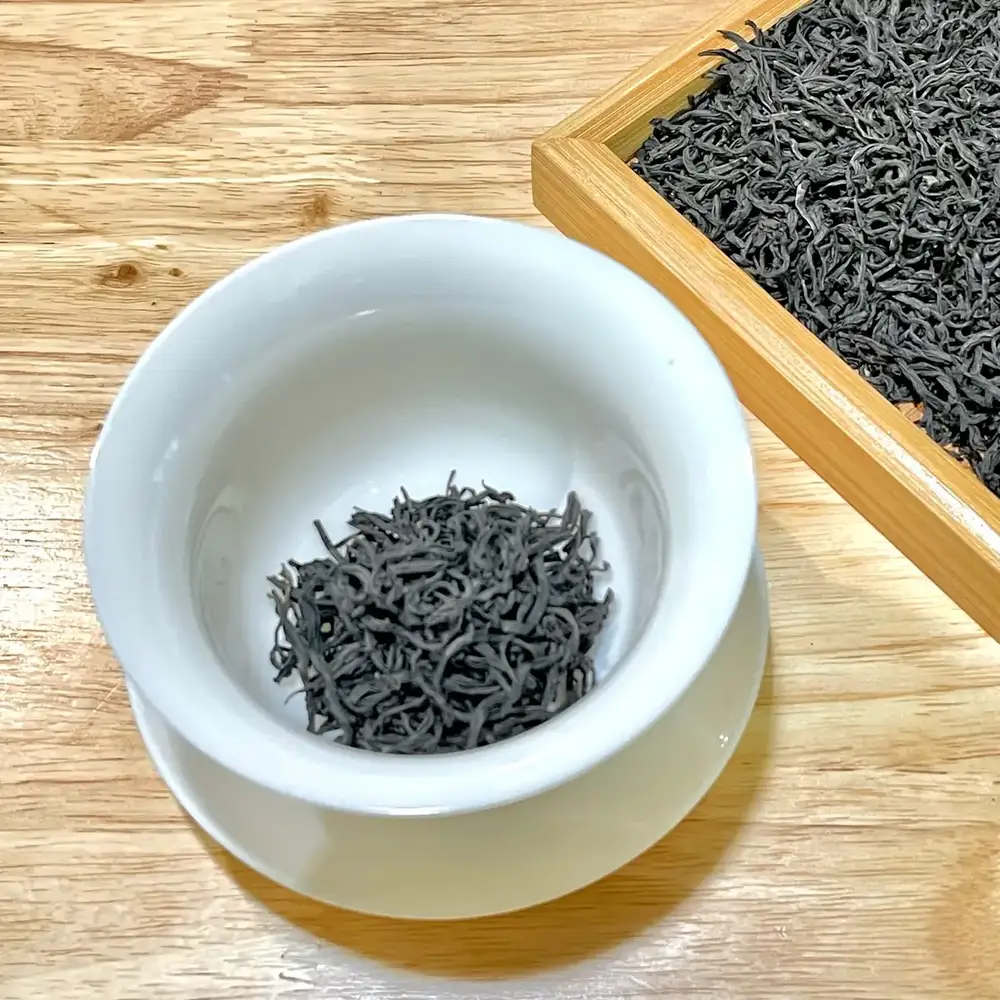
Choosing a Container
The requirements for how to store black tea are simple: opaque, airtight, and small enough that there is not much air above the leaf.
| Container | Verdict |
|---|---|
| Metal tin with a tight lid | Good — the standard choice |
| Dark glass jar with a rubber seal | Good, if kept in a cupboard |
| Clear glass jar | Poor — light damage |
| Original foil pouch, resealed | Good for short-term |
| Cardboard box | Poor — no moisture barrier |
| Fridge | Bad unless vacuum-sealed |
One detail that matters more than people expect: buy tins sized to how much tea you actually drink. A 500 g tin that takes a year to empty will have stale tea at the bottom long before it is finished. Two smaller tins, one opened and one sealed, work better than one large one.
The Fridge Question
Refrigeration is standard advice for green tea and bad advice for black tea, and it is the part of how to store black tea that people most often get wrong. The reason is condensation.
A sealed tin taken out of a cold fridge into a warm kitchen develops condensation on the inside surface as it warms. That moisture goes straight into the leaf. Unless the tea is vacuum-sealed in a portion you will use in one go, the fridge does more harm than good.
For black tea, a cool dark cupboard is better than a fridge. If your kitchen regularly exceeds 25 °C in summer, a wine fridge or a cool pantry is the practical answer — but not the main fridge.
Does Black Tea Improve With Age?
No, and this is worth stating plainly because it is widely marketed. Any honest guide to how to store black tea has to start by removing the expectation that waiting improves it.
Unlike Shoumei white tea or pu-erh, black tea has no tradition of aging and no evidence that aging improves it. The aromatics that make a good black tea — the geraniol in Keemun, the honey and lychee in Jin Jun Mei, the malt in Dianhong — are volatile. They decline over time. Nothing replaces them.
The confusion arises because some teas are sold as vintages, and because aged white tea genuinely does change for the better. Black tea is not in that category. A 2015 black tea sold at a premium in 2026 is, with rare exceptions, simply older tea.
What does not happen: black tea does not become unsafe to drink, and it does not “go off” in the way food does. It just becomes less interesting.
How Long It Keeps
Roughly a year for an opened tin stored properly, and up to two years for a sealed one. These are not hard limits — tea stored well at eighteen months is better than tea stored badly at six.
Three signs that stored tea has declined:
- The dry leaf has lost its smell. Open the tin and sniff. A good black tea should smell malty and distinct. If you have to put your nose right into it, the aroma has gone.
- The cup is flat rather than weak. Weakness means you need more leaf. Flatness means the compounds are gone and more leaf will not help.
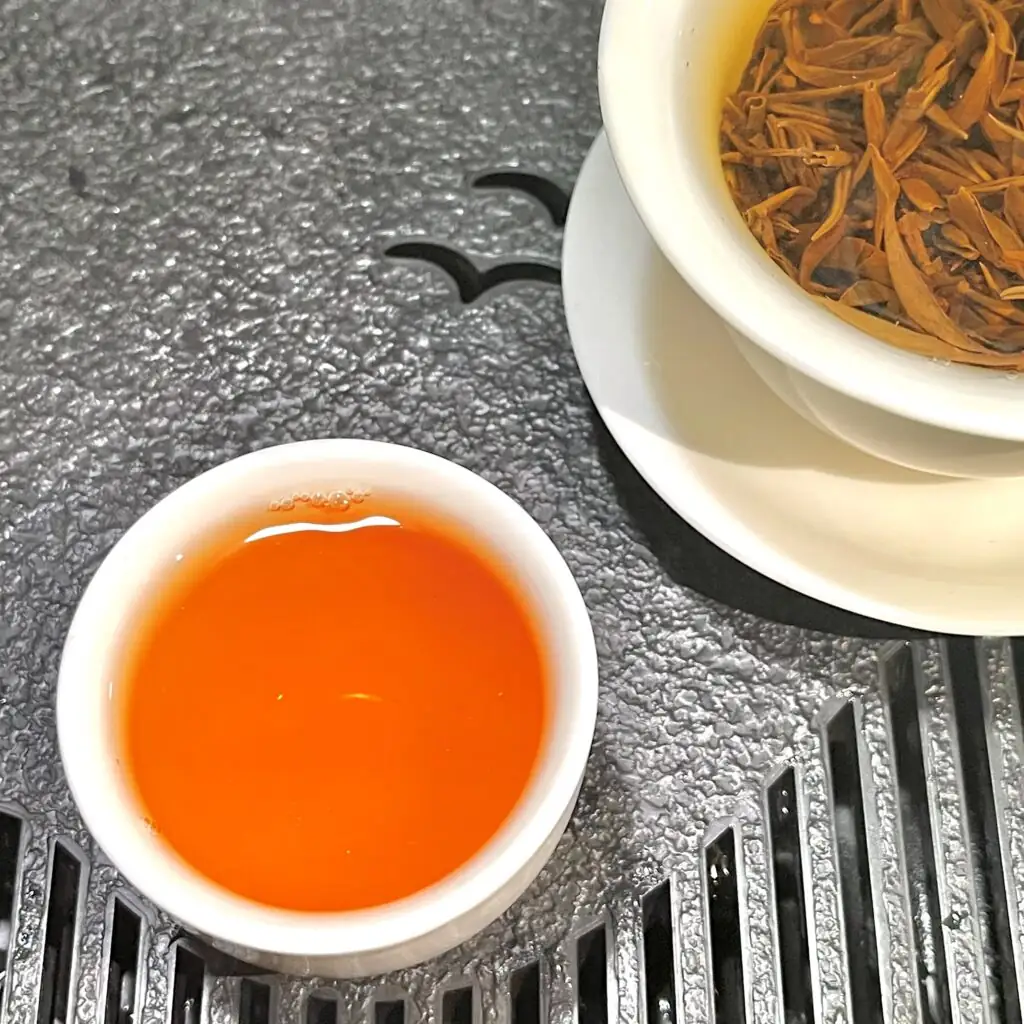
- The colour is dull. Brightness in the liquor comes from theaflavins, which are the first thing to decline.
A Practical Routine
None of this requires equipment. A small opaque tin costs less than a single expensive tea, and the routine takes about ten seconds a week. The whole of how to store black tea comes down to removing light, heat, moisture, air and smell — and the container you choose is simply the tool that removes most of them at once.
Four habits cover almost everything:
- Keep the tea in its original sealed pouch until you open it, then transfer to a small tin
- Store the tin in a cupboard, not on the counter and not above the kettle
- Keep it away from coffee, spices and anything strong-smelling
- Write the opening date on the tin, because you will not remember
If you buy in bulk, split it: one tin in use, the rest sealed and stored dark. That single habit does more for quality than any particular container.
Frequently Asked Questions
Should black tea be kept in the fridge?
No, not unless it is vacuum-sealed. Condensation forms each time the tin moves between cold and warm, and that moisture damages the leaf. A cool dark cupboard is better.
Does black tea expire?
It has a best-before date rather than a safety expiry. Old black tea is not dangerous, it is just flatter and less aromatic.
How do I know if my black tea has gone bad?
Smell the dry leaf. If the malty, distinctive aroma has gone, the tea has declined. If it smells of the cupboard or of something else, it has picked up odour and should be replaced.
Can I freeze black tea?
Only if it is vacuum-sealed and you let it come to room temperature before opening. Otherwise condensation does the same damage as the fridge, faster.
Does how to store black tea differ for loose leaf and tea bags?
The principles are identical. Bags are usually already in foil, which helps, but once the box is open they stale at the same rate as loose leaf — often faster, because broken leaf has more surface area exposed to air.
Why It Matters More for Aromatic Teas
The scale of the loss depends on which black tea you are storing, and the pattern is worth knowing before you decide how much effort to spend.
Aromatic teas lose the most. Keemun depends on geraniol for its rose character; Jin Jun Mei depends on a delicate honey and lychee profile. Both are volatile and both go first. A Keemun stored carelessly for a year is not a worse version of itself, it is a different and much duller tea.
Malty teas decline more gracefully. Dianhong and Assam rely more on body and the malt character, which is carried by less volatile compounds. They flatten too, but the fall is gentler and slower.
Smoked teas are the most robust. The smoke compounds in Souchong are relatively stable, and a smoked tea held under poor conditions will still taste smoky long after it has lost everything else. That is not a recommendation to store it badly — it is a warning that smoke can mask decline.
The practical consequence for how to store black tea is that the effort should be proportional to how aromatic the tea is. A modest Dianhong survives a cupboard; an expensive Jin Jun Mei deserves a proper tin.
Storage by Format
Loose leaf in a tin is the easiest case and the one most guidance assumes. Other formats need slightly different handling.
Tea bags. Most are already in foil-lined packaging, which protects them well until opened. Once the box is open, the bags stale at the same rate as loose leaf — often faster, because broken leaf has more surface area exposed. Keep the inner foil folded over rather than leaving bags loose in a cardboard box.
Compressed tea. Some black teas are pressed into cakes, mainly for gifting. A cake has less exposed surface per gram, so it holds up better than loose leaf, but the same rules apply: dark, dry, sealed, away from smells.
Gift packaging. The decorative tin is usually not airtight. If you are keeping the tea more than a few weeks, transfer it to a plain tin and keep the pretty one for the shelf.
What to Do With Tea That Has Gone Flat
Before discarding it, check whether it has actually declined or whether the problem is elsewhere.
Brew a cup with more leaf than usual and a shorter steep. If it is still flat, the tea has faded. If it comes back, the original cup was simply under-leafed.
Flat but not stale tea is still usable for things where aroma matters less: cold brew, milk tea, or cooking. What it will not do is improve in the tin, no matter how you store it from that point.
Tea that smells of the cupboard rather than of tea cannot be rescued. Odour pickup is not reversible, and it is the strongest argument for how to store black tea properly — an airtight container costs very little and a ruined 200 g tin costs a lot.
More Questions
How long can I store black tea?
About a year for an opened tin and up to two for a sealed one, stored dark, cool, dry and away from smells. These are practical figures rather than hard limits.
Should I keep black tea in its original packaging?
Yes, until you open it. Foil pouches are moisture and light barriers and are usually better than a decorative tin. Once opened, transfer to a small airtight tin you will finish.
Does how to store black tea change in humid climates?
Yes, significantly. In a humid climate the 50% relative humidity ceiling is the binding constraint rather than temperature. A sealed tin with a desiccant sachet, kept in an air-conditioned room, is the practical answer.
Related reading: types of black tea, how to brew black tea.
Shop the black teas in this guide
Sold directly from our own stock. Every listing states the harvest, the county and the size options.
Not sure which one? Browse the full black tea collection — or start with the guides above.
Still deciding between grades and styles? black tea caffeine sets out the categories and what each one means.
Sources & References
Standards
Standard numbers and dates can be verified at China’s national standards platform: std.samr.gov.cn.
- GB/T 30375-2013 — Tea storage. §5.3.2 specifies black tea at ≤25 °C and ≤50% relative humidity; §5.3.1 gives green tea at ≤10 °C.
- GB/T 13738.1-2017 / .2-2017 / .3-2012 — Maximum 7.0% moisture in the finished product, which is what makes shelf storage viable.
Peer-Reviewed Research
- Tanaka, T. & Matsuo, Y. (2020). Production mechanisms of black tea polyphenols. Chemical and Pharmaceutical Bulletin 68:1131–1142. DOI:
10.1248/cpb.c20-00295— theaflavin decline and its effect on brightness.
What this page does not claim
We do not claim black tea improves with age, that a specific container is essential, or that old tea is unsafe. Storage is about preserving what you paid for, and the techniques are simple once the reasons are clear.
