
Wuyi Oolong Tea Brewing Guide: Should You Pour Out the First Steep?
Most tea drinkers pour out the first steep of Wuyi Yancha without thinking. The habit stems from aged teas—compressed Pu-erh cakes, dark tea logs, and pressed white tea bricks. But Wuyi Yancha is none of those.
In modern sensory cupping, more tea professionals are pushing back against this blanket rule. A quick rinse can strip away the bright, volatile top notes of roasted rock tea. This guide explains what actually happens chemically in that first steep, separates folklore from extraction science, and walks you through brewing and buying Yancha properly.
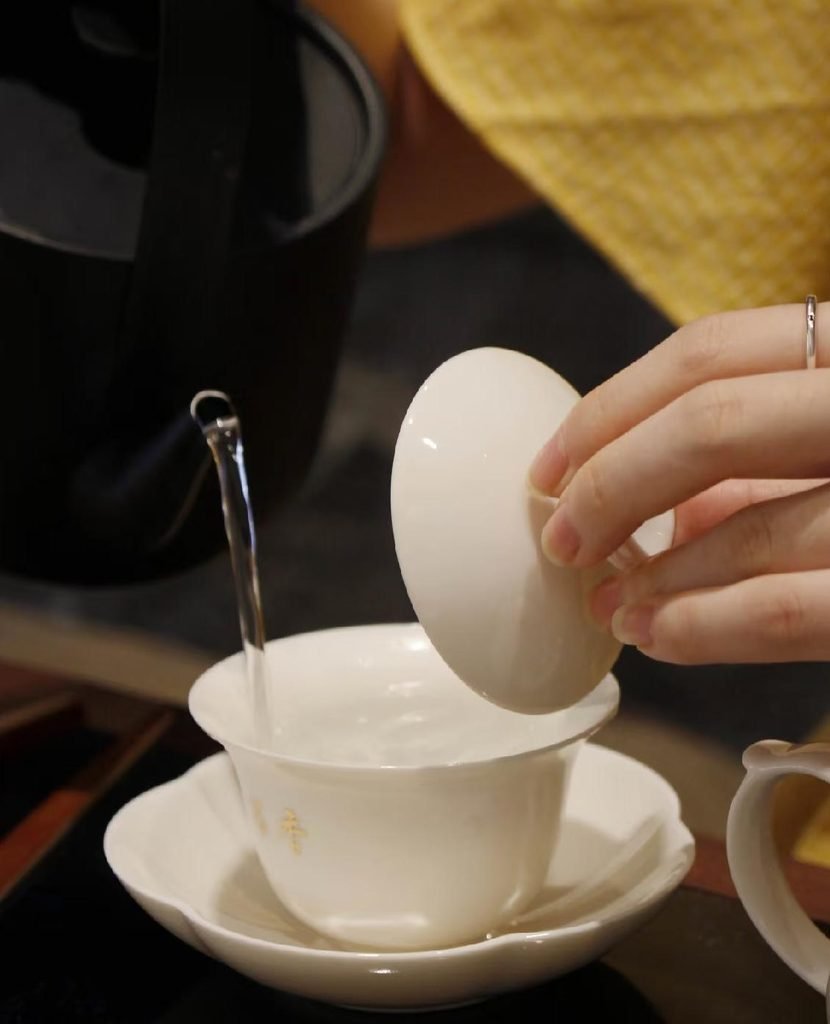
Should You Pour Out the First Steep of Wuyi Oolong Tea?
Short answer: usually no. Long answer: it depends on what you’re brewing.
The “first steep must go” rule was born for compressed teas. Aged pu-erh cakes, dark tea logs, and white tea bricks genuinely benefit from 1 to 2 quick rinses. These teas can trap dust during storage, and the brief rinse also helps rehydrate tightly compressed leaves so they can open properly.
Rock tea is different. Grounded in rigorous processing methods documented in fermentation and volatile metabolite research, authentic Wuyi rock tea undergoes meticulous multi-stage preparation—including precise withering, traditional deep fermentation, roasting, and final finishing—before it is packaged. Properly crafted modern Yancha is not a compressed tea that requires “washing” before drinking. There is no need to automatically discard the first steep to remove dust, “storage funk,” or rehydrate the leaves.
In other words, with properly made Wuyi Yancha, the first steep is part of the tea—not something you have to throw away.
Wuyi Yancha’s flavor oils and minerals are trapped deep inside the roasted leaf. Even a 3-second rinse pulls them out. The “first steep” in Yancha is not a wash. It’s the opening note of the session
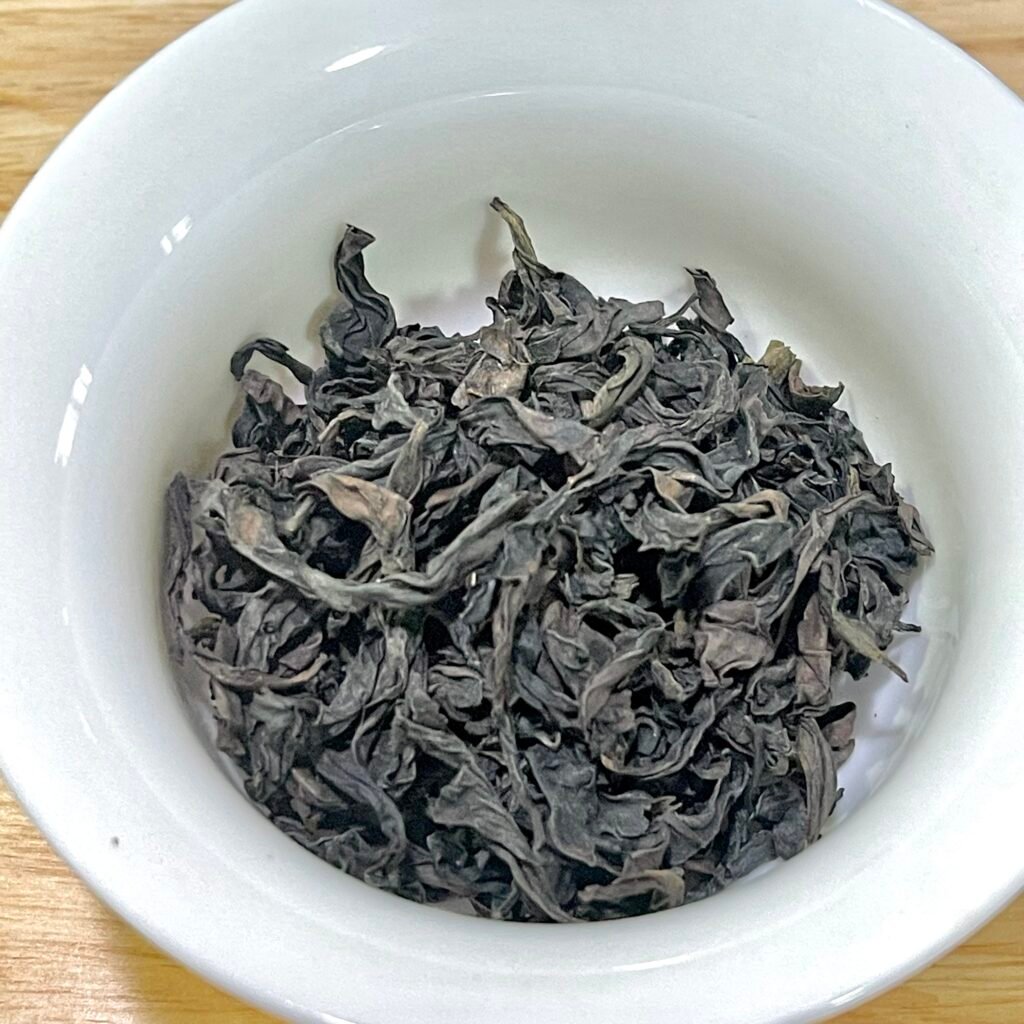
What Does the First Steep of Yancha Actually Taste Like?
A flash steep (in and out within 0 to 3 seconds) tastes like the brightest version of that tea. It pulls only the lightest top-note oils. The result is floral, mineral, and surprisingly clean.
We ran a side-by-side test in our tea studio last winter. Same Rougui, same water, same 100°C, same gaiwan. One version had the first steep discarded. The other kept it. The kept version tasted rounder and more layered by steep four. The discarded version felt almost hollow. That’s the distinct mineral edge on the back of the tongue—the sensation we actually mean when we talk about Yan Yun, or “rock rhyme.”
Many beginners think the first steep is dirty water. In practice, it’s where Wuyi Yancha shows its brightest face.
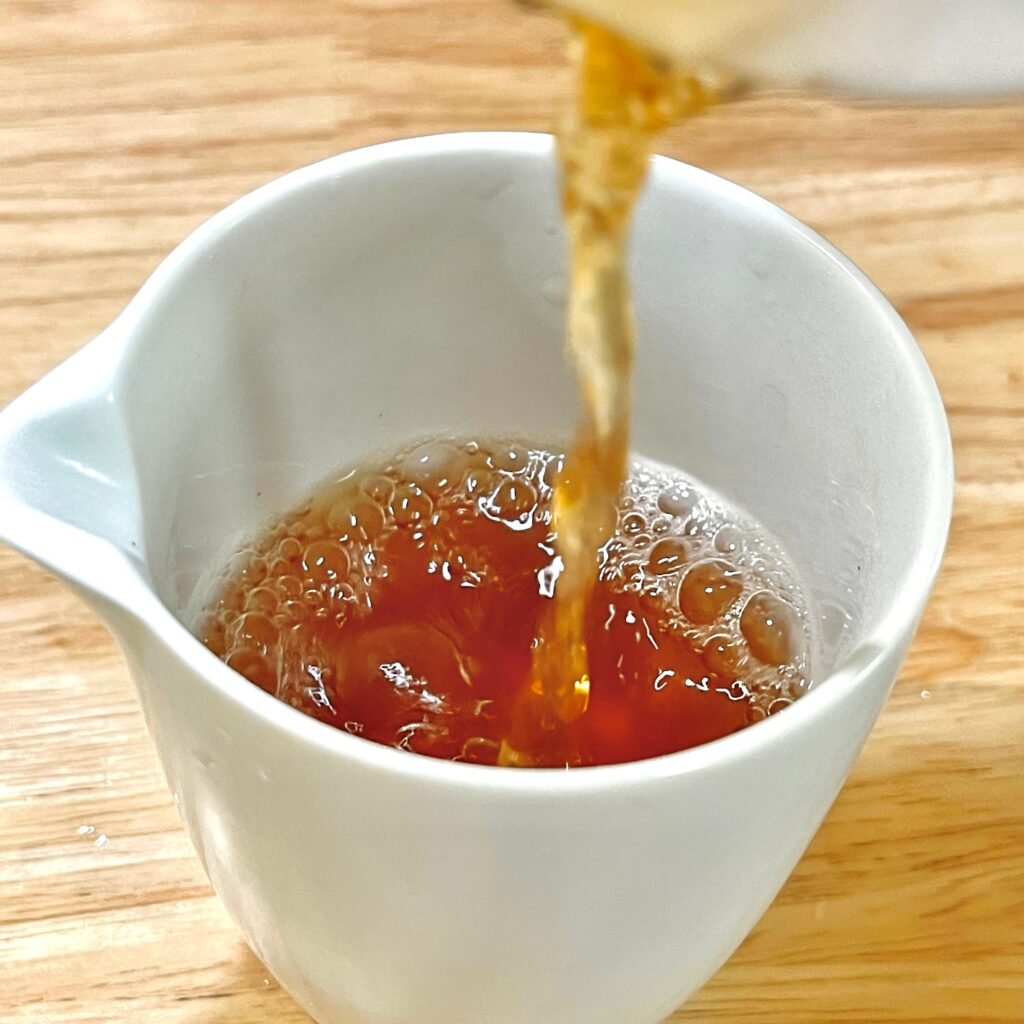
How Does Roast Level Change the Best Steeping Time for Rock Tea?
Roast level is the single biggest variable in any Wuyi Yancha session. Most rock tea falls into three rough tiers. Each one demands a slightly different first steep.
| Roast Level | First Steep Time | Flavor Effect | Watch Out For |
|---|---|---|---|
| Light 轻火 | 0–3 sec | Bright floral, fresh mineral | Easy to under-extract |
| Medium 中火 | 2–5 sec | Balanced sweetness, body | Standard Wuyi Yancha |
| Heavy 足火 | 3–8 sec, or skip rinse | Deep cocoa, caramel, smoke | Burns off Huo Qi 焙火气 |
If your Yancha has overwhelming smoky roast heat (Huo Qi), treat the first steep as a quick rinse. It softens that aggressive char. The smoother mineral core emerges on steep two.
Light-roast fans, try our Matouyan Rougui Wuyi Rock Oolong. Its lively aroma and layered character reward shorter flashes, letting the tea open gradually without overwhelming the palate.
Heavy-roast drinkers, take a look at our Wu San Di Lao Cong Wuyi Oolong. Its deeper roast and mature character can handle a longer first steep, bringing out a fuller body without turning bitter.
Why Does Wuyi Oolong Tea Need Boiling Water Instead of Cool Water?
Yancha’s flavor compounds sit deep inside roasted leaf tissue. These aromatic oils and mineral esters have high molecular weights. Most need water near 100°C to fully dissolve.
According to recent food science and processing research, key flavor compounds and aromatic profiles found in oolong tea show more effective extraction at higher water temperatures. Use water below 85°C, and you may end up with a thinner, sharper cup. Bring the water to a full boil, however, and you can better unlock the deeper mineral character and complex volatiles of roasted Wuyi rock tea.
Many beginners assume 90°C is hot enough. In practice, higher temperatures can help reveal the depth and structure of medium- and heavy-roasted Yancha.
The trick isn’t just heat. It’s also contact time. Even at full boil, a 0–3 second flash stays gentle. Steep that same leaf for 60 seconds, and tannins flood the cup. Boiling water unlocks potential. Short contact time controls it.
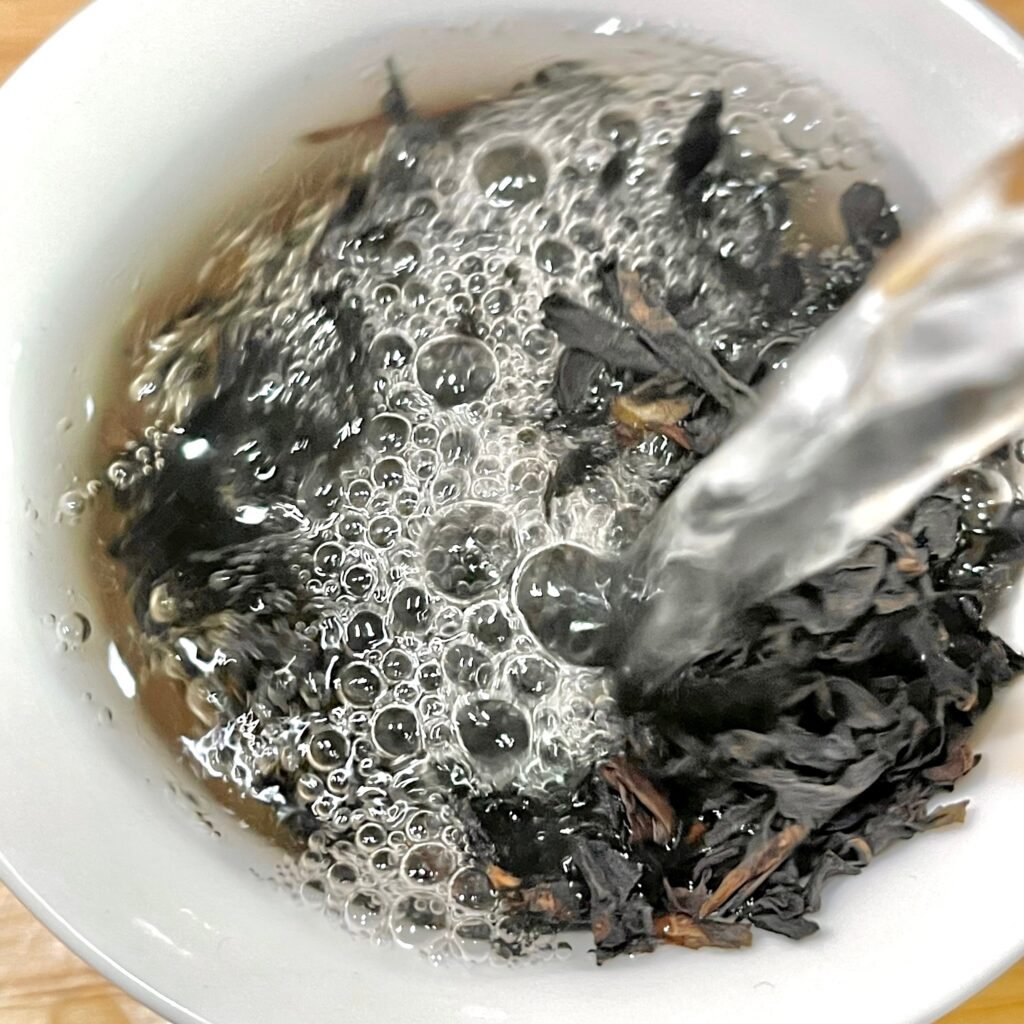
How Do You Brew Wuyi Yancha in a Gaiwan Step by Step?
Use a porcelain gaiwan, not glass. Porcelain retains heat more effectively, helping maintain a stable brewing temperature. For a 110 ml gaiwan, weigh out 8 g of dry leaf.
Here is the 7-step routine we use in our tea studio, cross-referenced with historical brewing notes from the tea culture collection:
- Rinse the gaiwan and cups with boiling water. Discard. Pre-warm every vessel.
- Add 8g of dry leaf. Sniff the dry aroma. Note the roast level.
- Pour 100°C water to fill the gaiwan. Cover. Steep 0–3 seconds. This is your first steep. Drink it.
- Pour into a fairness pitcher (gong dao bei). Then into cups. Tilt the gaiwan to drain every drop (Li Gan 利干).
- For steep 2, pour 100°C water again. Steep 5–8 seconds. Drain fully into the pitcher.
- For steep 3 onward, add 5–10 seconds per round. Adjust to taste.
- After steep 6, sniff the wet leaves. Compare to the dry aroma. That is your Yancha fingerprint.
What’s the Difference Between Washing, Waking, and Warming Yancha?
Many beginners mix up these three concepts. Let’s split them clearly.
| Concept | What It Does | When to Use | Drink It? |
|---|---|---|---|
| Warming 温壶 | Heats the vessel with hot water | Before any session | Discard |
| Waking 醒茶 | Expands leaves with a short pour | Loose Wuyi Yancha, no rinse needed | Drink — it IS the first steep |
| Washing 洗茶 | Flushes dust and rehydrates dense leaves | Aged pu-erh, pressed dark tea | Discard |
If you’re brewing compressed tea, wash it. If you’re brewing loose Yancha, wake it and drink that first steep.
So next session, skip the ritual. Trust your nose, not the rhyme.
Wuyi Yancha First Steep FAQ 2026: 5 Expert Answers
Does the “don’t toss the first steep” rule apply to all teas?
No. It depends on the tea and how it was made, stored, and packaged. Loose Wuyi Yancha and well-finished oolongs generally do not need a mandatory rinse before drinking. Compressed teas such as aged pu-erh cakes, dark tea bricks, and pressed white tea may benefit from 1 to 2 quick rinses, especially after extended storage.
For properly processed Yancha, the first steep can be part of the drinking experience rather than something you automatically discard.
How fast should the first steep be if I plan to drink it?
Start with a true flash steep—roughly 3 to 5 seconds after the water makes contact with the leaves. The exact timing depends on the leaf-to-water ratio, roast level, and how tightly the leaves are rolled.
The goal is not simply to make the steep as short as possible. You want enough contact time to open the leaves and release the first layer of aroma without extracting too much bitterness or astringency.
What if my Yancha has overwhelming smoky Huo Qi?
If the roast aroma feels especially strong, you can treat the first steep as a very short rinse and discard it. A second steep often reveals a clearer balance between roast, floral or fruity notes, and the underlying mineral character.
However, don’t assume that every strong roast aroma is a flaw. A well-executed roast can be part of the tea’s intended character and may soften over several infusions.
Why is 100°C water recommended for Yancha?
Yancha generally benefits from very hot water because high temperatures help extract the tea’s aromatic compounds and soluble flavor components efficiently, especially from tightly rolled, roasted leaves.
For gongfu brewing, freshly boiled water is a reliable starting point. That said, 100°C is a brewing guideline rather than an absolute requirement. Different cultivars, roast levels, and personal preferences may respond well to slightly lower temperatures.
Can I use a Western teapot instead of a gaiwan?
Yes. A Western-style teapot can produce a good cup of Yancha, especially if you prefer a larger serving and fewer infusions.
The main difference is brewing style. A gaiwan or small gongfu teapot allows you to use more leaf, less water, and shorter infusions, making it easier to follow how the tea changes from steep to steep. A larger Western pot usually produces a slower, more continuous extraction and a less concentrated liquor.
How much Wuyi Yancha should I use for a 110 ml gaiwan?
A good starting point is around 7–8 g of dry leaf for a 110 ml gaiwan. This relatively high leaf-to-water ratio is intentional: gongfu brewing is designed around concentrated, short infusions rather than one long extraction.
If the tea tastes too intense, reduce the leaf slightly or shorten the steep. If it tastes thin, increase the leaf amount before dramatically increasing the brewing time.
Should I preheat my gaiwan before brewing Yancha?
Yes. Preheating the gaiwan helps reduce the initial temperature drop when boiling water meets the brewing vessel. This is particularly useful for roasted Yancha, where maintaining a high and stable brewing temperature can help the leaves open more evenly.
Simply rinse the gaiwan with hot water, empty it, and then add your dry leaves.
Why does my Yancha taste bitter on the first steep?
Bitterness does not automatically mean the tea is bad. The most common causes are excessive leaf, water that is too hot for your particular tea, or a first steep that is too long.
Try shortening the infusion before lowering the water temperature. For a small gaiwan, even a few extra seconds can make a noticeable difference when using 7–8 g of leaf.
If the bitterness remains through several short infusions, the issue may be related to the tea itself rather than your brewing technique.
Why does my Yancha taste thin even when I use boiling water?
Temperature is only one part of extraction. If the tea tastes thin, check your leaf-to-water ratio first.
Using too little leaf in a large volume of water often produces a weak cup, even with freshly boiled water. Yancha is usually brewed with a relatively high leaf-to-water ratio, allowing short infusions to produce a concentrated liquor.
The shape and condition of the leaves also matter. Tightly rolled leaves may need several infusions before they fully open.
How long should I steep the second and third infusions?
There is no single correct schedule, but a useful starting point is to keep the first several infusions short and gradually extend the time as the leaves open.
For example:
- First steep: 3–5 seconds
- Second steep: 5–8 seconds
- Third steep: 8–12 seconds
- Later steeps: gradually increase according to taste
Treat these numbers as a starting framework, not a fixed rule. A heavily roasted, tightly rolled Yancha may behave very differently from a lighter-roasted tea.
How can I tell whether a Yancha has good “Yan Yun” or rock rhyme?
Yan Yun is not simply a single flavor or a literal taste of “rock.” It is a traditional term used to describe a distinctive overall character associated with Wuyi rock tea.
When brewing, pay attention to the finish rather than only the first sip. A tea with pronounced Yan Yun may leave a lingering, mineral-like impression, a persistent aftertaste, and a sense of depth that develops across multiple infusions.
The best way to understand it is to compare several Wuyi Yancha side by side and focus on what remains on the palate after swallowing.
Does a heavier roast always mean a stronger Yancha?
No. Roast level and tea strength are not the same thing.
A heavy roast can create deeper roasted, woody, nutty, or charcoal-like notes, while a lighter roast may preserve more floral, fruity, or fresh aromatic character. The quality of the underlying leaf, craftsmanship, cultivar, and roasting technique all influence the final cup.
A well-made Yancha should not need an extremely heavy roast simply to taste “strong.”
Stop Wasting Your First Steep: Experience Authentic Wuyi Yancha
The “wash and discard” habit doesn’t belong to rock tea. For Wuyi Yancha, that first steep is part of the soul of your session. Treat it as a quick flash wake-up, drink it, and let your palate explore the unfolding layers of Yan Yun.
Ready to test your brewing skills with authentic Woyishan craft teas? Explore our fresh 2026 spring & artisan harvest selections:
- 🌸 For Delicate Floral & Fruity Top Notes:Experience the enchanting peach aromatics of Wuyi Rougui Rock Tea Xuntao 2026 or the high-mountain freshness of Sanyang Peak Rougui Wuyi Rock Tea 2026.
- 🍂 For Classic Balance & Masterful Blending:Discover the smooth, sweet mineral character of our signature Da Hong Pao Mituoyan 2026.
- 🔥 For Deep Rock Rhyme & Intense Spice:Dive into the bold, rich, and unforgettable finish of Jiulongke Rougui Wuyi Rock Tea 2026.
Grab your gaiwan, boil your water, and savor every single steep from the very first drop!
Sources & Further Reading
- Fujian Provincial People’s Government. “什么是武夷岩茶的’岩韵’?” (2023). fujian.gov.cn
- Permanent Mission of China to UN Agencies for Food and Agriculture. “岩岩有茶,非岩不茶” (2020). cnafun.moa.gov.cn
- Liu, X. et al. “Chemical Characterization of Wuyi Rock Tea with Different Roasting Degrees.” RSC Advances, 2021. pubs.rsc.org
- Wu, Z. et al. “Study on the Glycosidically Bound Volatiles and Aroma Constituents in the Processing of Wuyi Rougui.” Journal of Tea Science, 2024. tea-science.com
- Cao, H. et al. “Non-Targeted Metabolomics Analysis Revealed…Characteristic…Metabolites in the Rougui Wuyi Rock Tea from Different Culturing Regions.” Foods, 2022. mdpi.com
- Yue, C. et al. “Aroma Characteristics of Wuyi Rock Tea Prepared from 16 Different Tea Plant Varieties.” Food Chemistry: X, 2023. PMC9945420
- “Differences in the Quality Components of Wuyi Rock Tea and Huizhou Rock Tea.” Foods, 2024. PMC11720515
- “Withering and Fermentation Affect the Transformation and Accumulation of Key Metabolites in Rougui.” Foods, 2024. PMC11640889
- CCTV. “初春天寒肉桂暖” (2022). jingji.cctv.com
- Wikipedia. “Si Da Ming Cong Tea.” en.wikipedia.org
- TeaDB. “Wuyi Oolong Compendium.” (2014). teadb.org
- Enhancing tea brewing with ultrasound: effects of temperature on antioxidant and antibacterial activities.link.springer.com/article/10.1007/s11694-026-04070-x
- Contribution of traditional deep fermentation to volatile metabolites and odor characteristics of Wuyi rock teahttps://www.frontiersin.org/journals/bioengineering-and-biotechnology/articles/10.3389/fbioe.2023.1193095/full
- Min Tea Shop. “Wuyi Rock Tea Beginner’s Guide.” minteashop.com
- Min Tea Shop. “Rock Tea Buying Myths.” minteashop.com
- Min Tea Shop. “Rock Tea Collection.” minteashop.com
Disclosure
This article is for educational purposes only. Tea flavor perception is subjective, and the recommendations here are based on the author’s personal tasting experience and on published research — not on regulated professional advice. Some links in this article point to products sold by Min Tea Shop (minteashop.com), an online Chinese tea retailer based in Fuzhou, Fujian; the author may earn a commission on qualifying purchases. Product recommendations reflect the terroir and cultivar framing in the article rather than promotional arrangement. Affiliate relationships do not influence the sourcing, citations, or conclusions above.
