
White Peony Tea: The Balanced Middle Way of White Teas
Within the white tea family, Silver Needle is the aloof eldest son, Shou Mei the plain-spoken youngest, and White Peony sits comfortably between them. It doesn’t take only single buds the way Silver Needle does, nor does it use the thick, coarse leaves of Shou Mei. One bud, one or two leaves — green leaves cradling silver down — unfurls in the cup like a peony just beginning to bloom. This is White Peony, poised perfectly between elegance and depth.
What Is White Peony Tea?
White Peony, known as Bai Mudan (白牡丹) in Chinese, is a mid-grade white tea harvested as one bud with one or two leaves under China’s national standard GB/T 22291. Premium leaves are picked at the “initial unfurling” (初展) stage and must meet the “three whites” (三白) rule — bud and both leaves densely covered in silver down. It sits between Silver Needle (bud-only) and Shou Mei (leaf-heavy) on the white tea spectrum, prized for balancing floral freshness with deeper body.
If you’re new to white tea overall, our White Tea Beginner’s Guide lays out the family in plain language; for a closer look at how White Peony fits among the four main types of white tea, see our 4 Types of White Tea overview. The White Peony we source at Min Tea Shop is grown in Shouning, Fujian — a thousand-year tea hometown in the high mountains of northern Fujian, where cool mists and mineral-rich soil give the leaves their characteristic clarity and the kind of body that holds up well through years of aging.
What Does White Peony Tea Taste Like?
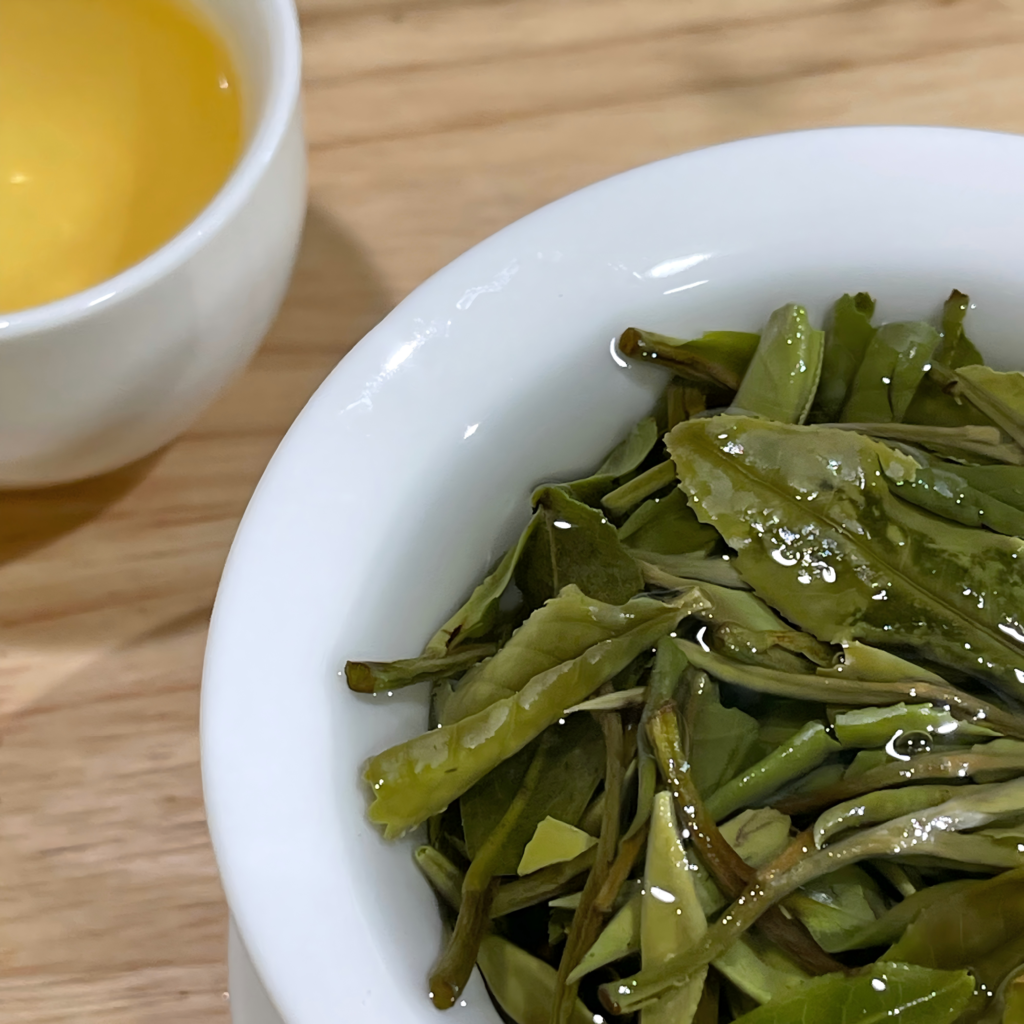
White Peony brews to a clear apricot-yellow liquor with layered, subtle flavor. The first impression is smooth and silky — like spring water carrying a faint floral scent. Standard flavor notes include downy fragrance (毫香), soft florals, and a soft vegetal sweetness reminiscent of warm grain or fresh hay — all settling into the cup without competing. A cool sensation rises in the throat after swallowing, with sweetness returning faster than in Silver Needle.
For the broader picture on what white tea — and White Peony in particular — is considered good for, our What Is White Tea Good For guide covers the cultural and wellness traditions behind these claims, with appropriate context.
How Does White Peony Compare to Silver Needle and Shou Mei?
Silver Needle is more delicate and floral but costs more and yields fewer infusions. Shou Mei is heartier, earthier, and cheaper, with stronger aging character. White Peony occupies the middle: more body and sweetness than Silver Needle, more refinement and floral lift than Shou Mei. It offers the most balanced everyday-drinking profile of the three.
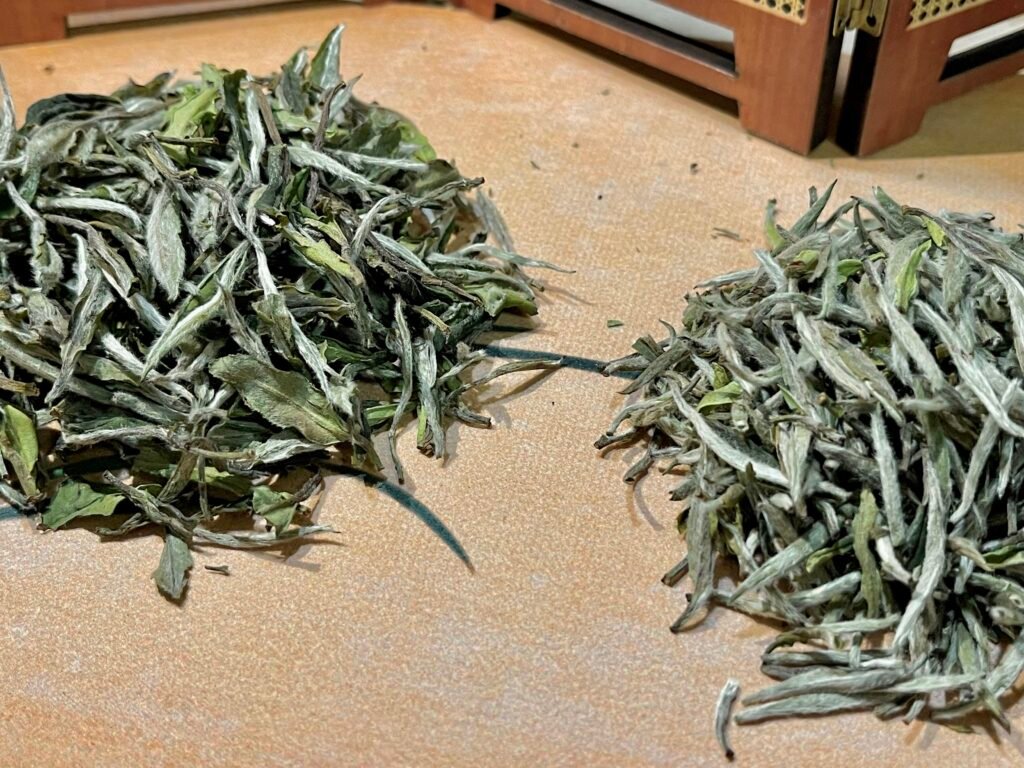
For a side-by-side tasting experience, our Bai Hao Yin Zhen (Silver Needle) 2026 offers the bud-only reference point — lofty and rare — while our Shou Mei 2025 sits at the heartier, more affordable end. White Peony is the bridge between the two.
Does White Peony Tea Get Better with Age?
Yes — and the change is well-documented. By the second or third year, the brighter florals begin to mellow as the tea’s chemistry turns. By years three to five, honey notes rise and the liquor deepens from apricot-yellow toward amber. By year five and beyond, a date-like sweetness (枣香) settles in; at seven years or more, the tea is widely regarded as fully aged. The traditional Chinese saying — “one-year tea, three-year medicine, seven-year treasure” (一年茶、三年药、七年宝) — captures this entire arc in a single line.
For collectors planning to lay down a few cakes, our Shou Mei Aging Guide — though focused on Shou Mei — applies in equal measure to White Peony cakes: cool, dry, dark, odor-free storage is the foundation, and peony rewards patience just as generously as its plainer cousin.
How Do You Brew White Peony Tea Properly?
Use about 3 grams of leaves per 150 ml of water at roughly 90°C (194°F) — boiling water scatters the floral fragrance. Run the first two or three infusions quickly (10–15 seconds), then extend each steep by about 10 seconds. White Peony reliably yields 5 good infusions under standard brewing, with finer leaf and good technique pushing that to 6–10 — more than Silver Needle, and far more forgiving: a slightly longer steep won’t turn bitter or astringent.
For a fuller walk-through of teaware choices, water temperatures, and a side-by-side brewing comparison, see our White Tea Brewing Guide — the technique carries over from Shou Mei to Peony with only minor adjustments.
Who Should Drink White Peony Tea?
White Peony suits anyone who wants premium white-tea flavor without Silver Needle’s price tag. It’s ideal for daily drinkers — those who want a forgiving, repeatable cup in the morning and enough depth to linger over on a weekend. It also appeals to aged-tea collectors, since properly stored peony gains rare honey and date-like depth over a decade.
A First Encounter with White Peony
The first time I truly paid attention to White Peony, its aroma was what caught me. I’d just started drinking white tea, beginning with Shou Mei, and assumed white tea meant notes of dates and herbs. Then one day a friend brewed a pot of White Peony. When she lifted the lid, a wave of floral fragrance drifted out, and I stopped short — white tea could smell like this?
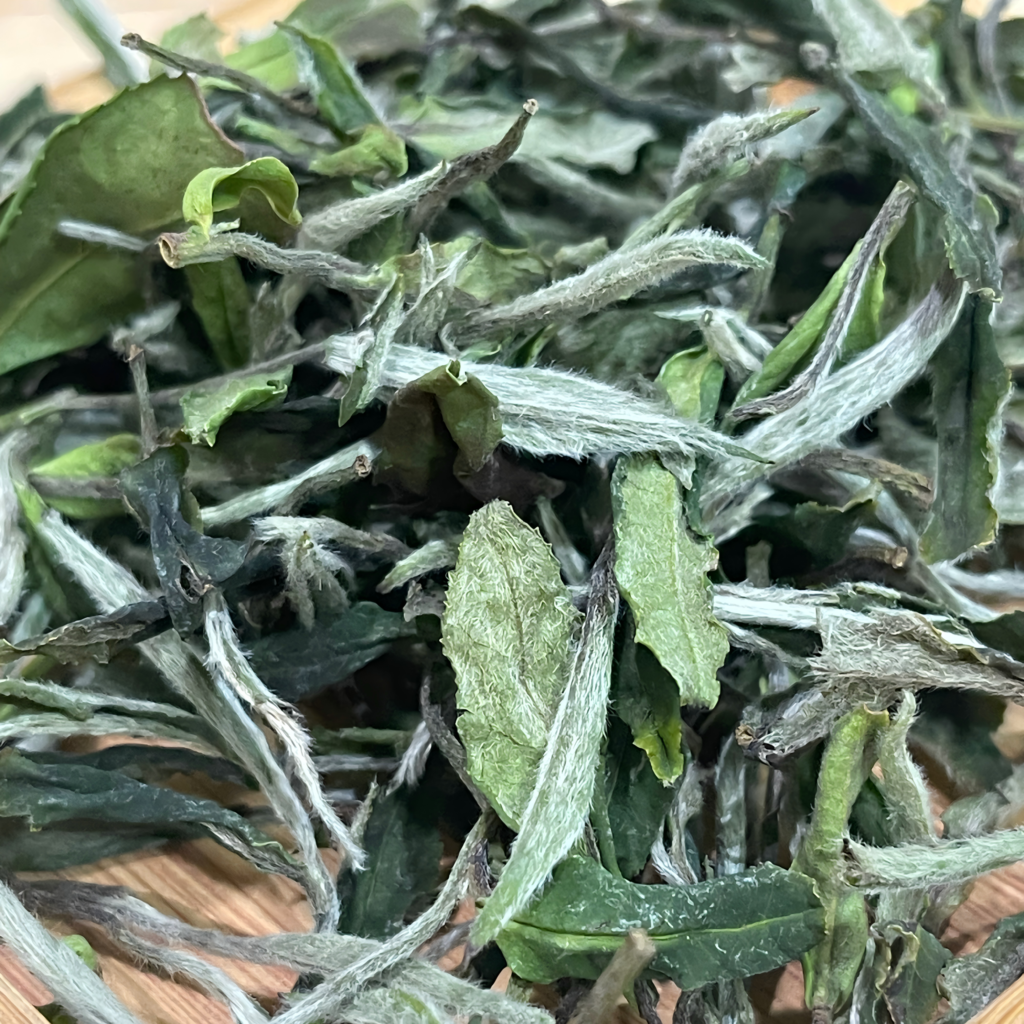
The dry leaves are beautiful to behold. The buds are slightly slimmer than Silver Needle’s, still thickly furred with white down, with a leaf or two alongside — silver-white mingling with grey-green. Not the uniform silver of Silver Needle, nor the unstudied rusticity of Shou Mei. There’s the delicate grace of the bud and the relaxed ease of the leaf, both present.
Brewed, the liquor is a clear apricot-yellow — deeper than Silver Needle, lighter than Shou Mei. The first impression on the palate is “smooth,” like holding a mouthful of mountain spring water that carries a floral scent within. This isn’t the perfumed fragrance of jasmine tea, where the scent is layered on; it’s the fragrance the leaves carry within themselves, accumulated in their very bones while still on the bush. Downy scent (毫香), soft florals, and a gentle vegetal sweetness — all meld quietly into the infusion, none competing. After swallowing, a cool sensation rises in the throat (回甘), and the sweetness returns a touch faster than with Silver Needle.
The Middle Way: The Beauty of Balance
The beauty of White Peony lies in that single word: balance.
In freshness, it falls short of Silver Needle; in mellowness, it surpasses it. In depth, it can’t match Shou Mei; in refinement, it wins. It takes three parts of Silver Needle’s elegance, three parts of Shou Mei’s substance, and reserves four parts of its own floral character.
White Peony is harvested at the standard of one bud with one or two leaves — the very combination China’s GB/T 22291 national standard sets for it, with premium grades further requiring the bud and both leaves to be densely furred with white down (the “three whites” criterion, 三白). The bud contributes freshness; the leaf, body. All buds would make it Silver Needle — exalted, otherworldly, unsuited to ordinary life. All leaves would make it Shou Mei — honest, hearty, humble fare. One bud with one or two leaves brings the two paths together.
The finest examples come from high-mountain gardens like those in Shouning, Fujian — where slow leaf growth under cool mists and mineral-rich soil builds a depth and clarity that holds through years of aging.
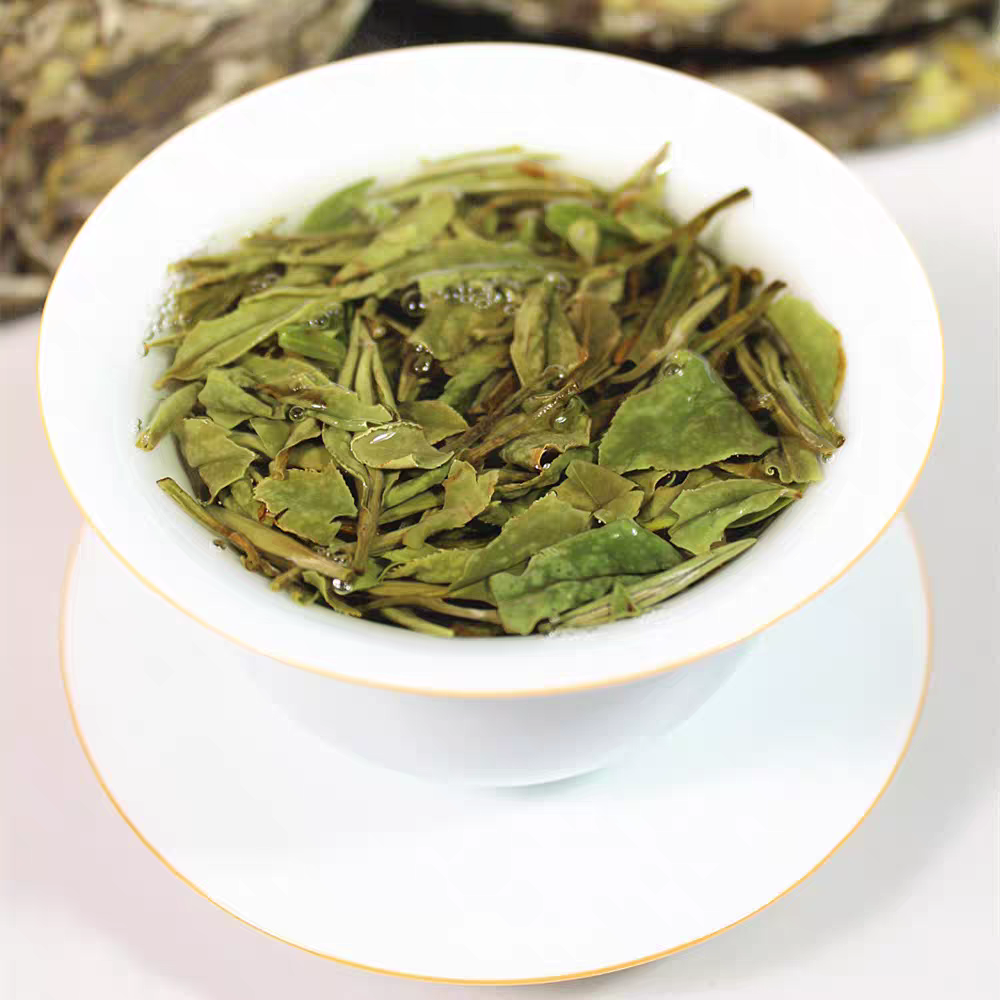
The name “Peony” has its own logic. When White Peony unfurls, the green leaves cradle the bud at the center, rising and settling in the water like a peony just coming into bloom. Not a peony in full flower, but one on the cusp — between bud and blossom. That moment’s beauty, perhaps, is the aesthetic of White Peony: not the extreme, but the measure that is just right.
The Freshness of New Tea, the Medicinal Depth of Aged Tea
New White Peony is drunk for its liveliness — that floral and downy fragrance feels like youth. By the second or third year, the brighter florals begin to mellow. By years three to five, honey notes rise and the liquor shifts from apricot-yellow to amber. By year five and beyond, an herbal character emerges with date-like sweetness (枣香) quietly surfacing. By seven years or more, the tea is widely regarded as fully aged — the kind of leaf an old Fujian farmer keeps aside for his grandchildren.
I once kept a small cake of ten-year-old peony that a tea-farming friend in Fuding shared with me; its youthful sparkle is long gone, but the depth and silky smoothness belong to an entirely different experience. New tea is like dew on a spring morning; aged tea is like afternoon sunlight in autumn. Each has its own merit — there’s no choosing between them.
The Chinese tea world has long captured this arc in a single line: “one-year tea, three-year medicine, seven-year treasure” (一年茶、三年药、七年宝). It is a cultural saying rather than a clinical claim — a way of honoring how white tea deepens with time. For any therapeutic use, consult a qualified practitioner; for daily drinking, trust your own palate.
Good White Tea Without the Hefty Price Tag
Silver Needle uses only single buds; White Peony uses one bud with one or two leaves. On harvesting alone, peony saves the farmer considerable effort, and over time that translates into a real price difference. Yet the flavor doesn’t lose to Silver Needle — it’s simply a different style. Silver Needle is lofty; peony is even-tempered.
For those who want good white tea without spending a fortune, White Peony is the more considerate choice. It neither puts on airs nor settles for less. It’s that most comfortable middle ground for everyday drinking.
Brewing Peony Without Fuss
Brewing White Peony doesn’t demand the careful handling Silver Needle requires. Water around ninety degrees Celsius works best — too hot and the floral fragrance scatters; too cool and the mellow quality won’t emerge. Run the first few infusions quickly, then let later ones steep a touch longer. Standard brewing yields around five good infusions; with finer leaf and patient technique, that easily stretches to six, eight, or even ten.
Rushing out the door in the morning, toss three grams into a cup, steep for five minutes, and you’re on your way. On a weekend with time to spare, brew it properly in a gaiwan, drinking from floral notes to date-like sweetness — a single session that can carry you from afternoon to evening. The beauty of peony is its willingness to accommodate: rushed or leisurely, it meets you where you are.
Some say Silver Needle is tea you drink to be seen; peony is tea you drink for yourself. There’s truth in that. Silver Needle’s price and rarity give it a natural social currency. Peony has no such burden — it sits quietly in the tea cabinet, ready whenever you are. No need to pick a special day, no need to wait for the right mood. Every day is right for peony, and every state of mind suits it. When you’re happy, it tastes sweet; when you’re low, it smooths things over; when you’re worn out at the end of the day, it warms you.
The Gentleman Among Teas
Tonight I brewed another pot of this year’s new peony. The liquor is clear apricot-yellow, its floral fragrance drifting up gently. By the third infusion, a light rain had started outside.
The tea is still warm; the throat still cool.
Silver Needle is often called “the beauty among teas” (茶中美女) — a name that has circulated in Chinese tea literature for generations. In tea-culture writing, White Peony has been likened to “the gentleman among teas” (茶中君子) — a cultural metaphor rather than an official title, drawn from its unfussy poise, its balance, and its quiet depth. If Silver Needle is the family beauty, White Peony is the steady elder brother: unwavering, gentle as jade.
A tea like this need not rush to bloom, nor rush to age. Drink it daily without growing tired; set it aside for a decade, and it will still offer new surprises.
Just right is, in itself, perfect.
Where to Begin with White Peony at Min Tea Shop
If this article has stirred your curiosity, the best way to deepen it is in the cup. Our White Peony selection is grown in Shouning, Fujian — a thousand-year tea hometown in the high mountains of northern Fujian. The cool mists, mineral-rich soil, and slow leaf growth there give our teas a characteristic clarity, depth, and the kind of staying power that lets them age gracefully.
Here are a few selections from our white tea collection that map directly to the journey this article has traced:
For fresh White Peony (new tea):
- White Peony (Bai Mu Dan) 2026 — this year’s harvest, bright florals and lively downy fragrance
- Bai Mu Dan Tea Cake 2024 — lightly pressed cake, just settling into its second year
For the mellowing stage (2–3 years):
- White Peony Cake 2023 — two-year-aged cake, the honey notes have just begun to rise
For deeper aged character (5+ years):
- Bai Mu Dan Dragon Pearl 2019 — five-year-aged hand-rolled dragon pearl, where date-like sweetness has settled in
To taste across the white tea family:
- Bai Hao Yin Zhen (Silver Needle) 2026 — bud-only, the family beauty
- Shou Mei 2025 — leaf-heavy, the heartier younger sibling
📦 Orders processed within 24–48 hours. Standard shipping 7–15 days via DHL, FEDEX, or European special line; 15–25 days via EMS or Cainiao when policy requires. Secured payment by PayPal, Visa / Mastercard / JCB, Western Union, or bank transfer. 7-day returns on defective or wrongly-shipped items — see our shipping and return policy at checkout for full details.
📋 Editorial Disclosure: This article is published by Min Tea Shop (minteashop.com), an online Chinese tea retailer specializing in white tea, red tea, rock tea, green tea, and pu’er from Fujian and other traditional tea regions. References to aged white tea’s “medicinal depth” reflect the traditional Chinese saying “one-year tea, three-year medicine, seven-year treasure” (一年茶、三年药、七年宝) and our personal tasting experience — they are cultural observations, not clinical health claims. Consult a qualified healthcare provider before using white tea for therapeutic purposes. Product links throughout the article are provided for reader convenience; purchasing through these links does not affect our editorial content or pricing.

3 Comments