
Chinese Tea Pet: Giggling Stream Water-Spitting Figurine
$39.90
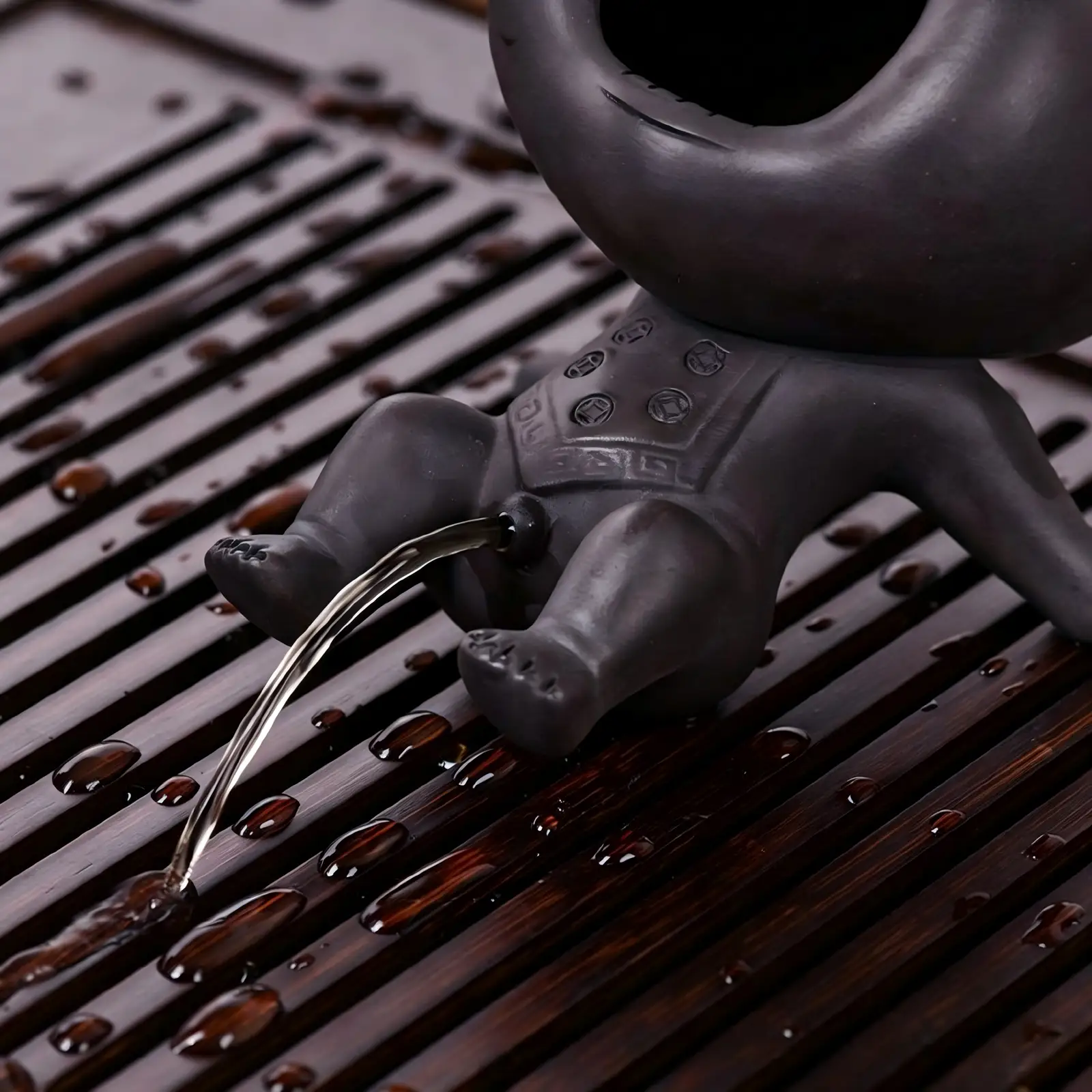
Water-spitting Chinese tea pet hand-sculpted in Zisha or Zhu Ni clay. Fill with cool water, pour hot tea over it, and it sprays across your cha pan.
Description
First published: 23 May 2026 · Last updated: 2 November 2026
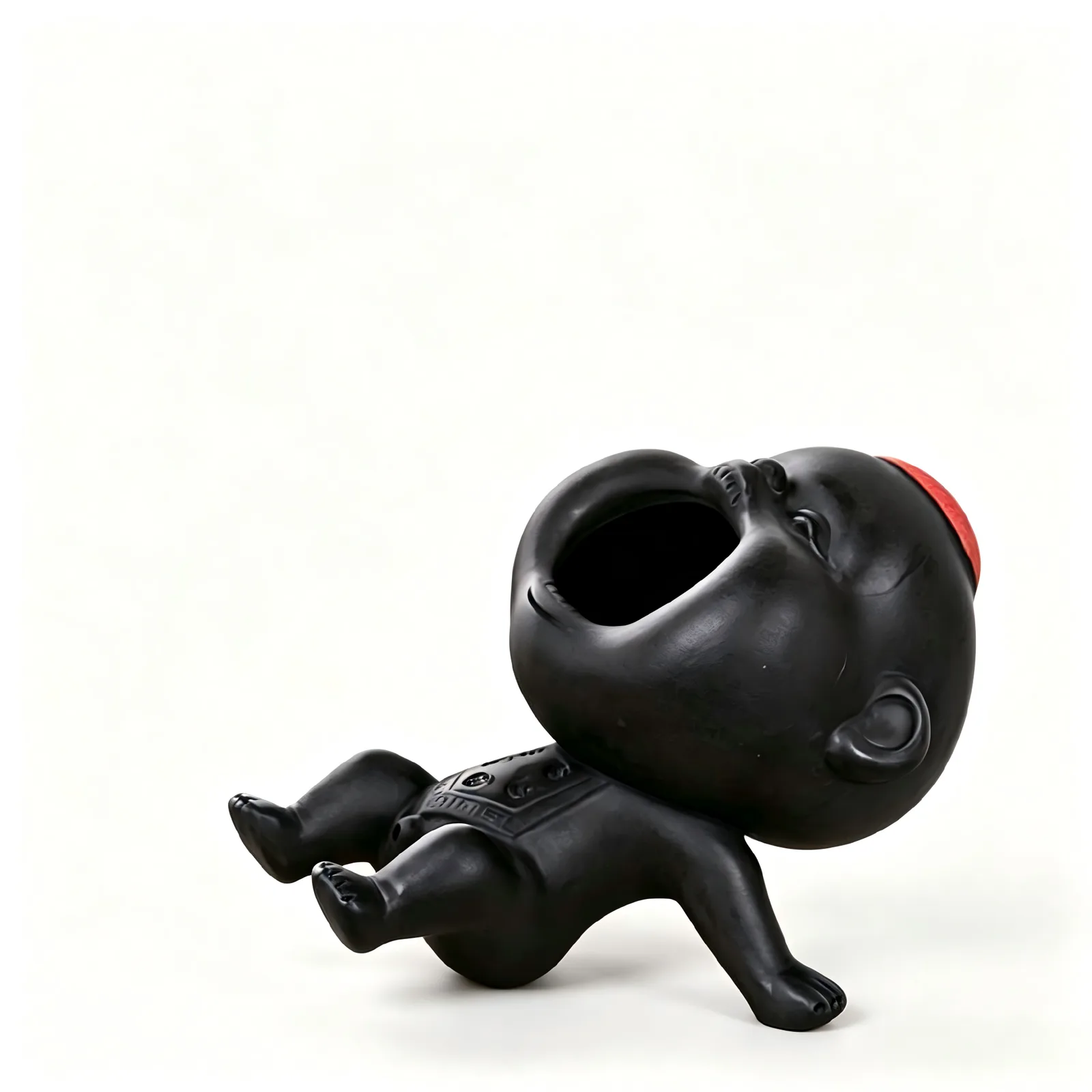
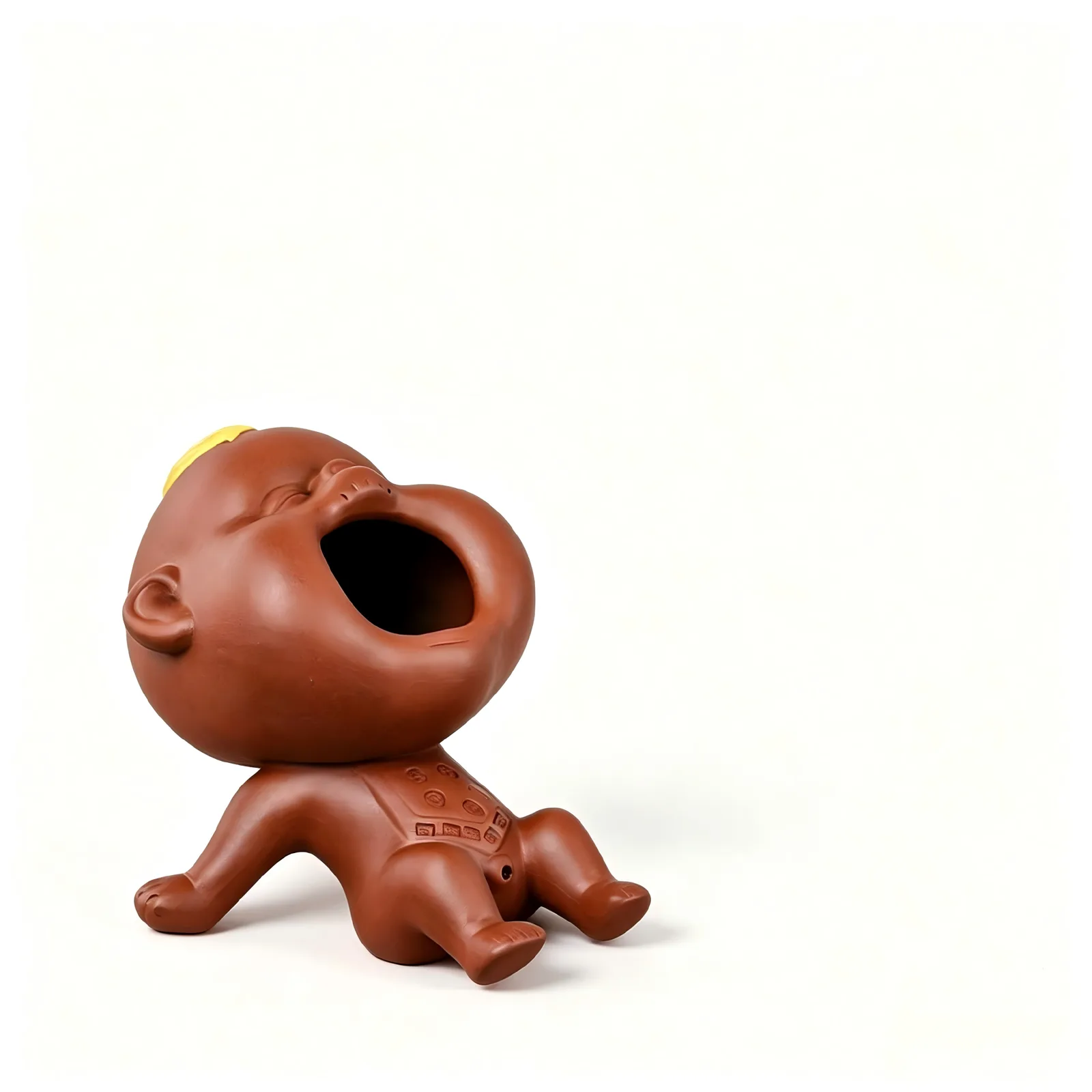
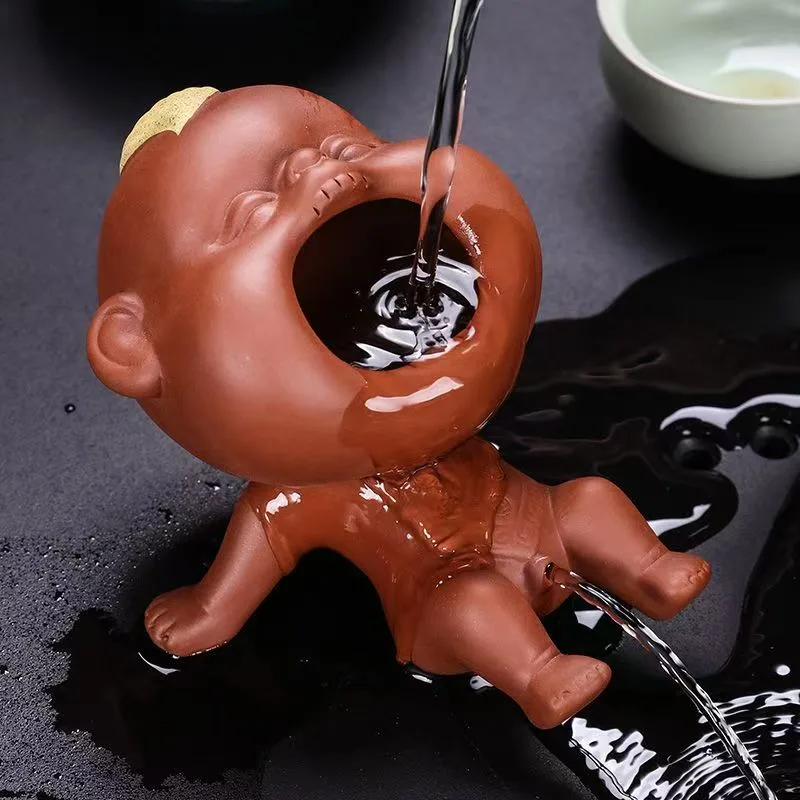
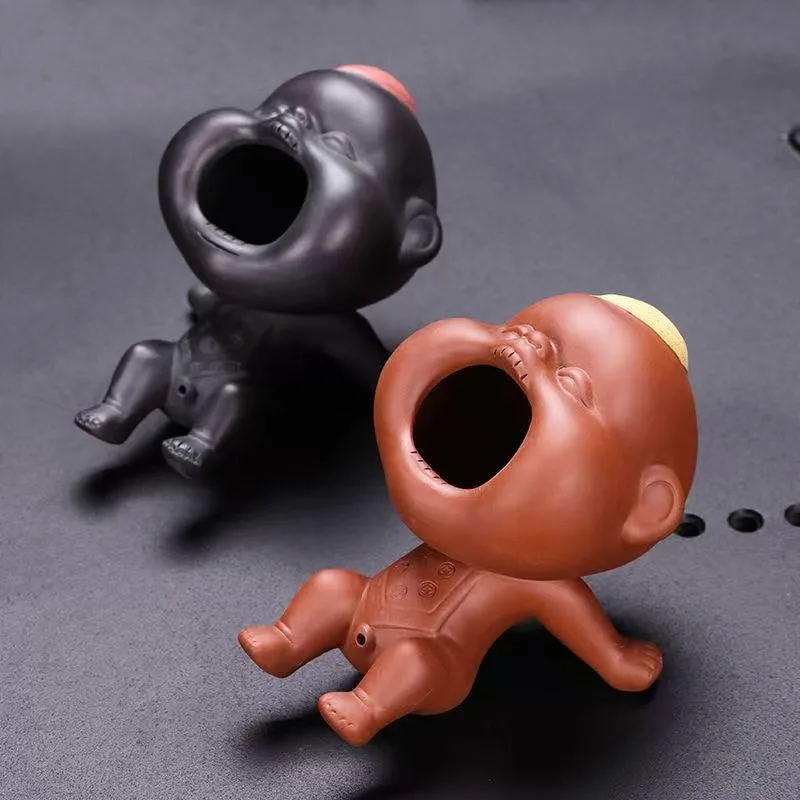
This Chinese tea pet is a hand-finished figurine that sprays water across your cha pan: fill the hollow chamber with cool water, pour hot tea over its head, and the steam pressure pushes the stored water out through its mouth. It comes in black Zisha or red Zhu Ni clay, both unglazed, so it also seasons over time. It suits gongfu drinkers who want a rinse with some theatre, and anyone who likes a small surprise at the rinse.
What is this Chinese tea pet?
It is a small unglazed clay figure with a hollow chamber inside, and this Chinese tea pet does something when you pour hot water over it: it sprays.
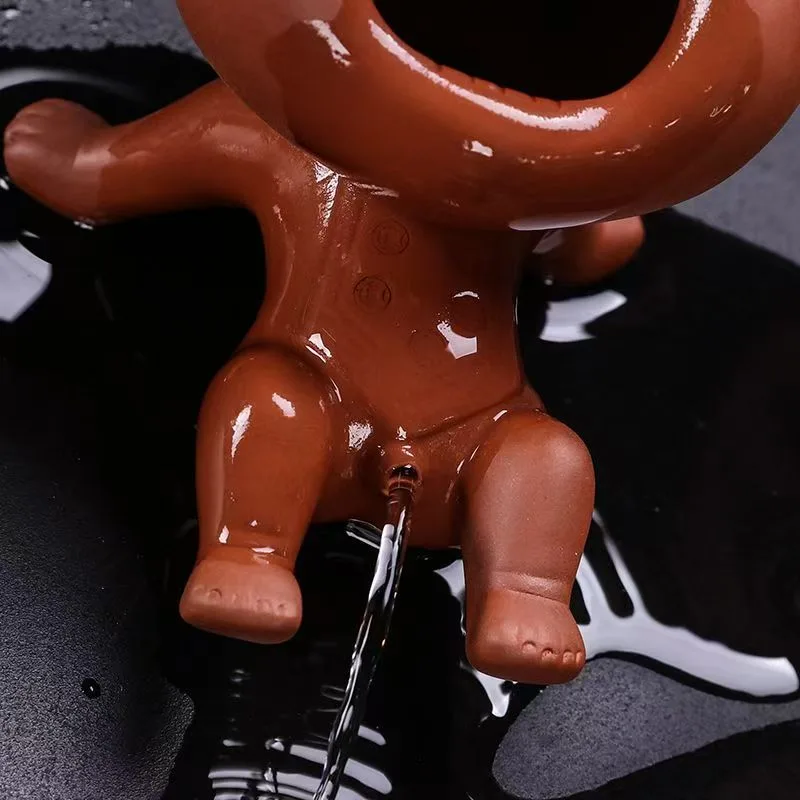
Most tea pets sit still. They take the rinse water, absorb it, and darken over months. This one also reacts, because the water inside it heats, the air above it expands, and the pressure pushes the stored water out through the figure’s mouth in a fine arc across the tray.
Two clay options, both unglazed and both styled as Yixing Zisha or Zhu Ni: a dark, almost black Zisha, and a warm red Zhu Ni. The clay choice changes the colour, the weight in the hand, and how the surface changes later on.
Chinese Tea Pet: How does the water-spitting mechanism work?
It runs on thermal expansion. There are no batteries, no moving parts and no electronics.
The sequence is short and it has to be done in this order:
- Fill. Stand the figure in cool water for two to three minutes, so the hollow chamber inside fills completely.
- Place. Set it on the tray.
- Pour. Pour hot rinse water over the head.
The trapped air heats quickly, expands, and pushes the stored water out through the mouth. That is the whole mechanism.
The order matters, and this is the single most common support question we get. Pouring hot water onto a dry figure produces no spray at all, because there is no water inside to push out. If nothing happens, the figure was not filled first. We test the spray on every piece before it ships, so if the piece you receive will not spray, tell us and we will replace it.
Chinese Tea Pet: What are Zisha and Zhu Ni, and how do they differ?
They are two clays from the same craft tradition, and the difference shows up in colour and in how the surface behaves.
| Zisha | Zhu Ni | |
|---|---|---|
| Colour | Deep espresso brown to near black | Warm terracotta to coral red |
| Body | Slightly more open, earthier | Finer grain, a little denser and smoother |
| Patina | Deepens to a dark, even sheen | Warms and softens in tone |
| Suited to | Roasted oolong, black tea, ripe pu-erh | Light oolong, white tea |
Both names mean a colour rather than a place. Zisha is literally purple sand, and Zhu Ni is vermilion clay. The craft tradition they belong to is the Yixing one, and Yixing clay teapots have been made there since the 15th century. Zhu Ni is the rarer of the two, and it is also the more demanding in the kiln, which is why it usually costs more.
We have asked the supplier to confirm the clay source for this batch. The page describes the style and the clay type, not a verified mine or workshop.
Chinese Tea Pet: How does the surface change over time?
It develops a patina, and the mechanism is closer to chemistry than to folklore.
A clay teapot that is used constantly ends up with a film on its surface. Analysis of the films on used zisha and zhuni pots found they are made up mainly of fatty acids and long-chain hydrocarbons, including palmitic acid and stearic acid, and that these come from the tea infusions themselves, carried in by the steam and the vapour (Journal of Food and Drug Analysis). In other words, the surface change is tea-derived material settling into and onto the clay, not a coating you apply.
The same clay also changes what is in the cup. A study comparing infusions brewed in zisha and zhuni pots against stainless steel, ceramic and glass found that the zisha and zhuni infusions carried higher levels of EGC, EGCG and total catechins (Liao et al., 2018). Two things worth saying about that finding. It was a chemical comparison of oolong infusions, not a clinical study, and the authors themselves note that not all of the differences between zisha, zhuni and stainless steel were statistically significant. We are not claiming a clay pot makes the tea better for you.
What that means on the tray is practical. Ripe pu-erh, roasted oolong and full-bodied black teas have the most oil and change the surface fastest. Light green teas change it slowly and subtly. There is no set schedule, because your pouring habits, your tea, your water and how you handle the piece all leave different traces.
Chinese Tea Pet: What usually goes wrong, and how do you fix it?
Almost every problem is one of three things, and all three are easy to fix.
| Symptom | Cause | Fix |
|---|---|---|
| No spray | The Chinese tea pet was not filled with cool water first | Fill it for two to three minutes, then pour hot water over the head |
| A weak spray | The chamber had air rather than water in it | Refill it completely, and make sure the figure is standing in water rather than being held |
| A dribble rather than a spray | Too much water in the chamber | Let it run down and empty some of it before the next pour |
One more thing worth knowing: mineral specks and faint kiln marks on the surface are normal in unglazed clay. They are not cracks and they will not affect the spray.
How do you clean and store it?
Rinse this Chinese tea pet with hot water, let it spit a few times to clear the chamber, and dry it in the air.
After each session, flush the inside with clean hot water, then pour hot water over the head so it spits several times and clears the chamber. Wipe it dry with a soft tea cloth and let it air-dry fully before you put it away.
Never use soap, detergent or a dishwasher. Unglazed clay is porous and it will hold on to the scent of chemicals, and a dishwasher will also strip any seasoning you have built up.
How does it compare with a traditional tea pet?
This Chinese tea pet is the same clay family and a different trick.
| Giggling Stream | River Stride, Dehua purple clay | |
|---|---|---|
| Clay | Yixing-style Zisha (black) or Zhu Ni (red) | Fujian Dehua purple clay |
| Effect | Spits a stream of water when rinsed | No moving part, purely a figure |
| Carving | Hand finished, small variations each piece | Hand carved, visible tool marks on scales and fins |
| Patina | Builds on whatever tea you pour over it | Builds in four to eight weeks |
| Price | $39.90 | $39.90 |
If you want the quiet version, the River Stride is a hand-carved dragon fish from Fujian purple clay. If you want the rinse with a bit of theatre, this is the one. Our tea pets section has both.
Who is this Chinese tea pet for?
For gongfu drinkers who enjoy the rinse as much as the tea, and for anyone who wants a gift that makes people laugh.
It works well in a real gongfu session, where there is already hot rinse water and a tray with room on it. The spray needs somewhere to land, so it wants a bamboo cha pan or a tray with a lip rather than a flat table. Our glass automatic tea set and a Zisha teapot make a complete brewing station to put it on.
It is also a good gift, because the trick needs no explanation. You fill the figure, you pour hot water over it, and it does the rest. We have sent them as housewarming gifts and as birthday gifts for people who drink gongfu tea daily.
Three other pieces sit in the same category and they work in different ways. The Zen cat tea pet is a quiet one: unglazed purple clay that simply drinks what you pour over it. The Awakened Lion tea pet changes colour when you pour hot water over it, because the pigment in it is heat-activated. The ember fox tea pet is glazed Chaozhou stoneware, so it does not drink at all and it will never change. The full set is in our tea pets collection and our zen collection.
Frequently Asked Questions
How does the water-spitting mechanism work?
The figure has a hollow chamber inside. Stand it in cool water for two to three minutes to fill the chamber, set it on the tray, then pour hot water over the head. The trapped air heats and expands, and the pressure forces the stored water out through the mouth. There are no batteries, no pump and no moving parts.
Why will it not spray when I pour hot water over it?
Because this Chinese tea pet was not filled first. The chamber needs cool water in it before the hot pour, otherwise there is nothing to push out. Fill it for two to three minutes in cool water, and check that water has actually reached the chamber before you pour.
Will tea change the surface over time?
Yes, and the change is tea-derived material rather than a coating. Chemical analysis of the films that form on used zisha and zhuni pots found fatty acids and hydrocarbons, including palmitic and stearic acid, that originate in the tea infusions. Dark, oily teas such as ripe pu-erh, roasted oolong and black tea build a patina fastest. Light teas change it slowly.
How long does the patina take?
Roughly four to eight weeks of regular use for a visible change on this piece, and longer for a deep one. No two pieces season identically, because your tea, your pouring habits, your water and how you handle the figure all leave different traces.
Does it need special cleaning?
Only in the sense of avoiding things. Rinse with hot water, let it spit a few times to clear the chamber, wipe dry and air-dry. Do not use soap, detergent or a dishwasher: unglazed clay is porous, it will absorb the scent, and a dishwasher will strip the seasoning.
Is every piece different?
Yes. Each one is hand finished, so the facial expression, the clay tone, the surface texture, the pressure of the spout and small asymmetries all differ. So do kiln markings and mineral specks in the clay. Those differences are how you tell a hand-finished piece from a moulded one.
Author and reviewer disclosure
This page was written by the founder and head tea buyer at Min Tea Shop, who has bought and brewed tea in Fujian for eight years. We sell this tea pet, we have used it on our own tray, and the specifications above are the supplier’s for this product, with the open question marked in the text.
Patina timings are our own observations from our own sessions and are not laboratory measurements. No sponsored content, no paid placements, and no affiliate links appear on this page, and we do not sell or share your personal data — see our privacy policy for details. If a specification on this page is wrong, tell us and we will correct it.
Additional information
| color | Dark Grey (Zi Ni), Red Clay (Zhu Ni) |
|---|
Related products
-

-
-
-
Sale!
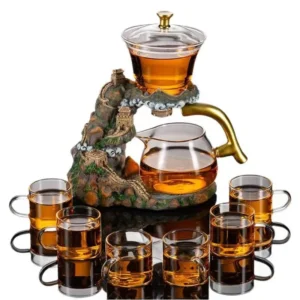
Great Wall 9-Piece Glass Automatic Tea Set for Gongfu
Original price was: $199.90.$159.90Current price is: $159.90.


Reviews
There are no reviews yet.