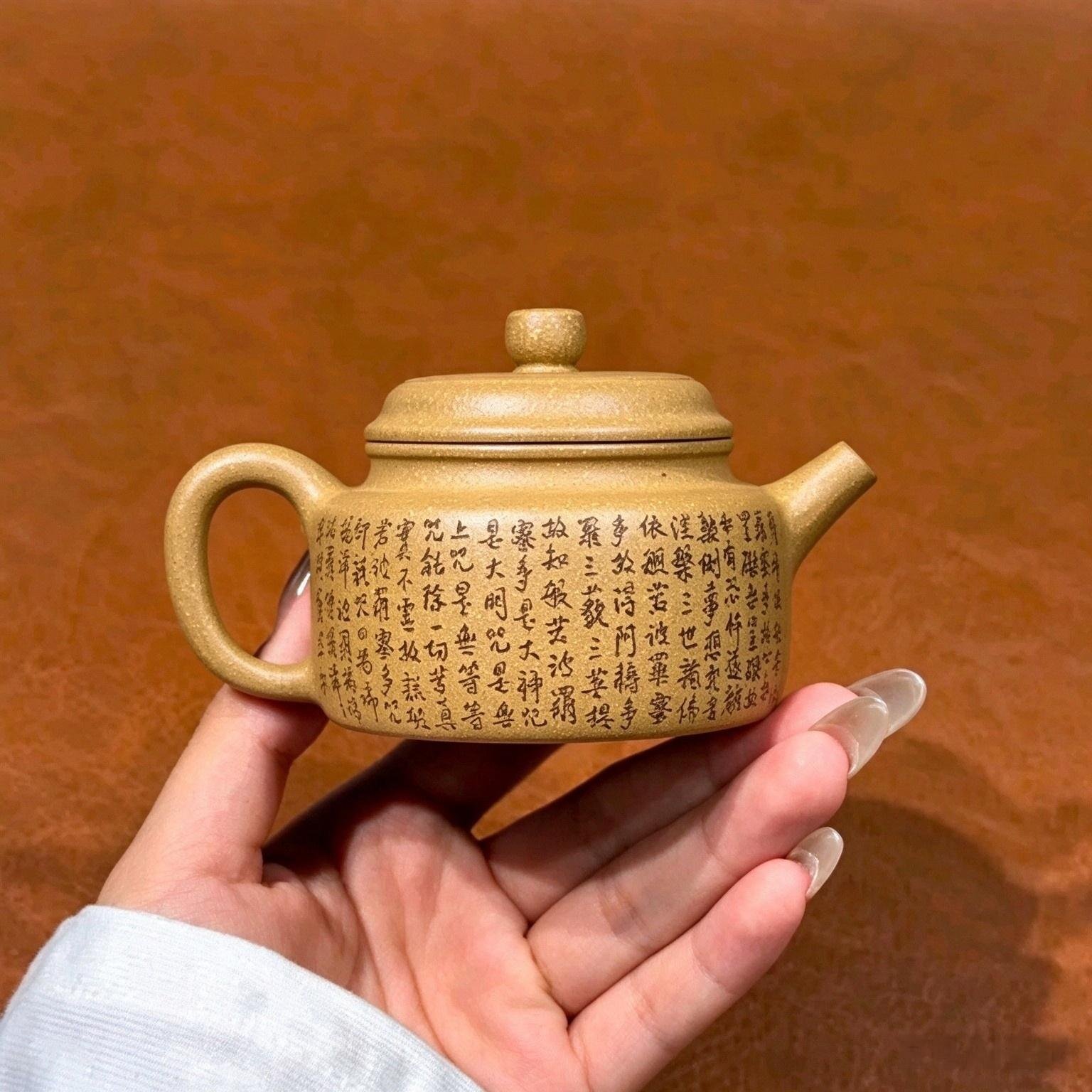
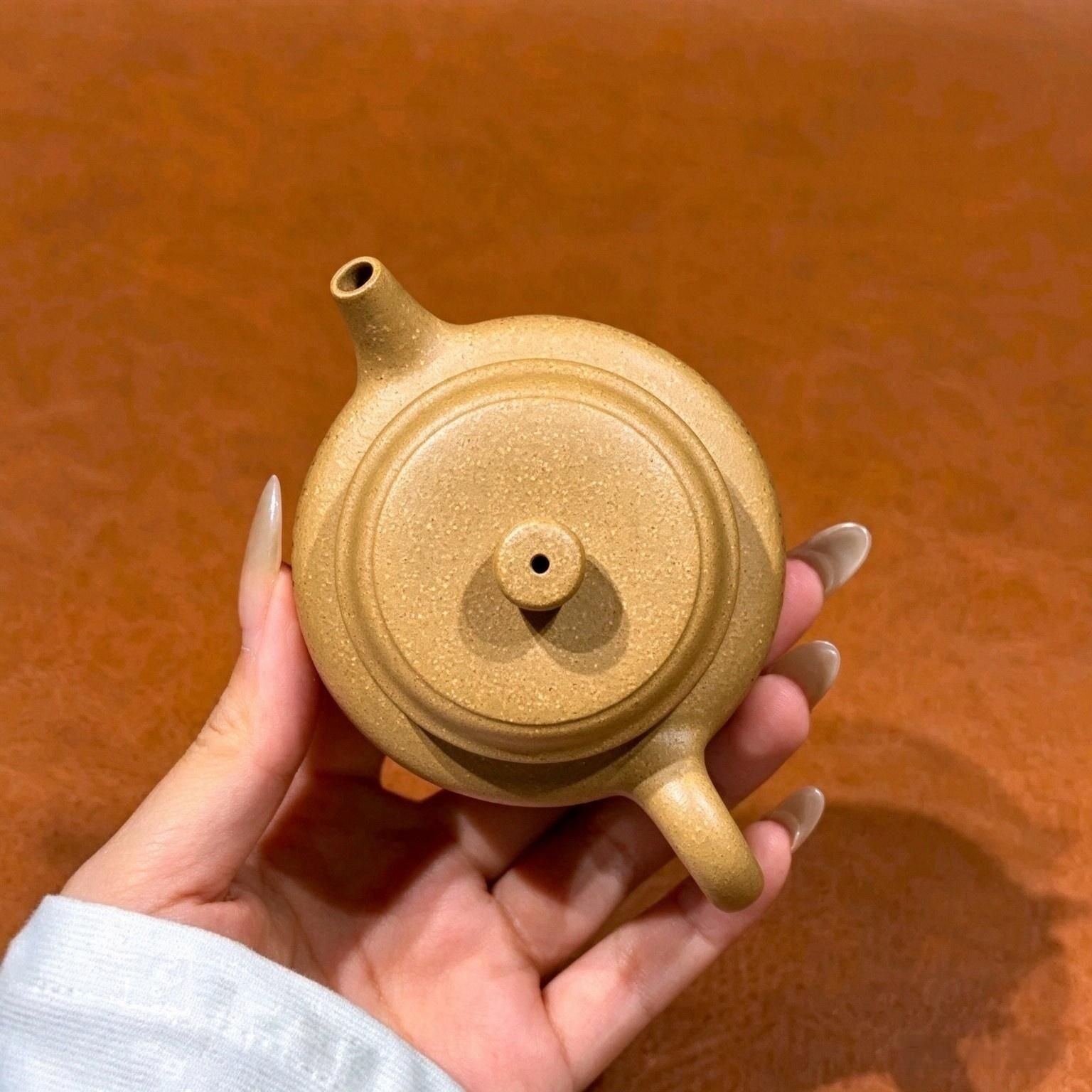
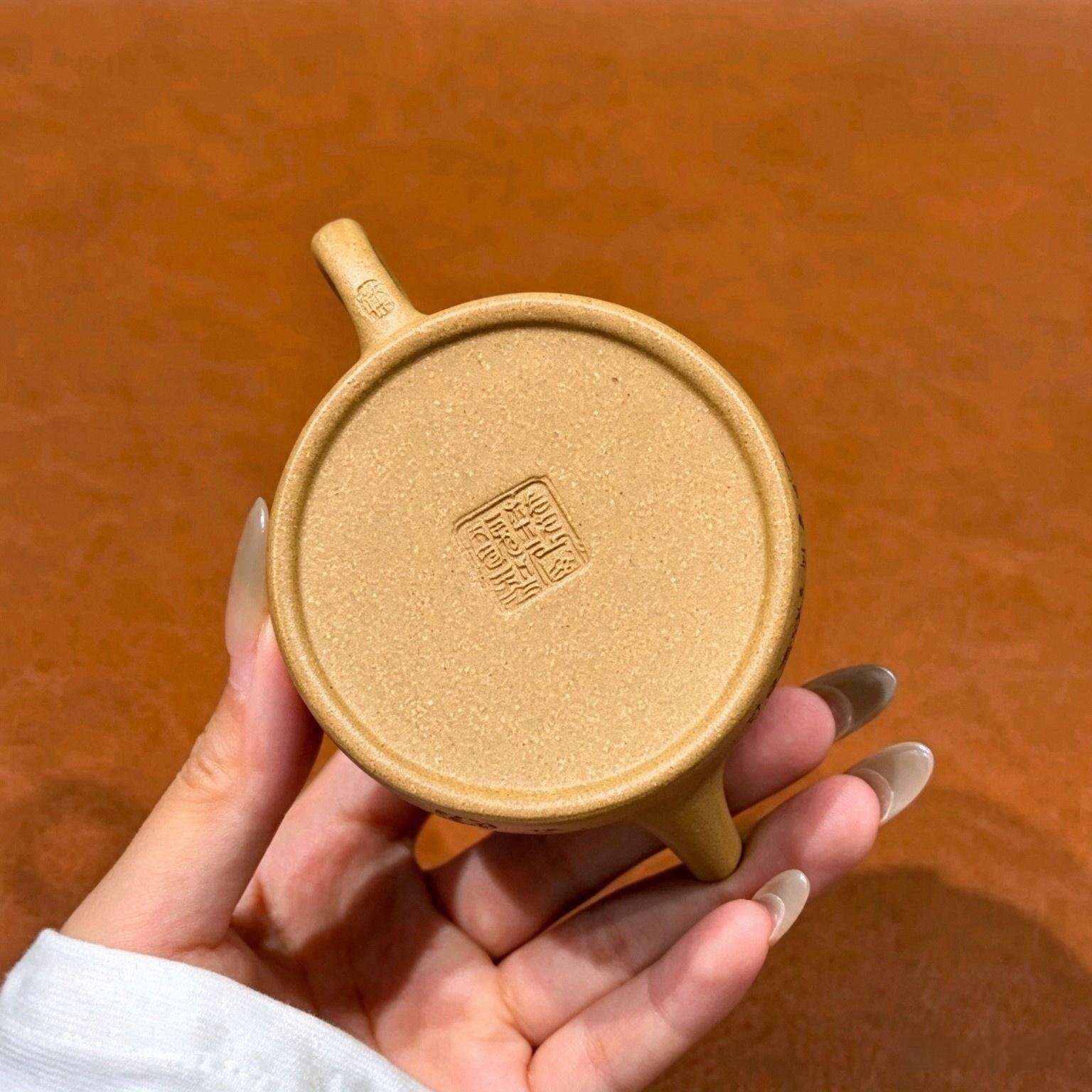
De Zhong 80cc Yixing Teapot for Solo Gongfu Brewing
$69.90
Key Reasons to Choose Half-Handmade Zisha Teapots
Authentic Craftsmanship (Not Machine-Made)
Half-handmade teapots are still fully crafted by hand from genuine Zisha clay (using hand-pounded slabs, manual trimming, and hand-fitted spouts/handles). The mold is only used as a shaping aid for the body. They retain the exact same porous, breathable structure as full-handmade pots, unlike cheap slip-cast or machine-pressed pots.Better Clay & Details for the Same Budget
Because molds significantly cut down on the time spent shaping the teapot’s body, labor costs drop. For a mid-range budget, buying a full-handmade pot only gets you beginner-level skills and basic clay. Buying half-handmade allows your money to go toward premium/rare clays and impeccable finishing work by experienced artisans.Superior Practical Performance
Mold assistance ensures precise symmetry, resulting in a tighter lid seal, smoother water flow, and a crisp, clean pour without dripping. The structural tension is also more uniform, making the pot less prone to cracking during extreme temperature changes (e.g., pouring boiling water in winter).Stress-Free Everyday Use
Teapots are meant for brewing tea. High-end, full-handmade teapots often make users anxious about accidental chipping or breaking. Half-handmade pots deliver excellent ergonomics, classic proportions, and durability at an approachable price, letting you focus on enjoying your tea.
The De Zhong 80cc Yixing Teapot combines rare Golden Duan clay and semi-handmade precision for perfect gongfu brewing. Shop this high-value teapot now!
3 in stock
Description
De Zhong 80cc Yixing Teapot: Golden Duan Clay Guide (2026)
Looking for a small Yixing teapot that pours cleanly without the price of a studio piece? This 80cc De Zhong Yixing teapot is molded, hand-finished, and sized for a single drinker. Below is the complete 2026 guide: where the clay comes from, how to season it, which teas it suits, how 80cc compares with larger pots, and what a semi-handmade pot gives up versus a fully hand-built one.
First published: 29 October 2026 · Last updated: 5 November 2026
What Does the Name De Zhong Mean?
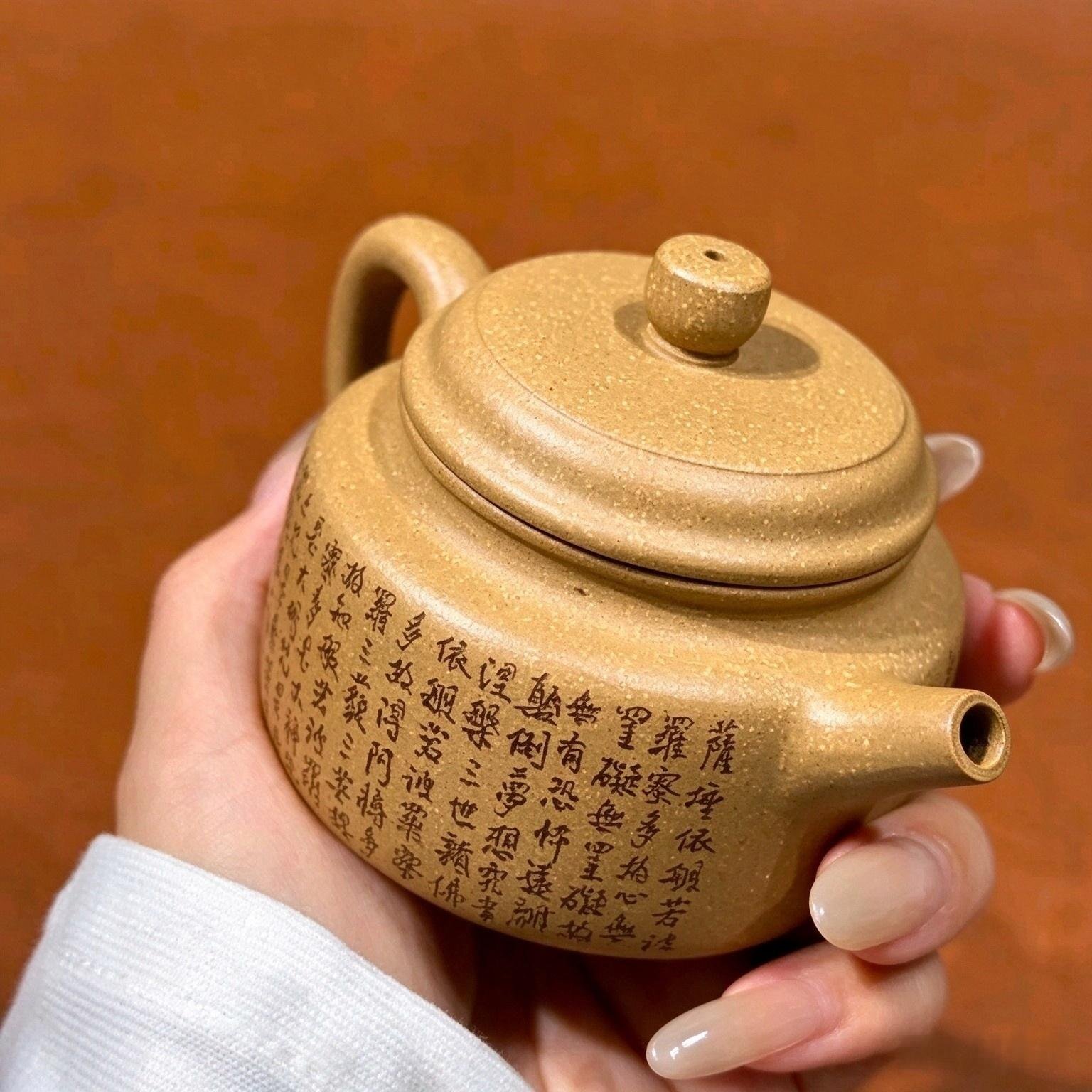
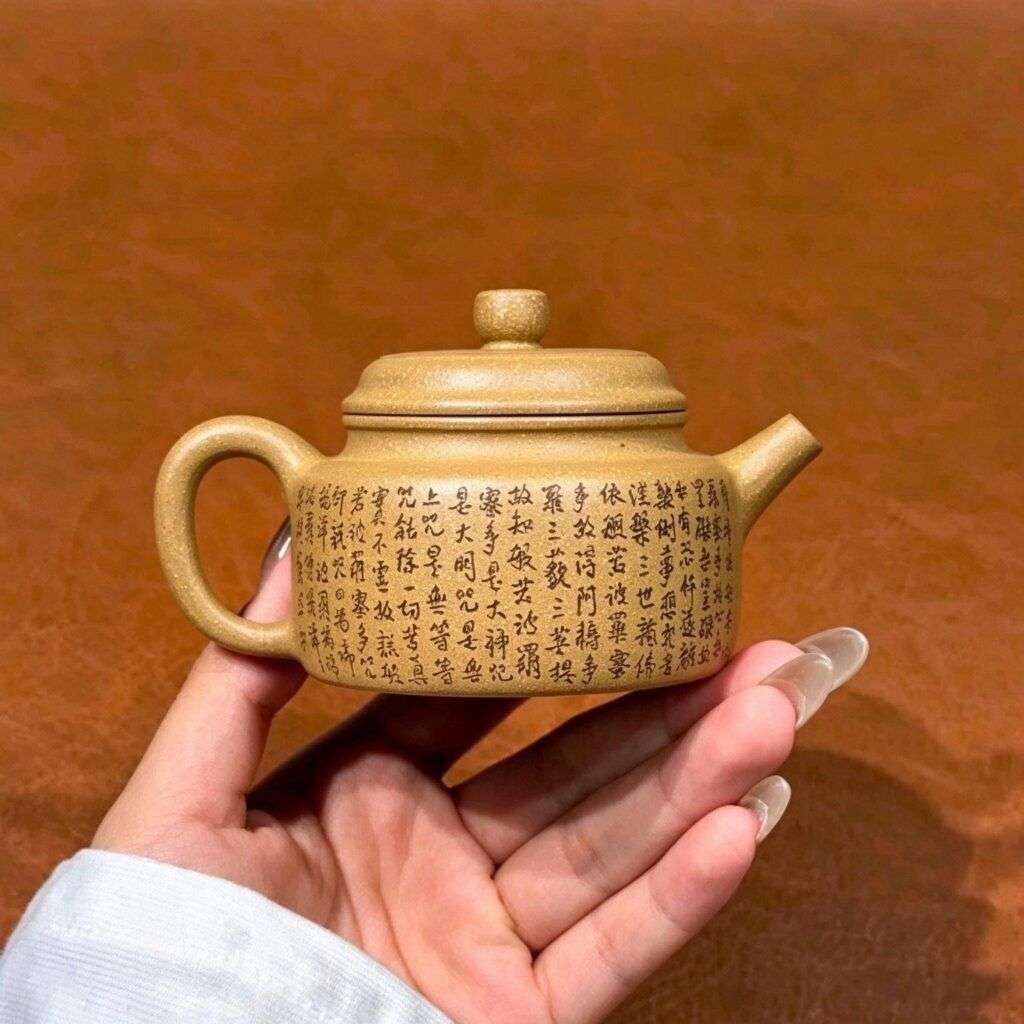
De Zhong, 德钟, is usually translated “virtue bell.” The form is a classic Yixing shape commonly attributed to Shao Daheng (邵大亨) in the Qing dynasty; older sources also call it 钟德. The name is debated, but the silhouette is not: a straight-sided body, a rounded shoulder, a domed lid and a flared foot, with a straight spout and an ear handle. Those proportions are why it pours cleanly and why the lid seats well.
What Is Golden Duan Clay (Duan Ni), and Where Does It Come From?
Golden duan is a light clay from the Huanglongshan area in Yixing. Mix it with a little extra water and it becomes plastic enough to press into a mold. Fired, it turns golden yellow, with small natural grains running through it. The clay comes from raw Huanglongshan ore. It is golden yellow, and the grains are part of the ore, not added later.
Most of our clay comes from a single workshop near Huanglongshan. We buy duan mud in block form, let it air out for months, then wet it and press it. That slow step is what keeps the body from cracking in the kiln.
Why the color matters
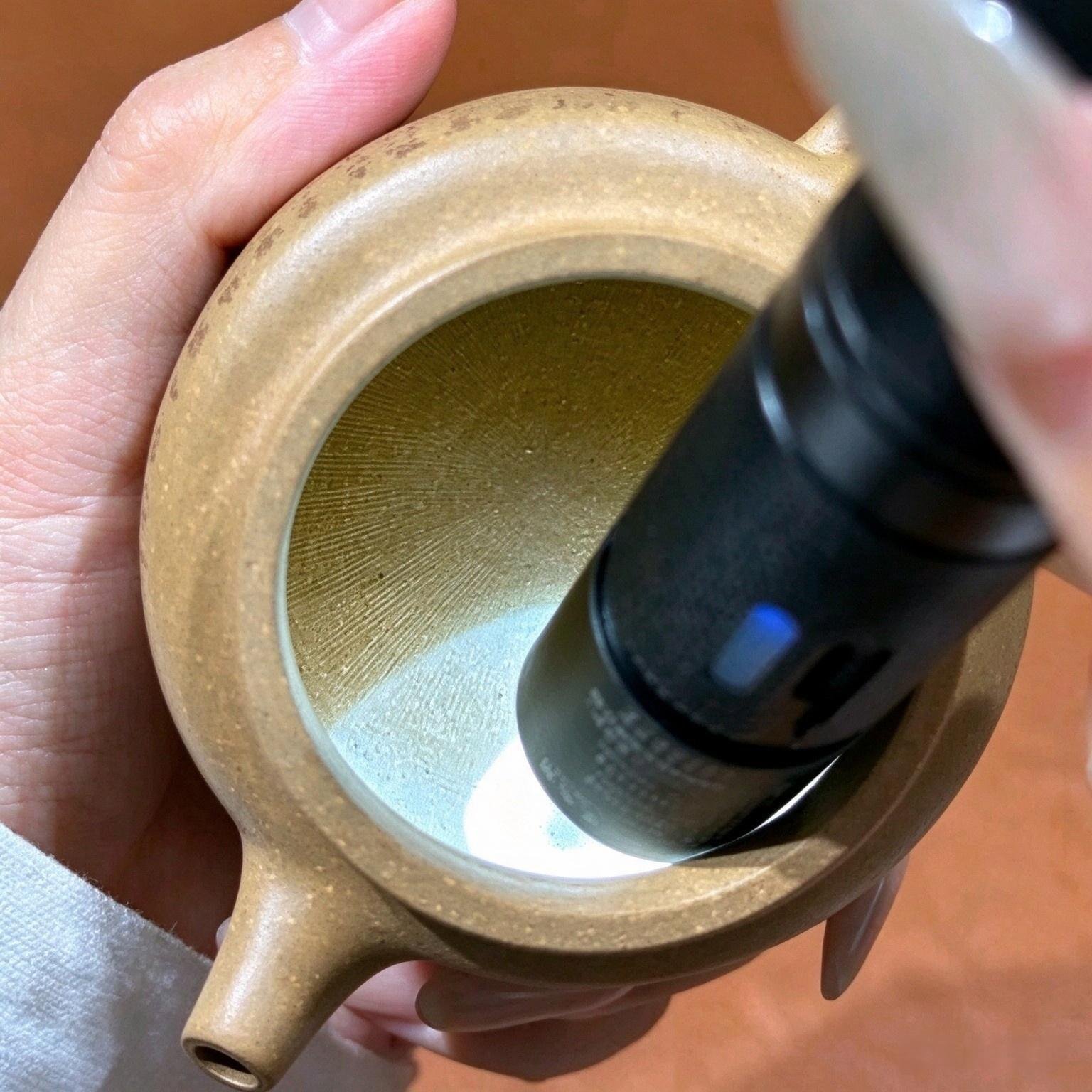
That yellow tone comes from iron in the raw ore. Nothing is painted on. Every pore stays open, and that is why this unglazed Yixing teapot handles aroma differently from a glazed one.
Many people assume a gold pot must be coated or dyed. Actually, the color is baked in at firing. If you scratch the surface, the inside stays the same yellow.
No colourants, no powders, no glaze
We do not add colorants, powders, or glaze to the body. The golden duan clay teapot you brew from is the same material you see on the shelf. Water passes through the wall slowly. Over months, tea oils settle into the clay and darken it.
The clay itself is a blend: most working workshops combine several clays to get a workable body, and this pot uses a duan-dominant mix chosen for even porosity and durability. A single-mud pot is rarer and costs more; a blended body is what a daily brewing pot is normally made from.
“Everyone asks if the gold color fades,” a buyer told us last year. It does not fade. It deepens, because the tea oils are darker than the raw clay.
How Huanglongshan duan mud compares with other Yixing clays
Clay choice changes how a Yixing teapot behaves. Here is a quick comparison of the main types you will meet in shops.
| Clay type | Color | Porosity | Best for |
|---|---|---|---|
| Golden duan (Duan Ni) | Golden yellow | High | Oolong, light pu-erh, rock tea |
| Purple clay (Zi Ni) | Red-brown | Medium | Sheng pu-erh, darker oolongs |
| Black clay (Hei Ni) | Dark brown-gray | Low-medium | Strong shou pu-erh, daily use |
| Light yellow clay (Huang Duan Ni) | Pale yellow | Very high | Light teas, floral oolong |
| Blended clay | Mixed | Varies | Budget pots, general use |
Most artisan workshops blend several clays to create a workable body—making unblended single-mud pots increasingly rare and costly. Our 80cc Yixing teapot relies on a carefully formulated, duan-dominant blend designed for balanced porosity and everyday durability. The specifications for what counts as Yixing zisha are written down, not folkloric. The national product standard is GB/T 10816-2024, Zisha ware , in force since July 2025, and it now runs alongside the food-safety standard for ceramic tableware, GB 4806.4-2016. The geographical indication itself is covered by T/JSBA 004-2025
, which sets limits on appearance, lead and cadmium migration, iron content, open and closed porosity, water absorption and thermal shock resistance, and specifies the process from weathering the raw ore through refining, forming and firing.
Which Standards Apply to This Pot
| Standard | What it covers | Status |
|---|---|---|
| GB/T 10816-2024, Zisha ware | The product standard for zisha pottery, aligned with the ceramic food-safety standard GB 4806.4-2016 | In force since 1 July 2025 |
| T/JSBA 004-2025, geographical indication product Yixing zisha | Appearance, lead and cadmium migration, iron content, open and closed porosity, water absorption, thermal shock resistance, and the full production process | In force since 15 December 2025 |
| GB 4806.4-2016, ceramic products for food contact | The mandatory food-safety requirements, including migration of harmful substances | Current |
Here is what we can and cannot tell you. The clay we buy is a duan-dominant blend from the Huanglongshan area, we name the region rather than a mine we cannot verify, and every pot leaves us from the same workshop. We have not had this batch independently tested against the figures in the geographical-indication standard, so we are not going to quote you a porosity number or a migration figure we do not have. If you want a laboratory report for your own pot, that is a reasonable thing to ask a seller for, and the standards above tell you which numbers to ask for.
Has This Pot Been Lab-Tested?
We do not publish a test certificate for this pot, so we will not claim one. What we can tell you is what the standards require and where to look: the geographical-indication standard for Yixing zisha sets limits for lead and cadmium migration, iron content, porosity, water absorption and thermal shock resistance, and the mandatory ceramic food-safety standard GB 4806.4-2016 covers migration from anything that touches what you drink. If a seller shows you a certificate, check that it names the pot or the batch and the standard it was tested against, not just the workshop. We would rather tell you what to ask for than hand you a piece of paper you cannot read.
How Do You Season and Care for an Unglazed Yixing Teapot?
Seasoning is the one part of teapot care most people get wrong on a new Yixing teapot. The pot needs months of tea oil, not a week. Rushing it leaves the clay dry inside and the drinks flat.
We have handled a lot of new pots over the years. The pattern is always the same. People wash the pot, then wonder why the first ten brews taste dusty. That dustiness is unseasoned clay, and no amount of rinsing fixes it.
A five-step seasoning routine
- Rinse the pot with hot water. No soap, no detergent.
- Fill it with a strong oolong and do three short pours.
- Let the wet leaves sit inside for a few hours, then dump them.
- Repeat with fresh leaf every few days for the first two weeks.
- After a month, use it normally, and keep one tea type in it while it seasons.
No soap. Ever. Soap leaves a film that the clay will hold for years.
Daily care rules that protect the pot
- Keep it off the stove and out of the microwave.
- Do not run it through a dishwasher.
- Use one tea type during the first few months.
- Keep the lid on when the pot rests, so the two pieces do not dry apart.
- Rinse with hot water only, then let it air-dry before storing.
- Pour boiling water over the whole pot at the end of a session.
Common mistakes we see every week
| Mistake | What happens | Fix |
|---|---|---|
| Washing with detergent | Clay holds a chemical film | Rinse with hot water only |
| Soaking for hours | Waterlogged clay; the body softens and the surface loses its texture | Rinse under a tap, then air-dry |
| Switching teas daily in month one | Mixed, muddy aroma | One oolong for the first month |
| Leaving it on a wet tray | Mold spots at the foot | Dry it fully after brewing |
| Using a dishwasher | Heat and detergent kill the body | Hand wash only |
What Teas Is an 80cc Gongfu ZiSha Teapot Best For?
Golden duan is porous, so it works best with light and medium oolongs, and the body holds aroma from each session. We will not tell you it softens bitterness — nobody has measured that. What you will notice is that the same pot tastes different after a week of one tea than it did on day one, and that the difference is yours to make. The pot is small, so the water stays hot and the leaves open fast.
Use it with these teas and you will get the most out of a small Yixing teapot:
| Tea | Leaf | Water | First steep | Note |
|---|---|---|---|---|
| tieguanyin tea | 5 g | 80 ml | 10 s | The default choice for this pot |
| wuyi rock tea | 6 g | 80 ml | 8 s | Firm roast, bright liquor |
| sheng pu-erh tea | 5 g | 80 ml | 5 s | Good after a few months of use |
| Da Hong Pao | 6 g | 80 ml | 8 s | Rock tea with a roasted edge |
| Light green tea | — | — | — | Not recommended; the pot holds aroma. Use glass or porcelain for green tea. |
| Jasmine oolong | 5 g | 80 ml | 10 s | Floral, and the pot keeps the scent |
| Strong shou pu-erh | 6 g | 80 ml | 8 s | Best after seasoning |
How to run an 80 ml session
Three grams of leaf goes in first. You add twenty milliliters of water, wait five seconds, then pour out. A second infusion gets more water and a longer steep. That is the whole method.
Many people think gongfu brewing means tiny cups and heavy equipment. Actually, the small pot is doing most of the work. The rest is patience.
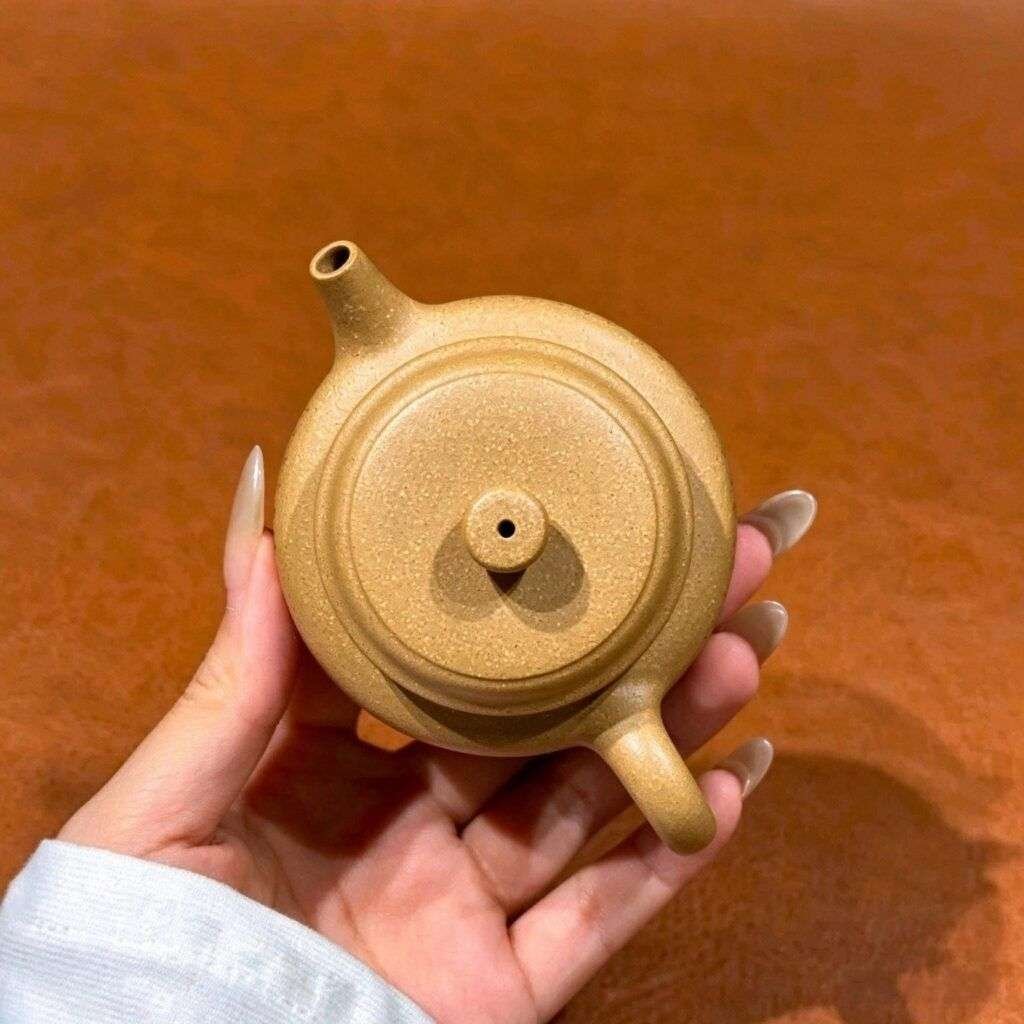
What Does “Semi-Handmade” Actually Mean?
We shape the body in a mold, then finish every edge by hand. It keeps the lid sitting flush without the price of a studio-signed piece.
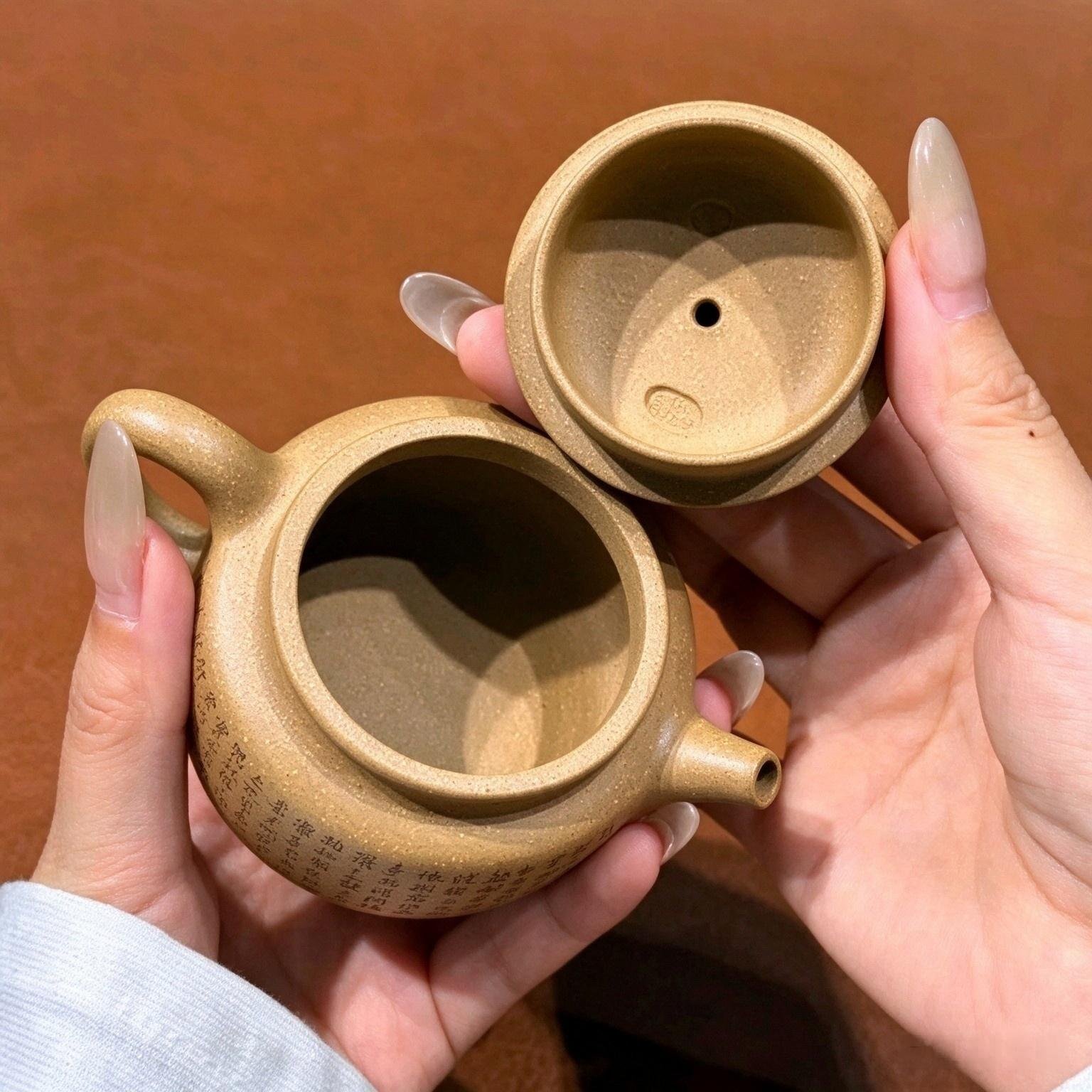
A semi-handmade pot spends most of its forming time in the mold. Hand finishing handles the parts a machine cannot judge. The lid fit, the spout angle, the surface, and the foot all get a person.
What we finish by hand
- Trimming the mold seam off the body.
- Fitting the lid so it sits flat and stops rattling.
- Smoothing the spout so the stream stays straight.
- Drilling the air hole and the filter holes.
- Sanding the foot so it sits level on a table.
- Checking the wall thickness against the lid.
Semi-handmade vs. fully hand-built vs. machine-pressed
A fully hand-built pot has thinner walls and a rounder pour. Collectors pay for the maker’s name. Most daily gongfu drinkers pick a semi-handmade pot instead, and that is why we build this Yixing teapot the way we do.
What You Can Check on the Pot Itself
Most zisha pots on sale are unglazed, and the standards written for the material describe exactly what to look for: porosity, water absorption, thermal shock resistance and iron content. Those are laboratory figures, so unless you have a report in front of you, the honest way to judge a pot is by its physical behaviour rather than by its label. Here are four things you can check yourself in about a minute. None of them is a test, and none of them settles whether a pot carries a certificate.
- Look at the interior. A matte, slightly grainy surface with no glossy glaze is what an unglazed body should look like.
- Check the lid and the pour. The lid should seat evenly, and the stream should run straight rather than dribble or spray.
- Look for hand-finishing marks. A seam, foot or filter hole that has been trimmed by hand is evidence of finishing, not a certificate.
- Compare the grain across units. Natural clay varies from pot to pot; an identical pattern on every unit points to a moulded copy.
What a listing can reveal
We would rather lose a sale than sell a fake. If you are unsure about a pot you already own, send us photos and we will tell you what you are looking at.
Is 80cc Enough for Gongfu Brewing?
Yes. 80 ml is 2.7 oz. That is one small cup, plus a second pour for your guest.
Small volume is the point. The water stays hot, and the leaves open fast. That is why an 80cc Yixing teapot works better for leaf testing than a big pot. You can brew three grams and compare.
A large pot needs a large leaf budget. A small one lets you taste more teas with less tea.
How Does 80cc Compare With Larger Teapots?
Size changes the session, not the technique. Here is how the volumes stack up for the same brew.
If you brew alone, 80cc is the sweet spot. You can still pour for a friend, and the leaves open in seconds. That flexibility is the main reason we chose this size for our Yixing teapot line.
Who Is the De Zhong 80cc Yixing Teapot Best For?
- Leaf testers. Anyone who wants a small Yixing teapot to compare teas side by side.
- Oolong drinkers. Tieguanyin, rock tea, and dan cong all fit the 80cc format.
- First zisha buyers. The price is low enough to make a mistake, and the size is easy to handle.
- Office brewers. One cup, one pot, no wasted water.
- Collectors of simple tools. A working pot, not a display piece.
- Gift buyers. It comes ready to use, with a fitted lid and no assembly.
If you are new to this side of tea, our teaware collection has the rest of the range, and the zisha teapot section is where the other clay bodies sit. The 120cc Mutton Fat duan clay pot is the larger version of this one, the 170cc Jigu in Di Cao Qing is the darker-clay comparison, the 180ml Bian Chen is the flat-bodied option, and our brewing guide covers the brewing side.
What Ships With Your 80cc Yixing Teapot?
Every pot leaves us in a plain protective box. There is no foam, no plastic, and no filler that can leave a mark on the clay.
- One 80cc golden duan clay teapot with a fitted lid.
- A cotton cloth for wiping the pot dry.
- A short printed brewing card with our recommended ratios.
- A 90-day damage warranty on transit and manufacturing faults.
We ship worldwide from our workshop. Orders placed before 2 pm local time leave the same day, and tracking arrives by email. Returns are open for 30 days, as long as the pot has not been used for brewing.
Frequently Asked Questions
Can I use one Yixing teapot for different teas?
Not at first. Most of the clay surface is still porous during the first three months, so different teas will mix in the taste. Season the pot with one oolong for the first month. After that you can rotate teas, though many drinkers keep one pot per type for the cleanest flavour in a gongfu session.
How long does a new Yixing teapot need to season?
Plan on one to three months. The clay darkens as tea oil soaks in, and the pour speed starts to slow down slightly. You do not need a special routine. Daily use with oolong does most of the work. Just rinse with hot water, keep soap away, and do not rush it in the first week.
Is a semi-handmade Yixing teapot as good as a fully hand-built one?
For daily brewing, yes. A fully hand-built pot has thinner walls and a rounder pour, and collectors pay for the maker’s name. A semi-handmade pot gives you the same clay, the same unglazed body, and a well-fitted lid at a far lower price. Most daily gongfu drinkers choose this trade.
Why does the pot feel different after a few weeks?
The surface fills with fine tea particles, and the pour slows down a touch. That is normal and it is a good sign. It means the clay is taking on oil. A very slow pour usually means you should pour a little faster and use a coarser strainer.
Can I use an 80cc gongfu teapot for western-style brewing?
Technically yes, but do not. The small chamber leaves little room for a full pot of water, and the strong body of a Yixing teapot holds aroma from every brew. If you want western-style tea, buy a larger pot and save this one for gongfu.
Does boiling water crack the pot?
No. Good Yixing clay is fired at around 1,200 °C. Boiling water is normal and it is how you wake the pot up. Only thermal shock from moving a hot pot onto cold stone can cause damage, so set it on a dry mat.
How do I remove a tea stain that is too dark?
Boil plain water in the pot and let it sit for an hour, then rinse. For darker marks, fill it with hot water and a small pinch of baking soda, wait an hour, and rinse well. Never use a metal scraper. It will scratch the surface and hold flavour for years.
About this product
This page is a commercial product page. We make and sell the Yixing teapot described above, and we may earn a commission if you buy through the links on this page. Product claims on this page describe our own production process, and we do not publish competitor pricing or sponsored placements.
We brew in this pot every week, so the seasoning notes, pour timings, and brewing ratios here come from our own use rather than from a spec sheet. Clay sources are described from what we buy at the workshop in Yixing, and we name the region rather than an individual mine we cannot verify.
One practical note on ratios: 80 cc is small, so a 5 g dose in 80 ml is roughly 1:16, which is where gongfu brewing usually sits. If your first infusion runs fast, the fix is usually a coarser strainer or a slightly shorter pour rather than more leaf.
Related products
-

-
Sale!
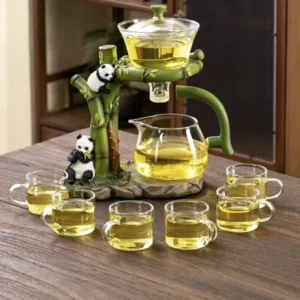
Panda Hua Bao 9-Piece Automatic Glass Tea Set for Gongfu
Original price was: $199.90.$159.90Current price is: $159.90. -
-
Sale!
Ji Pai Minimalist 9-Piece Automatic Glass Tea Set
Original price was: $199.90.$159.90Current price is: $159.90.

Reviews
There are no reviews yet.