
Bian Chen 180ml Yixing Zisha Teapot, Aged Purple Clay
$69.90
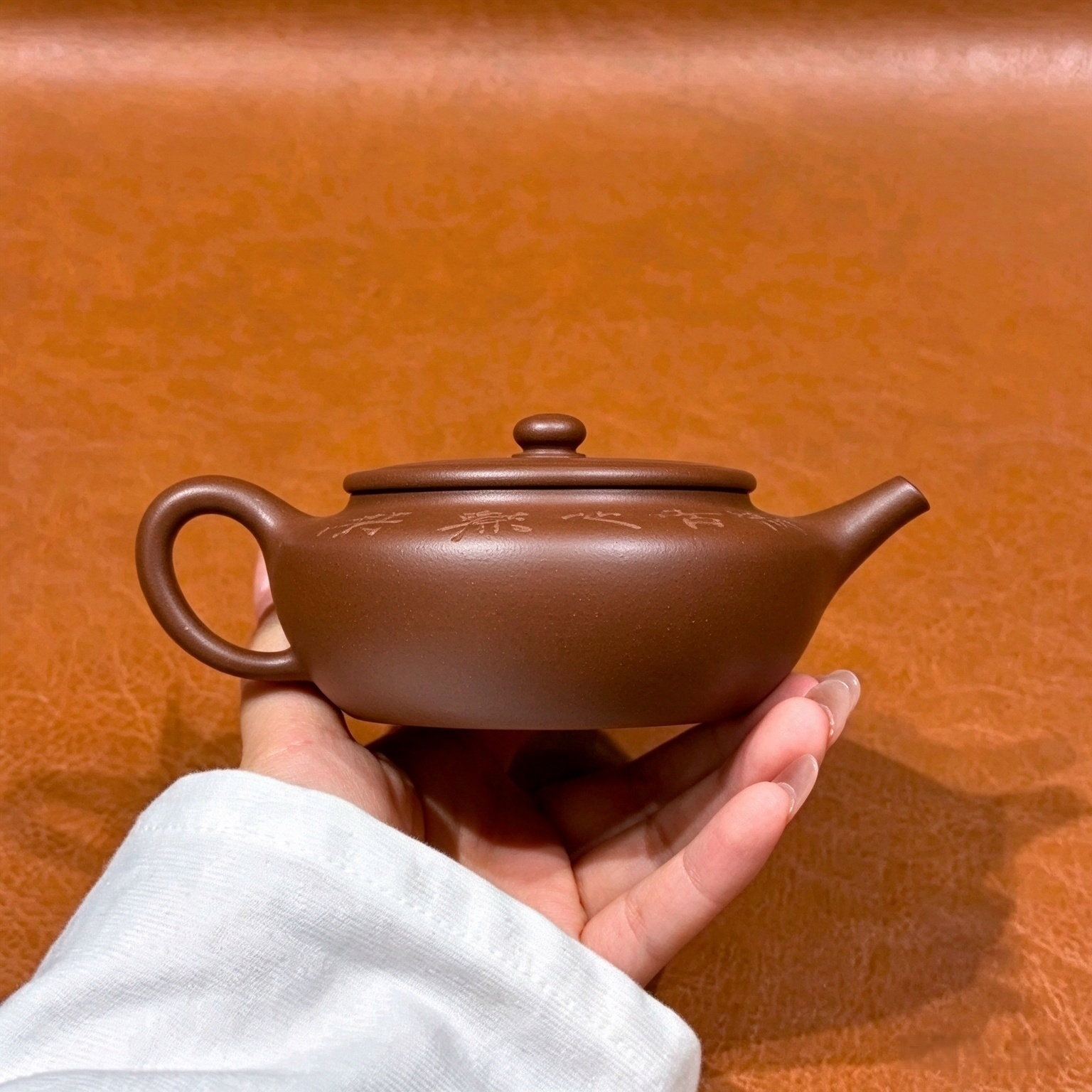
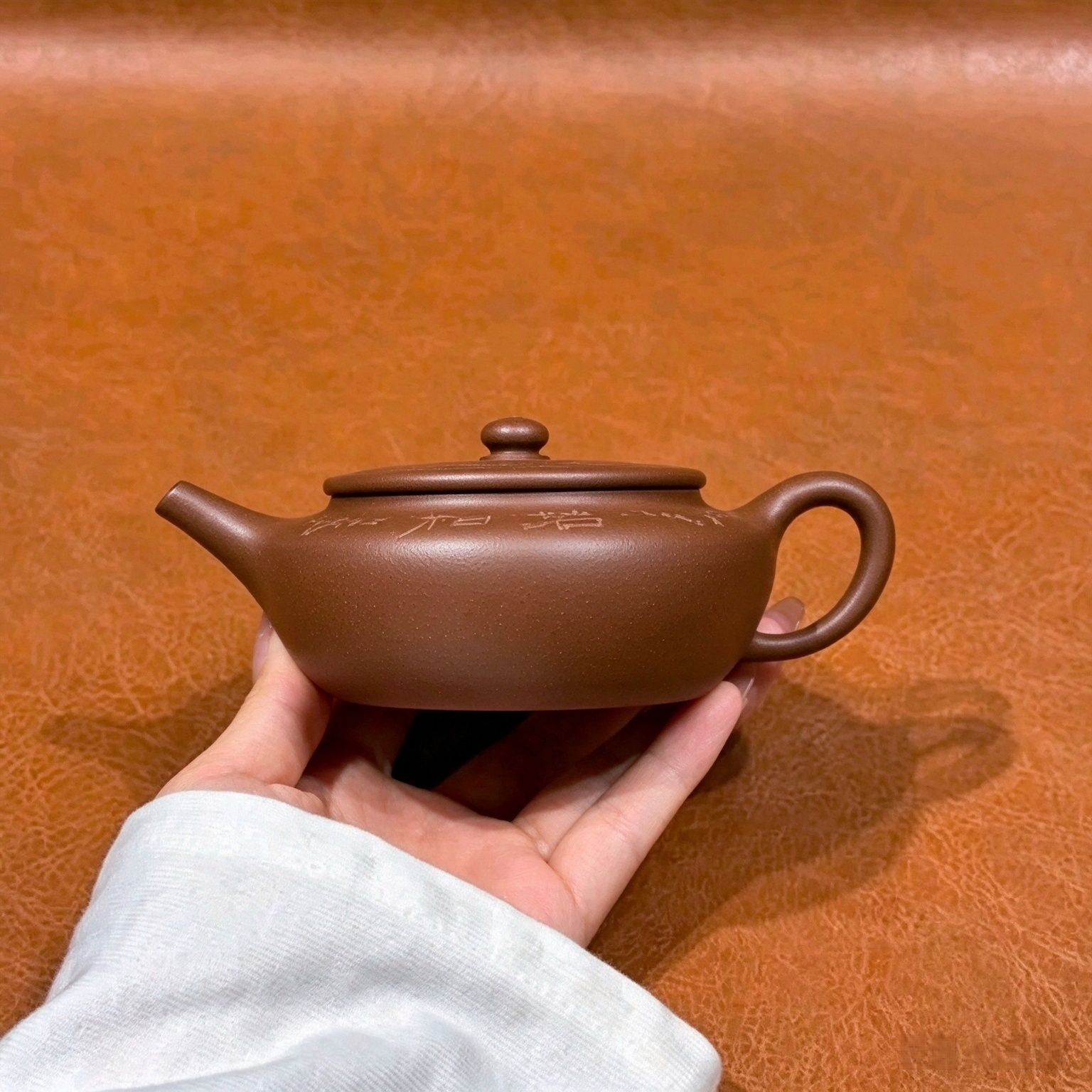
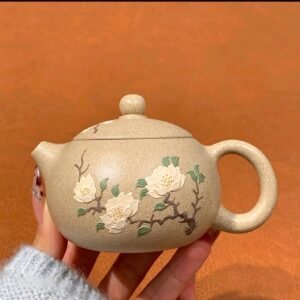
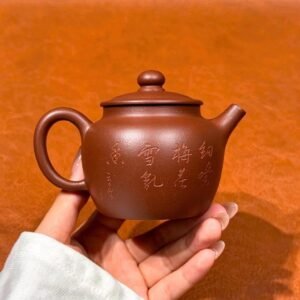
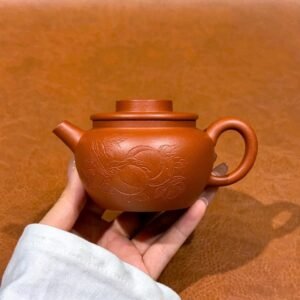
Bian Chen 180ml Yixing zisha teapot in aged purple clay, with a flat body, a lid that seats flat and a steady pour. A semi-handcrafted pot for one or two drinkers, with the clay and brewing checks set out below.
3 in stock
Description
Bian Chen 180ml Yixing Zisha Teapot, Aged Purple Clay
A pot can look right on a shelf and still disappoint on the table — a lid that rattles, a spout that wanders, a body that is heavier than the capacity needs. The Bian Chen Yixing teapot is built for a narrower set of priorities, and we would rather name them than claim it solves everything. It is a 180 ml pot for daily Gongfu brewing, made from aged purple clay and semi-handcrafted in Yixing, Jiangsu. This guide covers the clay, the shape, the seasoning steps, the brewing ratios, and the limits worth knowing before you buy.
We have brewed from a prototype of this pot in our own studio since 2023, through two Pu-erh winters and one move. Every brewing number below comes from that pot, not from a catalog.
What is a Bian Chen Yixing teapot, and why is 180 ml a good size?
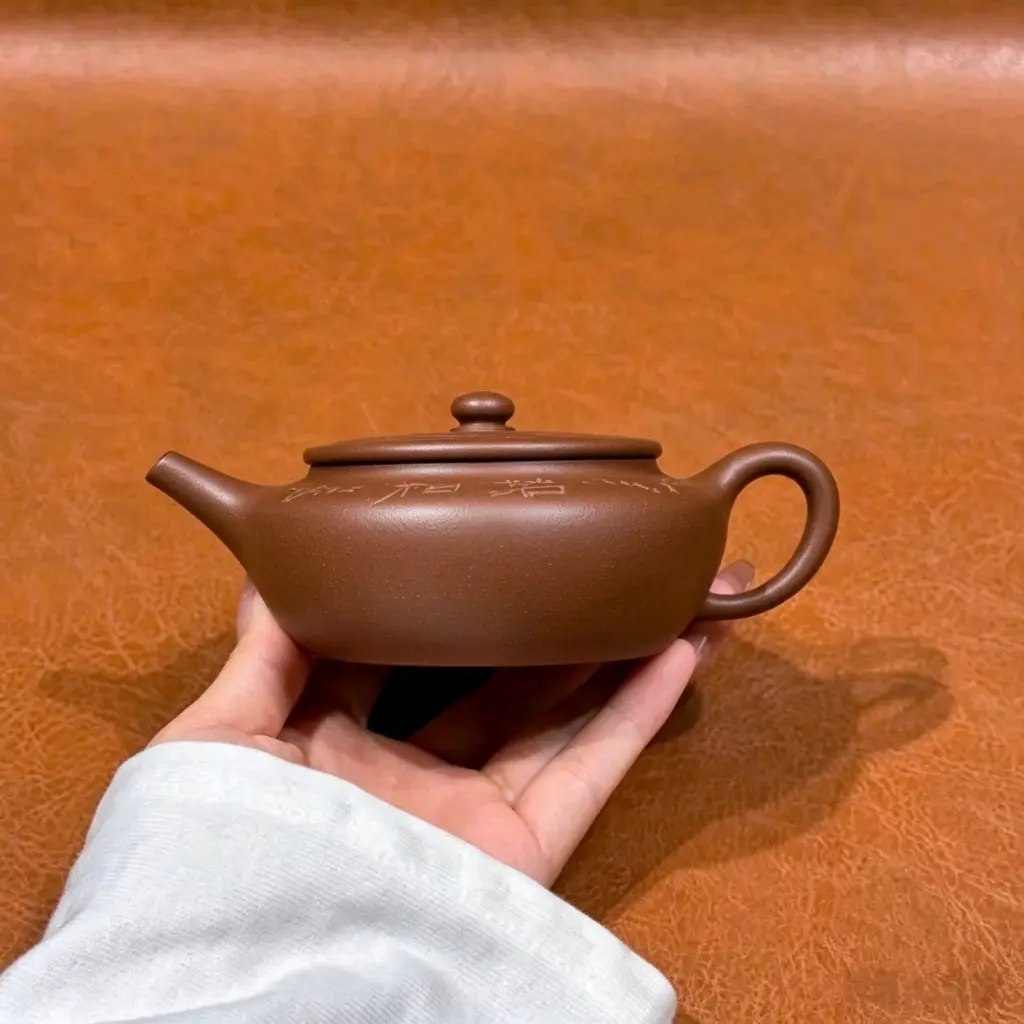
A Bian Chen Yixing teapot is a flat, round-bodied pot with a wide mouth and a short spout, made in Yixing, Jiangsu. The 180 ml size holds about 8 to 10 g of loose tea. That suits daily Gongfu brewing of Pu-erh and oolong.
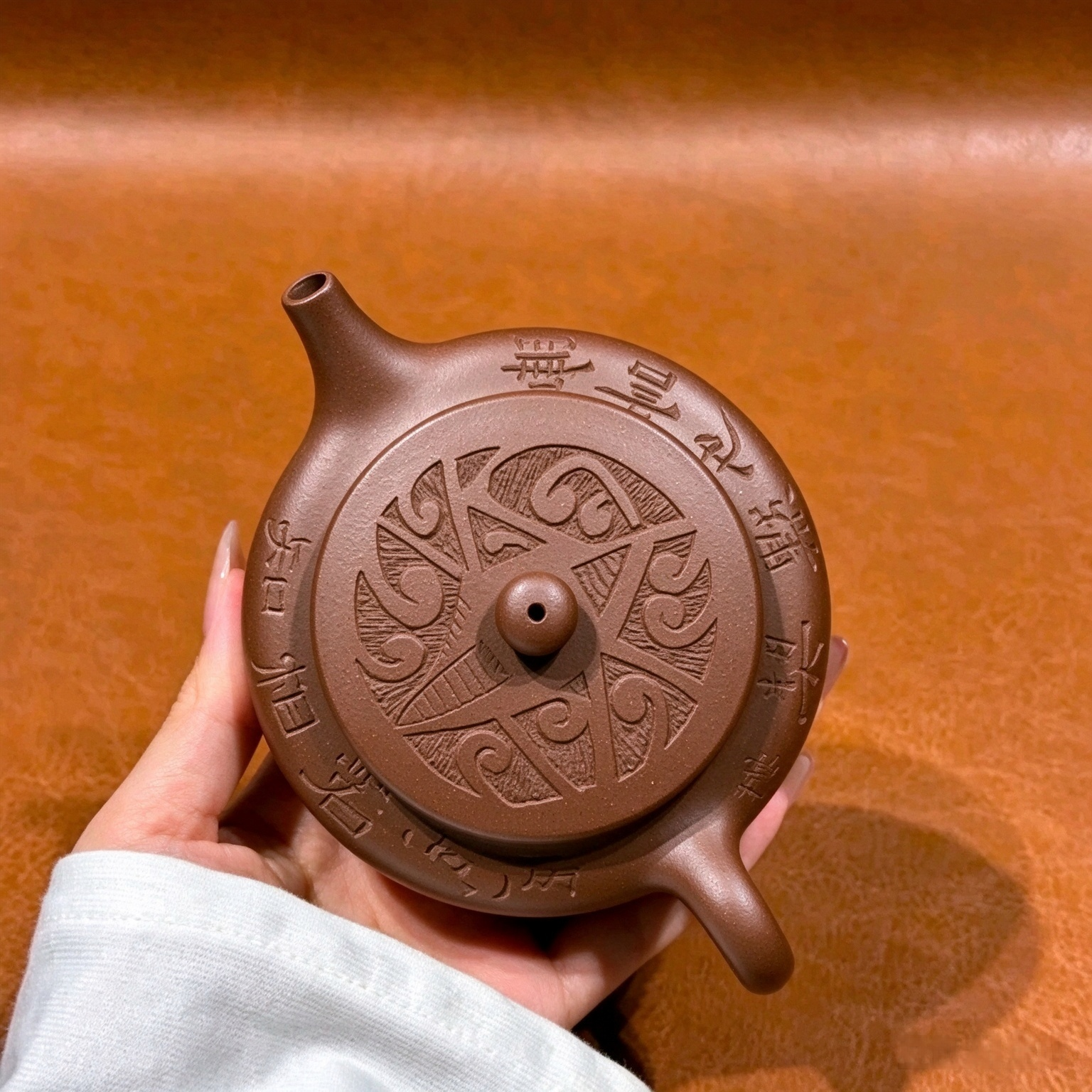
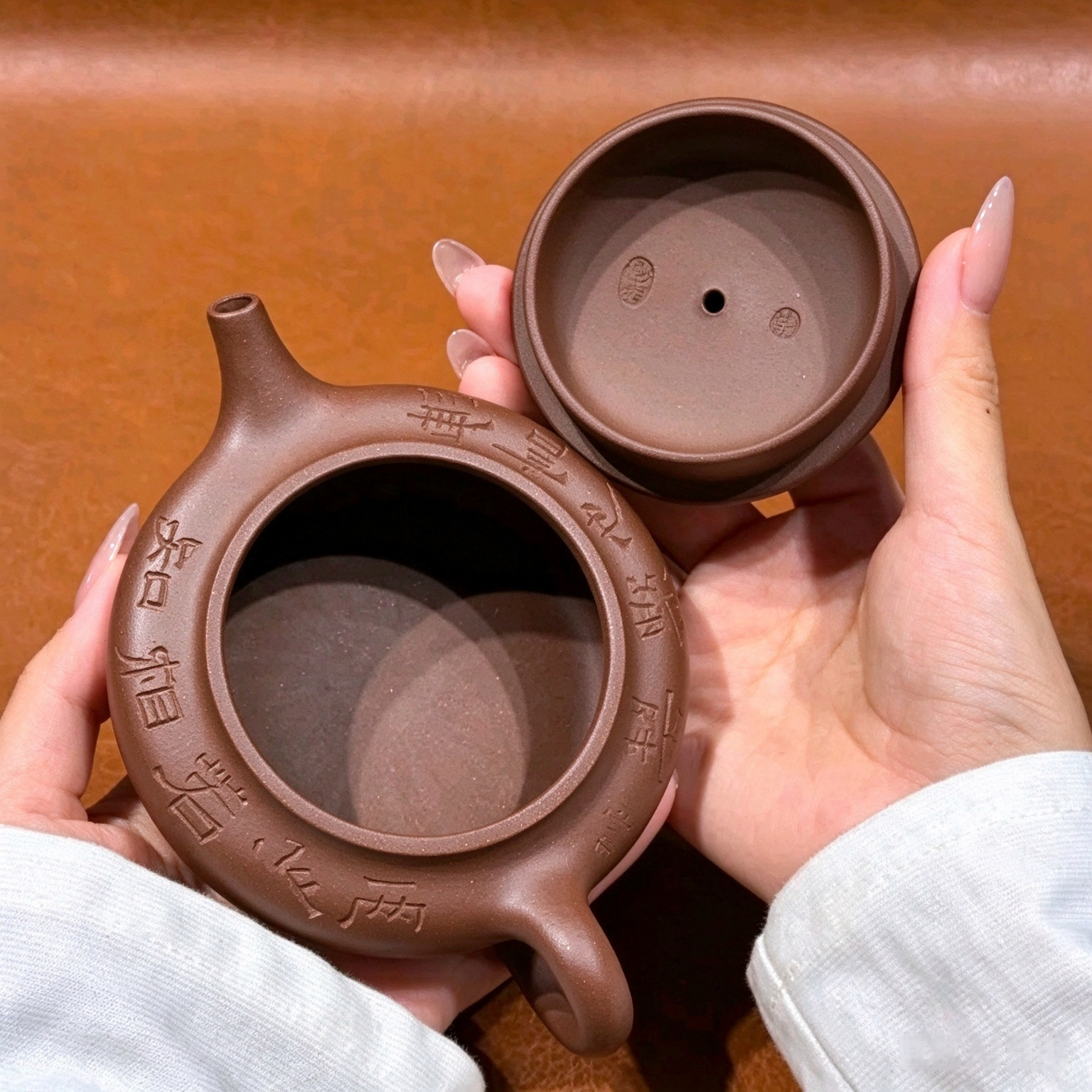
Bian Chen, 扁臣, is a flat-bodied form in the Meng Chen lineage. 扁 describes the low, wide body; 臣 is the second character of 惠孟臣, the late Ming and early Qing potter whose small pots were copied so widely that “Meng Chen” became a style rather than a signature. His best-known forms are the pear and the level pot; this is the flat member of that family — wide mouth, flat lid, low body, and a handle that drops onto the rim when you lift the pot. The historical record documents the Meng Chen lineage, not a pot called “Bian Chen”; the name here is the workshop’s shape name.
In the Minnan and Chaoshan gongfu tradition there is a saying that the pot should be a Meng Chen and the cup should be a Ru Shen: 壶必孟臣,杯必若深. It is an old line about which two objects on the table were made with the most care, and it is why a flat Meng Chen body still carries a certain authority with people who know the lineage.
The size sits in the middle of the Gongfu range. Smaller pots, around 100 to 120 ml, suit tightly rolled oolong such as Tieguanyin. Larger pots, 200 ml and up, suit a second round of guests. At 180 ml, one pot serves one or two people.
Ban Shou Gong, or semi-handcrafted, means the clay body is pressed into a mold and then finished by hand. A fully hand-made pot is shaped from a lump of clay with no mold at all. Molding is faster and more consistent. Hand-shaping takes longer and gives every pot its own outline.
Both routes use the same clay family. The difference is the wall. A molded Yixing teapot has an even wall, which means even heat and an even pour. A hand-shaped wall is less predictable, and some drinkers prefer that.
Porosity means tiny open pores inside the clay. A new pot pulls water and tea oil into those pores. After months of use, a thin layer of oil stays in the clay. Tea drinkers report that the taste turns rounder and less sharp once that develops.
Many buyers assume a heavier pot means better clay. Actually, weight mostly comes from wall thickness. A thick-walled 180 ml pot can weigh more than a thin one cut from the same ore.
How do you season an aged purple clay teapot before the first brew?
Seasoning means soaking a new pot so the clay stops pulling water and aroma out of your tea. Rinse the pot, fill it with warm water, let it stand, repeat, then run one throwaway brew with the tea you plan to drink. Allow about 30 minutes.
- Rinse and check. Run cold water over the pot, lid, and filter. Look for loose dust inside. Soak the filter separately for a few minutes.
- Fill and soak. Put the body and lid back together, fill with water at about 80°C, and let it stand for 15 minutes. Empty it. Repeat once with hot water.
- Run a throwaway brew. Add about 5 g of the tea you plan to drink. Steep for 10 seconds, pour, and discard. That confirms the clay is sealed and gives you a first read on the leaf.
After that, the pot is ready. No special powder, no vinegar, no long soak.
Which teas pair best with a 180 ml Yixing teapot for Gongfu brewing?
A 180 ml Yixing teapot handles dense, roasted, and aged teas best. Ripe Pu-erh, shou Pu-erh, and Wuyi Yancha all give a clean result at 8 to 10 g of leaf. Light, delicate teas want a smaller pot and a shorter leaf. Here is the working ratio we use.
Strongly roasted teas were set up for a 100 to 120 ml pot. At 180 ml, use fewer leaves and shorter steeps.
Can you brew different tea types in one Zisha teapot?
You can, but most serious drinkers should not. A pot used for roasted oolong holds that roast smell for weeks. Pour a light green tea into it later and the green tea tastes flat and slightly burnt.
Best practice: keep one Zisha teapot per tea type, and rinse the pot with hot water between sessions on the same tea.
If this is your only pot, start with roasted teas and strong oolong. They carry their own flavour, so a young pot does not show its seams.
How do you clean and maintain a purple clay teapot day to day?
Clean the pot with hot water only. No soap, no detergent, and no dishwasher. The clay holds oil, and detergent leaves a film that dulls the taste over time.
- Empty the pot and pour hot water over the inside.
- Rinse until the water runs clear.
- Air-dry with the lid off, on a cloth or a rack.
- Wipe the outside with a dry cloth. Skip polish and oil.
- Never heat an empty pot on a stove. Thermal shock cracks the body.
- Store the pot dry and open, away from strong odors.
How Can You Judge the Clay, and What Should You Ask a Seller?
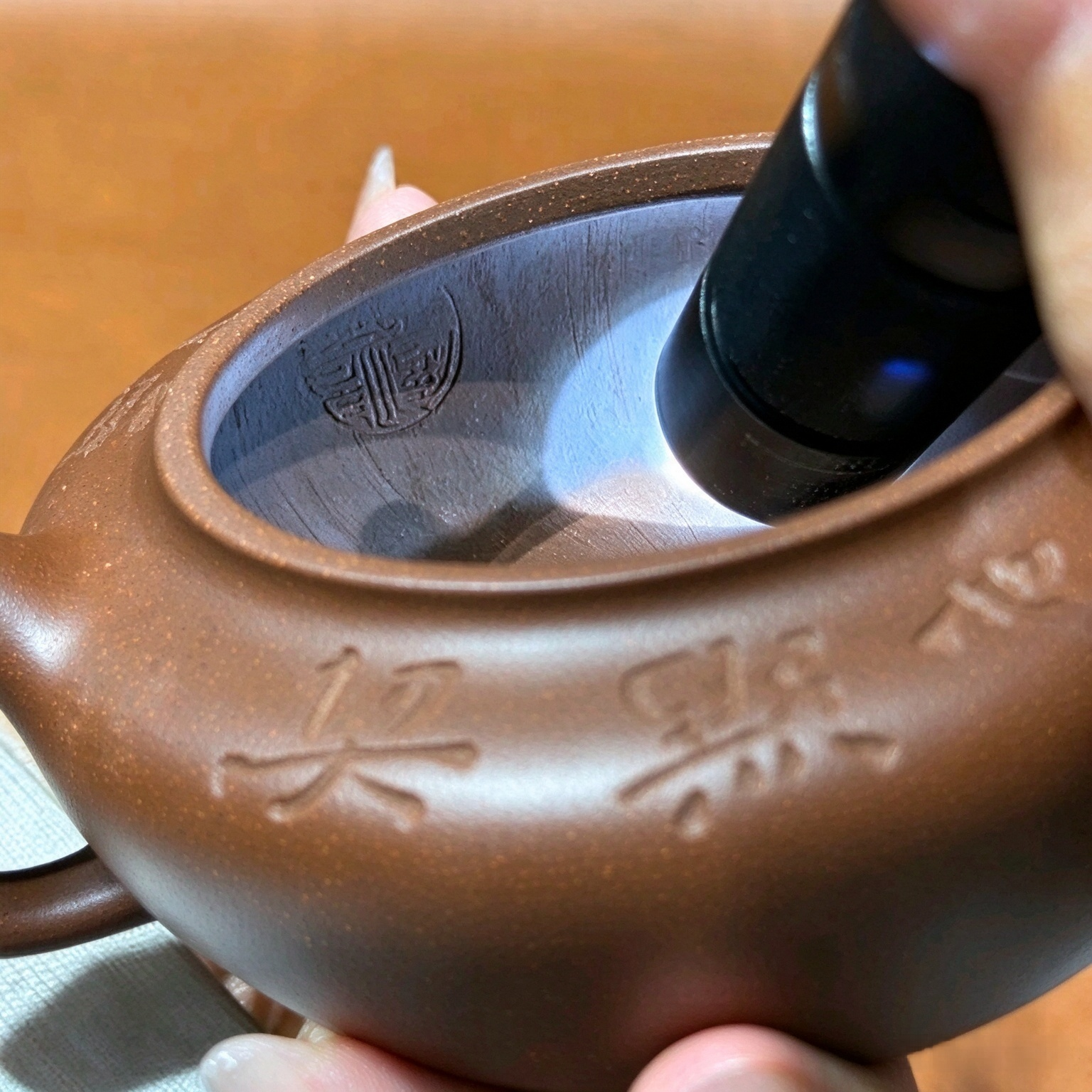
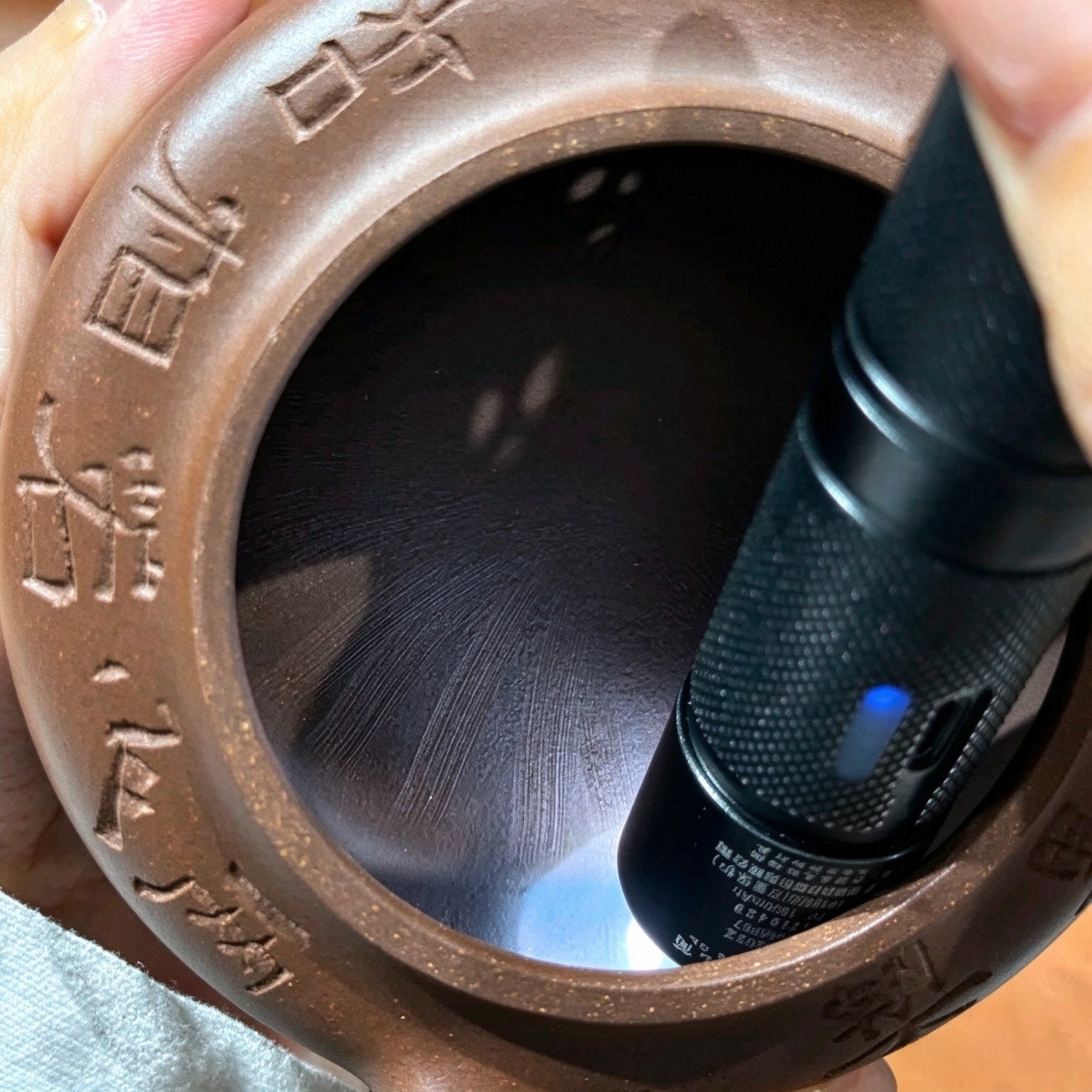
You cannot tell by colour alone, and you cannot tell by weight. Source documentation is the only reliable check, and we do not have one for this lot. The clay is described by the workshop as aged purple clay (Zi Ni, 紫泥), from the Huanglongshan, 黄龙山, area at Dingshan, 丁山, Yixing. We can tell you the clay family, the workshop and the region, and we can show you the finished body. We cannot show you a mining record for this lot, so we are not going to claim one — and we would rather say that than print a mine name we cannot verify.
| Signal | What it tells you |
|---|---|
| Where the clay comes from | Ask for the region and the workshop. Famous mine names are the most abused vocabulary in this trade — the No. 4 well, 四号井, that “Di Cao Qing” is most associated with was closed in 1997, and plenty of pots carry a well name they cannot support. |
| Surface | Original ore fires matte and earthy. A pot that has been coated or dyed reads differently in the hand. |
| Paperwork | A named workshop and a stated clay source are worth more than a well name. |
| Price | Price alone proves nothing in either direction. |
The craft itself is on China’s national list of Intangible Cultural Heritage, which is the right way to talk about this kind of thing: the listing covers the making, not the mine, and not the pot you are holding. The listing is here.
The craft is what appears on the heritage lists — China’s national list of Intangible Cultural Heritage for the making, and the UNESCO Representative List for Chinese traditional tea processing techniques, inscribed in 2022 as number 01884, which covers the six tea categories including oolong. A heritage listing covers the knowledge and the skill. It does not certify a garden, a pot, or a particular tin of tea, and we would rather say so than borrow something it does not say.
If you want the clay sourcing and workshop details for this specific pot, ask us with the order number and we will send what we have. If we do not have it, we will tell you that too.
The three pots we make come in three sizes and three bodies, and the difference between them is mostly about volume and how much clay you are pouring. The De Zhong 80cc is the small one for a single drinker working through teas quickly; the Jigu 170cc sits between the two; this Bian Chen at 180 ml is the one to reach for when you are brewing shou pu-erh and want a longer, slower round. All three are on our zisha teapot page, and the wider range is under teaware.
Where is this Yixing teapot made, and what is in the box?
Genuine Yixing Zisha is traditionally associated with clay deposits around Yixing, Jiangsu Province, especially the Huanglongshan, 黄龙山, area. The specifications that matter for a Yixing pot are written down rather than folkloric. The national product standard is GB/T 10816-2024, “Zisha ware”, in force since July 2025, and the geographical indication itself is covered by T/JSBA 004-2025, which sets limits for appearance, lead and cadmium migration, iron content, open and closed porosity, water absorption and thermal shock resistance, and specifies the process from weathering the raw ore through refining, forming and firing.
We do not publish a laboratory report for this pot, so we are not going to quote you a migration figure we cannot show you. What we can tell you is what to ask for: the mandatory food-safety standard for ceramic tableware is GB 4806.4-2016, and the geographical-indication standard for Yixing zisha sets its own limits for lead and cadmium migration. If a seller shows you a certificate, check that it names the pot or the batch and the standard it was tested against, not just the workshop.
Boil the empty pot for about ten minutes and pour the water away before your first tea — the first step in our care card, and worth doing regardless.
Peer-reviewed studies have analyzed Yixing Zisha’s mineral composition—typically including quartz, kaolinite, illite, hematite, and montmorillonite—and its hierarchical pore structure after firing.
What arrives:
- One Bian Chen 180 ml teapot, body and lid.
- One removable mesh filter.
- One gift box.
- One printed care card with the brewing ratios above.
Perfect for:
- Daily Pu-erh and shou sessions
- Wuyi rock tea at a small table
- Brewing for one or two people
- A first serious Yixing teapot
Bian Chen vs. round vs. tall: which Yixing teapot shape fits your tea table?
Shape changes the pour, not the flavour. A wide mouth shows you the leaf. A narrow neck holds heat. A tall body gives you a long steep.
Frequently Asked Questions
Is the Bian Chen teapot dishwasher safe?
No. Heat and detergent strip the oil layer the clay builds over time. Wash by hand with hot water and air-dry with the lid off.
How long does it take for the clay to develop a patina?
Three to six months of regular use. The matte surface slowly turns darker and glossier as tea oil settles into the pores. Speed depends on how often you brew and how oily the tea is.
Can I use this Yixing teapot for green tea?
You can, but most drinkers do not. A pot that has brewed oolong will mute a delicate green tea. Start a fresh pot if you plan to drink green tea weekly.
What is the difference between a 180 ml and a 250 ml Yixing teapot?
About four extra grams of leaf and a longer steep. A 250 ml pot serves two people at once. A 180 ml pot gives one brewer more control over leaf and water ratio, and it sits closer to traditional Gongfu practice.
Is the pot handmade or semi-handcrafted?
It is semi-handcrafted, also called Ban Shou Gong. The body is molded, then the rim, spout, handle, and lid are finished by hand. We describe it that way because that is how it is made.
Where do I get a replacement lid?
Contact us with your order number and the clay type. Lids are matched by shape and clay batch. A lid from a different batch will not seal well.
First published: 30 October 2026 · Last updated: 5 November 2026
Author and reviewer disclosure
This page was written by the founder and head tea buyer at Min Tea Shop, who has bought and cupped tea directly from growers and potters for eight years. The pot described above was developed from a prototype the team has brewed from since 2023, and every brewing number here comes from that pot rather than from a catalogue.
The heritage listing and the mineral and pore-structure references are linked above; the standards are the current ones, and where we cannot verify a claim — a mine name, a laboratory figure — we say so rather than print it. No sponsored content, paid placements or affiliate links appear on this page, and we do not sell or share your personal data — see our privacy policy for details.
Reviews
There are no reviews yet.