
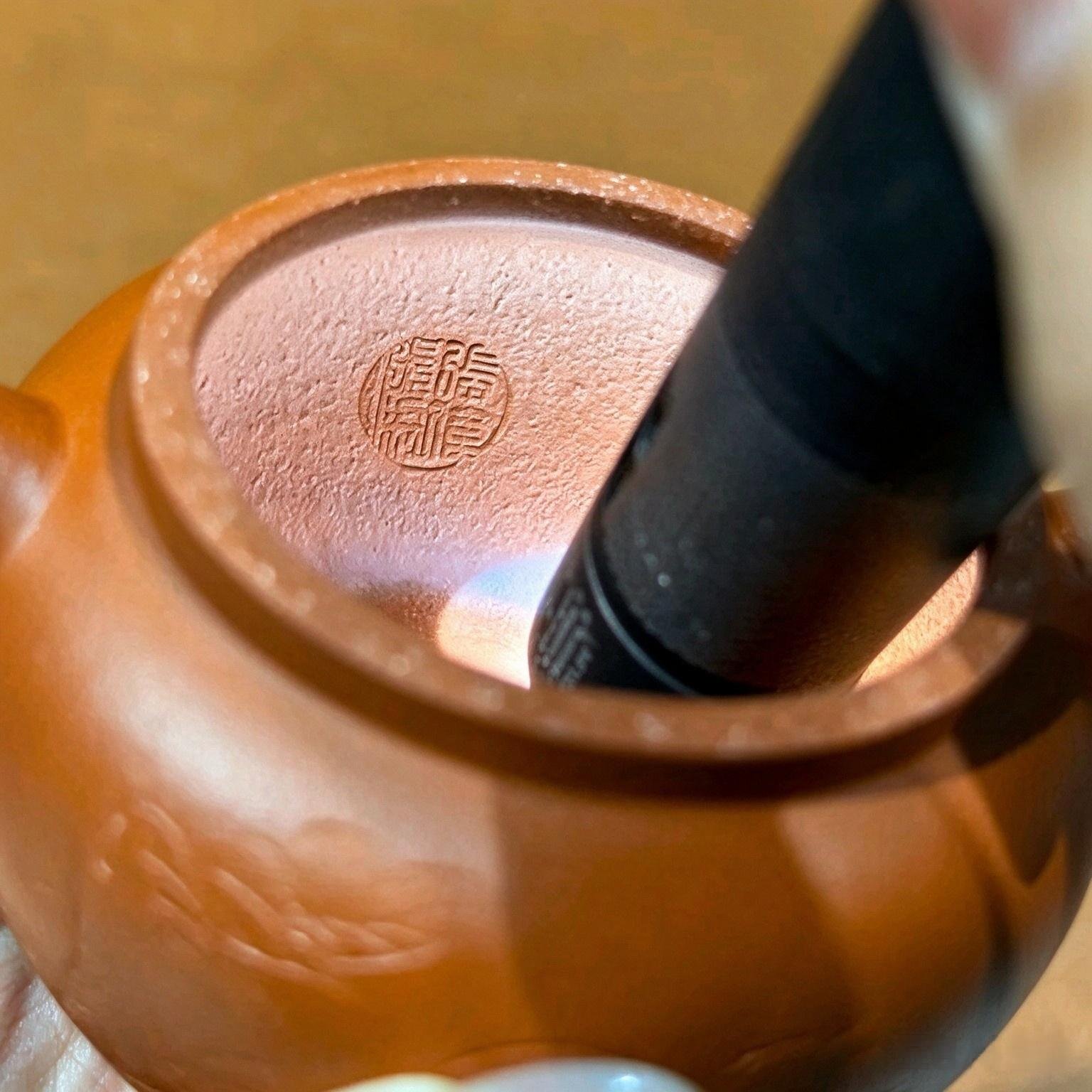
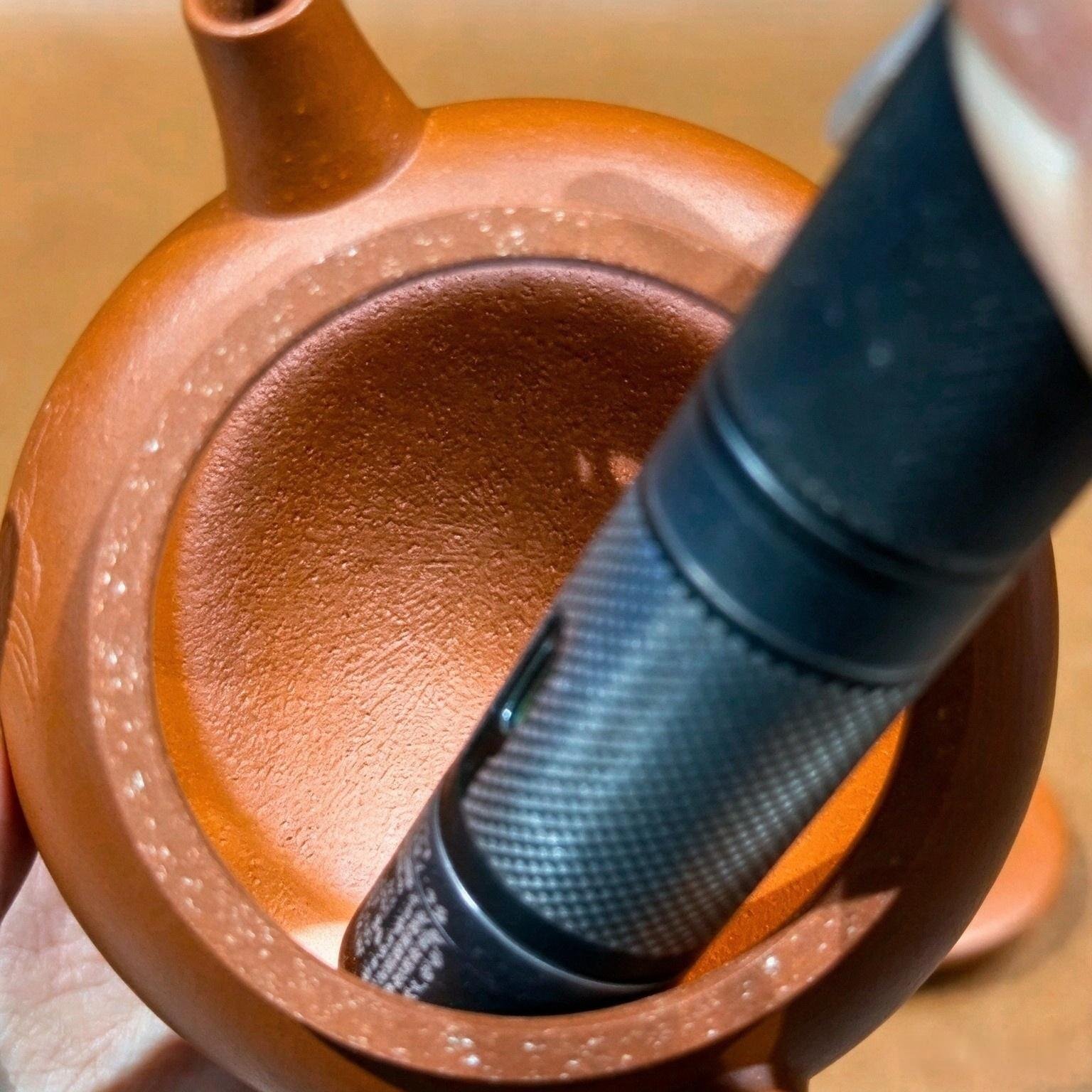
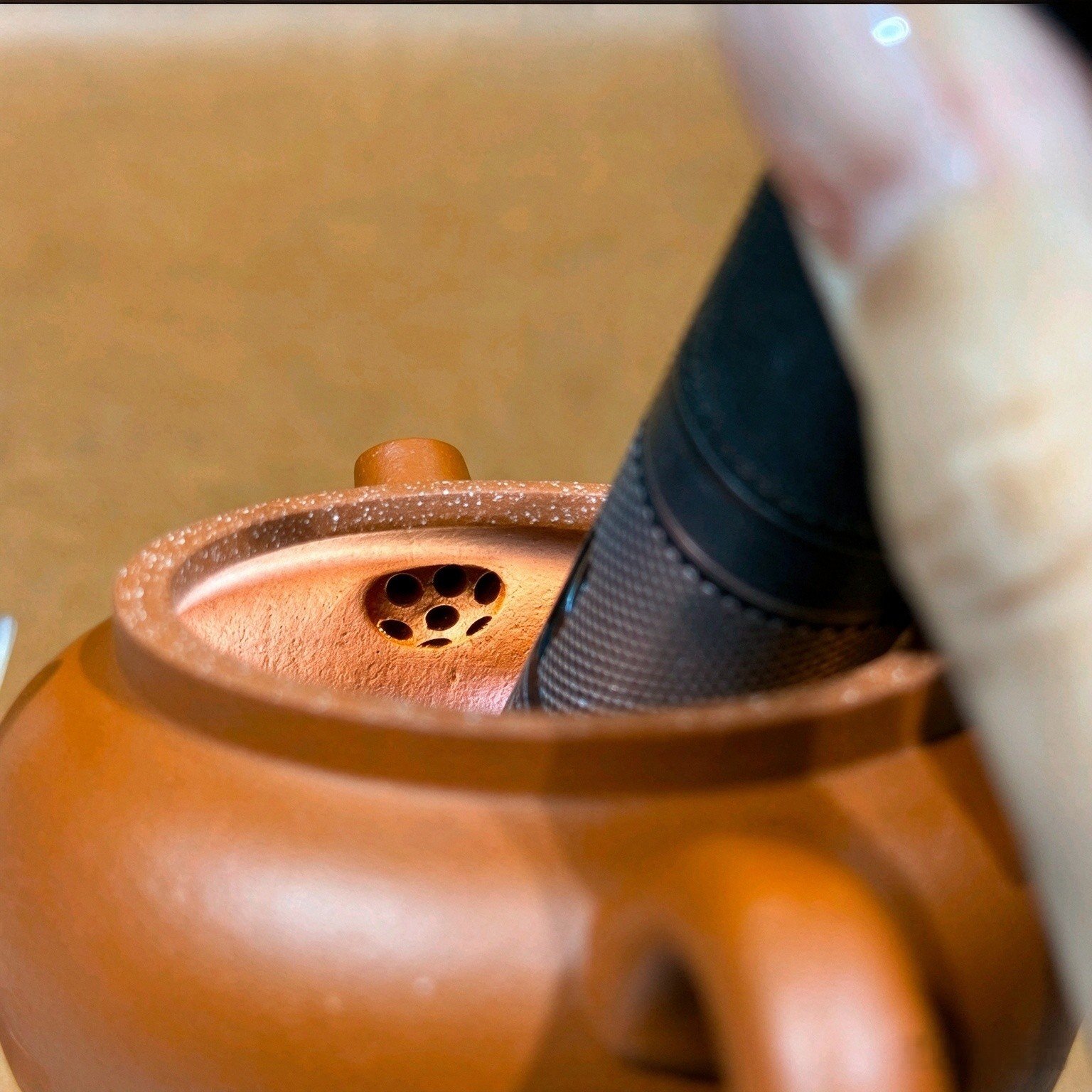
Ju Lun Zhu Yixing Teapot 150cc, Jiangpo Ni Clay
$79.90
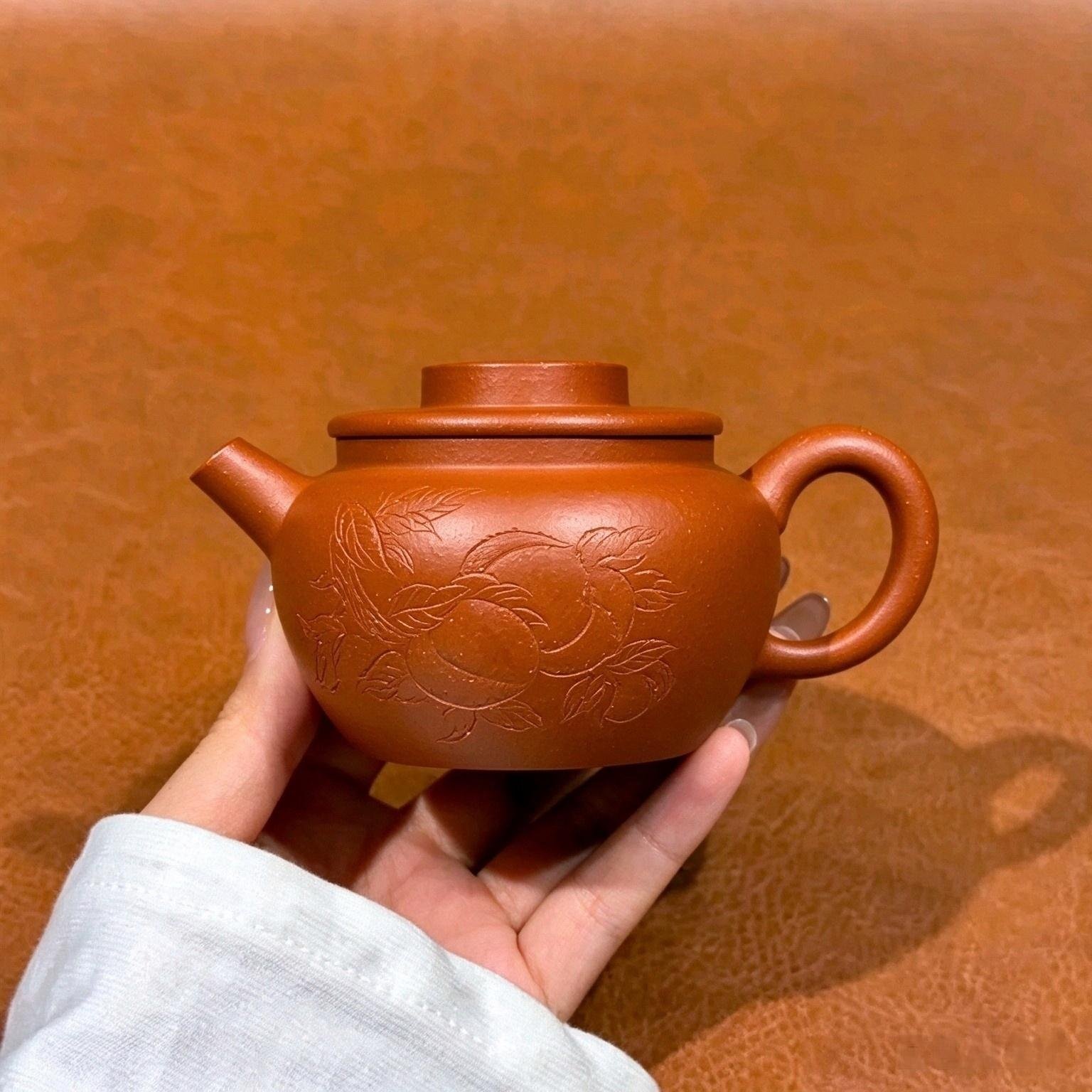
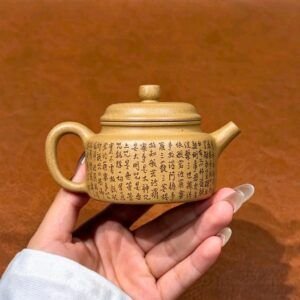
Ju Lun Zhu 150ml Yixing zisha teapot in Jiangpo Ni clay, with a cannon spout and a tight lid. A semi-handmade pot for one or two drinkers, with the measurements, seasoning log and clay notes set out below.
3 in stock
Description
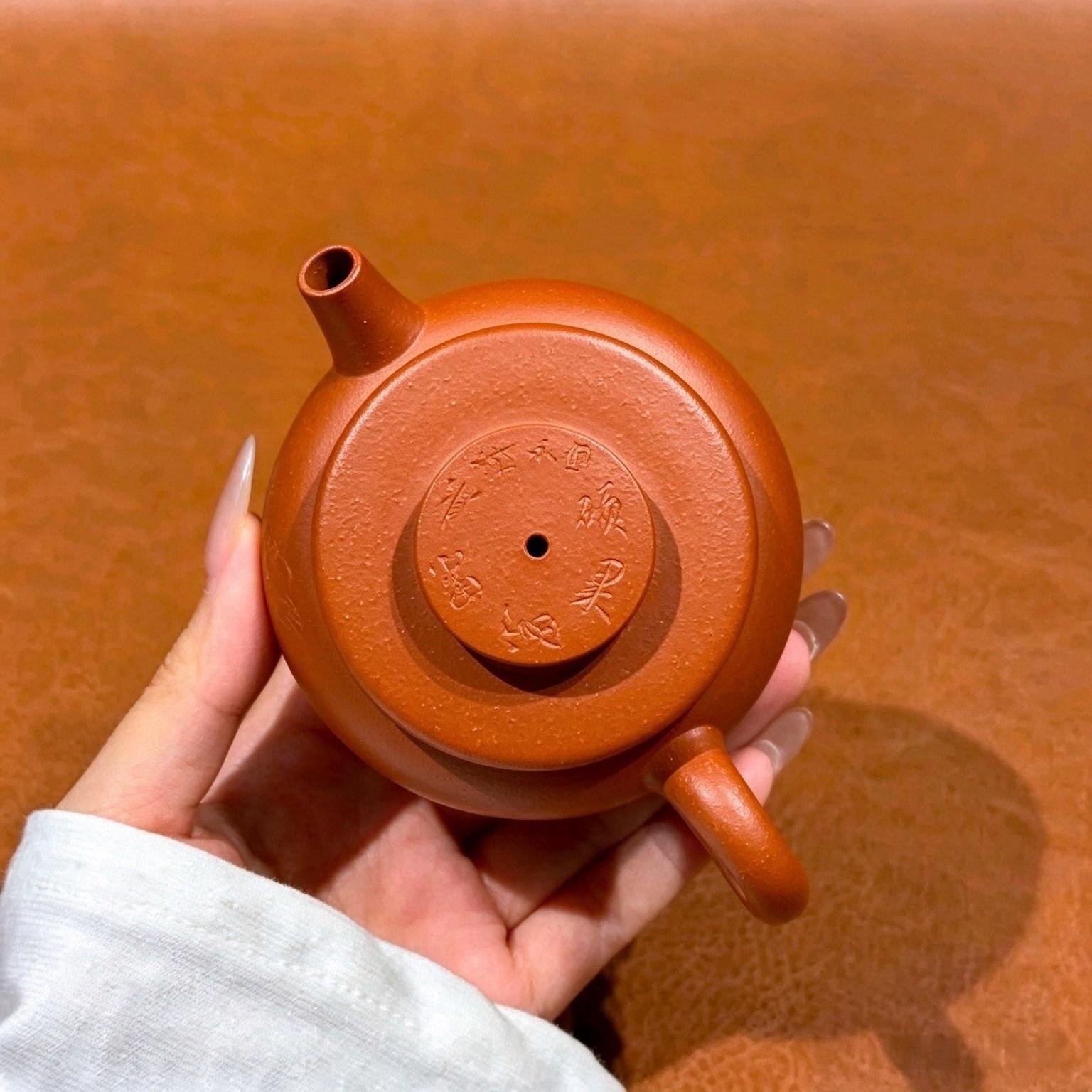
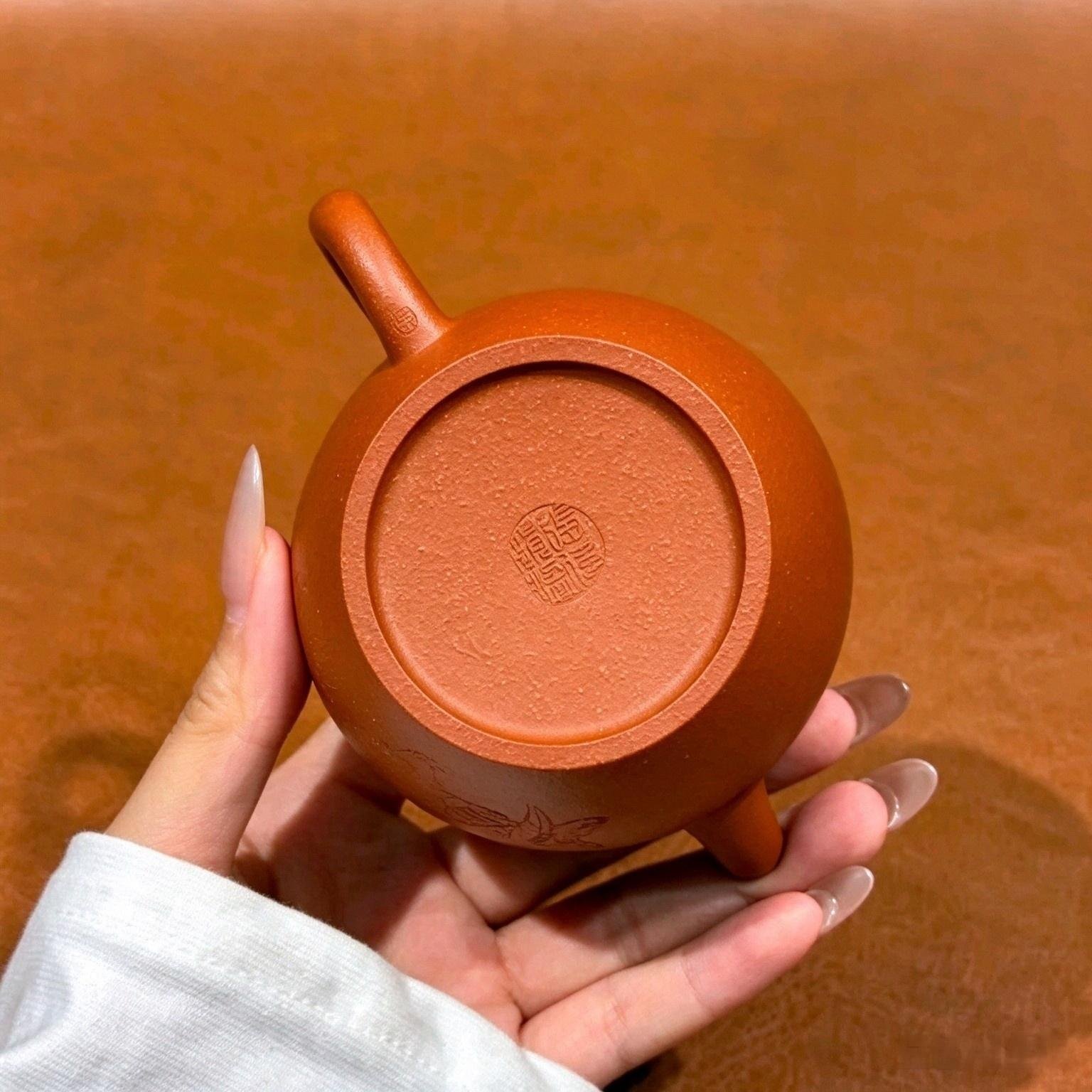
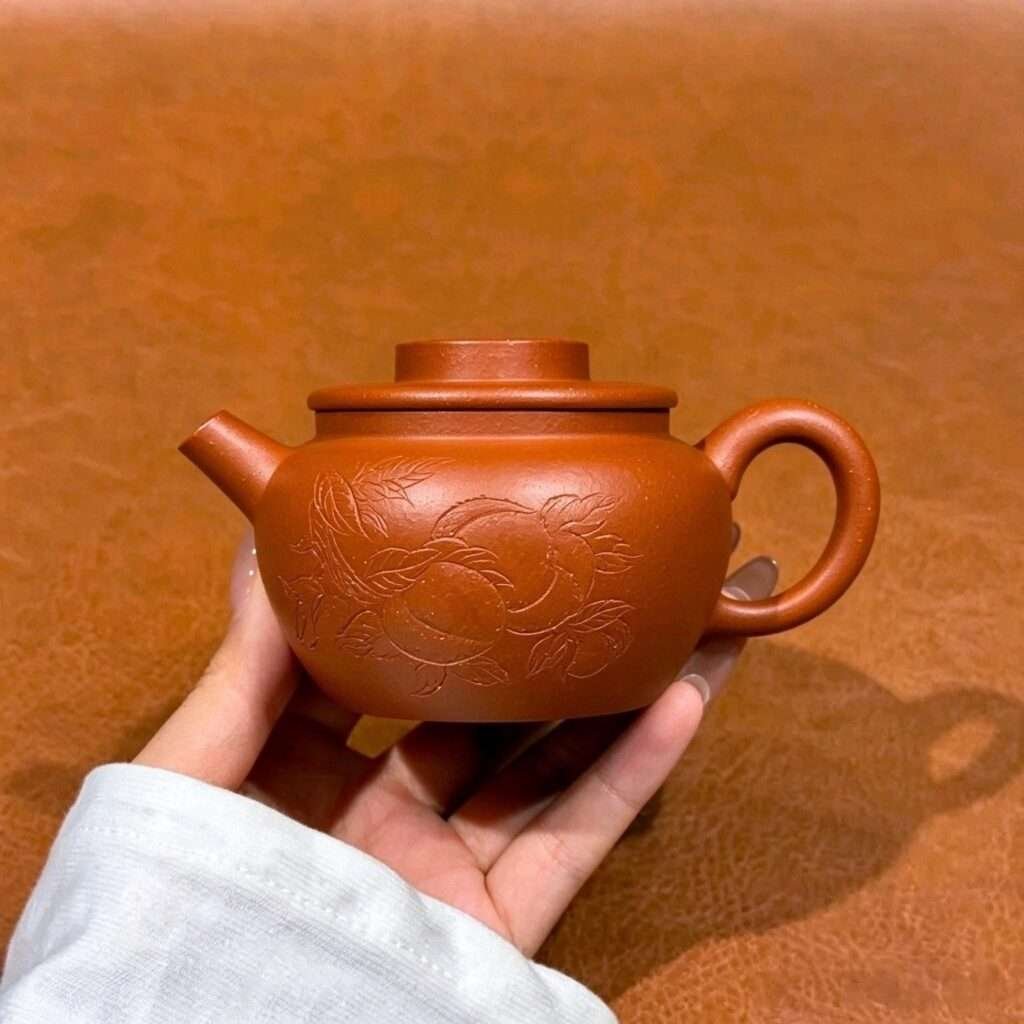
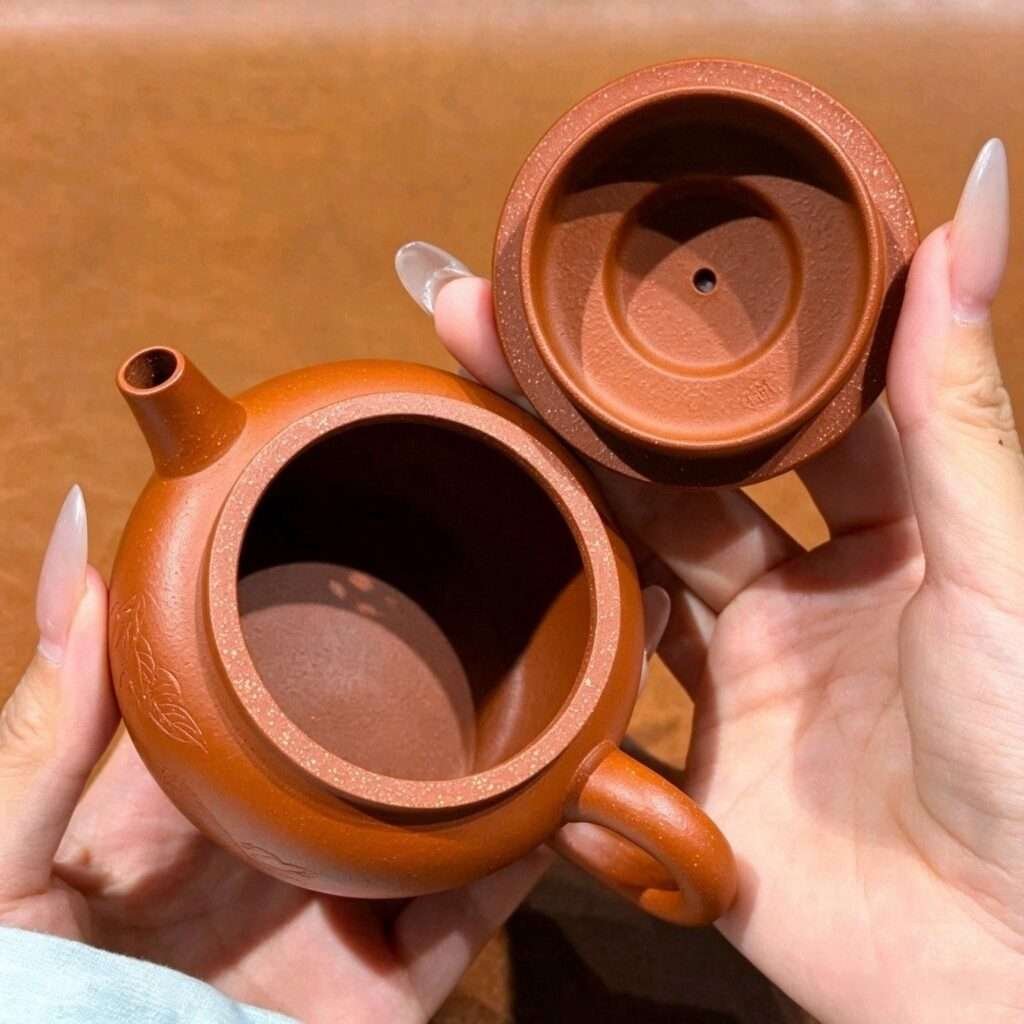
The Ju Lun Zhu is a 150 ml Yixing teapot with one job: pour fast and stop clean. This semi-handmade Gongfu pot in Jiangpo Ni clay gives you a wide flat lid, a straight cannon spout, and a full loop handle. Every number below came from the exact pot we ship. Check the measurements before you buy.
Most days this pot handles one thing: a single 150 ml session of gongfu brewing. Fill it with 8 g of rock oolong, 100 °C water, and three short infusions, then rinse and leave it open overnight.
What Is a Ju Lun Zhu (Giant Pearl) Yixing Teapot?
A Ju Lun Zhu is a squat, round Yixing teapot with a straight cannon spout, a wide flat lid, and a full loop handle. It holds 150 ml, which makes it a one-person Gongfu pot rather than a display piece. The body is short and wide, so water moves fast and a full pour empties in under four seconds.
It looks old-fashioned and works like a modern tool. The name translates roughly as giant pearl, which describes the round profile. The silhouette comes from a family of late-Qing pots that collectors still look for, and this one keeps that outline without the display case around it.
What Is Jiangpo Ni Clay, and Why Choose a Yixing Teapot Made From It?
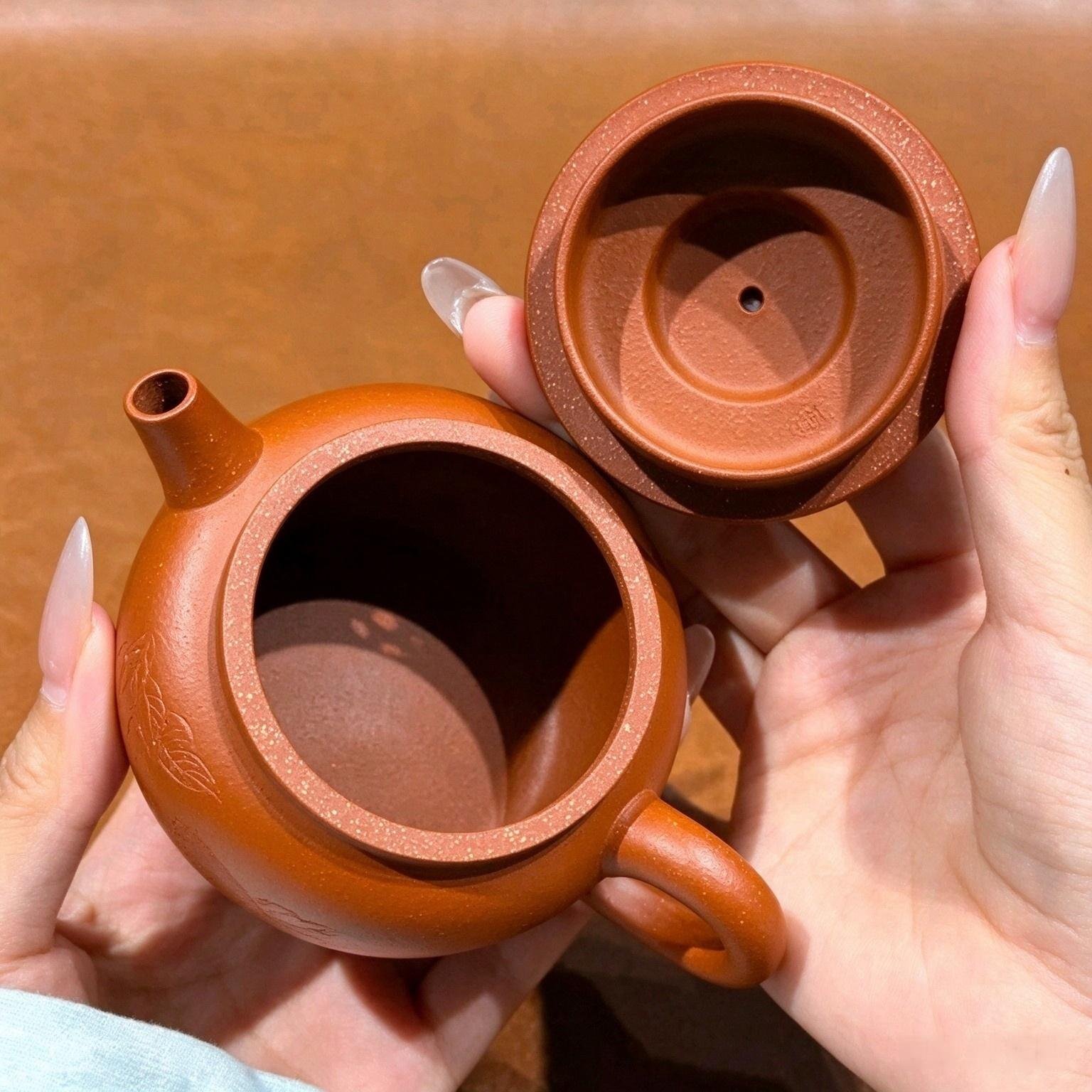
Jiangpo Ni is a natural clay body worked from ore in the Huanglongshan area of Yixing, Jiangsu. It fires to a rust-orange color with yellow and dark mineral grains, and it stays porous after firing, which is what lets the pot hold heat and let moisture out. The pot is fired without a glaze, so the surface you touch is the clay itself.
Porous is the word most people get wrong. Many buyers assume unglazed clay means a pot that leaks or stains. In practice fired zisha holds a network of sealed air pockets, and that is what stores heat and lets the wall breathe. Peer-reviewed work on zisha microstructure and thermal behaviour describes the same effect. The study is here. The Yixing teapot keeps a roast oolong hot through a three-round session without a thick wall.
Break the clay in half and the difference shows. The outside is rust-orange. The inside is flecked with yellow and black grit. Yixing clay mining and firing are a registered craft practice in China, carried on the national intangible cultural heritage list, and a pottery town is what you would expect to find around it. The heritage listing is here. Our supplier describes the clay body as Jiangpo Ni. We do not attach a laboratory assay with this pot, so treat the clay name as a supplier description, not a certified composition.
Two things are worth knowing about this clay before you buy, because both are well known in the trade and neither is a defect in the making.
The first is where it comes from. Jiangpo Ni was not a named seam that potters had worked for generations — it was exposed by accident in the early 1990s, when the road from Dingshan to Yixing was cut through the saddle where Huanglongshan meets Qinglongshan, and the miners named it after the slope they had cut. The deposit is shallow and patchy rather than a proper layer: a few centimetres thick in one place, a few tens of centimetres in the next, which is why it is not as plentiful as its reputation suggests.
It fires to an orange-red that leans red rather than yellow, and it carries visible yellow and dark mineral flecks through the body.
The second is that it is a reactive clay, because the side nearest Qinglongshan is rich in calcium carbonate. That makes the fired body more brittle, and potters have a word for the crack that opens on its own during firing: 惊裂, a surprised crack. Most workshops blend a proportion of purple clay in to guard against it, which is why you will see Jiangpo Ni described as a blend as often as a single seam — and it is why we do not call this pot unblended.
The third is the one that catches new owners out. A Jiangpo Ni pot used with strong dark tea will go dull and patchy across the surface, and the trade calls it 吐黑, spitting black. It is tea oils and minerals crystallising in the surface pores. It is normal for this clay, it comes off with rinsing and regular use, and it is not a sign that the pot is faulty or that the clay was not what we said it was. We would rather tell you now than have you find it in three months and think you had been sold something else.
Jiangpo Ni vs Zi Ni vs Di Cao Qing vs Duan Ni: what actually changes in the cup
We brewed the same leaf in four clays over 30 days and wrote down what we felt.
| Clay | What we felt in the cup | How we brew it | Which pot we sell |
|---|---|---|---|
| Jiangpo Ni 降坡泥 | Round and soft, generous aroma, forgiving of a slightly longer steep | 8 g, 100 ml, 10 s first round | Ju Lun Zhu 150cc |
| Zi Ni 紫泥 | Full body, the densest aroma of the four, takes the longest to open up | 8 g, 110 ml, 10 s first round | Bian Chen 180cc |
| Di Cao Qing 底槽清 | Firm and even, a fine sandy grip, the most mineral of the four | 8 g, 110 ml, 10 s first round | Jigu 170cc |
| Duan Ni 段泥 | Lighter and sandier, clearest water colour, muted aroma | 7 g, 110 ml, 15 s first round | Mutton Fat 120cc and De Zhong 80cc |
These are our own tasting notes on the pots we keep in the studio, not laboratory results, and the brewing figures are what we actually use rather than a rule. Jiangpo Ni is the most forgiving of the four for daily work.
Why Choose a Semi-Handmade Yixing Teapot for Daily Brewing?
A fully handmade Yixing teapot carries a large artist premium and often ends up on a shelf. A semi-handmade Yixing teapot forms the body in a mould, then fits the handle, spout, and lid by hand. That keeps the daily price reasonable while the hand-fitted lid still seats tight enough to pour clean in every session.
Most buyers hear semi-handmade and assume it means cheap. In practice the hand work moves to the rim. We grind the lid to the body’s mouth. The spout hole is opened by hand, and the handle is pulled and set.
Yixing Teapot Specifications: What We Measured on This Pot
Every specification below was measured on the exact Yixing teapot shipped with this listing. We used a 0.1 g scale, a stopwatch, and a measuring cylinder.
Never claim a weight or capacity we did not weigh. If a spec is not in this table, ask us and we will measure it in front of a camera.
Three things get you brewing today: this pot, a 0.1 g scale, and a fairness pitcher. The Yixing teapot collection lists every Ju Lun Zhu shape we keep in stock, including the 150 ml version on this page.
How Does the Cannon Spout Improve Gongfu Tea Brewing?
A short, straight cannon spout sends a fast, narrow stream and stops the moment you tilt the pot back. In a 150 ml pot that gives even pours with no thin tail at the end. It also lets you hit short infusion times on roasted oolong without the slow drip a bent spout leaves behind.
We timed it. A full 130 ml pour runs 3.4 seconds. We counted zero drips in the eight seconds after the pot was set down. The loop handle lets you hold the pot between two fingers. Your thumb keeps the lid from shifting, so the pour angle stays the same all session.
How Much Tea Should I Brew in a 150 ml Yixing Teapot?
For a 150 ml pot, use roughly 6 to 8 g of leaf, which fills about two thirds of the body. Pour about 100 ml for the first infusion, then raise the volume on later rounds. Short infusions suit roasted oolong and pu-erh, where clarity matters more than body.
Here is the routine we use. It is short enough to repeat every morning.
- Warm the pot with 100 ml of boiling water, swirl, and discard.
- Weigh 8 g of leaf. Drop to 6 g if the taste turns heavy.
- Pour 100 ml of water at 100 °C over the leaf.
- Steep 10 seconds for the first round, then add 5 seconds each round.
- Pour the full 130 ml into a fairness pitcher in one smooth motion.
- Rinse with boiling water, leave the lid off, and let it dry.
If you are starting from scratch, rock oolong tea is the easiest leaf for a pot this size. Its roast survives a short steep, and it stays clean even if you over-brew the first round.
Can I Brew Multiple Tea Varieties in One Yixing Teapot?
Not without a compromise. Unglazed Yixing clay keeps a faint memory of earlier brews. The tradition among tea experts is one pot for one tea family, such as roasted Wuyi yancha, Tieguanyin, or aged Pu-erh. If you rotate often, keep a second pot and give each one a single job.
The effect is subtle at first and obvious later. In week one a rinsed pot still tastes neutral. By week four the same pot pulls a faint roasted note even after two rinses. That is why our guide to the full zisha teapot page dedicates one pot to storage-brewed pu-erh and washes it with hot water only.
That is also why we would not use this pot for green tea. Unglazed zisha holds aroma in its wall, which is exactly what makes it right for rock tea, aged pu-erh and ripe pu-erh — and wrong for delicate green tea. If green tea is half your routine, use glass or porcelain for that and keep the zisha for the teas it suits. Our green tea brewing guide covers the temperature and time.
How Do You Season and Care for a Yixing Teapot?
Rinse your Yixing teapot with boiling water only, then let it air-dry with the lid off. No soap, no detergent, no scrub pad, because the unglazed body absorbs whatever you use. After a month of one tea, the inside stops looking dusty and the surface takes on a soft shine.
Five steps cover the whole process.
- Boil fresh water, pour it over the pot, and let it sit open until it is dry to the touch.
- From day one, brew only one tea family in the pot.
- After each session, rinse with boiling water and air-dry with the lid off.
- Once a week, wipe the body with a damp cloth and let it dry fully before the next brew.
- Never store tea inside the pot, and never use detergent.
Our 30-day seasoning log
We brewed from this same pot daily for 30 days and wrote down what changed.
Is This Yixing Teapot a Good Gift for a Tea Drinker?
Yes, with one caveat. A semi-handmade 150 ml Yixing teapot in Jiangpo Ni clay is an affordable first step into zisha tea ware. The size suits daily sessions instead of a shelf. Pair it with a small scale and a fairness pitcher, and the recipient can start brewing the same day.
The caveat is expectations. This is a working pot, not a signed artwork. If the person you are buying for wants a fully handmade piece with a named maker, tell us before you order and we will point you to a different range.
Frequently Asked Questions About This Yixing Teapot
Can I put the Ju Lun Zhu Yixing teapot in the dishwasher?
No. The body is unglazed, porous fired clay, and the handle and spout are fitted by hand. Dishwasher heat and detergent get absorbed into the clay and never fully come out. Rinse with boiling water only and let the pot air-dry with the lid off. The full routine is in our guide to the full zisha teapot page.
How long does this Yixing teapot keep tea hot?
Long enough for a three-round gongfu session, not long enough for a two-hour workday pot. The sealed pores in fired zisha act as an insulator, so the wall holds heat well. We poured boiling water into the pot, and eight minutes later the wall was still too hot to hold with one bare hand. Brew smaller rounds and pour into a warmed fairness pitcher if you want a long session.
Will the Jiangpo Ni clay absorb smells and stains from different teas?
Yes, and that is how the clay is meant to work. An unglazed Yixing teapot keeps a memory of the tea it has brewed, and the memory deepens over weeks. That is the reason we recommend one pot for one tea family, such as roasted Wuyi yancha or aged Pu-erh. Our notes on the full zisha teapot page show how that memory develops.
Can I replace the lid if I break it?
Yes. We keep the mould for this model and can supply a replacement lid fitted to the body. Send us your order number and we will confirm fit, finish, and price before anything ships. A new lid can also be ground to the body by hand if the fit is slightly loose.
Can I put this Yixing teapot on a flame or an electric stove?
No. Unglazed zisha is fired clay, not a flameproof material, and both direct flame and induction heating will crack the body or split the fitted spout. Use a temperature-controlled kettle or a regular kettle with a good pour spout. Boiling water at 100 °C is all this pot needs.
Can I use this 150 ml Yixing teapot for large-volume western brewing?
Not well. This is a single-session Gongfu pot, and 150 ml is the right size for 6 to 8 g of leaf brewed in short rounds. If you want to brew 500 ml or more per pot, choose a larger teapot from the Yixing teapot collection instead. We also stock gongfu tea sets with bigger pots if you brew for a group.
Chinese Standards and Food Contact
The same applies outside the US. The mandatory Chinese food-safety standard for ceramic tableware is GB 4806.4-2016, and the geographical-indication standard for Yixing zisha, T/JSBA 004-2025, sets its own limits for lead and cadmium migration, iron content, open and closed porosity, water absorption and thermal shock resistance. The product standard for zisha ware is GB/T 10816-2024. We have not had this batch independently tested, so we are not going to quote you a migration figure we cannot show you — and if you want one, ask for batch material testing before daily use. The national standards platform record is here.
First published: 31 October 2026 · Last updated: 5 November 2026
Author and reviewer disclosure
This page was written by the founder and head tea buyer at Min Tea Shop, who has bought and cupped tea directly from growers and potters for eight years. The specifications above were measured on the pot we ship, with a 0.1 g scale, a stopwatch and a measuring cylinder, and the 30-day log is from the same pot brewed daily in our own studio. The workshop calls this shape Ju Lun Zhu; we have not verified the Chinese characters, so we do not print them as fact.
Where we cannot verify a claim — a laboratory assay, a mine name, a museum collection — we say so on the page rather than print it. No sponsored content, paid placements or affiliate links appear on this page, and we do not sell or share your personal data — see our privacy policy for details.
Reviews
There are no reviews yet.