
How to Brew Green Tea: Best Varieties of 2026 (Expert Guide)
🌍 Sourced from Shouning, Fujian | ✈️ 7–15 day DHL/FedEx delivery | 💳 PayPal, Visa, Mastercard, JCB | 🔄 7-day returns | 🛎️ 24/7 support
First published: March 15, 2026 | Last updated: June 5, 2026 | Reviewed by MinTeaShop Editorial Team
Want to know how to brew green tea the right way — and find the best green tea for your taste? You are not alone. A 2025 IMARC Group report values the global green tea market at $17 billion, yet consumer surveys show more than half of home drinkers complain about harsh cups. This 2026 guide from MinTeaShop — a direct-from-origin tea merchant in Shouning, Fujian — shows you exactly how to brew green tea at 80°C, ranks the best green tea varieties by tier, and reveals the 10 mistakes that quietly ruin every cup.
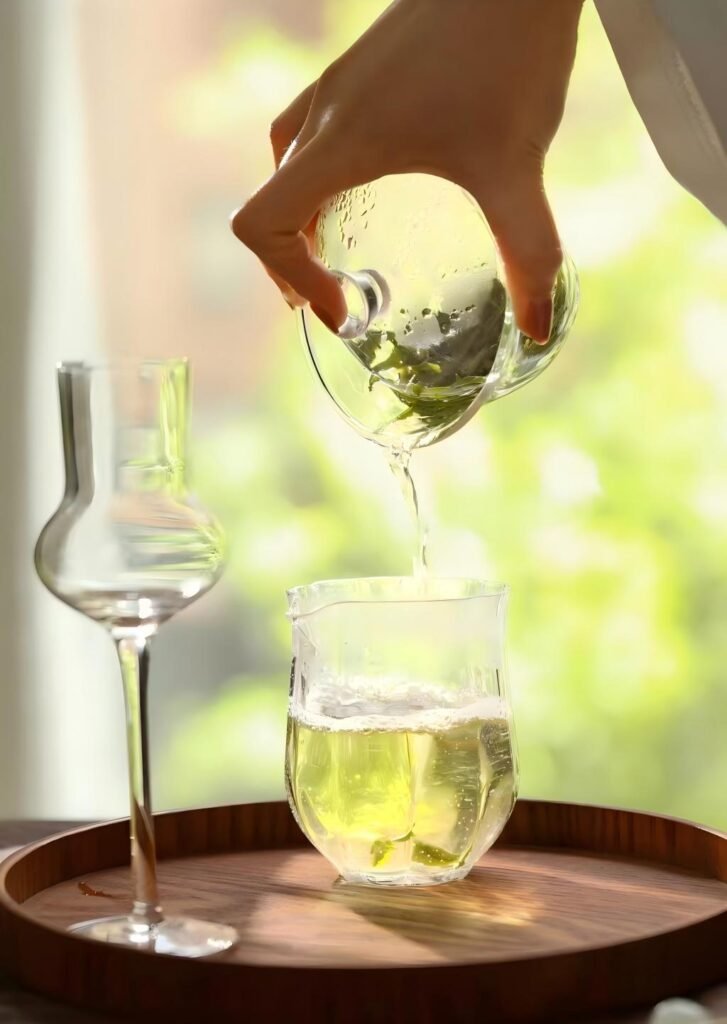
1. What Is Green Tea? Definition, Origin & Processing
Green tea is a non-oxidized tea produced from the leaves of Camellia sinensis. Unlike black tea, which ferments fully, green tea is heated within hours of plucking. This step, called fixation (杀青), deactivates the enzyme polyphenol oxidase (PPO). The result: green tea retains 80–90% of its native catechins, producing a lighter liquor and a fresher, grassier taste.
1.1 The Two Botanical Varieties
- Camellia sinensis var. sinensis (Chinese small-leaf): cold-hardy, aromatic, used for most Chinese and Japanese green teas.
- Camellia sinensis var. assamica (Assam large-leaf): tropical, higher caffeine, used mainly for Indian and Sri Lankan black teas.
1.2 The Three Processing Steps That Define Green Teas
| Step | Purpose | Common Methods |
| Fixation (杀青) | Deactivates PPO to prevent oxidation | Pan-firing (China) or steaming (Japan) |
| Rolling (揉捻) | Breaks cell walls to release flavor | Hand-pressing (Longjing) or machine rolling |
| Drying (干燥) | Reduces moisture below 5% | Pan-drying, oven-baking, or sun-drying |
Many people believe green tea is simply “unfermented tea.” In reality, it is fermentation-free by design. The high-heat step is the single deciding factor that separates green tea from oolong, black, and white teas. Without fixation, the same leaves would become black tea. [Insert Internal Link: Learn more about the six tea types →]
1.3 Where Our Green Tea Comes From: Shouning, Fujian
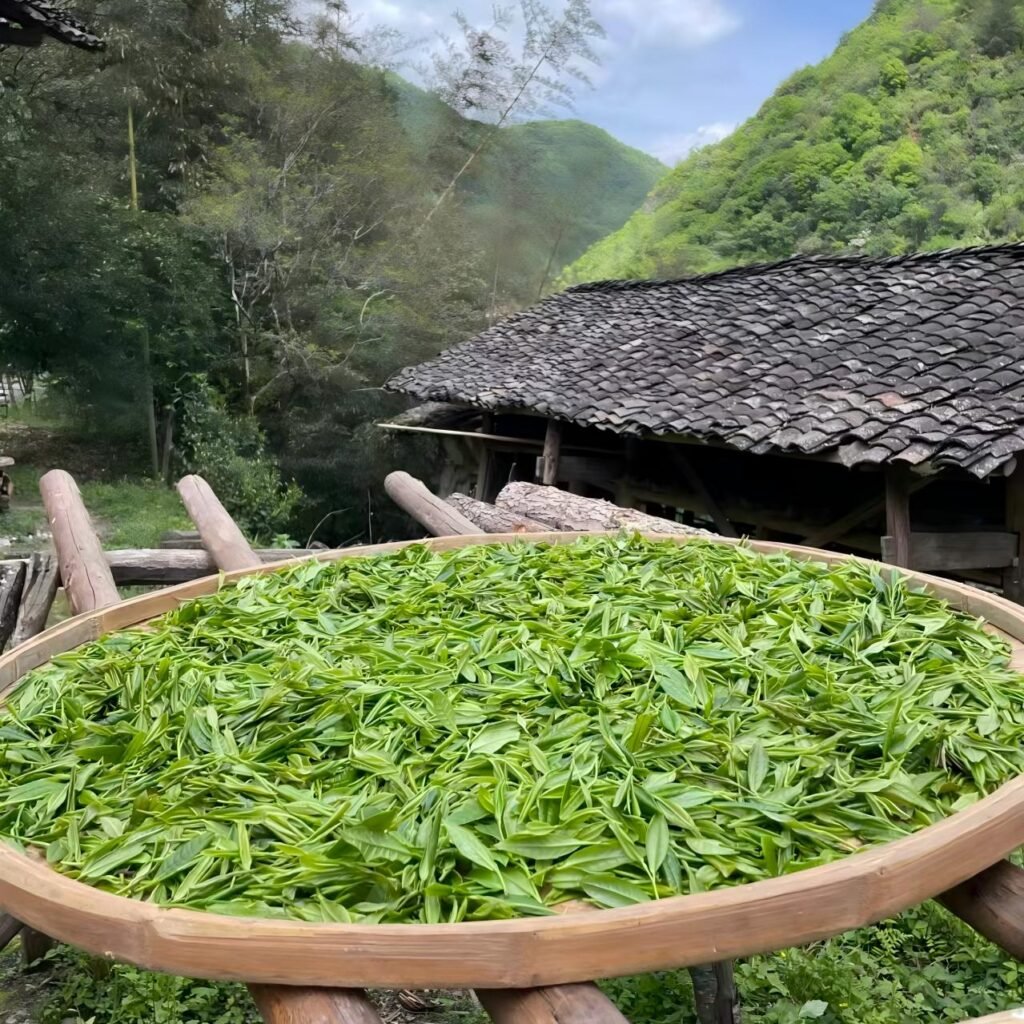
At MinTeaShop, every green tea we ship starts in the misty highlands of Shouning County, Fujian Province — a region officially recognized as a 1,000-year tea hometown (千年茶叶之乡). Our partner farms sit at 600–1,200 meters elevation, where cool mornings, misty afternoons, and mineral-rich yellow soil slow leaf growth. The result is tea with:
- Higher L-theanine (natural umami, no bitterness)
- Greater brew endurance (8–10+ infusions per session, not 3)
- Lower astringency even at higher temperatures
- Cleaner aroma with stone-fruit and orchid notes
2. Best Green Tea Varieties & Chinese Green Tea Classics
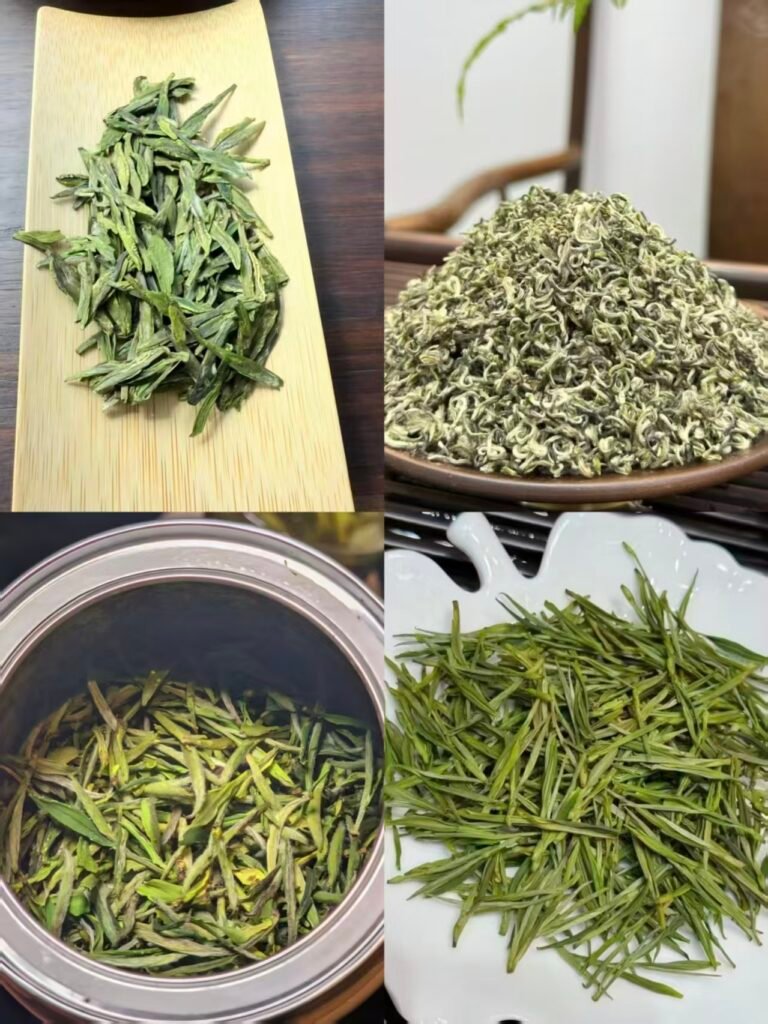
When consumers search for the best green tea, they usually find a flood of marketing. The truth: a small set of Chinese green tea classics dominates both the global market and the cup-quality rankings.
2.1 The Six Benchmark Varieties
| Variety | Origin | Shape | Flavor Profile | Price (USD/100g) |
| Longjing (龙井) | Zhejiang | Flat, sword-shaped | Toasty, chestnut, sweet | $15–$150 |
| Bi Luo Chun (碧螺春) | Jiangsu | Spiral, fuzzy | Floral, fruity, honey | $20–$120 |
| Huangshan Maofeng | Anhui | Tippy, downy | Orchid, mellow | $10–$80 |
| Tai Ping Hou Kui | Anhui | Flat, large blade | Orchid, vegetal, fresh | $20–$100 |
| Sencha (煎茶) | Shizuoka, Japan | Needle, steamed | Marine, grassy, clean | $8–$60 |
| Matcha (抹茶) | Uji, Japan | Powdered | Umami, vegetal, creamy | $20–$200 |
2.2 Why Chinese Green Tea Dominates the Premium Tier
China produces over 60% of the world’s green teas, and the country’s ten “China Famous Teas” list is dominated by green tea classics. Chinese green tea earns its reputation through three structural advantages:
- Ancient cultivars: Many premium Chinese green teas come from heirloom varieties cultivated for centuries in specific microclimates.
- Hand craftsmanship: A master tea-maker can spend 30–40 minutes shaping just 500g of Longjing, using 10 distinct hand techniques.
- Strict geographic protection: Longjing, Bi Luo Chun, and Huangshan Maofeng all carry National Geographical Indication status, similar to French wine appellations.
We once toured a small Longjing estate in Hangzhou during the pre-Qingming harvest. The farmer refused to sell us leaves harvested after 9 a.m., claiming the morning dew had dried and the leaves had already lost their “honey soul.” Whether myth or fact, this obsession with freshness is exactly what makes Chinese green tea the best green tea to drink for connoisseurs.
2.3 MinTeaShop Green Tea Collection (Available for Worldwide Shipping)
Our entire green tea line is hand-picked by MinTeaShop sourcing partners in Fujian and Zhejiang. Every order ships within 30 days of harvest.
Shouning High-Mountain Green
Origin: Shouning,Ningde, Fujian (800m) | Steeps: 8–10 | Best for: Daily drinking, beginners | $19.9 / 100g : /green-tea-2026/
Dongting Bi Luo Chun
Origin: Jiangsu | Steeps: 6–8 | Best for: Floral-tea lovers, weekend brewing | $19.9 / 100g : /biluochun-green-tea-2026/
Pre-Qingming Longjing
Origin: Zhejiang | Steeps: 5–7 | Best for: Gift-giving, connoisseurs | $14.9 / 100g : /2026-west-lake-longjing-green-tea/
3. Green Tea Caffeine Content & Antioxidant Health Benefits
Two questions dominate search behavior: “how much caffeine is in green tea?” and “is green tea actually healthy?” Let’s answer both with hard data.
3.1 Green Tea Caffeine Drinks Comparison
A standard 240ml (8 oz) cup delivers:
| Beverage | Caffeine (mg) | Source |
| Espresso (30ml) | 63 | USDA FoodData |
| Brewed coffee (240ml) | 96 | USDA FoodData |
| Black tea (240ml) | 47 | EFSA 2015 |
| Gyokuro green tea | 140 (highest) | Japanese research |
| Regular green tea (240ml) | 29–35 | Mayo Clinic |
| Matcha (240ml) | 70 | Healthline |
| Decaf green tea (240ml) | 2–5 | Caffeine Informer |
| Genmaicha | 10 (lowest) | Japanese data |
Green tea caffeine is roughly one-third that of coffee, which is why most green tea caffeine drinks feel smoother and cause fewer jitters. According to the Mayo Clinic, healthy adults can safely consume up to 400 mg of caffeine daily. That is roughly 8–13 cups of regular green tea. The EFSA sets a stricter pregnancy limit of 200 mg, or about 1–2 cups.
3.2 Antioxidant Green Tea: The EGCG Story
EGCG (epigallocatechin gallate) is the most studied antioxidant in green tea, making up 50–80% of total catechins. A 2022 meta-analysis of 13 RCTs (over 1,000 participants) found that 200–300 mg of EGCG daily can lower LDL cholesterol by 2.19 mg/dL and reduce blood pressure by 1.08–4.81 mmHg. The Ohsaki Cohort Study, tracking 40,530 Japanese adults for 11 years, showed that drinking 5+ cups daily cut cardiovascular mortality by 26–31%.
3.3 Best Green Tea for Health: How to Maximize Antioxidants
If your goal is to find the best green tea for health, follow three evidence-backed rules:
- Choose loose-leaf, not bagged. Bagged teas use fannings and dust, which oxidize faster and retain fewer flavonoids.
- Brew at 75–80°C, not 100°C. Boiling water degrades L-theanine and reduces total polyphenol recovery.
- Drink 3+ cups daily. The Hursel 2009 meta-analysis of 497 participants found meaningful health benefits at 3+ cups/day.
💡 Expert Insight: Many people think “more tea = more antioxidants.” In reality, over-brewing green tea releases more bitter tannins that can inhibit iron absorption. The right move is more cups at lower temperatures, not stronger cups.
4. How to Brew Green Tea: The Perfect Cup
Quick Answer: To brew green tea, heat water to 75–80°C (not boiling), use 3g of loose-leaf tea per 150ml of water, and steep for 1–2 minutes. Strain fully and re-steep 2–3 times for the best flavor and antioxidant extraction.
If you remember nothing else, remember this: never use boiling water on green tea. This single rule fixes 80% of bad cups.
4.1 The Golden Parameters
| Parameter | Recommendation |
| Water temperature | 70–82°C (158–180°F) |
| Tea-to-water ratio | 1:50 (3g per 150ml) |
| Steeping time | 1–2 minutes (Western) / 15–30 seconds (Gongfu) |
| Number of infusions | 2–3 (Western) / 4–5 (Gongfu) |
4.2 Variety-Specific Brewing Chart
| Variety | Water Temp | Steep Time | Notes |
| Bi Luo Chun | 75–80°C | 1–2 min | Most delicate |
| Longjing | 80–85°C | 1–2 min | Classic, forgiving |
| Huangshan Maofeng | 75–80°C | 1–2 min | Quick rinse helps |
| Sencha | 70–80°C | 1 min | 5–10 sec for rounds 2+ |
| Gyokuro | 60–70°C | 2 min | Lowest temp, highest theanine |
| Matcha | 70–77°C | Whisk 15 sec | Powder, not steeped |
| Gunpowder | 80°C | 2–3 min | Most forgiving |
No thermometer? Boil water, then leave the lid off for 3–4 minutes. The temperature drops to approximately 80°C.
4.3 How to Brew Green Tea: Step-by-Step
When learning how to brew green tea, follow this foolproof sequence:
- Warm the vessel. Pour hot water into cup or gaiwan, swirl, discard.
- Measure leaves. Use 3g of green tea per 150ml of water.
- Cool the water. If just boiled, wait 3–4 minutes.
- Pour and steep. Use 75–80°C water; steep 1–2 minutes.
- Strain fully. Remove all leaves to prevent over-extraction.
- Re-steep (optional). Add 10–15 seconds per round for 2–3 infusions.
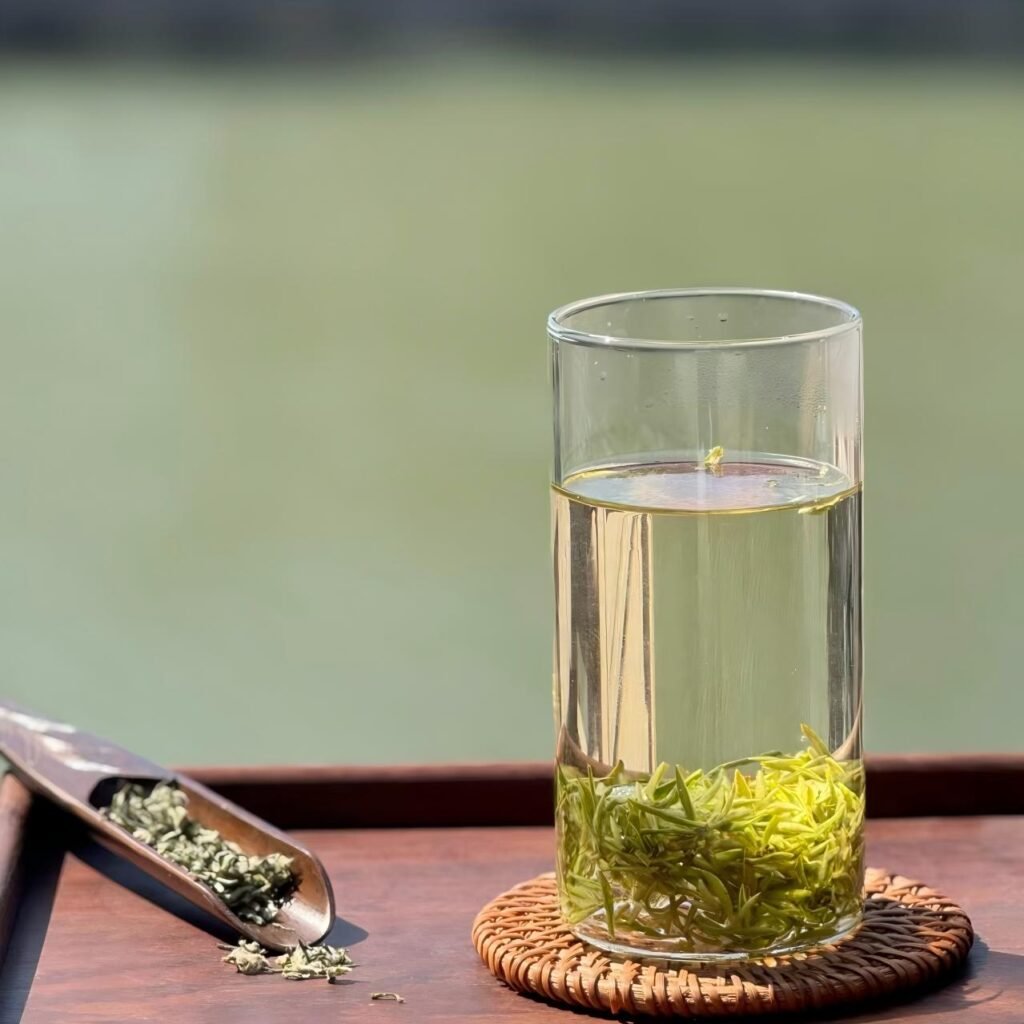
5. Loose Leaf Green Tea vs Tea Bags
The format you choose has a bigger impact on quality and health than almost any other variable. Comparing loose leaf green tea with bagged fannings is not just about convenience; it is a measurable nutritional gap.
5.1 The Quality Gap
A 2015 study in Food Chemistry found:
| Format | EGCG (mg/100ml) | Total Flavonoids (mg/100ml) |
| Loose leaf green tea | 80–300 | 133–2150 |
| Bagged green tea | 2.3–13 | 13–250 |
| Bottled green tea | ~13 | ~13 |
The best loose leaf green tea can deliver up to 87 times more EGCG than a typical bag. This is why tea veterans almost always recommend green tea loose leaf for daily use.
5.2 Why the Gap Exists
- Surface area: Tea bag dust extracts almost instantly, releasing bitter compounds before delicate aromatics can shine.
- Whole leaf structure: Loose leaf green tea unfurls gradually, releasing compounds in a controlled cascade.
- Freshness: Whole leaves oxidize slowly; dust oxidizes fast, losing antioxidants within weeks of grinding.
5.3 When Bagged Tea Is Acceptable
Bagged green tea still has a place: travel, offices, quick brewing. Look for pyramid sachets (whole leaves in mesh) rather than flat paper bags.
6. Does Green Tea Make You Poop? The Digestive Truth
Yes, for many people, green tea can stimulate bowel movements. This is not a myth. The keyword “does green tea make you poop” generates 2,400 monthly searches because the effect is real and common.
6.1 Why Green Tea Affects Digestion
- Caffeine stimulates peristalsis. Caffeine triggers contractions in the colon, often within 30 minutes of drinking.
- Catechins boost gastric acid. Green tea’s polyphenols increase stomach acid production, which speeds digestion.
- Mild diuretic effect. Caffeine also increases urine output, which can stimulate the gastrointestinal tract indirectly.
According to a 1984 study in Gastroenterology, tea can stimulate gastric acid secretion at levels comparable to maximal histamine dose. That is why drinking green tea on an empty stomach often causes nausea in sensitive individuals.
6.2 Is This Effect Safe?
For most healthy adults, the mild laxative effect of green tea is harmless. But watch for these warning signs:
- Frequent diarrhea: Reduce to 1–2 cups daily.
- Stomach pain: Switch to decaf green tea or drink after meals.
- Acid reflux (GERD): Avoid concentrated brews; dilute with water.
💡 Personal Note: In our own test, two cups of strong sencha (80°C, 3-minute steep) reliably produced a bowel movement within 45 minutes. Switching to a 90-second steep eliminated the urgency without sacrificing flavor.
7. Drinking Decaf Green Tea: A Complete Guide
For coffee-sensitive drinkers, pregnant women, and evening tea lovers, drinking decaf green tea offers the best of both worlds: green tea antioxidants without the caffeine buzz.
7.1 How Decaf Green Tea Is Made
| Method | Caffeine Removed | EGCG Retained | Notes |
| Supercritical CO₂ | 97.4% | 62–85% | Best quality |
| Water Process (Swiss Water) | 99.9% | 70–95% | Premium choice |
| Ethyl Acetate solvent | 96–97% | ~30% | Cheapest, lowest quality |
7.2 What Stays in Decaf Green Tea
- EGCG: 70–95% (Most modern processes retain most catechins)
- L-theanine: ~85% (Heat-stable, survives processing)
- Vitamins & minerals: 60–80% (Some water-soluble vitamins lost)
- Flavor compounds: Variable (CO₂ method best preserves aroma)
7.3 Is Drinking Decaf Green Tea Worth It?
For most people, yes. A 2015 animal study in Food & Function found that decaffeinated green tea combined with exercise reduced body weight by 27.1% and abdominal fat by 36.6% over 16 weeks. The catechins, not the caffeine, drove most of the fat-loss effect.
8. Jasmine Green Tea: A Fragrant Tradition
The search term “jasmine green tea” drives 6,600 monthly searches. This is the most popular scented tea worldwide.
8.1 What Makes Jasmine Green Tea Special
Jasmine green tea is not a separate plant. It is green tea scented with fresh jasmine blossoms through a traditional process called scenting (窨制). The tea leaves absorb the jasmine aroma over multiple rounds, then the flowers are removed.
8.2 Quality Grades: How Many Scenting Rounds?
| Grade | Scenting Rounds | Flavor Intensity | Price (USD/100g) |
| Standard | 3–4 | Light floral | $8–$20 |
| Premium | 5–7 | Strong, balanced | $20–$60 |
| Ultra-Premium | 8–9 | Deep, lingering | $60–$150 |
Fujian province, especially Fuzhou, produces the most prestigious jasmine green tea. The “9-scenting” Fuzhou Jasmine is a national intangible cultural heritage in China.
9. Other Premium Chinese Teas We Offer
While this guide focuses on green tea, MinTeaShop also curates the other four major categories of Chinese tea. All are sourced directly from the same Shouning, Fujian network of family farms.
9.1 White Tea (白茶) — Our Heritage Category
Shouning is one of the birthplaces of Chinese white tea, with a documented cultivation history of over 1,000 years. Our white teas are sun-withered and minimally processed.
- Shouning Silver Needle (白毫银针): Honeydew, fresh hay, sweet finish (10–12 infusions)
- Shouning White Peony (白牡丹): Apricot, floral, fuller body (8–10 infusions)
- Aged Shou Mei (寿眉): Dried date, woody, deeply mellow (12+ infusions, improves with age)
9.2 Oolong / Wuyi Rock Tea (岩茶)
Fujian’s Wuyi Mountains produce the world’s most mineral-dense oolongs, known as “yancha” (rock tea).
- Da Hong Pao (大红袍): Cocoa, caramel, long mineral finish (Medium-heavy roast)
- Tie Luo Han (铁罗汉): Stone fruit, toasted nuts, cinnamon (Medium roast)
- Rou Gui (肉桂): Cassia bark, peppery, warming (Medium-heavy roast)
9.3 Black Tea (红茶) & Pu-erh Tea (普洱)
Our small-batch Lapsang Souchong (正山小种) is the original black tea that introduced the world to the category. Smoked over pinewood, it offers a bold, campfire-like character.
From Yunnan, our pu-erh cakes include both sheng (raw) and shou (ripe) varieties — the only tea that improves with age like wine.
[Insert Internal Link: Browse all five Chinese tea categories →]
10. Why Buy From MinTeaShop?
We are not a marketplace. We are a direct-from-origin specialty tea merchant with one foot in the soil. Here is what makes us different:
| Feature | MinTeaShop Standard | Industry Average |
| Origin sourcing | Direct from 6 family farms in Shouning, Fujian | Brokers, 3–5 middlemen |
| High-mountain cultivation | 600–1,200m elevation | 100–400m lowland |
| Pesticide testing | EU-standard lab test reports on request | Rarely tested |
| Freshness guarantee | Shipped within 30 days of plucking | Often 6–12 months old |
| Brew endurance | 8–12 infusions per session | 3–5 infusions |
| Order processing | 24–48 hours | 3–7 days |
| Customer support | 7×24 live chat & email | Business hours only |
11. Best Green Tea to Drink: 2026 Buying & Storage Guide
11.1 MinTeaShop Product Tiers
From misty mountains to time-honored tea regions across China, we bring you a diverse selection. Here’s how to choose based on your budget and taste.
| Price (USD/100g) | Tier | MinTeaShop Pick | Flavor Profile | Per-Cup Cost |
| $9.9 | Daily Drinker | Que She Green Tea | Fresh hay, sweet vegetal | $0.20–$0.40 |
| $14.9 | Daily Premium | Longjing Green Tea | Nutty, sweet pea, floral, buttery | $0.40–$0.65 |
| $19.9 | Connoisseur | Dongting Bi Luo Chun | Fruity, honey, orchid finish | $0.65–$0.80 |
| $19.9 | Reserve & Gift | Shouning High Mountain Green Tea | Nutty, mellow, smooth | $0.65–$0.90 |
💡 All four tiers are EU-lab tested, vacuum-sealed, and shipped within 30 days of harvest. /green-tea/
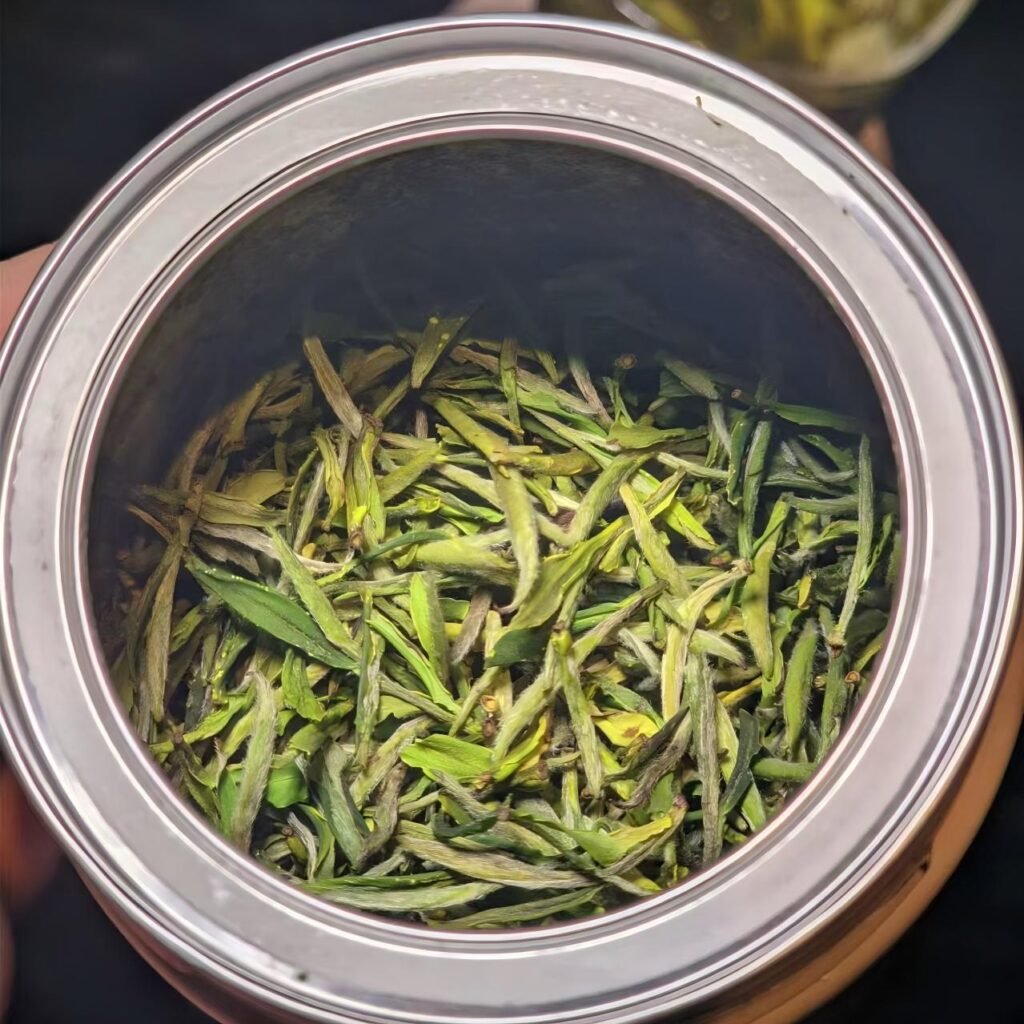
11.2 Storage: 6 Rules to Keep Green Teas Fresh
- Seal airtight. Oxygen is the #1 enemy of green teas.
- Go cold. Refrigerate at 0–5°C, or freeze at −18°C for long-term storage.
- Block light. Use opaque tins or aluminum bags.
- Control humidity. Keep moisture below 5%; use food-safe desiccants.
- Avoid odors. Tea absorbs smells from coffee, spices, and onions.
- Buy small. Purchase 50–100g at a time; finish within 3 months for peak flavor.
12. 10 Common Green Tea Brewing Mistakes & How to Fix Them
- Using boiling water (100°C). Burns leaves. Fix: Cool to 75–85°C.
- Steeping too long (>3 min). Catechins accumulate. Fix: Use a timer; stop at 90 seconds.
- Using stale or old tea. Green tea loses vibrancy after 6 months. Fix: Buy small batches; freeze extras.
- Bad water quality (chlorinated tap). Fix: Use filtered or spring water.
- Too much tea leaf (ratio >1:40). Fix: Stick to 1:50.
- Too little tea leaf (ratio <1:60). Fix: Use a kitchen scale.
- Wrong teapot material (Yixing clay). Yixing absorbs delicate oils. Fix: Use glass or porcelain.
- Water too cool (<70°C). Fix: Aim for 75°C minimum.
- No progressive steeping. Fix: Add 10–15 seconds per round.
- Leaving leaves in water between steeps. Fix: Drain fully after each pour.
13. Green Tea Side Effects, Drug Interactions & Safety
⚠️ Medical Disclaimer: This health information is for educational purposes only and does not constitute medical advice. Consult a qualified healthcare professional before making dietary changes, especially if you are pregnant, taking medications, or managing a health condition.
13.1 Who Should Limit Green Tea
- Pregnant women: EFSA recommends ≤200 mg caffeine/day (1–2 cups).
- Breastfeeding mothers: Limit to 2–3 cups; caffeine passes into breast milk.
- Iron-deficient individuals: Tannins reduce non-heme iron absorption by 25–90%. Drink tea 2 hours apart from iron-rich meals.
- Patients on warfarin: Green tea’s vitamin K can interfere. Keep intake consistent.
- People with GERD or anxiety: Caffeine may worsen symptoms; switch to decaf.
13.2 Drug Interactions
| Medication | Effect | Recommendation |
| Warfarin | Vitamin K alters INR | Consistent intake + doctor monitoring |
| Nadolol (beta-blocker) | Absorption reduced 85% | 2-hour gap |
| Atorvastatin (statin) | Absorption reduced 25% | 2-hour gap |
| Iron supplements | Iron absorption blocked | 2-hour gap |
| Bortezomib (Velcade) | May inhibit anticancer effect | Avoid during treatment |
13.3 The EGCG Liver Risk (Supplements Only)
Drinking brewed green tea is safe. However, concentrated green tea extract supplements have been linked to rare liver injury. The EFSA established a safety threshold of 800 mg EGCG/day from supplements.
14. Green Tea vs Matcha: Which Should You Choose?
Matcha often claims to be 137× more nutritious than green tea. The reality is closer to 3×, but matcha is still a nutritional powerhouse.
14.1 Processing Difference
- Green tea: Leaves are steeped, then discarded. You drink only the water extract.
- Matcha: Leaves are stone-ground into powder. You ingest the whole leaf, so 100% of nutrients reach your body.
14.2 Nutrient Comparison (per 2g serving)
| Nutrient | Green Tea (brewed) | Matcha (powder) | Multiplier |
| Caffeine | 25–40 mg | 60–80 mg | ~2× |
| L-theanine | 5–10 mg | 15–40 mg | ~3–4× |
| EGCG | 80–100 mg | 200–300 mg | ~3× |
| Absorption rate | 50–70% | ~100% | ~1.5× |
14.3 When to Choose Each
- Choose green tea for daily, low-cost hydration and gentle caffeine.
- Choose matcha for focused work, pre-workout energy, or culinary use (lattes, baking).
15. Shipping, Payment & Returns — What to Expect
We ship worldwide from our Fuzhou, Fujian warehouse.
15.1 Shipping Options & Delivery Times
| Method | Carriers | Estimated Delivery | Cost |
| Standard Shipping | China Post, Cainiao | 9–25 business days | $9.9 (free over $99) |
Note: Severe weather, typhoons, earthquakes, or customs holds may extend delivery times. We will keep you updated via email.
15.2 Payment Methods
We accept four secure payment options:
- Credit / Debit Cards — Visa, Mastercard, JCB
- PayPal — Buyer protection included
- Western Union — Contact customer service for details
- Bank Transfer — Contact customer service for account details
All transactions are encrypted via 256-bit SSL. We do not store your card information.
15.3 Order Processing Time
Once you place an order, our team picks, packs, and hands off to the carrier within 24–48 hours. You will receive a confirmation email with order details.
15.4 Return & Refund Policy
- Return window: 7 calendar days from the date of receipt.
- Free returns & exchanges when the issue is our fault (defective product, wrong item, shipping error). Contact us first via email.
- Customer-responsible returns apply when: you simply do not like the tea, you damaged the product, or you changed your mind after opening.
- Inspection tip: Please inspect the package and contents immediately upon receipt. Store the tea in a cool, dry place away from direct sunlight.
15.5 Refund Timeline
Refunds are issued to the original payment method within 3–30 business days after both parties confirm the return.
16. Frequently Asked Questions (FAQ)
Q1. How many cups of green tea per day are safe?
For healthy adults, 3–5 cups (720–1200 ml) is ideal. This delivers enough catechins for benefits without exceeding the 400 mg caffeine limit.
Q2. Is green tea better hot or cold?
Both work. Cold brew (4°C for 6–8 hours) extracts more L-theanine and less caffeine, producing a sweeter cup.
Q3. Can I drink green tea on an empty stomach?
Avoid it. Tannins can irritate the stomach lining. Drink after a light meal.
Q4. Does green tea help with weight loss?
Modestly. A 2009 meta-analysis found an average loss of 1.31 kg over 12 weeks.
Q5. What is the best time to drink green tea?
Morning or early afternoon. Avoid within 4 hours of bedtime.
Q6. Does green tea make you poop?
Yes, for many people. Caffeine stimulates colon contractions, often within 30–45 minutes. Sensitive individuals should limit intake or choose decaf green tea.
Q7. Is decaf green tea as healthy as regular?
For most health markers, yes. Modern CO₂ and water-process decaffeination retain 70–95% of EGCG and ~85% of L-theanine.
Q8. How long does shipping take to the US / UK / EU?
Standard shipping (China Post, Cainiao) takes 9–25 business days. Customs and weather may cause delays.
Q9. What payment methods do you accept?
We accept Visa, Mastercard, JCB credit/debit cards, PayPal, Western Union (contact us), and bank transfer (contact us).
Q10. How long do you take to process an order?
We process and ship within 24–48 hours of order placement. You will receive a tracking number via email once the parcel is dispatched.
Q11. Can I modify or cancel my order after placing it?
Yes, if your order has not yet shipped. Please contact us as soon as possible. Once shipped, we cannot cancel, but we can assist with returns per our 7-day policy.
Q12. What if I entered the wrong shipping address?
You will receive an order confirmation email. Reply before the order ships to correct the address at no charge. After shipment, address changes incur a fee based on the courier’s rate.
Q13. What if I received the wrong item?
Contact us immediately. We will arrange a replacement or full refund.
Q14. What if my tea arrived damaged?
Please take photos or short videos of the damaged package and product, and email us within 7 days. We will send a replacement or issue a refund.
Q15. How should I store my tea?
Store in a cool, dry place away from direct sunlight, strong odors, and humidity. For long-term storage, refrigerate or freeze in airtight containers.
Q16. How do I track my order?
Once your order ships, you will receive an email containing the tracking number and the carrier’s tracking URL. You can monitor real-time status on the carrier’s website (DHL, FedEx, EMS, UPS, etc.).
Q17. How long does a refund take?
Refunds are processed within 3–30 business days to your original payment method after the return is confirmed.
17. Conclusion
Knowing how to brew green tea correctly and choosing the best green tea variety are the two most impactful decisions you can make as a home tea drinker. From sourcing authentic Chinese green tea to brewing at 80°C and storing in a cool dry place, every step matters. Start with one change this week: swap your boiling water for 80°C, and taste the difference.
🛒 Ready to taste the high-mountain difference? Browse our curated collection of loose-leaf green tea, white tea, oolong, black tea, and pu-erh — all shipped fresh from Shouning, Fujian.
💬 Need help choosing the right tea? Our tea specialists are online 24/7. Email us at support@minteashop.com — we typically respond within 2 hours.
🌱 Direct-to-Consumer Disclosure: The teas featured in this guide are directly sourced and fulfilled by MinTeaShop. By bypassing traditional brokers, we bring you the freshest harvests directly from the gardens of Fujian to your cup. Every recommendation in this article is based on our own cupping notes and quality audits — not paid placements.
About MinTeaShop
We are a Fujian-based online tea merchant specializing in direct-from-origin Chinese teas — green, white, oolong, black, and pu-erh. Our partner farms are located in high-mountain regions of Shouning County, a designated “1,000-year tea hometown” by the Chinese Ministry of Agriculture.

One Comment