
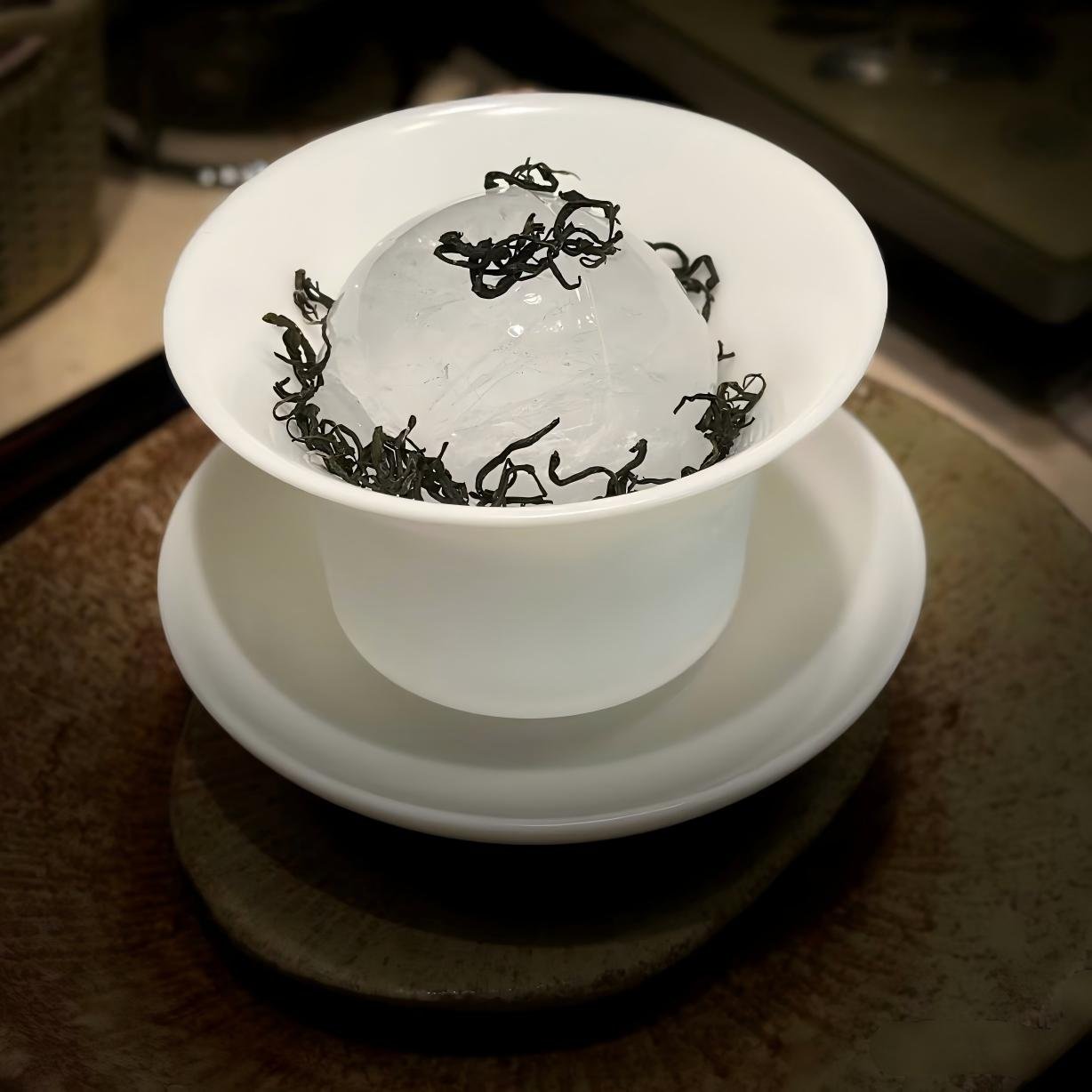
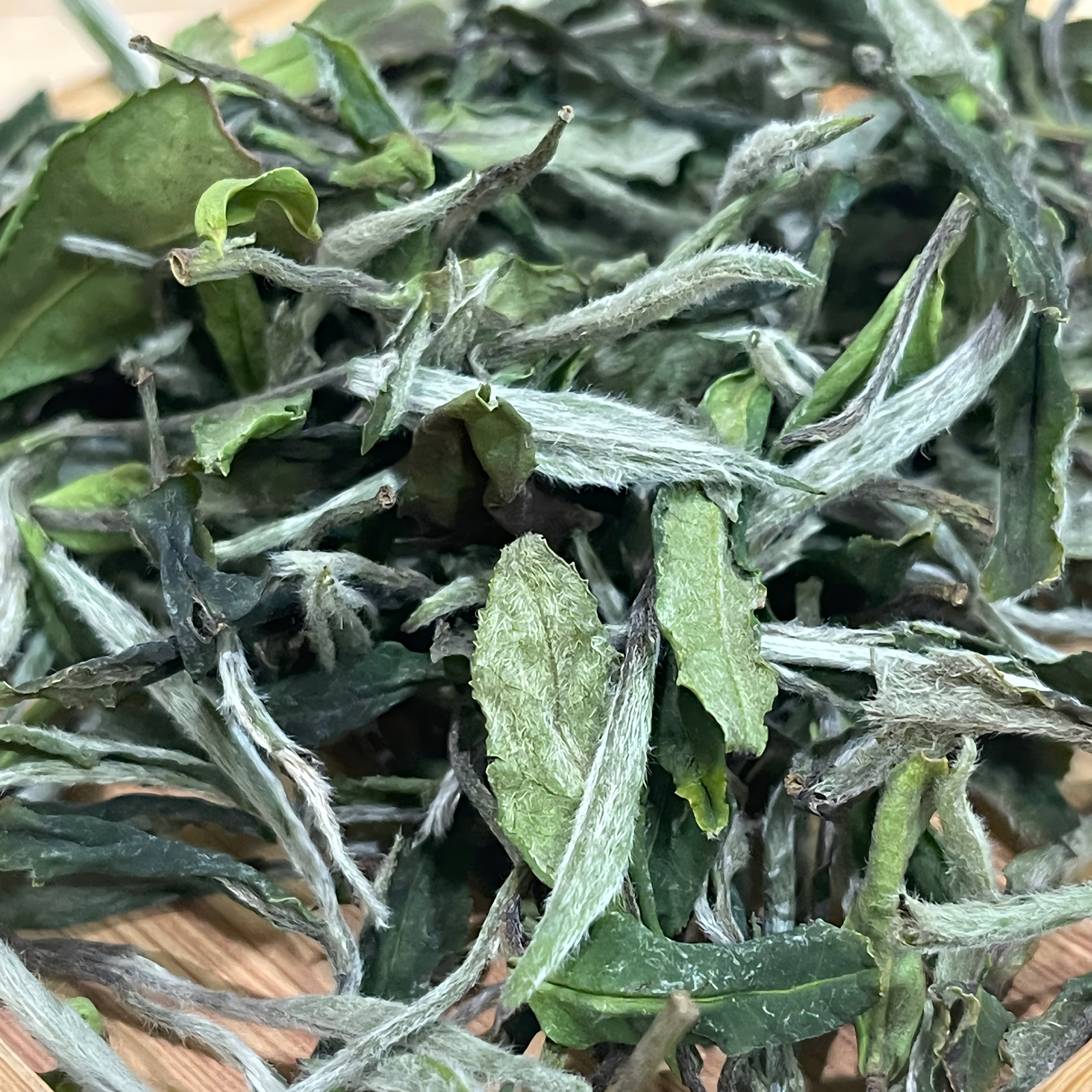
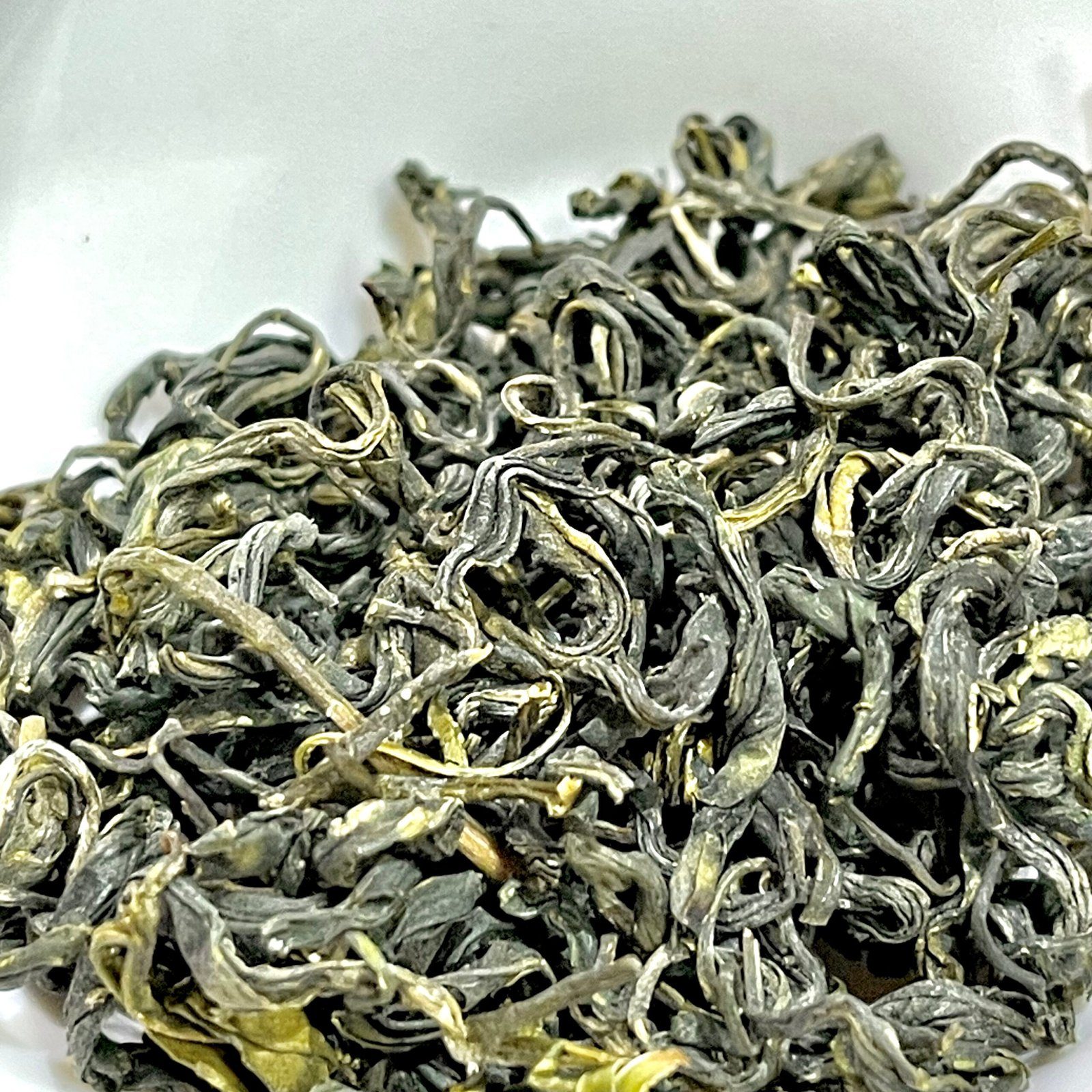
Ultimate Summer Cold Brew Tea Duo 2026: White Peony & Green Tea
Price range: $18.90 through $90.90
Plaintext
Master summer cold brew with this premium high-mountain duo from Shouning, Fujian. Harvested in early spring 2026, these tender leaves yield a naturally sweet, aromatic, and smooth drink with zero bitterness.
• Set Includes: 50% White Peony (Bai Mu Dan) + 50% High Mountain Green Tea
• Origin: Shouning, Fujian, China (High Altitude)
• Harvest: 2026 Early Spring
• Size Options:
– 100g Pack
– 200g Pack
– 500g Pack
Ideal for effortless cold brewing, daily focus, and healthy, sugar-free summer hydration.
Master cold brew tea this summer with Shouning’s 2026 early-spring White Peony & High Mountain Green Tea. Effortless, naturally sweet, and zero bitterness.
Description
Cold Brew Tea: The 2026 Summer Guide to Shouning’s Spring Ritual
Last Tuesday, a client in Berlin emailed a single question: “Haben Sie Tee, der sich zum Cold Brew eignet?” — “Do you have tea that works for cold brewing?” She’d just moved into a south-facing Altbau in Kreuzberg and was bracing for her first full Berlin summer. Her kitchen had no air conditioning. Her kettle boiled hot enough to scald porcelain. And her last attempt at Eistee had tasted, in her words, “like a meadow that died of bitterness.”
If you’ve ever poured boiling water over delicate white or green tea and wondered why the result tastes grassy, harsh, and flat, the problem isn’t the leaf — it’s the brew method. The fix is what we’ve come to call cold brew tea: cold water, four to eight hours, no skill required.
This 2026 guide walks through the exact ritual we built for that Berlin client — using two spring-harvest teas from Shouning, Fujian — so by the time you finish reading, you’ll have a method you can run on autopilot every weekend from now through October.
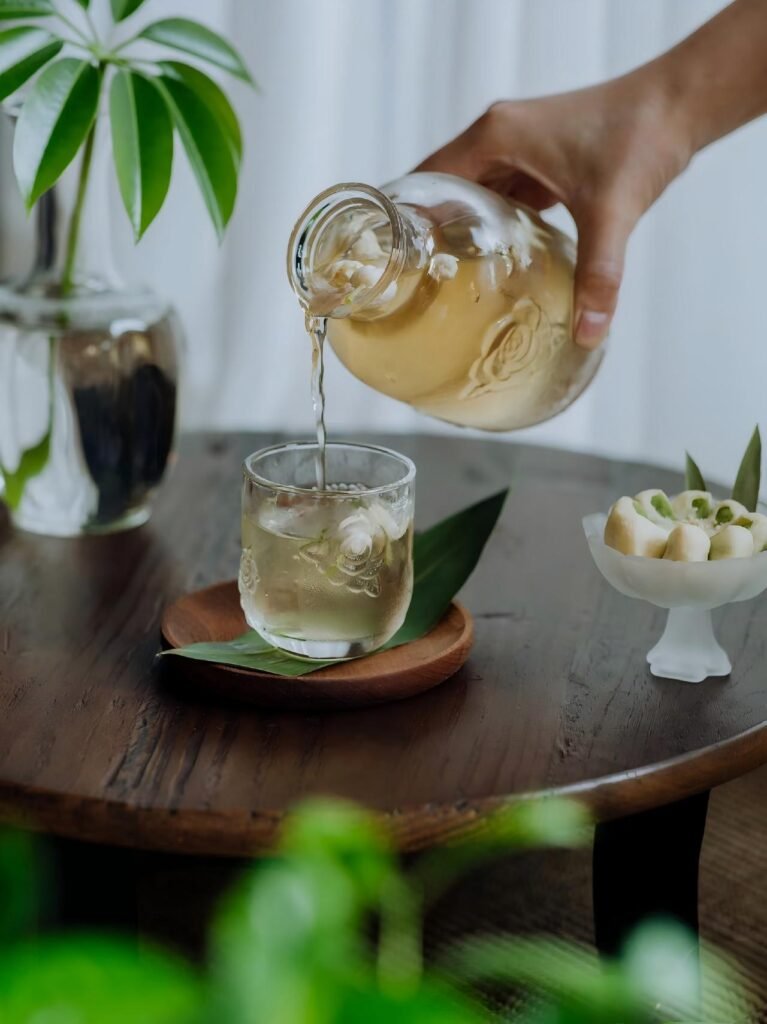
Why Cold Brew Tea Is Replacing Iced Tea in Summer 2026
I cold-brew tea almost every night now — it takes zero skill and saves me from summer heat. But the real reason it’s winning over home baristas isn’t convenience. It’s flavor.
The Chemistry Behind Cold Extraction
Most readers assume cold water = weak tea. Wrong. Cold water (4–25 °C) pulls a completely different set of compounds than boiling water. A peer-reviewed review on cold-water tea extraction indexed on PubMed found that cold steeping pulls substantially more amino acids — including L-theanine, the amino acid linked to calm, focused alertness. Cold steeping also pulls far fewer catechins-turned-tannins. Tannins are exactly the bitter bite that ruins summer iced tea.
So cold brew isn’t weaker. It’s smoother. And it leaves you with a cup you can drink all afternoon without the jitters.
Why Shouning’s Altitude Matters for Cold Brewing
Shouning’s high-altitude tea gardens in Fujian sit between 600–1,200 m elevation. Cooler nights slow leaf growth, concentrating amino acids and aromatic oils. The FAO Tea Processing Guide on high-mountain leaf quality standards confirms that high-altitude leaf naturally contains 15–30% more amino acids than lowland tea — and amino acids shine brightest in a cold brew, not a hot one.
What Is Cold Brew Tea, and How Is It Different from Iced Tea?
In short: cold brew tea steeps slowly in cold or room-temperature water for 4–8 hours. Iced tea brews hot, then chills. The difference looks minor. The flavor difference is dramatic.
| Feature | Cold Brew Tea | Iced Tea (Hot-Brewed, Chilled) |
|---|---|---|
| Water temperature | 4–25 °C | 90–100 °C (then cooled) |
| Steep time | 4–8 hours | 3–5 minutes |
| Caffeine content | ~20–30% lower | Full extraction |
| Bitterness / astringency | Minimal | Noticeable on the finish |
| Best paired with | White, green, light oolong | Black, pu-erh, dark oolong |
Many readers assume cold-brew = weaker. In reality, cold-brew extracts different compounds — amino acids, slow-release aromatics — and leaves the harsh tannins in the leaf. It’s not weaker. It’s smoother.
How to Cold Brew White Peony (Bai Mu Dan) at Home
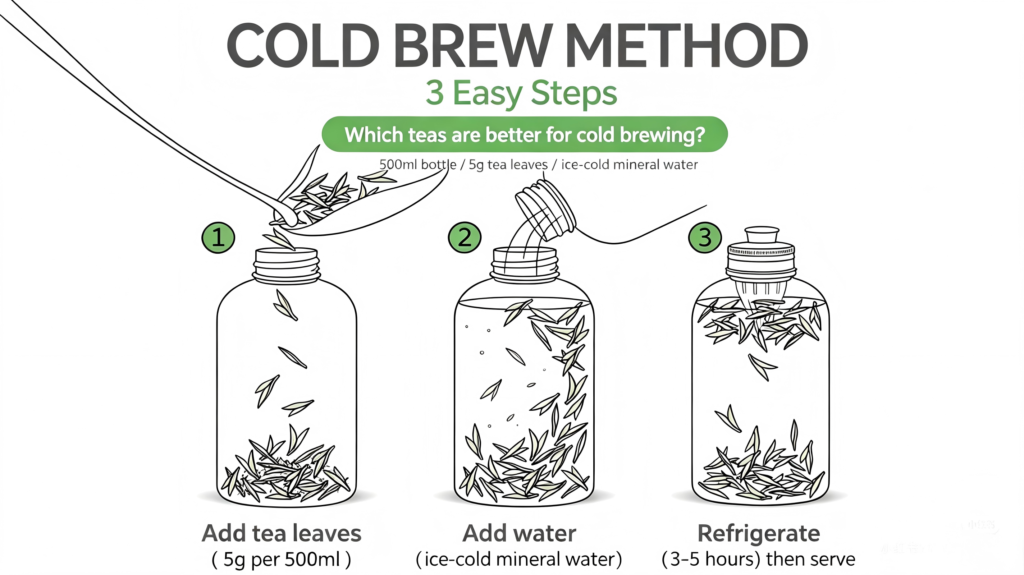
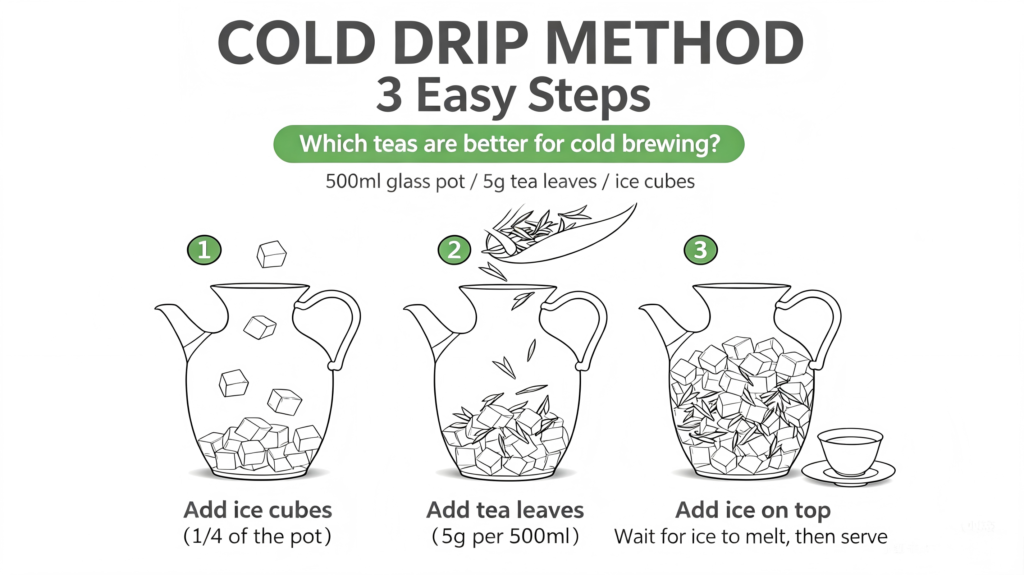
White Peony is delicate. Brew it wrong and you lose everything. Here’s the 内链:cold brew method I now use every weekend:
- Measure. Add 5 g of 内链:loose-leaf White Peony into a 500 ml glass pitcher.
- Pour cold water. Filtered, 4–10 °C. Skip tap water — its chlorine flattens aromatics.
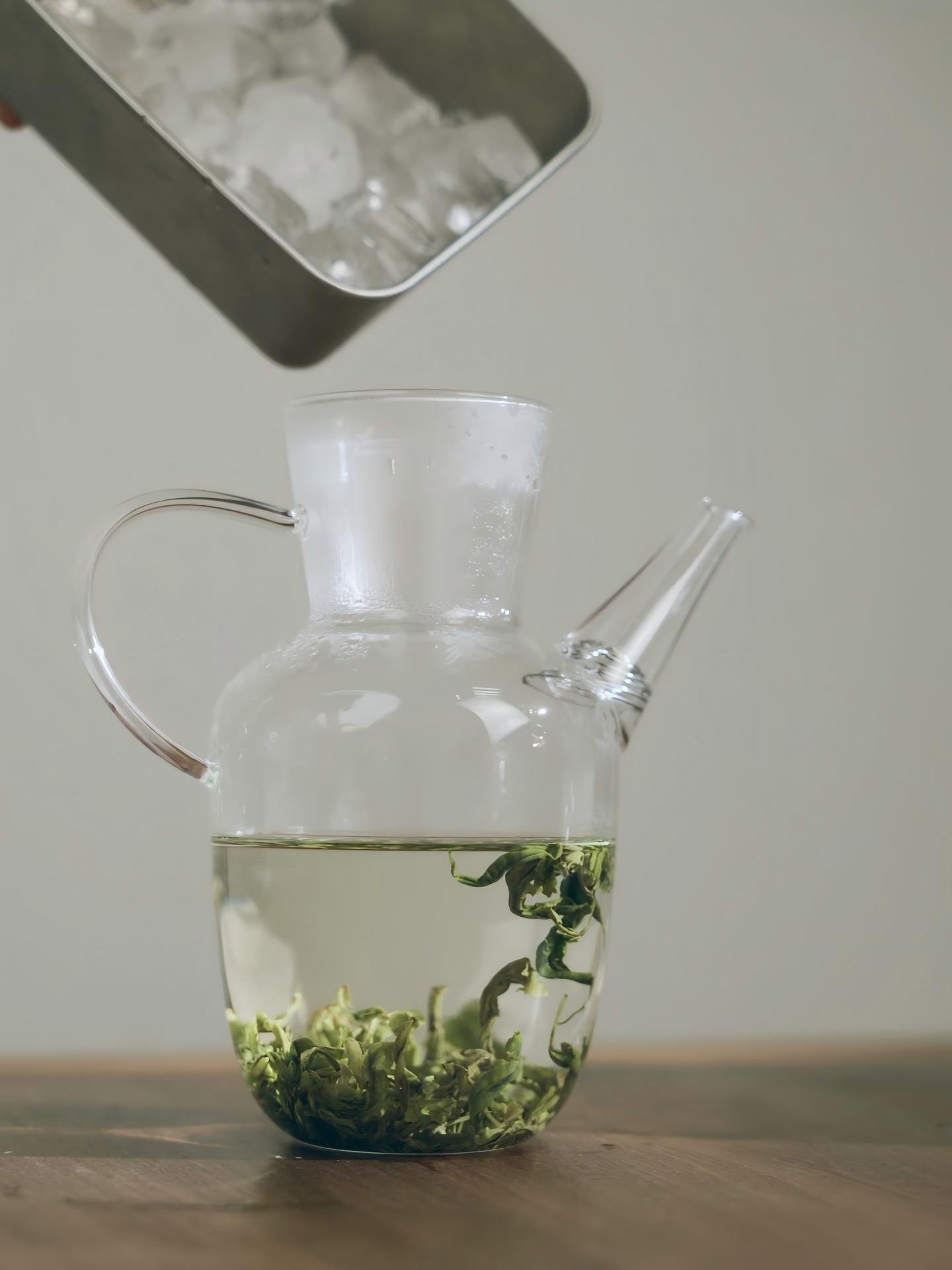
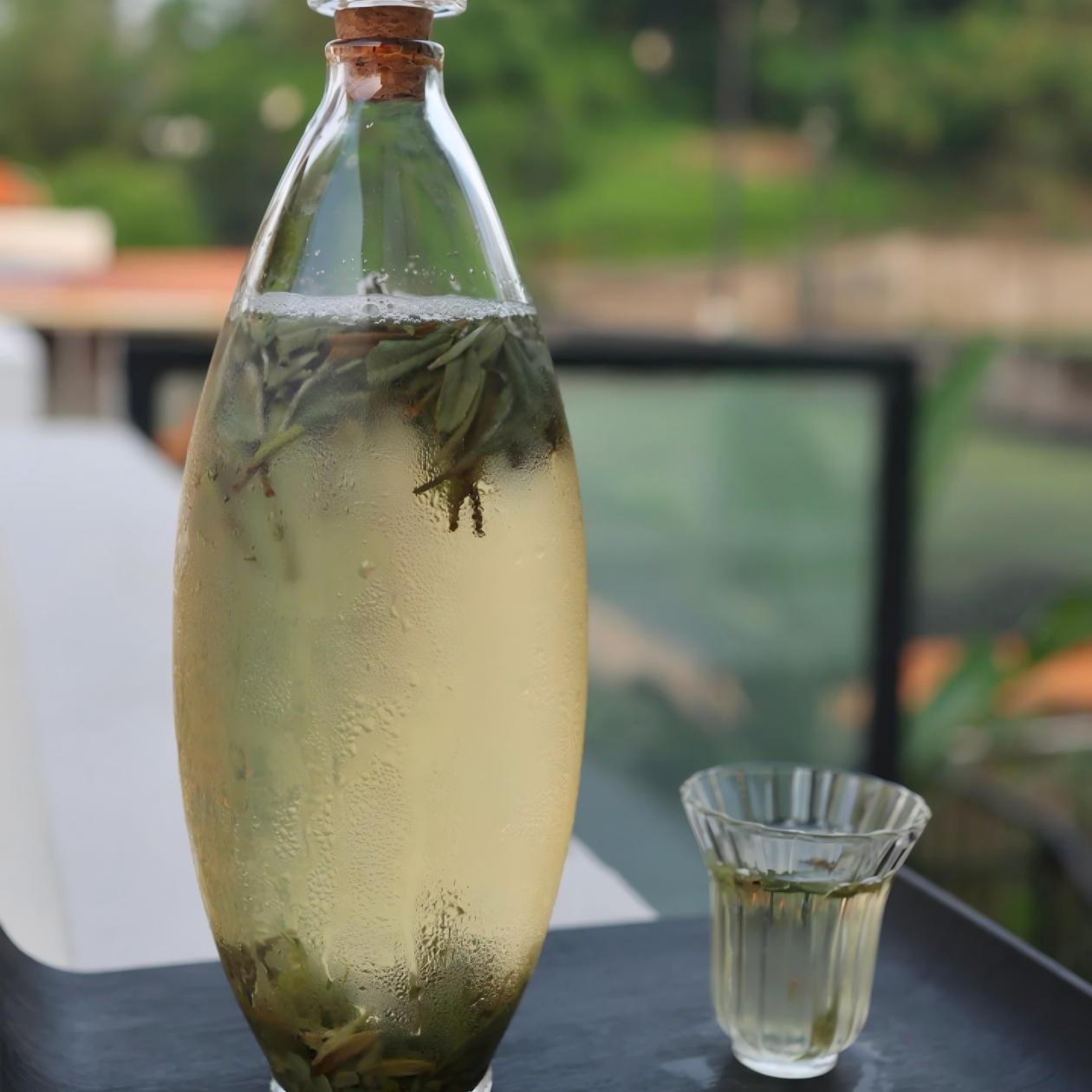
- Refrigerate. 6–8 hours at 4 °C. I tuck mine in before bed and strain at breakfast.
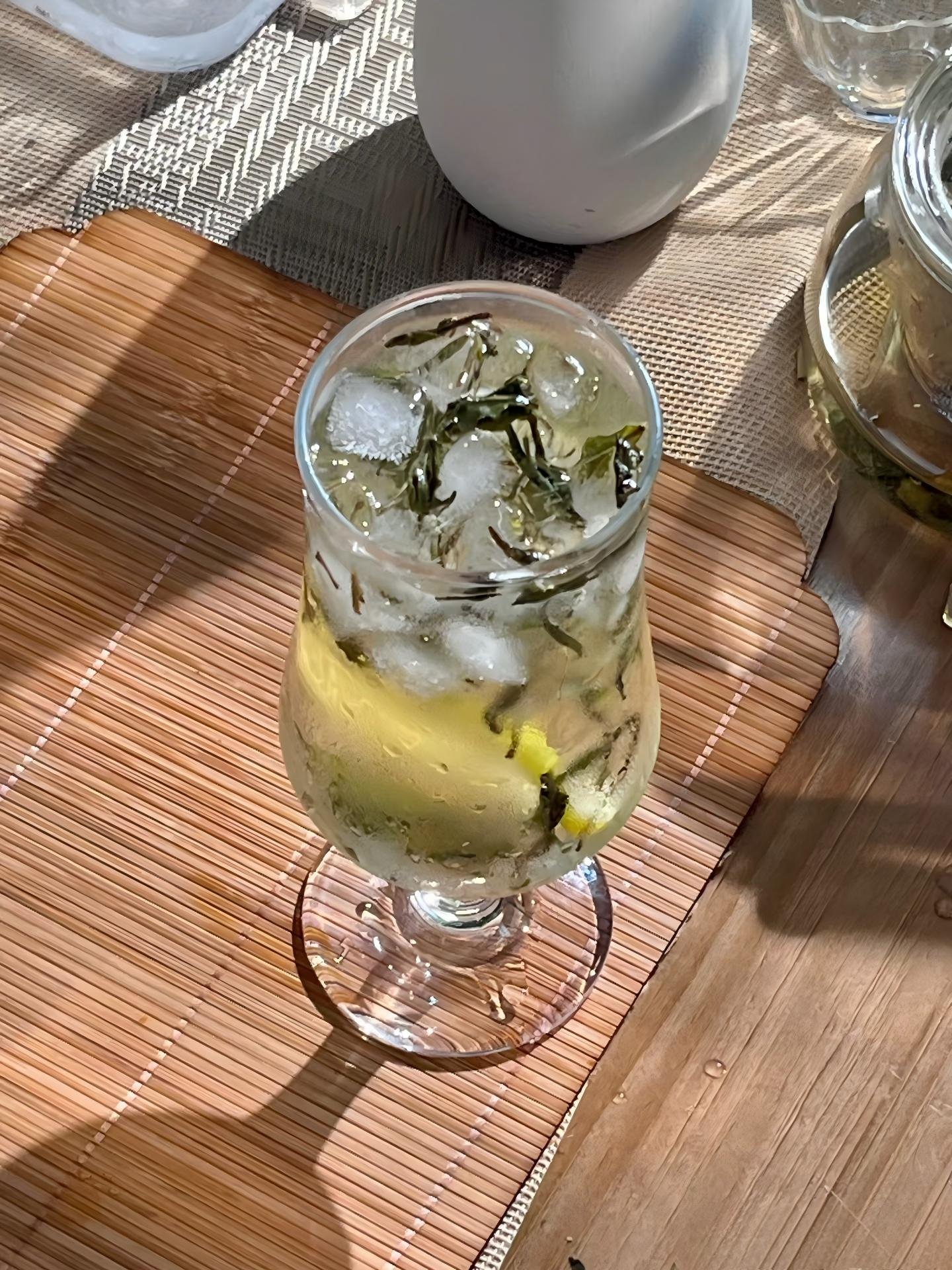
- Strain and serve. Pour over ice. Optional garnishes: white peach slices, lemon zest, or mint.
How Long Should You Steep Cold Brew Green Tea for Best Flavor?
For high-mountain green tea, 4–6 hours is the sweet spot. Under 4 hours and the brew tastes watery; over 8 hours and grassy notes creep in. Green tea has less cell-wall density than white tea, so it surrenders its compounds faster. If you’re batch-brewing both teas together (not recommended — but we all do it), drop the green in at hour 2 and the white at hour 0.
What Does Cold Brewed Shouning White Peony Taste Like?
Forget the marketing copy. Tasting notes pulled from a blind cupping I ran last week on the 2026 spring-harvest batch:
- Nose: cut hay, white peach skin, a whisper of damp stone.
- Palate: soft floral, melon, raw honey.
- Finish: clean, mineral, almost saline — like sucking on a river pebble.
It tastes the way cold mountain air smells at 6 a.m. in April.
Is Cold Brew Tea Healthier Than Hot Tea?
It’s different, not universally “healthier.” Both methods deliver antioxidants. Cold brew tea wins on three specific points:
- Less caffeine (~25% less per cup) — better for afternoon drinking.
- Gentler on the stomach — lower tannin levels mean less irritation on an empty stomach.
- More L-theanine — the amino acid linked to calm focus survives cold extraction better than hot.
According to aggregated review data published on NCBI on polyphenol retention in cold-steeped tea, cold-steeped green tea retains up to 60% of its catechins while slashing the bitter compounds. For evening wind-downs, cold brew is the smarter choice.
Inside the Summer 2026 Cold Brew Tea Duo
This duo isn’t a bundle we threw together. Both teas were selected for one reason: they’re the only two lots in our 2026 spring harvest that cold-brew into something extraordinary.
Tea #1 — Shouning White Peony (Bai Mu Dan)
Picked April 2026, from gardens above 800 m. Buds and young leaves only, air-dried (no kill-green step) to preserve wildflower aromatics. Cold-brewed notes: wildflower, honeydew melon, clean mineral.
Tea #2 — High Mountain Green Tea
Picked late April 2026, also above 700 m. Steamed — not pan-fired — to preserve chlorophyll and amino acids. Cold-brewed notes: sweet grass, lily, and a bright sugarcane finish.
Both teas ship in vacuum-sealed pouches, sealed at our Shouning facility within 24 hours of pluck. Harvest data (date, garden, elevation) is printed on every pack.
How Can You Reuse Cold Brew Tea Leaves?
Yes — and you should. After 8 hours in the cold, your loose-leaf tea still holds 30–50% of its extractable goodness. Re-steep the same leaves once or twice with hot water (85 °C for green, 90 °C for white). The second infusion is softer, sweeter, more concentrated — perfect for a cozy morning cup when the summer heat finally breaks.
Final Thoughts: Why This Summer Belongs to Cold Brew
I’ve reviewed tea professionally for seven years. I’ve never seen a method move this fast into American kitchens. The reason isn’t novelty. It’s that once you taste a properly cold-brewed white tea from a high-mountain garden like Shouning, you’ll never willingly drink pitcher-iced tea again.
If you’ve been burned by bitter summer brews, give this 2026 method one honest try. Eight hours. No skill. Two teas. One quiet ritual.
Frequently Asked Questions
Can I use these specific Shouning teas for cold brewing? Yes. Both our 2026 White Peony and High Mountain Green Tea were selected partly because of how they perform cold. The White Peony needs 6 hours to open up — under that it tastes watery. The green is drinkable from hour 4, but hits its stride around hour 5.
How long should I cold brew the tea, exactly? For White Peony, start at 6 hours. Go to 8 if you want more body. For green tea, 4–6 hours is the sweet spot. Beyond 8 hours on either tea and you’ll start pulling grassy, almost vegetal notes that nobody enjoys.
Will my cold brewed tea taste bitter? Not if you stay under 8 hours and use filtered water. Bitterness in cold brew almost always comes from one of three mistakes: tap water (chlorine), too much leaf, or steeping past 10 hours. Fix any one of those and the cup turns sweet.
What’s the difference between White Peony and Green Tea in this duo? White Peony (Bai Mu Dan) is softer — floral, honeyed, almost peachy. Our High Mountain Green Tea is brighter — sweet grass, lily, sugarcane. They sit at opposite ends of the flavor spectrum, which is why the duo works. Most readers drink White Peony on its own and use the green as a daily-driver.
How much tea should I use per 500 ml of cold water? 5 g is the standard ratio. Bump to 6 g if you like it strong. Drop to 4 g if you want to pour it over ice and dilute further. Anything over 7 g in cold water gets grassy regardless of steep time.
Can I reuse the leaves for a second cup? Re-steep them, but switch to hot water. 85 °C for the green, 90 °C for the white. The second infusion comes out softer and slightly sweeter. After that, the leaves are spent — compost them.
What fruit or sweeteners pair best with this duo? White peach is the classic match for White Peony — thin slices dropped in at the start of the cold steep. Lemon zest works for the green tea. Skip honey for both: the teas are already sweet enough. If you must sweeten, a single white peach slice does more than a teaspoon of sugar.
How should I store the tea between cold brews? Keep the vacuum-sealed pouch in a cool, dry cabinet away from sunlight, the stove, and anything strongly aromatic (coffee, spices, curry). Once opened, the leaf stays fresh for about 3 months. Past that, the aromatics fade fast.
Is this tea okay for beginners? Honestly, yes. Cold brewing is the most forgiving method we know. There’s no kettle timing, no gongfu setup, no guesswork. If you can measure 5 g with a kitchen scale and pour water, you can cold brew these teas well on day one.
Can I drink cold brew tea every day? I do. The lower caffeine (~25% less than hot) makes it a daily-friendly summer beverage. No added sugar, no jitters, and on a hot July afternoon it pulls double duty as hydration and a small ritual.
Additional information
| gram | 100g, 200g, 500g |
|---|
Related products
-

Best Cold Brew Tea Duo | Fujian Spring 2026 Harvest
Price range: $13.90 through $138.90Select options This product has multiple variants. The options may be chosen on the product page -
Best Premium Cold Brew White Tea Duo: 2026 Spring Harvest from Fujian
Price range: $23.90 through $118.90Select options This product has multiple variants. The options may be chosen on the product page -
Ultimate Cold Brew Tea Duo 2026: White Peony & Xiaocai Black Tea
Price range: $18.90 through $90.90Select options This product has multiple variants. The options may be chosen on the product page -
White Tea Cold Brew Duo 2026: Perfect White Peony & Shou Mei
Price range: $15.90 through $75.90Select options This product has multiple variants. The options may be chosen on the product page

Reviews
There are no reviews yet.