
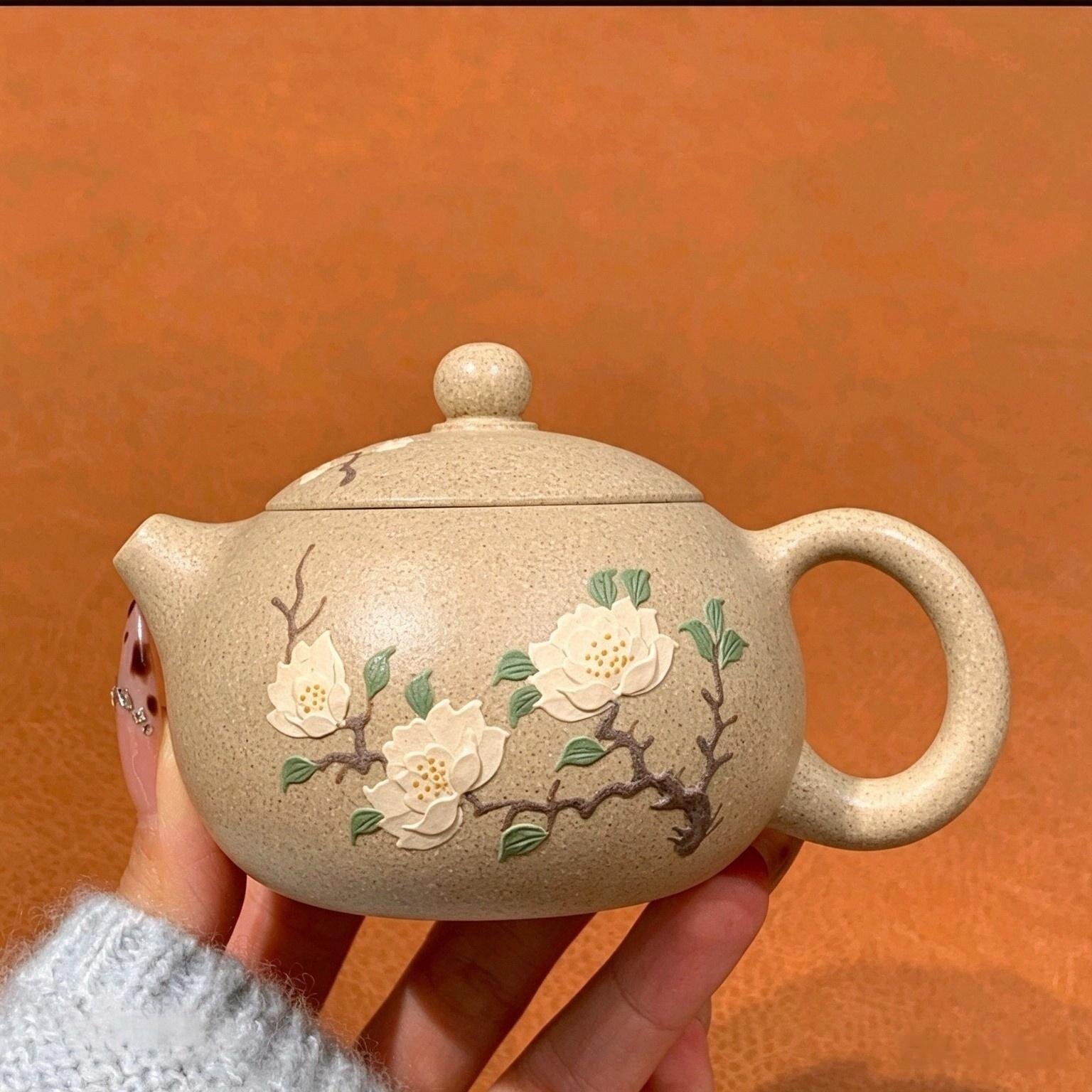
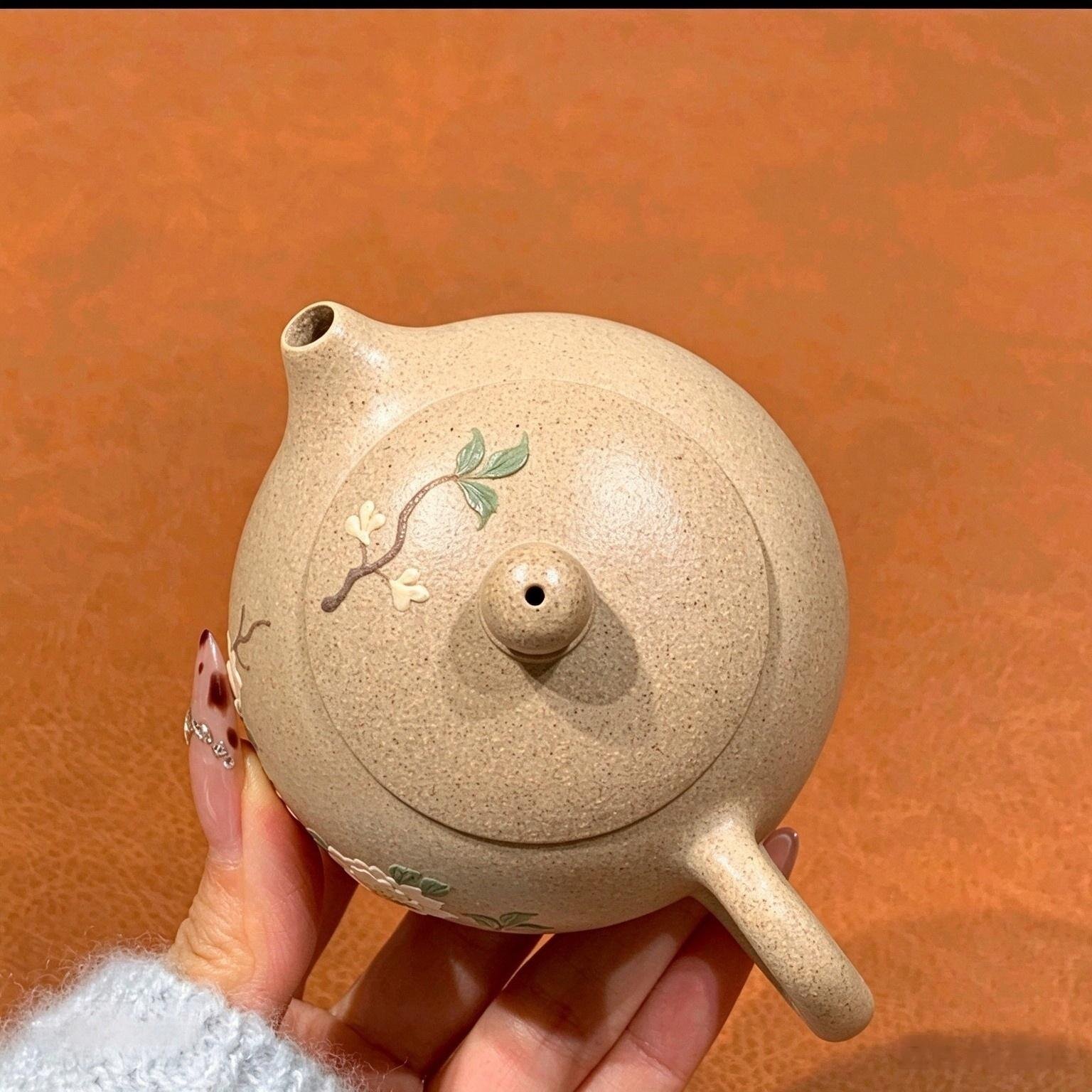
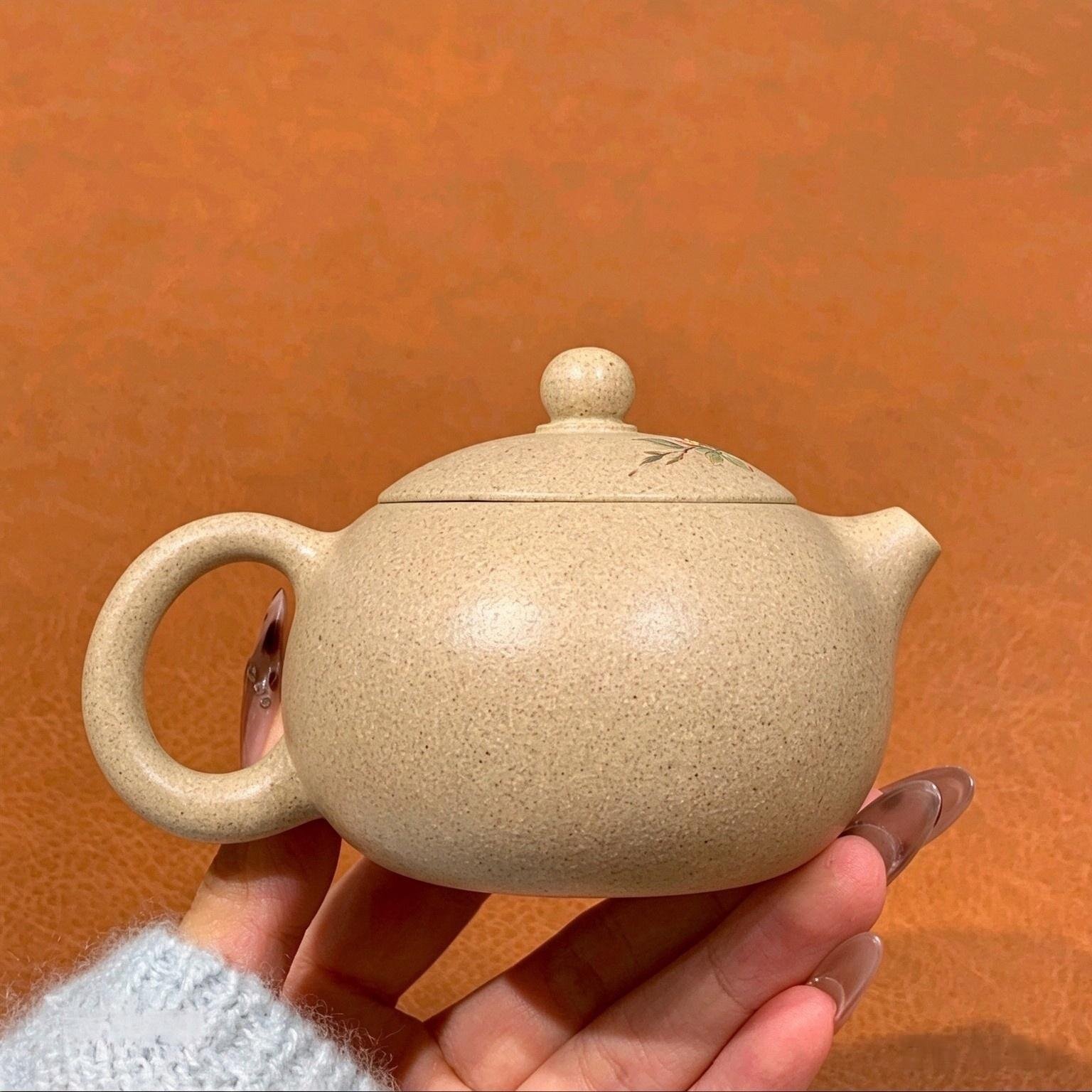
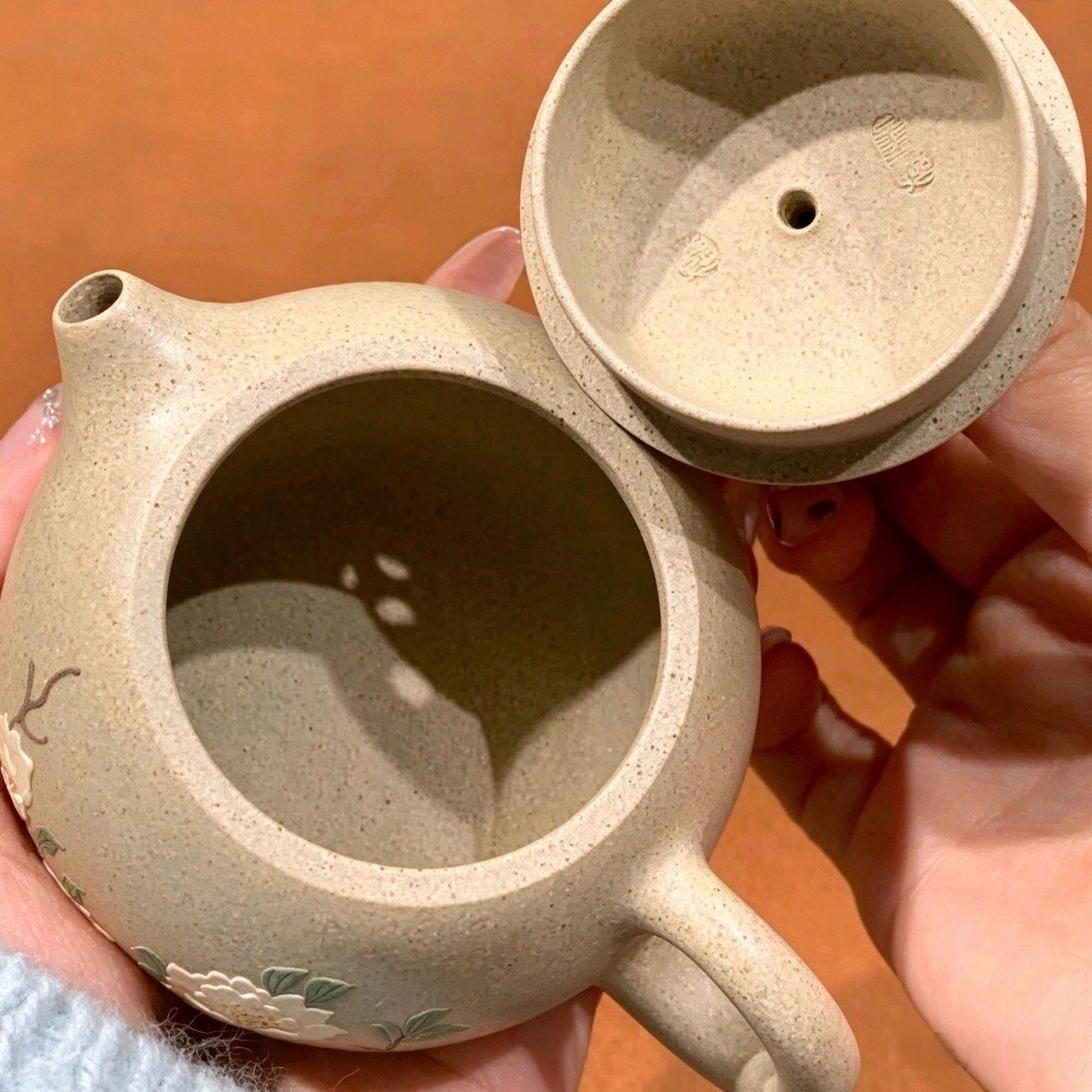
Mutton Fat Duan Ni Yixing Zisha Teapot, 120cc
$79.90
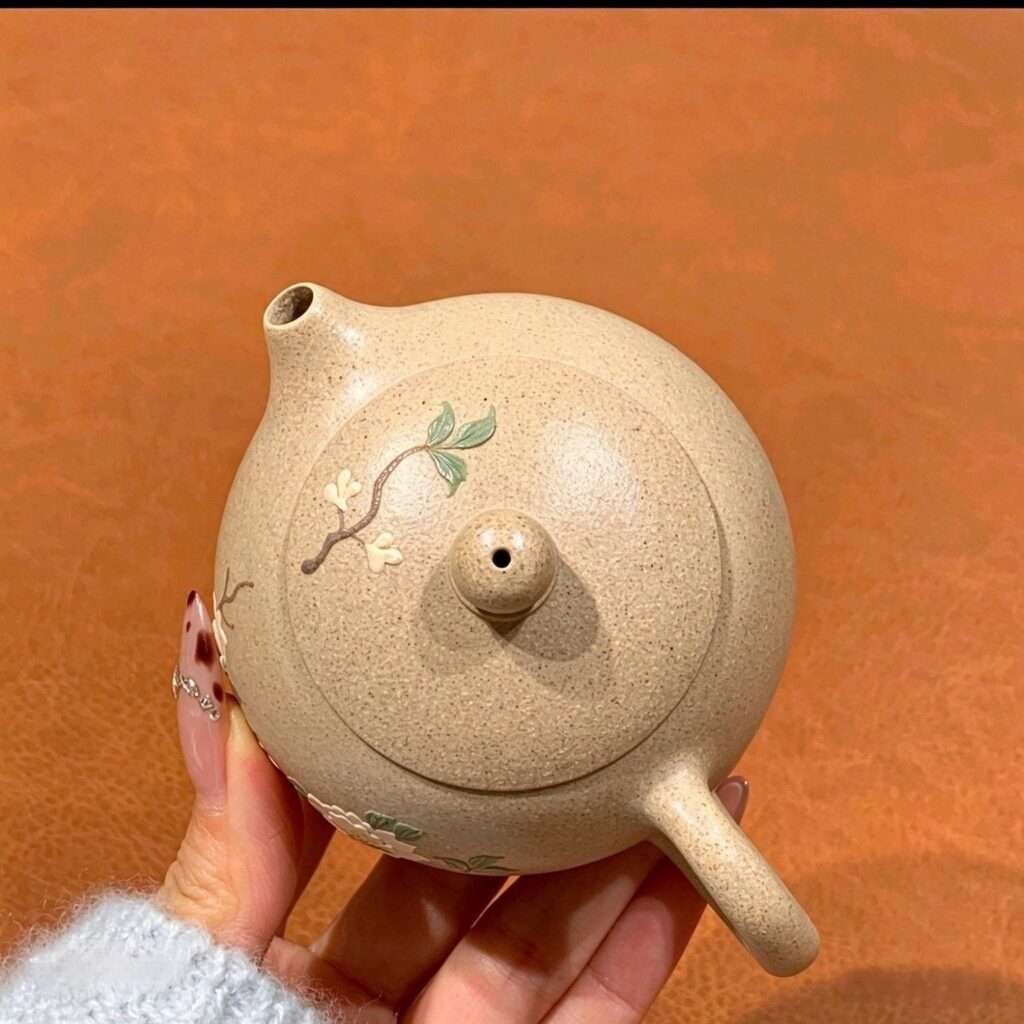
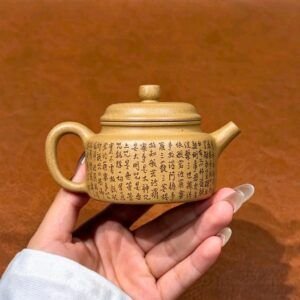
Mutton Fat Duan Ni 120cc Yixing zisha teapot with a flat round body and a taut lid. A semi-handmade pot for one or two drinkers, with the duan ni clay and brewing notes set out below.
3 in stock
Description
·
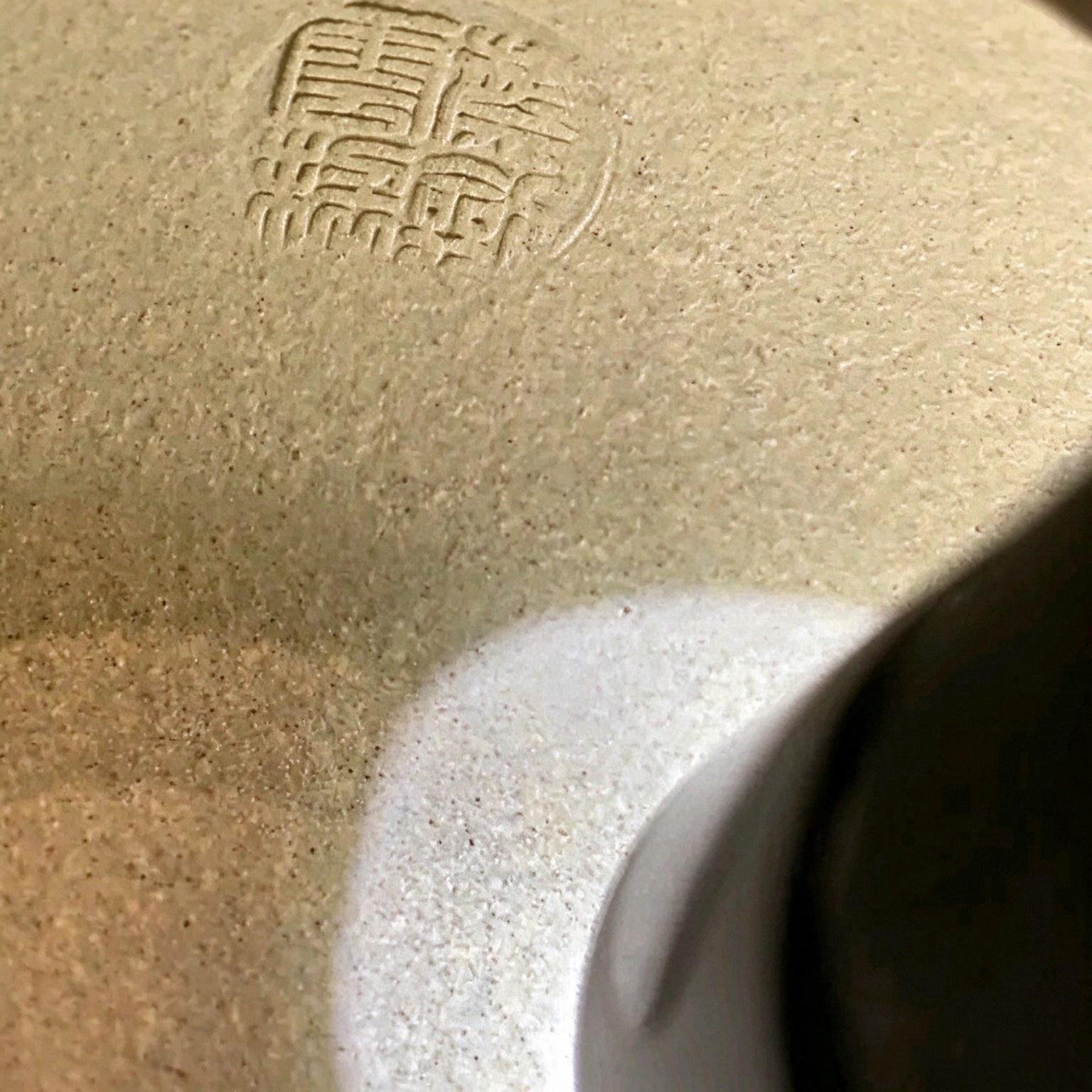
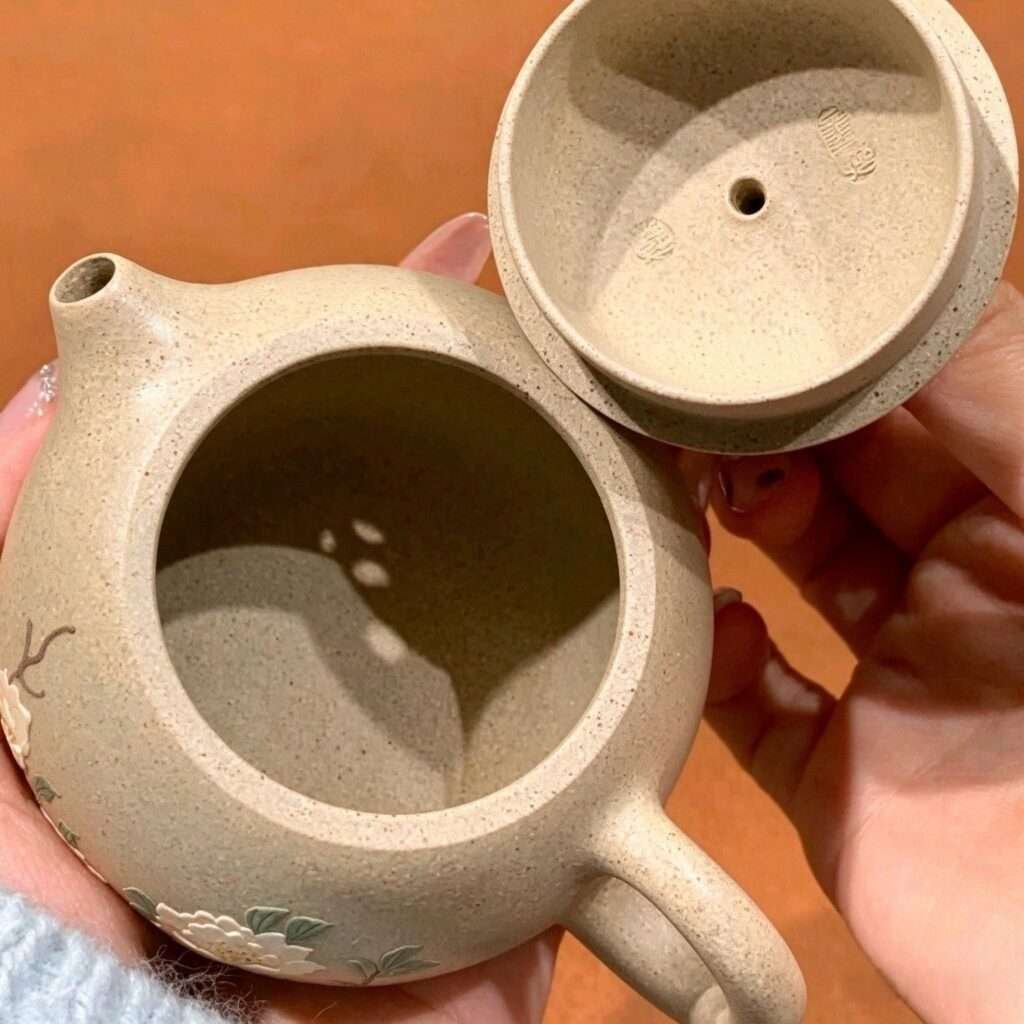
This 120cc Mutton Fat Duan Ni Yixing teapot is built for one person, or two. The clay comes from the duan ni layer in Yixing, Jiangsu, and the potter shapes it on a mould before finishing it by hand, so the walls come out even and the lid seats tight. No master’s signature on the bottom, and no master’s price.
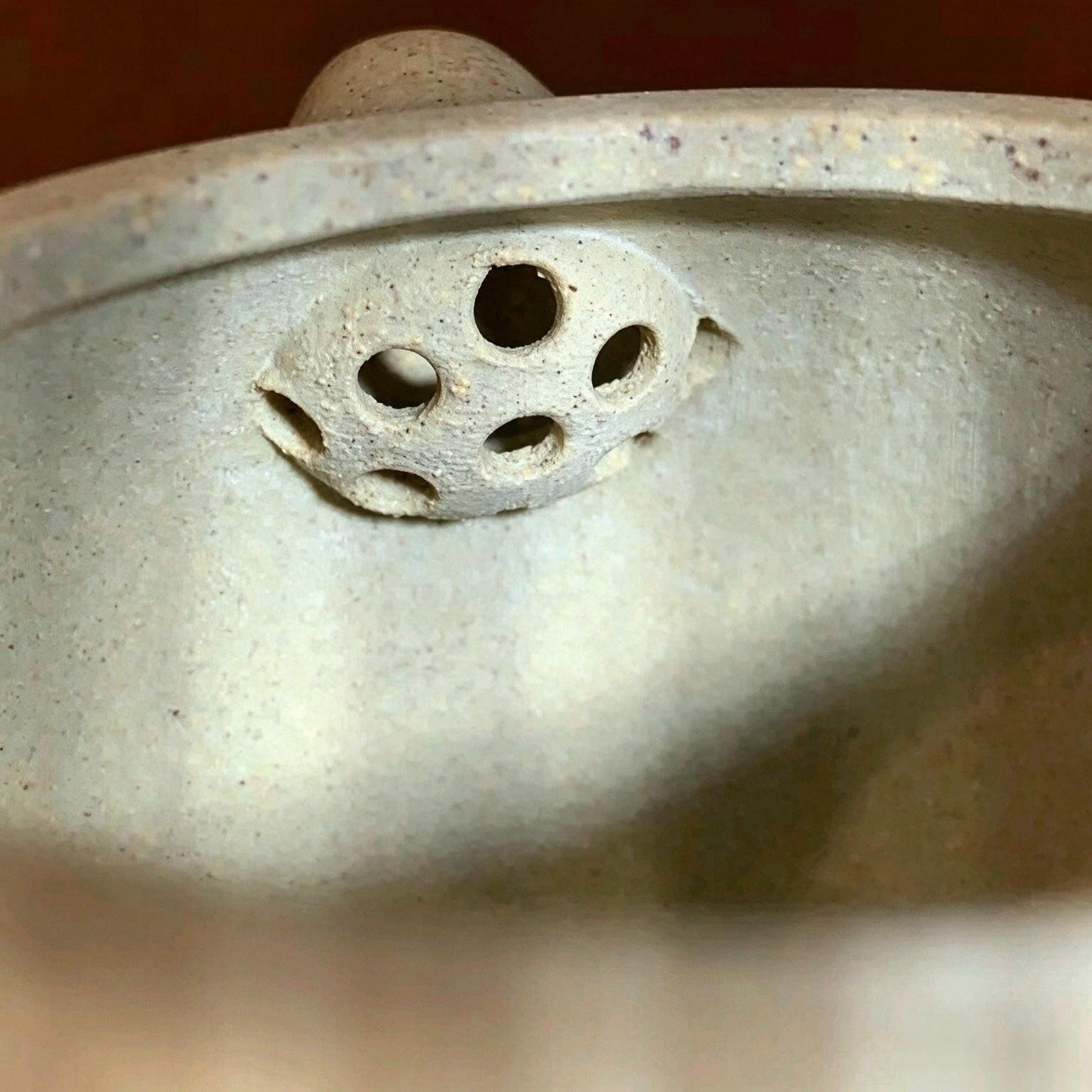
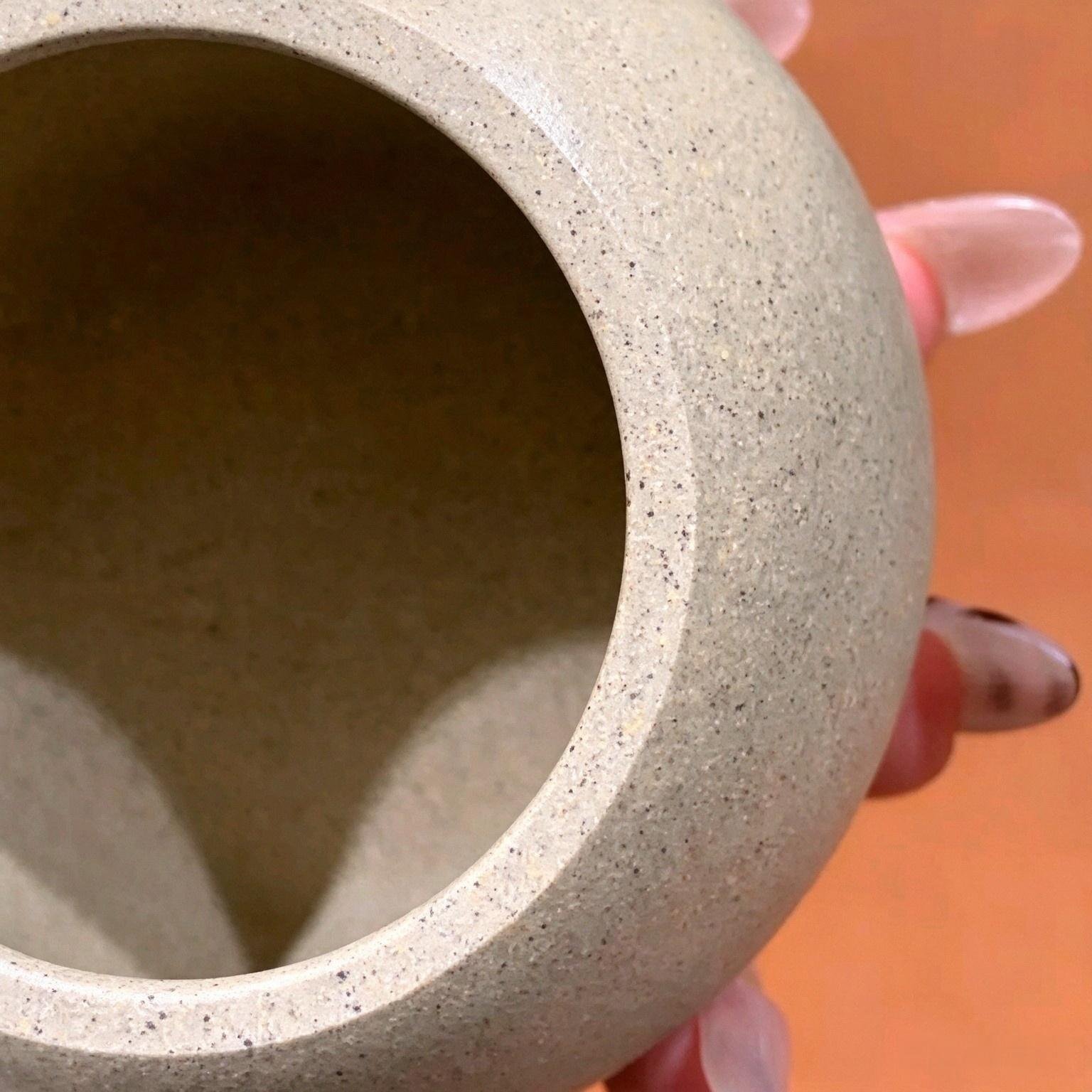
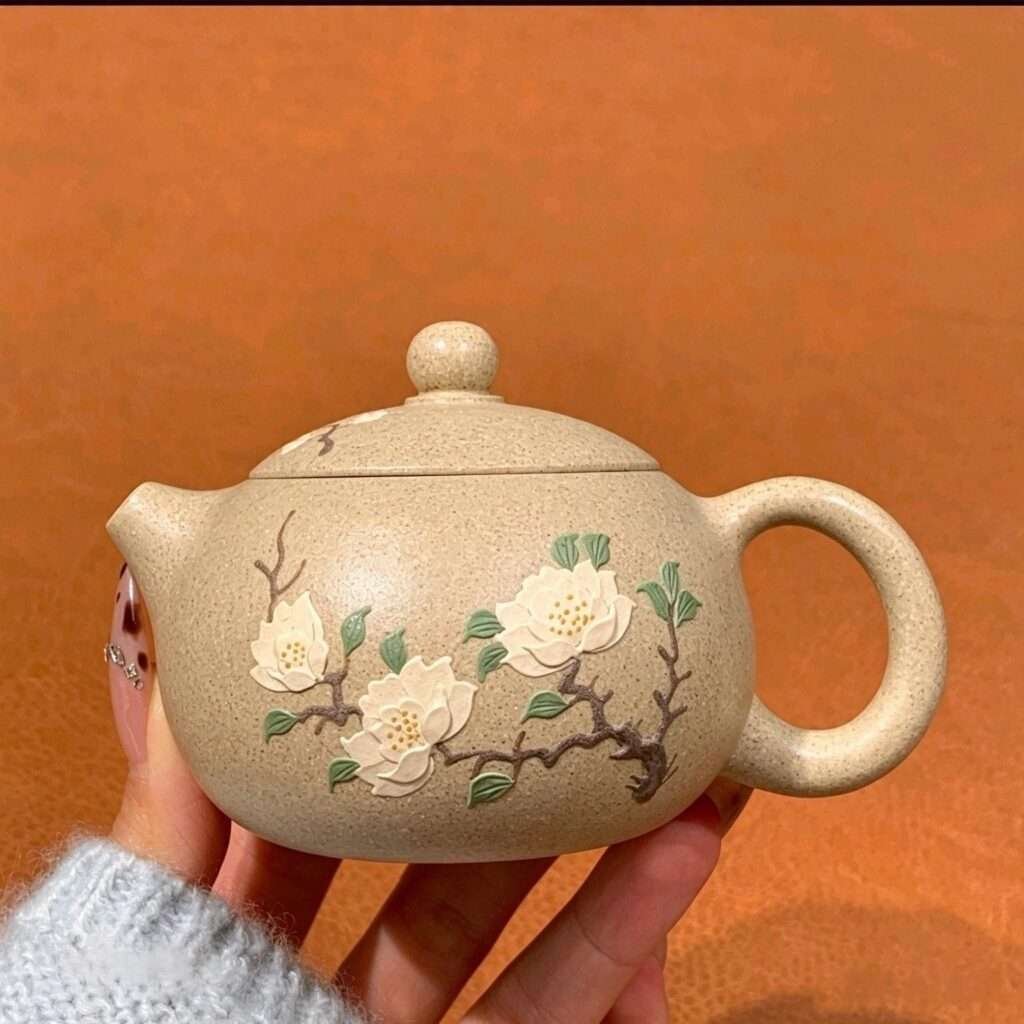
The body is a pale off-white, close to mutton-fat jade. The tone shifts a little from batch to batch, and this one sits closer to warm ivory than pure white. The surface is unglazed and satin, dry to the touch rather than slick.
I brew shou mei in a duan ni pot like this most mornings, and after a year the clay still smells faintly of plum. After about three months of daily use, the base started to turn glossy along the pour line. If you want one clean tea, keep this pot for one tea.
What Is Mutton Fat Duan Ni Clay, and How Does It Feel?
Two names are worth unpacking, because they are often used loosely. Duan ni, 段泥, is also called 团泥 after a small hill called 团山 inside the Huanglongshan mine system at Dingshan. Geologically it is not a separate mineral: it is a natural intergrowth where green clay and purple clay meet, which is why it fires a pale yellow rather than the red-brown of the purple layer. “Mutton fat”, 羊脂, describes the colour and fineness of one especially pale, close-grained part of that family, the one that comes out of the kiln looking like mutton-fat jade. It is a description of a look, not the name of a separate mine.
Duan ni (duanni) is a light clay layer that sits above the darker purple stone in the Yixing hills. When it fires, it turns off-white and stays porous. Many drinkers assume porcelain feels smoother, but in practice a duan ni Yixing teapot moves air through its wall, holds aroma inside it, and warms up faster than a glazed pot.
The clay comes from the same duan ni seams that Yixing potters have worked for decades. The clay is dug, prepared and fired locally, and the pale, fine-grained part we call mutton fat is a description of how it looks after firing, not a separate mine. We name the region and the workshop; we do not claim a single mine, and we do not claim it is unblended. A 2019 analysis in the Microchemical Journal measured the minerals in Zisha clay from the Yixing area and found a composition that shifts by deposit, which is one reason the firing tone moves between lots. Published research on Yixing zisha clay mineral composition documents the same variation. In the hand the material reads as soft rather than sandy, and the wall feels dry without feeling chalky.
How Does This 120cc Yixing Teapot Pour?
The spout is short and the handle sits inverted, so the pour stays close to the pot. Water leaves the spout in one thin stream, cuts off cleanly when you tilt back, and does not run down the side. A full 120 ml empties in about eight to ten seconds.
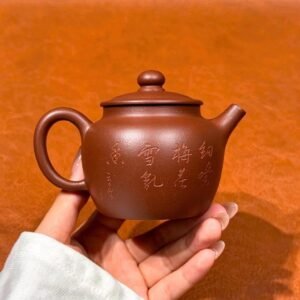
The body is the flat round shape (pian yuan) that most gongfu drinkers already know. The lid is a truncated jie gai with a zhu ni bead knob, and it drops into a seat that stays tight over steam. Because the pot holds only 120 ml, one pass empties it, so the last pour tastes as strong as the first.
Why Is 120cc the Right Size for Gongfu Tea?
At 120 ml you can run a strong leaf-to-water ratio without wasting tea. A typical load is 5 to 6 grams of leaf, and it fills the pot in one round. Ten seconds on the first steep of sheng puerh gives a hot, concentrated cup, and the ratio keeps the tea moving.
Small pots also show mistakes fast. If the leaf sits too long, you taste it, and the size keeps you honest. For two people, pour half into each cup and keep drinking from the pot.
Which Teas Pair Best With a Mutton Fat Yixing Teapot?
Shou (ripe) puerh, sheng puerh and roasted oolong all work well in a duan ni Yixing teapot. The body holds heat steadily and does not push a flavour of its own, so a tight roasted profile stays clean from the first steep to the last.
For sheng puerh, our short-steep brewing guide covers the short first steeps this pot handles well. Dan cong oolong also sits nicely here, because the roast suits the clay. Green tea and jasmine belong in a different pot, and the next section says why.
What Teas Should You Avoid Brewing in a Mutton Fat Teapot?
Avoid jasmine, osmanthus and long-aged ripe puerh if you plan to brew a different family in this pot later. The unglazed body holds aroma in its pores, so a scented tea can stay in the clay for months. A second pot costs less than a stubborn teapot.
That is the trade-off of an unglazed body, not a fault in it. The same pores that hold a roasted aroma in also hold a floral one in.
Is a Semi-Handmade Yixing Teapot as Good as a Fully Handmade One?
Yes for brewing, and the difference sits in the forming step rather than the material. Semi-handmade (ban shou gong) means the potter presses clay into a mould so the wall stays even and the lid seats properly, then trims and finishes it by hand. The clay is the same Yixing duan ni family.
Recent ceramic scholarship treats the Yixing process as a living technique rather than a preserved one, and documents how potters read iron content and firing temperature from the body they are shaping. A 2026 ceramic study of Yixing clay vessels follows that line of work. A fully handmade pot differs from this one in small ways that only show under a loupe. The bigger difference you feel in the hand is the price: most of the gap between a signed pot and an unsigned one sits in the name and the maker’s reputation, not in the clay in the wall.
How Does a 120cc Teapot Compare With a 180cc or 250cc Gongfu Teapot?
| Capacity | Leaf per round | First steep | Who it suits |
|---|---|---|---|
| 120 ml (4.05 fl oz) | 5–6 g | About 10 seconds | One drinker, or two sharing the same leaves |
| 180 ml (6.1 fl oz) | 8–10 g | About 15 seconds | Two drinkers, larger-leaf oolong |
| 250 ml (8.5 fl oz) | 12–15 g | 20–30 seconds | Small group, high-volume brewing |
| Duan Ni Yixing teapot (120 cc) | Porcelain gaiwan (100–150 ml) | Glass kettle (1 L) | |
|---|---|---|---|
| Heat retention | Clay wall holds heat; 5–6 g steeps fast | Glazed and easy to heat, cools between pours | Loses heat fastest |
| Aroma | Unglazed pores hold aroma in the body | Neutral; aroma comes from the leaf alone | Neutral, but a long boil flattens light aroma |
| Cleaning | Hot water only, no soap | Easy to rinse, stains with very dark tea | Easy to wash |
| Best for | Ripe and sheng puerh, roasted oolong, one or two drinkers | Comparing two teas side by side | Boiling water for a group, not for brewing |
How Do You Care for a Duan Ni Yixing Teapot?
Rinse your Yixing teapot with hot water only, after every session. Do not use soap, detergent or a scouring pad, because unglazed clay absorbs what you put on it. Leave the lid off and let the pot air dry on a towel. No Yixing teapot goes on a stovetop, in a microwave or in a dishwasher.
There is no oiling step. Some people soak a new pot in tea for a week, but ordinary brewing is enough. After roughly two to three months of daily use, the surface starts to look glossier along the base and spout. For the longer routine, the care notes on our zisha teapot page cover the habits that work and the ones to skip.
Who Is a 120cc Gongfu Teapot Right For?
For one drinker who wants a small, focused pot, or for two people sharing the same leaves. The 120 ml size suits a desk setup next to a laptop and a glass cup, and it suits a first gongfu teapot, because 5 to 6 grams is easy to judge by eye.
If you brew large-leaf oolong for six people, a 250 ml pot saves you rounds. If you drink one cup in the morning and want the pot to stay out on the desk, 120 ml is the size.
Want to see how it sits next to the rest of the shelf? Browse the Yixing teapot collection for similar sizes, or the teaware collection for larger pots and full tea sets. The De Zhong 80cc, Jigu 170cc and Bian Chen 180ml are the other sizes from the same workshop.
Mutton Fat Duan Ni Yixing Teapot Specifications
| Material | Mutton Fat Duan Ni (段泥), unglazed — a pale, fine-grained part of the duan ni family |
|---|---|
| Firing | About 1,150–1,200 °C |
| Capacity | 120 ml / 4.05 fl oz |
| Shaping method | Semi-handmade (Ban Shou Gong 半手工) |
| Body shape | Flat round (Pian Yuan 扁圆) |
| Spout | Short spout (Duan Zui 短嘴) |
| Handle | Inverted handle (Dao Ba 倒把) |
| Lid | Truncated lid (Jie Gai 截盖) with bead knob (Zhu Niu 珠钮) |
| Dimensions | Approx. 12 × 8 × 6 cm (4.7 × 3.1 × 2.4 in) |
| Net weight | 150 g (0.33 lb), unboxed |
| Package weight | Approx. 350 g (0.77 lb) |
| Origin | Yixing, Jiangsu, China |
| Care | Hot water rinse only. No soap, detergent, dishwasher, microwave or stovetop. |
Materials, Sourcing, and Care Disclosure
This pot is made from Mutton Fat Segmented Clay (duan ni) sourced in the Yixing region of Jiangsu, China, and shaped by a workshop using the semi-handmade (ban shou gong) method. We describe the clay as duan ni from the Yixing region, and we name the workshop and the region rather than an individual mine we cannot verify. We do not claim it is unblended or 100 percent authentic. Tone and texture vary slightly between batches, and the photos on this page show the current lot.
The clay is unglazed and carries no synthetic coating. Ceramic ware that touches food is regulated separately in each country; in the United States, food contact substances fall under the FDA framework for packaging and food contact substances, and researchers continue to test how metals migrate from ceramic tableware into food and drink. FDA guidance on food-contact materials sets out the US framework. If you have specific health requirements, confirm material testing with the manufacturer before daily use.
This pot must not go on a stovetop, in a microwave or in a dishwasher, and it should not be used for strongly scented teas if you plan to brew a different tea family in it later. No sponsored content, paid placements or affiliate links appear on this page, and we do not sell or share your personal data — see our privacy policy for details.
Frequently Asked Questions About Duan Ni Yixing Teapots
What the clay is and where it comes from
What is duan ni clay, and where does it come from?
Duan ni (duanni) is a light clay layer that sits above the darker purple stone in the Yixing hills of Jiangsu, China. Potters dig it, blend it, and let it rest before forming, and it fires to a warm off-white. The name means segmented clay, which refers to the layers it comes from. Our pots use the light layer rather than the purple one, which is why the body reads as ivory instead of red-brown.
Is mutton fat duan ni the same thing as zisha clay?
Zisha is the broad family of clays dug in the Yixing region, and it comes in several layers with different colours and textures. Duan ni is one of those layers, and mutton fat describes the pale, waxy tone it fires to. So a mutton fat duan ni Yixing teapot is a specific clay from that family, not a marketing word for all zisha. Other layers fire red-brown and behave differently in the pot. Our zisha teapot page sets out the clay families we carry and how they behave.
Is a semi-handmade Yixing teapot real Zisha clay?
Yes. Semi-handmade (ban shou gong) means a mould helps shape the body so the wall stays even and the lid seats properly. The clay itself is duan ni from the Yixing region of Jiangsu, dug and processed there. The difference from a fully handmade pot is the forming step, not the material.
Is this teapot really Yixing clay, and how would I know?
We describe it as duan ni from the Yixing region of Jiangsu, and we do not use absolute claims such as 100 percent authentic. Two things help you judge it. The clay is unglazed, so you can see and feel the grain. It behaves like clay: it absorbs water, stains where tea sits, and develops a patina over months of use.
Why does the colour shift slightly between batches?
Tone depends on the deposit and on how the clay sits in the kiln. This batch reads closer to warm ivory than pure white, and a later batch may sit a shade warmer or cooler. Expect the surface to darken slightly where you hold and pour, and expect a faint tea mark near the base after a few months. That variation is normal for an unglazed light clay, not a defect.
Size, brewing and heat
Why is 120cc considered the golden capacity for gongfu tea?
At 120 ml you can run a strong leaf-to-water ratio without wasting tea, and a typical load of 5 to 6 grams is easy to judge by eye. It is a smaller window than a 180 or 250 ml pot, so it suits one brewer who wants to change teas quickly rather than a table brewing together.
Is 120ml enough for one person, or should I buy 180ml?
120 ml gives one drinker a full cup and a little more, and gives two people a proper half pour each. A Western teapot is usually 800 to 1,200 ml and one tea bag serves the table, but gongfu runs the other way: more leaf, less water, shorter steeps. Buy 180 ml if you often brew rolled oolong for two, or 250 ml and up for a group.
How much tea should I put in a 120ml Yixing teapot?
Between 5 and 6 grams of leaf for most oolong and puerh, which fills the pot roughly one third. For a lighter tea such as green tea in a dedicated pot, drop to about 3 grams. A practical rule: cover the bottom of the pot with a loose layer and stop there. If the first cup tastes thin, add half a gram rather than doubling the leaf.
How long should I steep sheng puerh in this pot?
Start at 10 seconds for the first infusion and add 3 to 5 seconds each round. Our short-steep brewing guide covers the method in more detail. The 120 ml size helps here, because a small pot heats up quickly and the water never sits long enough to turn bitter, so you can run a long session without the tea punishing you.
Does a Yixing teapot keep tea hot?
The clay wall holds heat better than glass and holds it longer than thin porcelain, and it gives the heat back gradually instead of all at once. That is why gongfu drinkers refill a small pot many times instead of topping up a large one. The lid helps too, because a tight jie gai seat slows evaporation while you pour.
Care, cleaning and seasoning
How do I care for a Duan Ni Yixing teapot?
Rinse with hot water only, after every session. Do not use soap, detergent or a scouring pad, because the unglazed clay absorbs chemical residue. Leave the lid off and let the pot air dry fully on a towel. Never use a dishwasher, microwave or stovetop.
How do I season a new Yixing teapot?
Rinse it with hot water, brew two or three light rounds in it, and then use it every day. That is the whole method. You will hear about boiling rice water, oil, or a week of soaking in tea, and none of it is needed. Our clay teapot seasoning routine covers the habits that work and the ones to skip.
How do I remove tea stains from a Yixing teapot?
Let a brown ring sit for months and it becomes part of the patina, which most drinkers like. If you want it gone, soak the pot in warm water with a small pinch of baking soda for a few hours, then rub the inside with a soft cloth rather than a scouring pad. Never use soap or detergent, because the clay absorbs the residue and can hold a chemical smell through your next session.
Why does my teapot smell like a different tea?
Because the body is unglazed and porous, and it holds aroma in the wall. A jasmine or osmanthus session can stay in the clay for months. Rinse with hot water after every session, keep the pot for one tea family at a time, and if the smell persists, fill it with hot water and a spoon of baking soda for a few hours, then rinse well.
Can I put a Yixing teapot on a stovetop or in the dishwasher?
No to all three. Unglazed clay and a sudden change in temperature can crack the body, and a microwave or dishwasher will damage the clay and any food contact surface. Wash by hand with hot water only, and let the pot air dry with the lid off. This is a brewing vessel, not a cooking pot.
Safety, price and storage
Does an unglazed Yixing teapot leach lead or cadmium?
Unglazed zisha has no glaze to leach, which removes the main source of concern with decorated ceramic ware. Ceramic food contact materials are still regulated separately in every country. In the US, the FDA sets the framework for packaging and food contact substances, and researchers keep testing metal migration from ceramic tableware into food and drink. If you have specific health requirements, ask the manufacturer for batch material testing before daily use.
The same applies outside the US. The mandatory Chinese food-safety standard for ceramic tableware is GB 4806.4-2016, and the geographical-indication standard for Yixing zisha, T/JSBA 004-2025, sets its own limits for lead and cadmium migration, iron content, open and closed porosity, water absorption and thermal shock resistance. The product standard for zisha ware is GB/T 10816-2024. We have not had this batch independently tested, so we are not going to quote you a migration figure we cannot show you — and if you want one, ask for batch material testing before daily use. The national standards platform record is here.
Is a Yixing teapot worth the price compared with cheaper zisha pots?
It depends on what you are paying for. The clay is not the expensive part, and a well-made semi-handmade pot from Yixing is a fair price for the brewing result. What you pay extra for with a signed pot is the maker’s name, and that is a collector market rather than a brewing one. To test any pot honestly, brew the same tea in it and in a cheaper one and compare. You can also see the rest of the Yixing teapot collection side by side.
How should I store a Yixing teapot when I am not using it?
Leave the lid off and the pot open to the air, on a shelf or a towel, away from strong smells such as coffee, spices or cleaning products. Putting the lid back on traps moisture, and a closed cupboard lets kitchen odours settle into the clay. If the pot lives in a busy kitchen, an open shelf in another room is better than a sealed cabinet.
The rest of our zisha pots are on the zisha teapot page, and the wider range is under teaware.
Additional information
| Weight | 0.15 kg |
|---|
Reviews
There are no reviews yet.