
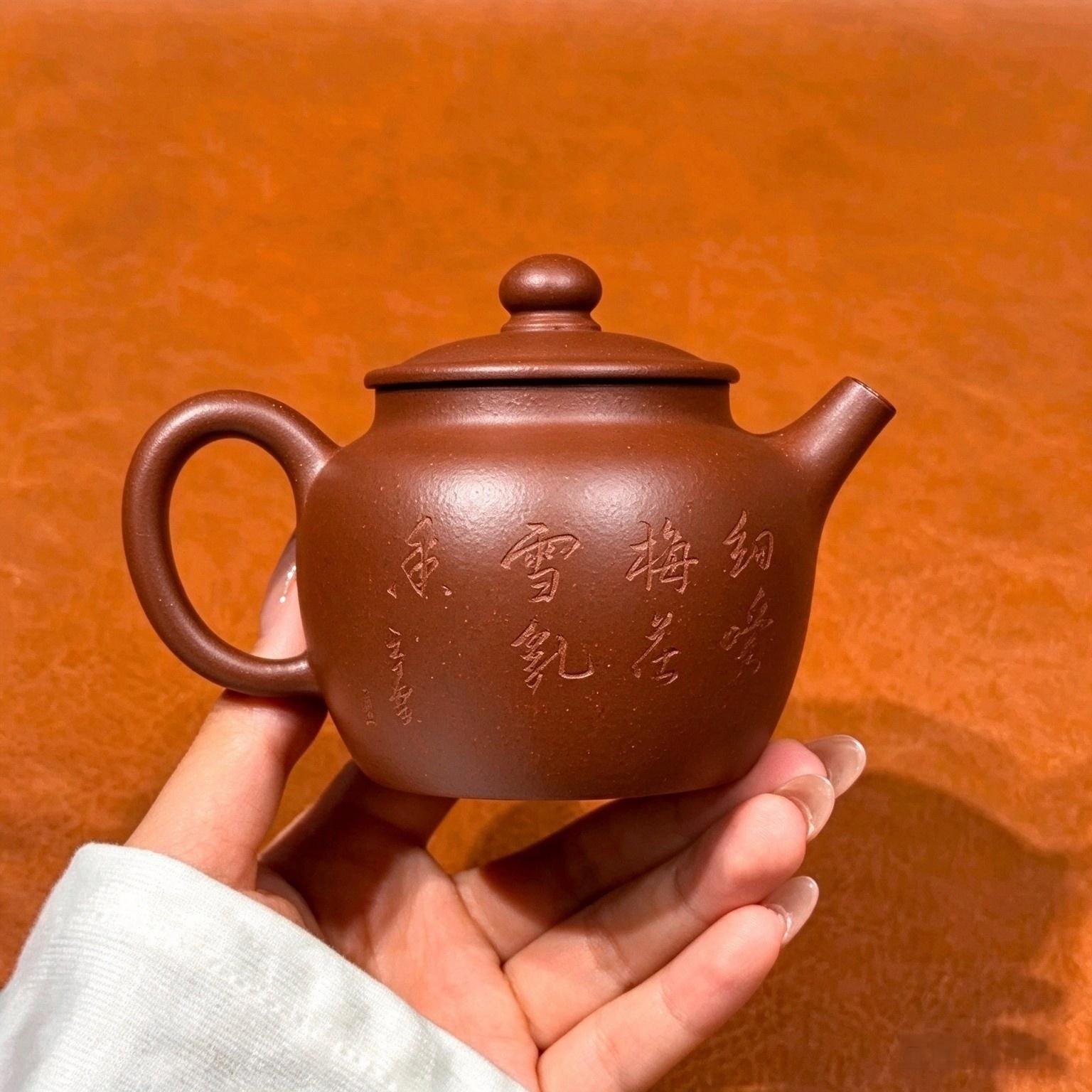
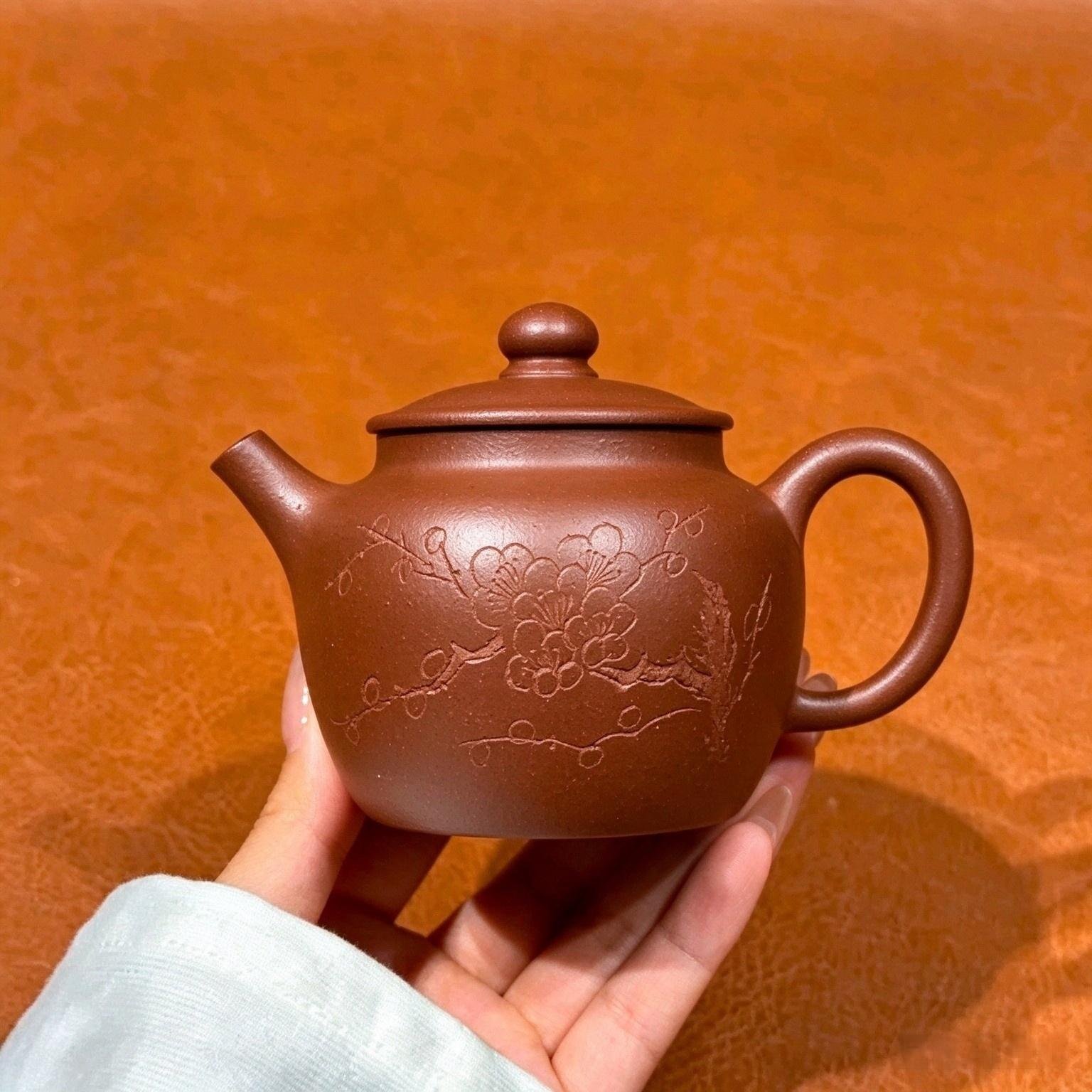
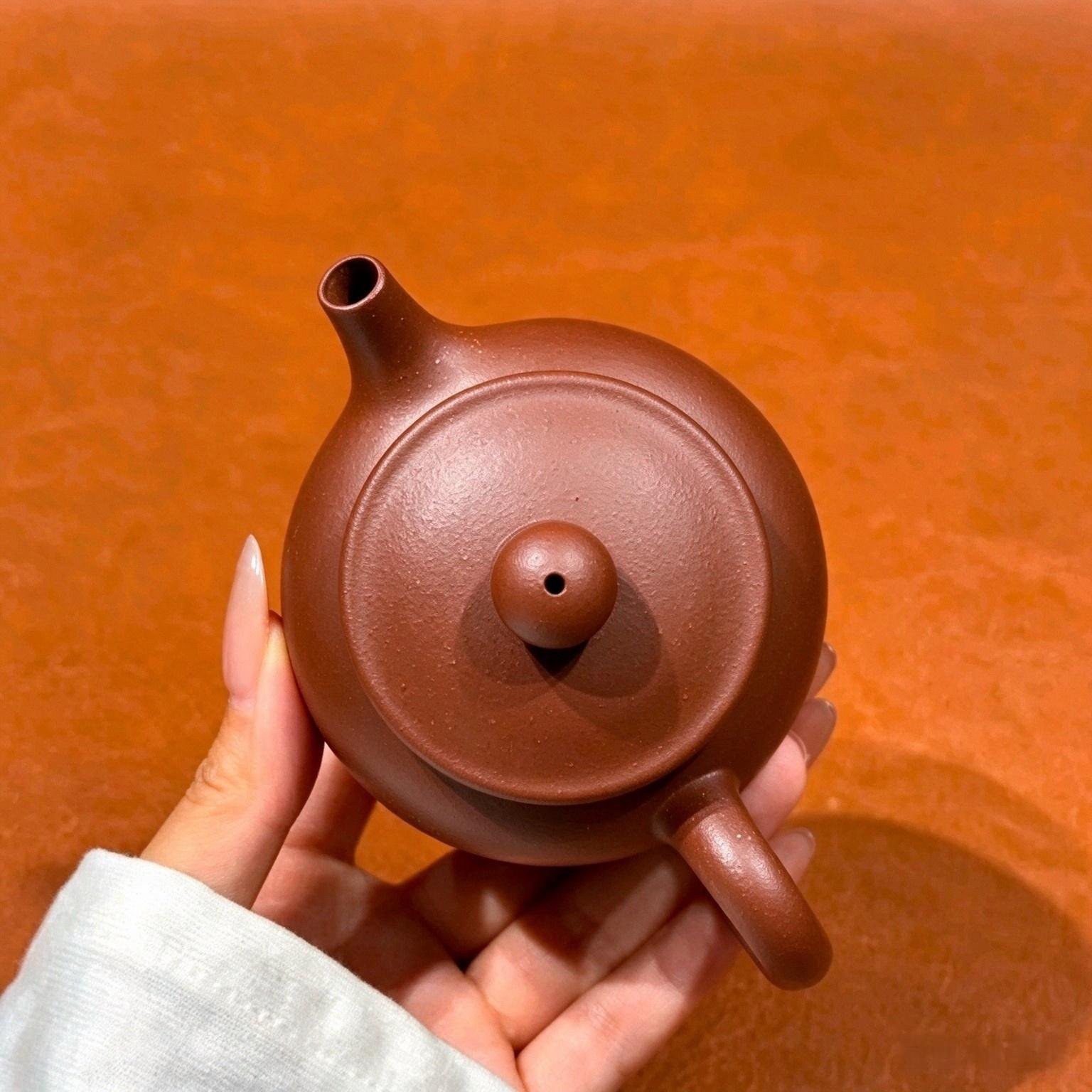
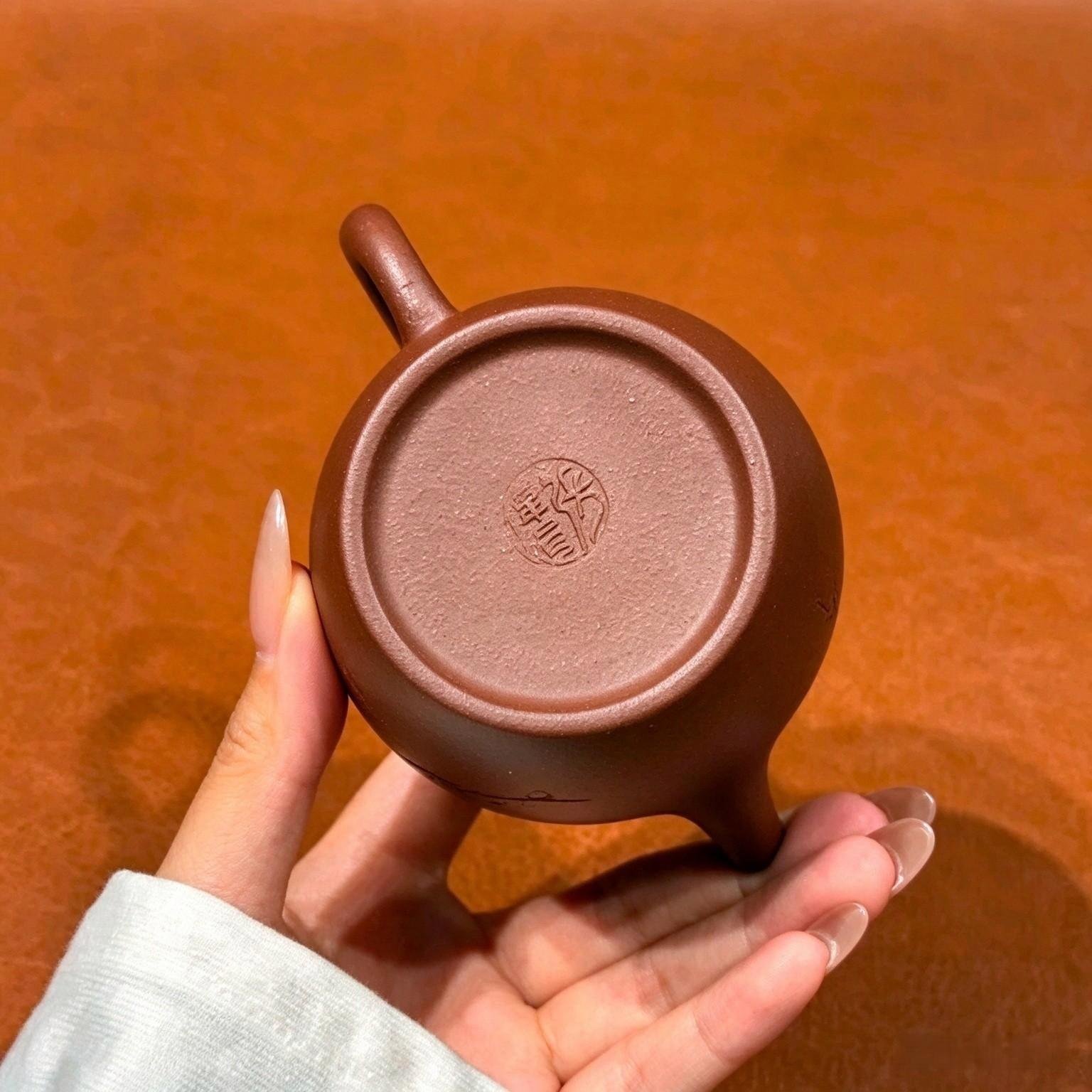
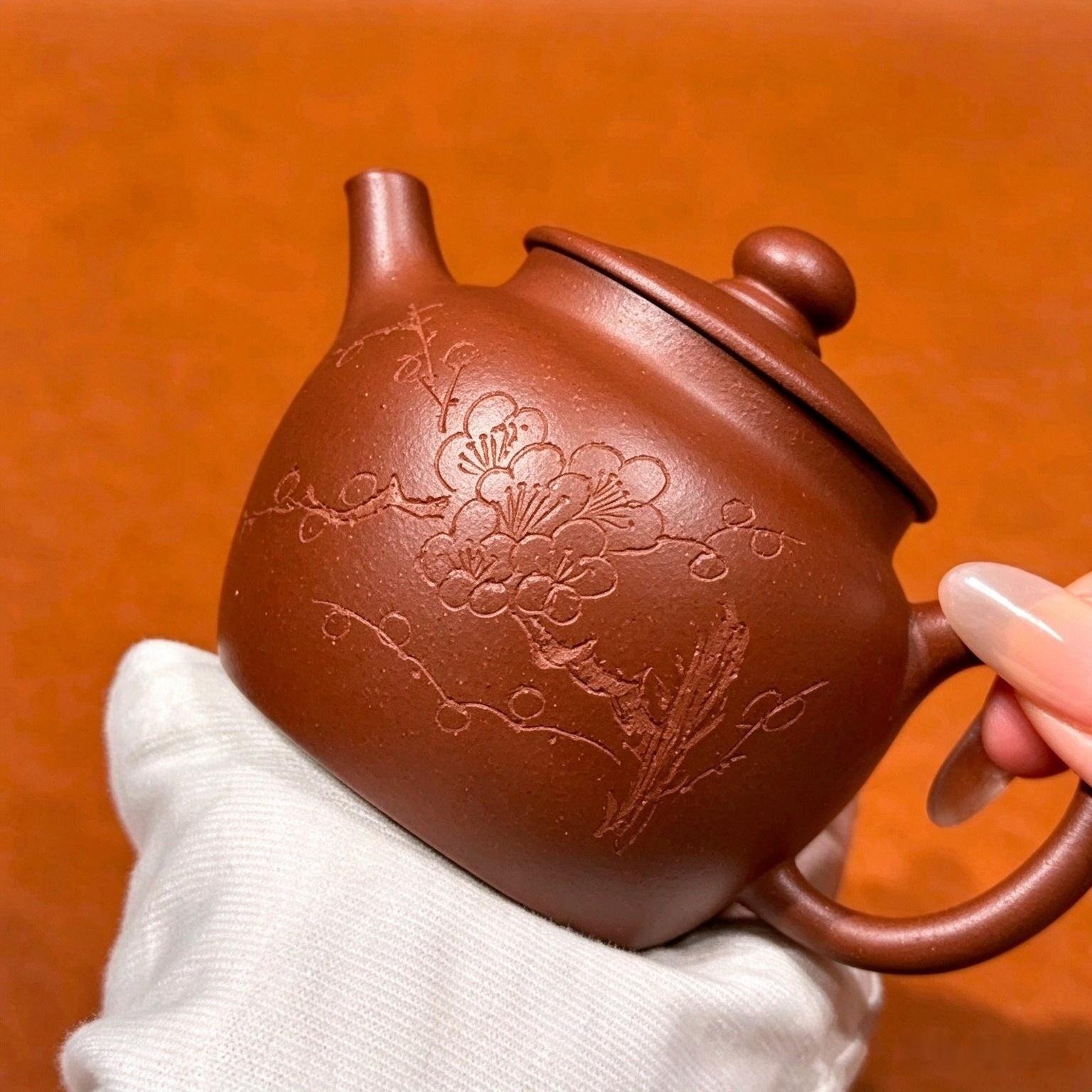
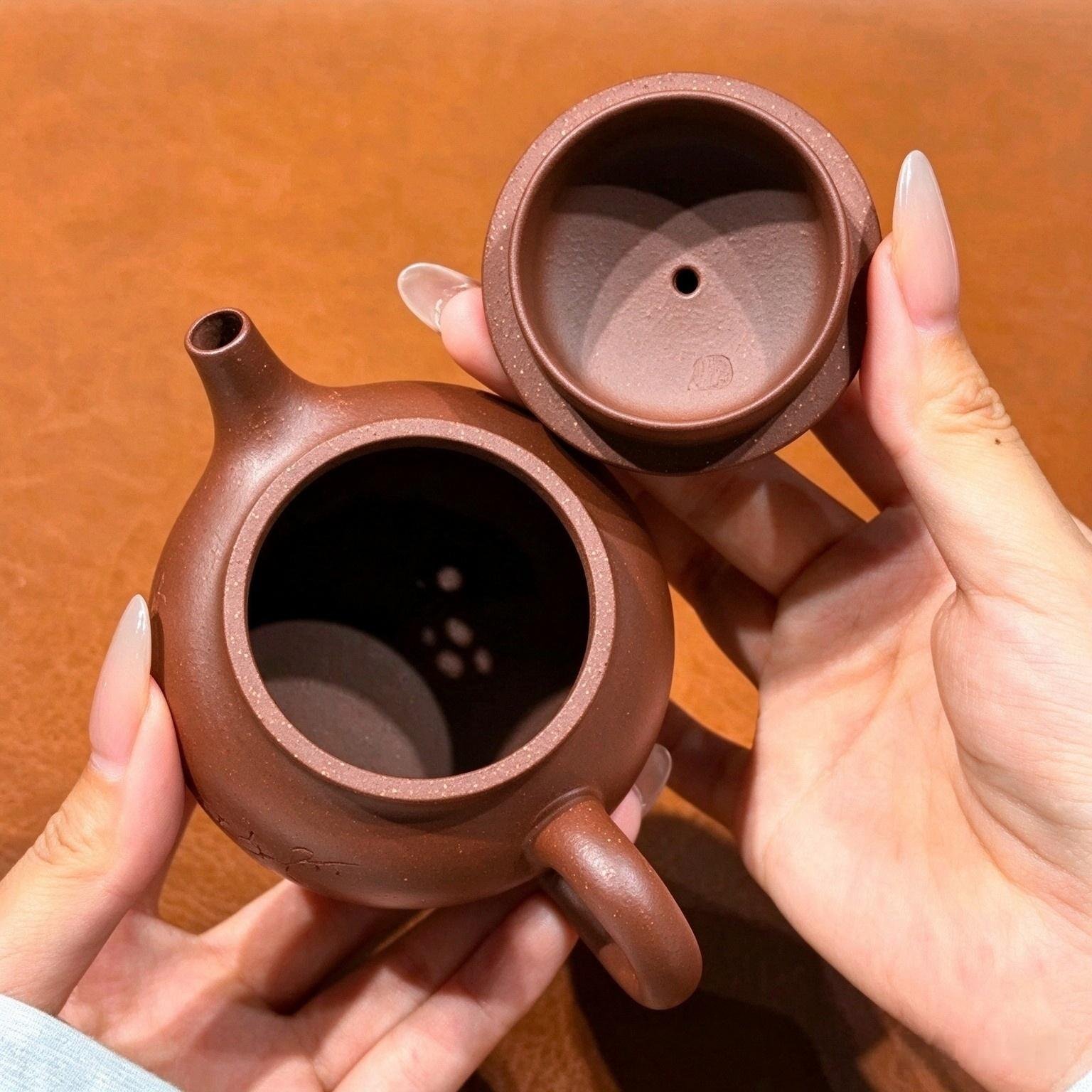
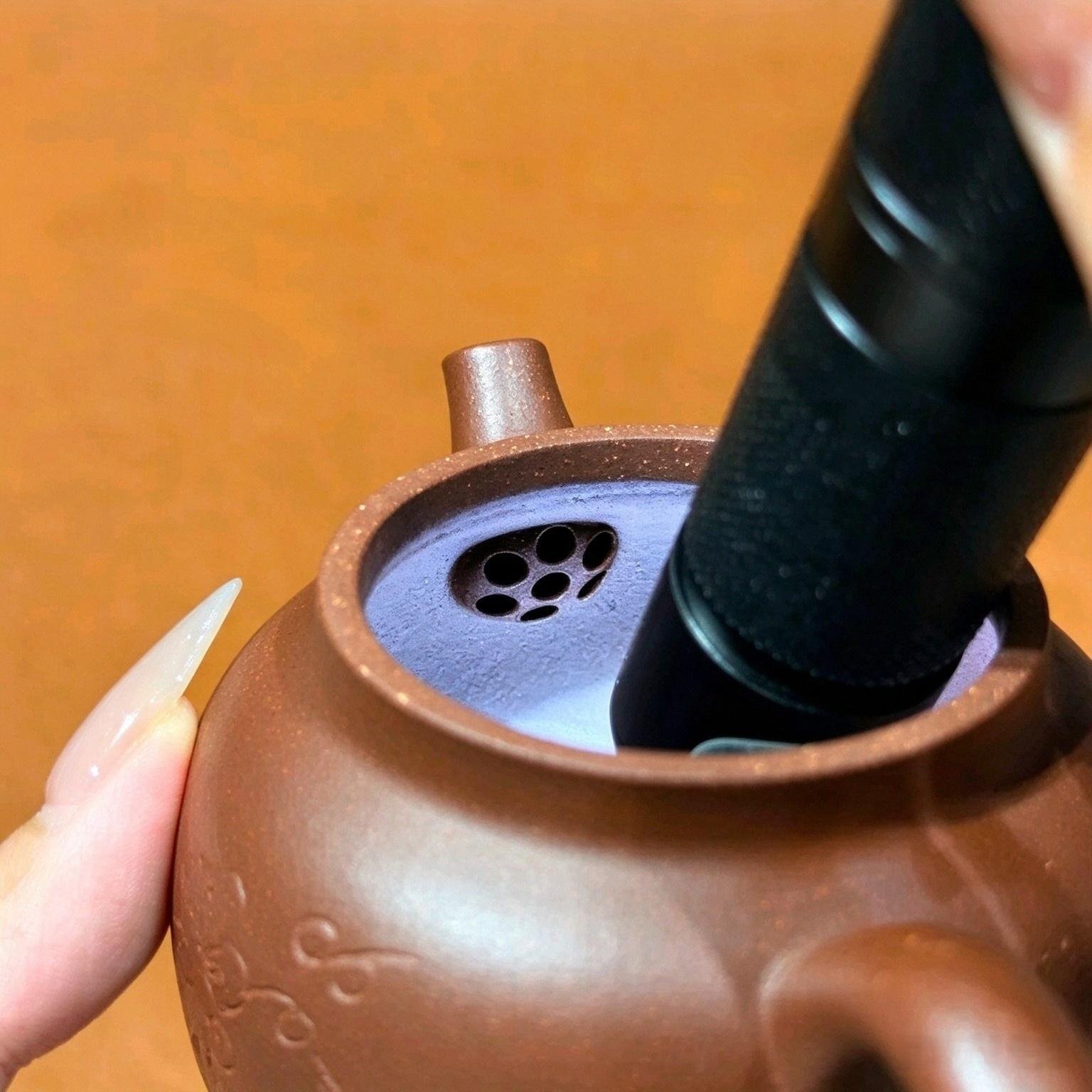
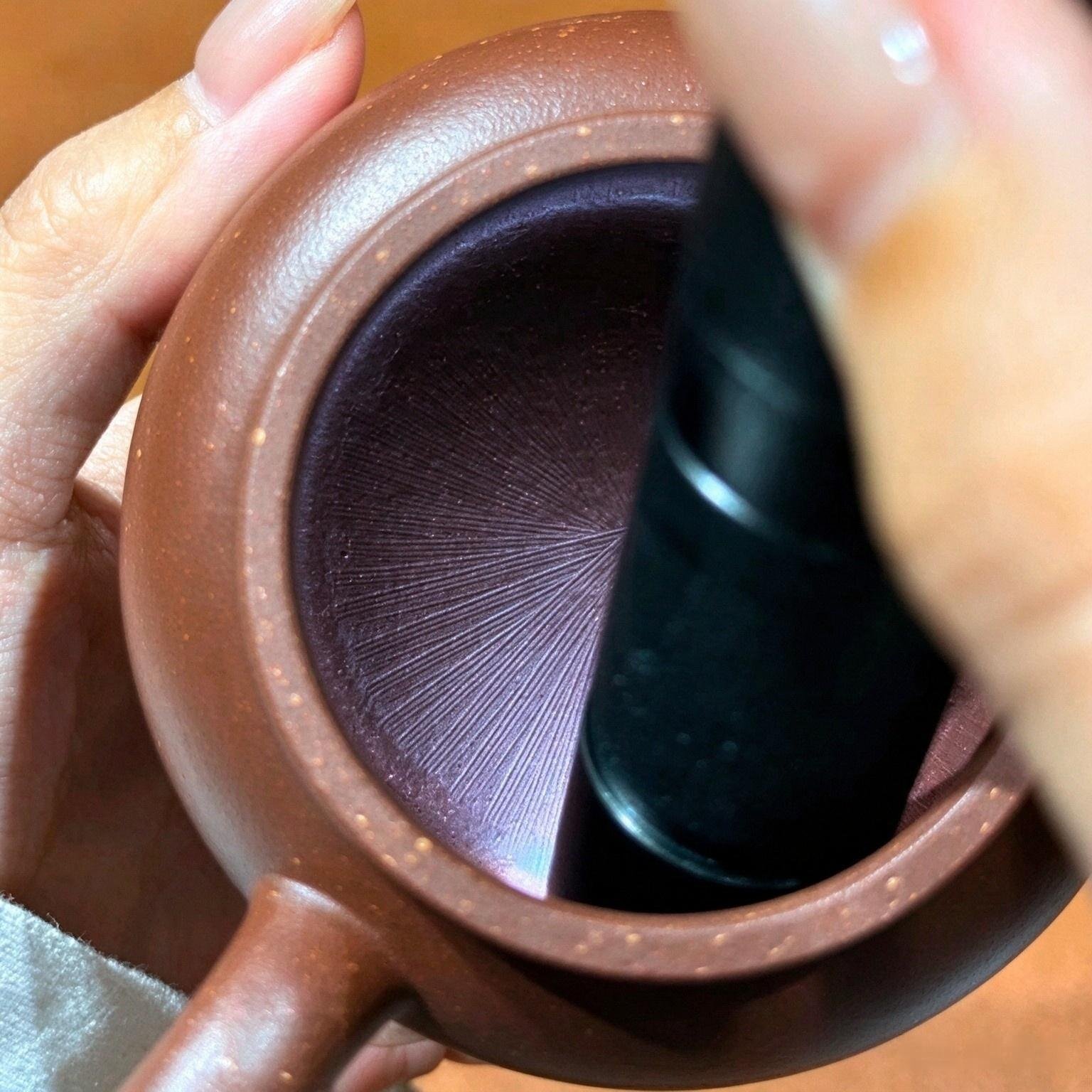
Jigu 170cc Yixing Zisha Teapot in Di Cao Qing Clay
$69.90
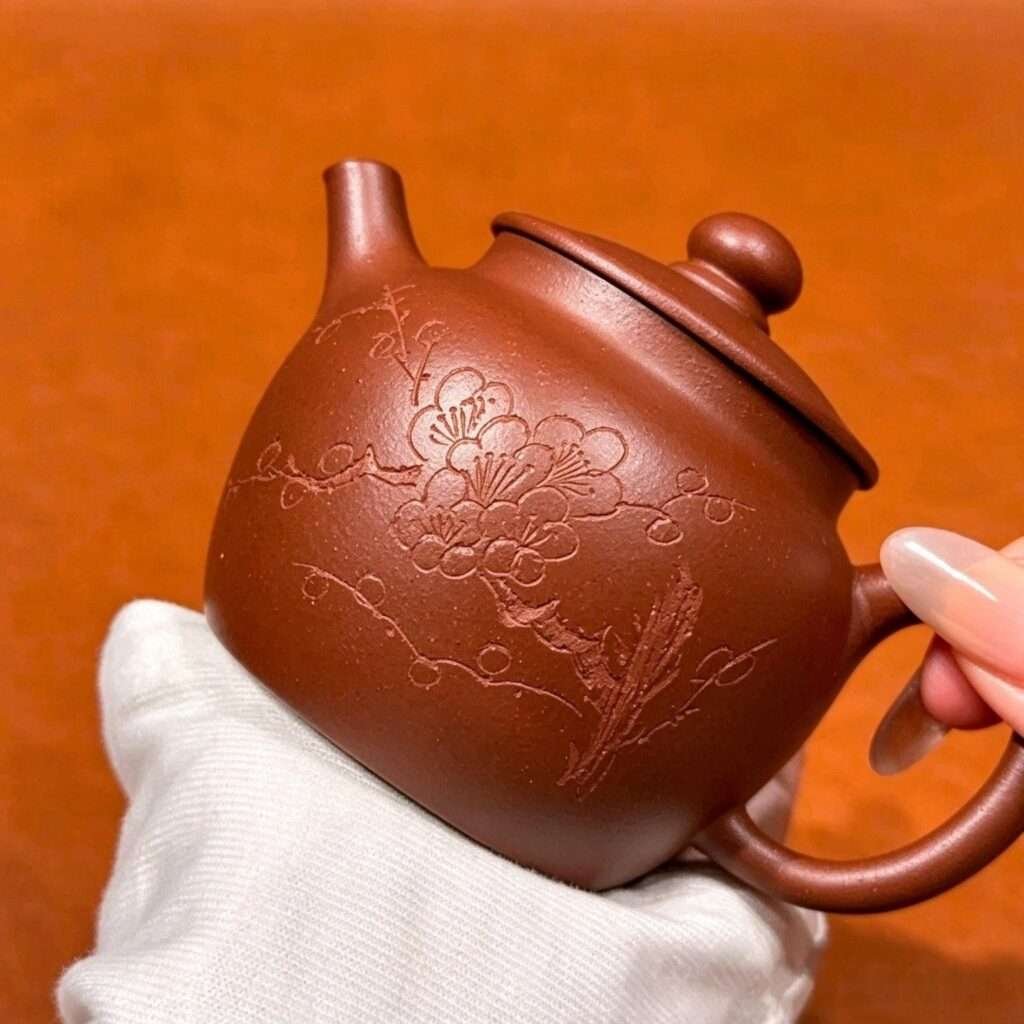
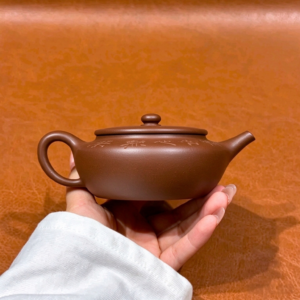
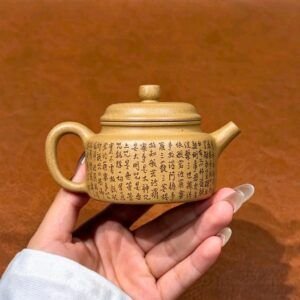
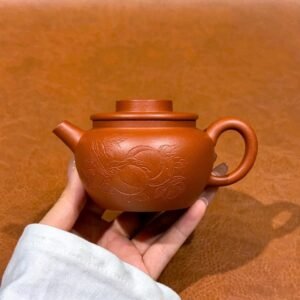
Jigu 170cc Yixing zisha teapot in Di Cao Qing clay, with a fitted lid and a steady pour. A semi-handmade pot for one or two drinkers, with the clay, seasoning and buying checks set out below.
3 in stock
Description
A Tea Sommelier’s Guide to Jigu 170cc Yixing Zisha Teapot (2026): Di Cao Qing Clay, Seasoning, & Buying Tips
Two purple clay pots can cost ten times more than each other, yet the price tag tells you little. What changes your brewing sits in the clay body, the lid fit, and the pour. This 2026 guide covers a Yixing Zisha teapot from clay to seasoning, then ends with buying checks.
I have brewed in nine of them since 2019, and the same three questions decide every purchase.
What Is a Yixing Zisha Teapot?
A Yixing Zisha teapot is an unglazed pot made from clay dug in Yixing, Jiangsu. Fired without a glaze, the clay stays porous. It holds heat well and collects tea oils, so an old pot tastes different from a new one.
My desk pot is a 170 ml Jigu model bought in 2021. It handled eight Da Hong Pao sessions this month, and the second infusion tasted rounder.
It is not delicate. My 260 g example knocked a cup off a tray once, so I pour over the sink now.
| Pot material | Heat | Flavour | Best for |
|---|---|---|---|
| Yixing zisha | High | Body and aroma retention | Wuyi oolong, aged pu-erh |
| Porcelain or glass | Low | Clean and neutral | Green and white tea |
| Stainless steel | Medium | Neutral | Everyday brewing |
| Cast iron | Very high | Heavy, can scorch leaves | Black tea |
What Are the Specifications?
| Item | Detail |
|---|---|
| Form | Jigu — a drum-bodied 170 ml form |
| Nominal capacity | 170 ml |
| Clay | Di Cao Qing, 底槽清 — purple ore clay; the well it came from is not one we can verify |
| Firing | About 1,150–1,200 °C |
| Glaze | None — unglazed throughout |
| Finished weight | 220–260 g |
| Price | $69.90 |
| Stock | 3 in stock |
How Does Di Cao Qing Clay Affect Tea Taste?
Di Cao Qing, 底槽清, is the lowest layer of the purple ore in the Huanglongshan, 黄龙山, mine system at Dingshan, 丁山, Yixing. It fires to a purple-brown body with fine golden flecks and a dense grain. That grain holds heat without scalding the leaf, and it keeps a heavy brew fragrant.
A 2018 study in the Journal of the Science of Food and Agriculture compared infusions brewed in six different teapot materials and found measurable differences in what ended up in the cup. Read it for what it measured — catechins and caffeine in the infusion, by material — rather than as a verdict on which pot is better.
Many drinkers assume any purple pot swallows aroma and improves the tea. The lab work is more careful than that. It shows a real chemical difference, but it does not prove a costly pot beats a cheap one.
Buy for the clay, the maker, and the pour.
One thing worth saying plainly about clay names, because it is a trap for buyers on both sides of this trade. Di Cao Qing, 底槽清, is the lowest layer of the purple ore in the Huanglongshan mine system at Dingshan, Yixing, and it has a devoted following. It also has a problem: the No. 4 well, 四号井, was closed in 1997 and is no longer worked, the name is applied to a great many pots that cannot be traced to it, and the people who work the clay are the first to say so.
We are not going to name a well on this page, because we cannot verify which one this clay came from, and a name we cannot verify is worth less than an honest description of the body.
How Do You Season a New Purple Clay Teapot?
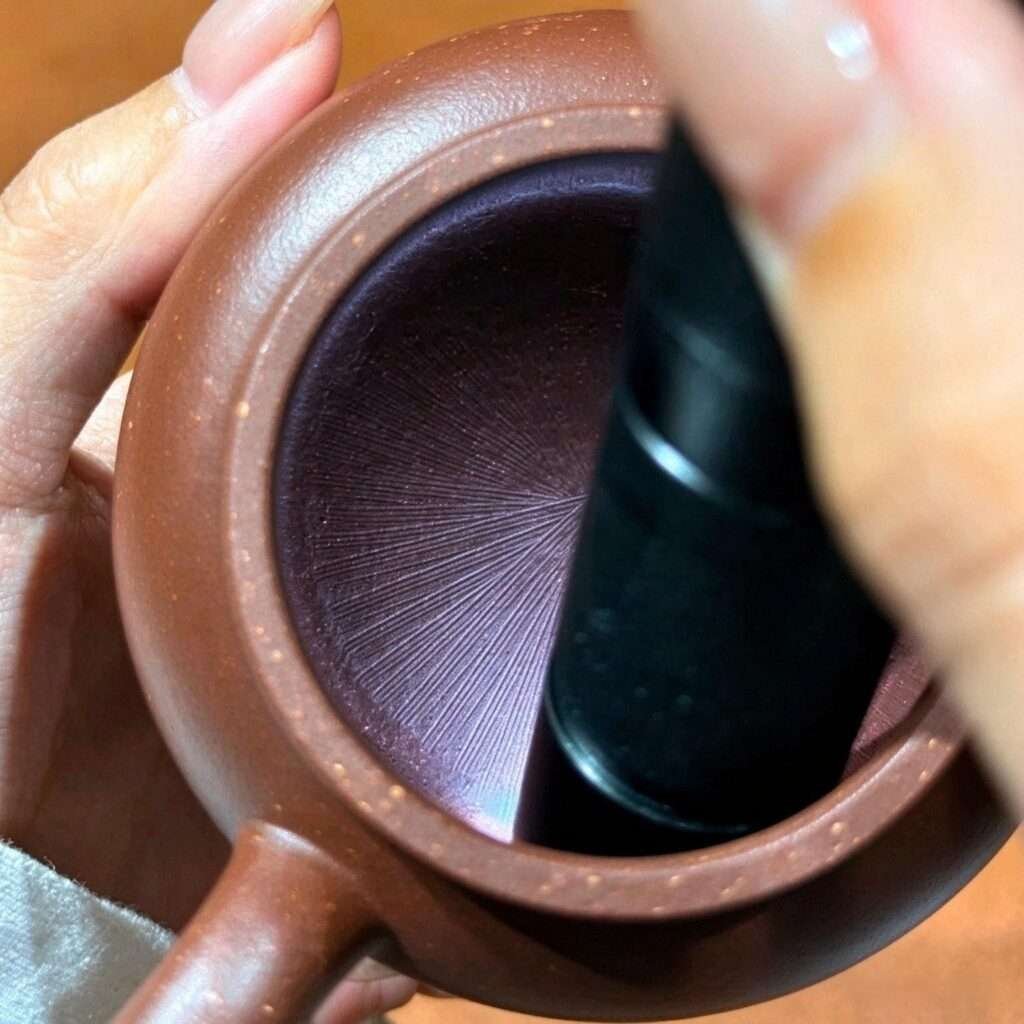
Seasoning, or yang hu, 养壶, means feeding tea oils into the clay. Rinse the pot with boiling water, brew a strong oolong three times, and throw away every drop. Repeat until the surface turns dark and glossy.
- Boil the empty pot for ten minutes, then pour the water out.
- Wait until the pot cools. A hot pot stored in a cupboard can crack.
- Fill it with 10 g of oolong and 120 ml of water at 95 °C. That is a 1 to 12 ratio.
- Steep for 15 seconds and pour the liquor out. Do not drink it.
- Repeat steps 3 and 4 three times, then rinse, air dry, and repeat over two weeks.
Lead, Cadmium and Boiling Water
Lead and cadmium migration from ceramic tableware is regulated by the mandatory food-safety standard GB 4806.4-2016, and the geographical-indication standard for Yixing zisha, T/JSBA 004-2025, sets its own limits for lead and cadmium migration alongside iron content, porosity, water absorption and thermal shock resistance. The product standard for zisha ware, GB/T 10816-2024, no longer sets lead and cadmium leaching limits itself; the mandatory food-safety standard covers migration. We do not publish a laboratory report for this pot, so we are not going to quote you a migration figure we cannot show you.
What we do tell you is how to use it safely, and it is the same advice every zisha pot gets: boil the empty pot for about ten minutes and pour the water away before your first tea. That is the first step above. Boiling drives off surface moisture and any loose particles. If a pot gives you a chemical or plastic smell that does not fade after that, it is a reason to return it — and a reason to ask the seller for a food contact test before you buy, which is a reasonable thing to ask anyone.
The national standards platform record is here.
The gloss that builds on an unglazed pot has been measured, and it is worth knowing what it is. A 2015 analysis by Chung et al. in the Journal of Food and Drug Analysis extracted the surface film from zisha and zhuni pots used for oolong and old oolong, and ran it through gas chromatography–mass spectrometry. The films were made up mostly of fatty acids and linear hydrocarbons, rich in palmitic acid and stearic acid, and the authors traced that origin back to the tea infusion: those same fatty acids appear in the vapor above the infusion, which is why a pot used for oolong seasons faster than one used for water. It is a coating of tea lipids, not a glaze and not a coating of anything added. The study is open access. We have not measured what it does to the taste, so we are not going to tell you it softens bitterness.
How Do You Care for a Yixing ZiSha Teapot?
Care for a Yixing Zisha teapot with warm water, no soap, and open air. Soap strips oils the clay spent months collecting, and a dishwasher warps the shape. Rinse, invert the pot on a cloth, and let it dry fully before the lid goes back on.
- Use water below boiling for cleaning, and 95 °C for brewing.
- Skip dish soap, detergent, and abrasive sponges. Skip the dishwasher too.
- Empty and rinse the pot right after every session.
- Store lids separately when you stack pots. Trapped moisture grows mold.
- Keep it off the radiator and out of direct sun. Heat cracks, sunlight fades.
Even careful owners slip. I once left a pot on the stove to warm it faster. A hairline crack appeared at the spout two months later.
Is a 170 ml Yixing Zisha Teapot Big Enough for Gongfu Tea?
A 170 ml Yixing Zisha teapot suits one drinker or two to three guests with small cups. It works well for dense teas brewed in many short rounds. For four people or more, move up to a 200 to 250 ml model.
For two people I fill the 170 ml Jigu to 130 ml. That leaves about 11 g of leaves per round. With three friends I switch to the 250 ml version.
| Nominal capacity | Water to fill | Leaf dose | Serves |
|---|---|---|---|
| 100 to 120 ml | 80 to 100 ml | 7 to 9 g | One drinker, light oolong |
| 150 to 170 ml | 120 to 140 ml | 10 to 12 g | One or two people |
| 200 to 250 ml | 160 to 200 ml | 14 to 18 g | Three to four people |
How Do You Tell Handmade vs. Machine-Made Yixing Zisha Teapot?
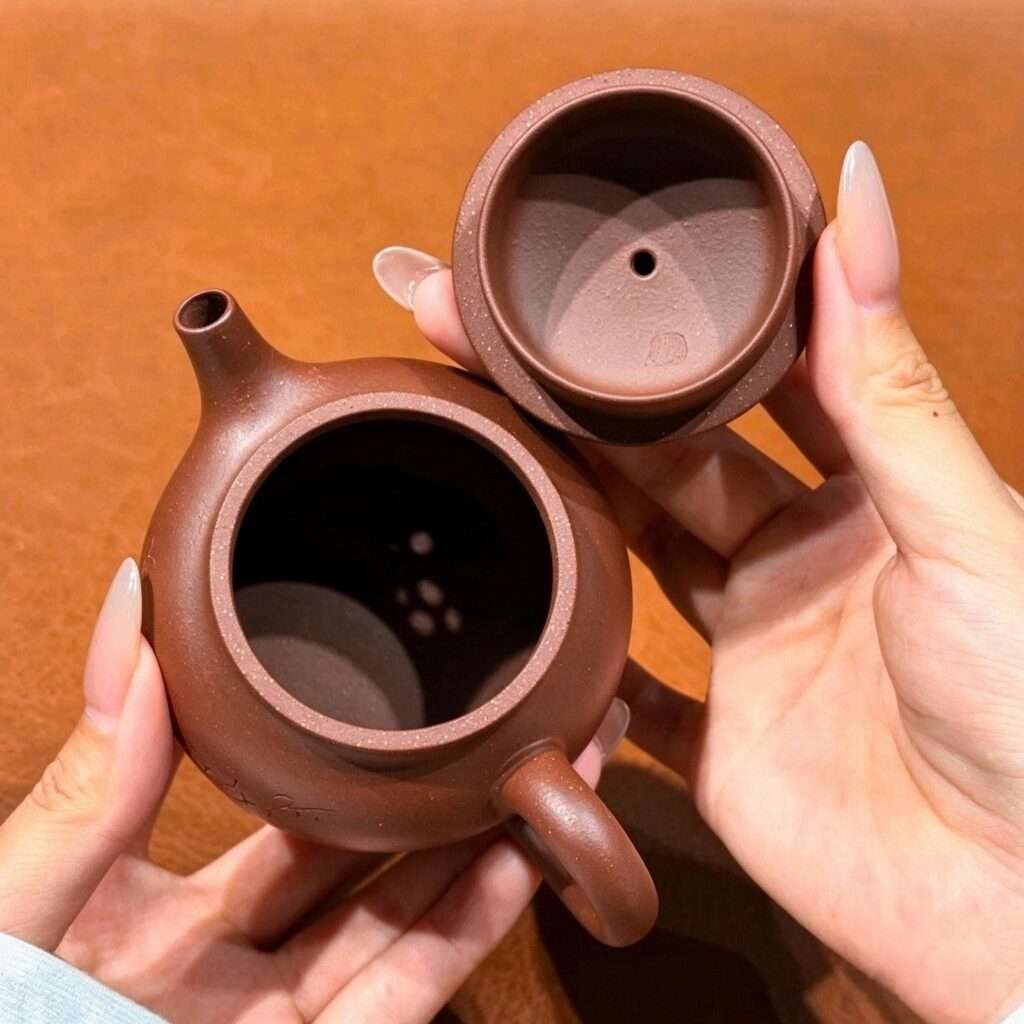
Handmade and machine-made pots both come from Yixing, so a label proves little. Judge the object instead. A handmade Yixing Zisha teapot shows a shaped spout, a flat-seating lid, and small pits.
- Turn it over. A mold seam on the belly shows as a faint line.
- Listen for the lid. It should seat with a soft click, not a rattle.
- Feel inside the spout. Hand finishing leaves it uneven and slightly rough.
- Pour water before you pay. A hand finished spout gives a clean stream.
What Should You Look for When Buying a Yixing Zisha Teapot?
- Clay label. Ask where the clay came from, and accept “a blend from the Huanglongshan area” more readily than a well-known mine name.
- Test report. Ask for a food contact test before the first boil.
- Weight. A 170 ml pot should land between 220 g and 260 g.
- Lid fit. It should drop in without rattling and lift out with two fingers.
- Spout. Test the pour with water before the box closes.
- Maker mark. A stamped seal tells you who answers for the clay.
- Real photos. Sellers should show the actual pot, not stock art.
- Returns. A 30 day window protects you from a cracked spout.
Frequently Asked Questions About Yixing Zisha Teapots
These are the questions readers ask most often, including the ones about patina, stains, and switching tea types. If yours is not here, ask us before you buy.
What Makes the Jigu 170cc Yixing Zisha Teapot Unique?
An unglazed pot from clay mined in Yixing, Jiangsu. It holds heat well and collects tea oils over time. The same pot can taste different after months of use.
How does Di Cao Qing clay affect tea taste?
It is dense original ore clay with a fine grain. A 2018 study found that zisha and zhuni infusions had higher EGC, EGCG and total catechins and less caffeine than ceramic, glass and plastic; not every difference was statistically significant, and the study did not test whether one pot makes tea taste better.
How do you season a new purple clay teapot?
Boil the empty pot for ten minutes, then brew strong oolong three times and discard the liquor. Repeat that routine four or five times over your first two weeks.
How do you care for a Yixing teapot?
Use warm water only, and no soap or dishwasher. Let the pot air dry fully and store the lid separately. Keep the clay away from heat and sunlight.
Is 170 ml enough for gongfu tea?
Yes, a 170 ml Yixing Zisha teapot suits one drinker or two to three guests using small cups. For four people or full mugs, choose a 200 to 250 ml model.
How long does a Yixing Zisha teapot take to develop a patina?
A dark gloss usually shows up after four to six weeks of regular use. Tea oil does the work, not heat, so the change is gradual. Judge the surface rather than the calendar.
Can I use a Yixing Zisha teapot for green tea?
You can, but you will not get the same result. Green tea wants short infusions and a cooler pot, so most drinkers keep glass or porcelain for it. Using one pot for light and dark tea also slows the patina down.
What is the difference between Zisha and Zhuni clay?
Zisha, 紫砂, is the original purple ore clay with a balanced grain and a steady heat profile. Zhuni, 朱泥, is a redder and denser clay. It brews thinner infusions and scorches easily if you push the heat.
Why does my new Yixing Zisha teapot smell like earth?
A raw clay smell is normal for the first few brews. It fades once the clay is boiled, rinsed, and seasoned with tea. A chemical or plastic smell that will not fade is a reason to return the pot.
How do I remove tea stains from a purple clay teapot?
Work slowly, because aggressive scrubbing takes clay with it.
- Rinse the pot with hot water and let it soak for an hour.
- Add a small spoonful of baking soda and swirl the pot.
- Rinse well, then brew a strong oolong to settle the surface back in.
Stains on the outside usually stay, and that is fine. The clay takes on color over time, so the marks become part of the patina.
Should I use a different Yixing teapot for pu-erh and oolong?
One pot per tea family is the usual advice for a Yixing Zisha teapot. Wuyi rock oolong and aged pu-erh share a pot happily, while strong black tea leaves a heavier mark. If you own two pots, keep the second one for lighter teas.
Is a Yixing Zisha teapot better than a porcelain teapot?
It depends on the tea. Porcelain is neutral and clean, so it suits green and white tea. Zisha holds heat and adds body, so it suits dense oolong and aged pu-erh.
How do I store a Yixing Zisha teapot when I am not using it?
Leave the pot open on a shelf, away from the stove and direct sun. Keep the lid beside it rather than closed inside, because trapped moisture causes musty smells and mold. A drawer works only if the pot is completely dry.
Does a Yixing teapot keep tea warm?
Yes. The thick clay holds heat for roughly 20 to 30 minutes. That is long enough for a second round in a small pot. It does not replace a warmer, and you should not reheat tea on the stove.
If you are comparing shapes, the 80cc De Zhong is the smaller pot from the same workshop, and the 120cc Mutton Fat Duan Ni is the larger one. The 180ml Bian Chen is the flat-bodied, aged-clay option, the teaware collection has the rest, and the zisha teapot section is where the other clay bodies sit.
First published: 29 October 2026 · Last updated: 5 November 2026
Author and reviewer disclosure
This page was written by the founder and head tea buyer at Min Tea Shop, who has bought and cupped tea directly from growers and potters for eight years. The tea and the pot described above were selected during our 2026 sourcing trip. The measured findings cited here are quoted from the published papers linked in the text, with the limits of each study stated rather than smoothed over. Statements about clay and production are general, are not medical advice, and no sponsored content, paid placements or affiliate links appear on this page. We do not sell or share your personal data — see our privacy policy for details.
Reviews
There are no reviews yet.