
Wuyi Cinnamon Rock Tea: 5 Honest Truths About Its Spicy Flavor
Meta description: How peer-reviewed research explains the true spiciness in Wuyi cinnamon rock tea, with brewing tips to tell real warmth from astringency — and how to source trustworthy cinnamon.
Editor’s note: The opening anecdote is an illustrative composite, not a literal event. Some links below lead to products in our catalog; this does not affect our editorial assessment of the underlying research.
Last spring, I watched a Shanghai tourist in Fuding pop a slice of rou-pian into her mouth, then nearly spit it across the table when the Yong’an yellow pepper kicked in. Locals had warned her. She laughed it off anyway.
Most outsiders walk away from that meal convinced Fujianese people can’t handle heat. The truth runs the other way — though with a caveat.
Across northern Fujian, around the Mount Wuyi UNESCO site (No. 911, inscribed in 1999 as a mixed cultural and natural property under criteria iii, vi, vii, and x), the mountain corridor has a relative taste for chili that contrasts with the lighter coastal palate of Fuzhou and Quanzhou.
An academic study on the geographic distribution of spicy eating in China classifies Fujian overall as a low-spice coastal zone, while still identifying a relative retention of chili customs in its northern highlands. People’s Daily Fujian describes Wuyishan’s food habits with the phrase 好辣喜辛 — fond of chili and pungent flavours.
Local signatures are well documented. Langu smoked goose (岚谷熏鹅), goose first braised then smoked over glutinous rice, tea leaves, and spices, was listed as a Fujian provincial intangible cultural heritage in 2022. CCTV’s cultural feature on Fujian cuisine records chili stir-fried loach (辣椒炒泥鳅) as a mountain-home classic and the local saying 无辣不成饭 — no meal without chili — in Shaowu, Guangze, and Taining.
A tea friend once asked me, half-joking, whether the peppery kick in Wuyi cinnamon rock tea comes from the locals’ love of chili. He was teasing, but he is not the only one who mixes the two up. There is a real distinction between the burn of a chili pepper and the warmth found in a good cinnamon.
The burn of chili comes from capsaicin — a sharp sting the moment it hits your tongue. The warmth in Wuyi cinnamon is born of the tea’s rich body. It is gentler and more restrained by nature. To appreciate it, you first need to set it apart from chili, ginger, and white pepper.
What Does “Spiciness” Actually Mean in Wuyi Cinnamon Rock Tea?
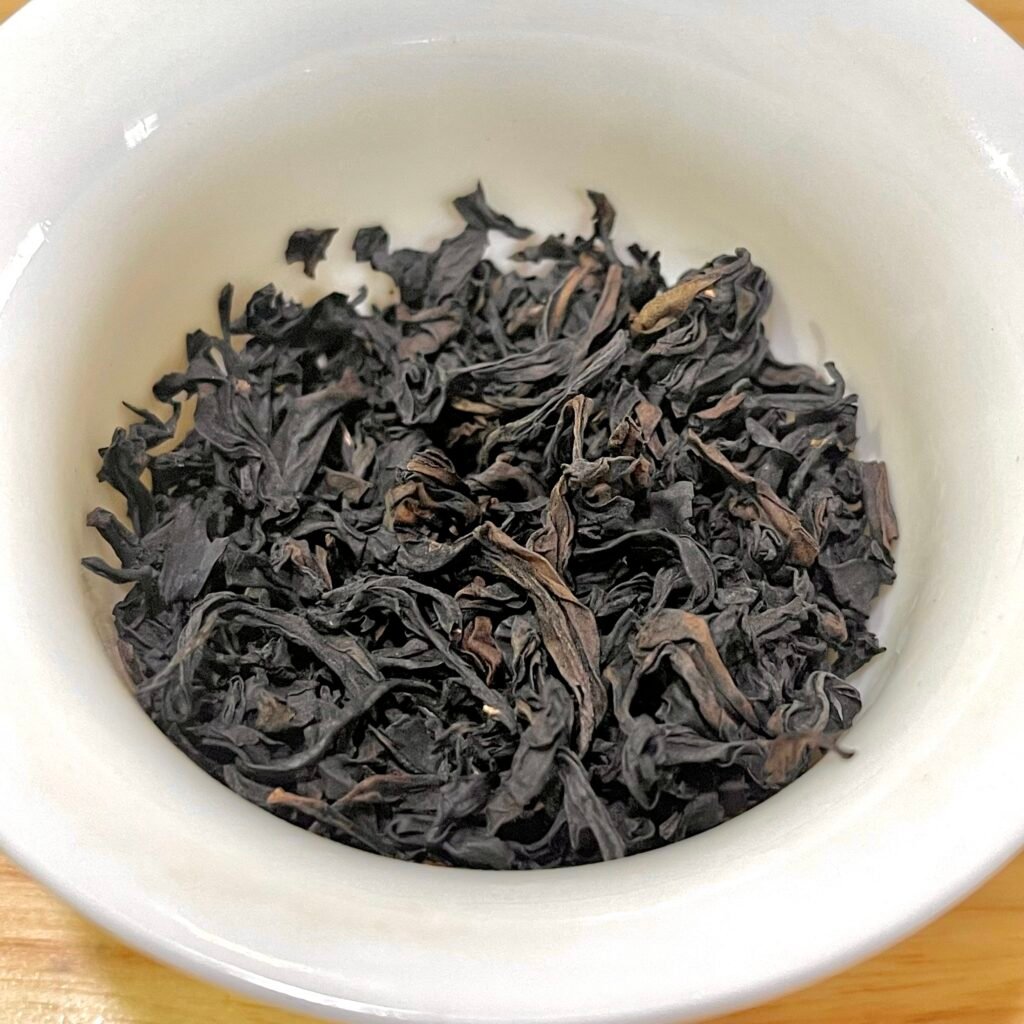
That peppery thread is a defining trait of a well-made cinnamon — a point of consensus among rock-tea drinkers. You can occasionally sense it in old-bush yancha, but in cinnamon it reads loudest. It is almost a hallmark of a quality leaf.
Cinnamon’s varietal aroma carries the fragrance of cassia bark, which already has a natural sharpness. So a touch of warmth woven through the liquor does not feel out of place. That said, it is a mild, gentle warmth — tucked behind the body of the liquor, never as bold or upfront as the cassia aroma itself.
When the liquor first meets your tongue, the tea’s full body wraps around the heat, so what you notice first is the weighty, mellow thickness settling across your palate. Only after you swallow — once sweetness and saliva start to well up — do those faint threads of warmth surface at the back of your throat.
It lingers as an aftertaste, almost tactile. A light teasing of the throat muscles. Each sip carries its own tiny spark. One phrase sums it up: a needle hidden in silk.
Why Does Cinnamon Rock Tea Feel Spicy but Not Hot Like Chili?
That is a different animal from chili heat. Chili delivers a powerful, in-your-face taste — a kind of pain — that hits the lining of your mouth directly and gives an addictive punch. The warmth in cinnamon rock tea is gentler and more distinctive. It speaks to the strength and backbone of the tea, and offers a completely different drinking experience.
Mechanically, chili’s burn is well understood. As David Julius reviews in Annual Review of Cell and Developmental Biology (2013), capsaicin binds the TRPV1 ion channel on a subset of nociceptive sensory neurons, opens the channel, and lets cations flood in — the same pathway noxious heat uses, which is why chili “burns.” A 2015 Nature Chemical Biology cryo-EM study by Yang and colleagues mapped exactly where capsaicin docks inside the channel.
Cinnamon’s warmth has no analogous chemical trigger. There is no capsaicin-like molecule in tea acting on TRPV1. Whatever the sensation is, it comes from a different pathway.
What Does Peer-Reviewed Research Say About This Sensation?
This is where the honest answer becomes more cautious — and more interesting. As of mid-2026, no published study has isolated a single compound that causes the peppery mouthfeel of Wuyi cinnamon. What we have instead is a converging picture from metabolomics, GC-MS, gas chromatography-olfactometry, and trained sensory panels.
The most cited work is a 2022 Xu et al. study in Foods that compared Rougui samples from different culturing regions using LC-MS, GC-MS, and odour-activity values. They found that pungency in Rougui correlated most strongly with a cluster of terpene volatiles — 3-carene, alpha-pinene, beta-pinene, D-limonene — and the ketone 6-methyl-5-hepten-2-one. The same team detected dihydrocapsaicin, a compound chemically related to capsaicin, in one Rougui sample and linked it to perceived thickness — but explicitly not to a peppery burn.
A second 2022 study by Zhang and colleagues, also in Foods, used gas chromatography-olfactometry to identify aroma-active compounds. They flagged (E,E)-2,4-heptadienal as pungent and fatty-green, and noted naphthalene’s pungent-earthy note across Wuyi teas.
More recently, a 2026 Feng et al. paper in Frontiers in Plant Science tracked how roasting remodels Rougui’s chemistry. The cinnamon-like attribute peaked at the second repeated roasting stage; gallic acid, gallocatechin gallate, theabrownins, and soluble pectin tracked with thickness and mouthfeel, while pyrazine and furan derivatives drove roasted, nutty, and caramel notes — not the peppery thread itself. Notably, roasting converted insoluble protopectin into soluble pectin, which the authors proposed as a physical contributor to a thicker infusion.
What remains unproven. No peer-reviewed Rougui-specific study identifies particular mineral elements as the cause of the peppery sensation — “mineral” in the roasting paper is used as an aroma descriptor, not measured mineral chemistry. And no retrieved study has combined oral trigeminal testing, receptor assays, and chemical recombination to definitively link any compound to the sensation.
A defensible formulation, then, is this: Rougui’s spicy impression is most closely associated with terpene-rich volatiles and selected aldehydes or ketones, while the possible role of non-volatiles such as dihydrocapsaicin in the oral mouthfeel remains an open question.

Which Brewing Tips Bring Out the Peppery Note in Cinnamon Rock Tea?
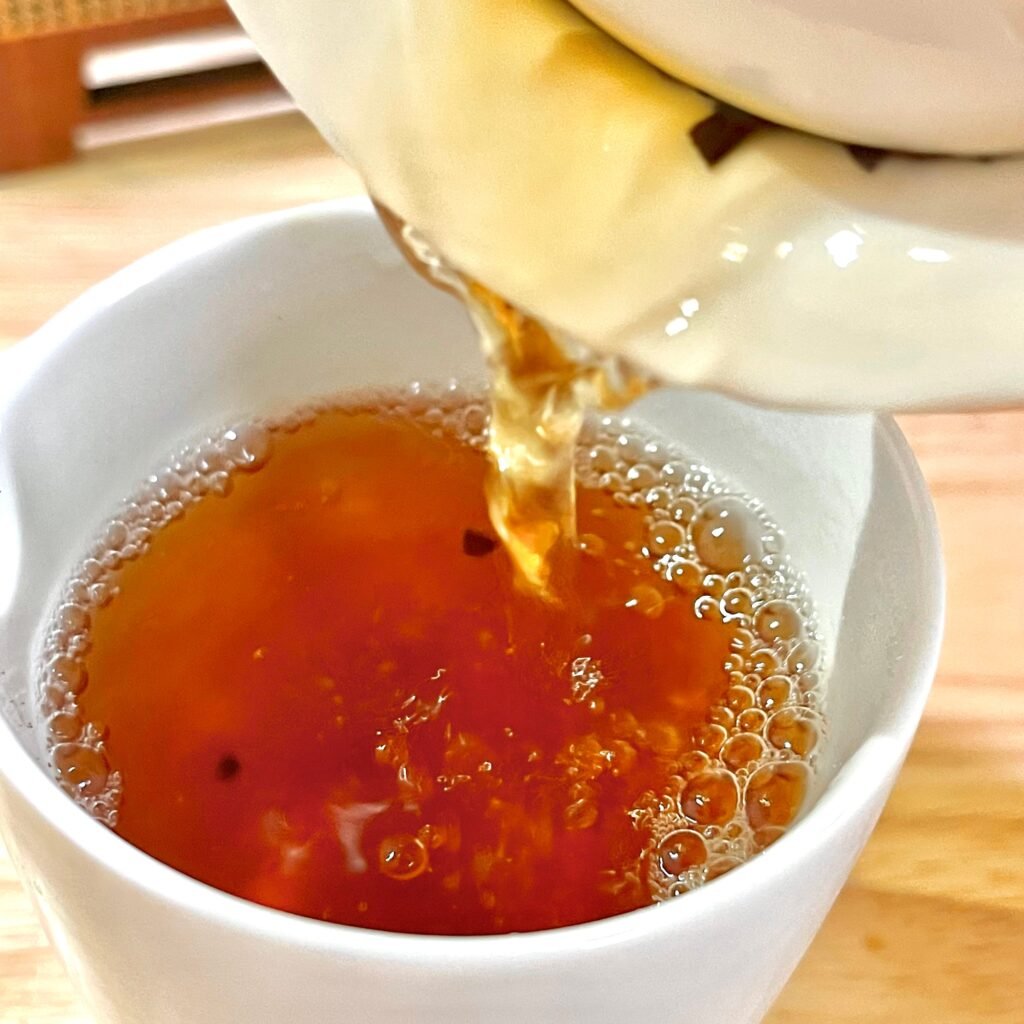
To feel cinnamon’s warmth, focus not only on the throat but also on the later steepings — the tail-end infusions. When you brew gongfu-style in a gaiwan, the character of the liquor shifts with each round.
In the first few steepings, the tea’s body is rich and the aroma is at its peak, so the heat stays wrapped inside the thick liquor. The drinker’s attention goes to the bold cassia fragrance, the floral and fruity notes, and that dense, congee-like texture. If you cannot taste any warmth here, that is perfectly normal.
By the later rounds, the inner substance has thinned out. The liquor loses some of its enveloping fullness, allowing the warmth to come forward more clearly.
To sense it, focus on what happens at the throat after you swallow. As the liquor glides down, the throat tightens ever so slightly. Then sweetness rises, saliva flows, and the warmth surfaces with them.
There is no single official gongfu recipe for Wuyi yancha, but English-language brewing guides converge on a clear range:
- Tea-to-water ratio: roughly 7–8 g per 100–120 ml gaiwan (about 1:13–1:18 g/ml). 8 g per 110 ml is a common traditional-leaning starting point (Chinese Tea Guide, Orientaleaf, Nanyin).
- Water temperature: 95–100 °C — freshly boiled, not deliberately cooled.
- Quick rinse: 5–10 seconds, then discard. This is a wetting rinse, not a drinking infusion.
- First true infusion: about 10 seconds, pour out fully.
- Infusions 2–3: about 10–15 seconds each.
- Infusions 4 onward: extend gradually by 5–15 seconds as the flavour softens. Well-made yancha commonly gives 7–10+ rounds.
- Drink at a comfortable temperature — the warmth at the throat reads more clearly that way.
- Use purified or spring water — poor-quality water masks the finer nuances with off-notes.
A small caveat from the Feng et al. 2026 roasting study: a heavily roasted yancha may benefit from a slightly longer rinse or first infusion, while a lighter, more aromatic roast may turn bitter sooner — adjust to the leaf rather than the calendar. For a deeper look at the trade-offs, our rock tea buying myths guide walks through what roast level, aroma, and mouthfeel actually tell you before you commit to a tin.
How Do You Avoid Mistaking Astringency for Spiciness?
True spiciness is understated yet alive, surfacing at the throat. Astringency is sharp and rough, making itself felt the instant the tea touches your tongue.
Spiciness is a fresh, layered experience. You taste it best right as the liquor slips past your throat. Sweetness, salivation, and that faint heat rise together, leaving your mouth and throat open and at ease.
Astringency and numbness, on the other hand, deliver a harsh stimulation to the tongue — and they are often mistaken as a “fake” version of spiciness. Only when the liquor contains too much caffeine or tea polyphenols does that pronounced puckering and tingling set in. Our Wuyi Rou Gui beginner’s guide breaks down how to read these signals in plain language for first-time drinkers.
Every tea has these stimulants. In a good one, the sweetness of amino acids and sugars keeps them in check.
When leaves are under-nourished in the garden or roasted carelessly, the balance tips. In inferior cinnamon, that astringency can creep all the way down to the throat, tightening the muscles and leaving a dry, scratchy feel. Drinkers call it “throat-lock.”
Cinnamon has to be of good quality for you to taste that warmth, because it depends on the tea’s rich inner substance to form. A thin, inferior cinnamon simply lacks the material needed to produce it — the liquor is either flat and lifeless, or dominated by astringency and numbness.
If you are new to rock tea, start with an everyday cinnamon to get familiar with the cassia aroma and that robust, mellow mouthfeel. If you cannot detect the warmth right away, that is perfectly fine. Do not rush in blindly — or you may end up drinking astringency and numbness without realizing it.
Where Can Beginners Source Trustworthy Wuyi Cinnamon?
Everything in this guide assumes a cinnamon that actually has the body to support the sensation. A thin, badly stored, or stale leaf will never deliver the throat feeling described above — no matter how carefully you brew it.
A few practical markers separate trustworthy sources from the rest:
- Clear origin and harvest year. Quality Wuyi cinnamon carries both, because yancha character shifts dramatically between seasons and roasting batches.
- Direct-from-Fujian sourcing. The Wuyi Mountain corridor around Nanping, and the wider Fujian tea network including Fuzhou, Ningde, and Shouning, are the natural sourcing base for authentic yancha.
- Sensible storage and fast shipping. Yancha is sensitive to moisture, heat, and light. Sealed packaging, climate-controlled warehousing, and quick dispatch — ideally 7–15 days internationally — protect the leaf’s volatile compounds.
- A real return window. At least 7 days for transit-damaged or incorrect orders is a baseline trust signal.
- Responsive customer service. First-time buyers benefit from being able to ask about harvest date, roast level, and intended brewing style before they commit.
For readers ready to explore, three Rougui entries from our catalog offer different entry points:
- Wuyi Rock Tea Rougui 2026 (Ma Zhen Feng) — a clean, classic expression of the cultivar, ideal for first-time tasting.
- Wuyi Alpine Rougui 2026 — higher-elevation leaf with a denser mouthfeel, where the peppery thread tends to read more clearly.
- Wuyi Rougui, Six Micro-Terroirs — a side-by-side comparison set for drinkers who want to feel how terroir shapes the same cultivar.
Each ships from our Fuzhou warehouse via DHL, FedEx, or a Europe-dedicated line — typical delivery is 7–15 days, with China Post and Cainiao available for slower, more economical shipping (9–25 days). Orders are processed within 24–48 hours. Returns are accepted within 7 days of receipt for transit damage or incorrect shipments; change-of-mind returns are also accepted, with the buyer covering return shipping.

Disclosure: This article is educational. Tea flavor perception is subjective — consult a certified sommelier for personalized advice. The chemistry summary reflects peer-reviewed sources available as of 2026; new research may revise the picture. MinTeaShop is based in Fuzhou, Fujian, and sources yancha directly from Wuyi Mountain and other Fujian tea regions, including Ningde and Shouning. International orders ship via DHL, FedEx, or our Europe-dedicated line (typically 7–15 days); China Post and Cainiao are available for standard shipping (9–25 days). We accept Visa, Mastercard, JCB, PayPal, and bank transfer. Returns are accepted within 7 days of receipt for transit damage or incorrect shipments; buyers cover return shipping for change-of-mind. Some links in this article are product recommendations from our catalog.
