
Why Beginners Shouldn’t Avoid Rou Gui When Trying Wuyi Rock Tea — Is It Really Too Bold?
Dried Rou Gui Wuyi rock tea leaves showing tight rolled strips with dark brown color.
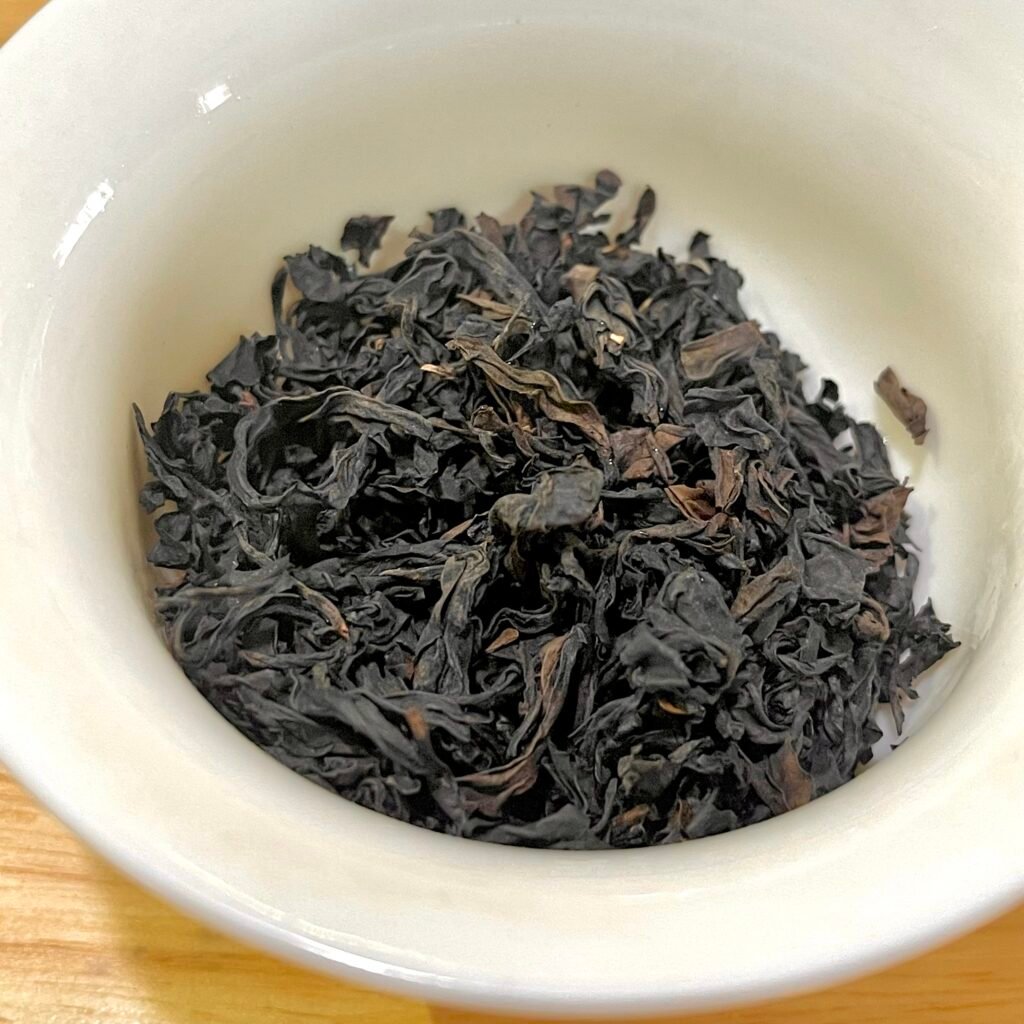
Wuyi rock tea (武夷岩茶) is one of China’s most storied oolong traditions, and Rou Gui (肉桂, “cinnamon”) is one of its most distinctive cultivars. Despite a reputation for being “too bold” or “too intense,” Rou Gui is actually one of the most accessible entry points into the category — once you understand what “bold” really means.
This guide explains why Rou Gui suits beginners, separates fact from folklore, and walks you through brewing and buying it properly. If you want a broader overview of the entire Wuyi category first, see our Wuyi rock tea beginner’s guide.
What Is Wuyi Rock Tea, and What Does “Yan Yun” Mean?
Before tasting any single cultivar, it helps to understand what defines the entire category.
Wuyi rock tea is a strip-rolled, roasted oolong grown only in the Wuyi Mountains of northern Fujian. What separates it from other oolongs is not just the leaves or the roast — it is a combined quality called Yan Yun (岩韵), often translated as “rock rhyme” or “rock bone and floral fragrance” (岩骨花香).
According to the Fujian Provincial People’s Government, Yan Yun is the aroma and taste formed collectively by:
- A unique growing environment
- A suitable tea cultivar
- Excellent cultivation methods
- Traditional processing
In practical tasting terms, Yan Yun is the combined impression of:
- Body — the liquor feels substantial, not thin
- Structure — a clear, persistent presence on the palate, often described as “bone”
- Returning sweetness — sweetness and aroma that come back after swallowing
- Persistence — fragrance that lingers in the mouth and throat
- Balance — roasted, floral, fruity, spicy, and mineral-like notes coexisting cleanly
Cultivar changes the aromatic accent through which Yan Yun is perceived. Rou Gui expresses it through a particularly high, penetrating cassia-like aroma; Shui Xian tends toward fuller, woody or orchid-like impressions. The same underlying “rock rhyme” can sound different through different cultivar instruments.
→ External link: For the full official Fujian Provincial Government definition of Yan Yun, see fujian.gov.cn.
Zhengyan, Ban Yan, and Zhou Cha: The Geographic Quality Tiers
Wuyi rock tea is also traditionally divided into three geographic categories, and understanding these will help you calibrate price and quality expectations:
- Zhengyan (正岩) — tea from the central, core rock area inside the Wuyi Mountains national park. Traditionally associated with the highest quality, the strongest Yan Yun, and the highest prices.
- Ban Yan (半岩) — tea from the surrounding or marginal zones. Yan Yun is somewhat weaker; prices are usually lower.
- Zhou Cha (洲茶) — tea from riverbank or alluvial areas farther from the core, often used in commercial blends or “Wuyi-style” products.
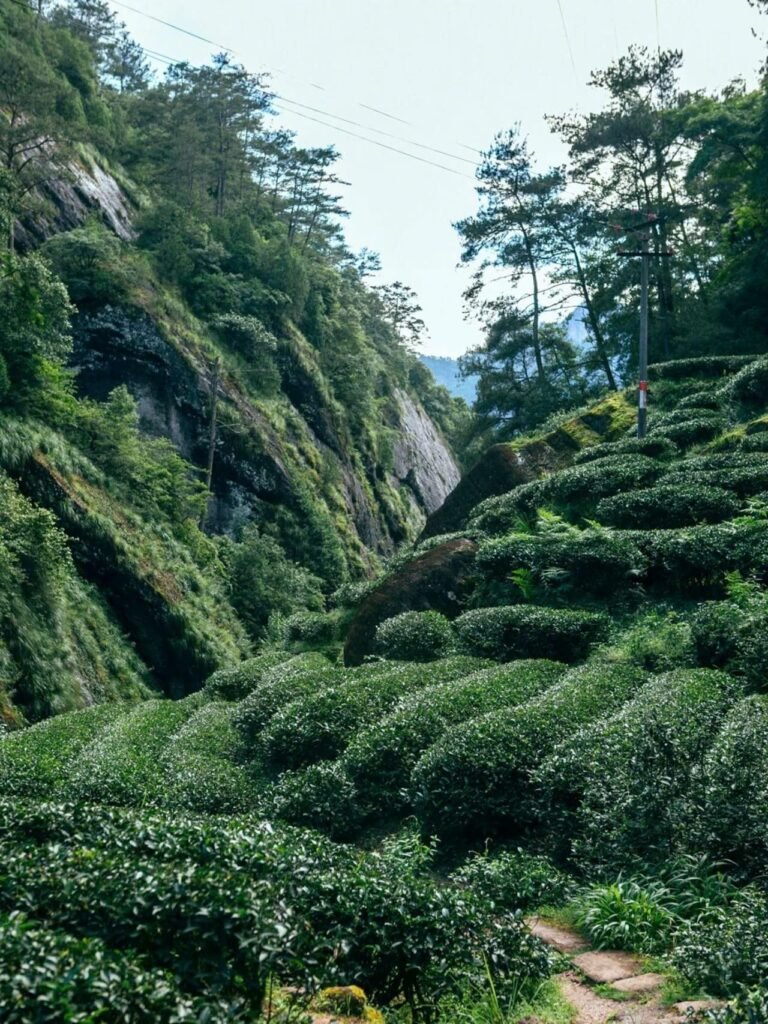
The Fujian Ministry of Agriculture notes that even within Zhengyan, micro-terroir can vary sharply: “tea-garden location can be subdivided into mountain, pit/gully, even different orientations on the same mountain or the two sides of the same ridge.” This is where the keng jian vs gang shang distinction comes in.
→ External link: See the Fujian Ministry of Agriculture overview.
What Are the Mainstream Wuyi Rock Tea Cultivars?
Wuyi has many cultivars, and they aren’t all equal in familiarity or production scale. A useful beginner framework groups them this way:
Mainstream varieties (large production, consistent market presence)
- Shui Xian (水仙) — fuller, softer, often woody or orchid-like; old-bush material can be deep and rounded
- Rou Gui (肉桂) — sharp, spicy, cinnamon-like; high and penetrating aroma
- Da Hong Pao (大红袍) — complex, layered, balanced; the name also covers modern blending practices
Famous cultivars (Ming Cong, 名丛)
The best-known traditional group is the Si Da Ming Cong (四大名丛) — “Four Great Famous Bushes”:
| Chinese | Pinyin | Common English Translation |
|---|---|---|
| 大红袍 | Da Hong Pao | Big Red Robe |
| 铁罗汉 | Tie Luo Han | Iron Arhat |
| 白鸡冠 | Bai Ji Guan | White Cockscomb |
| 水金龟 | Shui Jin Gui | Golden Water Turtle |
Wider Wuyi cultivar lists sometimes also include Ban Tian Yao (半天腰) and Que She (鹊舌), but these are not part of the canonical Si Da Ming Cong.
Newer and minor varieties
- Huang Guan Yin (黄观音, code 105) — a Fujian-bred hybrid cultivar from Tieguanyin × Huangdan parents, approved in 1998 by the Fujian provincial crop committee. Despite its Anxi-lineage parents, it is also grown and processed in Wuyi as yancha.
- Jin Mu Dan (金牡丹) — a newer cultivar with strong aromatic character
- Rui Xiang (瑞香) — another newer aromatic cultivar
To browse a curated selection of mainstream, famous, and minor Wuyi cultivars in one place, see Min Tea Shop’s full rock tea collection.
→ External link: For a complete Wuyi cultivar compendium, see the TeaDB Wuyi Oolong Compendium.
→ External link: For the Wikipedia list of Si Da Ming Cong, see Si Da Ming Cong tea.
Why Do Some Beginners Find Rou Gui Too Bold?
When people say beginners should “stay away from Rou Gui,” they usually mean one of two things — both of which are misunderstandings.
Misunderstanding #1: Conflating “harsh” with “bold”
A poorly-made tea can hit the palate with raw bitterness, astringency, throat-dryness, and rough texture. That is harshness, not boldness. It is a sign of either over-hasty roasting or insufficient inner quality — not a property of the cultivar itself.
Misunderstanding #2: Picking the wrong roast level
Wuyi rock tea is sold across a wide spectrum of roast levels — from light (清香型, qing xiang) to heavy (足火, zu huo). A newcomer going straight to a heavily-fired Rou Gui is likely to meet an overwhelming wall of roast aroma before they can taste the cultivar character underneath.
Peer-reviewed research published in RSC Advances (2021) confirms that roasting significantly changes both the volatile and non-volatile compounds in Wuyi rock tea — which is why roast level matters as much as cultivar choice.
If you’re new to navigating roast levels, oxidation grades, and batch variation online, see our rock tea buying myths guide before placing an order.
→ External link: See Liu et al., “Chemical Characterization of Wuyi Rock Tea with Different Roasting Degrees,” RSC Advances, 2021, at pubs.rsc.org.
What Does “Bold” Actually Mean for Rou Gui?
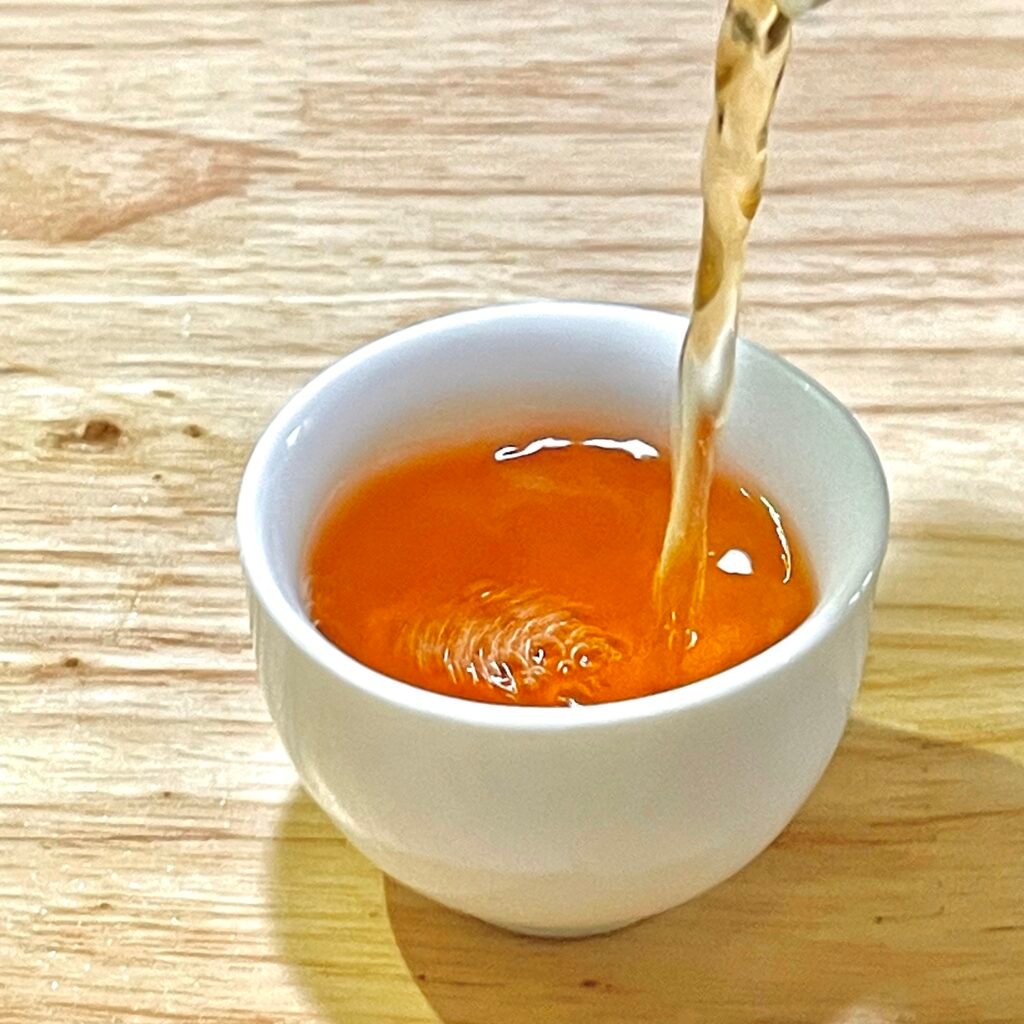
Used correctly, “bold” describes the rich, full-bodied texture and the clear cinnamon-like aroma that comes through with penetrating presence. The liquor feels thick, almost syrupy, and leaves a subtle spicy warmth behind. That is what the word should mean.
What actually creates that impression? A 2024 study in the Journal of Tea Science analyzed Rou Gui across 11 processing stages and identified 276 aroma constituents. The characteristic cinnamon aroma comes from a complex mixture — not a single “cinnamon compound”:
- Dehydrocinnamyl alcohol and α-ionone — specifically identified as contributors to Rou Gui’s characteristic cinnamon aroma
- Eugenol — spicy, clove-like; increases during processing
- Linalool, benzyl alcohol, benzaldehyde, β-ocimene — contribute floral and fruity layers
- Roast-derived pyrazines, pyrroles, and furans — add nutty, coffee-like, caramel, and bark notes
In other words, Rou Gui’s “cinnamon bark” impression is a sensory analogy produced by a mixture of cultivar volatiles and processing chemistry, more accurately described than “Rou Gui tastes of cinnamon because it contains cinnamaldehyde.”
→ External link: See Wu et al., “Study on the Glycosidically Bound Volatiles and Aroma Constituents in the Processing of Wuyi Rougui,” Journal of Tea Science, 2024, at tea-science.com.
Is Rou Gui a Good First Choice for New Drinkers?
Yes — for several well-supported reasons.
1. The aroma is unmistakable and beginner-friendly
A 2023 study in Food Chemistry: X tested 16 Wuyi tea cultivars under controlled conditions and confirmed that “Rougui WRT has a distinctive cinnamon-like aroma.” That distinctiveness gives beginners an anchor point: once you’ve locked onto the cassia note, you can use it as a reference to detect similar cues in other teas.
→ External link: See Yue et al., “Aroma Characteristics of Wuyi Rock Tea Prepared from 16 Different Tea Plant Varieties,” Food Chemistry: X, 2023, at PMC9945420.
2. The cultivar has a clear, documented history
Rou Gui is a native Wuyi cultivar, traditionally associated with Ma Zhen Peak (马枕峰), with an alternative historical account placing it at Huiyuan Keng (慧苑坑). It has a documented history of more than 100 years, and was formally recognized as a superior provincial variety by the Fujian Provincial Crop Variety Approval Committee in 1985, after systematic propagation during the 1960s–1980s.
That pedigree matters for beginners because it means production is widespread, named, and quality-controlled at the provincial level — not a niche or experimental cultivar.
If you want to taste the cultivar from its traditional origin terroir, the Ma Zhen Peak Rou Gui (2026) is harvested from that same mountain in central Wuyi.
→ External link: See the CCTV feature on Rou Gui’s history, “初春天寒肉桂暖,” at jingji.cctv.com.
→ External link: See also “Withering and Fermentation Affect the Transformation and Accumulation of Key Metabolites in Rougui,” Foods, 2024, at PMC11640889.
3. Production is large, but core terroir commands premium prices
Rou Gui is now one of the two dominant market Wuyi cultivars (along with Shui Xian), with substantial production volume. Entry-level blends are accessible in price. However, genuine Zhengyan Rou Gui from core areas — particularly the famed “Three Pits and Two Gullies” (三坑两涧) and the “Two Nests and One Cave” (两窠一洞), such as Huiyuan Keng, Niulan Keng, Dakeng Kou, Liuxiang Jian, Wuyuan Jian, Jiulong Ke, Zhu Ke and Gui Dong — can be very expensive.
4. Micro-terroir gives you a built-in tasting lab
Within Rou Gui itself, keng jian (坑涧, sheltered pits and gullies) and gang shang (岗上, exposed ridge or hilltop sites) produce measurably different styles:
- Keng jian — more shade, higher humidity, cooler conditions; commonly associated with deeper, thicker, more persistent liquor
- Gang shang — more direct sun, more wind exposure; commonly associated with brighter, sharper, more lifted aroma
A 2022 metabolomics study in Foods (MDPI) confirmed that three Rou Gui samples from different culturing regions had significantly different flavor qualities and chemical profiles, especially in taste and aroma.
For drinkers who want to taste this contrast directly, the Six Micro-Terroirs Rou Gui comparison set packages six single-terroir Rou Gui samples side by side — arguably the fastest way to internalize the keng jian / gang shang difference.
For a single-vineyard example from one of the most famous sheltered gullies, the Jiu Long Ke Rou Gui (2026) comes from Jiulong Ke (九龙窠), one of the “two nests” in the core 三坑两涧两窠一洞 framework — a textbook keng jian terroir.
Important caveat: keng jian vs gang shang are practical tendencies, not fixed rules. Cultivar, roast level, and processing can dominate the cup. Roast level in particular can reverse the apparent contrast: a heavily roasted hilltop tea may taste darker and heavier than a lightly roasted gully tea.
→ External link: See Cao et al., “Non-Targeted Metabolomics Analysis Revealed the Characteristic Non-Volatile and Volatile Metabolites in the Rougui Wuyi Rock Tea from Different Culturing Regions,” Foods, 2022, at mdpi.com.
How Should Beginners Brew Rou Gui Properly?
There is no single universal ratio for Wuyi rock tea. The right amount depends on what you’re trying to do:
| Brewing purpose | Tea amount for a 110 ml gaiwan |
|---|---|
| Formal sensory evaluation | 5 g |
| Moderate gongfu starting point | 6–7 g |
| Strong, traditional Wuyi-style gongfu | 7–8 g |
The 5 g : 110 ml ratio is the most rigorously documented because it was used in a peer-reviewed study published in Foods (2024). Stronger Wuyi-style gongfu may push to 7–8 g, but calling any single number “the standard” oversimplifies.
A practical beginner brewing protocol
Based on the sensory-evaluation method documented in the Foods study:
- Measure leaf — start with 6–7 g per 110 ml gaiwan (a moderate starting point)
- Heat water to a full boil
- First infusion — pour boiling water over the leaves, cover, smell after 1 minute, taste after 2 minutes
- Second infusion — add fresh boiling water, smell after 1 minute, taste after 3 minutes
- Third infusion — repeat, smell after 1 minute, taste after 5 minutes
- Extend gradually — for subsequent infusions, add roughly 30–60 seconds per round
A well-made Rou Gui should yield 5–7+ infusions before the flavor fades.
Smell the lid before each sip — the aroma trapped under the gaiwan lid is one of the clearest windows into a tea’s character, exposing both cultivar notes and processing notes.
When tasting, take small sips, let the liquor sit briefly in your mouth, and notice the texture before swallowing. After swallowing, give the cup a moment before refilling — the returning sweetness and aftertaste are part of the experience.
→ External link: See the Foods study methodology at PMC11720515.
Which Roast Level Should Beginners Start With?
Start light to medium. A lightly-roasted Rou Gui keeps the cinnamon note bright and the texture clean, making it easier to taste the cultivar character underneath. As your palate develops, you can move toward heavier roasts and the toasted-nut, caramel, and bark territory they open up.
Roast level isn’t just a flavor preference — it materially changes the chemistry. The 2021 RSC Advances study and a 2025 mechanistic study on roast-induced aroma formation both confirm that roasting drives complex chemical transformations that produce Wuyi’s characteristic aroma.
→ External link: For a 2025 mechanistic study on roasting and aroma formation, see Europe PMC.
A Note on Choosing Well
We recommend Rou Gui and Shui Xian to beginners because they are easier to get into than most Wuyi rock teas — but “easier” doesn’t mean “automatic.” Appreciation still takes practice.
The path most beginners find comfortable is roughly Shui Xian → Rou Gui → Da Hong Pao, moving from softer and more rounded toward more aromatic and more complex. That order is a recommendation, not a hard rule. Other sensible orders include Da Hong Pao → Rou Gui → Shui Xian (start with the benchmark), or grouping by roast level and terroir rather than by cultivar.
The most rigorous approach is to control the variables that dominate the experience: roast level, oxidation, age, terroir, and brewing strength. The cultivar label matters, but it isn’t the only thing in your cup.
Whichever path you take, pick your tea carefully. The process of choosing itself sharpens your judgment over time. Learn to read a tea on your own, find the ones that suit your palate, and what you taste will be the truest reflection of what’s actually there.
Where to Start Buying: A Beginner’s Rou Gui Shortlist
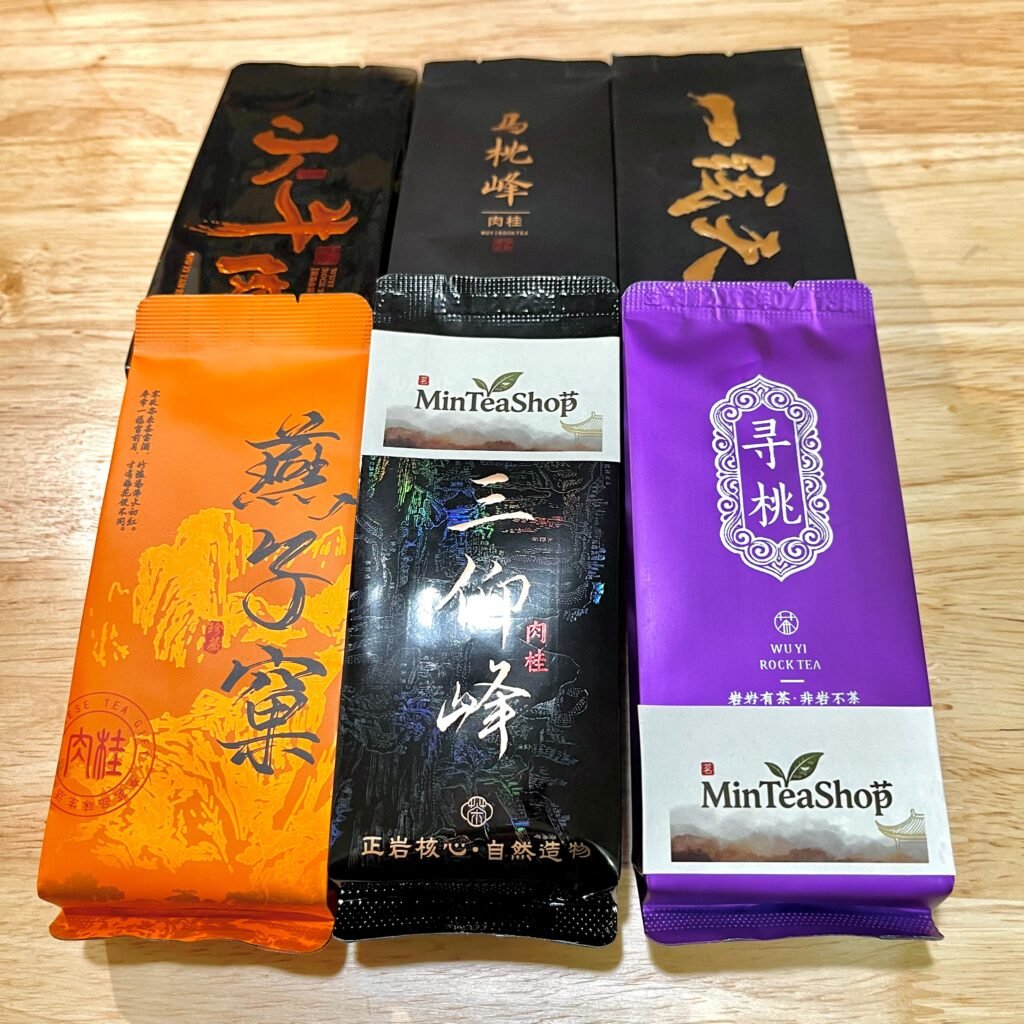
If you’re ready to taste Rou Gui for yourself, here’s a shortlist drawn from Min Tea Shop’s curated selection. Min Tea Shop is a Fuzhou-based online Chinese tea specialist that sources directly from producing regions across Fujian — including Nanping Wuyishan and Ningde Shouning — and ships internationally via DHL, FedEx, and European postal lines (typical delivery 7–15 days, with 24–48 hour order processing). Payment options include PayPal, Visa / Mastercard / JCB cards, and bank or Western Union transfer by contacting customer service.
A sensible starting lineup:
- Ma Zhen Peak Rou Gui (2026) — the historic origin terroir discussed above; a benchmark for authentic cultivar character.
- Jiu Long Ke Rou Gui (2026) — from one of the core “two nests” in the 三坑两涧两窠一洞 framework; textbook keng jian.
- Six Micro-Terroirs Rou Gui comparison — six single-terroir samples side by side; the fastest way to internalize how terroir shapes Rou Gui.
- Da Hong Pao from Mi Tuo Yan (2026) — for the next step on the tasting path toward the most famous of the Si Da Ming Cong.
- Wu San Di Old Bush Shui Xian — to experience the deeper, more rounded side of Wuyi’s other mainstream cultivar for comparison.
If you want an even broader sweep across cultivar, roast level, and price point, browse the full rock tea collection.
Practical notes for new buyers:
- Orders are processed within 24–48 hours.
- Express shipping (DHL / FedEx / European special line) typically arrives in 7–15 days; standard shipping (China Post / Cainiao) takes 9–25 days.
- Returns are accepted within 7 calendar days of receipt for vendor-fault issues (defects, wrong items). Customer-change-of-mind returns are not accepted.
- If you enter a wrong shipping address, contact customer service before dispatch; changes after dispatch incur courier surcharges.
- Once your order ships, you will receive a tracking number by email — trackable on the courier’s official site (DHL, FedEx, EMS, UPS, etc.).
→ External link: For a primer on avoiding the most common mistakes when buying rock tea online, see our rock tea buying myths guide.
Frequently Asked Questions
What does “Yan Yun” actually mean in Wuyi rock tea? Yan Yun (岩韵), or “rock rhyme,” is the combined sensory impression of body, structure, returning sweetness, persistent aroma, and clean aftertaste that defines high-quality Wuyi rock tea. It results from the interaction of growing environment, cultivar, cultivation, and processing — not from any single “mineral” compound.
Is Rou Gui too bold for beginners? Not when brewed and selected properly. Beginners often confuse “bold” (rich, full-bodied, spicy) with “harsh” (bitter, astringent, throat-drying). A well-made, appropriately-roasted Rou Gui is one of the most accessible entry points into Wuyi rock tea.
What is the right tea-to-water ratio for Rou Gui? For a 110 ml gaiwan, 5 g is the rigorously documented ratio used in formal sensory evaluation. For ordinary gongfu brewing, 6–7 g is a moderate starting point, while strong Wuyi-style sessions may use 7–8 g.
What roast level is best for new drinkers? Light to medium. This keeps the cinnamon-like aroma bright and clean, letting you taste the cultivar character before the roast character takes over.
Where does Rou Gui come from? Rou Gui is a native Wuyi cultivar, traditionally associated with Ma Zhen Peak (马枕峰) or Huiyuan Keng (慧苑坑). It was formally recognized as a superior provincial variety in Fujian in 1985.
What’s the difference between Rou Gui’s “cinnamon” aroma and actual cinnamon bark? Rou Gui’s “cinnamon” is a sensory analogy produced by a mixture of compounds — including dehydrocinnamyl alcohol, α-ionone, eugenol, and various floral and fruity volatiles — not by a single cinnamon-derived molecule like cinnamaldehyde.
Where can I buy authentic Rou Gui from a specific terroir? Specialist online retailers that source directly from Fujian producing regions — such as Min Tea Shop’s full rock tea collection — offer single-terroir Rou Gui from origin points like Ma Zhen Peak and Jiu Long Ke. Look for clear harvest year, region, and roast-level labeling on the product page.
Sources & Further Reading
- Fujian Provincial People’s Government. “什么是武夷岩茶的’岩韵’?” (2023). fujian.gov.cn
- Permanent Mission of China to UN Agencies for Food and Agriculture. “岩岩有茶,非岩不茶” (2020). cnafun.moa.gov.cn
- Liu, X. et al. “Chemical Characterization of Wuyi Rock Tea with Different Roasting Degrees.” RSC Advances, 2021. pubs.rsc.org
- Wu, Z. et al. “Study on the Glycosidically Bound Volatiles and Aroma Constituents in the Processing of Wuyi Rougui.” Journal of Tea Science, 2024. tea-science.com
- Cao, H. et al. “Non-Targeted Metabolomics Analysis Revealed…Characteristic…Metabolites in the Rougui Wuyi Rock Tea from Different Culturing Regions.” Foods, 2022. mdpi.com
- Yue, C. et al. “Aroma Characteristics of Wuyi Rock Tea Prepared from 16 Different Tea Plant Varieties.” Food Chemistry: X, 2023. PMC9945420
- “Differences in the Quality Components of Wuyi Rock Tea and Huizhou Rock Tea.” Foods, 2024. PMC11720515
- “Withering and Fermentation Affect the Transformation and Accumulation of Key Metabolites in Rougui.” Foods, 2024. PMC11640889
- CCTV. “初春天寒肉桂暖” (2022). jingji.cctv.com
- Wikipedia. “Si Da Ming Cong Tea.” en.wikipedia.org
- TeaDB. “Wuyi Oolong Compendium.” (2014). teadb.org
- Min Tea Shop. “Wuyi Rock Tea Beginner’s Guide.” minteashop.com
- Min Tea Shop. “Rock Tea Buying Myths.” minteashop.com
- Min Tea Shop. “Rock Tea Collection.” minteashop.com
Disclosure
This article is for educational purposes only. Tea flavor perception is subjective, and the recommendations here are based on the author’s personal tasting experience and on published research — not on regulated professional advice. Some links in this article point to products sold by Min Tea Shop (minteashop.com), an online Chinese tea retailer based in Fuzhou, Fujian; the author may earn a commission on qualifying purchases. Product recommendations reflect the terroir and cultivar framing in the article rather than promotional arrangement. Affiliate relationships do not influence the sourcing, citations, or conclusions above.

2 Comments