
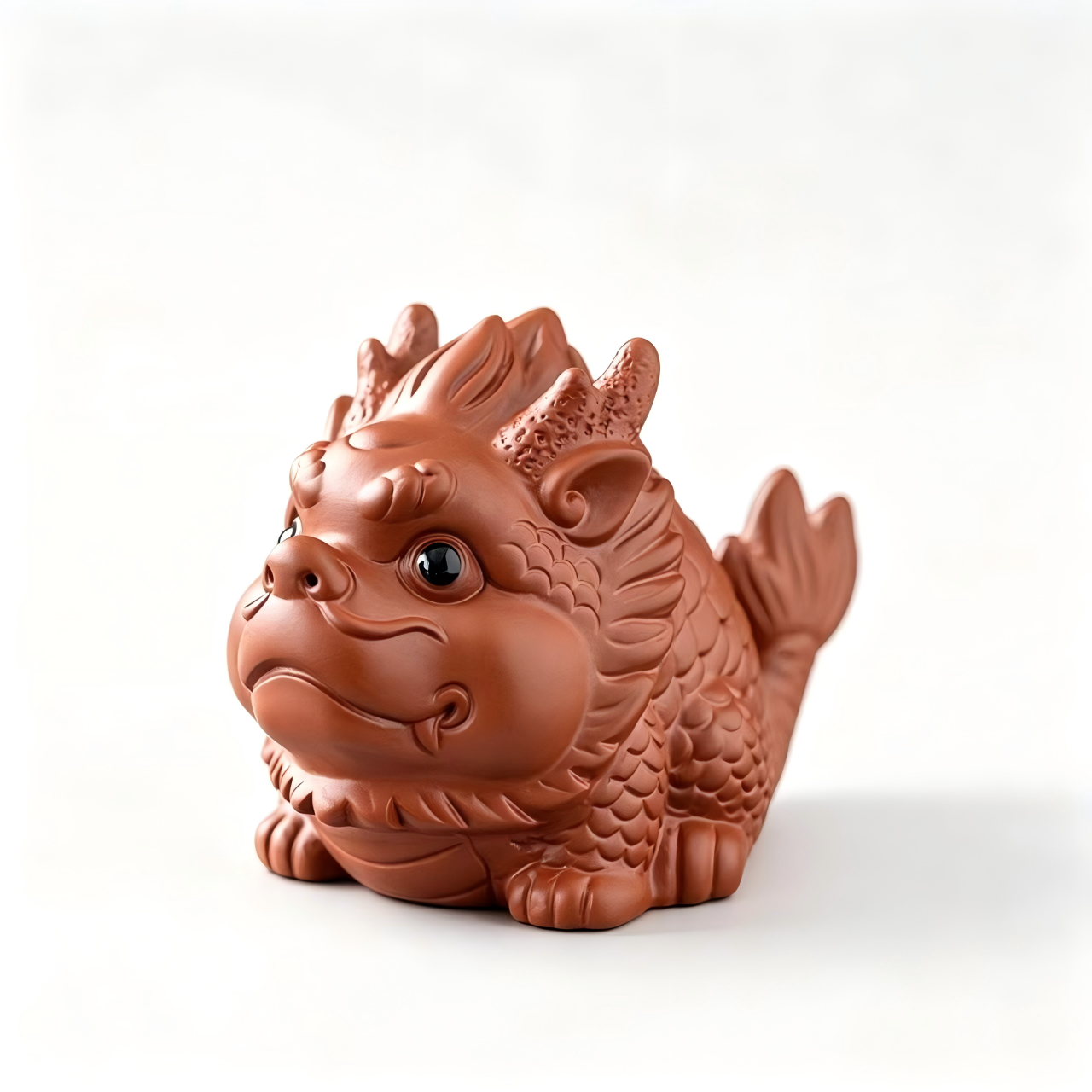
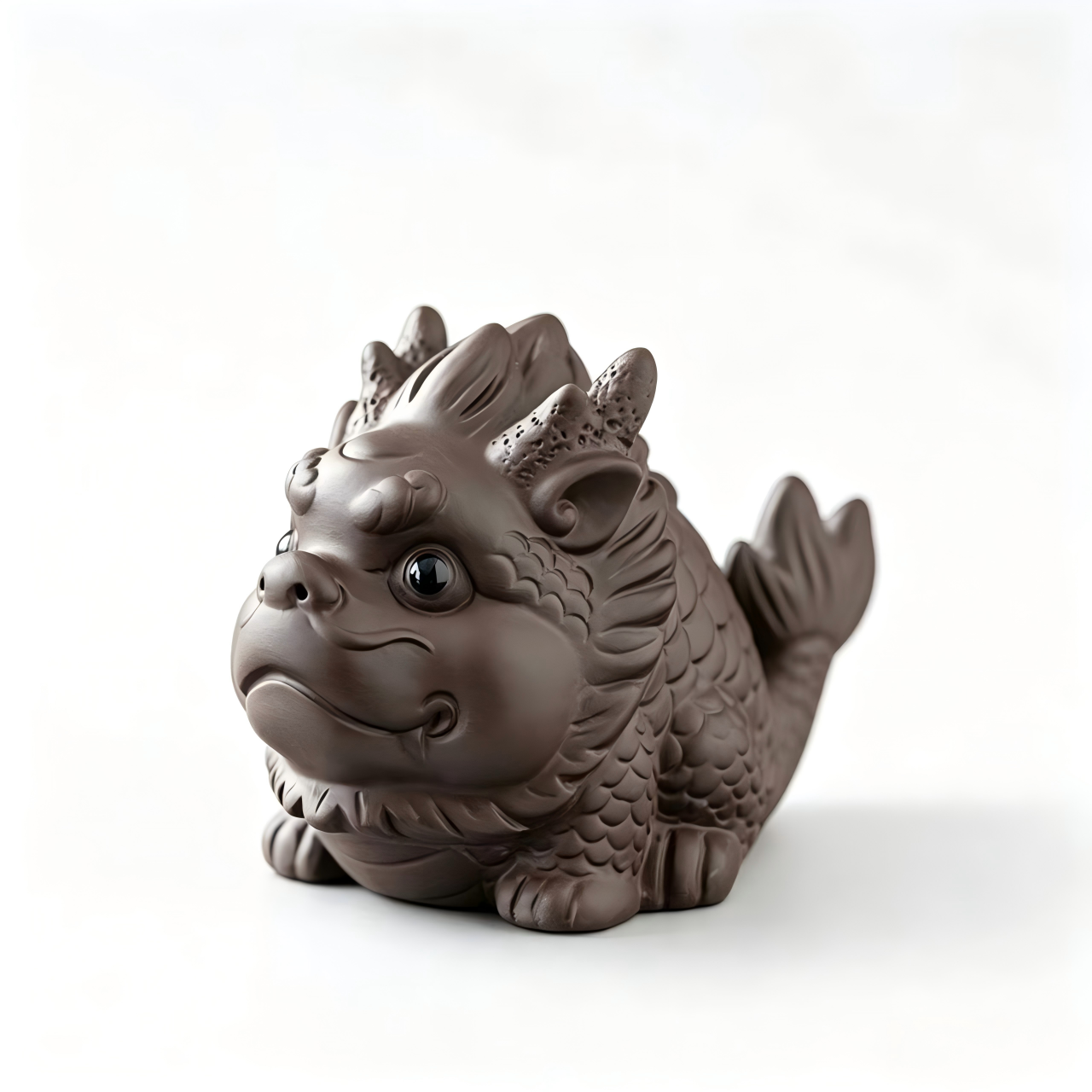
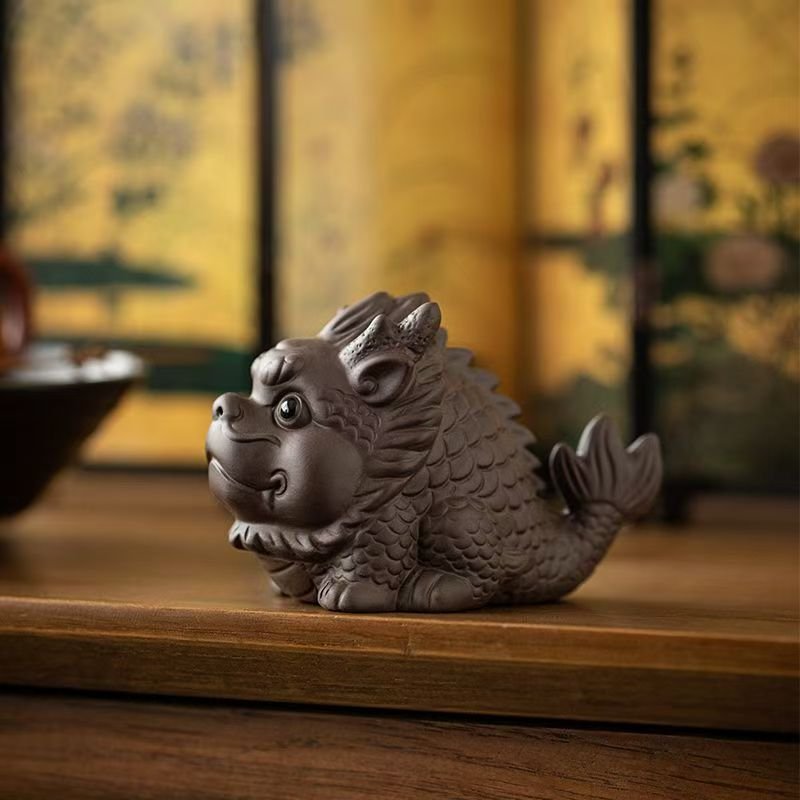
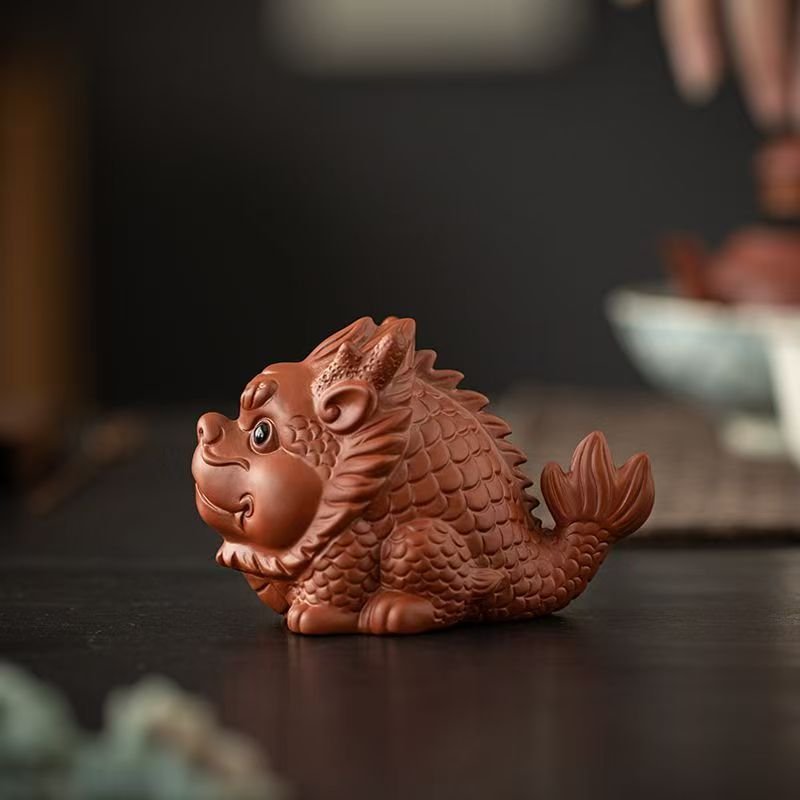
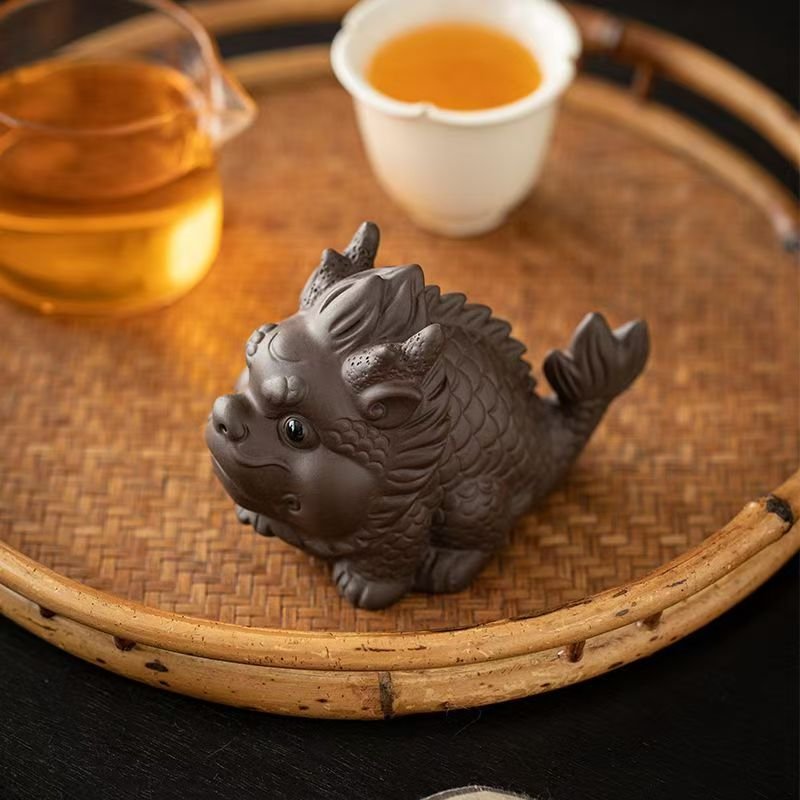
Dehua Zisha Tea Pet: 100% Authentic, Beautiful Dragon Fish
$39.90
Specifications
Product Name: The River Stride
Material: Authentic Dehua Zisha (Purple Clay) | Unglazed
Craft Technique: Hand-sculpted and hand-burnished
Origin: Dehua, Fujian Province, China
Dimensions: 4.1 in (10.4 cm) long x 2.5 in (6.3 cm) wide x 2.6 in (6.5 cm) high
Weight: 0.37 lb (168 g)
Discoer The River Stride: a hand-sculpted Dehua Zisha tea pet that develops a rich, glossy patina over time. Perfect for Gongfu tea rituals.
Description
The River Stride – Hand-Sculpted Dehua Zisha Tea Pet for Gongfu Tea
A new Dehua Zisha tea pet can feel a little strange at first. The clay looks dry. The surface is rough. Almost bone-dry, as if someone forgot to glaze it.
That dryness is the point. Once this dragon-fish figure sits on your tea tray and meets your daily Gongfu pours, it begins to change. Color deepens. The grain softens. Within months, your Dehua Zisha tea pet starts telling the story of every session you have poured.
In this complete guide, I will walk through the clay’s heritage, how to season The River Stride, and the small habits that keep a Dehua Zisha tea pet looking its best for decades.
What Is a Dehua Zisha Tea Pet? Origins and Meaning
A tea pet is a small clay figure that lives on your Gongfu tray. You pour tea over it during each session. Over time, the clay drinks the tea and grows darker.
he Dehua Zisha tea pet comes from Dehua County in Fujian Province. Dehua has fired ceramics for over a thousand years and is best known for its white porcelain (Wikipedia entry on Dehua County). The local Zisha (“purple sand”) deposits are less famous than Yixing’s, but local potters prize them for their high iron content and fine sandy grain.
A few things make a Dehua Zisha tea pet different from a generic clay ornament:
- It is unglazed, so the pores stay open
- The clay body breathes and absorbs tea oils
- Each piece is shaped and carved by hand
- No two figures are exactly alike
The River Stride takes the form of a leaping carp-dragon. This is a reference to the Chinese myth of the carp leaping the Dragon Gate. In tea culture, the fish symbolizes perseverance and forward motion.
Why Dehua Zisha Clay Differs From Yixing Zisha
Many buyers assume “Zisha” always means Yixing. In reality, both regions mine purple clay, but the deposits behave differently. Yixing Zisha sits in Jiangsu Province and tends toward a denser, slightly purple-brown body. Dehua Zisha sits in Fujian and often shows a warmer reddish tone, with a more uniform grain.
| Property | Dehua Zisha (Fujian) | Yixing Zisha (Jiangsu) |
|---|---|---|
| Region | Fujian Province | Jiangsu Province |
| Color tone | Reddish-brown | Purple-brown |
| Grain | Fine, sandy, even | Slightly coarser |
| Iron content | High | High |
| Best tea pairing | Wuyi Yancha, roasted oolong, black tea | Sheng Pu’er, Dancong oolong |
| Firing tradition | Small dragon kilns, wood and gas | Dragon kilns, gas and electric |
According to the Wikipedia entry on Zisha clay and Britannica’s guide to Chinese pottery, traditional unglazed clays play a distinct role in tea culture. For drinkers of roasted Wuyi rock tea or Rougui, a Dehua Zisha tea pet is a strong match. The high iron content is said to round out roasted notes, and the porosity grips tea polyphenols faster than denser slips.
The River Stride: Craft Details You Can See and Feel
The River Stride stands about 8 cm tall and weighs roughly 168 grams. Each figure is shaped by hand from a single block of Dehua Zisha. Then it is tooled with bamboo and metal chisels for the scales, fins, and the curling tail.
A few small details to look for on each piece:
- The gill lines curve outward, not stamped flat
- The eye sockets are recessed, then dotted by hand
- The dorsal fin shows visible tool marks
- The base is unglazed, so it grips the tray without slipping
We tried three prototypes in our tea room before settling on the current weight. Lighter versions tipped when we poured. Heavier ones lost the lively, leaping feel.
According to the Fujian Provincial Cultural Heritage Bureau, Dehua Zisha clay firing is recognized as part of the province’s intangible craft heritage. Small-batch firings will always vary in tone.
How to Season a Dehua Zisha Tea Pet for a Rich Patina
Seasoning is the slow ritual of feeding tea to the clay. The clay drinks. The color shifts. Over weeks, a soft amber sheen appears.
The basic steps for seasoning a Dehua Zisha tea pet:
- Rinse the figure once with warm water before first use
- Place it on the tray beside your pot or pitcher
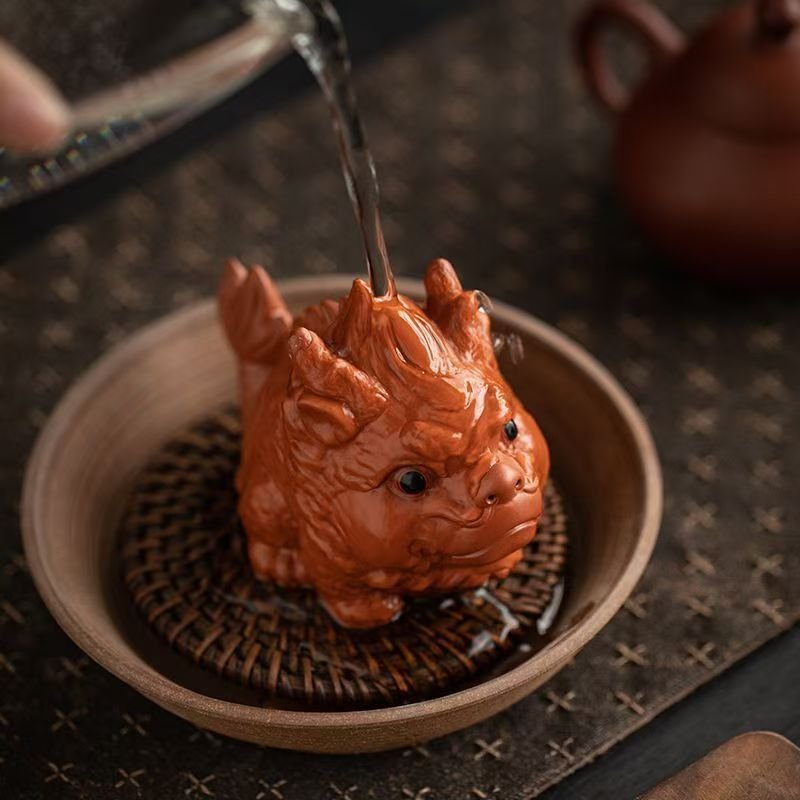
- Pour your tea rinse or first short steep over the figure
- Sweep it gently with a soft natural-bristle brush
- Repeat at every session for the first month
- Expect the first visible sheen around day 30
After about thirty days, you will see a faint sheen. After a year, the body looks like worn leather. Use any tea you actually drink — there is no need to buy a special tea for the figure.
A small note from our own tray: I noticed faster patina growth with roasted oolong than with green tea. The oils seem to grip the clay more.
Ideal Companion for Every Tea Drinker
The River Stride works for several types of drinkers. I have placed it next to beginners and long-time collectors, and the reaction tends to fall into a few clear groups.
For the Gongfu Beginner
A new tea drinker often wants a calm focal point on the tray. The dragon-fish form is friendly, with no sharp angles to worry about.
For the Oolong or Pu’er Drinker
Mid-level drinkers usually appreciate the clay’s breathing quality. They notice the patina forming within weeks.
For the Gift-Giver
The River Stride comes in a fitted gift box. We have shipped it to wedding tea sets, housewarmings, and quiet “thinking-of-you” gifts.
For the Long-Time Collector
Collectors tend to want a piece that holds its identity. Hand-carved tool marks and small scale variations are part of the appeal. A Dehua Zisha tea pet from a small workshop feels more honest than a slip-cast factory piece.
Caring for Your Dehua Zisha Tea Pet: Cleaning and Storage
Because the clay is porous, cleaning needs to stay simple.
- Rinse only with hot water. Skip soap or detergent.
- Air-dry on a bamboo tray, away from direct sun.
- Keep it on the working tray, not in a sealed box. The clay needs airflow.
- If you take a break from tea for a few weeks, dust it and store in a cloth pouch.
If the surface ever looks chalky, that means the pores have dried out. A few rounds of warm tea rinses will bring the sheen back.
One note for humid climates: do not seal the figure in plastic. Trapped moisture can encourage surface mildew in unglazed Zisha clay.
Comparing The River Stride With Other Tea Pets on the Market
If you are shopping around, a quick comparison helps. Here is how the most common options line up.
| Tea Pet Type | Clay Origin | Patina Speed | Price Range (USD) |
|---|---|---|---|
| The River Stride (Dehua Zisha tea pet) | Fujian Dehua | Medium (4–8 weeks visible) | $35–$55 |
| Generic Yixing mass-produced | Jiangsu Yixing | Fast (2–3 weeks) | $10–$25 |
| Hand-carved Yixing artisan | Jiangsu Yixing | Slow, deep | $80–$200+ |
| Glazed porcelain figure | Jingdezhen / Dehua white porcelain | None (glazed) | $15–$40 |
Mass-produced Yixing pieces can patina faster, but they often use lower-grade slip-cast clay that wears poorly. Fully glazed porcelain stays clean forever, but it never drinks tea.
Complete Your Tea Tray With a Dehua Zisha Tea Pet
A bare tray can feel empty. Adding The River Stride brings a quiet anchor. The dragon-fish rests at the corner where your rinse pitcher usually sits. Within a few sessions, it starts to feel like part of the ritual rather than a decoration.
For a balanced setup, pair The River Stride Dehua Zisha tea pet with:
- A 100–150 ml Yixing or Dehua teapot
- A small porcelain pitcher for fairness
- Two or three tasting cups
- A bamboo tea tray with a water reserve
Together, the tray becomes a working space, not a display shelf. The figure holds its corner and quietly records every session.
Frequently Asked Questions
How do I properly “nourish” my Dehua Zisha tea pet? Nourishment is the heart of the ritual. During your tea session, simply pour your tea wash or any leftover tea directly over the figure. Over time, the heat and tea oils will penetrate the porous clay. For an even patina, you may use a soft tea brush to distribute the liquid across the scales.
What makes a Dehua Zisha tea pet different from a Yixing Zisha one? While Yixing is the most famous origin, Dehua’s local Zisha clay from Fujian riverbeds is prized for its unique mineral composition and fine, sandy texture. It is exceptionally resilient and has a distinct “earthy” warmth that develops a luminous sheen specifically well when paired with Fujianese Oolongs and Pu’er.
Does it require any special cleaning? Never use soap or detergents. Zisha is highly absorbent and will trap the scent of chemicals. To clean, simply rinse with hot water and wipe with a soft, lint-free cloth.
Will the patina wash off? No. The patina is not a coating; it is the result of tea oils becoming part of the clay’s structure. It is a permanent, evolving change that deepens the more you use it.
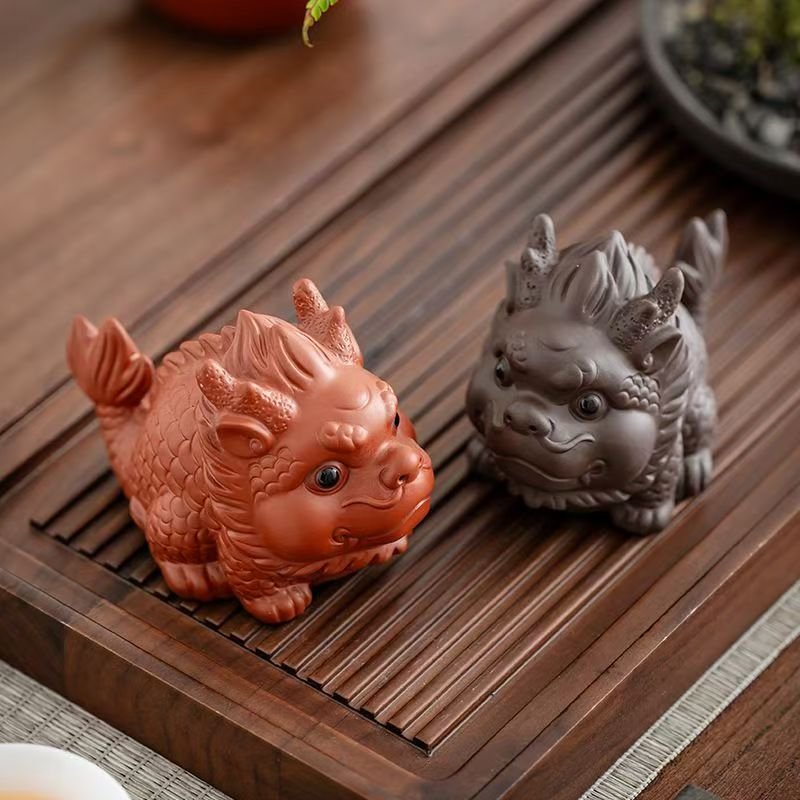
Why does my tea pet look different from the photo? Because each River Stride is hand-sculpted and hand-finished, no two are identical. Minor variations in the clay’s grain, the depth of the carving, and the initial tone are hallmarks of artisanal craftsmanship.
Elevate Your Ritual: Pair this unglazed clay tea companion with our collection of [artisanal incense burners] to curate a complete, multi-sensory meditation space that engages both scent and touch, inviting a deeper, calmer breath into your home.
Additional information
| color | Red Clay (Zhu Ni), Dark Grey (Zi Ni) |
|---|
Related products
-

Chinese Tea Pet: Delightful 100% Handcrafted Artisan Companion
$39.90Select options This product has multiple variants. The options may be chosen on the product page -
-
-
Reviews
There are no reviews yet.