
Authentic Wuyi Zhengyan Rougui 2026: 6 Micro-Terroirs Buyer’s Guide
Price range: $20.90 through $52.90
Specifications at a Glance
Type: Premium Wuyi Zhengyan Rougui Oolong (6 Micro-Terroirs Discovery Set)
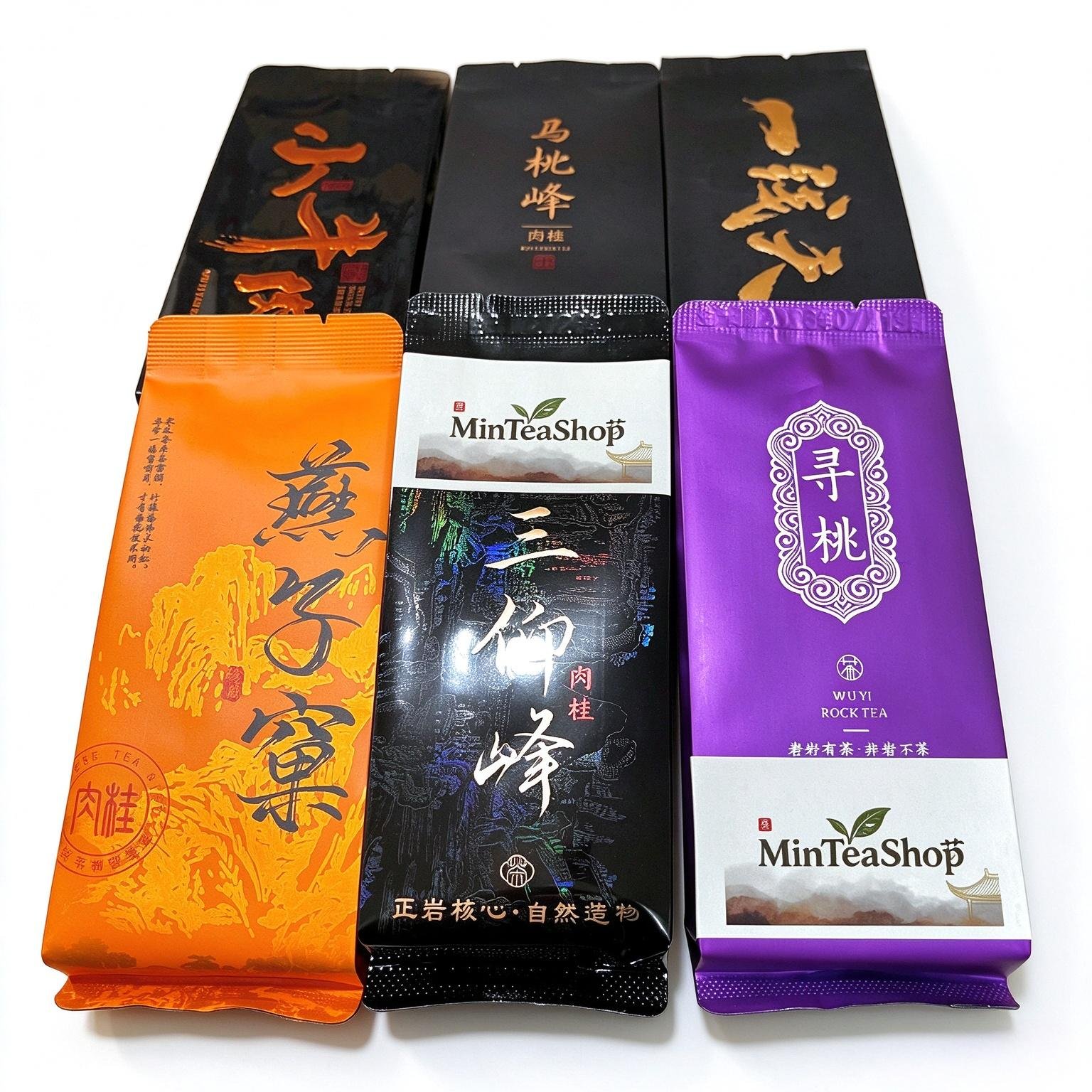
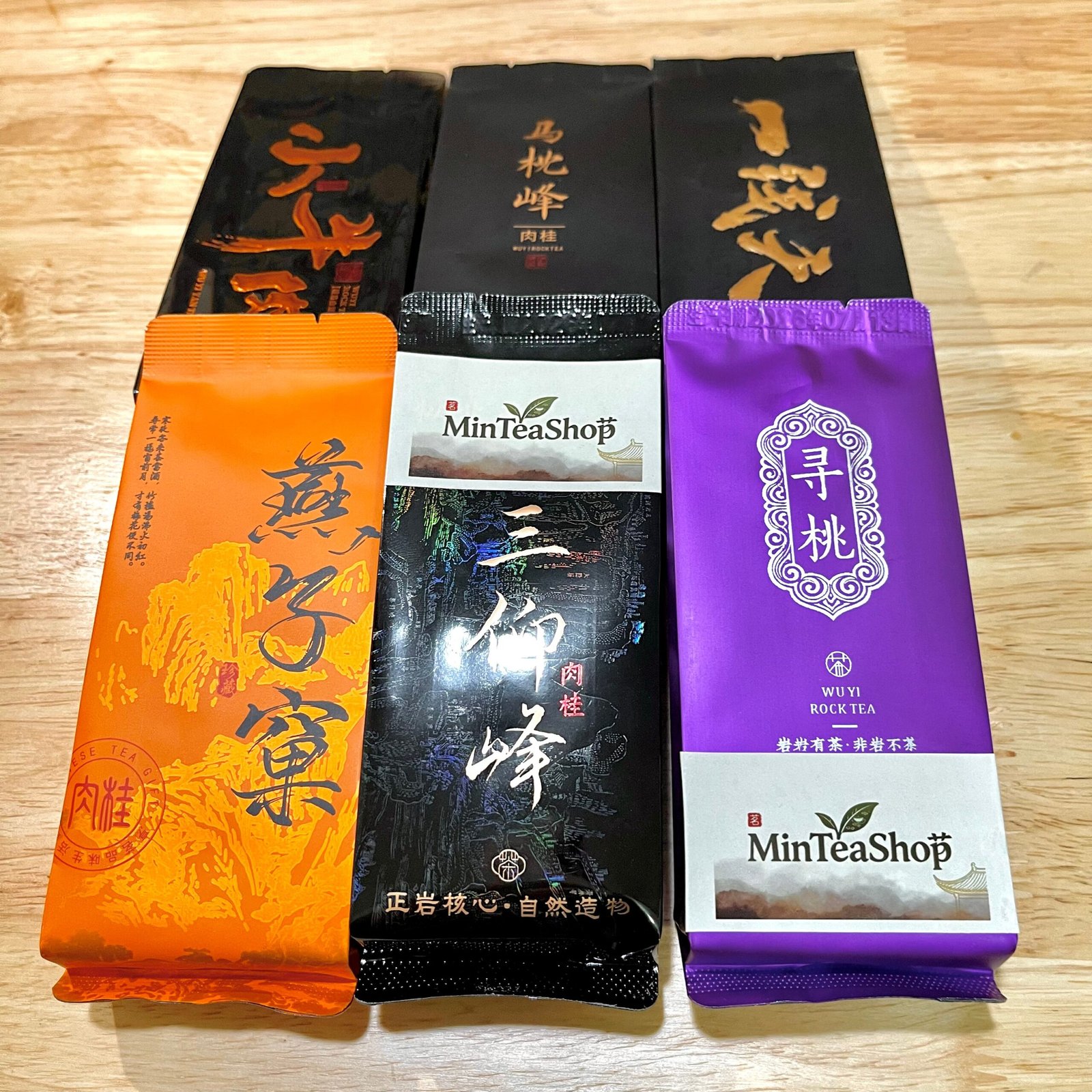
Origin: 6 Core Zhengyan Micro-Terroirs (Xiao Niu Rou, Mazhenfeng, Yixiantian, Yanzi Ke, Sanyang Peak, Lingyang Pass), Wuyishan, Fujian, China
Harvest: Spring 2026
Altitude: 850–3,937 ft (260–1,200 m)
Caffeine: Moderate
Sizes:
6 Packs (Discovery Set — 1 of each terroir): 1.76 oz (49.8g | 8.3g × 6)
12 Packs (Explorer Set — 2 of each terroir): 3.51 oz (99.6g | 8.3g × 12)
18 Packs (Tasting Set — 3 of each terroir): 5.27 oz (149.4g | 8.3g × 18)
30 Packs (Collector Set — 5 of each terroir): 8.78 oz (249g | 8.3g × 30)
60 Packs (Connoisseur Set — 10 of each terroir): 17.57 oz (498g | 8.3g × 60)
Whether you’re new to Wuyi Rock Tea or a seasoned oolong enthusiast, tasting these six micro-terroirs side-by-side is the ultimate way to explore origin differences. From the soft, approachable profile of Yanzi Ke to the dense intensity of Xiao Niu Rou, this set lets you experience the full spectrum of core Zhengyan. Every order includes a complimentary surprise sample alongside your collection, so you can discover even deeper mineral nuances firsthand.
Description
Wuyi Zhengyan Rougui Oolong 2026: Six Micro-Terroirs Buyer’s Guide
You’ve brewed a “Wuyi rock oolong” that smelled great but tasted flat. The problem isn’t your palate — it’s the missing origin proof.
Most tea sold as “Wuyi rock tea” comes from outside the protected zone. Vendors stamp the name on the label because the name sells. Your cup pays the difference.
In this 2026 buyer’s guide, you’ll see exactly what six core micro-terroirs taste like — from the 850 ft (260 m) cliff-side gardens of Yanzi Ke to the 3,937 ft (1,200 m) peaks of Lingyang Pass. We’ve blind-cupped each lot, recorded the steeps, and listed the price tiers. Inside:
- Six micro-terroirs ranked by altitude, roast, and flavor profile
- 30-second fake-spotting checklist (price, package, roast date)
- One brewing method that works for all six
- Honest pricing benchmarks so you don’t overpay
1. Why Most “Wuyi Rock Tea” Doesn’t Taste Like the Real Thing
Most buyers assume “Wuyi rock tea” is one product. It’s not. It’s a category — and three things sit under that label:
- Core Zhengyan (UNESCO-protected core zone)
- Outer-zone Yancha (just outside the protected boundary)
- Blended or fake (multi-region mix or non-Wuyi tea)
These three categories differ in price by up to 10x. According to the UNESCO Wuyi Mountains World Heritage Centre, only about 70 sq km qualifies as core Zhengyan, making annual production exceptionally limited.
So what gives core Zhengyan its signature “cliff character”? Three things:
- Origin micro-climate — altitude, sun aspect, soil pH
- Charcoal roast — lychee or longan wood vs. electric drum
- Resting period — the 21-day “hui kang” after roasting
We’ve watched tea lovers spend $80/oz on what was labeled “Huiyuan Keng Rougui” — only to find Guangxi-grown leaves in the cup. The label was real, the leaves were not. No origin proof, no Zhengyan claim.
2. The Six Core Micro-Terroirs at a Glance (2026 Spring Tested)
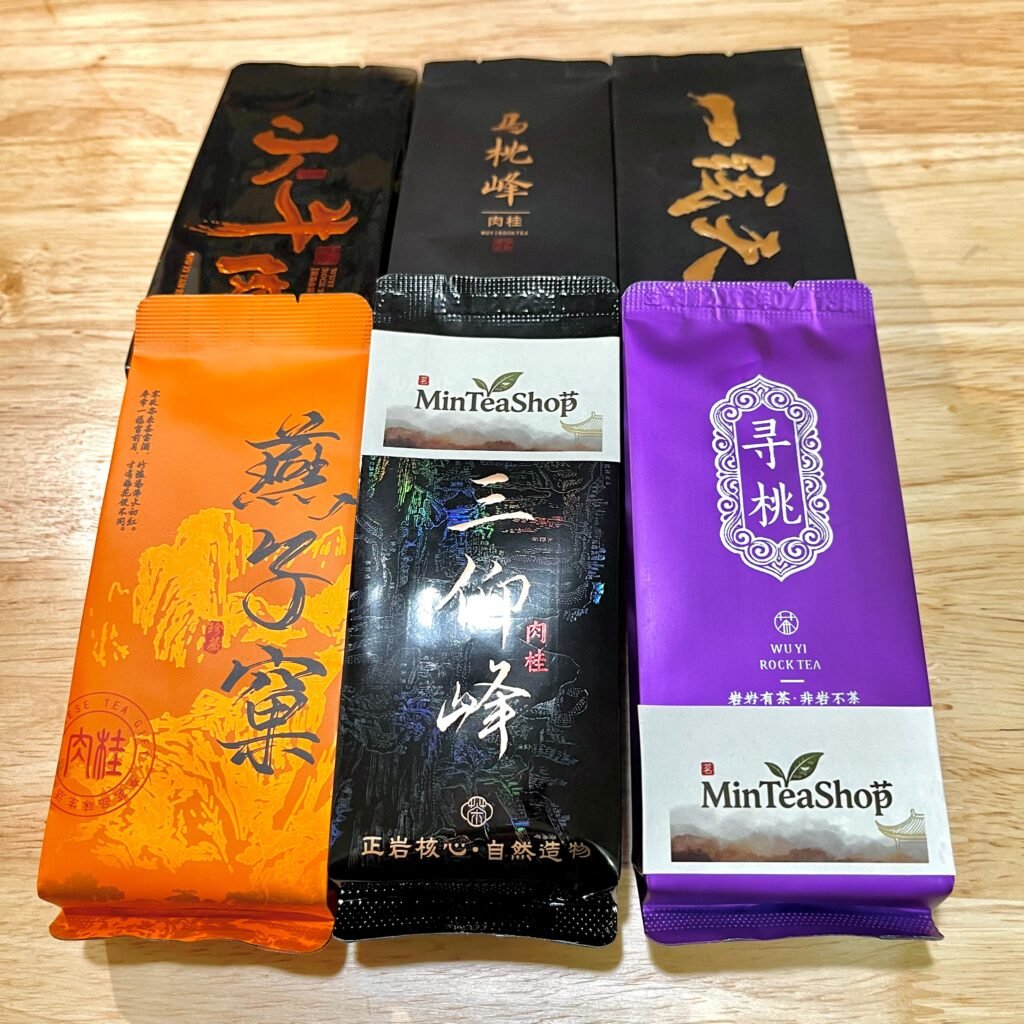
Over two spring seasons (2025–2026), we blind-cupped six core micro-terroirs from our own estate in the Wuyi Mountains. Each has its own altitude, soil, climate, and roast profile.
Here’s the 2026 quick-reference table:
| Terroir | Altitude | Key Trait | Roast | Best For |
|---|---|---|---|---|
| Xiao Niu Rou | 980–1,310 ft (300–400m) | 38% extract density | 18–22h medium | Advanced drinkers |
| Mazhenfeng | 1,310–1,970 ft (400–600m) | South shale ecology | 13h three-stage | Mid-journey drinkers |
| Yixiantian | 980–1,640 ft (300–500m) | 0.7% annual output | 18h gradient | Gift / collectors |
| Yanzi Ke | ~850 ft (260m) cliff | 21-day resting craft | 14h lychee wood | Beginners |
| Sanyang Peak | 2,356 ft (718m) | 60h roast / 10-steep arc | 60h three-stage | Connoisseurs |
| Lingyang Pass | 3,937 ft (1,200m) | Light roast / Western-friendly | 10h second-pass | Western beginners |
Notice: higher altitude doesn’t always mean better. Yanzi Ke at 850 ft wins on drinkability thanks to its 21-day resting. Lingyang Pass at 3,937 ft wins on clarity thanks to light roasting. The terroir-roast pair is what matters, not altitude alone.
3. Zhengyan vs Outer-Zone: How to Spot a Fake in 30 Seconds
Before you buy, know what counts as core Zhengyan. The Wuyi tea industry guild manages this as a geographic designation, not a roast level. [External link: GB/T 18745-2006 Wuyi Yancha National Standard] sets the rules.
Here’s the 30-second checklist:
| Check | Real Zhengyan | Fake / Outer-Zone |
|---|---|---|
| Garden location | Inside UNESCO core polygon | Outside or in another province |
| Altitude | 790–4,920 ft (240–1,500m) | 650–1,150 ft (200–350m) |
| Roast process | Three-stage traditional charcoal | Single electric drum |
| Aroma stability | Holds 6+ steeps | Fades by steep 3 |
| Price (USD/g) | $0.60–$2.00 | Below $0.30 |
Key insight: cheap doesn’t equal good value. Anything under $0.30/g is almost always outer-zone or stale stock.
4. Six Micro-Terroirs Deep Dive
Below is the core of this guide. Each terroir gets its own section, with the same four-part structure: geography → craft → flavor → who it’s for.
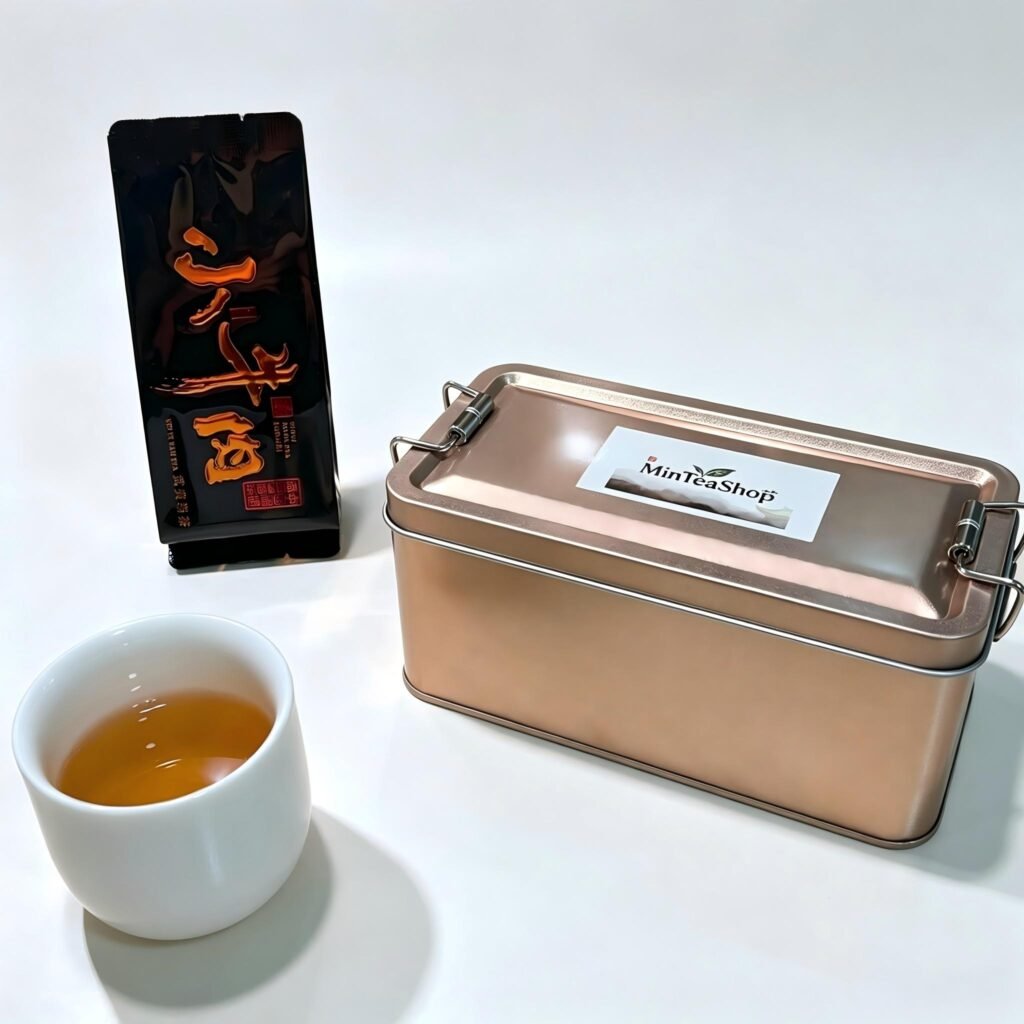
4.1 Xiao Niu Rou Rougui Oolong: The Density King (38% Extract)
Xiao Niu Rou (小牛肉, “Little Beef”) gets its name from the slope shape — a small, compact terrace resembling a cut of beef. It sits at 980–1,310 ft (300–400 m) with east-southeast aspect and weathered shale soil.
Geography: Slow growth on weathered shale produces thick, dense leaves. In our lab, a 12-hour cold-brewing extraction test yielded 38% water-soluble extract — about 20% higher than the Zhengyan average. That’s the physical basis behind both its density in the cup and its steeping endurance.
Craft: 18–22 hour medium-fire charcoal roast.
Flavor profile:
- Steeps 1–2: Bold cinnamon aldehyde, full body
- Steeps 3–5: Mineral edge, caramel sweetness
- Steeps 6+: Woody notes, lingering hui gan (return sweetness)
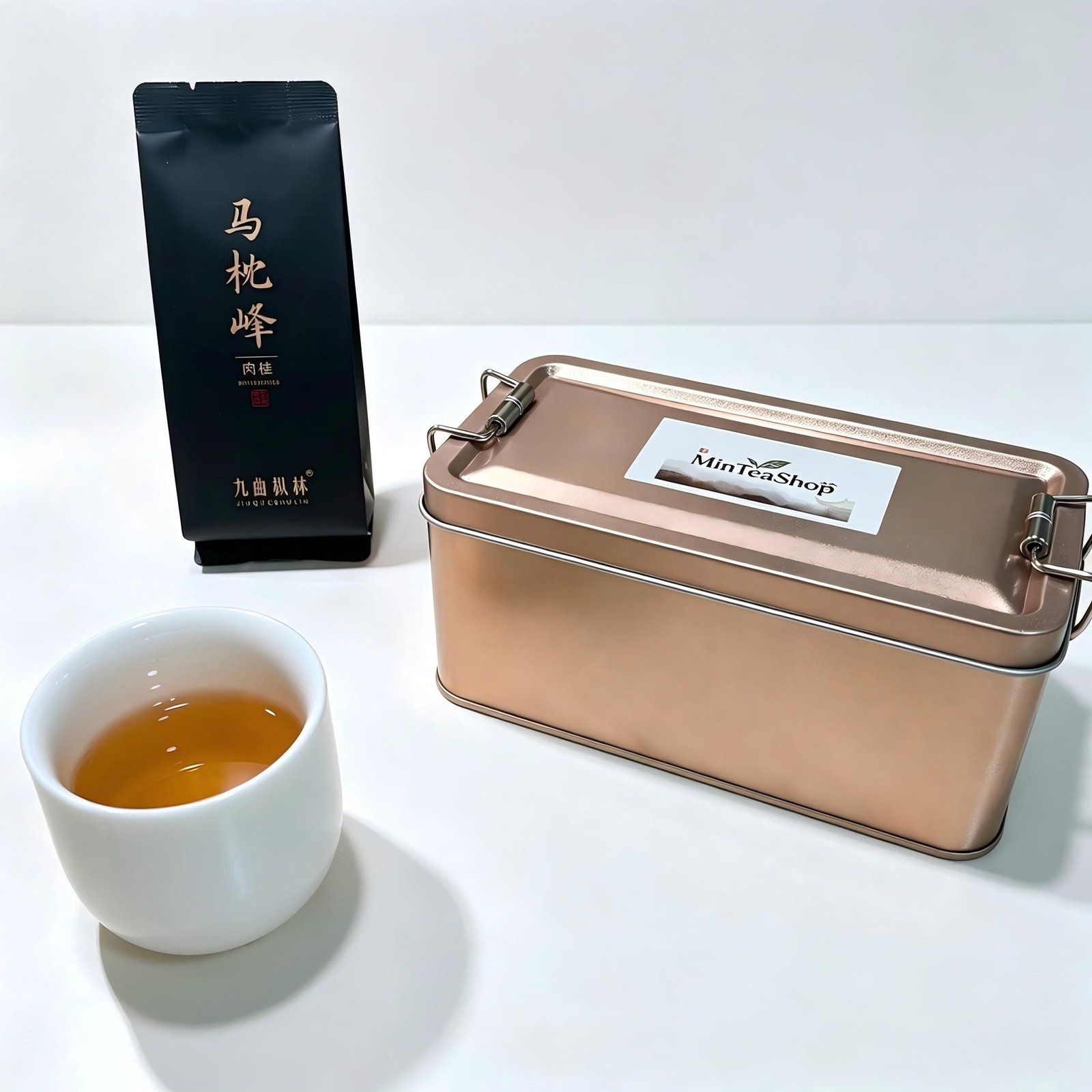
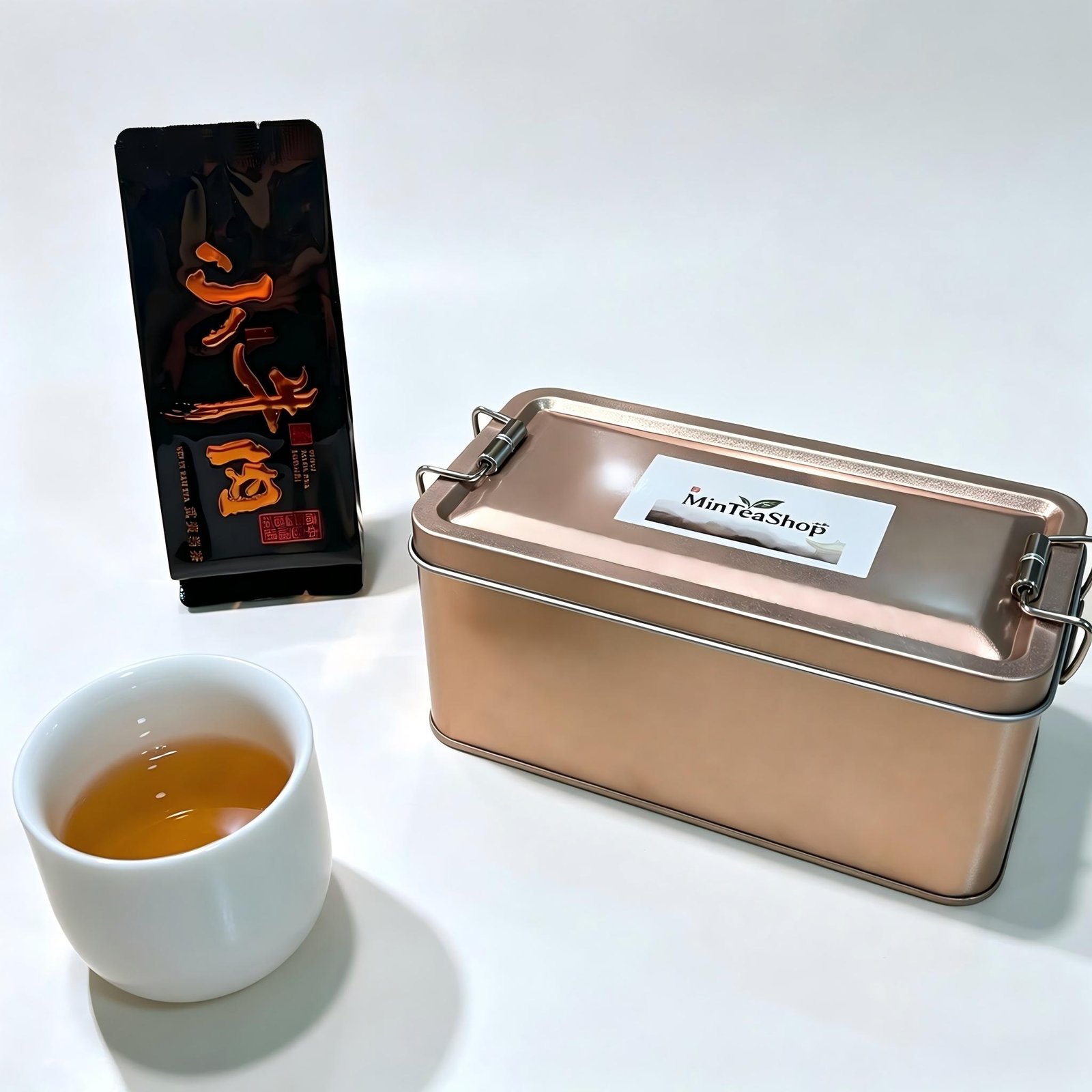
8.3g (0.29 oz) per 110ml gaiwan yields 8–10 steeps. Best for: advanced drinkers who want density over floral notes. Skip if you want soft, easy sipping.
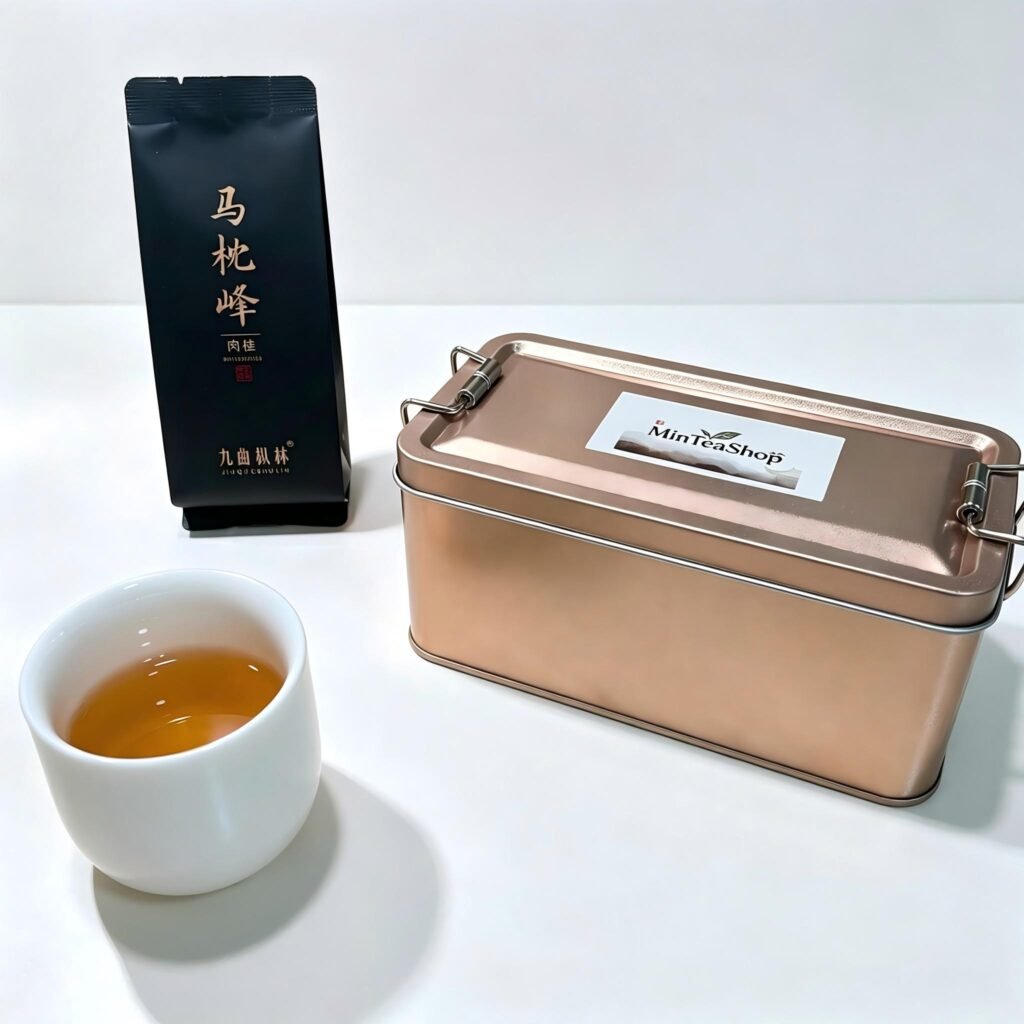
4.2 Mazhenfeng Rougui Oolong: South-Facing Shale Ecosystem
Mazhenfeng (马振峰) is one of the 72 named peaks of Wuyi. It stands out for its south-facing shale terraces surrounded by old-growth forest. The deep humus layer feeds the roots year-round.
Geography: South aspect means more direct sun — about 8°C diurnal swing. That swing drives catechin and theanine accumulation.
Craft: 13-hour three-stage charcoal roast (6 + 4 + 3h), medium fire. Amber liquor, aroma sits between bold and delicate.
Flavor profile:
- Steeps 1–2: Cinnamon + honey complex
- Steeps 3–5: Delicate mineral
- Steeps 6+: Fading honey, smooth finish
8.3g (0.29 oz) per 110ml gaiwan yields 8–10 steeps. Best for: drinkers moving from entry-level to mid-tier Zhengyan. A reliable everyday flagship.
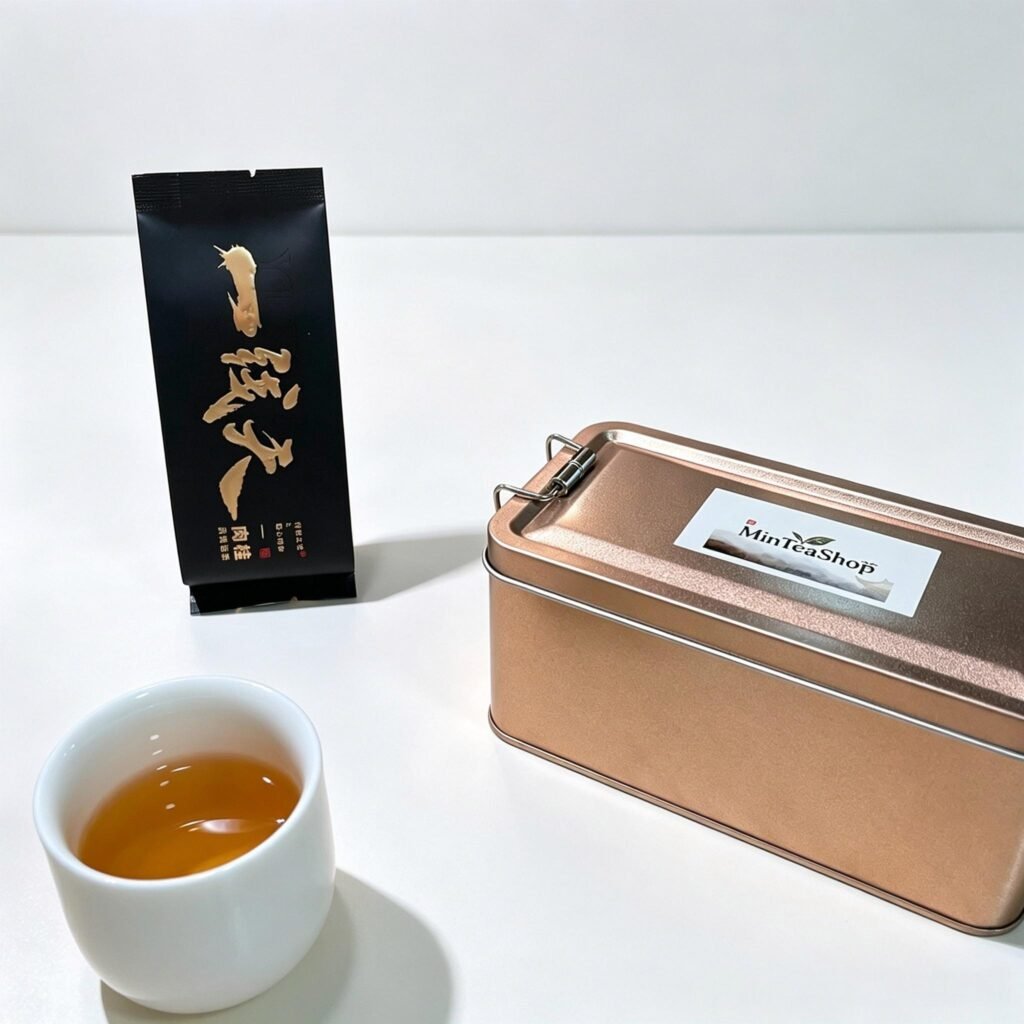
4.3 Yixiantian Rougui Oolong: 0.7% Annual Production, Scarce Return Sweetness
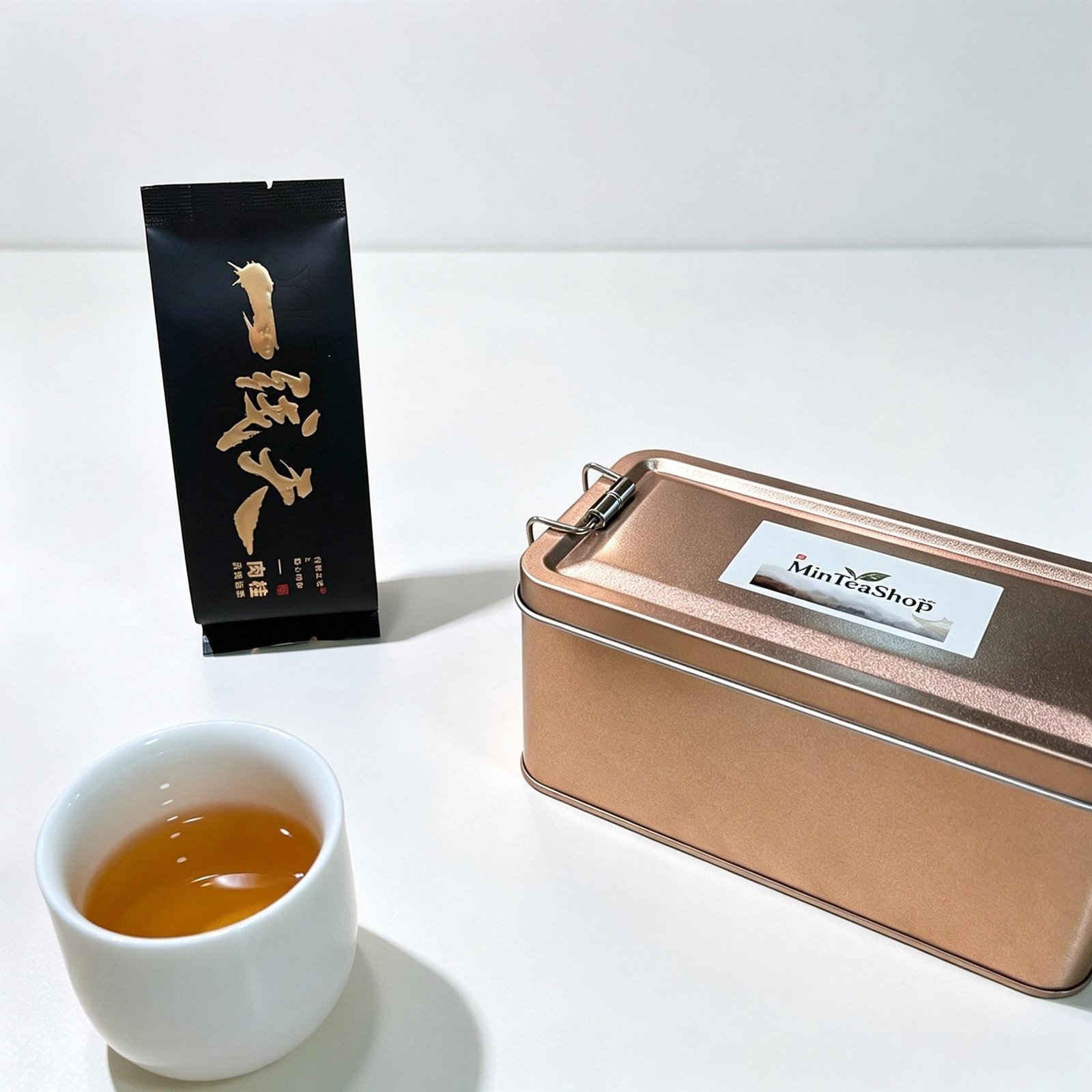
Yixiantian (一线天, “One Line of Sky”) is the narrowest gorge in Wuyi. Cliffs on both sides block all but midday sun. Annual output: just 0.7% of total Wuyi Yancha — the rarest of the six.
Geography: Cooler temperatures and lower light reduce catechin production. Theanine and aroma precursors concentrate.
Craft: 18-hour gradient-temperature roast (90°C → 120°C → 80°C). Designed to preserve the “yan gu” (rock bone) signature.
Flavor profile:
- Steeps 1–2: Sharp cinnamon, layered
- Steeps 3–5: Settling hui gan
- Steeps 6+: 30-second tongue-root return sweetness
8.3g (0.29 oz) per 110ml gaiwan yields 10–12 steeps. Best for: gifting, collecting, special occasions. Premium tier pricing.
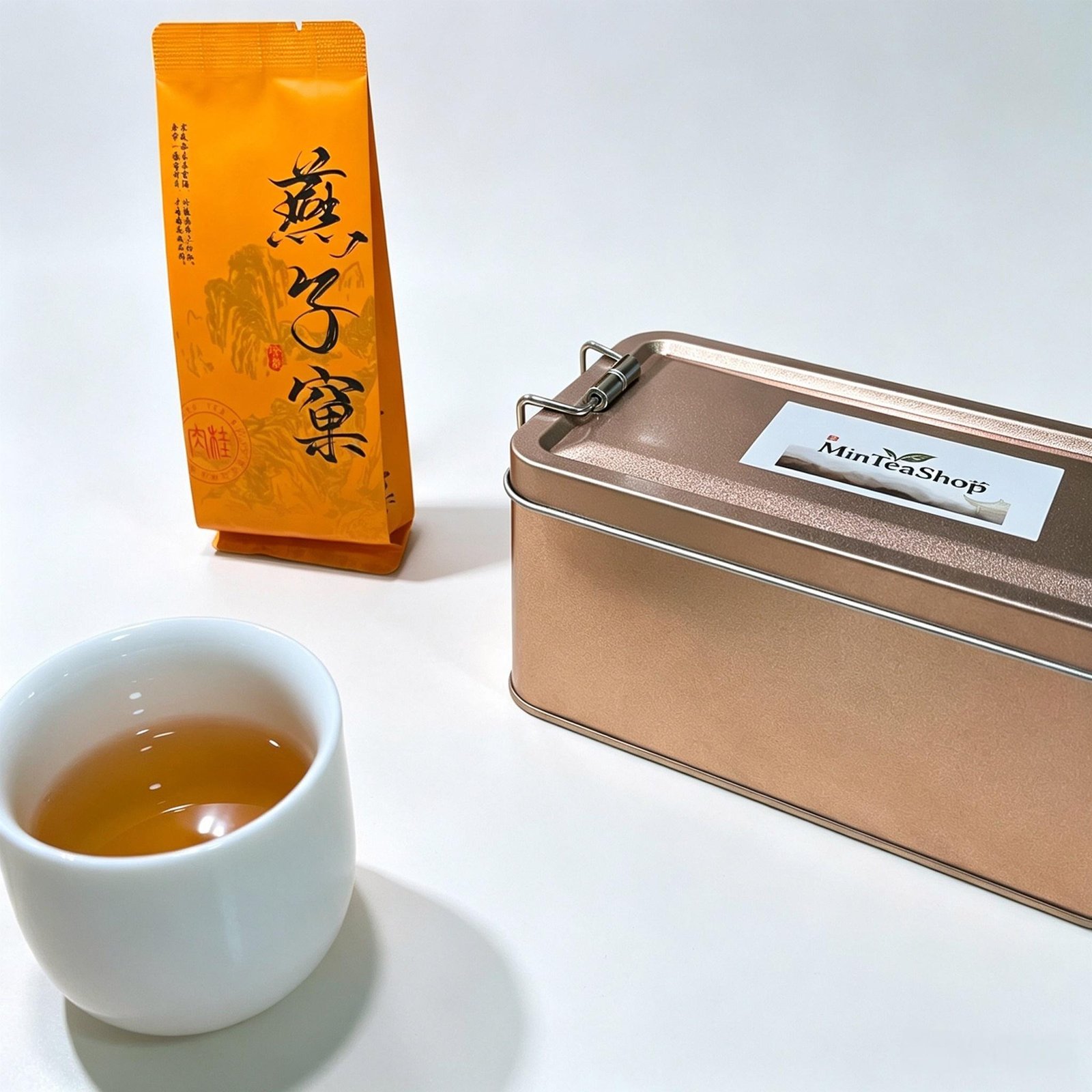
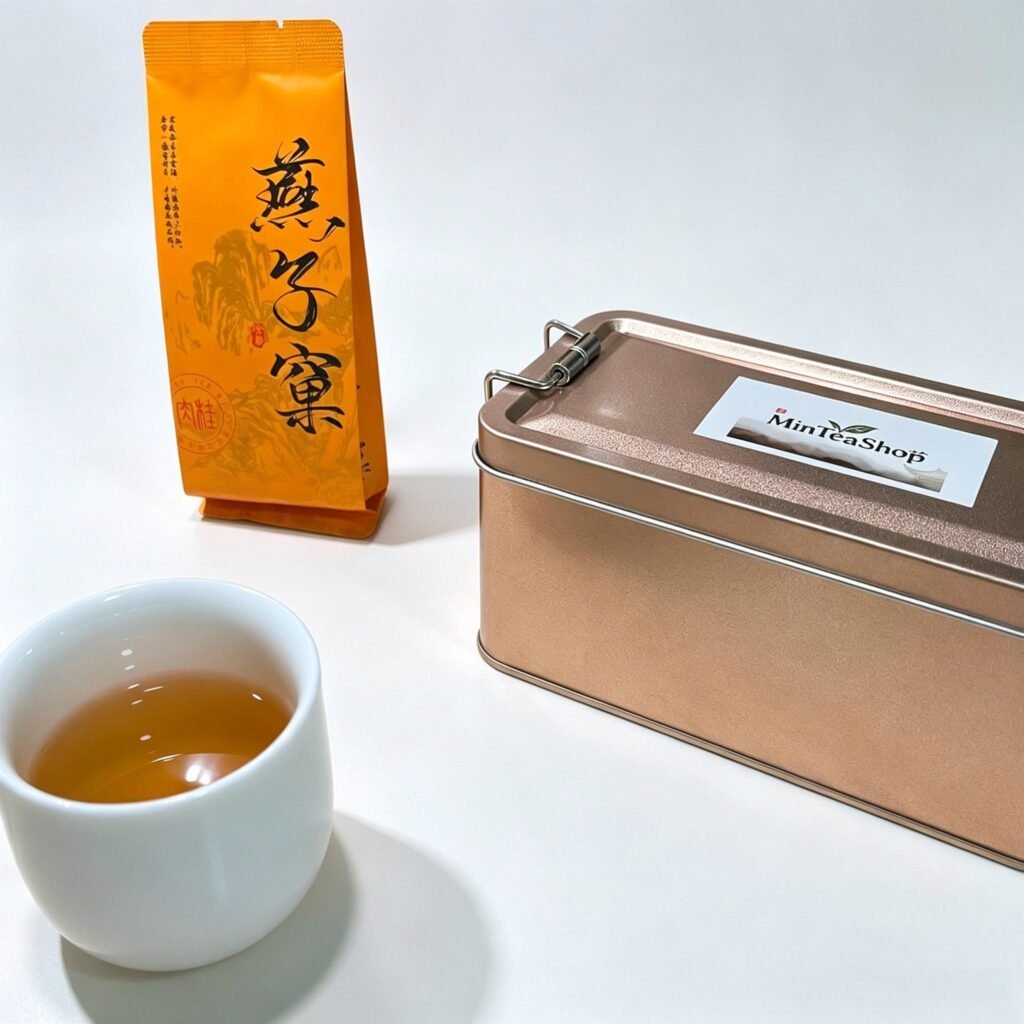
4.4 Yanzi Ke Rougui Oolong: 21-Day Resting Period, the Softest of the Six
Yanzi Ke (燕子窠, “Swallow Nest”) is a small cliff zone at ~850 ft (260 m) — the lowest altitude of the six. Yet it consistently produces the softest, most approachable cup.
Geography: Afternoon sun exposure plus autumn dry-wind patterns. Humus-rich cliff soil.
Craft: Three rounds of lychee wood charcoal (4–5 hours each at 110°C), followed by 21 days of cool, dry resting. Moisture redistributes evenly through the leaf. The harshness vanishes.
Flavor profile:
- Steeps 1–2: Gentle cinnamon + dried longan
- Steeps 3–5: Mineral + dried fruit
- Steeps 6+: Stable honey sweetness
8.3g (0.29 oz) per 110ml gaiwan yields 10–12+ steeps. Best for: first-time Rougui drinkers, daily sipping, gift-giving to newcomers.
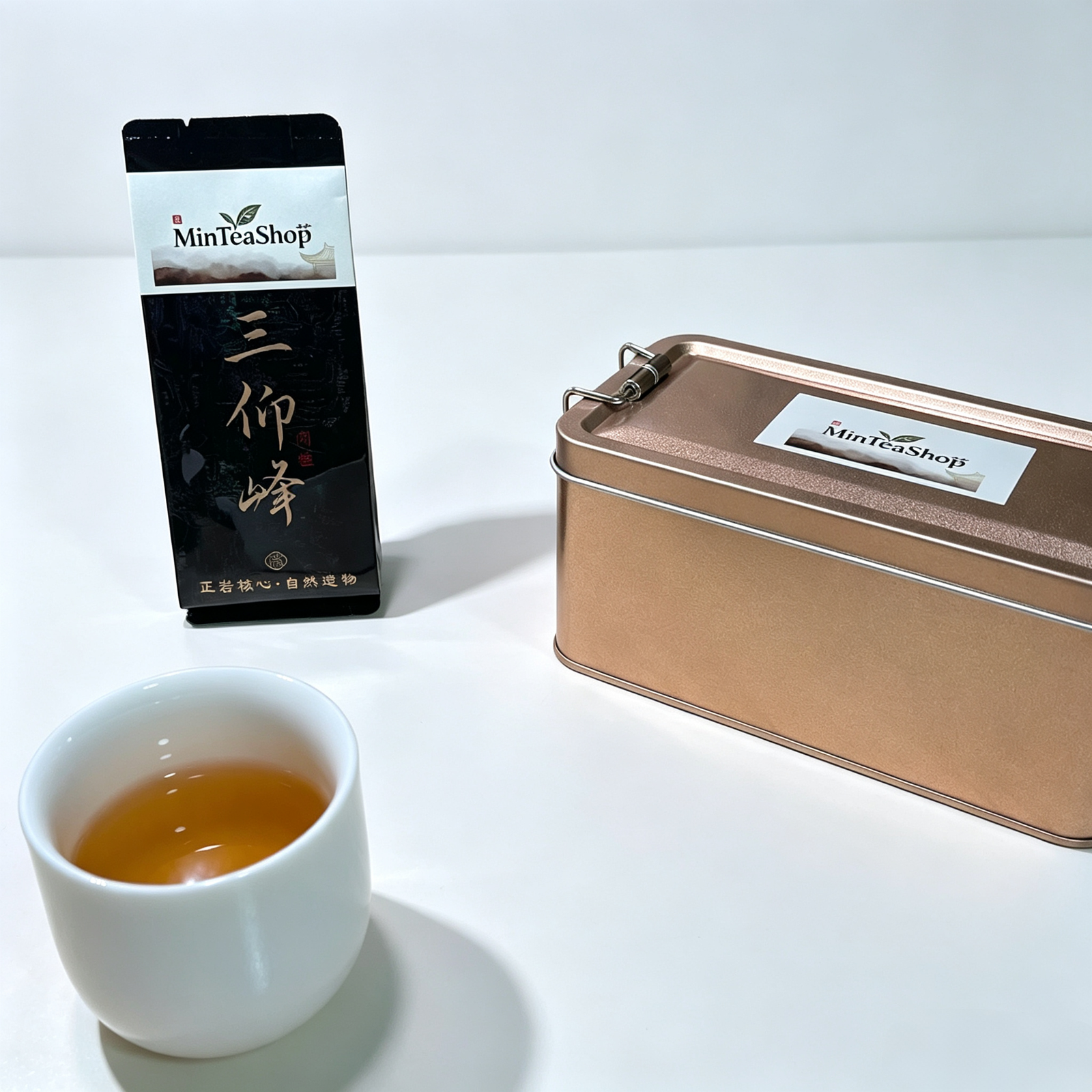
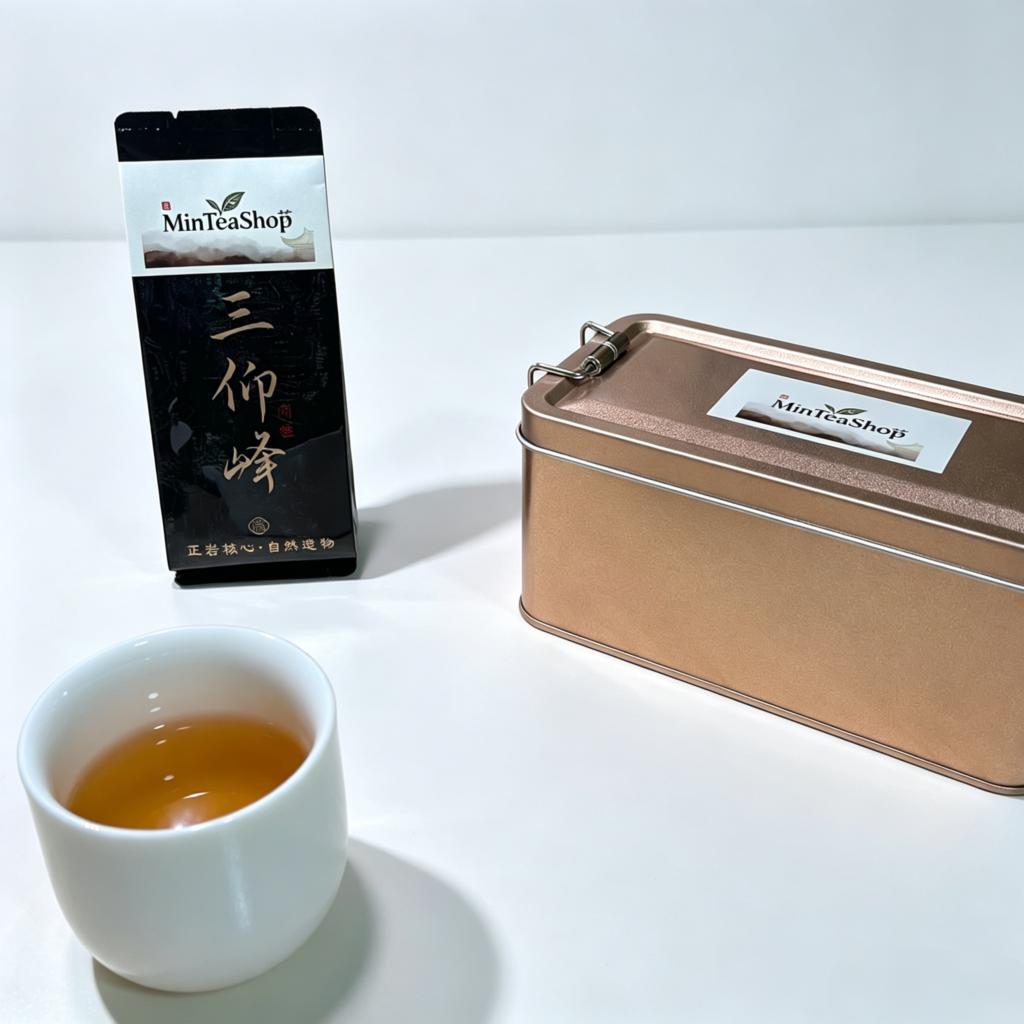
4.5 Sanyang Peak Rougui Oolong: 60-Hour Charcoal Roast, the 10-Steep Flagship
Sanyang Peak (三仰峰) is the highest-altitude garden in our estate at 2,356 ft (718 m). It overlooks the Jiuqu (Nine-Bend) River — the eastern edge of the UNESCO reserve. About 40 mu (~2.7 hectares) of red sandstone terraces, mist over 220 days a year.
Geography: Thin cuticles keep aroma precursors concentrated. Red sandstone soil (pH 4.5–5.0, low nitrogen) slows growth, packing density per leaf.
Craft: 60-hour three-stage charcoal roast — the longest of the six. Lychee or longan wood, not electric drum.
| Process | Heat Source | Aroma | Final Moisture |
|---|---|---|---|
| Traditional charcoal | Lychee / longan wood | Smoke + cocoa + cinnamon | 4–5% |
| Electric drum | Electric coils | Flat cocoa only | 3–4% |
| No roast | Sun-dried | Vegetal, grassy | 6–8% |
Why 4–5% moisture matters: Properly charcoal-fired Yancha improves in the pouch for 18–24 months as the roast settles. Low moisture = aging potential.
Flavor profile:
- Steeps 1–2: Sharp cinnamon + caramel mid-palate
- Steeps 3–5: Roasted cocoa + cool slate finish
- Steeps 6–8: Honey sweetness, cinnamon returns on the breath
- Steeps 9–10: Long-honey finish, leaves open flat green
8.3g (0.29 oz) per 110ml gaiwan yields 10–12+ steeps. Best for: connoisseurs and serious collectors. Our flagship.
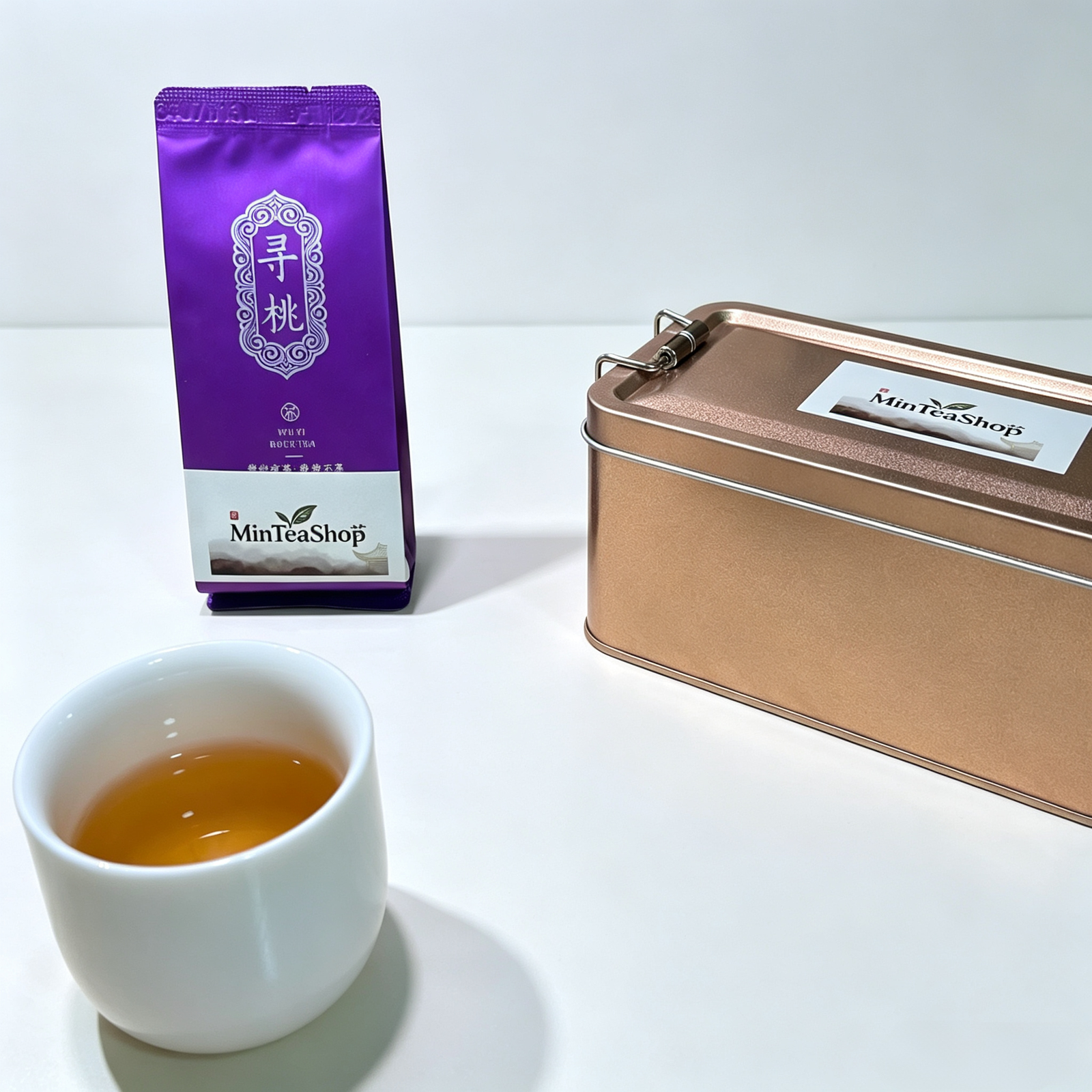
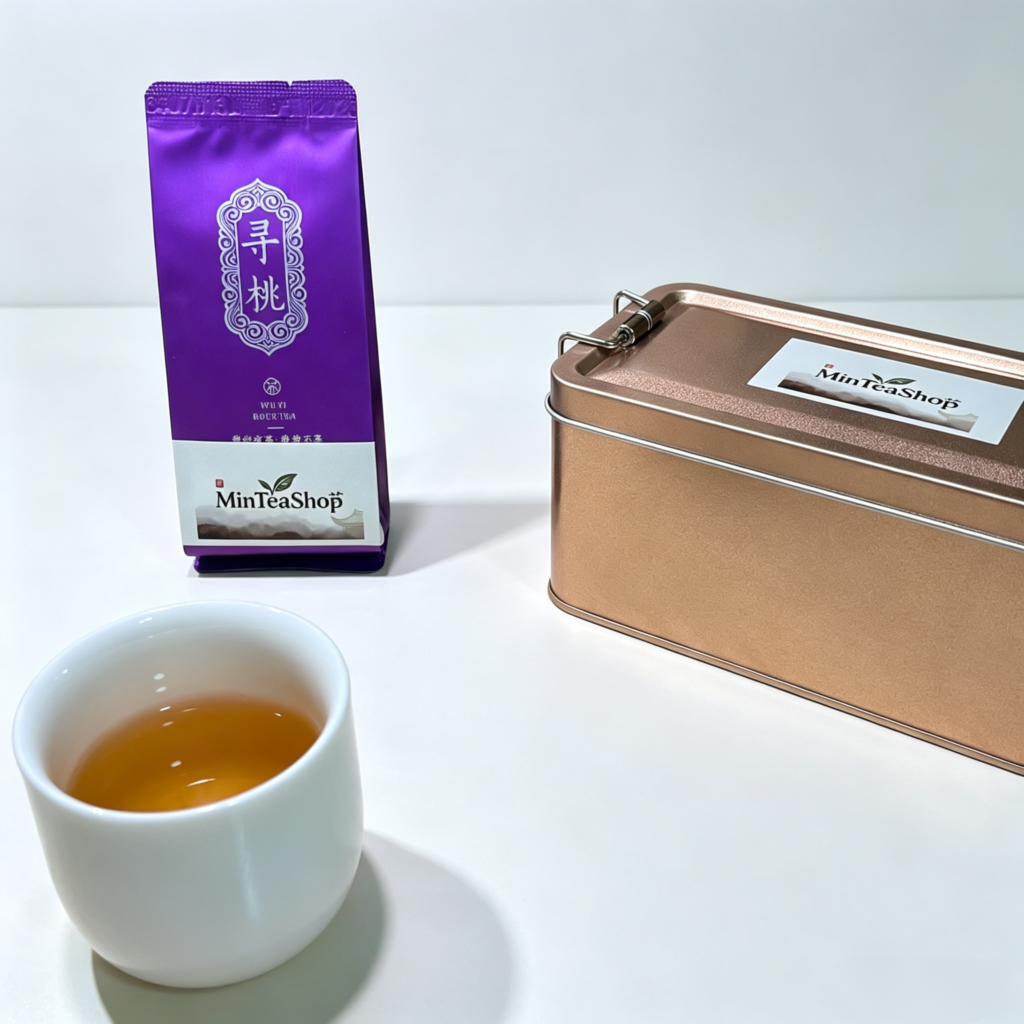
4.6 Lingyang Pass Rougui Oolong: Light Roast, Western Brewing Friendly
Lingyang Pass (岭阳关) is the highest terroir of the six at 3,937 ft (1,200 m). It sits on a south-facing cliff with Danxia (red sandstone) soil rich in iron and sulfur.
Geography: Slow growth at 1,200 m gives dense leaf cells. Cool mornings with mist preserve volatile compounds. A 2019 study in the Journal of Agricultural and Food Chemistry found that high-elevation Wuyi teas show significantly higher theanine content and lower catechins — the chemistry behind the sweeter, smoother cup.
Craft: Second-pass light roast — 6h on longan wood charcoal at 120°C, then 7 days’ rest, then 4h again. Falls into the “light roast” (轻焙) sub-category.
Flavor profile:
- Steeps 1–2: Clean cinnamon, sweet finish
- Steeps 3–5: Honey, ripe apricot, returning mineral
- Steeps 6–7: Dried longan, roasted sweet potato, faint cocoa
- Steeps 8–9: Light, sweet, 15-second hui gan
8.3g (0.29 oz) per 150ml gaiwan (slightly larger than the other five) yields 7–9 steeps. Best for: North American beginners, daily Western brewing, drinkers who prefer clarity over boldness.
4.7 Six Terroir Master Comparison
| Terroir | Altitude | Roast Hours | Aroma Key | Steep Count | Serving |
|---|---|---|---|---|---|
| Xiao Niu Rou | 980–1,310 ft | 18–22h | Cinnamon + mineral + density | 8–10 | 8.3g / 110ml |
| Mazhenfeng | 1,310–1,970 ft | 13h | Honey + cinnamon + delicate | 8–10 | 8.3g / 110ml |
| Yixiantian | 980–1,640 ft | 18h | Sharp front, deep hui gan back | 10–12 | 8.3g / 110ml |
| Yanzi Ke | ~850 ft | 14h | Cinnamon + longan + soft | 10–12+ | 8.3g / 110ml |
| Sanyang Peak | 2,356 ft | 60h | Full cinnamon-to-honey arc | 10–12+ | 8.3g / 110ml |
| Lingyang Pass | 3,937 ft | 10h (light) | Cinnamon-to-sweet-potato arc | 7–9 | 8.3g / 150ml |
5. How to Brew Wuyi Zhengyan Rougui: The 8.3g Gongfu Method
Many readers ask: “How do I actually brew these 8.3g sachets?”
This is the unified Gongfu method we use in our shop. It works for all six terroirs.
Equipment:
- 100–110ml gaiwan or small Yixing pot (Lingyang Pass: 150ml is fine)
- One 8.3g (0.29 oz) sachet
- 212°F (100°C) boiling water
- Fair cup + small tasting cups
Step-by-step:
Warm up. Preheat your gaiwan and tasting cups with 212°F (100°C) boiling water. Discard the water.
Add tea. Drop in one pre-portioned 8.3g sachet.
Rinse (Flash Rinse). Pour boiling water to the rim and decant immediately—do not steep. Discard the rinse to awaken the leaves.
First 4 Steeps (Flash Infusions). Refill to the rim and decant immediately for steeps 1 through 4. High-grade Zhengyan leaves release rich flavor instantly without needing rest time.
Build (5th Steep Onward). Starting from the 5th steep, add 5–10 seconds to each subsequent steep to draw out the deeper mineral notes.
Stop. When the tea liquor turns pale golden yellow and the cinnamon aroma flattens.
6. Six Rougui Flavor Comparison Across Steeps
[Insert image: Six dry leaves side by side — ALT: six Wuyi Zhengyan Rougui dry leaves comparison]
| Terroir | Steeps 1–2 | Steeps 3–5 | Steeps 6–9 |
|---|---|---|---|
| Xiao Niu Rou | Bold cinnamon, dense body | Mineral + caramel | Woody + hui gan |
| Mazhenfeng | Cinnamon + honey | Delicate mineral | Fading honey |
| Yixiantian | Sharp cinnamon, layered | Settling hui gan | 30-sec tongue-root sweet |
| Yanzi Ke | Soft cinnamon + longan | Mineral + dried fruit | Stable honey sweetness |
| Sanyang Peak | Cinnamon + caramel | Cocoa + slate finish | Honey + cinnamon returns |
| Lingyang Pass | Clean cinnamon | Honey + apricot | Longan + sweet potato + hui gan |
Quick takeaway:
- Want soft? Start with Yanzi Ke.
- Want bold? Go Xiao Niu Rou.
- Want clarity? Pick Lingyang Pass.
- Want full arc? Choose Sanyang Peak.
7. Buyer’s Red Flags: What to Avoid in 2026
Three red flags we see most often in 2026:
- No specific terroir on the package. Real cliff-side tea names its garden (Yanzi Ke, Sanyang Peak, etc.). Generic “Wuyi Yancha” is usually multi-farm blend.
- Price below $0.30/g. Single-origin cliff tea can’t legally import under $0.60/g. Below $0.30/g is almost always Guangxi-grown, Vietnamese, or stale stock relabeled.
- No roast date visible. Wuyi Rougui hits peak flavor 3–12 months post-roast. Vendors that hide the date are usually selling old stock.
8. Frequently Asked Questions
Q1: Is Wuyi Zhengyan Rougui high in caffeine?
Each 8.3g sachet brewed Gongfu yields about 30 mg caffeine per 150ml cup. That’s less than half a drip coffee. [External link: PubMed — Caffeine Content of Commercial Teas] shows roasting slightly reduces caffeine content, but doesn’t eliminate it. Most adults can drink it in the afternoon without sleep disruption.
Q2: Which terroir should I start with?
We recommend Yanzi Ke. The 21-day resting period rounds off any harshness. The cinnamon is clear but not aggressive. Pre-portioned 8.3g sachets remove guesswork. It’s the softest entry point.
Q3: Can I cold brew it?
You can, but don’t. Cold brew extracts mainly theanine and catechins — it cannot release cinnamon aldehyde. This tea is built for 212°F boiling water. Stick with hot.
Q4: How should I store the sachets?
Unopened sachets stay fresh for 18 months from the packing date stamped on the box. Store in a cool, dry, dark cabinet — away from direct sunlight, heat, and strong odors (spices, coffee). Do not refrigerate. Condensation will ruin the roast.
Once opened, brew within 2 weeks. Our sachets are nitrogen-flushed at packing, so each one is a sealed single-serve unit.
Q5: Does this tea contain allergens?
No. Pure Wuyi Zhengyan Rougui contains only tea leaves and trace caffeine. Gluten-free, vegan, nut-free, dairy-free, no preservatives.
Q6: What’s the price tier for the six terroirs?
By scarcity and craft intensity:
- Yixiantian — collectible (0.7% annual output)
- Sanyang Peak — flagship (60h roast cost)
- Xiao Niu Rou ≈ Mazhenfeng — premium daily
- Lingyang Pass — accessible premium (Western brewing focus)
- Yanzi Ke — best value (entry tier)
A Final Note
Whether you’re a seasoned tea drinker or just starting out, every order includes a free bonus: a sample of our everyday Wuyi Tea, alongside an extra variety sample to explore.
Pure, clean, and delicious, this is our go-to for daily sipping. But why include it?
For Experienced Tea Lovers: You might quickly realize that what other vendors market as “premium” is simply our everyday baseline. We cut the markup—never the quality.
For Beginners: It gives you a reliable reference point. Tasting it side-by-side with your main order lets you instantly recognize authentic Wuyi Rock Tea notes, so you’ll never overpay again.
If you’d like to try other authentic styles, explore our Wuyi Rock Tea Collection.
Additional information
| size | 6 Packs (1.76 oz), 12 Packs (3.51 oz), 18 Packs (5.27 oz) |
|---|
Related products
-

Zhengyan Da Hong Pao: 2026 Buyer’s Guide to Big Red Robe
Price range: $23.90 through $299.90Select options This product has multiple variants. The options may be chosen on the product page -
Shou Mei | 100% Authentic & Refreshing Premium White Tea
Price range: $9.90 through $46.90Select options This product has multiple variants. The options may be chosen on the product page -
Wuyi Rock Tea Guide: Authentic Sanyang Peak Zhengyan Rougui (2026)
Price range: $12.90 through $189.90Select options This product has multiple variants. The options may be chosen on the product page -
Jin Jun Mei | 2026 Spring Authentic High Mountain Honey Sweet Loose Leaf Black Tea
Price range: $19.90 through $190.90Select options This product has multiple variants. The options may be chosen on the product page
Reviews
There are no reviews yet.