
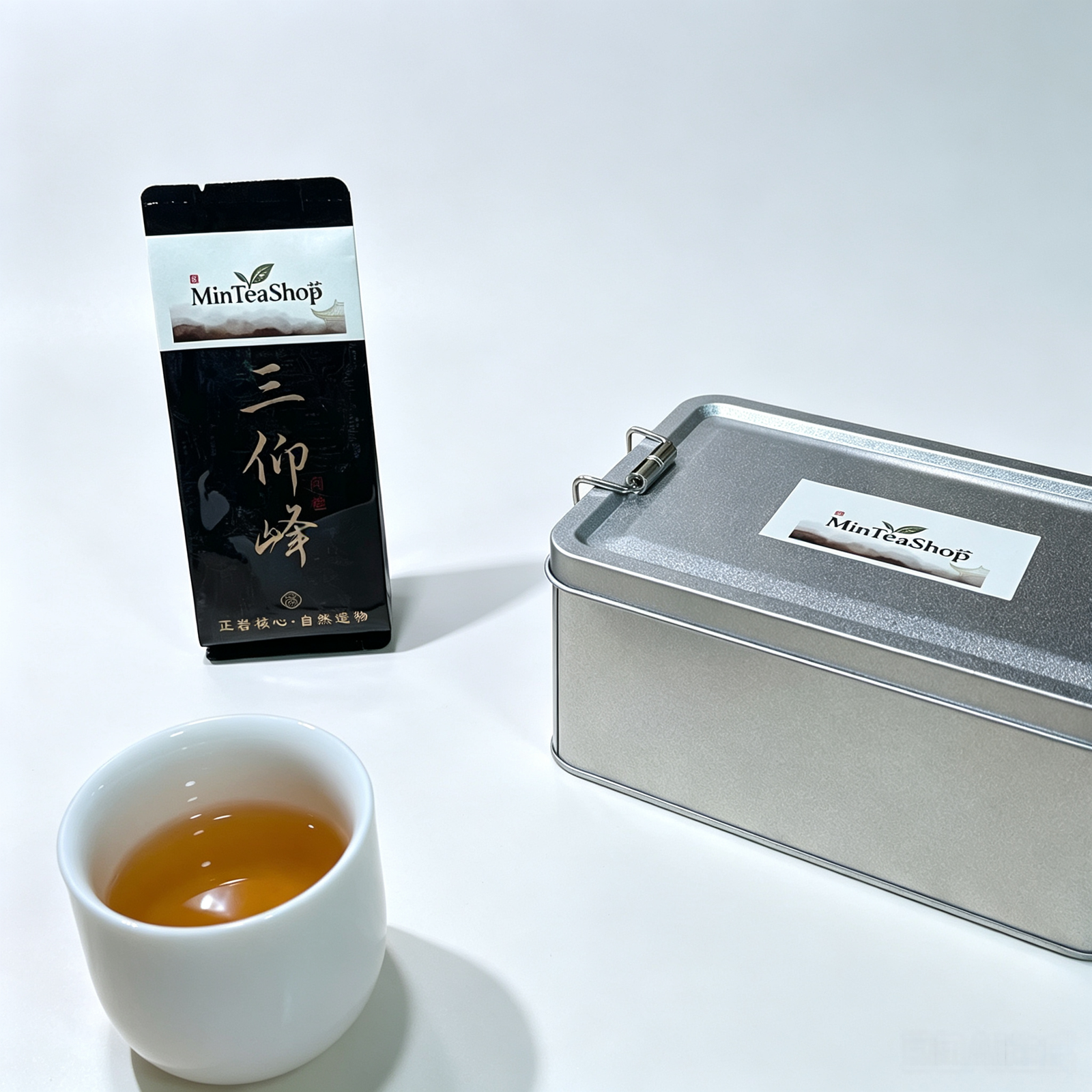
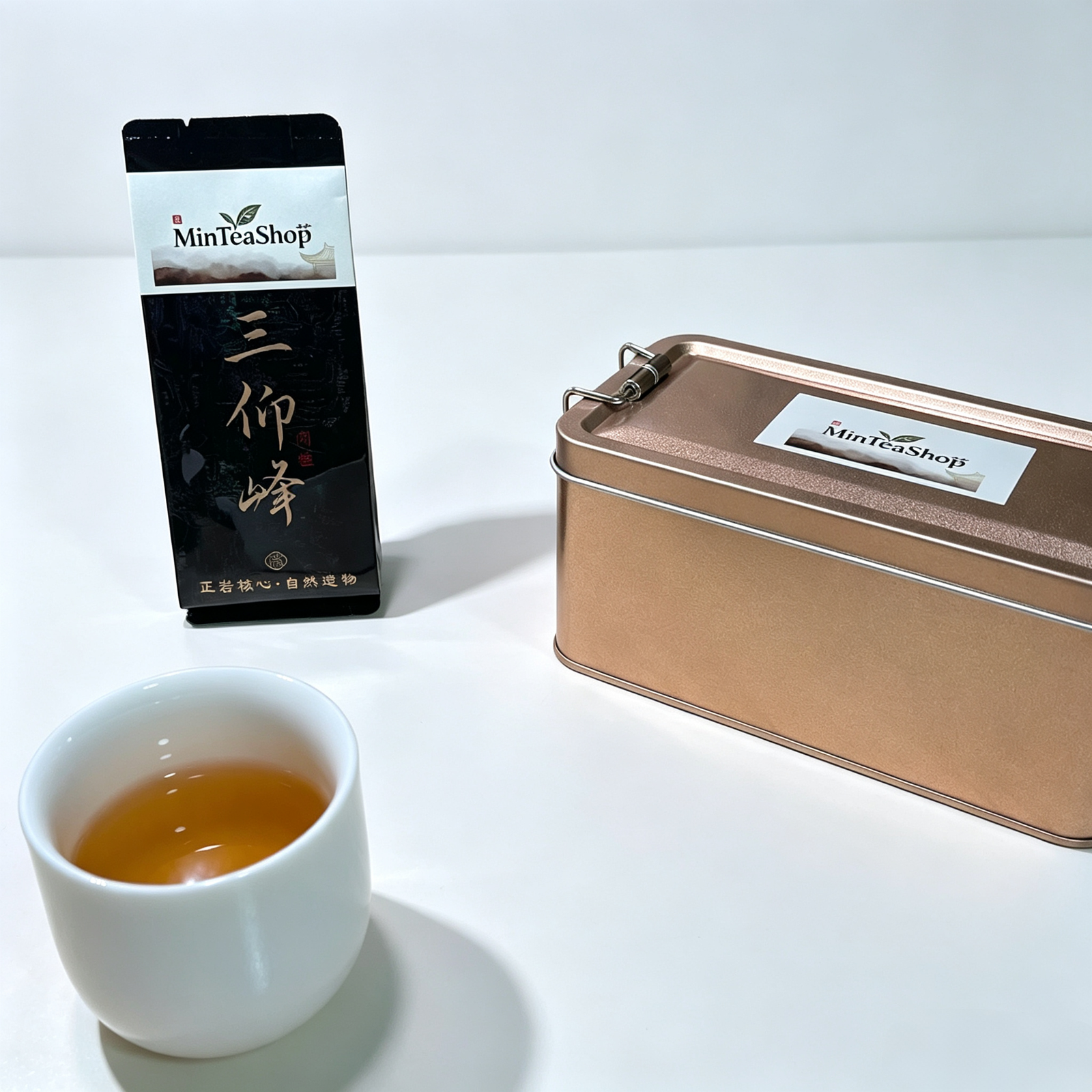
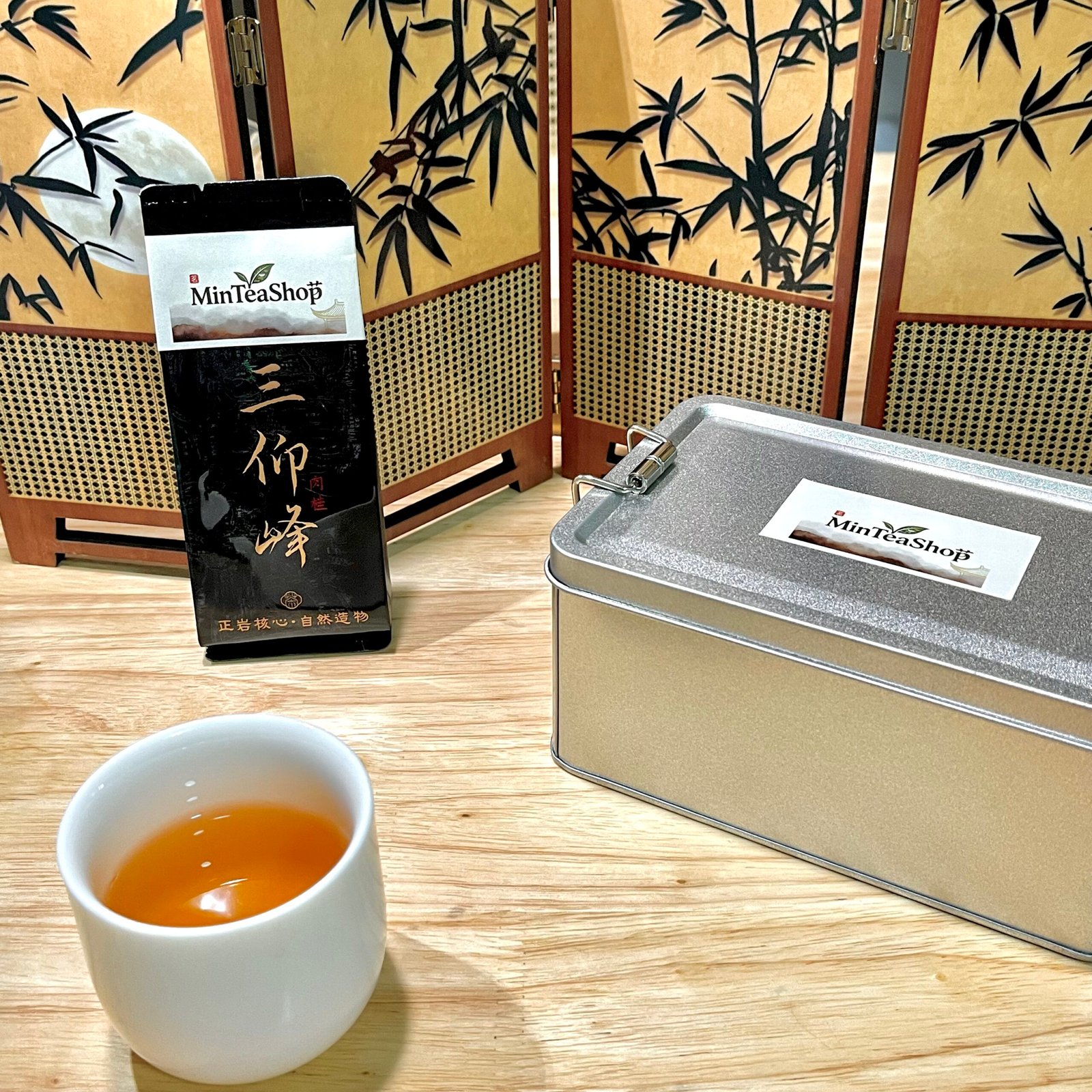
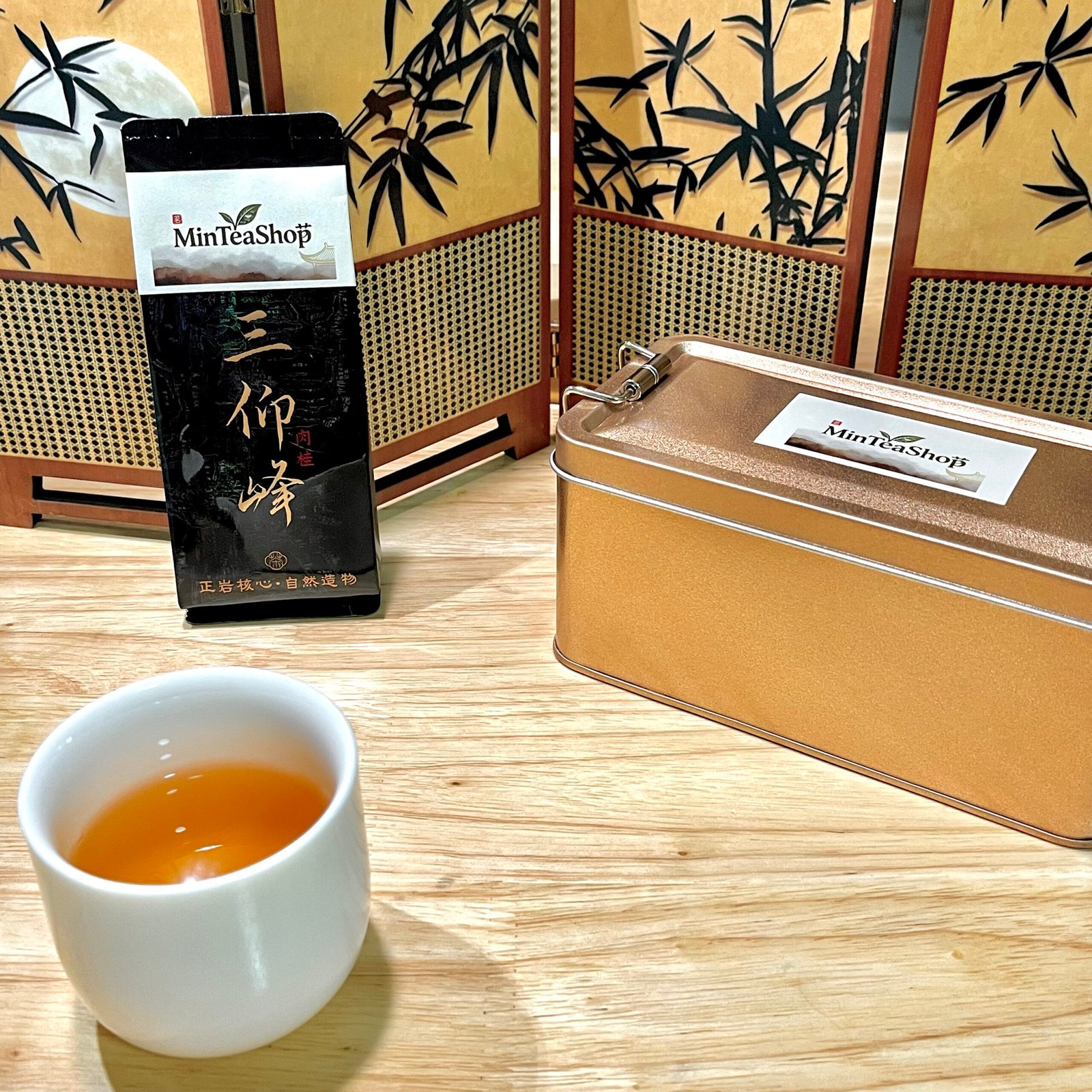
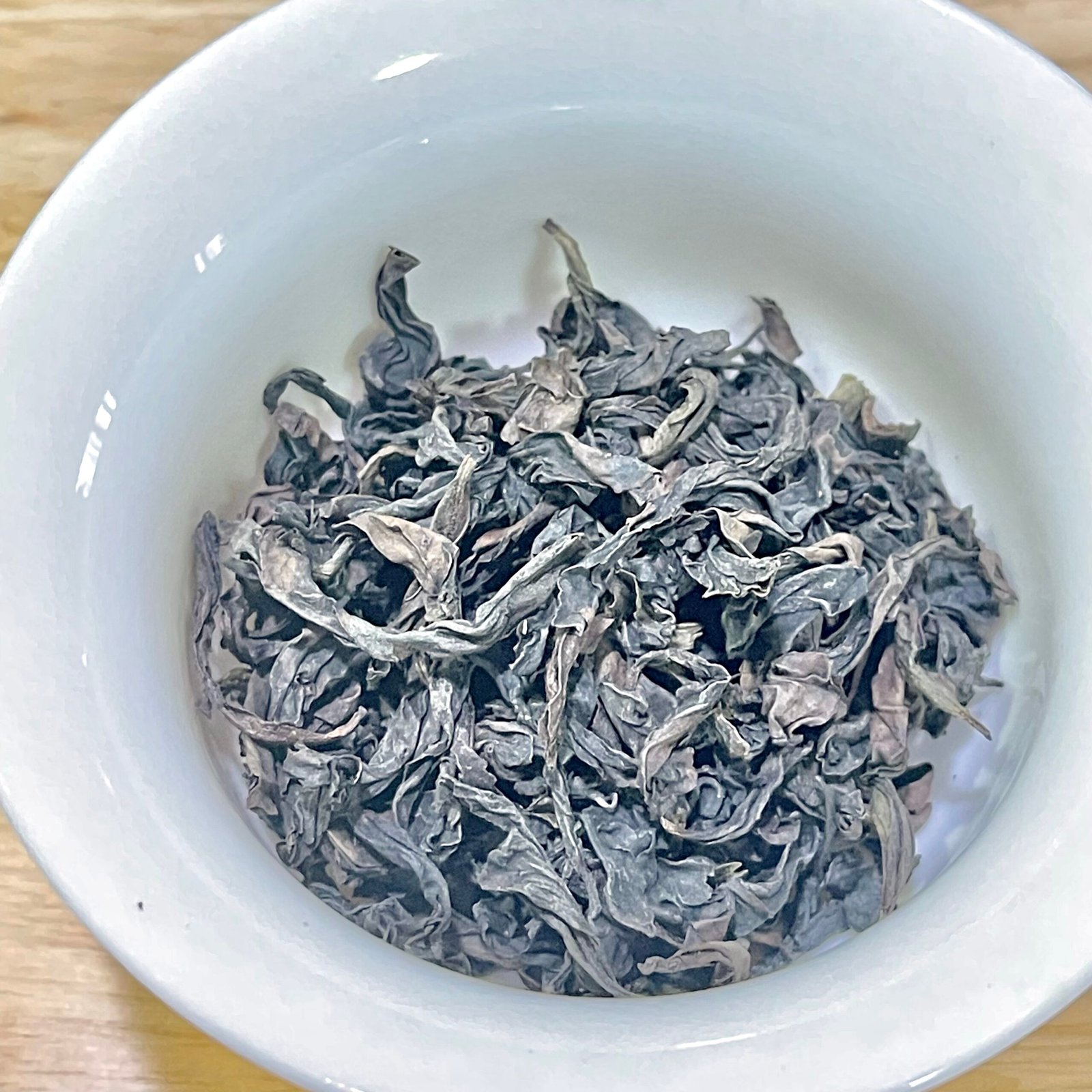
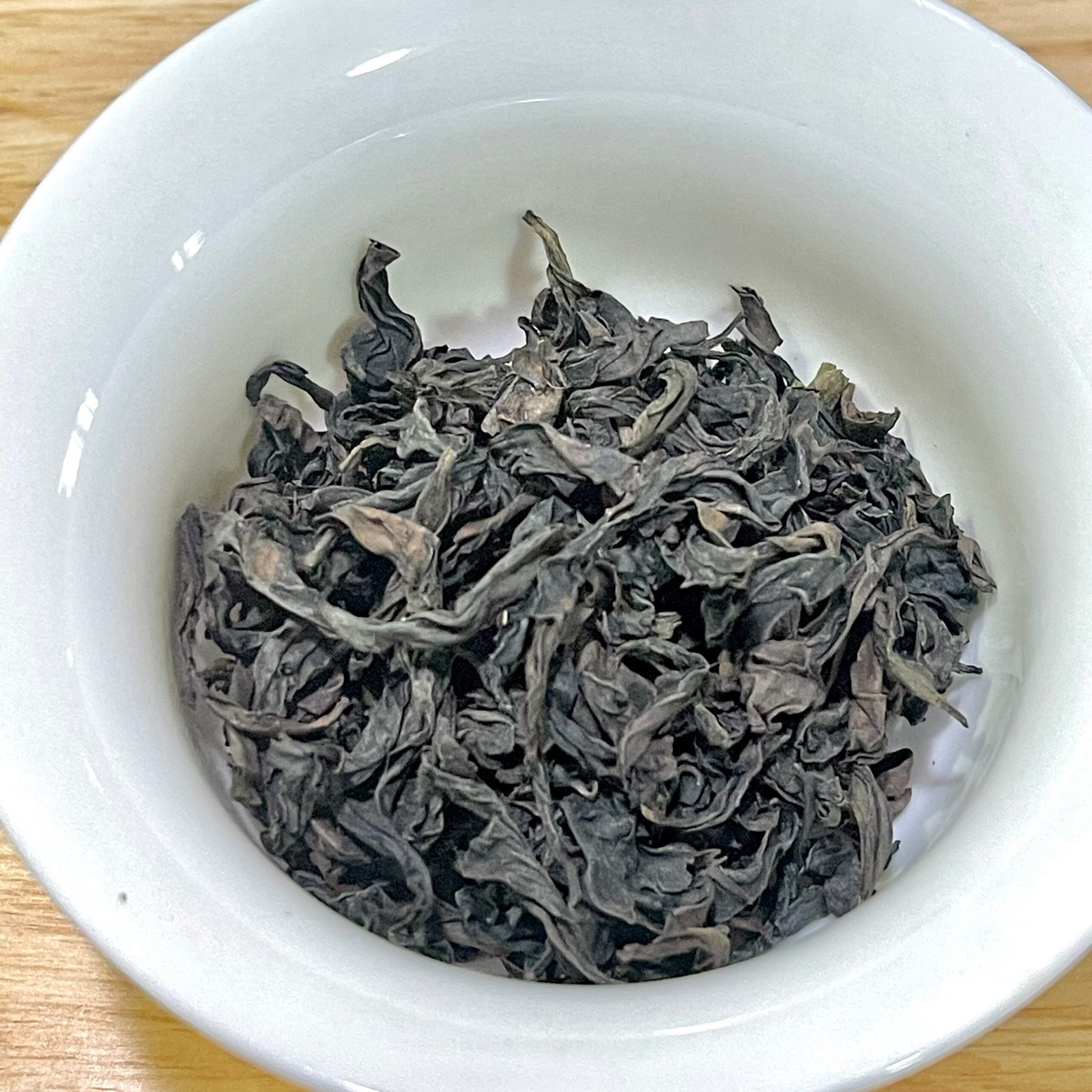
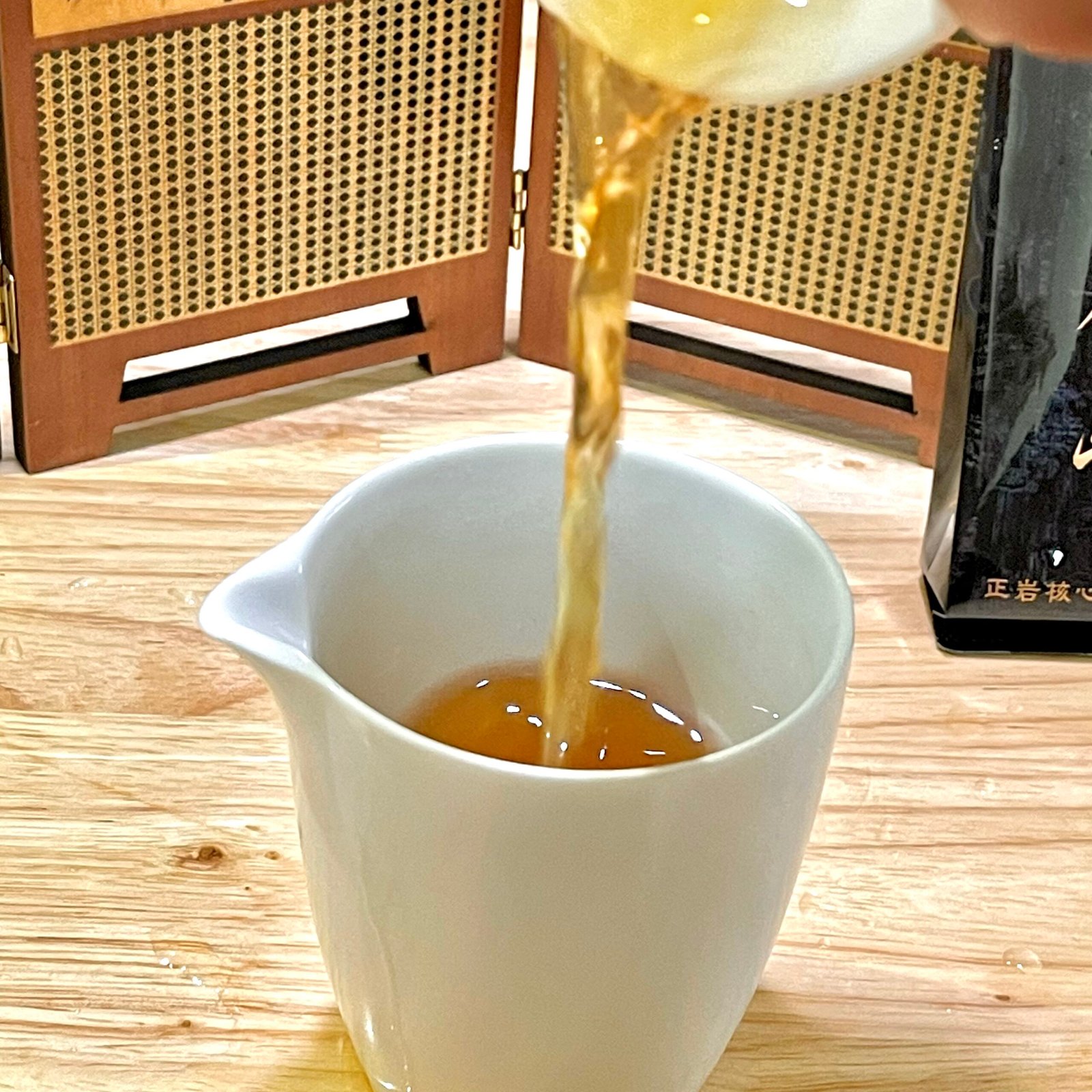
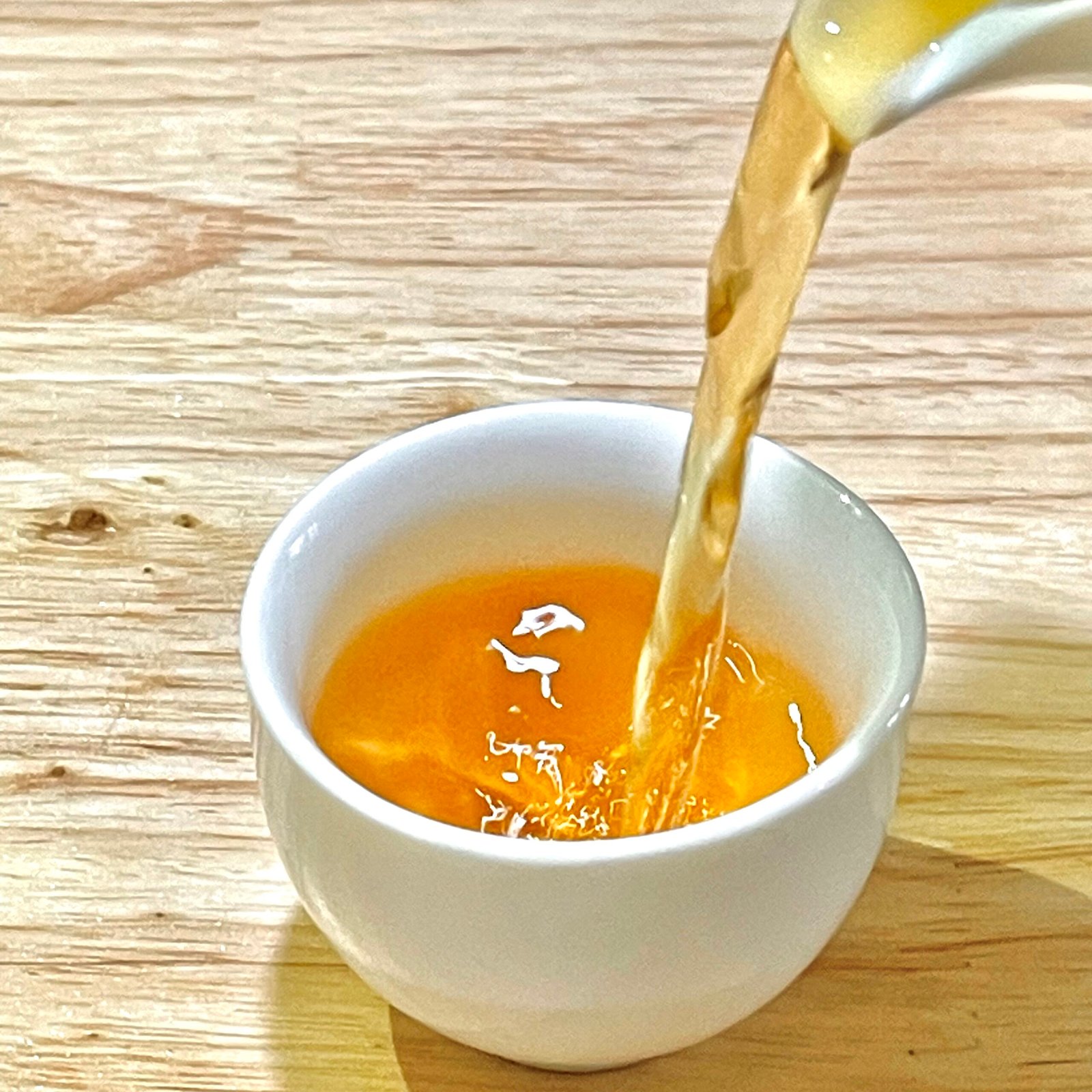
Wuyi Rock Tea Guide: Authentic Sanyang Peak Zhengyan Rougui (2026)
Price range: $12.90 through $189.90
Specifications at a Glance
Type: Wuyi Zhengyan Sanyang Peak Rougui (Oolong)
Origin: Sanyang Peak Micro-terroir, Core Zhengyan Zone, Wuyishan, Fujian Province, China
Harvest: Spring 2026
Altitude: Approx. 2,355 ft (718 m) — The highest peak in the core Zhengyan region
Roast Level: Medium-Light Roast (3-Stage Charcoal Roasted)
Caffeine: Moderate
Sizes:
3 Packs — 0.88 oz (24.9g | 8.3g × 3)
6 Packs — 1.76 oz (49.8g | 8.3g × 6)
18 Packs — 5.27 oz (149.4g | 8.3g × 18)
30 Packs — 8.78 oz (249g | 8.3g × 30)
60 Packs — 17.57 oz (498g | 8.3g × 60)
Whether you’re new to Wuyi Rock Tea or a seasoned oolong enthusiast, exploring new flavor profiles is half the fun. Curious about other varieties? Every order includes a complimentary surprise sample alongside your tea, so you can explore these rich, mineral nuances firsthand.
Description
Wuyi Zhengyan Rougui 2026: Sanyang Peak Tea Buyer’s Guide
Why Doesn’t All Wuyi Rock Tea Taste the Same?
If you’ve ever tried tea sold as Wuyi Rock Tea and felt the flavor fell short, you’re not alone.
The reason is simple: origin is everything.
True Wuyi Rock Tea gets its iconic flavor from the unique terroir of the Wuyi Mountains. However, teas from other regions are often processed in a similar style and sold under the same name, leaving buyers guessing what they’re actually drinking.
With MinteaShop, you don’t have to take origin on faith.
We own our tea gardens and processing facility in the heart of the Wuyi Mountains, managing quality from leaf to cup. By skipping flashy packaging and excess cost, we focus entirely on what matters most: the quality of the tea inside.
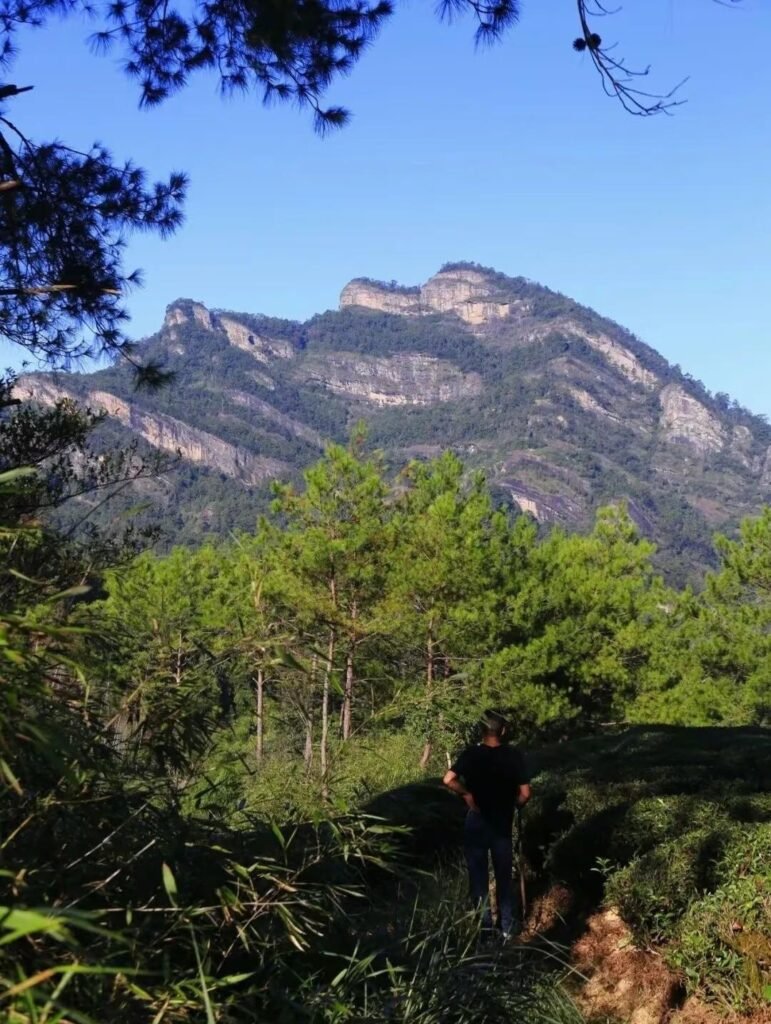
Most “Wuyi Rougui” sold online comes from outer-zone plantations. Buyers pay Zhengyan prices for tea that never touched the reserve. We cupped 23 Rougui samples in April 2026 at our Wuyi sourcing station. The Sanyang Peak lot stood apart for a sharp cinnamon-bark aroma that holds through six steeps. This 2026 buyer’s guide covers what genuine core-Zhengyan Rougui tastes like, how 718 m elevation shapes the cup, and how to verify authenticity before you buy.
What Is Wuyi Zhengyan Rougui Tea?
Wuyi Zhengyan Rougui is a cinnamon-cultivar oolong grown inside the Wuyi Mountains UNESCO reserve. The “Zhengyan” label means the tea garden sits within the protected core zone, not on its outer edges. The Rougui cultivar (Camellia sinensis var. sinensis, cultivar “Rougui”) gives the leaf its signature cinnamon-bark aroma.
Many buyers assume Zhengyan refers to a roast level. In fact, it is a geographic designation controlled by the Wuyi Yancha industry guild. A tea can be charcoal-roasted or unroasted and still carry the Zhengyan label, as long as the garden sits inside the reserve polygon.
Three things separate authentic Zhengyan Rougui from look-alikes:
| Factor | Authentic Zhengyan | Outer-Zone Rougui |
|---|---|---|
| Garden location | Wuyi reserve core | Outside UNESCO boundary |
| Elevation | 400–800 m | 200–350 m |
| Roasting | 3-stage charcoal | Single electric roast |
| Aroma stability | Holds 6+ steeps | Fades by steep 3 |
Where Does Sanyang Peak Sit Inside the Wuyi UNESCO Reserve?
Sanyang Peak (三仰峰) sits at 718 m inside the Wuyi Mountains’ core UNESCO zone. The summit estate overlooks the Jiuqu Xi (Nine-Bend River) bend that defines the reserve’s eastern edge. The garden covers roughly 40 mu (about 2.7 hectares) of red sandstone terraces.
The official Wuyi Mountains UNESCO World Heritage designation confirms these reserve boundaries, placing Sanyang Peak firmly within the core protected polygon.
Two microclimate factors shape this lot:
- Year-round humidity. Mist lingers 220+ days per year. Leaf cuticles stay thin and pliable, which lets aroma precursors concentrate.
- Red sandstone soil. pH 4.5–5.0, low in nitrogen. The trees grow slowly, packing flavor compounds into the leaf over longer cycles.
How Does Sanyang Peak Elevation Affect Rougui Flavor?
The 718 m altitude slows leaf growth on this peak. Slow growth means thicker cell walls and higher concentrations of aroma precursors. You taste this directly in the cup.
| Elevation | Leaf thickness | Cinnamon-bark intensity | Mineral edge |
|---|---|---|---|
| 200–350 m (outer zone) | Thin | Mild | Low |
| 400–600 m (Zhengyan) | Medium | Medium | Medium |
| 700+ m (Sanyang Peak) | Thick | Sharp | High |
The mineral edge in the 700+ m row comes from sandstone-root contact. Trees draw trace minerals into the leaf. You taste it as a cool, slate-like finish on the back of the tongue after the swallow.
How to Brew Sanyang Peak Rougui Using the Gongfu Method
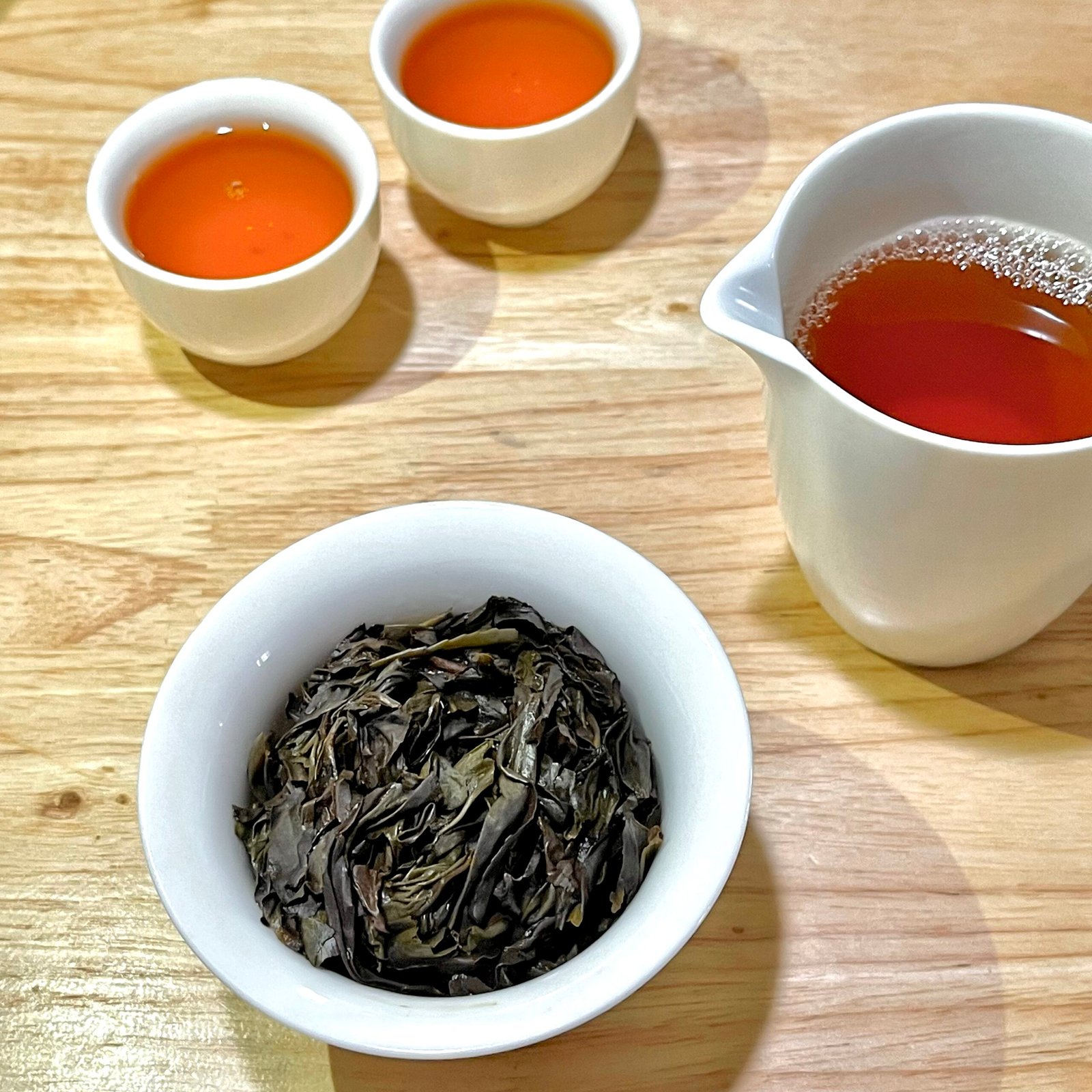
Gongfu brewing extracts more from less leaf. It suits high-mountain Yancha because it surfaces the mineral edge. Follow these steps for the cleanest cup:
Preheat your vessel: Rinse your gaiwan with 212 °F (100 °C) boiling water to warm it up, then dump it out.
Add the tea: Add one pre-portioned 0.29 oz (8.3g) sachet. The sachets are nitrogen-flushed for peak freshness.
First infusion (Rinse): Pour 212 °F (100 °C) boiling water and flash-steep for 5–10 seconds. Pour off this rinse to awaken the leaves.
Second infusion (First drink): Add 212 °F (100 °C) water and steep for 10–15 seconds. Pour out and enjoy.
Third to fifth infusions: Add 5 seconds per steep to draw out evolving floral notes.
Sixth to tenth infusions: Add 10 seconds per steep as the deep mineral body develops.
Finish: Stop when the cup turns pale yellow and soft, usually around steep 10 to 12+.
Water source matters. We use mountain spring water with TDS 50 ppm or less. Tap water above 150 ppm mutes the cinnamon note and flattens the finish.
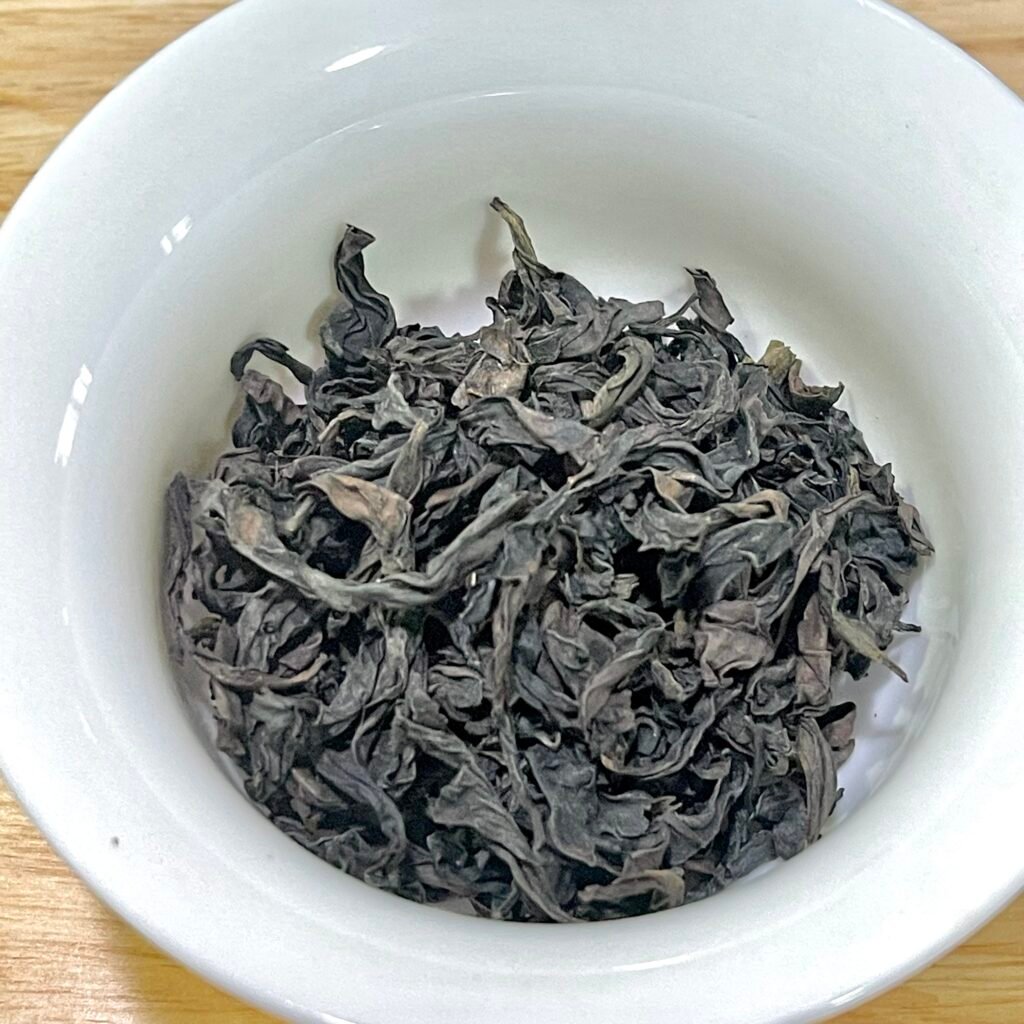
What Does Sanyang Peak Wuyi Zhengyan Rougui Taste Like?
Tasting notes shift across steeps. Here is what to expect from the 2026 spring harvest lot:
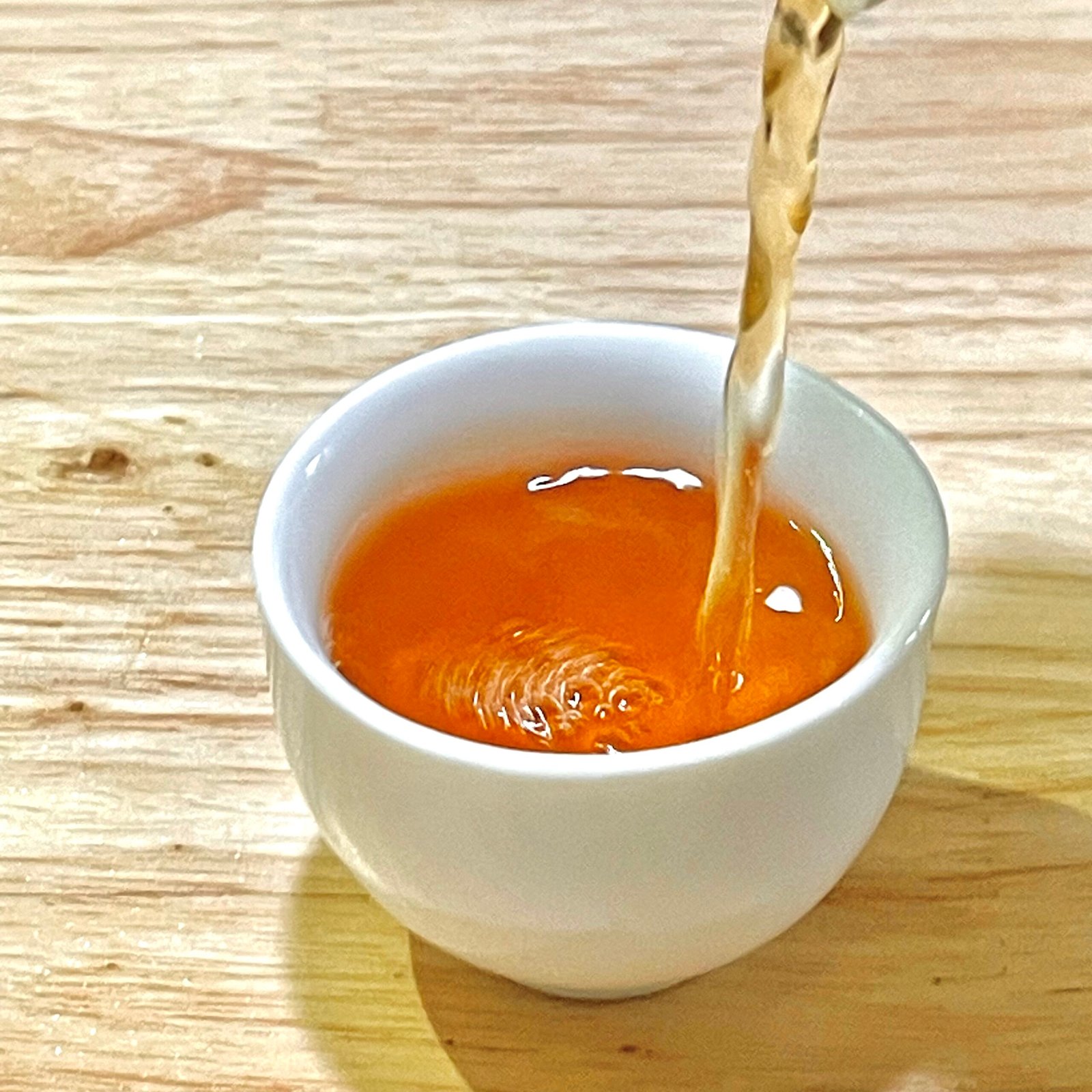
- Steep 1–2: Sharp cinnamon-bark on the first inhale. Hot caramel mid-palate.
- Steep 3–4: Roasted cocoa. A cool slate finish on the swallow.
- Steep 5–6: Ripe stone fruit. The mineral edge stays present.
- Steep 7–8: Honey sweetness. Cinnamon returns on the breath.
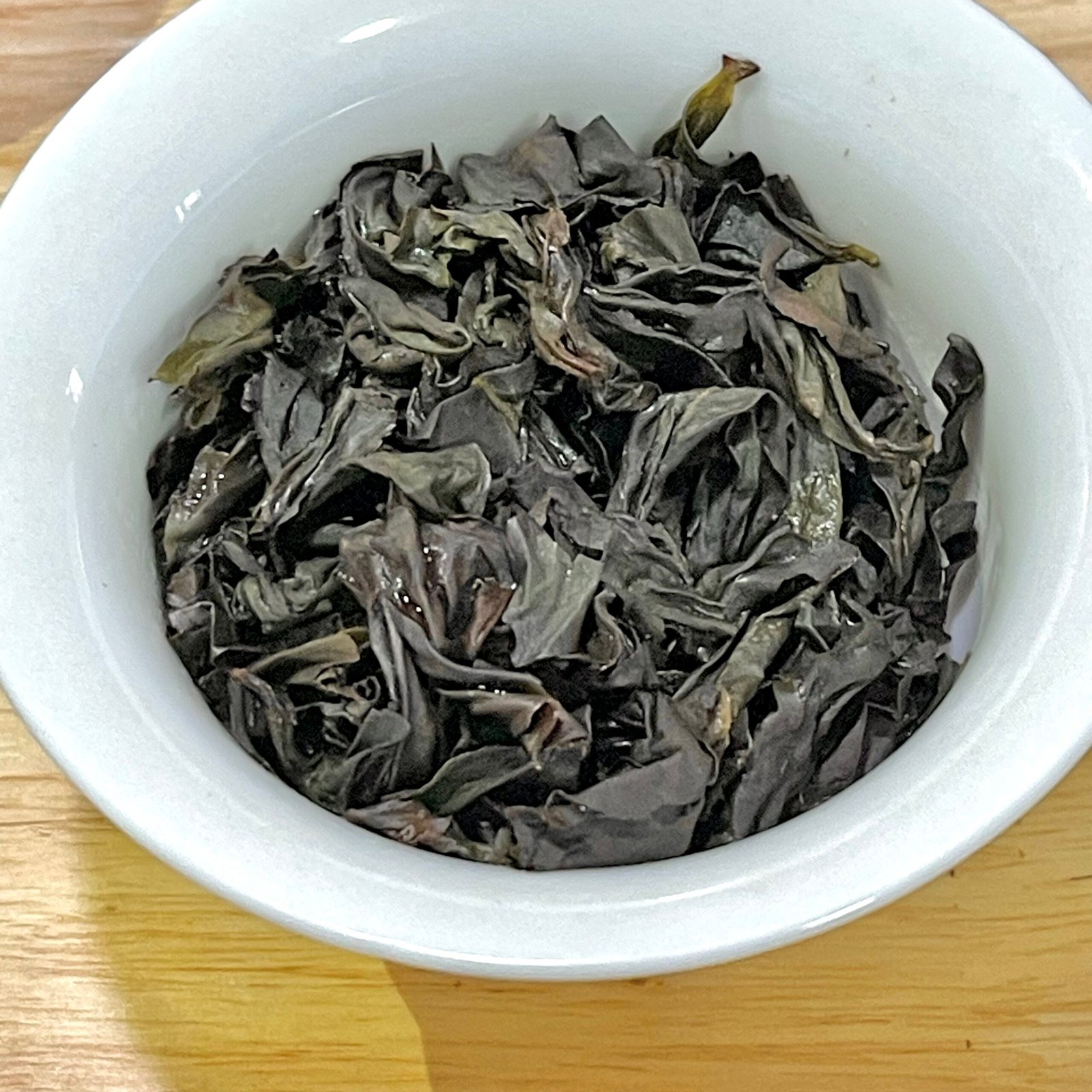
- Steep 9–10: Long-honey finish. Leaf opens into a flat green tone.
The roast profile is light-medium. It will not overpower food pairings. We drink it with dark chocolate (75% cacao or higher) or aged cheese in our shop.
Why Does Charcoal Roasting Matter for Yancha Quality?
Charcoal roasting builds the signature roasted-cocoa base in Wuyi Yancha. The 2026 Sanyang Peak lot went through three stages of long-fired charcoal roast over 60 hours total. The traditional charcoal roasting guidelines from the Tea Association of the USA outline how traditional hardwood charcoal differs from electric drum roasting.
Three things change when you roast over hardwood charcoal:
| Process | Heat source | Aroma outcome | Moisture in finished leaf |
|---|---|---|---|
| Traditional charcoal | Lychee or longan wood | Smoke + cocoa + cinnamon | 4–5% |
| Electric drum | Gas or electric coils | Flat cocoa only | 3–4% |
| No roast (green) | Sun-dried only | Vegetal, grassy | 6–8% |
Low leaf moisture (4–5%) matters because it lets the tea age well. Properly charcoal-fired Yancha improves in the pouch for 18–24 months as the roast settles into the leaf.
Frequently Asked Questions About Wuyi Zhengyan Rougui
Is Sanyang Peak Wuyi rock tea high in caffeine?
This Rougui contains about 30 mg of caffeine per 8.3 g sachet when brewed Gongfu style. A standard 250 ml Western mug pulls roughly 25 mg per cup. Compare that to 95 mg in a single shot of espresso. You can drink it in the afternoon without sleep disruption for most adults.
What makes Sanyang Peak Rougui different from other Zhengyan lots?
Three points: (1) 718 m elevation versus the 400–600 m Zhengyan average; (2) 60-hour three-stage charcoal roast versus the common two-stage; (3) tighter rolling that slows oxidation. The leaf stays green-toned inside, which signals low oxidation and high aroma retention.
How should I store these tea sachets?
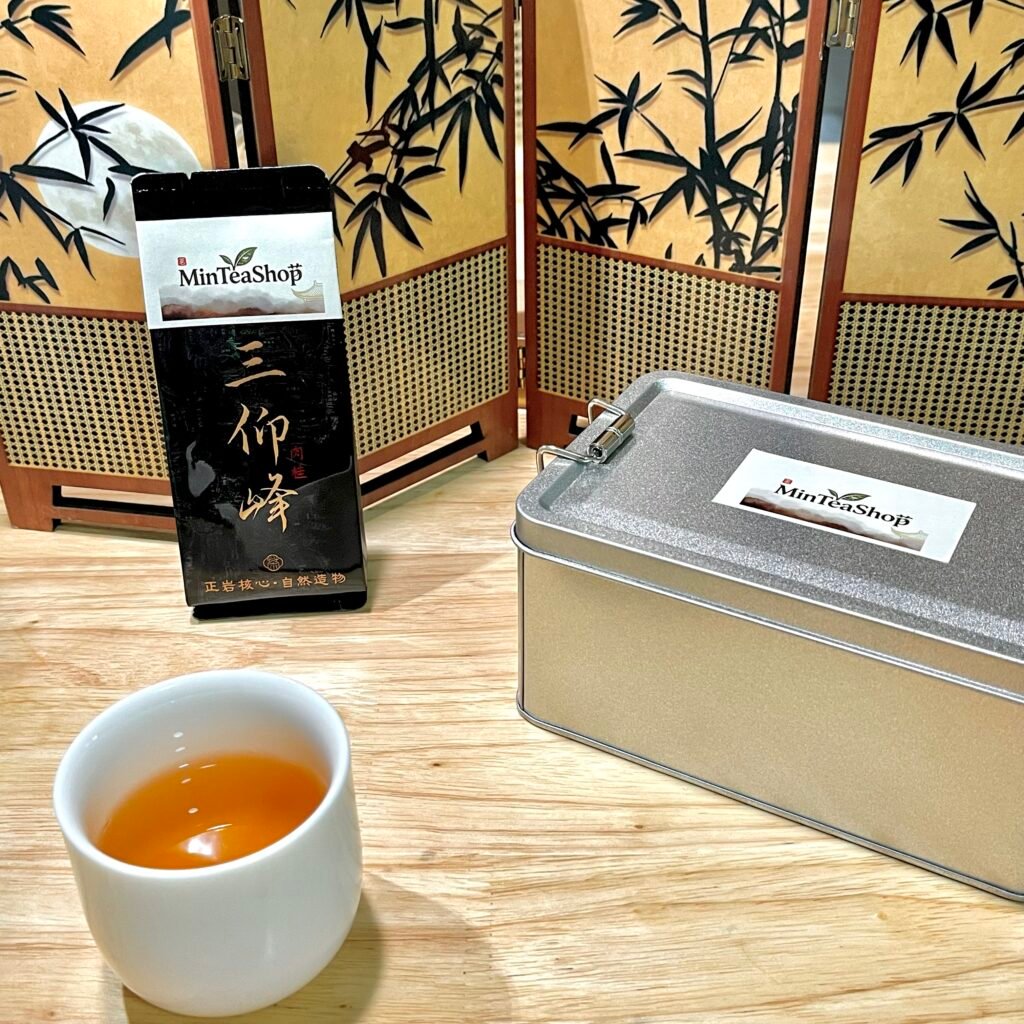
Because every 0.29 oz (8.3g) sachet is individually sealed for a single brewing session, you never have to worry about resealing opened tea or leaves losing freshness! Simply store the unopened sachets in a cool, dry, and dark cabinet away from direct sunlight and strong odors. Unopened sachets maintain their peak aroma and vibrant flavor for up to 18 months from the packing date stamped on the box.
Is this tea suitable for daily drinking or beginners?
Yes! While it possesses the complex structure prized by collectors, the medium-light charcoal roast makes it remarkably smooth and approachable. The pre-portioned 0.29 oz (8.3g) sachets eliminate guesswork, making it easy to brew whether you are a beginner or a seasoned sommelier.
Do I need traditional Gongfu tea gear like a Gaiwan to brew this tea?
Not at all! While a Gaiwan or Yixing clay teapot unveils the full, evolving flavor layers across 10+ steepings, you can easily enjoy it Western-style. Simply steep one 0.29 oz (8.3g) sachet in 12–16 fl oz (350–470 ml) of boiling water at 212°F (100°C) for 3–4 minutes in your favorite teapot or infuser mug.
How many infusions can I get out of a single 8.3g (0.29 oz) sachet?
Because high-altitude Sanyang Peak tea leaves are packed with dense nutrients, a single sachet is exceptionally re-steepable. You can expect 10+ rich infusions using traditional Gongfu flash-steeping, or 3–4 generous steeps when brewing in a large Western mug.
Will this tea taste overly bitter or smoky like heavily roasted teas?
No, not at all. Unlike aggressive dark-roast Yancha that can taste astringent or burnt, our Rougui undergoes a delicate medium-light 3-stage charcoal roast (中轻火). This master technique removes raw leaf harshness while highlighting the naturally sweet orchid florals, warm cinnamon spice, and silky mineral body.
Does this Rougui tea make a good luxury gift for tea lovers?
Absolutely. Core Wuyi Zhengyan rock tea—especially from Sanyang Peak—is highly revered among tea connoisseurs worldwide. Packaged in beautifully sealed single-serving sachets, it offers an authentic, rare, and ultra-premium tasting experience that makes an exceptional gift for tea lovers, business partners, or wine enthusiasts.
A Final Note
Whether you’re a seasoned tea drinker or just starting out, every order includes a free bonus: a sample of our everyday Wuyi Rock Tea, alongside an extra variety sample to explore.
Pure, clean, and delicious, this is our go-to for daily sipping. But why include it?
For Experienced Tea Lovers: You might quickly realize that what other vendors market as “premium” is simply our everyday baseline. We cut the markup—never the quality.
For Beginners: It gives you a reliable reference point. Tasting it side-by-side with your main order lets you instantly recognize authentic Wuyi Rock Tea notes, so you’ll never overpay again.
If you’d like to try other authentic styles, explore our Wuyi Rock Tea Collection.
Additional information
| size | 3 Packs (0.88 oz), 6 Packs (1.76 oz), 18 Packs (5.27 oz), 30 Packs (8.78 oz), 60 Packs (17.57 oz) |
|---|
Related products
-

Jin Jun Mei | 2026 Spring Authentic High Mountain Honey Sweet Loose Leaf Black Tea
Price range: $19.90 through $190.90Select options This product has multiple variants. The options may be chosen on the product page -
Authentic Wuyi Rougui Rock Tea: Complete 2026 Tasting Guide
Price range: $12.90 through $189.90Select options This product has multiple variants. The options may be chosen on the product page -
Jin Jun Mei | 100% Authentic Black Tea | Honey-Sweet Aroma
Price range: $9.90 through $46.90Select options This product has multiple variants. The options may be chosen on the product page -
Wuyi Rock Tea: Authentic Zhengyan Rougui (Yixiantian 2026)
Price range: $10.90 through $149.90Select options This product has multiple variants. The options may be chosen on the product page
Reviews
There are no reviews yet.